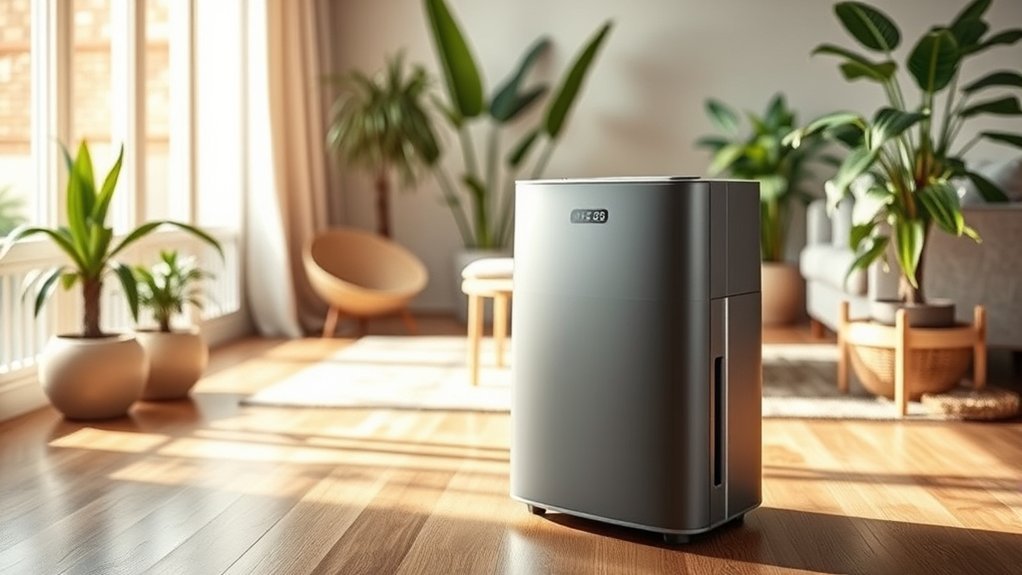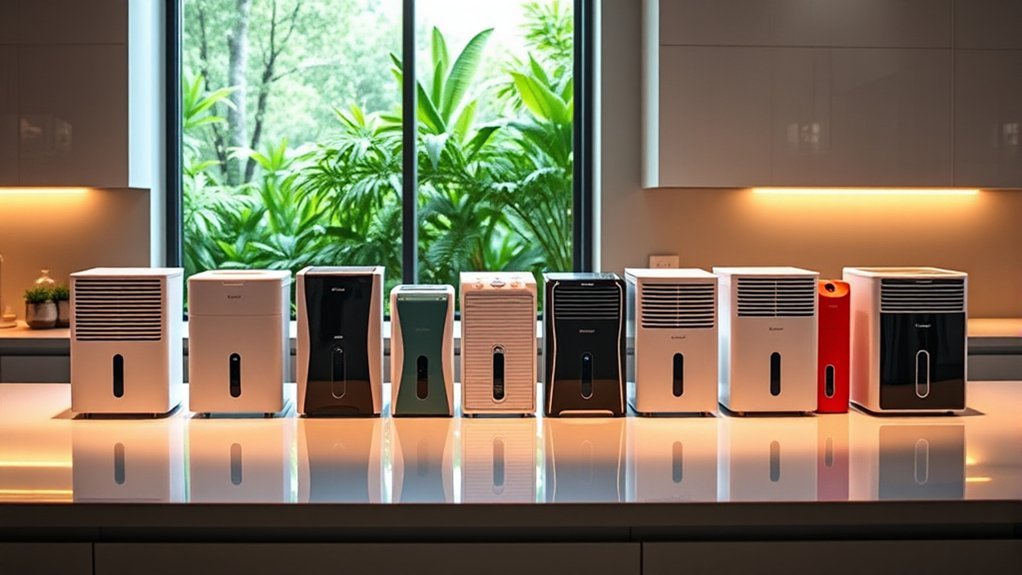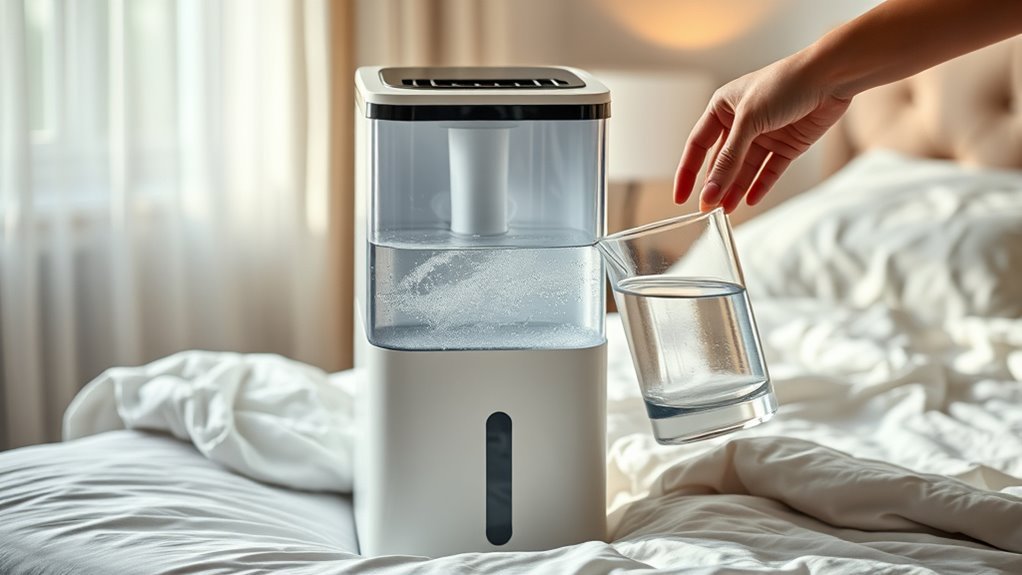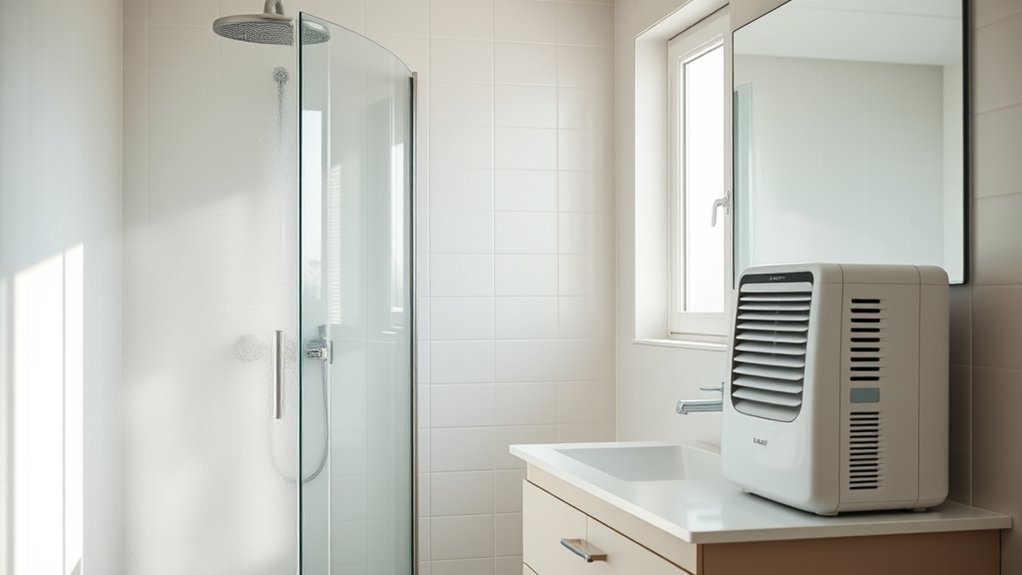
Yes, a dehumidifier can help reduce bathroom moisture, especially after steamy showers, wet towels, or poor airflow. But it is not always the safest or simplest first fix. Because a bathroom is a wet room, you need to think about the appliance manual, electrical protection, splash zones, ventilation, and whether a basic fan or window already solves the problem.
Quick Answer
A dehumidifier can help in a damp bathroom, but only if it is used safely and the manual allows that setting. For most bathrooms, start with ventilation: run an extractor fan, open a window if available, wipe wet surfaces, and use a hygrometer before adding an electric appliance.
Key Takeaways
- Use ventilation first. A fan or open window removes steam at the source, while a dehumidifier works more slowly.
- Aim to keep bathroom humidity around 30% to 50% when possible, and avoid long periods above 50% to 60%.
- Do not place a portable dehumidifier where it can be splashed, touched with wet hands, or connected by an extension cord.
- If the bathroom has visible mold, leaks, peeling paint, or musty smells, fix the moisture source instead of relying only on a dehumidifier.
At a Glance
| Time Required | 5 minutes to check humidity; 20–30 minutes of ventilation after a shower is often enough for light moisture. |
| Difficulty | Easy for daily habits; moderate if you need a new fan, outlet, or fixed electrical work. |
| Tools Needed | Humidity meter, extractor fan or openable window, squeegee or towel, and a dehumidifier only if the manual allows safe use. |
| Cost | Low for daily drying habits; modest for a hygrometer; higher if you need a new fan or electrician-installed outlet. |
Are Bathroom Dehumidifiers Safe and Useful?
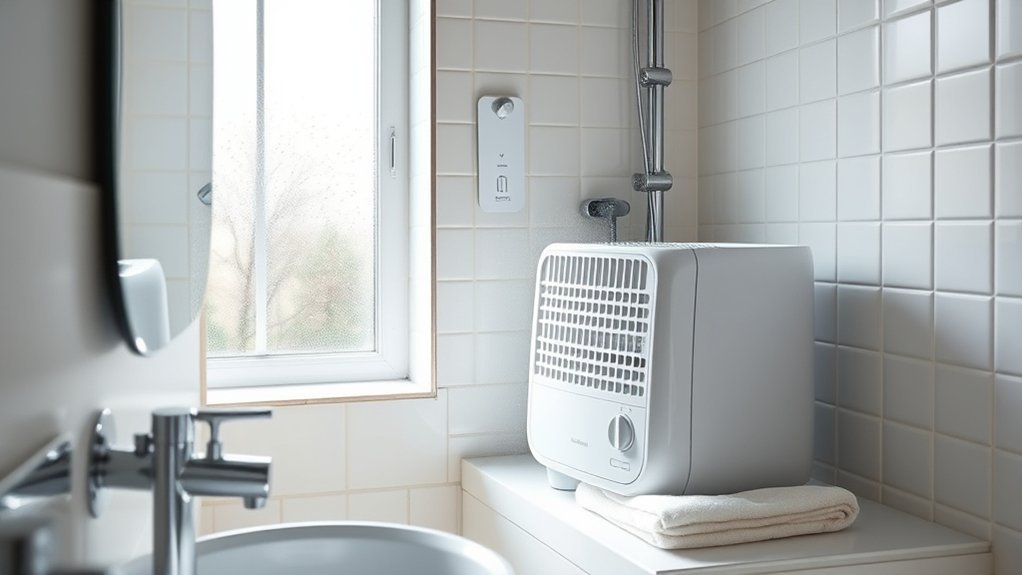
Bathroom dehumidifiers can be useful, but safety has to come first. A dehumidifier is an electrical appliance, and bathrooms create the exact conditions that make electricity riskier: water, condensation, wet hands, damp floors, and tight spaces.
Before using one, read the appliance manual. If the manual says not to use it in bathrooms, wet rooms, or near water, do not use it there. A GFCI outlet in the U.S. or an RCD-protected circuit in many other countries can reduce shock risk, but it does not make unsafe placement safe. Local electrical rules also vary, so new outlets or fixed bathroom electrical work should be handled by a qualified electrician.
Warning: Never use a portable dehumidifier where it can be splashed, sit in standing water, be touched from the shower or tub, or run through an extension cord. If the cord, plug, outlet, tank, or casing is damaged, unplug it and stop using it.
For most bathrooms, better ventilation is the first fix. Run an extractor fan while showering and afterward, open a window when you can, and dry wet surfaces. If the room stays damp after that, a dehumidifier can help as a second tool.
Recommended Products

🍃Advanced Small Dehumidifier for Home: Designed for lasting home use, our bathroom dehumidifier works gently and steadily to maintain a balanced humidity level. The large 44 OZ (1.3L) water tank minimizes emptying frequency. Suitable for dorm room, camper, apartment, room, office and living room. No more dampness-just fresh, comfortable air everywhere

UPGRADED HIGH EFFICIENT DEHUMIDIFICATION:Say goodbye to sticky air. This dehumidifier uses semiconductor condensation technology to quietly and efficiently pull moisture from your bedroom, bathroom, or basement. It extracts up to 23 oz (650 ml) of moisture per day under test conditions of 86°F and 60% RH, which helps you enjoy a fresher, more comfortable living space

Fast Drying & Rechargeable — Keep your enclosed spaces perfectly dry with ease! This mini dehumidifier uses silica beads to trap dampness quickly, dropping indoor humidity from 50% down to 30%. You no longer need to deal with the hassle of buying or throwing away standard disposable bags. It is built for a simple, continuous cycle. Just plug the unit in for 16 hours to fully recharge it, and you will get up to 5 days of reliable dryness for your daily life.
Why Bathrooms Get So Damp
Bathrooms get damp because warm water adds moisture fast. Showers, baths, wet towels, bath mats, laundry, damp grout, and puddled floors all add water vapor to the air. If that humid air stays trapped, it settles on mirrors, walls, ceilings, windows, grout, and cold pipes as condensation.
The EPA says indoor relative humidity should be kept below 60%, ideally between 30% and 50% when possible. The CDC recommends keeping home humidity no higher than 50% all day long to help prevent mold growth. A cheap humidity meter, also called a hygrometer, gives you a better answer than guessing from a foggy mirror.
If your bathroom regularly stays above 50% to 60% relative humidity after showers, treat that as a moisture warning sign—not just a comfort issue.
Moisture matters because mold needs water to grow. The EPA explains that indoor mold can be controlled by controlling moisture, and wet materials should be dried quickly, ideally within 24 to 48 hours after leaks or water damage.
Check Ventilation Before Using a Dehumidifier
Before you plug in a bathroom dehumidifier, check whether your ventilation is doing its job. This step often solves the problem more safely than adding another appliance.
- Run the fan during the shower. Steam is easiest to remove while it is being created.
- Keep the fan running afterward. Let it run until the mirror clears and walls, ceiling, and window areas stop feeling damp.
- Open a window if you have one. Even a small opening can help moisture escape when outdoor conditions allow.
- Leave the shower door or curtain open. This helps the wet enclosure dry instead of trapping moisture.
- Use a hygrometer. If humidity drops back near 30% to 50% after the room dries, you may not need a dehumidifier.
Pro Tip: If the bathroom fan is noisy, weak, dusty, or barely holds a tissue to the grille, clean it and check that it vents outdoors. A fan that vents into an attic or ceiling space can move the moisture problem instead of fixing it.
How to Use a Bathroom Dehumidifier Safely
When you use a bathroom dehumidifier, safety comes first. Choose a model only if the manufacturer allows use in damp or high-moisture areas, and follow the instructions exactly. Do not assume every compact dehumidifier is bathroom-safe.
1. Read the Manual and Rating
Check whether the unit is rated for humid spaces and whether the manual bans use in bathrooms, wet rooms, or near water. If the manufacturer says not to use it in that setting, place it outside the bathroom door instead and leave the door open after showering.
2. Use Protected Power
Plug the unit directly into a properly grounded outlet with suitable shock protection, such as GFCI or RCD protection where required. Do not use an extension cord, power strip, or adapter in a bathroom. If you are unsure whether your outlet is protected, ask a qualified electrician.
3. Set the Right Humidity
Use a humidistat or hygrometer. A practical target is usually around 30% to 50% relative humidity. Avoid setting the dehumidifier so low that the room feels overly dry, and do not run it just because the mirror fogs for a few minutes during a hot shower.
4. Run It at the Right Time
Do not run a portable unit while water is spraying or while people are bathing. The safer routine is to ventilate during the shower, then use the dehumidifier afterward if humidity stays high and the unit can sit well away from splash zones.
5. Maintain the Unit
Empty the tank, clean the filter, clear blocked vents, and check the cord and plug. A dirty tank or clogged filter can make the appliance less effective and can create new air-quality problems. If you use a drain hose, keep it sloped, clear, and away from electrical cords.
Where to Place a Bathroom Dehumidifier
Place your bathroom dehumidifier in a dry, open spot with good airflow and no splash risk. The safest location is often just outside the bathroom door after a shower, especially if the bathroom is small. This lets the unit pull humid air out of the room without sitting beside water.
Safe Placement Spots
Safe placement makes a bathroom dehumidifier safer and more effective. Use these placement rules:
- Put the unit on a stable, dry, level surface.
- Keep it outside direct splash zones from the shower, tub, sink, toilet, and wet towels.
- Leave clear space around the intake and outlet vents so air can circulate.
- Keep it near a suitable outlet so you do not need an extension cord.
- Use continuous drainage only if the hose can run safely without kinks, trips, or contact with electrical connections.
Keep Away From Water
Keep a bathroom dehumidifier away from showers, sinks, bathtubs, and wet floors so it stays clear of direct water exposure. A three-meter distance can be a useful conservative buffer in some layouts, but it is not a universal legal rule and it does not replace the manufacturer’s instructions or your local electrical code.
In a small bathroom, the better choice may be a wall-mounted extractor fan, a humidity-sensing fan, or a portable dehumidifier placed outside the doorway after bathing. If the unit cannot be placed safely, do not use it in the room.
What Not to Do
- Do not place the unit on the edge of a sink, tub, toilet tank, or narrow counter.
- Do not hide it behind towels, baskets, shower curtains, or doors that block airflow.
- Do not run it with wet hands or bare wet feet.
- Do not use it to compensate for a leak, failed grout, poor sealant, or a broken fan.
- Do not ignore a musty smell, recurring black spots, or paint that keeps peeling.
Bathroom Fan vs. Dehumidifier
When comparing a bathroom fan vs. a dehumidifier, the main difference is how each handles moisture. A fan vents humid air outdoors right away. A dehumidifier pulls water from the air over time and stores it in a tank or sends it through a drain hose.
| Option | Best For | Watch Out For |
| Extractor fan | Fast steam removal during and after showers. | It must be clean, correctly sized, and vented outdoors. |
| Dehumidifier | Lingering dampness, wet towels, and rooms that stay humid after ventilation. | Electrical safety, tank cleaning, placement, noise, and energy use. |
| Both together | Windowless bathrooms or bathrooms that stay damp for hours. | Do not skip leak repair, grout repair, or fan maintenance. |
You’ll usually get the best results by venting first, drying wet surfaces next, and using a dehumidifier only when humidity remains high.
Recommended Products

Effective Moisture Control for Home Use: OWAAE dehumidifier is designed to reduce excess moisture and help maintain comfortable humidity levels in everyday living spaces. It works best in moderate-to-high humidity environments, improve overall air comfort at home

Semiconductor dehumidifiers use thermoelectric cooling to remove moisture from the air. They create a drier, more comfortable environment by reducing humidity and improving air quality.
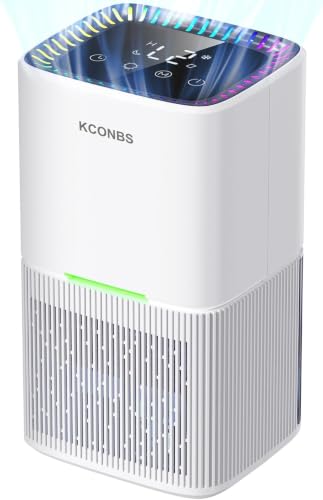
Two Dehumidification Modes and Fast Performance: This dehumidifier uses dual-mode condensation technology and features a highly efficient heat exchanger, combining high performance and versatility. At 30°C and 80% humidity, the electric dehumidifier absorbs 100 millilitres of moisture per day, quickly removing excess moisture to provide dry, fresh air and eliminate humidity
Best Bathroom Moisture-Control Alternatives
If a bathroom fan or dehumidifier isn’t the right fit, you still have practical ways to control moisture.
- Use an extractor fan. This is the best first step for most bathrooms because it removes moist air at the source.
- Open a window when possible. Natural ventilation helps steam escape, especially right after a shower.
- Wipe surfaces dry. Use a squeegee on glass, tile, and shower walls to remove water before it evaporates into the room.
- Dry towels outside the bathroom when you can. Damp towels keep feeding moisture back into the air.
- Use a heated towel rail or radiator carefully. It can help towels dry faster, but the moisture still needs somewhere to go, so pair heat with ventilation.
- Try non-electric moisture absorbers for small spots. They can help in cupboards or tiny damp corners, but they are not a replacement for ventilation in a steamy bathroom.
- Repair leaks and failed sealant. A dehumidifier cannot fix water entering behind tiles, around a tub, or through a leaking pipe.
Note: If visible mold keeps returning after cleaning and ventilation, look for a hidden moisture source such as a leak, blocked vent duct, failed sealant, cold uninsulated pipe, or damp wall cavity.
Recommended Products

Efficient Dehumidification: Traps excess moisture quickly. Vacplus moisture absorbers use spherical calcium chloride to enlarge the absorbing area. The large collecting capacity of this moisture remover keeps a long time dry.
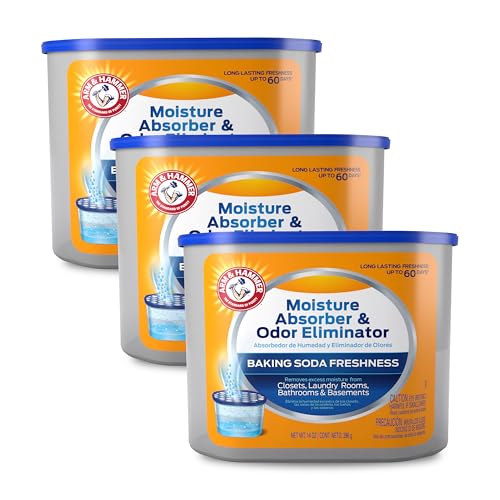
Arm & Hammer Refillable Moisture Absorber and Odor Eliminator attracts and traps excess moisture, eliminating musty odors.

DON'T JUST COVER UP ODORS, ELIMINATE THEM: DampRid Lavender Vanilla Hanging Moisture Absorbers attract and trap excess moisture from the air, eliminating musty odors and creating fresher, cleaner air. Includes three - 16-ounce bags.
What to Do in a Windowless Bathroom
A windowless bathroom needs mechanical ventilation. If the room has no window and no working extractor fan, a dehumidifier may reduce lingering humidity, but it should not be the only plan. Steam needs a route out of the home.
For a windowless bathroom, use this order:
- Run the extractor fan every time you shower or bathe.
- Keep the door slightly open afterward if privacy and household layout allow.
- Wipe down wet shower walls, screens, and floors.
- Move wet towels to a better-ventilated drying area.
- If humidity stays high, use a dehumidifier outside the bathroom doorway or in a safe dry spot approved by the manual.
Troubleshooting Bathroom Condensation and Mold Risk
If your bathroom still feels damp, work through these checks before buying a bigger dehumidifier:
- The fan is too weak or dirty: Clean the grille and check whether airflow improves.
- The fan vents to the wrong place: Moist air should vent outdoors, not into an attic, wall cavity, ceiling void, or loft.
- The room is cold: Cold walls, windows, and pipes make condensation worse. Insulating cold surfaces may help.
- Wet items stay in the room: Towels, bath mats, and laundry can keep humidity high for hours.
- Humidity is high throughout the home: A small bathroom unit may not solve a whole-home humidity problem.
- There is a leak: Soft flooring, stained ceilings, loose tiles, or musty smells may point to water behind the surface.
Frequently Asked Questions
Is it worth putting a dehumidifier in the bathroom?
Sometimes, but not usually as the first fix. Start with a working extractor fan, an open window when possible, and daily drying habits. A dehumidifier is worth considering if humidity stays high after the room has been ventilated, the unit can be placed safely, and the manual allows that use.
Should you use a dehumidifier if you have COPD?
A dehumidifier may help control dampness and reduce mold risk, but it is not a COPD treatment. If you have COPD, asthma, allergies, immune suppression, or chronic lung disease, keep the unit clean, avoid moldy environments, and ask a healthcare professional what indoor humidity range is best for you.
Will a dehumidifier stop condensation in the bathroom?
It can reduce condensation, but it may not stop it completely. Condensation happens when warm, humid air hits cold surfaces. You will get better results by combining ventilation, surface drying, warmer surfaces, leak repair, and a dehumidifier only when humidity stays high.
Where should a dehumidifier be placed in a bathroom?
Place it in a dry, open, stable spot with good airflow and no splash risk. In many small bathrooms, the safest spot is outside the bathroom door after showering, with the door open. Never place it on a sink edge, beside a tub, on a wet floor, or behind towels.
Can I leave a bathroom dehumidifier running overnight?
Only if the manual allows continuous use, the unit is on a safe dry surface, the tank has auto shutoff or continuous drainage, and the outlet is properly protected. In a bathroom, it is usually safer to ventilate after showering and run the unit only as long as needed to bring humidity back down.
What humidity should a bathroom be?
A good target is about 30% to 50% relative humidity when possible. Brief spikes during a shower are normal, but the room should dry down afterward. If humidity stays above 50% to 60% for long periods, improve ventilation and look for moisture sources.
Conclusion
So, yes—a dehumidifier can help pull excess moisture from bathroom air, especially after steamy showers or when towels stay damp. But it should not be treated like a splash-proof bathroom gadget. Use ventilation first, measure humidity, keep electrical appliances away from water, and follow the manual. When a dehumidifier is used as one tool in a bigger moisture-control routine, it can help keep condensation, musty smells, and mold risk under control.
Sources
- U.S. EPA Mold Course, Chapter 2 — humidity targets, shower moisture, condensation, and mold prevention basics.
- U.S. EPA: A Brief Guide to Mold, Moisture and Your Home — bathroom ventilation, mold cleanup, and drying guidance.
- CDC: About Mold — mold health effects, chronic lung disease cautions, and humidity prevention advice.
- ENERGY STAR: Dehumidifiers — dehumidifier sizing, placement, electrical safety, humidistats, and energy-efficiency guidance.