
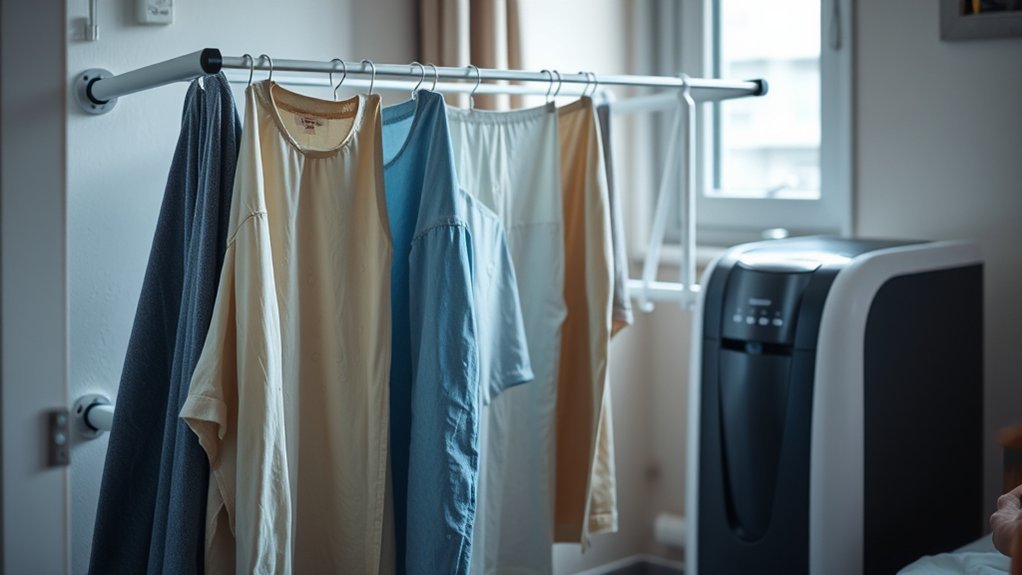
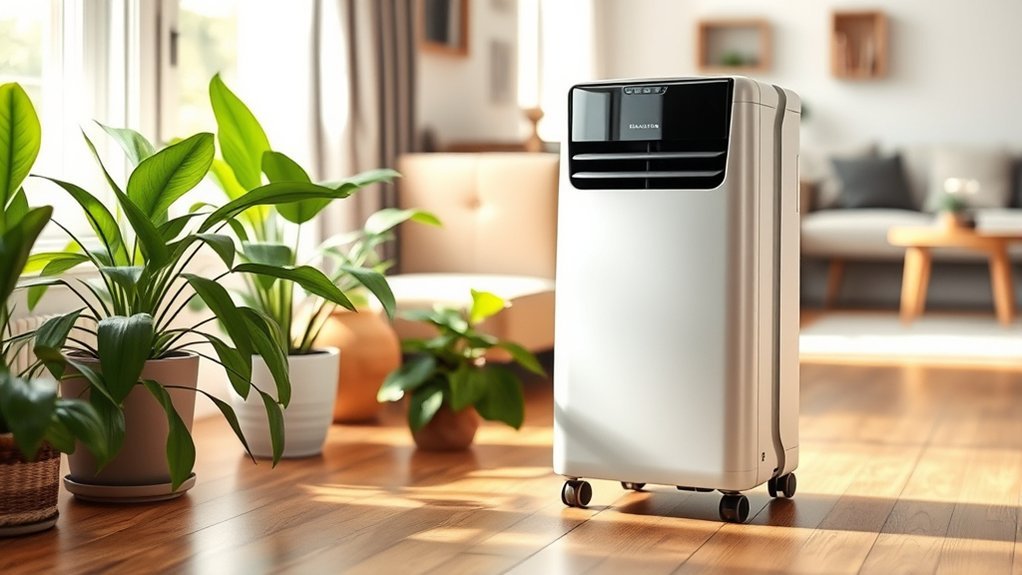
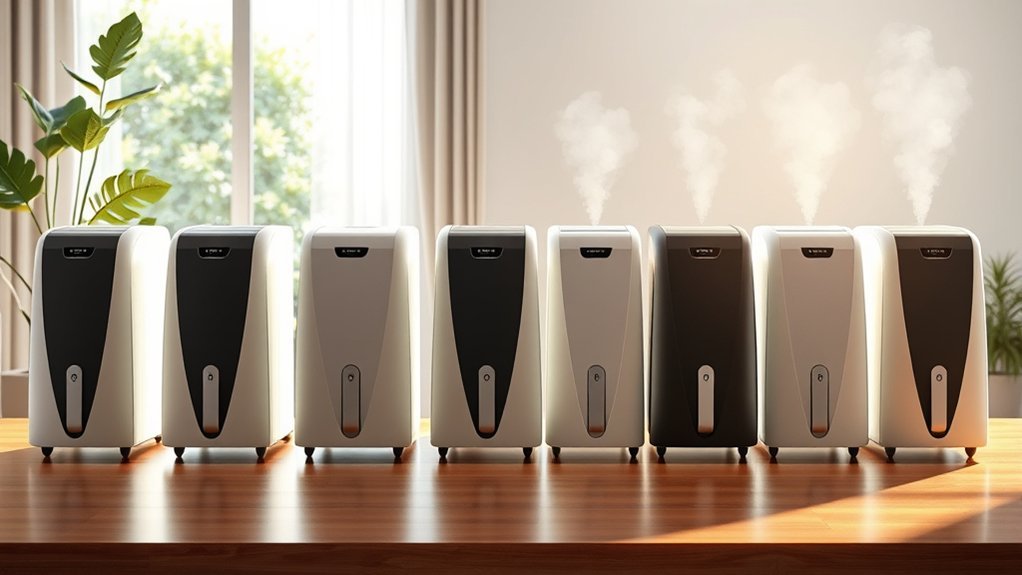
Yes, a small dehumidifier can dry clothes indoors, but it works best when you treat the room like a mini drying chamber. Use one small, well-spun load, space the clothes out on a rack, close the room, add airflow, and keep an eye on humidity. A compact 10-litre-per-day unit can help with light laundry, but drying time depends on the room temperature, fabric thickness, starting moisture, and how much air can move around the clothes.
Quick Answer
A small dehumidifier can dry clothes if the load is light, the room is closed, and air can move around the fabric. For a 10-litre unit, expect best results with one small rack load. Add a fan, keep humidity around 40–50%, and use a warmer room for faster drying.
Key Takeaways
- A small dehumidifier is best for one light laundry load, not a full family wash.
- Drying is faster in a small closed room with space between garments and added airflow.
- A 10-litre-per-day rating means moisture removed in 24 hours under test conditions; it does not guarantee a fixed clothes-drying time.
- Aim for roughly 40–50% relative humidity while drying, and avoid letting the room become excessively dry.
- If the room is cold, a desiccant dehumidifier usually performs better than a small compressor model.
At a Glance
| Time Required | About 4–8 hours for a light, well-spun load in a warm small room; longer for towels, jeans, cold rooms, or crowded racks. |
| Difficulty | Easy, but setup matters. |
| Tools Needed | Small dehumidifier, drying rack, hygrometer, optional desk fan, and access to a safe power socket. |
| Cost | Uses electricity while running; exact cost depends on the unit’s wattage, drying time, and your energy tariff. |
How a Small Dehumidifier Dries Clothes
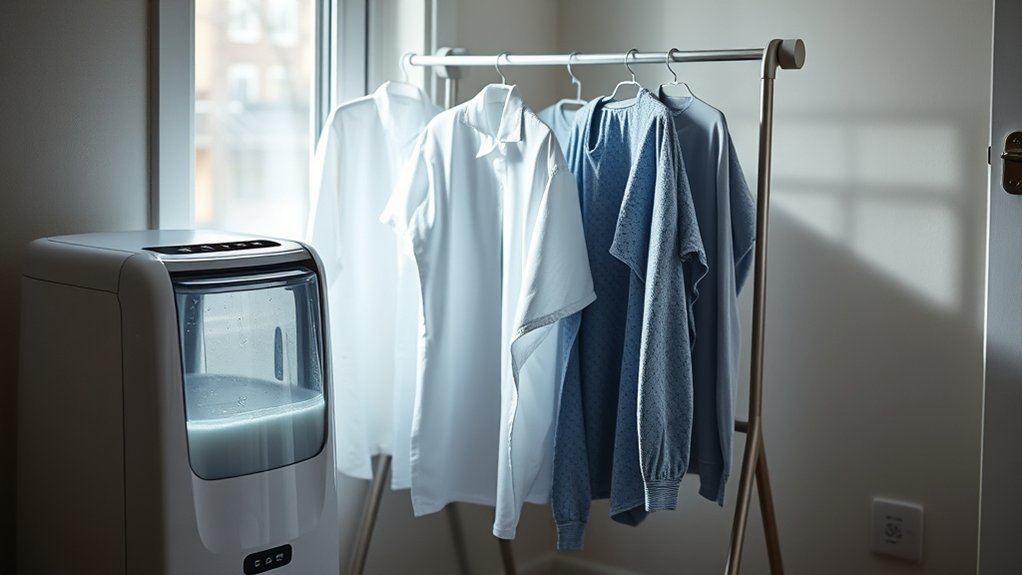
A small dehumidifier dries clothes by removing water vapour from the air. As the room air becomes drier, moisture can evaporate from wet fabrics more easily. The machine then collects that moisture in its tank or sends it through a drainage hose.
This is why the room setup matters as much as the appliance size. According to the ENERGY STAR explanation of dehumidifier capacity, capacity is the amount of water a unit removes per 24 hours under test conditions. So a 10-litre-per-day dehumidifier is not promising to dry 10 litres of laundry water in your room every day. Real performance changes with temperature, room humidity, airflow, and how wet the clothes are when you hang them.
Dry clothes faster by controlling three things at once: drier air, moving air, and enough warmth for evaporation.
For best results, start with clothes that have been spun well in the washing machine. The less water left in the fabric, the less work the dehumidifier has to do.
How Much Laundry It Can Handle
A small 10-litre dehumidifier usually suits one small drying rack or about 1–2 kg of well-spun laundry. That is a practical rule of thumb, not a fixed appliance standard. If you crowd the rack or add heavy towels, jeans, hoodies, or bedding, the room humidity rises faster and drying slows down.
| Load size | Expected result with a small unit | Best setup |
|---|---|---|
| 1 kg light clothes | Good drying | Small closed room, spaced rack, optional fan |
| 1–2 kg mixed clothes | Acceptable drying, but slower | Use laundry mode or low target humidity and check the tank |
| Heavy towels, jeans, or bedding | Slow drying | Use a larger 20L+ unit or split the load |
| Full family load | May overwhelm a compact unit | Choose a larger dehumidifier or dry in batches |
If the water tank fills before the clothes are dry, the unit will either stop or reduce performance, depending on the model. Empty the tank before starting, check it during long drying sessions, or use continuous drainage if your dehumidifier supports it.
Set Up the Room for Faster Drying
To get the best drying results, use the smallest practical room, such as a utility room, bathroom, spare room, or box room. Close the door and windows while the dehumidifier runs so the unit is drying the room air, not constantly pulling in damp air from elsewhere.
Use a hygrometer if you have one. The EPA recommends keeping indoor relative humidity below 60%, ideally between 30% and 50% where possible. For laundry drying, a practical target is usually around 40–50%. The CDC also advises keeping home humidity no higher than 50% to help prevent mold growth.
Note: Do not chase the lowest possible humidity. If the room drops below about 30% RH, the air may feel too dry for some people and can be uncomfortable for eyes, skin, and airways.
For compressor dehumidifiers, a warmer room usually helps. Around 18–22°C is a good practical range. If the room is cold, moisture extraction can slow down. In colder spaces such as garages, conservatories, or unheated utility rooms, a desiccant model may work better because it does not rely on cold coils in the same way.
Recommended Products

Quiet & High-Efficiency Dehumidifier: Featuring next-generation semiconductor cooling technology, this quiet dehumidifier delivers efficient moisture removal while running at ultra-low noise (≤40dB). Stable humidity levels are maintained, making your home environment more comfortable and pleasantly dry.

ELIMINATES MUSTY ODORS & FRESHENS AIR: Keep rooms smelling fresh with Arm & Hammer Essentials Hanging Moisture Absorbers. Musty odors? Give it the Hammer. Includes three 17.5 oz. Fragrance Free bags.

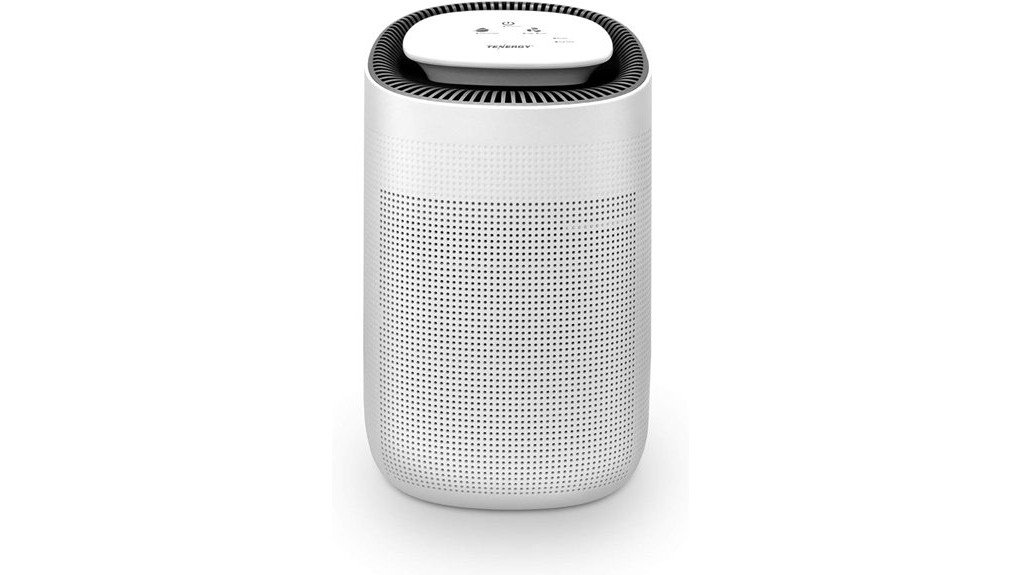
Upgrade High Efficient Dehumidification: Dehumidifier utilize semi conductor condensation technology, ensuring quiet operation while effectively extracting moisture from the air. This advanced feature helps keep humidity levels below 45%
Best Placement for the Dehumidifier
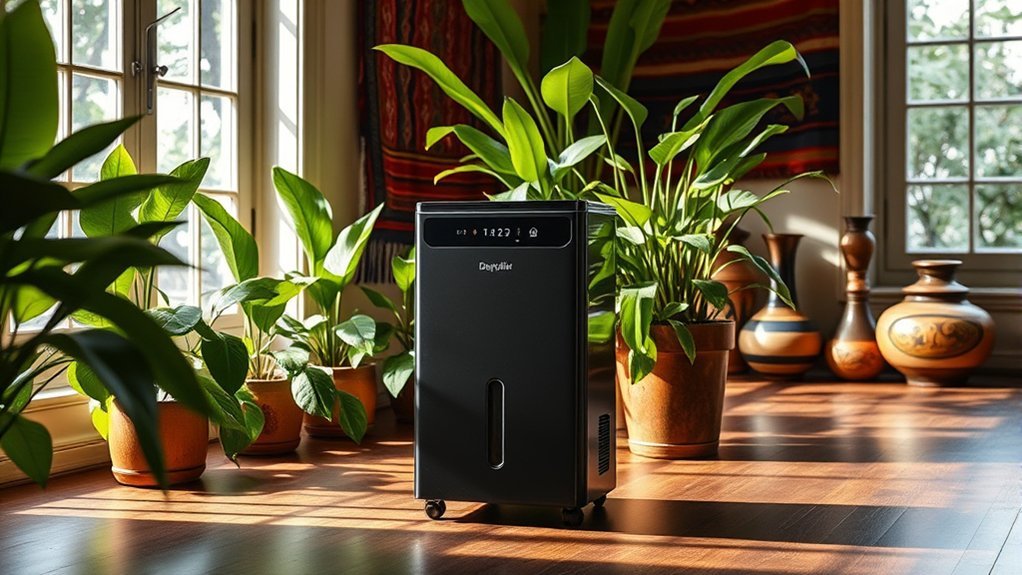
- Place the dehumidifier near the drying rack, but not so close that clothes block the intake or outlet.
- Leave clear space around the vents, following your model’s manual.
- Point the outlet air toward the clothes if the unit has a moveable louvre.
- Keep the dehumidifier on a flat, stable surface.
- Spread clothes out so air can reach both sides of the fabric.
Pro Tip: Run the dehumidifier for 15–30 minutes before hanging the laundry. Starting with a drier room gives the clothes a better head start.
Small Dehumidifier vs Bigger Model
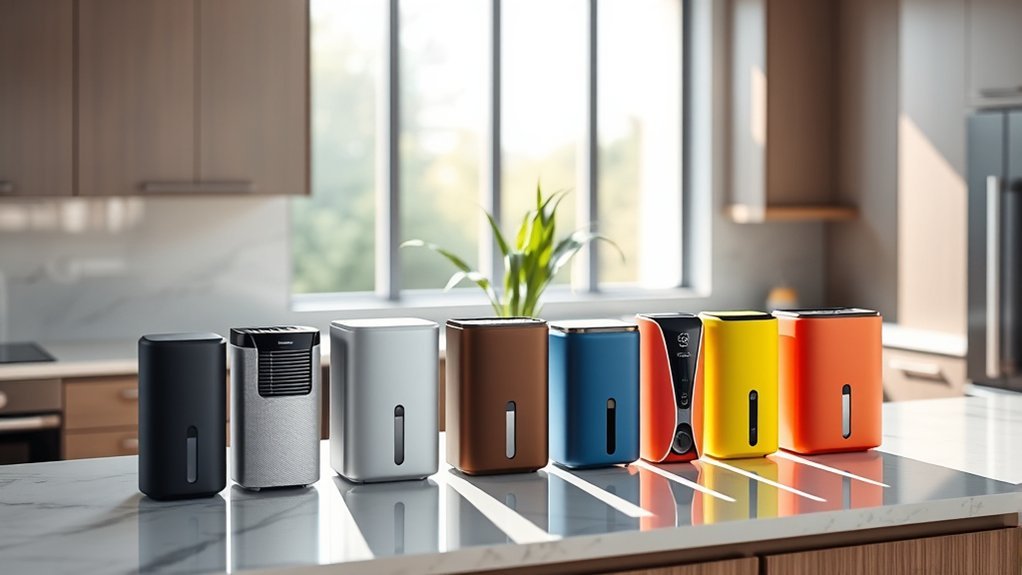
Small dehumidifiers can dry clothes, but they have limited moisture extraction capacity. A compact 10L unit is best for occasional light laundry. If you dry clothes indoors several times a week, a larger 20L or 25L model can be more practical because it removes moisture faster and usually has a larger tank.
| Dehumidifier size | Best for | Limit |
|---|---|---|
| 6–10L/day | Small rooms, light loads, occasional drying | Slow with heavy fabrics or large racks |
| 12–14L/day | Regular small-to-medium laundry loads | Still needs good airflow and spacing |
| 20L+/day | Frequent indoor drying, families, damp homes | Higher upfront cost and usually larger size |
Some models include a dedicated laundry mode. On certain dehumidifiers, this simply runs the unit harder for a set time. De’Longhi explains that its laundry function uses maximum dehumidification and ventilation while bypassing the humidistat. Meaco also describes indoor laundry drying as a combination of strong airflow, dry air, and heat. Check your manual because laundry mode varies by brand and model.
Recommended Products
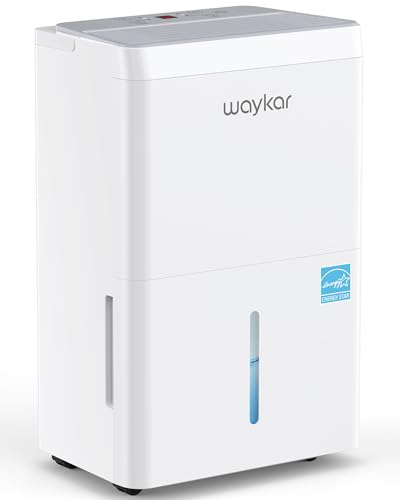
【Waykar 80 Pints for Spaces up to 5,000 Sq. Ft】Effectively extracts up to 80 pints of humidity per day (under 95°F, 90% RH), making it ideal for damp basements, humid homes, bedrooms, laundry areas, storage rooms, and bathrooms. Covers up to 5,000 sq. ft., helping reduce condensation and unpleasant odors to create a cleaner, drier, healthier living space. With a 30%–80% RH adjustable range, maintain full control of indoor comfort through all seasons—from muggy summers to wet winters

38 Pint Moisture Removal for Large Rooms - DR.PREPARE compressor dehumidifier removes up to 38 pints of moisture per day at 95°F, 90% RH. Designed for 2000-2500 sq.ft spaces such as basements, bedrooms, bathrooms, living rooms, garages and RVs. Adjustable humidity from 30% to 80% helps maintain a drier, more comfortable indoor environment.

【𝟭𝟬𝟬 𝗣𝗶𝗻𝘁 𝗛𝗶𝗴𝗵-𝗖𝗮𝗽𝗮𝗰𝗶𝘁𝘆 𝗠𝗼𝗶𝘀𝘁𝘂𝗿𝗲 𝗥𝗲𝗺𝗼𝘃𝗮𝗹 – 𝗖𝗼𝗺𝗳𝗼𝗿𝘁 𝗬𝗼𝘂 𝗖𝗮𝗻 𝗙𝗲𝗲𝗹】 Enjoy a drier, fresher, and more comfortable home by reducing excess humidity in basements, garages, laundry rooms, and other damp spaces. Removes up to 100 pints of moisture per day under high-humidity conditions (95°F, 90% RH), and up to 70 pints per day at 86°F and 80% RH, delivering reliable moisture control across a wide range of indoor environments.
Speed Up Drying With These Tips
Place the dehumidifier close to your laundry so it can pull moisture from the surrounding air more efficiently. Then add airflow. A desk fan does not remove moisture by itself, but it breaks up the damp air sitting around the fabric surface, helping moisture evaporate faster.
| Action | Effect |
|---|---|
| Use a dehumidifier | Lowers humidity so moisture leaves fabric more easily |
| Add a fan | Boosts airflow and reduces damp pockets around clothes |
| Close the room | Lets the unit control a smaller air volume |
| Rotate garments | Helps cuffs, waistbands, and thick seams dry evenly |
| Keep clothes spaced out | Prevents damp fabric layers from touching |
| Spin clothes well first | Removes water before the dehumidifier has to handle it |
Rotate thick items every few hours. Turn jeans inside out halfway through. Hang shirts on hangers if you have space, and place towels over two bars instead of folding them over one narrow rail.
Safety, Humidity, and Health Notes
Warning: Do not place a dehumidifier where water can drip into it. Keep vents clear, avoid covering the appliance with clothes, do not run cables through puddles or wet floors, and only use the unit in bathrooms if the manual says it is suitable for that location.
Drying clothes indoors adds moisture to the home. If that moisture is not removed or vented, it can raise the risk of condensation, damp, and mould. GOV.UK guidance says damp and mould mainly affect the airways and lungs, and the NHS notes that people with respiratory problems can be more sensitive to damp and mould. A dehumidifier can help control moisture, but it is not a substitute for fixing leaks, poor ventilation, or existing mould.
If someone in the home has COPD, asthma, allergies, or another respiratory condition, use a hygrometer and keep the room comfortable rather than extremely dry. If symptoms worsen, stop the drying setup and get medical advice.
Troubleshooting: Why Your Clothes Are Still Damp
If your clothes are still damp after several hours, the problem is usually the setup rather than the basic idea.
- The rack is too crowded: remove a few items or split the load.
- The room is too cold: move to a warmer room or use a desiccant dehumidifier in colder spaces.
- The tank is full: empty it or connect continuous drainage if available.
- Humidity is still high: close the room, reduce other moisture sources, and check for leaks or damp walls.
- Air is not moving: add a small fan and point it across, not directly into, the rack.
- Heavy seams are holding water: rotate jeans, hoodies, waistbands, cuffs, and towels halfway through.
Recommended Products

【Efficient Dehumidification】With 360° dual cooling semiconductor technology, the dehumidification area reaches up to 650sq ft. The Levoair safe dehumidifier with 2000ml(68oz)water tank could absorb up to 35oz (1000ml) of moisture per day in a humid environment (Temperature: 86°F, Humidity: 80%RH) and keep moisture below 45%. Say goodbye to humidity!

Multi-Purpose Hose, 6ft Cut-to-Fit:This 6-foot hose is designed for various applications, including dehumidifier drainage and gardening tasks. It can be easily cut to the desired length for flexible use. Please confirm the required length before purchase.

MULTIFUNCTIONAL UNIVERSAL DRAIN HOSE: This drain hose has multiple uses, in addition to being suitable for dehumidifier drainage, it is also suitable for air conditioner drainage as well as being suitable for a variety of gardening tasks. Additionally our dehumidifier drain hose can be cut to your desired length to customize it for different situations.
Frequently Asked Questions
How big of a dehumidifier do I need to dry clothes?
For one light rack load in a small room, a 10L/day dehumidifier can work. For regular laundry, heavy fabrics, larger rooms, or family loads, a 20L/day or larger model is usually more practical. Match the unit to the room size, dampness level, and how often you dry clothes indoors.
Should you use a dehumidifier if you have COPD?
A dehumidifier may help if your home is damp, humid, or at risk of mould, but it is not automatically right for every person with COPD. Use a hygrometer, keep humidity in a comfortable range, avoid over-drying the air, and speak with a healthcare professional if humidity changes affect your breathing.
How do Amish dry their clothes in the winter?
Many Amish households use simple methods such as outdoor clotheslines when weather allows, indoor lines near steady heat, and careful spacing for airflow. The lesson for indoor drying is the same: clothes dry faster when they are spread out, exposed to moving air, and kept away from damp corners.
How long do clothes take to dry with a dehumidifier?
A light, well-spun load in a small warm room may dry in about 4–8 hours. Heavy cotton, towels, jeans, hoodies, cold rooms, and crowded racks can take 8–12 hours or longer. A fan and good spacing can reduce the time noticeably.
Should windows be open when using a dehumidifier to dry clothes?
Usually, no. When the dehumidifier is running, close the windows and door so it can control the room humidity. If you are not using a dehumidifier, ventilation becomes more important because the moisture needs somewhere to go.
Can I leave a dehumidifier running overnight with clothes?
You can if the unit is in good condition, placed safely, has auto shut-off or continuous drainage, and the manual allows unattended use. Keep it away from dripping clothes, do not block vents, and avoid unsafe extension leads or wet floors.
Conclusion
So, yes—a small dehumidifier can dry clothes, but only if you keep the load realistic and set up the room properly. Use one small rack, close the room, space out garments, add airflow, and watch the humidity. A 10L unit can handle light drying, while regular laundry days usually call for a larger model. In short, you’ll need the right load, the right room, and the right airflow.
Sources
- ENERGY STAR — Dehumidifier Testing and Capacity — supports how dehumidifier capacity is measured.
- ENERGY STAR — Dehumidifiers — supports matching dehumidifier capacity to space and conditions.
- U.S. EPA — Mold Course Chapter 2: Humidity — supports indoor RH guidance below 60%, ideally 30–50%.
- CDC — Mold Prevention — supports keeping home humidity no higher than 50% and maintaining airflow.
- De’Longhi — Laundry Function FAQ — supports how a laundry function can run maximum dehumidification and ventilation.
- GOV.UK — Damp and Mould Health Risks — supports respiratory health cautions around damp and mould.


[…] Small Dehumidifier for Drying Clothes: 10L Setup Guide […]