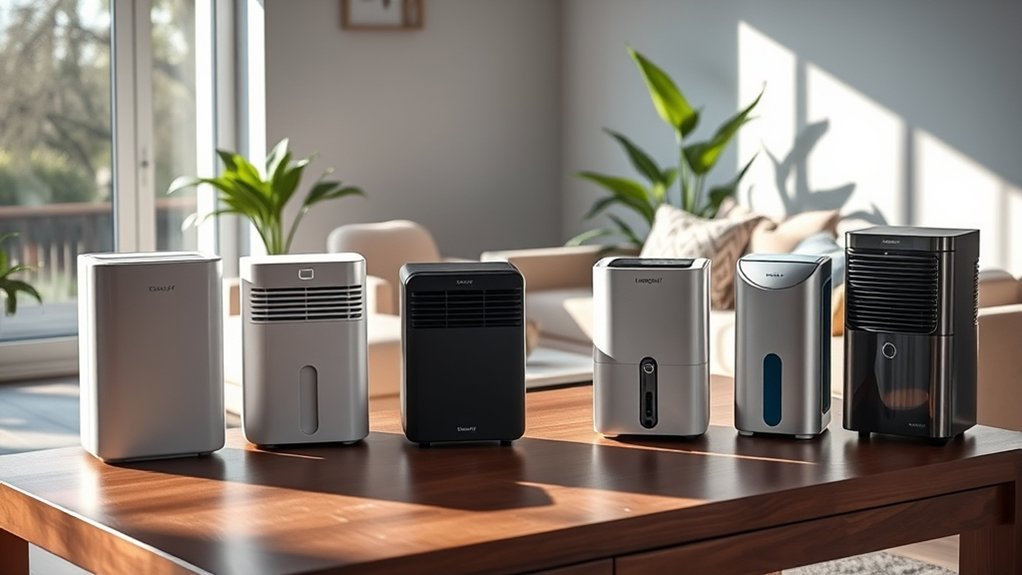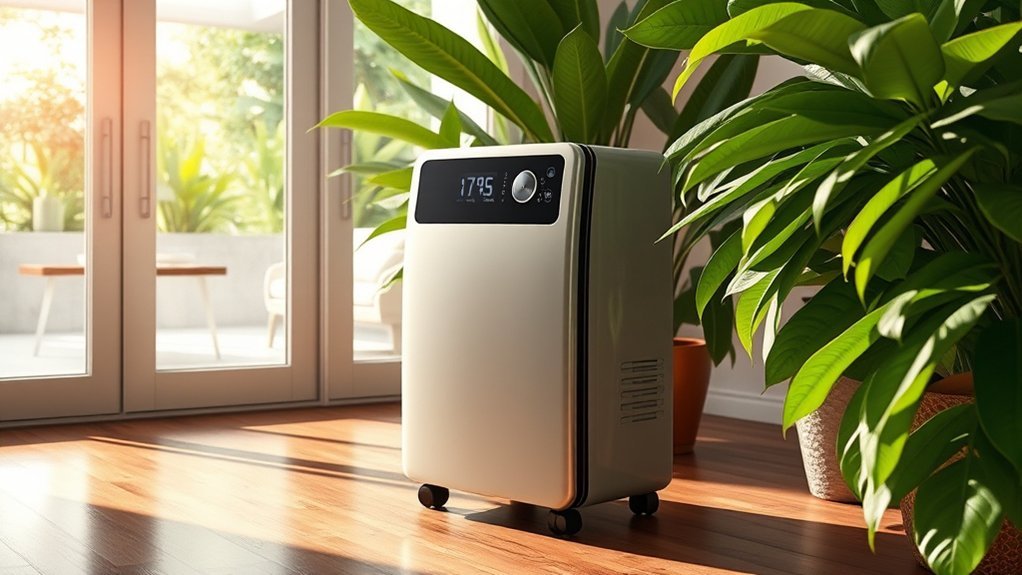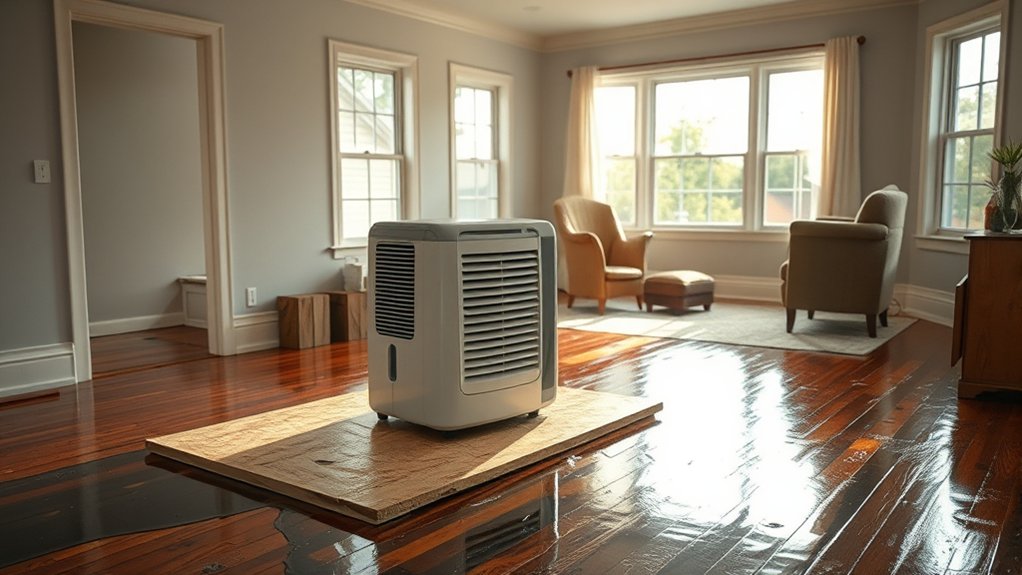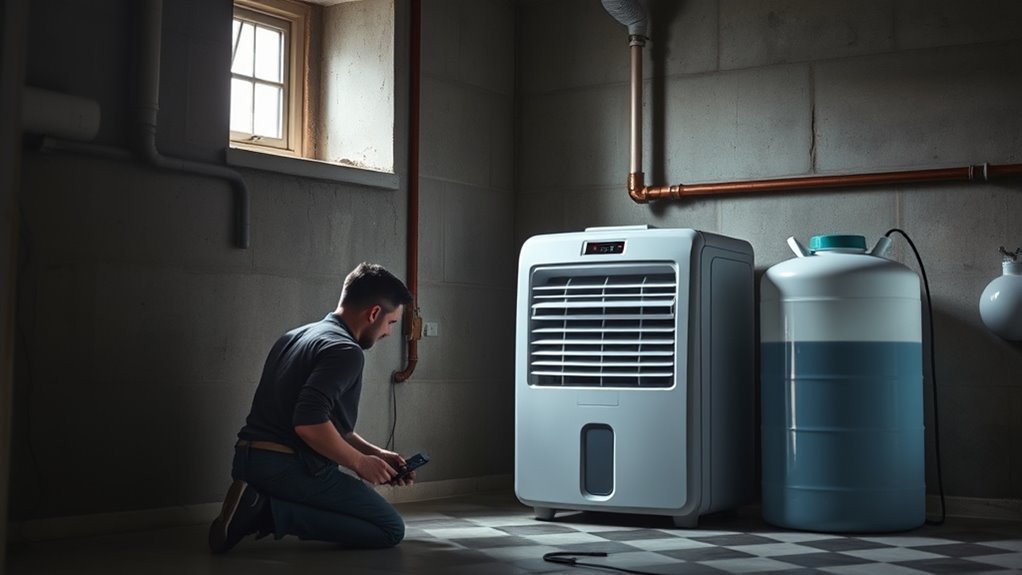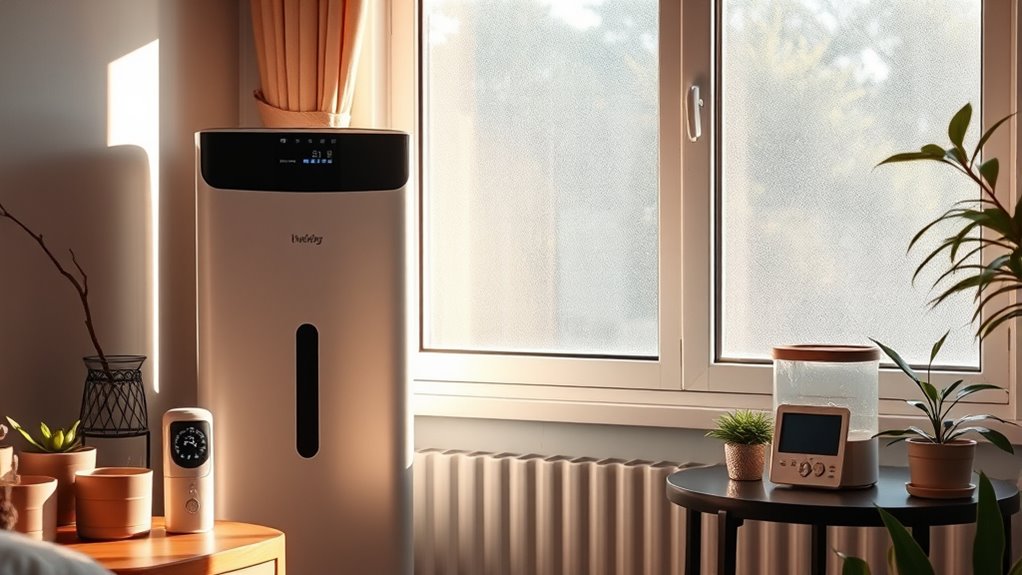
A dehumidifier does not cool a room like an air conditioner. It removes excess moisture, which can make the air feel less sticky and help your body cool itself through sweat evaporation. That means the room may feel cooler, even if the actual temperature stays the same or rises slightly near the unit. Use a dehumidifier when humidity is the main problem. Use AC for real cooling when the room temperature itself is too hot.
Quick Answer
A dehumidifier does not lower room temperature like AC. It removes moisture, so sweat can evaporate more easily and the room may feel less muggy. If a hygrometer shows relative humidity above 50%, dehumidification may improve comfort. If the room is actually hot, use air conditioning or another true cooling method because a portable dehumidifier can slightly warm the air around it.
Key Takeaways
- A dehumidifier removes moisture; it does not remove heat from the room like an air conditioner.
- Lower humidity can make you feel cooler because sweat evaporates more easily.
- Aim for about 30% to 50% indoor relative humidity for comfort and moisture control.
- A dehumidifier may slightly warm the air near the unit during operation.
- Use AC when the room temperature itself is uncomfortable or unsafe.
Quick Decision Guide
| Room feels sticky, but temperature is tolerable | Use a dehumidifier and target about 45% to 50% relative humidity first. |
| Room is hot and humid | Use AC for cooling. If indoor humidity still stays above 50%, add dehumidification for moisture control rather than expecting it to provide extra cooling. |
| Room is hot, but humidity is already 30% to 50% | Use AC, shading, ventilation, or a fan. A dehumidifier is unlikely to help much. |
| You see condensation, musty odors, or damp surfaces | Fix the moisture source, then use a dehumidifier to bring RH back into range. |
Does a Dehumidifier Cool a Room?
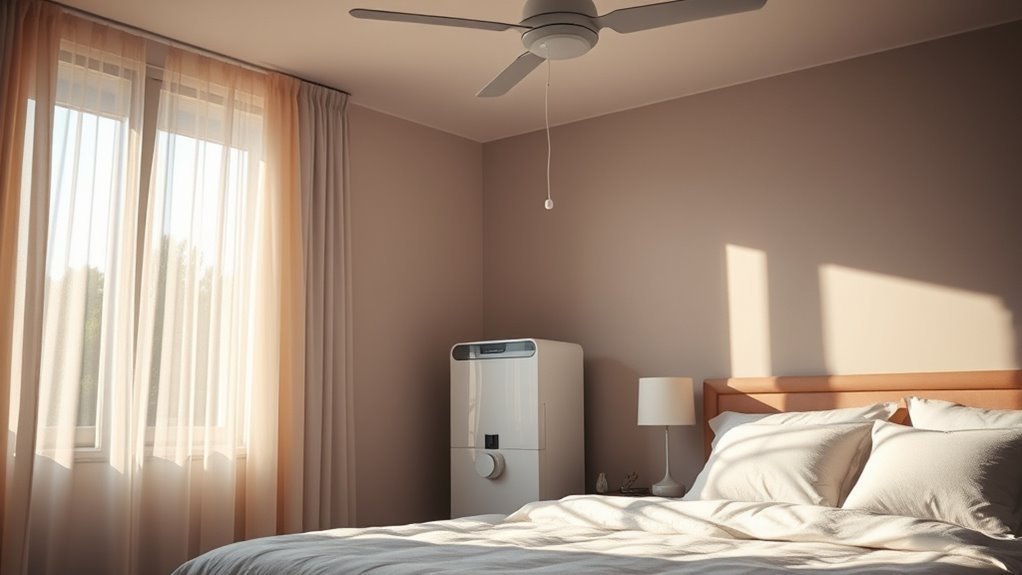
A dehumidifier does not cool a room the way an air conditioner does. An air conditioner removes heat from the indoor air and sends that heat outside. A dehumidifier removes water vapor from the indoor air, collects that moisture as water, then sends drier air back into the room.
That difference matters. When humidity is high, your skin feels sticky because sweat cannot evaporate as easily. The National Weather Service explains that high relative humidity slows evaporation from the body, which makes the body feel warmer. Lower humidity helps sweat evaporate better, so the room can feel more comfortable without a big change on the thermometer.
There is one important catch: a dehumidifier can slightly warm the space around it. ENERGY STAR notes that as a dehumidifier removes moisture, the air temperature directly around the unit may feel warmer than the surrounding area. So the honest answer is simple: a dehumidifier can make a room feel cooler, but it is not a cooling appliance.
Note: If your room feels muggy but the temperature is already comfortable, a dehumidifier may be enough. If the room is hot and humid, use AC first and let the dehumidifier support moisture control.
How Does a Dehumidifier Work?
A dehumidifier pulls humid air into the machine, removes moisture from that air, and releases drier air back into the room. Most portable compressor models use cold coils to condense water vapor into liquid water. That water collects in a bucket or drains through a hose.
| Step | What Happens | Result |
|---|---|---|
| 1 | Fan draws humid air into the unit | Moist air enters the system |
| 2 | Air passes over cold coils | Water vapor condenses |
| 3 | Water flows into a tank or drain | Moisture leaves the room air |
| 4 | Air passes back through the unit | Drier air returns to the room |
| 5 | Humidistat cycles the unit on and off | Humidity stays near your target |
The goal is not to chase the lowest possible humidity. The goal is balance. The EPA recommends keeping indoor humidity below 60% and ideally between 30% and 50% to help control moisture and mold risk. ENERGY STAR also lists 30% to 50% as the generally optimal indoor relative humidity range for a building.
Why Humidity Makes Rooms Feel Hotter
High humidity makes a room feel hotter because it slows your body’s natural cooling system. Your body releases sweat to cool your skin. When the air is already full of moisture, sweat evaporates more slowly, so heat stays on your body longer.
This is why two rooms at the same air temperature can feel very different. The National Weather Service explains that higher relative humidity slows sweat evaporation, which raises apparent temperature and makes the body feel warmer. Lower relative humidity allows faster evaporation, so the same air temperature can feel more comfortable.
A dehumidifier does not create cold air, but it can improve comfort by lowering the moisture that makes heat feel heavier.
Humidity also affects your home. Damp rooms can smell musty, encourage condensation on windows or pipes, and raise the risk of mold growth if moisture stays high. That is why dehumidifiers are especially useful in basements, bathrooms, laundry rooms, and poorly ventilated bedrooms.
When Does a Dehumidifier Feel Like Cooling?
A dehumidifier feels most like cooling when the room temperature is not extreme but the humidity is high. In that situation, the air may feel uncomfortable even though the thermometer does not look alarming. Lowering the humidity can make the room feel less sticky and more comfortable.
- Best case: The room is warm, damp, and sticky, but not dangerously hot.
- Good target: Indoor relative humidity is above 50% and you want to bring it closer to 30% to 50%.
- Best room types: Basement, bathroom, bedroom, laundry room, storage room, or enclosed apartment room.
- Best pairing: Dehumidifier plus AC or a fan for air movement.
If AC already keeps indoor relative humidity in the 30% to 50% range, a separate dehumidifier may add little comfort. If humidity stays high, dehumidification can help with moisture control, but a portable unit also releases some heat into the room, so do not assume it will reduce cooling energy use. ENERGY STAR says a properly sized and installed whole-home dehumidifier can increase comfort and save energy in homes with central air when whole-house humidity readings stay above about 55%.
Pro Tip: Use a small hygrometer instead of guessing. If the room feels hot but humidity is already around 40% to 50%, a dehumidifier is unlikely to help much. You probably need cooling or better airflow.
Can You Use a Dehumidifier Instead of AC?
No, you should not use a dehumidifier instead of AC when heat is the main problem. A dehumidifier removes moisture, but it does not remove heat from the room. If the indoor temperature is already uncomfortable, rising, or unsafe for your body, AC is the right tool.
Use air conditioning instead of relying on a dehumidifier when:
- The room temperature is high even after humidity drops.
- You feel overheated, dizzy, weak, or unable to cool down.
- The room gets direct sun and keeps gaining heat.
- You need quick temperature relief for children, older adults, pets, or someone with a health condition.
- The space is hot but not especially humid.
Warning: Do not use a dehumidifier as a substitute for cooling during dangerous heat. If someone has heat illness symptoms or a medical condition affected by heat, move to a cooler place and seek medical help when needed.
Dehumidifier vs AC vs Fan
These three tools solve different comfort problems. Picking the right one saves energy and gives better relief.
| Tool | Main Job | Best For | Limit |
|---|---|---|---|
| Dehumidifier | Removes moisture | Sticky, damp, musty rooms | Does not lower temperature like AC |
| Air conditioner | Removes heat and some moisture | Hot rooms that need real cooling | May not control humidity enough in damp spaces |
| Fan | Moves air across your skin | Mild heat and better airflow | Does not remove heat or moisture |
For hot, humid weather, use AC to lower temperature and add a dehumidifier only when moisture remains too high. A fan can improve air movement across your skin, but it does not remove heat or moisture from the room. You may not need all three at the same time.
Recommended Products

Semiconductor dehumidifiers use thermoelectric cooling to remove moisture from the air. They create a drier, more comfortable environment by reducing humidity and improving air quality.

High Efficient Dehumidifiers for Home: This compact 44oz dehumidifier efficiently removes excess moisture in rooms with 86°F and 80% RH, collecting up to 11.8oz (349ml) of water in 24 hours. It maintains an ideal humidity level of 45%-55% while operating at ultra-low energy consumption (24W/hour, 576W/day). Perfect for bedrooms, bathrooms, and small spaces.

Upgrade High Efficient Dehumidification: Dehumidifier utilize semi conductor condensation technology, ensuring quiet operation while effectively extracting moisture from the air. This advanced feature helps keep humidity levels below 45%
Signs Your Room Needs a Dehumidifier
You may need a dehumidifier if moisture is the reason the room feels bad. Look for these signs:
- The room feels sticky or heavy even when the temperature is reasonable.
- Windows, pipes, or walls collect condensation.
- The space smells musty.
- Clothes, bedding, or towels stay damp too long.
- You see mold spots or mildew in corners, closets, bathrooms, or basements.
- A hygrometer shows relative humidity above 50% for long periods.
If you see active leaks, water stains, or flooding, fix the water source first. A dehumidifier can help dry the air, but it cannot solve a roof leak, plumbing leak, poor drainage, or foundation moisture problem by itself.
Recommended Products

Effective Moisture Control for Home Use: OWAAE dehumidifier is designed to reduce excess moisture and help maintain comfortable humidity levels in everyday living spaces. It works best in moderate-to-high humidity environments, improve overall air comfort at home

32-Pint Daily Capacity for Spaces up to 2,500 Sq. Ft. — Designed to manage ambient moisture in large living spaces, finished basements, and storage areas. This unit removes up to 32 pints of water vapor every 24 hours under test conditions of 95°F and 90% RH, helping promote a more balanced indoor air environment across areas up to 2,500 sq. ft

🍃Advanced Small Dehumidifier for Home: Designed for lasting home use, our bathroom dehumidifier works gently and steadily to maintain a balanced humidity level. The large 44 OZ (1.3L) water tank minimizes emptying frequency. Suitable for dorm room, camper, apartment, room, office and living room. No more dampness-just fresh, comfortable air everywhere
How to Use a Dehumidifier Well
To get the best results, set the dehumidifier to hold relative humidity near 30% to 50%. That range is dry enough to reduce sticky air but not so dry that the room feels harsh.
- Measure first. Use a hygrometer to check the room’s current relative humidity.
- Set your target. Start around 45% to 50%. Lower it only if the room still feels damp.
- Place the unit correctly. Put it where air can move freely around the intake and exhaust.
- Close doors and windows. This keeps outdoor moisture from constantly entering the room.
- Empty the tank or connect a drain hose. Use continuous drainage if the room is very damp. If it will not drain, check the hose slope, connection, and clog points before you assume the unit has failed.
- Clean the filter. A dirty filter reduces airflow and makes the unit work harder.
- Watch the room temperature. If the room is hot, use AC instead of expecting the dehumidifier to cool it.
Warning: Keep drain hoses away from electrical cords and outlets. Plug the dehumidifier into a properly grounded outlet, and follow the manufacturer’s electrical safety instructions.
If your dehumidifier is a compressor model and the room is below about 65°F, performance may drop and frost can form on the coils. ENERGY STAR recommends choosing a model rated for lower temperatures if the space often falls below that range.
How to Choose the Right Dehumidifier Size
Choose a dehumidifier size by looking at both room size and dampness level. Dehumidifier capacity is usually listed in pints per 24 hours, which means how much water the unit can remove from the air in a day under test conditions.
| Room Condition | What It Feels Like | Small-Medium Room Under 2,000 sq. ft. | Large Room Over 2,000 sq. ft. |
|---|---|---|---|
| Slightly to moderately damp About 50% to 75% RH |
Feels damp, musty odor comes and goes | 20 to 30 pints per day | 30+ pints per day |
| Very damp About 75% to 90% RH |
Consistently damp smell, damp spots on walls or floors | 25 to 40 pints per day | 40+ pints per day |
| Wet About 90% to 100% RH |
Walls or floors sweat, seepage, or high moisture load | 30 to 50 pints per day | 50+ pints per day |
This sizing approach follows ENERGY STAR’s portable dehumidifier buying guidance. If your room is unusually damp, has laundry drying indoors, or sits below grade like a basement, choose more capacity rather than less. An undersized unit may run constantly and still fail to control humidity.
If energy use matters, look for an ENERGY STAR certified model. As of August 2026, ENERGY STAR says certified dehumidifiers use more efficient coils, compressors, and fans and are 20% more efficient than non-certified models while delivering comparable moisture-removal performance.
Recommended Products

Efficient 30 Pint Dehumidifier for 2,500 Sq. Ft. - The dehumidifier for home is engineered to lower humidity to 30% RH, ensuring a more comfortable and healthier environment compared to models that only reach 40%. Removes up to 30 pints per day, making it ideal for homes, basements, bedrooms and medium-sized spaces. Tested at 95°F, 90% RH
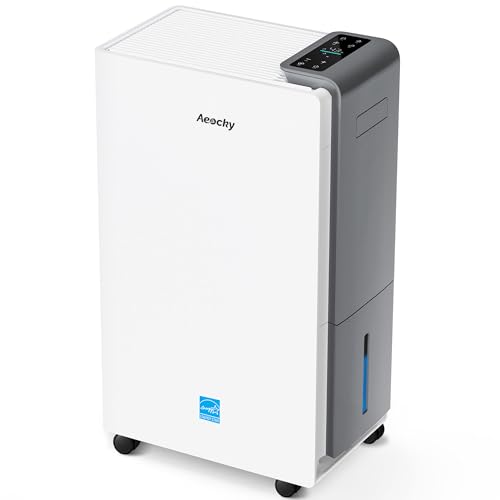
【ENERGY STAR 25 ≠ ENERGY STAR Most Efficient 2025】Don't fall for competitors' word games. With only 2.6% of ENERGY STAR models earning "Most Efficient 2025" title, these options are exceptionally rare on the market. RHEA-001 is one of the few to truly hold this top-tier certification. Many brands use misleading phrases like "Energy Star Efficient 25" or "Energy Star 25" to imply a standard they haven't met. Choosing them is a risk.With AEOCKY, you get verified performance and the peace of mind of authentic, top-tier efficiency.

【Powerful 30-Pint Dehumidifier for Basement, Bedroom & Whole Home】This high-capacity dehumidifier removes up to 30 pints per day (95°F, 90% RH) and 25 pints under normal conditions (86°F, 80% RH).conditions, making it the go-to dehumidifier for basement spaces with sweating walls, a musty dehumidifier for bedroom comfort, and a versatile choice among dehumidifiers for home use. Covers up to 2,000 sq. ft., eliminating condensation, odors, and damp air for a fresher living environment.(Dehumidification capacity≠Water Tank Volume)
Common Mistakes That Make a Dehumidifier Less Effective
- Leaving windows open: Outdoor humidity keeps entering, so the unit never catches up.
- Blocking airflow: Furniture, walls, or curtains can restrict intake and exhaust.
- Ignoring the filter: Dust buildup lowers performance.
- Setting humidity too low: Very low settings waste energy and can make the room feel too dry.
- Using the wrong appliance: If temperature is the main problem, use AC.
- Skipping leak repairs: A dehumidifier cannot fix a moisture source that keeps feeding the room.
Frequently Asked Questions
Does a dehumidifier lower room temperature?
No. A dehumidifier does not lower room temperature the way AC does. It removes moisture from the air, so the room may feel less muggy, but the thermometer may stay the same or rise slightly near the unit.
Will a dehumidifier make a room feel cooler?
Yes, it can make a room feel cooler when humidity is high. It lowers moisture in the air, which helps sweat evaporate more easily. The actual room temperature may stay the same or rise slightly near the unit.
Should I use a dehumidifier or air conditioner?
Use a dehumidifier when humidity is the main problem and the room temperature is tolerable. Use an air conditioner when the room is hot, unsafe, or uncomfortable even after humidity drops. In hot and humid rooms, AC should do the cooling first.
Will a dehumidifier help my AC?
It can help with comfort when AC is cooling the room but indoor humidity still stays too high. AC still does the real cooling. A portable dehumidifier also releases some heat into the room, so it is not automatically an energy-saving add-on. ENERGY STAR specifically notes benefits for properly sized whole-home dehumidifiers in homes with central AC and consistently high humidity.
Should I get a dehumidifier if my room is hot?
Consider one if the room is hot and humid and relative humidity remains above 50%, but use AC or another cooling method to lower temperature. If humidity is already in the 30% to 50% range, a dehumidifier is unlikely to improve heat relief and may slightly warm the space around the unit.
Can a dehumidifier make a room warmer?
Yes. A dehumidifier may slightly warm the air around the unit because it uses electricity and releases drier air back into the room. You may still feel more comfortable if the humidity drops enough.
What humidity should I set my dehumidifier to?
A good target is 30% to 50% relative humidity. Many people start around 45% to 50% for comfort. If you see condensation, musty smells, or mold risk, you may need a lower target within that range.
Should you use a dehumidifier if you have COPD?
Humidity needs can vary for people with COPD. The American Lung Association notes that hot, humid conditions can worsen respiratory symptoms, while very dry air can also irritate airways. Measure indoor humidity, avoid extremes, use cooling during hot weather, and follow your clinician’s advice for your individual symptoms.
How many degrees can a dehumidifier cool a room?
There is no reliable number of degrees to expect because a portable dehumidifier is not designed to lower room temperature. It may make humid air feel more comfortable, but ENERGY STAR notes that the air directly around the unit can be warmer than the surrounding area.
Should I run a dehumidifier with windows open?
No. Keep windows and doors closed while the unit runs. Open windows let more humid outdoor air enter, which makes the dehumidifier work harder and slows results.
Conclusion
A dehumidifier will not truly cool your room like an air conditioner, but it can make a humid room feel more comfortable by removing moisture that slows sweat evaporation. Think of it as a moisture-control tool, not a temperature-control tool. Keep indoor relative humidity around 30% to 50%, use AC when the room is actually hot, and choose dehumidifier capacity based on both room size and dampness. The goal is a drier, more comfortable room without expecting a dehumidifier to lower the thermostat reading.
Sources
- U.S. Environmental Protection Agency: A Brief Guide to Mold, Moisture and Your Home — supports indoor humidity targets, moisture control, and mold prevention guidance.
- ENERGY STAR: Dehumidifiers — supports dehumidifier sizing, humidity targets, humidistat use, placement, low-temperature notes, the slight warming effect, whole-home use with central AC, and current energy-efficiency guidance.
- National Weather Service: What Is the Heat Index? — supports the explanation of humidity, sweat evaporation, and perceived temperature.
- American Lung Association: Weather and Your Lungs — supports the caution around hot, humid weather and respiratory conditions such as COPD and asthma.