A steam mop and a regular mop both clean floors, but they do so in very different ways. One uses heat and moisture to lift grime and reduce germs on sealed surfaces, while the other relies on water, detergent, and manual scrubbing. The better choice depends on floor type, budget, and how much cleaning power is actually needed. The differences are more significant than they first appear, and they can change the result completely.
What Is a Steam Mop?
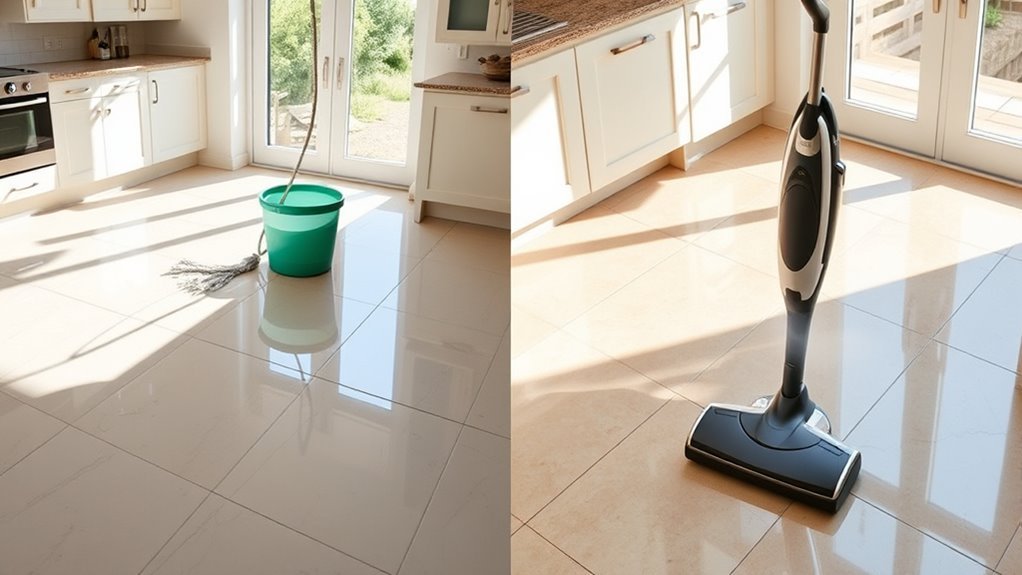
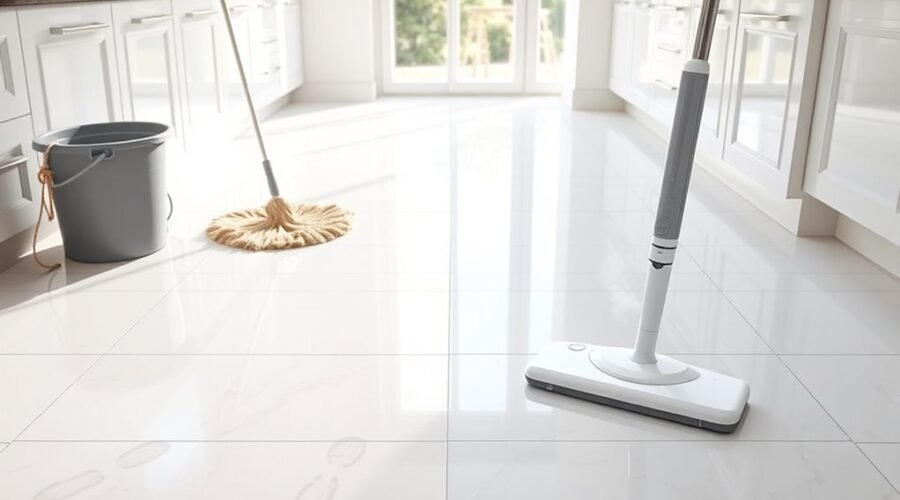
A steam mop is a floor-cleaning tool that uses heated water to create high-temperature steam, loosening dirt and grime while a microfiber pad lifts away debris.
A steam mop releases heated water vapor through its head, allowing it to sanitize surfaces without relying on traditional cleaning solutions. This method is designed for sealed hard floors, including tile and finished hardwood, where the steam can safely support deep cleaning.
The hot vapor softens residue, and the pad absorbs the loosened material in a single pass. In many cases, the process can kill bacteria and reduce exposure to residues left by chemical cleaners.
It also typically requires less physical effort than scrubbing with a conventional mop, since there is no bucket to carry or wring out.
Used correctly, the steam mop offers a practical, efficient option for households seeking cleanliness, control, and a more liberated approach to routine floor care.
What Is a Regular Mop?
A regular mop is a traditional cleaning tool that uses a bucket, water, and often a cleaning solution to wash floors by hand.
It is commonly available in types such as string mops and flat mops, which suit different cleaning tasks and floor surfaces.
Its simple design and manual wringing make it a practical choice for everyday cleaning.
Traditional Mop Basics
Traditional mops are the familiar bucket-and-water tools used for everyday floor cleaning, relying on water and cleaning solutions to lift dirt, spills, and grime. Regular mops remain a practical option because they are simple, cost-effective, and accessible for everyday cleaning.
Their manual wringing process removes excess water, though it can require effort and interrupt momentum. Even so, traditional mops are versatile and suitable for most floor materials, giving households flexible coverage without added complexity.
Their lower upfront cost makes them appealing to budget-conscious users who want dependable results without dependence on powered equipment. For many people, regular mops offer a straightforward path to cleaner floors while preserving choice, control, and independence in routine home care.
Common Mop Types
Regular mops come in several common forms, with string mops, flat mops, and sponge mops serving different cleaning needs and floor types. A regular mop is a practical cleaning tool for floor maintenance, usually paired with a bucket, water, and solution.
The types of regular mops vary by task and surface:
- String mops absorb well for large spills.
- Flat mops suit quick, even everyday cleaning.
- Sponge mops work on smoother floors.
All remain budget-friendly, often costing only a few dollars to about $30. Unlike steam mops, a regular mop is versatile and can handle unsealed surfaces that heat may damage.
Manual wringing can be tiring, yet the simplicity keeps it useful for households seeking control, low cost, and reliable cleaning.
Which Mop Cleans Better?
When comparing cleaning power, steam mops generally perform better on sealed hard floors because the heated water vapor loosens dirt and residue more effectively and provides deeper sanitization, killing up to 99.9% of bacteria and viruses without harsh chemicals.
For deep cleaning, steam mops often remove grime that regular mops leave behind, especially on sealed floors and stubborn stains. A cleaning expert would note that the heat helps break down residue while reducing reliance on chemical cleaners, which can support a cleaner, more independent routine.
Regular mops still have value, especially on unsealed or delicate surfaces that cannot handle heat, but they usually depend more on manual scrubbing and may leave extra moisture behind. That can mean streaks or longer drying times.
Steam mops also heat up quickly, often in about 15 seconds, making them more effective for fast, focused cleaning when sanitation matters most.
Which Mop Is Easier to Use?
Concerning ease of use, steam mops are often more convenient because they are lighter to handle, heat up in under 30 seconds, and do not require a bucket or manual wringing. That simplicity can make a steam mop help users move through chores with less strain and more freedom.
- A steam mop is easier to maneuver because it uses a push-and-glide motion.
- A traditional mop demands lifting, wringing, and carrying dirty water.
- Many models include detachable microfiber pads and adjustable steam settings for better control.
- Regular mops often need cleaning solutions and extra setup, while a steam mop usually relies on water alone.
For people seeking efficient cleaning sessions, the reduced preparation is a clear advantage.
The tradeoff is that a traditional mop remains familiar and inexpensive, but it asks more physical effort.
What Floors Can Each Mop Clean?
Steam mops are best suited to sealed hard floors such as tile, grout, sealed hardwood, laminate, and vinyl, where heat and moisture can sanitize without causing damage.
They should not be used on unsealed surfaces or porous stone, since excess moisture can weaken adhesives or cause warping.
Regular mops are more versatile across floor materials, including unsealed wood and other delicate surfaces, making them the safer choice when material compatibility is uncertain.
Sealed Floor Compatibility
Sealed floors are where steam mops and regular mops overlap most, but they do not have identical limits. For tile, grout, sealed hardwood, laminate, and vinyl, steam mops are generally compatible and can provide strong deep cleaning with little chemical use.
Regular mops also work well on these flooring materials, and they may suit more varied surfaces when paired with the right cleaner.
- Sealed hardwood: usually safe when manufacturer instructions allow it.
- Tile and grout: both mop types clean effectively.
- Laminate and vinyl: both can be used carefully.
- Unsealed surfaces: better matched to regular mops than steam.
For the freest, safest choice, read the label first.
Unsealed Surface Risks
Unsealed floors and porous stone require extra caution because steam mops can force moisture into the material, weakening adhesives, causing warping, or leaving permanent damage. For that reason, steam mops should stay off unsealed surfaces unless the manufacturer guidelines clearly permit use.
The risks are not minor: steam can damage certain finishes, lift boards, and compromise a hardwood floor that lacks proper sealing. By contrast, a regular mop offers safer, more flexible cleaning for delicate or absorbent materials, since it avoids heat-driven moisture penetration.
Steam mops remain effective for deep cleaning only when floor compatibility is confirmed, especially on sealed tile, grout, laminate, vinyl, or sealed hardwood. Practical freedom comes from choosing the tool that protects the floor while still meeting cleaning goals.
Best Use By Material
Floor type largely determines which mop is the better fit. For sealed hard floors, steam mops often excel because they loosen grime and support deep cleaning without chemicals. For unsealed surfaces, regular mops remain the safer choice across many flooring types.
- Tile, laminate, and sealed hardwood: suitable for steam cleaning.
- Unsealed hardwood and delicate surfaces: regular mops reduce damage risk.
- Porous stone or weak adhesive floors: avoid steam mops entirely.
- Carpeted areas: some steam mops with gliders can sanitize lightly.
Regular mops also absorb more liquid, which helps with spills and sticky messes that steam mops may leave behind.
In practical use, the best mop depends less on preference and more on material, moisture tolerance, and cleaning goal.
How Much Does Each Mop Cost?
When comparing upfront cost, steam mops are generally the pricier option, with models typically starting around $52 and rising into the several-hundred-dollar range depending on brand and features; for example, the Shark Professional Steam Pocket Mop costs about $119.99.
Steam mops usually cost more upfront, with prices starting around $52 and climbing much higher.
In steam mopping vs regular mopping, the cost difference is clear: steam mops usually demand a larger initial outlay because of advanced cleaning capabilities, such as adjustable steam settings and faster heating times.
By contrast, the O-Cedar EasyWring Microfiber Spin Mop is budget-friendly at about $34.96, showing how regular mopping stays accessible.
Regular mops come in many price tiers, letting households choose a tool that fits everyday cleaning needs without paying for extras.
For users seeking practical freedom from unnecessary spending, a traditional mop often offers the most economical route, while steam models suit those willing to invest more for added features.
Which Mop Is Better for Hygiene?
For hygiene, a steam mop generally has the advantage because it sanitizes with high-temperature steam rather than relying on cleaning solutions alone. It can kill bacteria more effectively on sealed hard floors, and the steam mop provides a cleaner finish with less residue.
Regular mops can spread grime if the head is not rinsed often, while high-temperature steam loosens soil and supports deep cleaning and sanitizing in one pass. This also eliminates the need for chemical cleaners, which gives households more freedom from extra exposure.
- Steam mops can kill up to 99.9% of germs in tests.
- They blast away grease and sticky spots on contact.
- Regular mops depend on solution strength and careful wringing.
- Hygiene improves in high-traffic rooms because steam sanitizes while it cleans.
For sealed floors, the steam option is usually better for sanitary results, though it still needs proper setup and electricity access.
Which Mop Is More Eco-Friendly?
Eco-friendliness is another major factor, and steam mops often have an advantage because they clean and sanitize with high-temperature steam instead of relying heavily on chemical detergents. That means fewer chemical cleaners enter the home, drain, or waste stream, which can deliver clear environmental benefits.
Steam mops also reduce the need for disposable cleaning solutions and replacement pads, so they usually create less waste over time. However, they do use electricity, so their footprint is not zero.
Regular mops can be sustainable when made from natural materials like cotton or wood, but their eco-friendly profile weakens when frequent detergents and single-use products are required.
Manual mops also avoid the e-waste associated with electric appliances, which matters for consumers seeking lower-impact cleaning solutions.
Which Mop Should You Choose?
The better mop depends on the cleaning task and the floor type. A steam mop suits deep cleaning on sealed surfaces, especially when sanitation and chemical-free use matter. A regular mop is more budget-friendly and works across more floor types, including unsealed surfaces.
- For periodic deep cleaning: choose a steam mop for tough stains and stronger sanitizing power.
- For daily cleaning tasks: choose a regular mop when light maintenance and lower cost matter most.
- For convenience: a steam mop heats in under 30 seconds and avoids bucket handling.
- For versatility: a regular mop handles more floor types and remains practical for simple routines.
A steam mop often offers adjustable steam settings and advanced features, but its higher upfront cost may not suit every household.
A regular mop demands more manual effort, yet it preserves flexibility and keeps routines accessible. The best choice supports freedom through efficient, appropriate cleaning.
Frequently Asked Questions
Why Is My Floor Still Dirty After Steam Mopping?
The floor stays dirty because steam mop effectiveness depends on pre-cleaning, steam temperature impact, and floor type considerations. Residue issues, cleaning solution necessity, and weak dirt removal capabilities also matter; maintenance tips and initial cost comparison influence outcomes.
What Are the Potential Downsides of Using a Steam Mop?
Potential downsides include floor damage, cord limits, weak spill handling, and higher Steam mop cost. Steam mop maintenance, safety, efficiency, durability, versatility, performance, and residue control can all suffer, especially with unsealed surfaces.
What Floors Should You Not Use a Steam Mop On?
A minefield, steam mop limitations make hardwood floors, laminate surfaces, stone flooring, and some vinyl issues risky; tile concerns matter with unsealed grout, and carpet compatibility is poor. Manufacturer guidelines should always govern floor types.
How Often Should You Steam Mop Your Floor?
A practical steam mop frequency is every 1–2 weeks, or weekly with pets or children. The cleaning schedule should consider surface types, dirt removal needs, mop maintenance, water temperature, steam penetration, and floor protection.
Conclusion
In the grand duel of floor warfare, the steam mop arrives like a stainless-steel prophet, promising sanitization and moral superiority—provided the floor is sealed and the budget is forgiving. The regular mop, meanwhile, remains the dependable veteran: cheaper, simpler, and less likely to turn a wood floor into a cautionary tale. For deep cleaning, steam wins; for versatility and restraint, the classic mop still earns its keep.