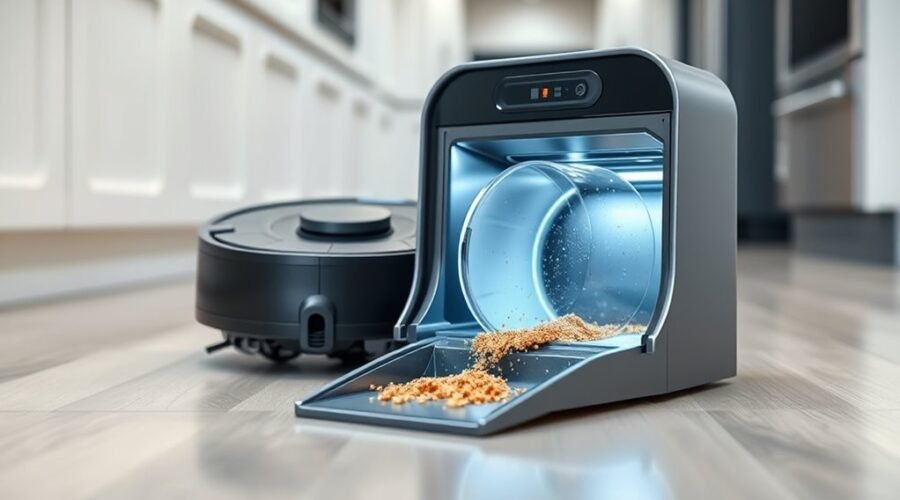
A self-empty dock removes debris from a robot vacuum without much effort from the user. When the vacuum returns, it lines up with a suction port that pulls dirt from the bin into a larger bag or container. The process is simple, but several small details affect how well it works and whether it is worth the added cost.
What a Self-Empty Dock Does
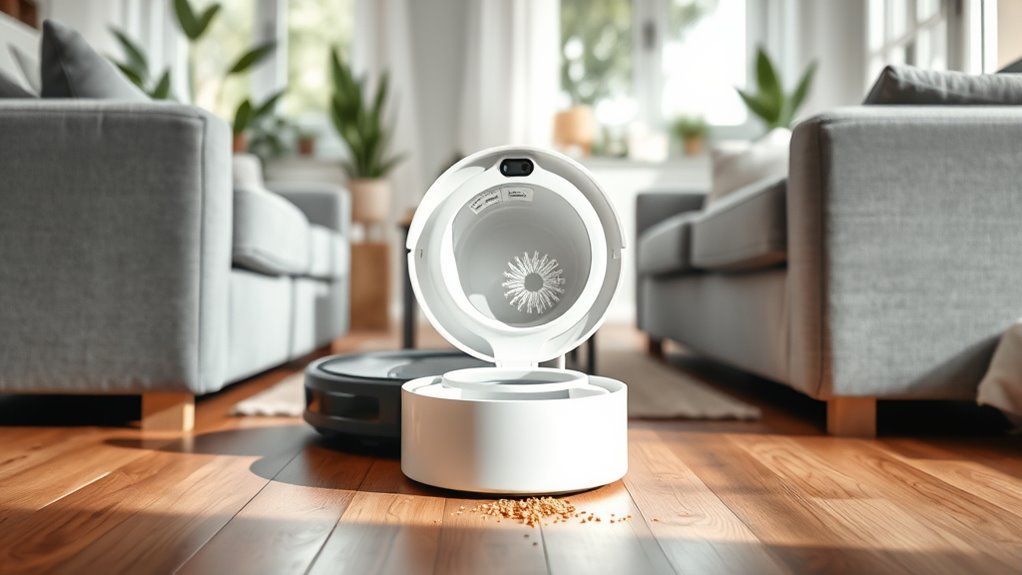
A self-empty dock automatically removes debris from the robot vacuum’s internal dustbin by using strong suction to transfer dirt into a larger, sealed dust bag.
In self-emptying robot vacuums, the docking station becomes a practical base that stores collected dust and debris after each cleaning session. When the robot returns, an emptying cycle begins and the contents move into the larger container within seconds.
The airtight seal helps keep dust and allergens from escaping, supporting cleaner indoor air and a more liberated routine. Most docks hold weeks of debris, which reduces the need for frequent manual emptying.
An airtight seal keeps dust in, helping maintain cleaner air and cutting down on emptying.
This efficient maintenance means less interruption and more time saved. Many models also include indicators that signal when the bag is full, making replacement straightforward.
How a Self-Empty Dock Empties the Bin
When the robot vacuum returns to the dock, it aligns with the suction channel and the dock activates its powerful vacuuming process. The self-empty dock then uses strong suction to pull debris from the robot’s internal dustbin and move it into the dock’s dust bag.
This transfer happens automatically, so the user does not need to handle mess after each run. An airtight seal helps keep dust from escaping during the process, which supports better hygiene and reduces exposure to allergens.
Because the dock stores weeks of collected debris, emptying is needed far less often than with standard models. The system is designed to keep cleanup simple and practical, giving households more freedom from daily upkeep.
Regular maintenance still matters: the dust bag should be changed about every 30 to 60 days to preserve airflow and prevent clogs in the self-emptying system.
Why Self-Empty Docks Use Bags
Self-empty docks use bags to keep dust and allergens securely contained after debris is pulled from the robot vacuum. In self-empty docks, dust bags support a sealed design that limits escape during transfer, helping trap up to 99.9% of allergens.
That makes bagged systems especially useful for allergy sufferers and homes with pets. The bag also holds several weeks of debris, so maintenance is less frequent than with bagless systems.
Easy replacement keeps the process simple: the full bag is removed and replaced without direct contact, supporting hygienic disposal and reducing exposure to dust.
The tradeoff is ongoing costs for replacement bags, yet many users accept that expense for cleaner handling and fewer messes. For households seeking more freedom from chores, dust bags offer a practical way to keep waste contained, simplify upkeep, and reduce contact with the dirt collected by the dock.
Common Self-Empty Dock Problems
Despite their convenience, self-empty docks can create a few common problems. A self-empty dock may produce loud noise during emptying, sometimes near 90 dB, which can interrupt quiet routines.
Self-empty docks can be loud during emptying, sometimes reaching 90 dB and disrupting quiet routines.
Frequent bin full alerts often point to dirty sensors or airflow trouble, suggesting a possible malfunction rather than a truly full bag. Dust leaks inside the unit usually mean worn seals or incorrect bag installation, and that can weaken hygiene.
Another issue is poor docking: if debris sits in the docking area, the robot may misalign and fail to empty. Larger debris, such as bottle caps or pet toys, can also cause clogs and block suction. When that happens, emptying becomes unreliable and the system needs attention.
Regular cleaning of sensors, seals, and the docking area helps limit these problems and keeps the self-empty dock working as intended.
Is a Self-Empty Dock Worth It?
For many households, a self-empty dock is worth the higher price because it reduces hands-on maintenance and can store weeks of debris in a sealed dust bag. The self-empty dock uses strong suction to move dirt from the robot bin, cutting manual emptying and freeing time for other priorities. | Factor | Benefit | Trade-off |
| — | — | — |
|---|---|---|
| Convenience | Less daily upkeep | Higher investment |
| Hygiene | Sealed dust bag limits dust | Dust bag replacement |
| Performance | Steady emptying support | Dock clog risk |
| Noise | Quick operation | Higher noise levels |
This balance often makes it worth it for busy homes and allergy-sensitive households. However, the convenience comes with a real cost: the dock can be noisy during emptying, and regular maintenance is still needed, including changing the dust bag every couple of months. A buyer should judge whether the time saved and cleaner handling outweigh the extra expense. For many, the answer is yes.
Frequently Asked Questions
Is a Self-Cleaning Vacuum Worth It?
Yes, for many households, it is worth it: self cleaning benefits, time savings, pet hair control, allergy reduction, and cleaning efficiency often outweigh maintenance costs. Smart technology, noise levels, brand comparisons, and user experiences determine value.
How Many Times a Week Do You Run Your Robot Vacuum?
Twice weekly seems the sweet spot. With robot vacuum features, maintenance tips, cleaning schedules, floor types, pet hair, battery life, noise levels, suction power, app connectivity, and user reviews, balance keeps liberation from chores intact.
How Do Robot Vacuums Empty Themselves?
Robot vacuums empty themselves using self empty technology: vacuum sensors detect fullness, then the docking station activates suction power to move dirt collection into a sealed bag. Smart features, app integration, filter systems, battery life, and maintenance tips help.
What Are the Downsides of Using a Robotic Vacuum Cleaner?
Robot vacuum limitations include maintenance challenges, weak suction power, high noise levels, navigation issues, limited battery life, and surface compatibility problems. Price comparison often favors manual options, while app connectivity glitches and allergy concerns remain practical drawbacks.
Conclusion
In practical terms, a self-empty dock turns routine vacuuming into a nearly hands-free task. After each cleaning run, the robot returns to the dock, and debris is suctioned into a sealed bag, keeping dust contained. For example, a busy family can let the vacuum clean daily for weeks before changing the bag. While docks can clog or need occasional maintenance, they offer a clear convenience boost for households that want less mess and less effort.