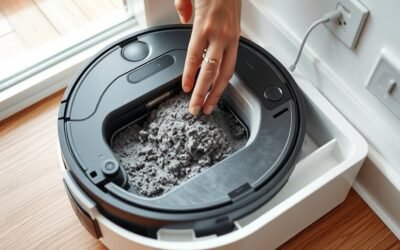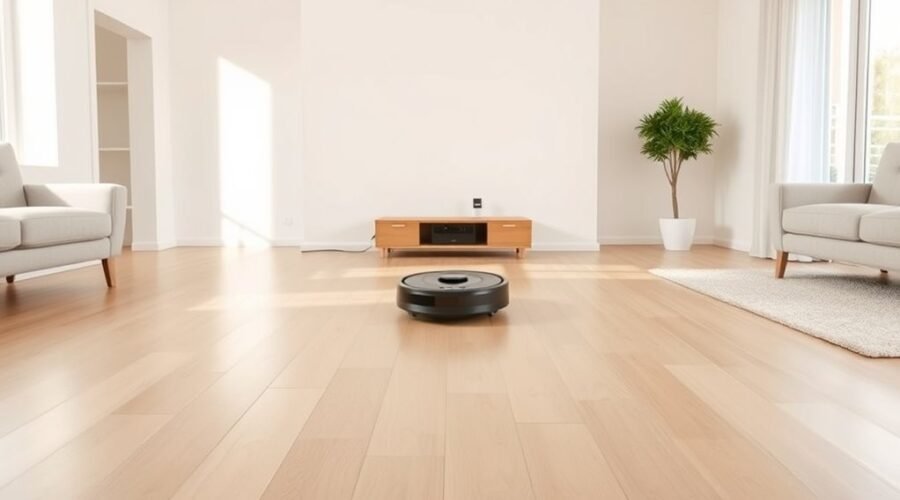
Reliable docking depends on dock placement more than many users expect. The station should sit on a level, hard floor with open space in front and clear room on both sides. Corners, clutter, and uneven surfaces can interfere with alignment. A nearby power outlet helps simplify setup, but contact cleanliness and an unobstructed path matter just as much. Small placement errors often explain repeated docking failures.
What Makes a Good Robot Vacuum Dock Location?
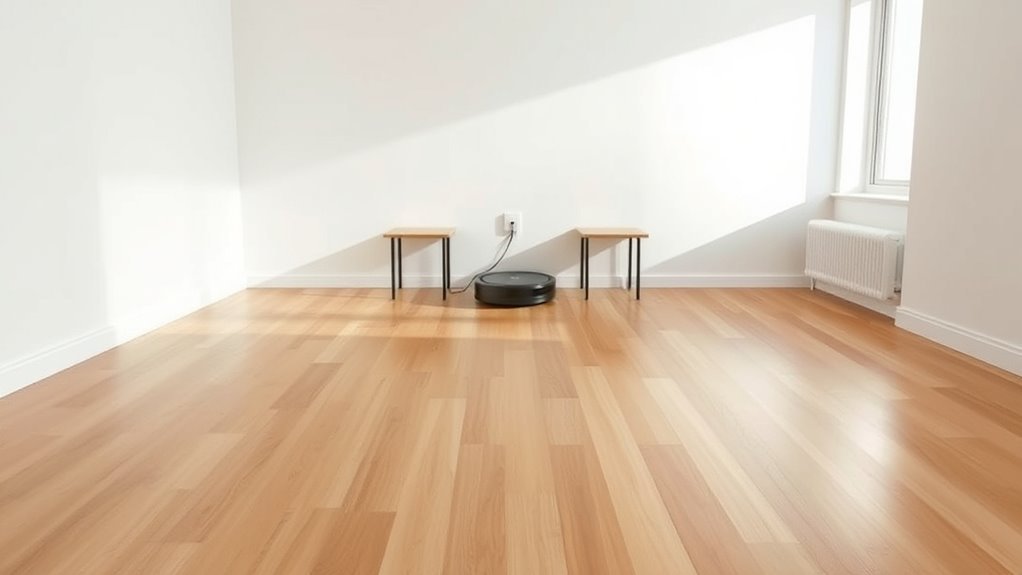
A good robot vacuum dock location provides at least 5 feet (152 cm) of clear space in front and 2 feet (60 cm) on each side to allow reliable docking and departure.
The best place to put the dock is a level, hard surface that supports stable charging and consistent contact. Carpets reduce reliability and should be avoided.
A level, hard surface ensures stable charging and reliable contact; carpets reduce dock performance and should be avoided.
The dock should remain away from stairs, ledges, and other drop-offs to lower the risk of falls during approach or exit. It should also sit near a power outlet so the cord can reach without strain.
Placement behind large metal appliances is unwise because they can interfere with Wi-Fi signals and disrupt control.
Surrounding clutter should be removed, since open pathways help the vacuum navigate freely and reduce the chance of getting stuck.
A practical dock position gives the machine a clear, protected base of operations, supporting efficient cleaning and easier maintenance for users seeking more autonomous household labor.
How Much Clearance Does a Robot Vacuum Dock Need?
For reliable operation, a robot vacuum dock generally needs 5 to 6 inches of clearance on both sides and 4 to 5 feet of open space in front. This spacing gives the robot vacuum’s navigation system enough room to approach, square up, and complete the final approach without hesitation.
If front clearance is reduced, the machine may fail to align correctly and repeat docking attempts, wasting time and battery. Place the dock where that forward corridor remains unobstructed during daily use. Some systems tolerate minimal side space, but broader front access often improves success more than side margin alone.
Regular inspection is practical: cables, storage items, or temporary obstacles should not encroach on the dock zone. Maintaining these clearances preserves autonomy, reduces intervention, and supports reliable return-to-base behavior.
Even modest neglect can compromise performance, so the setup should be treated as a maintained operational space rather than a fixed installation.
Which Floors Work Best for Docking?
Hard, flat flooring generally provides the most reliable surface for a robot vacuum dock, because carpets can interfere with alignment, wheel traction, and the final connection process.
In practice, a hard floor gives the dock a stable datum for guiding the robot into place, reducing the chance of wheel slip or nose-first contact. When placing the dock, a smooth surface also helps maintain consistent sensor readings and repeatable approach behavior.
Users have reported better results on tile, vinyl, laminate, and sealed wood than on carpet, even low-pile carpet, which can still cause minor misalignment.
For added stability, some use a non-slip mat designed for robot docks, but the priority remains a flat, immobile base. This choice supports dependable operation and removes unnecessary friction from daily cleaning.
Carved into the environment, a firm floor lets the machine move freely and dock without avoidable resistance.
Where Should You Place the Robot Vacuum Dock at Home?
The dock should be placed in an open, unobstructed area with at least 5 feet of clearance in front and 2 feet on each side to support reliable approach and alignment. This spacing helps the robot approach cleanly and improves finding the dock without repeated correction. A hard, level surface is preferred because it provides stable contact and consistent positioning. Placement near a power outlet keeps installation efficient; cords should run flat along walls for a tidy, secure setup. Choosing a location in a frequently used zone can increase cleaning cadence while keeping access simple.
| Placement factor | Practical guidance |
|---|---|
| Clearance | 5 feet front, 2 feet sides |
| Surface | Hard floor, not thick carpet |
| Power | Near outlet, cord routed flat |
| Use pattern | Central, high-traffic room |
A discreet location that still remains accessible preserves a liberated, uncluttered home environment, while supporting dependable docking behavior.
What Should You Avoid Around the Dock?
The dock should be kept clear of clutter, loose objects, and tight pathways, since obstructions can prevent smooth entry and exit and increase the chance of the vacuum getting stuck.
High-pile carpet around the station can also interfere with proper docking, so a hard, level surface is preferable.
Placement near stairs, ledges, or other drop-offs should be avoided to reduce the risk of the robot misaligning or falling during docking attempts.
Clutter and Obstacles
A robot vacuum dock should be placed in an open, uncluttered area to preserve reliable navigation and docking performance. The front approach path should remain free of clutter for at least 5 feet, allowing the robot to align and enter without hesitation.
At both sides, a minimum of 2 feet of clearance reduces the risk of getting stuck during final corrections. The dock should not be set in a corner or tight recess, because constrained geometry limits maneuvering and increases repeated docking failures.
Small obstacles, including shoes and compact furniture, should be removed from the docking zone to prevent interference and tripping hazards. A clean perimeter gives the machine the freedom to approach, correct, and settle precisely, without avoidable obstruction.
Carpet and Stair Hazards
High-pile carpet should be avoided around a robot vacuum dock because it can interfere with alignment and prevent reliable docking. The docking station should rest on a firm, level surface, free of carpet that compresses under the robot and disrupts approach sensors.
Stairs and ledges must remain outside the docking zone, since a failed approach can send the vacuum over an edge. Clear corners and open floor space support direct travel and reduce entrapment.
- Firm floor beneath the dock
- No carpet pile at the entrance
- Safe distance from stairs
- Spacious, unobstructed corners
If docking remains inconsistent, the location should be reconsidered. A clear path gives the machine dependable access and preserves the user’s freedom from repeated recovery tasks.
How Can You Hide a Robot Vacuum Dock Safely?
To hide a robot vacuum dock safely, it is best placed in a small entryway, behind low furniture such as a sofa or bench, or inside a closet or entertainment console, provided the vacuum can still align with the dock and clear the opening during return cycles.
A Robot Vacuum needs a direct approach path and sufficient Open Space in front of the station, so concealment should not narrow the approach corridor. Light tablecloths or decorative panels may mask the dock without blocking airflow.
The station should rest on a flat surface to support stable charging and predictable contact. Hidden locations should be checked regularly for stray objects, cables, or shifted decor that could restrict access.
When the dock remains visually subdued yet mechanically unobstructed, the room retains a cleaner appearance without sacrificing autonomous operation, allowing the household to keep surfaces open, functional, and free from unnecessary clutter.
How Do You Fix Robot Vacuum Docking Problems?
Docking problems usually stem from restricted access, poor surface conditions, or misalignment at the charging station. A robot gains steadier contact when the dock sits on a hard floor, not carpet, and when a clear corridor remains open: 4-5 feet in front and 5-6 inches on each side. The power outlet should be secure, and the dock must rest flat so the robot can approach without drag.
- A clean, uncluttered lane leading to the dock
- A rigid floor beneath the charging base
- Shiny, dust-free charging contacts on both units
- A dock nudged slightly until the robot centers
If docking still fails, resetting the robot can restore normal behavior, and small dock adjustments may correct connector alignment.
Regular contact cleaning prevents corrosion and weak charging. When the system remains unreliable, the manual should be consulted for model-specific steps, followed by customer support if needed.
Frequently Asked Questions
Where to Put a Robot Vacuum Dock?
The ideal dock placement is on a level hard floor near a power outlet, with docking space considerations of 5 feet clear in front and 2 feet per side, away from stairs, clutter, and thick carpets.
What Is the Best Docking Station for a Robot Vacuum?
The best docking station for a robot vacuum is a stable, open, level dock with hard-floor placement, ample clearance, nearby power, and unobstructed access, matching robot vacuum features and docking station types for dependable, efficient recharging.
How to Hide a Robot Vacuum Docking Station?
A dock can be concealed in one of three homes: under benches, behind sofas, or inside closets. Ninety percent of visibility disappears with careful placement. Practical docking tips preserve robot aesthetics, ventilation, access, and freedom.
Where Is the Best Place to Put My Roomba Dock?
The Roomba dock is best placed on a level, hard floor near an outlet, with open robot vacuum placement: 5 feet clear ahead, 2 feet each side, and no stairs, carpets, or obstacles. These docking station tips optimize reliability.
Conclusion
To conclude, a robot vacuum dock performs best when placed on a level, hard floor with generous clearance, a direct path, and access to power. Corners, clutter, and obstructed routes reduce docking reliability, while clean charging contacts support consistent performance. Proper placement turns the dock into a steady beacon, guiding the vacuum home with minimal error. With careful setup and regular inspection, reliable docking becomes a predictable part of daily cleaning.