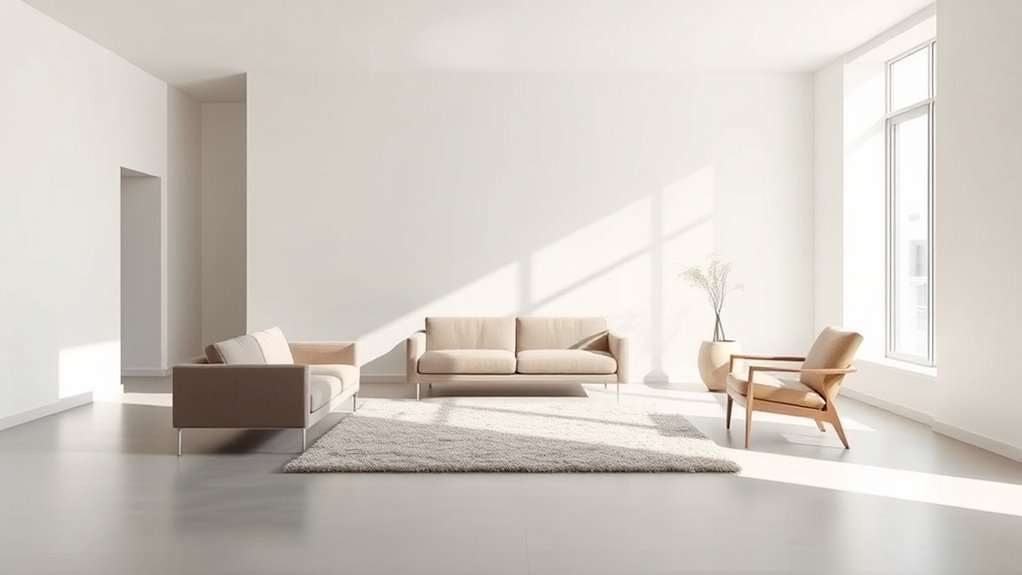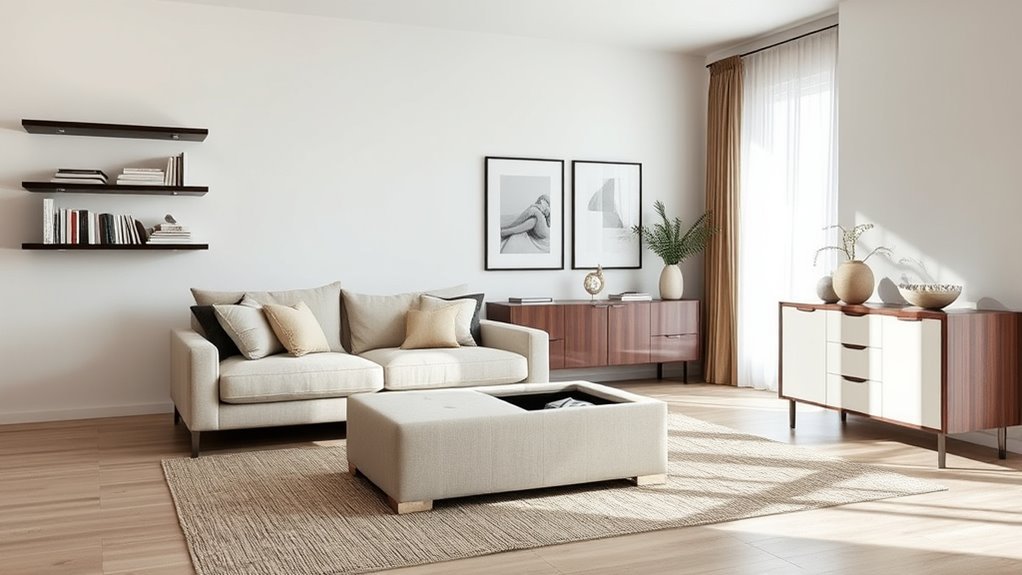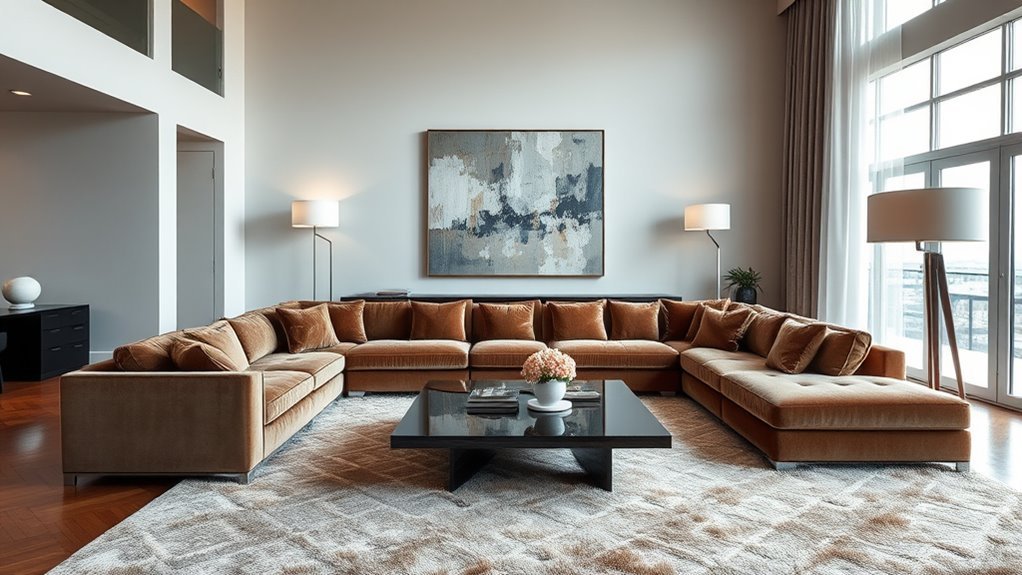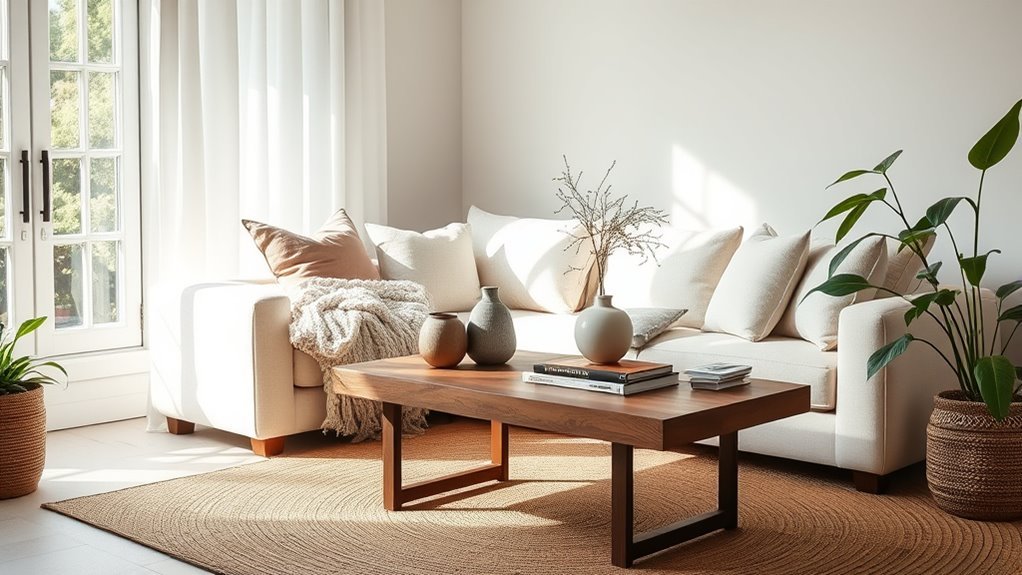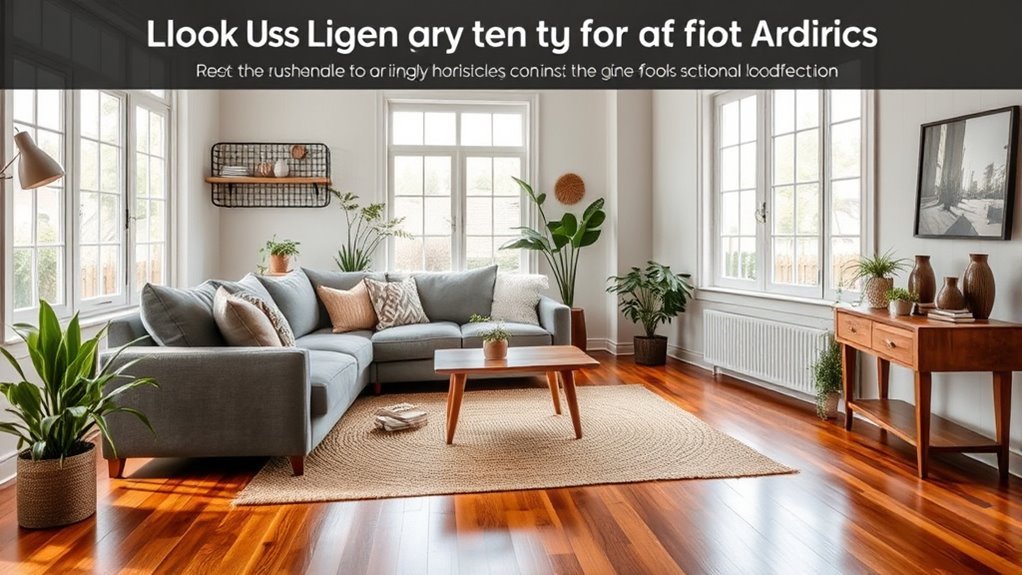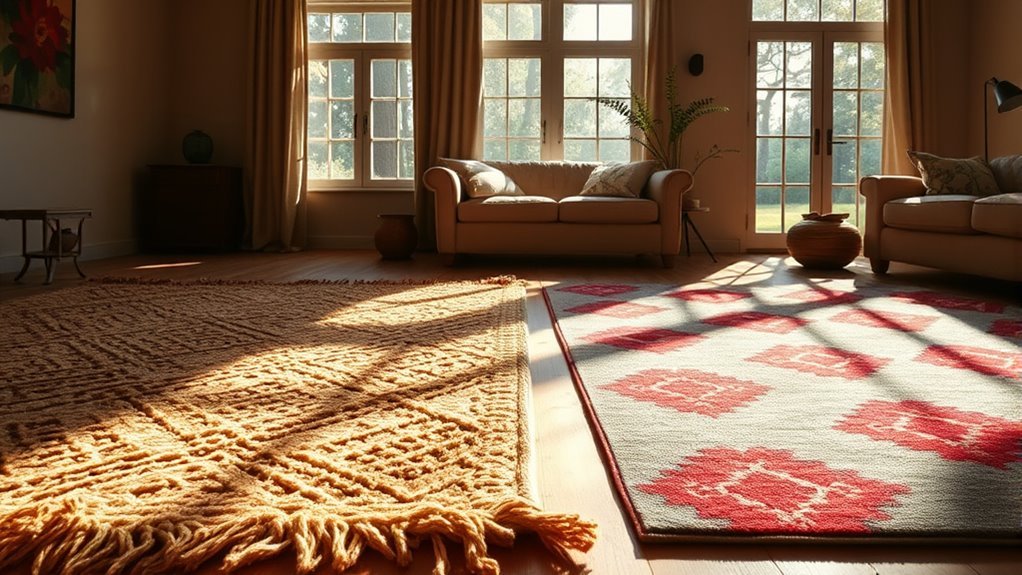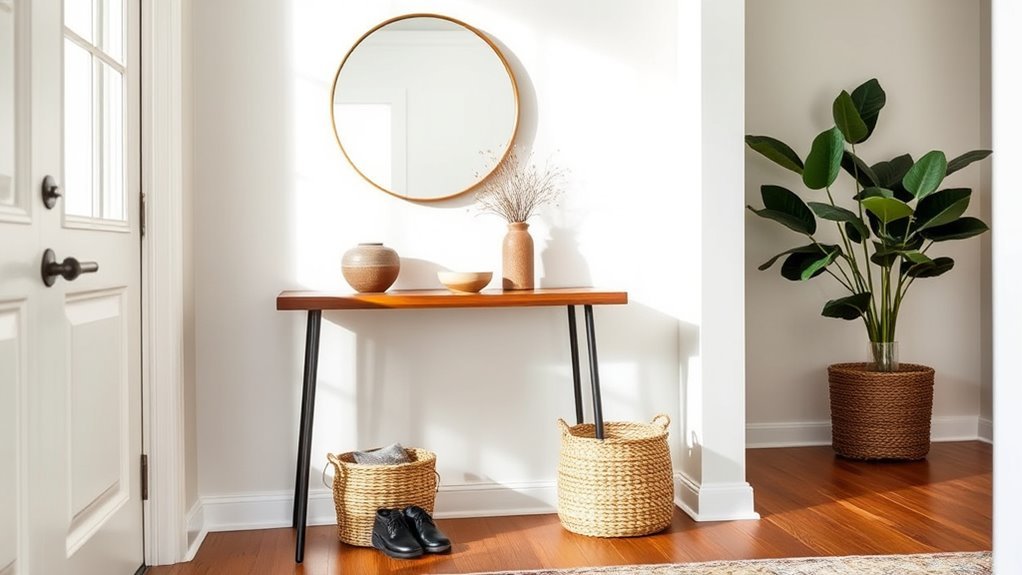
When your front door opens straight into the seating area, shoes, coats, and mail can quickly take over the couch. Learning how to create an entryway in a living room gives everyday items a dedicated landing spot without crowding your floor plan. With shallow storage, vertical wall hooks, and visual zoning, even a small corner or the back of a floating sofa can work like a true foyer.
Quick Answer
To create an entryway in a living room, claim a 24- to 36-inch wall near the door or float your sofa to form a walkway at least 36 inches wide. Add a 10- to 12-inch-deep console table or storage bench, mount coat hooks at 60 to 65 inches high, place a washable rug and shoe tray on the floor, and finish with a mirror and warm lamp.
At a Glance
| Time Required | 1 to 3 hours for a simple setup; a weekend for painting, drilling, or assembling furniture |
| Difficulty | Easy to moderate, depending on whether you install shelves, hooks, or wall anchors |
| Tools Needed | Tape measure, pencil, level, stud finder, screwdriver, drill, wall anchors, baskets, trays, and furniture pads |
| Cost | $0 to $50 using items you already own; $75 to $300+ for a new bench, console, rug, hooks, and lighting |
Identifying Your Entryway Challenges: A Starting Point
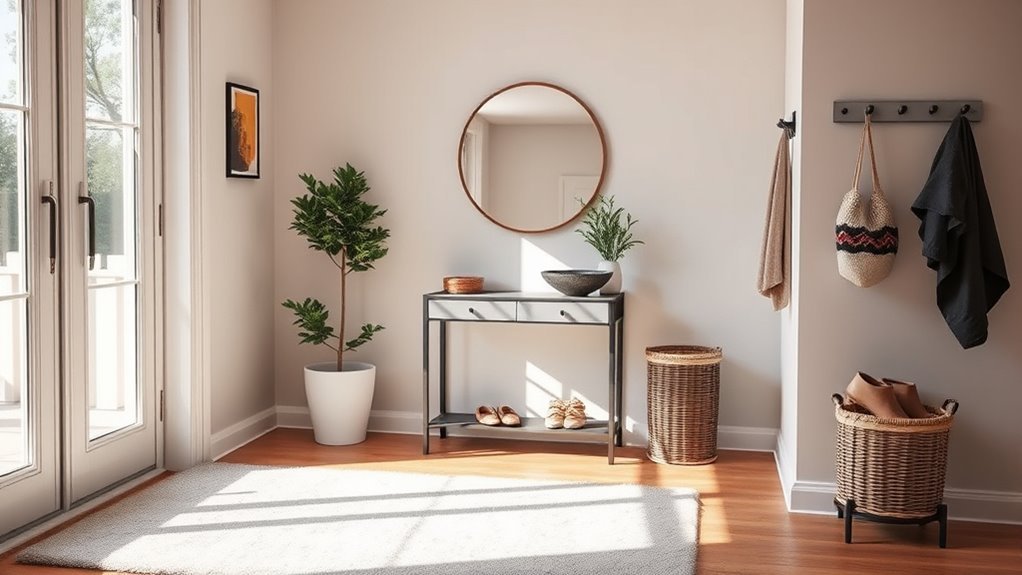
Start by standing at your front door and watching how your household naturally enters the living room. Notice where shoes pile up, where bags land, where keys disappear, and which furniture pieces interrupt the path from the door to the sofa, stairs, or kitchen. Your entry zone should solve those exact habits instead of adding clutter to a busy threshold.
Measure the available wall width, floor depth, door swing radius (typically 36 inches for a standard US entry door), nearby outlets, and the main traffic lane. To keep the passage comfortable and accessible, follow the ADA 2010 Standards clear-width benchmark of maintaining a 36-inch-wide walking path wherever possible. Even in a compact apartment, people should be able to walk inside with groceries without turning sideways or stepping over shoes.
If your front door opens directly into the living room, the entryway does not need to be a separate room. A 24- to 36-inch stretch of wall, a narrow console behind a floating couch, or one corner beside the door frame can work as a complete drop zone.
Essential Storage Solutions for Your Entryway
A well-organized living room entryway starts with storage sized for the clutter you actually bring inside. Shoes need a waterproof tray, tilt-out cabinet, or basket; coats and bags need sturdy hooks; and keys, sunglasses, wallets, and mail need a catchall dish. Matching each item to a dedicated container makes daily tidying effortless.
| Storage Item | Typical Dimensions | Purpose | Best For |
|---|---|---|---|
| Bench with storage | 15–18 in. deep, 18–19 in. high | Combines seating and hidden shoe storage | Families, shoe-heavy households, and wider entry walls |
| Wall-mounted hooks | 3–5 in. projection, spaced 8–10 in. apart | Keeps coats, hats, and bags off living room chairs | Small living rooms and narrow door areas |
| Tilt-out shoe cabinet | 6–10 in. deep closed (12–18 in. open) | Stores everyday sneakers and flats vertically out of sight | Tight walkways where a 12–14 in. shelf cabinet will not fit |
| Decorative baskets | 10–14 in. wide and deep | Contains shoes, pet leashes, scarves, and seasonal gear | Open shelving, under console tables, and family drop zones |
| Narrow console table | 10–12 in. deep, 30–36 in. high | Creates a landing surface for keys, mail, and a table lamp | Slim walls, floating sofa backs, and formal living rooms |
| Boot and shoe tray | 12–15 in. deep, 24–36 in. wide | Catches dirt, water, and snow before it reaches flooring | Rainy or snowy climates and homes with kids or pets |
Recommended Products

More Comfortable Shoe Change Cabinet: With a 2-inch thickened padded sponge cushion on the bench top, you can change shoes by sitting on the bench more comfortable without bending down or squatting

Stylish Fluted Shoe Storage Bench: Elevate your entryway decor with this modern shoe bench featuring a unique fluted door and a warm, natural oak finish. Its sleek, modern silhouette adds a touch of sophisticated elegance to any space. Perfectly suited for entryways, living rooms or bedrooms, this bench seamlessly blends functional storage with contemporary aesthetic appeal

Unique Design: This shoe rack bench combines two different styles—the ancient, retro style that speaks for the old times and the industrial design that expressed by the sturdy metal frames. Unique yet sturdy, this is what we do to make the shoe bench to you free soul
How to Create an Entryway in a Living Room With Limited Space
You can create an entryway in a living room with tight dimensions by claiming vertical wall space and using shallow, multi-functional furniture. Look for overlooked spots like a 24-inch wall strip behind the door, the back of a floating sofa, the side panel of a bookcase, or the space beneath a front window.
Identify Space Constraints
Map out every fixture that cannot move: the door swing arc, windows, radiators, baseboard heaters, outlets, vents, and light switches. A standard 18-inch-deep bench may look appealing online, but it will bottleneck a narrow room if it blocks the door from opening a full 90 degrees.
Before buying furniture, outline its exact footprint on the floor using painter’s tape. Walk through the door carrying a bag, open and close the door completely, and mime taking off your shoes. If the taped outline forces you to sidestep, drop down to a 6- to 10-inch tilt-out shoe cabinet or an 8-inch floating shelf.
Explore Layout and Zoning Solutions
Once you confirm your clearance, pick one primary layout strategy based on where your front door sits:
- Door in a corner (side wall available): Mount a row of hooks and a mirror above a 10- to 12-inch-deep console table, a slim tilt-out cabinet, or a storage bench along the adjacent wall.
- Door in the center of the wall (no side wall): Float your sofa facing away from the door, leaving a 36- to 42-inch walkway behind it. Place a narrow console table (sofa table) flush against the back of the couch to act as a room divider and key drop.
- Wide open-concept room: Place an open-back cube bookcase or a low 36-inch cabinet perpendicular to the door wall to screen the seating area while storing shoes and baskets on the entry side.
Pro Tip: Include at least one closed storage piece for visual calm. Open hooks work well for daily jackets, but lidded baskets, console drawers, or tilt-out shoe compartments hide messy laces and mail so your living room still feels relaxing.
Selecting Functional Seating Solutions for Your Entryway
Entryway seating makes taking off boots and tying laces much easier, provided your layout has at least 15 to 18 inches of depth to spare. Choose a storage bench for a wide wall, a tuck-under stool or ottoman for a console setup, or skip seating entirely if it narrows your walkway below 36 inches.
| Seating Solution | Ideal Dimensions | Benefits | Watch Out For |
|---|---|---|---|
| Storage bench | 15–18 in. deep, 18–19 in. tall, 36–48 in. wide | Comfortable chair-height seating that hides shoes or winter gear | Can crowd the door swing if deeper than 18 inches |
| Storage ottoman | 15–18 in. cube or cylinder | Doubles as extra living room seating when guests visit | Soft tops collect bag clutter unless paired with wall hooks |
| Tuck-under stool | 12–14 in. deep, 17–18 in. tall | Slides completely beneath an open console table to save floor space | Offers no internal storage |
| Built-in nook bench | 16–18 in. deep with a 2–3 in. recessed toe kick | Custom fit for alcoves with overhead cubbies and under-seat drawers | Higher cost and permanent installation unsuitable for renters |
Recommended Products

【QUICK ASSEMBLY, EASY FOLDAWAY】This storage ottoman from the SONGMICS MAZIE Collection has a foldable design that allows quick setup in seconds by simply inserting the bottom panel. Easily fold and store it under the bed or in a closet when not in use

【COMPARTMENT DESIGN MEETS OPEN STORAGE】This shoe bench comes from VASAGLE CUSTOS Collection, characterized by the open compartment design that embodies easy-to-blend-in minimalism, while ensuring everything's organized and easily accessible

Elegant Aesthetic: This shoe storage bench combines a natural rattan finish with smooth gold handles, adding a touch of sophistication to any space. Whether placed in the living room, entryway, it elevates the overall ambiance and effortlessly complements various home decor styles—making it a standout decorative piece in your home
Utilizing Hooks and Racks for Smart Organization
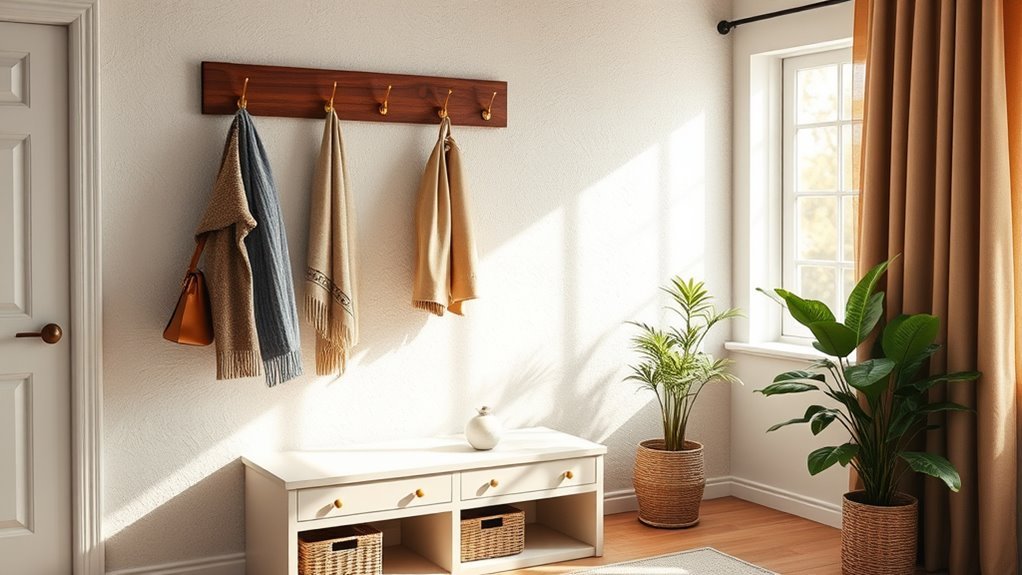
Wall hooks are the fastest way to replace a missing coat closet in a living room. Mount adult coat hooks 60 to 65 inches from the floor and space them 8 to 10 inches apart so bulky winter parkas and tote bags do not overlap. If you place hooks above a bench, leave 36 to 48 inches of vertical clearance above the seat so coats hang freely and people can sit without leaning into zippers.
Match the hardware finish to your living room decor: matte black hooks suit modern spaces, brushed brass warms up traditional rooms, and wooden peg rails fit Scandinavian or farmhouse interiors. Renters can use an over-the-door hook rack or a weighted freestanding coat tree. Save removable adhesive hooks for lightweight items like keys, dog leashes, or hats rather than heavy wet coats or loaded backpacks.
Warning: Always anchor tall shelving units, hall trees, top-heavy tilt-out shoe cabinets, and consoles with drawers directly to the wall. The U.S. Consumer Product Safety Commission’s Anchor It! campaign emphasizes securing furniture into wall studs (typically spaced 16 or 24 inches apart in US homes) or using weight-rated drywall toggle anchors to prevent severe tip-over injuries.
Recommended Products

Dimensions: The dimensions of our product are 16.5 x 2 inches, the length of the hook is 3.2 inches, and the distance between the 2 hooks is 3.2 inches. Suitable for narrow spaces with increased storage needs
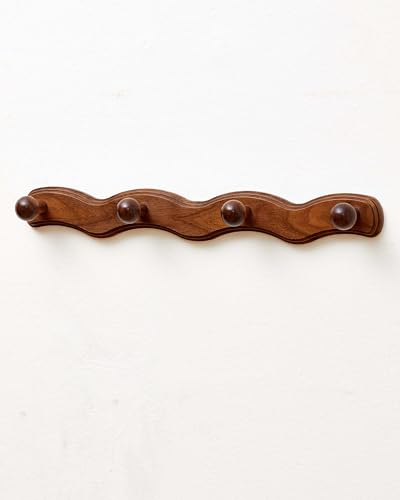
Natural Walnut Wood for Timeless Appeal-Made from high-quality walnut wood, this coat rack wall mounted boasts a natural, warm finish that adds a touch of elegance to any space. The wooden texture brings a rustic yet modern vibe, blending seamlessly with farmhouse, mid-century, or boho decor styles. It’s not just a hook—it’s a decorative piece for your walls.

【Double Hook Design】4 pcs = 8 hook ends, Double the storage, half the spend!
Enhancing Your Entryway With Light and Ambiance
Dedicated lighting makes a living room drop zone feel like a purposeful entryway rather than a dark corner. Pair your overhead ceiling fixture with a small console table lamp or a plug-in wall sconce to cast a welcoming evening glow and illuminate your key tray.
According to the U.S. Department of Energy lighting guide, LED bulbs with a warm white correlated color temperature of 2,700K to 3,000K and a Color Rendering Index (CRI) of 80 or higher best flatter indoor wood finishes, fabrics, and skin tones. Aim for 450 to 800 lumens (equivalent to a 40-watt to 60-watt incandescent bulb) so the light helps you sort mail and tie shoes without glaring into the TV zone.
Keep lamp cords tucked neatly behind furniture legs or inside paintable wall cord channels. Never run electrical cords under rugs or across doorways where foot traffic and trapped heat create fire and tripping hazards; as the Electrical Safety Foundation International warns, extension cords are strictly for temporary use and must never replace permanent wiring.
Personalizing Your Space With Decorative Elements
Once your storage and lighting work smoothly, layer in practical decor that visually separates the entry zone while echoing your living room palette. Two decorating proportion guidelines keep small entryways balanced:
- The 2/3 proportion rule: Hang a mirror or framed artwork that is roughly two-thirds the width of the console table or bench below it, mounting the bottom frame 6 to 8 inches above the furniture surface and centering it around eye level (57 to 60 inches from the floor).
- The 3-5-7 styling rule: Group console accessories in odd numbers of varying heights—such as a tall table lamp, a medium ceramic vase or plant, and a low catchall tray—leaving at least half the surface clear for setting down packages.
Anchor the floor with a durable, low-pile washable rug (such as a 2-by-3-foot doormat or a 2.5-by-7-foot runner) backed with a non-slip pad. Check that the combined height of the rug and pad is thin enough (usually under 0.38 inches) for the front door to swing open without dragging.
Note: If you store wet boots, umbrellas, or live plants by the door, protect hardwood and laminate floors with waterproof trays. The U.S. EPA Mold and Moisture Guide advises drying wet surfaces within 24 to 48 hours and keeping indoor relative humidity below 60 percent (ideally between 30 and 50 percent) to prevent mold growth.
Finalizing Your Entry Zone for Practicality and Style
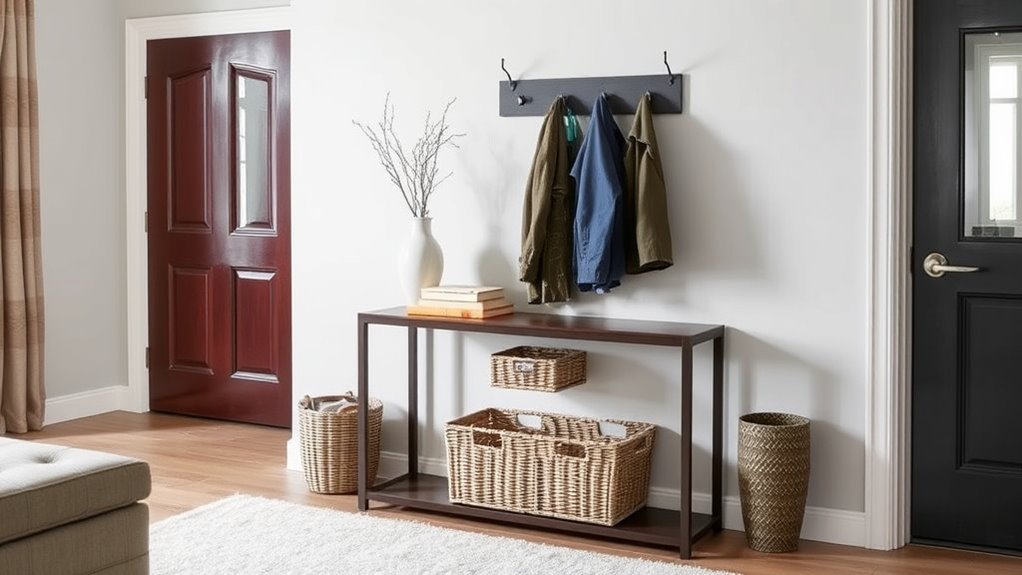
Before calling the project finished, test the entry zone under real daily conditions. Open the front door all the way, walk through carrying two grocery bags, sit down to unlace your shoes, hang up a heavy coat, and drop your keys into the tray. If any motion feels cramped, adjust the layout using this five-step checklist:
- Keep the 36-inch path clear: Ensure shoes, baskets, rug corners, and stools never jut into the main walkway.
- Cap surface items at three: Limit a console top to a lamp, a key tray, and one accent piece so mail cannot hide behind decor.
- Build vertically first: Use high wall hooks, floating ledges, and tall mirrors to preserve floor space in tight living rooms.
- Test hardware stability: Tug gently on mounted coat racks, shelves, and anti-tip furniture straps to confirm screws are biting firmly into studs or wall anchors.
- Enforce a one-touch rule: Every daily item should go into its spot in a single motion—dropping keys in an open bowl beats opening a stiff box lid.
Exploring Family-Friendly Features for Your Entryway
A family-friendly living room entryway works only when children and seated users can reach their own storage without adult help. Dividing hooks and bins by family member or category stops backpacks and sneakers from migrating onto the living room sofa.
Accessible Storage Heights and Labels
Place everyday storage within comfortable reach for every member of your home. While adult coat hooks sit at 60 to 65 inches, install a lower row of hooks at 36 to 48 inches above the floor—which also aligns with the ADA unobstructed forward and side reach range of 15 to 48 inches. Use open hooks rather than coat hangers for kids so hanging up a jacket takes two seconds.
- Double-tier hooks: Mount an upper rail (60–65 inches) for adult coats and a lower rail (36–48 inches) for kids’ backpacks, jackets, and lunch bags.
- Color-coded or labeled bins: Assign one cubby basket per person, or label bins by category (everyday shoes, sports gear, winter hats, and pet walk supplies).
- Sturdy bench seating: Choose a bench rated for at least 250 pounds at an 18-inch seat height so parents and kids have a stable spot to put on shoes.
Kid- and Pet-Friendly Materials
Choose forgiving materials that handle muddy paws, wet backpacks, and fast cleanups. Machine-washable indoor-outdoor runners, wipeable painted or sealed wood benches, powder-coated metal hooks, and plastic-lined or washable canvas bins hold up far better than raw linen or unsealed wood. If kids tend to drop items on the floor, place an open-top basket directly beneath their hooks to catch items effortlessly.
Stacking Vertical Drop Zones
When a small living room only spares 24 to 30 inches of wall width, stack your drop zones vertically in three layers: mount hooks or a peg rail on top for outerwear, hang a shelf with a key tray or mirror in the middle, and tuck a shoe tray or twin baskets on the floor below.
Rental-Friendly Entryway Ideas (No Drilling Required)
If your lease prohibits drilling into drywall, you can build a complete living room entryway using freestanding and over-the-door pieces:
- Weighted freestanding coat tree: Gives you 6 to 8 hooks for heavy coats and bags in an 18-inch circular footprint without a single screw.
- Over-the-door hook rack: Hangs over an adjacent closet or interior door for jackets and dog leashes.
- Sofa-back console table: Sits securely sandwiched between the back of a floating couch and the floor, naturally stabilized against forward tipping.
- Removable adhesive strips: Use heavy-duty removable strips strictly within their printed weight ratings (typically 2 to 5 pounds for small key rails, acrylic mail slots, or lightweight frames) and never for heavy shelves or wet winter coats.
Common Entryway Mistakes to Avoid
- Buying furniture before measuring door swing: Always verify wall width, furniture depth (including open drawer or tilt-bin clearance), and the 36-inch door swing arc first.
- Using unlabelled baskets: Baskets prevent clutter only when each bin has one clear job; unlabelled bins quickly turn into mystery junk piles.
- Pinching the traffic path: A deep bench that forces people to squeeze past sideways will frustrate your household daily.
- Mounting heavy coat racks into bare drywall: Standard wood screws pulled by 20 pounds of winter coats and backpacks will rip out of unanchored drywall; always hit a stud or use rated hollow-wall toggles.
- Decorating before solving clutter: Fix storage for shoes, bags, keys, and mail first, then add plants, candles, or art with whatever space remains.
Simple 10-Minute Weekly Reset Routine
Even the smartest living room entryway overflows if extra items accumulate all month. Once a week, spend ten minutes resetting the zone: carry out-of-rotation shoes back to bedroom closets, recycle junk mail and file bills, hang stray hoodies in closets, shake out the entry runner, and wipe down the boot tray. Keeping only daily essentials by the door preserves your living room’s calm look all week.
Key Takeaways
- Protect traffic flow first: Keep at least a 36-inch-wide walking path clear of shoes, benches, and door swings.
- Stick to shallow depths: Choose a 10- to 12-inch console table or a 6- to 10-inch tilt-out shoe cabinet when floor space is tight.
- Mount hooks at the right height: Install adult coat hooks at 60 to 65 inches high (8 to 10 inches apart) and kid or accessible hooks at 36 to 48 inches.
- Anchor for safety: Secure tall shoe cabinets, shelves, and consoles into wall studs (16 or 24 inches apart) or heavy-duty drywall anchors.
- Blend with the living room: Repeat your living room’s wood tones and metals, and use 2,700K–3,000K warm white lighting so the entry zone feels integrated.
Frequently Asked Questions
How do you create an entryway in a living room?
To create an entryway in a living room, claim a 24- to 36-inch stretch of wall beside the door or float your sofa to form a 36-inch walkway. Add a shallow 10- to 12-inch console table or storage bench, mount wall hooks for coats, place a washable runner and shoe tray on the floor, and add a mirror and key dish.
How do you create zones in a living room?
You create zones in a living room by using furniture placement, rugs, lighting, and vertical storage to signal distinct functions. A durable runner rug, wall hooks, and a console table behind a floating sofa define the entry drop zone, while a larger area rug, coffee table, and floor lamps anchor the conversation area.
What is the 2/3 rule for living rooms?
The 2/3 rule is an interior design proportion guideline where one piece measures roughly two-thirds the width of the element anchoring it. In a living room entryway, a wall mirror or artwork looks balanced when it spans about two-thirds the width of the console table or bench below it.
What is the 3-5-7 rule of decorating?
The 3-5-7 rule is a styling principle that groups decorative objects in odd numbers of three, five, or seven to create natural visual balance. On a narrow entryway console, grouping three items of varied heights—such as a table lamp, a small plant, and a flat key tray—looks polished without crowding the surface.
What furniture works best for a small living room entryway?
Shallow, multi-functional furniture works best for a small living room entryway. Look for a 6- to 10-inch-deep tilt-out shoe cabinet, a 10- to 12-inch narrow console table, an 8-inch floating wall shelf, wall-mounted coat hooks, or a compact storage bench with tuck-under baskets that will not block the door swing.
How do you keep a living room entryway from getting cluttered?
Keep a living room entryway clutter-free by giving every daily item a single-step home: a dish for keys, lidded baskets or a tilt-out cabinet for shoes, and wall hooks for coats and bags. Spend ten minutes once a week removing old mail, extra shoes, and out-of-season gear.
Conclusion
A living room entryway works best when it is sized accurately for your walkway and tailored to your daily clutter. Grab a roll of painter’s tape and a tape measure today to mark out a 36-inch path by your front door, then anchor your zone with wall hooks, slim shoe storage, and warm lighting.
Sources
- ADA.gov 2010 Standards for Accessible Design: 36-inch clear walking route width benchmark (Section 403.5.1).
- U.S. Consumer Product Safety Commission Anchor It!: Furniture and shelving tip-over prevention and stud anchoring guidance.
- U.S. Department of Energy: Purchasing Energy-Efficient Light Bulbs: Warm white color temperature (2,700K–3,000K), lumen output, and CRI (80+) lighting standards.
- Electrical Safety Foundation International: Extension Cord Safety Tips: Safe temporary cord use and doorway/rug fire hazard prevention.
- U.S. EPA: A Brief Guide to Mold, Moisture and Your Home: Indoor relative humidity targets (30–50%, below 60%) and 24- to 48-hour drying guidance.
- ADA Standards for Accessible Design: Unobstructed forward and side reach height limits (15 to 48 inches above the floor).