Every time someone pulls out a dining chair or settles onto a heavy couch, concentrated weight and tiny debris press against your wood finish. Learning how to protect hardwood floors from chair and sofa legs takes less than an hour per room and prevents deep dents, finish scuffs, and costly refinishing. With clean contact points and the right hardware, your floors can handle daily life without losing their luster.
Quick Answer
To protect hardwood floors from chair and sofa legs, wipe the leg bottoms with isopropyl alcohol, apply 3/16-inch to 1/4-inch high-density felt pads or screw-in glides to movable chairs, and place wide non-staining natural rubber pads or caster cups under heavy sofas. Vacuum grit weekly and replace flattened pads every few months.
At a Glance
| Time Required | 15–45 minutes for one room |
| Difficulty | Easy |
| Tools Needed | Vacuum with bare-floor setting, microfiber cloth, 70% isopropyl alcohol, pH-neutral wood-floor cleaner, scissors, furniture pads, optional furniture sliders |
| Cost | Usually $5–$40 per room, depending on pads, caster cups, sliders, or chair mats |
How Chair and Sofa Legs Damage Hardwood Floors
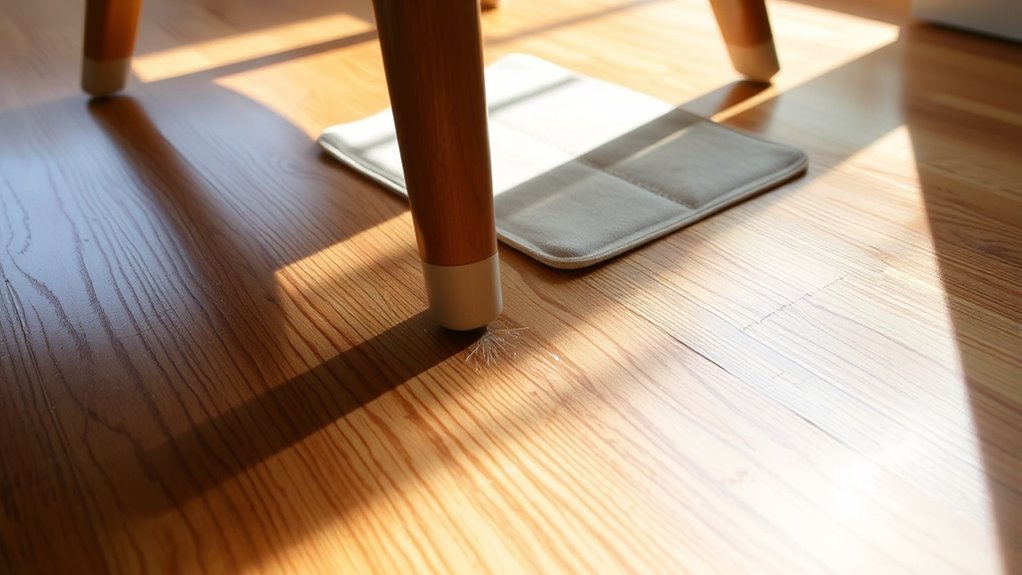
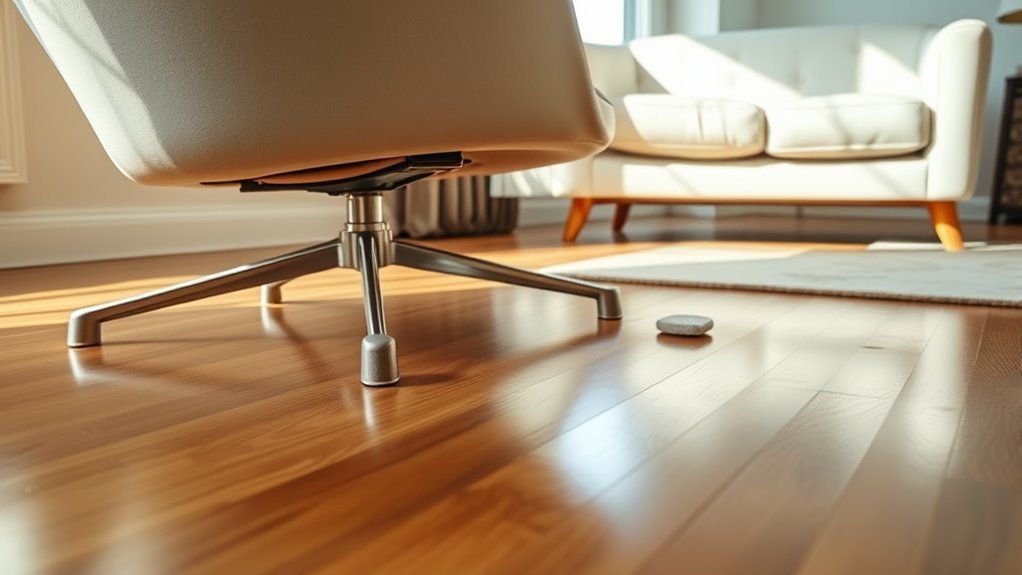
Chair and sofa legs damage hardwood floors through three main forces: concentrated downward pressure, sliding friction, and trapped abrasive grit. Heavy sofas press narrow, angled, or metal feet into the wood fibers and leave permanent indentations. Dining chairs and barstools create a different hazard because they slide across the floor several times a day, wearing down the protective topcoat.
Whether a heavy sofa dents your floor depends on point load and wood species. According to the USDA Forest Products Laboratory Wood Handbook, common flooring woods vary widely in Janka side hardness—the force in pounds-force (lbf) needed to embed a 0.444-inch steel ball halfway into the board. Shagbark hickory (1,880 lbf), hard maple (1,450 lbf), white oak (1,360 lbf), and northern red oak (1,290 lbf) resist dents better than softer woods like black walnut (1,010 lbf) or black cherry (950 lbf), yet a 300-pound occupied sofa resting on four 1-inch legs can exceed any wood species’ limit without wide pads.
Grit is the hidden catalyst behind most surface scratches. Fine sand, quartz dust, pet hair, and street debris settle under furniture feet and embed into worn pads. When a chair moves, that trapped debris acts like medium-grit sandpaper against polyurethane, oil, or wax finishes. That is why the National Wood Flooring Association recommends routine sweeping, dust mopping, or vacuuming with a bare-floor setting before dirt can abrade the surface.
Essential Preparation for Protecting Your Floors
Before installing furniture pads, prepare both the floorboards and the bottom of each furniture leg so adhesives bond firmly and grit is not sealed underneath. Peel-and-stick pads fail primarily because they are pressed onto dusty, waxy, or uneven surfaces. Taking 10 minutes to clean and inspect the feet extends pad life by months.
- Vacuum and dust-mop the floor first. Use a vacuum set to the bare-floor mode (with the rotating beater bar turned off) or a microfiber dust mop so you do not trap grit under the new pads.
- Degrease the bottom of each furniture leg. Scrape off old adhesive, pet hair, and dirt, then wipe the bottom tip of each leg with a cloth dampened with 70% isopropyl alcohol (keep alcohol off delicate shellac or lacquer finishes on the sides of the leg) and let it dry for 2 minutes.
- Inspect and remove tiny factory glides if needed. Many wooden chairs come with small, curved plastic or metal nail-in domes; prying these off gives adhesive pads a flat, full-width wood surface to grip, or allows you to install felt-bottom glides in their place.
- Check for uneven or wobbly legs. Set each chair on a flat section of floor and press the seat; a wobbly chair tilts onto one edge and grinds that corner into the finish.
- Measure each leg footprint. Match round legs with round pads, square legs with square pads, and custom-trim felt sheets for tapered or splayed legs.
Pro Tip: Write the installation date on the spare pad package and keep pre-cut replacements in a kitchen drawer. Dining chair pads wear down three to four times faster than sofa pads because of daily lateral sliding.
Choosing the Right Furniture Pads to Protect Hardwood Floors
To protect hardwood floors from chair and sofa legs effectively, match the protector’s material, thickness, and attachment method to how the furniture is used. Chairs that slide daily need low-friction, shear-resistant felt, whereas stationary sofas need wide, non-slip weight distribution that keeps the frame from creeping across the room.
Recommended Products

GREAT FOR FURNITURE AND DÉCOR: Scotch felt pads for furniture on hardwood floors are great for chair legs, tables, stools, lamps, couches, plants, or anything on a finished surface.

Ideal for use on furniture, lamps and décor that sit on finished surfaces

GREAT FOR FURNITURE AND DÉCOR: Scotch felt pads for furniture on hardwood floors are great for chair legs, tables, stools, lamps, couches, plants, or anything on a finished surface.
Types of Furniture Pads
| Pad Type | Best For | Recommended Spec | Watch Out For |
|---|---|---|---|
| High-density adhesive felt pads | Dining chairs, accent chairs, coffee tables, beds | 3/16-inch to 1/4-inch (5 mm) compressed wool or needle felt | They compress over time and trap grit; inspect monthly on dining chairs. |
| Screw-in or nail-on felt glides | Solid-wood dining chairs and barstools moved daily | Recessed screw or nail with 5 mm replaceable felt base | Drill a pilot hole first to avoid splitting wooden legs, and replace before the metal head touches the floor. |
| Non-staining natural rubber pads | Sofas, sectionals, recliners, and sideboards that should stay put | 100% natural rubber or TPU grip pad with felt core | Use only pads explicitly labeled safe for hardwood; cheap synthetic rubber can yellow polyurethane finishes. |
| Cork pads | Light end tables, plant stands, and decorative pieces | 1/8-inch to 3/16-inch natural grain cork | Cork crumbles under heavy loads or frequent sliding. |
| Caster cups | Heavy sofas, beds, pianos, and antique furniture with wheels | 2-inch to 3-inch wide recessed cup with felt or natural rubber base | Designed for stationary weight distribution, not chairs that slide back and forth. |
| Hardwood chair mats | Rolling office chairs and home desk workstations | Smooth flat-back polycarbonate, tempered glass, or woven vinyl | Never use a carpet chair mat with bottom cleats or spikes on wood floors, and clean under the mat monthly. |
| Furniture sliders | Moving heavy sofas, dressers, or appliances across a room | Thick foam-top pads with heavy felt bottoms (for hard floors) | Remove after moving unless rated for permanent hardwood use; hard plastic sliders are meant for carpet. |
Material Considerations for Protection
Prioritize high-density wool-blend felt, natural cork, or non-staining natural rubber over cheap synthetic alternatives. Low-cost fuzzy polyester pads flatten within weeks, while bare nylon or metal glides concentrate pressure into a tiny point that crushes wood fibers.
When selecting adhesive pads, look for pressure-sensitive acrylic adhesive and hold each pad firmly against the clean leg for 30 seconds before setting the furniture upright. Wait at least 1 hour before sliding a newly padded chair so the adhesive cures under vertical weight. When cleaning around furniture feet, use a pH-neutral cleaner formulated for wood finishes; the EPA Safer Choice product search lets you filter verified floor-care products with safer chemical profiles.
Size and Shape Matters
A furniture pad should cover the entire bottom contact area of the leg while sitting about 1/16 inch inside the outer edge. A pad that is too small creates a high-pressure ridge that dents the floor, while an oversized pad hangs over the edge, catches dust, and peels off when the chair moves.
- Round legs: Measure the diameter across the bottom face and pick a round pad or recessed cup that matches cleanly.
- Square or rectangular legs: Use precut square pads or trim heavy-duty felt sheets with sharp scissors.
- Angled or splayed legs: Mid-century modern chairs and sofas often meet the floor at a 10- to 25-degree angle; use swivel-ball felt glides, wrap-around silicone-and-felt boots, or 1/4-inch thick felt so the sharp leg corner cannot dig into the planks.
- Heavy sofas and sectionals: Use 2- to 3-inch wide pads or caster cups to lower the pounds per square inch pressing into the wood.
- Dining chairs and barstools: Choose 3/16-inch to 1/4-inch (5 mm) high-density felt or screw-in glides that resist lateral shear forces.
Effective DIY Solutions for Floor Protection
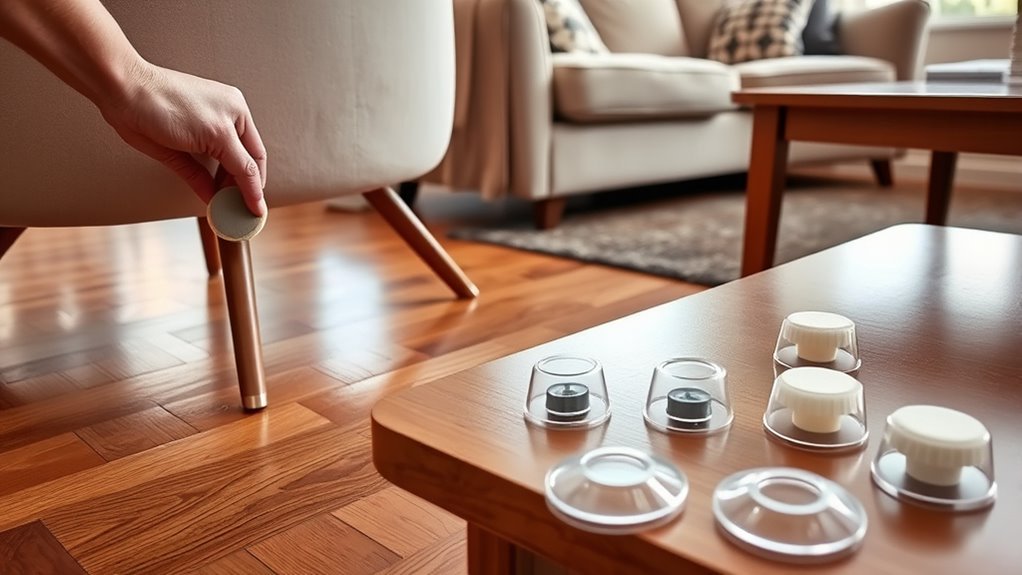
DIY floor protectors work well for odd-shaped furniture legs or temporary moves when they use clean, soft, non-abrasive materials. The goal is to build a secure cushion that will not shed grit, bleed dye, or slip out from under the leg.
| Solution | Pros | Cons |
|---|---|---|
| Custom-Cut Heavy Felt Sheets | Tailors seamlessly to L-shaped, sled, or oversized sofa feet | Requires clean trimming so loose corners do not peel up |
| Repurposed Carpet or Rug Remnants | Free, thick cushion for sliding heavy trunks or bookcases during a move | Must be placed soft pile-side down; rough jute or synthetic backing scratches wood |
| Knit Chair Socks or Tennis Balls | Wraps around curved tubular metal or angled legs where flat adhesive fails | Casual appearance; woven fibers trap dust and pet hair and need frequent washing |
| Soft-Bottom Furniture Sliders | Prevents back strain and floor gouges when rearranging sofas or dressers | Should be removed after moving so furniture does not slide unexpectedly |
When using carpet scraps to move a heavy sofa or armoire, always place the clean, plush yarn face down against the hardwood planks. Inspect the scrap first to confirm there are no tack-strip staples, dried carpet glue, or coarse backing fibers touching the floor.
Warning: Never use hard plastic carpet sliders, bare metal dome glides, rough carpet backing, duct tape, or black vulcanized rubber directly on hardwood. Hard plastics and metal gouge the finish, while vulcanized rubber and PVC leach plasticizers that permanently stain polyurethane.
Recommended Products

✌ DOES CHAIR MOVE AND SCRATCH YOUR FLOOR? FORGET ABOUT SCRATCHES! Furniture felt pads by X-PROTECTOR – THE BEST FLOOR PROTECTORS for furniture legs, wooden, laminate, or tiled floors!
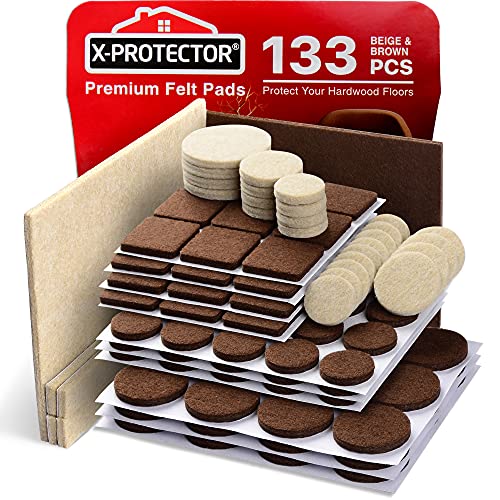
✌ X-PROTECTOR FURNITURE FELT PADS – best protection for Your wooden, laminate or tiled floors. Our furniture coasters create strong shields between floor and furniture, desks & tabletops, which carefully protect surfaces from scratches and scuffs.
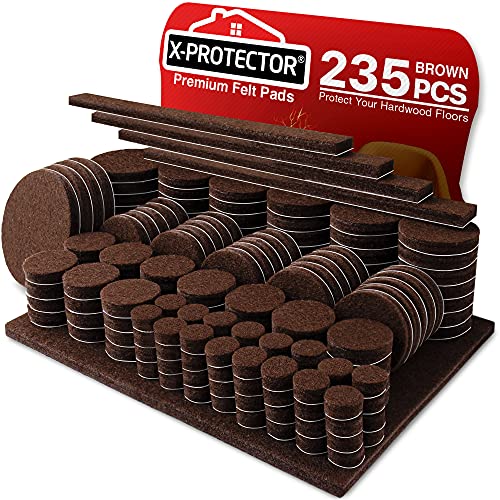
✌ X-PROTECTOR FURNITURE FELT PADS – best protection for Your wooden, laminate or tiled floors. Our furniture coasters create strong shields between floor and furniture, desks & tabletops, which carefully protect surfaces from scratches and scuffs.
Common DIY Mistakes to Avoid
Even high-grade felt pads can fail or cause scratches if installed improperly. Watch out for these frequent installation and maintenance errors:
- Sticking felt pads over curved factory glides: Pressing a flat adhesive pad onto a domed plastic or metal nail-in glide leaves only a tiny center point attached, causing the pad to slide off within days and smear glue across the boards.
- Applying pads to dusty or waxy legs: Wood polish, kitchen grease, and sawdust block adhesive from bonding.
- Leaving grit trapped under pads: Sliding a chair over a gritty floor embeds sand grains into the felt, turning the pad into an abrasive block.
- Using thin 1/16-inch craft felt on heavy furniture: Ultra-thin felt compresses flat almost immediately under adult body weight.
- Letting nail-on or screw-in glides wear down to the metal: Once the felt pad compresses past its recessed rim, the metal screw or nail head cuts deep grooves into the wood.
- Dragging furniture during installation: Always lift each corner cleanly or use felt-bottom sliders when positioning heavy pieces.
The best floor protection is preventive: clean grit away, cushion every contact point, and never let furniture drag directly across the finish.
Top Tips for Floor Maintenance
Furniture pads work best when paired with clean, stable floor conditions. When floorboards cup or crown from excess moisture, the raised board edges catch on sliding chair legs and chip the finish.
- Sweep or vacuum high-traffic zones several times a week: Dining rooms, living rooms, and hallways collect abrasive grit fastest.
- Switch off the vacuum beater bar: Use a bare-floor brush attachment or hard-surface setting so spinning bristles do not dull the topcoat.
- Wipe up liquid spills immediately: Use a dry or slightly damp microfiber cloth so standing moisture does not seep into board seams.
- Avoid wet string mops and steam mops: Pressurized steam and pooling water force moisture into the wood grain, causing finish peeling and board warping.
- Maintain stable indoor climate levels: According to NWFA problem prevention guidance, keeping indoor temperatures between 60°F and 80°F and relative humidity between 30% and 50% year-round minimizes board cupping, splitting, and seasonal gapping.
Note: Avoid DIY cleaning mixes made with vinegar, ammonia, or oil soaps. As explained in Southern Living’s guide on cleaning hardwood with vinegar, repeated vinegar solutions are acidic and gradually dull or break down protective polyurethane finishes. Stick to a pH-neutral cleaner designed for wood floors.
Smart Strategies to Keep Your Hardwood Floors Looking Great
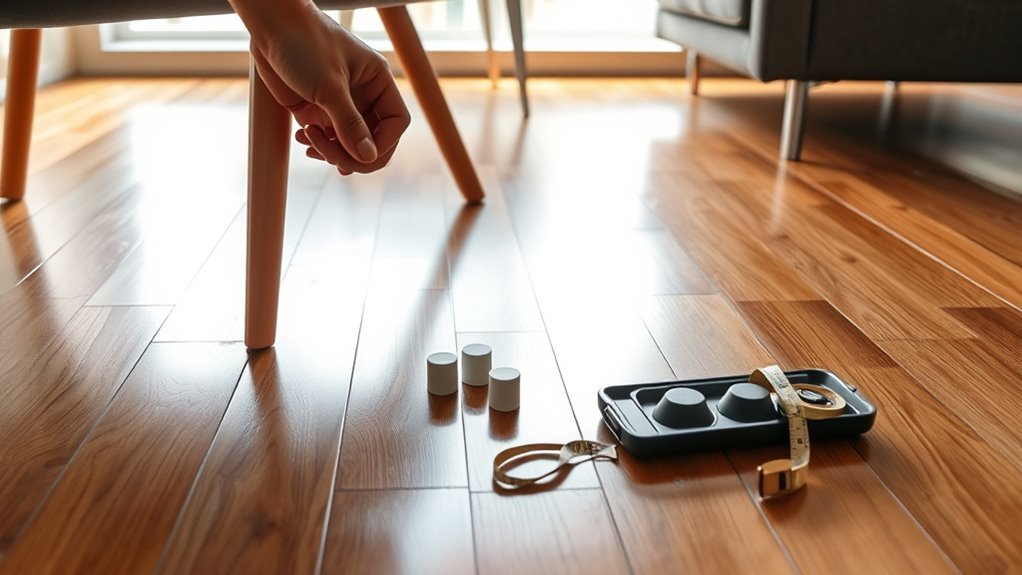
Long-term floor protection combines individual leg pads with room-wide barriers, a predictable inspection routine, and prompt touch-ups when minor scuffs happen. Setting up high-traffic zones properly stops wear before it reaches bare wood.
Effective Floor Protection Methods
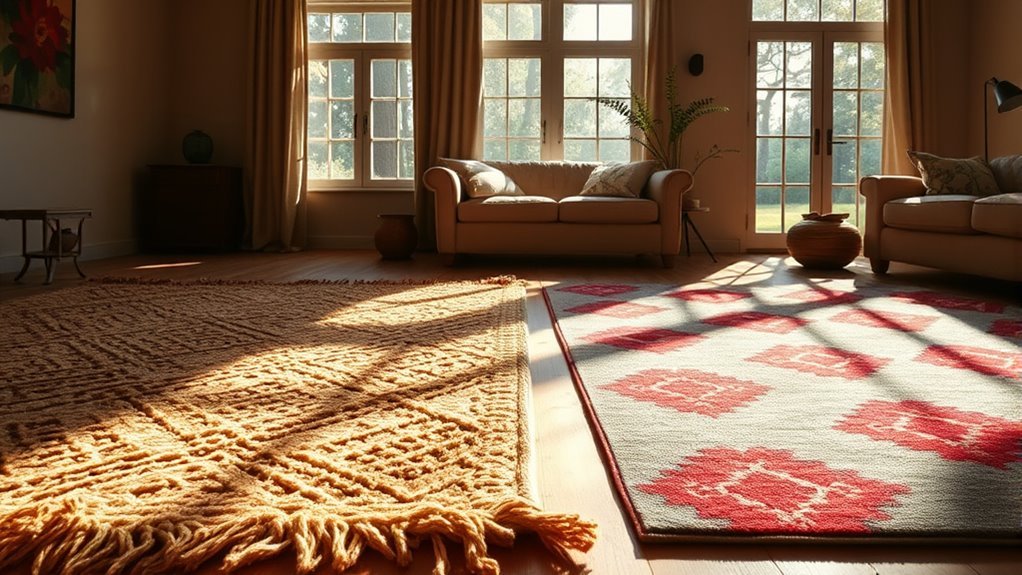
- Size dining room rugs so chairs stay on the rug: Choose an area rug that extends at least 24 to 36 inches beyond all four sides of the dining table so chair legs do not drop off the rug edge when diners sit down.
- Pair area rugs with a hardwood-safe rug pad: Use a breathable 100% felt pad or a combination felt-and-natural-rubber pad. Avoid waffle-style PVC pads, synthetic latex backings, or adhesive grippers that trap moisture and imprint grid marks onto the finish.
- Place walk-off mats at every exterior doorway: Trapping sand and pebbles at the entry cuts down the grit that reaches living and dining room furniture legs.
- Protect home office zones continuously: Use a smooth, flat-backed polycarbonate or tempered-glass chair mat wherever a task chair rolls daily.
Regular Maintenance Guidelines
Follow this routine inspection calendar to catch worn pads before a bare furniture leg touches the floor:
| When | What to Do |
|---|---|
| Weekly | Vacuum with a bare-floor attachment or microfiber dust-mop high-traffic lanes and around dining chair and sofa feet. |
| Monthly | Flip over dining chairs and kitchen stools; brush grit out of felt pads and replace any pad that has shifted off-center or compressed below 1/8 inch. |
| Seasonally | Lift sofa corners and caster cups to clean underneath, inspect for compression dents, and verify indoor humidity stays between 30% and 50%. |
| As needed | Replace glazed or torn pads, clean old adhesive off furniture legs with isopropyl alcohol, and touch up minor surface scuffs. |
How to Repair Existing Scratches and Dents
If furniture legs have already left marks, diagnose the depth before choosing a repair product. Run your fingernail lightly across the scratch: if your nail glides smoothly without catching, the mark is a superficial scuff in the clear topcoat; if your nail catches or reveals lighter raw wood, the scratch has penetrated the finish layer.
Never brush raw liquid polyurethane randomly over an isolated scratch, as it dries with visible lap lines and sheen mismatches. Instead, rub out surface rubber scuffs with a microfiber cloth and approved wood cleaner, and conceal shallow finish scratches using your flooring manufacturer’s color-matched touch-up marker, blending pencil, or wax fill stick. When a room develops widespread wear, deep gouges, or exposed bare wood, review NWFA refinishing guidance to decide between a professional maintenance coat (screen and recoat) and full sanding and refinishing.
What to Put Under Different Furniture Types
Every piece of furniture places a different mechanical load on hardwood planks. Use this reference list to equip each furniture style in your home:
- Dining chairs and barstools: Install 3/16-inch to 1/4-inch (5 mm) high-density wool felt pads, recessed felt cup glides, or screw-in felt glides that withstand daily backward sliding.
- Sofas and sectionals: Place 2- to 3-inch wide non-staining natural rubber pads or felt-bottom caster cups under every foot—including hidden center support legs—to spread heavy static loads and stop the couch from sliding when people sit down.
- Recliners and motion seating: Set a hardwood-safe recliner pad or wide rubber-and-felt rail strips under the entire base frame so shifting scissor mechanisms and metal rails never contact the floor.
- Rocking chairs: Apply continuous 1/4-inch thick adhesive felt strip tape along the full bottom curve of both wooden runners, or set the rocker on a low-pile rug with a felt rug pad.
- Rolling office chairs: Lay down a smooth hardwood-safe chair mat, or swap standard hard black nylon wheels (BIFMA Type H carpet casters) for soft polyurethane rollerblade-style wheels (Type W hard-floor casters, typically using a universal 7/16-inch by 7/8-inch grip-ring stem).
- Metal-legged and hairpin furniture: Fit snug thermoplastic elastomer (TPE) or silicone leg caps with bonded felt bottoms over tubular metal legs, or snap U-shaped felt glides onto hairpin rods.
- Heavy beds, dressers, and pianos: Use wide, rigid caster cups lined with dense felt or natural rubber to prevent deep compression dents from long-term static weight.
Recommended Products

✌️ HUGE QUANTITY OF FURNITURE PADS FOR ALL YOUR NEEDS - ALL SIZES AND MANY BIG FELT PADS - 357 pieces: (1) 4 1/3x6”, (30) 2½x½”, (16) 2”, (16) 2”x2”, (32) 1 ½, (42) 1”x1”, (96) 1”, (60) ¾”, (64) 3/8”.

BEST PROTECTION&ANTI SCRATCH - Place our felt furniture pads on the legs of your furniture, including beds, tables, chairs, sofas and appliances to provide the best protection for your wood, laminate or tile floor. And you never have to hear that annoying scraping noise again.

✌ X-PROTECTOR FURNITURE FELT PADS – best protection for Your wooden, laminate or tiled floors. Our furniture coasters create strong shields between floor and furniture, desks & tabletops, which carefully protect surfaces from scratches and scuffs.
Troubleshooting Floor Protection Problems
When furniture pads slip off, leave residue, or fail to stop scratches, a small mismatch in preparation or hardware is usually to blame. Here is how to solve the four most common issues:
- Adhesive pads keep sliding off chair legs: Lateral shear force or a curved factory glide is breaking the adhesive bond. Pry off any curved plastic dome on the leg bottom, clean the wood with 70% isopropyl alcohol, and switch to a recessed cup pad (which wraps around the sides of the leg) or a screw-in felt glide.
- Sticky adhesive residue on legs or floorboards: When a pad slides off-center, exposed glue collects dust and leaves dark smudges. Remove adhesive from the furniture leg with a cloth dampened in mineral spirits or isopropyl alcohol. To lift residue from the hardwood floor itself, blot gently with a microfiber cloth and a finish-safe wood floor cleaner—never scrape the floor with a putty knife or abrasive scouring pad.
- New scratches appear even with felt pads installed: Flip the chair over and rub your thumb across the pad. If the felt feels rough, shiny, or hard, quartz grit is embedded in the fibers or a screw-in glide has worn down to its metal rim. Discard and replace the pad immediately rather than trying to wash it.
- Yellow or dark outlines under rubber pads: Low-grade synthetic rubber or PVC pads are reacting chemically with the floor’s finish (plasticizer migration). Remove the pads immediately, clean the area with a pH-neutral wood cleaner, and replace them with 100% natural rubber or thick wool felt.
Key Takeaways
- Match pad thickness to furniture weight: use 3/16-inch to 1/4-inch (5 mm) high-density felt on dining chairs and sofas rather than thin craft felt that flattens quickly.
- Switch from peel-and-stick pads to screw-in felt glides or wrap-around silicone-and-felt boots on chairs that slide across the floor multiple times a day.
- Spread heavy static loads under sofas, sectionals, and beds with 2- to 3-inch wide caster cups or non-staining natural rubber pads, including under hidden center support legs.
- Keep indoor relative humidity between 30% and 50% and temperature between 60°F and 80°F so floorboards do not cup and catch on moving chair legs.
- Avoid steam mops, wet mops, PVC rug pads, and routine vinegar solutions, all of which weaken or discolor protective hardwood finishes.
Frequently Asked Questions
How do you protect hardwood floors from chairs?
Protect hardwood floors from chairs by wiping the bottom of each leg with isopropyl alcohol and applying 3/16-inch to 1/4-inch high-density felt pads or screw-in felt glides. Vacuum the floor weekly with a bare-floor attachment so grit cannot embed into the felt, and inspect dining chair pads monthly.
Should you use a chair mat on hardwood floors?
Yes, you should use a flat-backed chair mat under rolling office chairs because repeated caster movement wears through wood finishes and dents the grain. Choose a smooth polycarbonate, vinyl, or tempered-glass mat labeled safe for hardwood floors, and never use a carpet mat with spikes.
What is the best chair pad for hardwood floors?
The best chair pad for most dining chairs and barstools is a 3/16-inch to 1/4-inch high-density wool-blend felt pad or a screw-in felt glide that covers the full bottom of the leg. For heavy stationary seating like sofas, wide non-staining natural rubber pads or felt-lined caster cups work best.
What should you put under a recliner to protect a wood floor?
Place a full-size hardwood-safe recliner mat, wide non-staining natural rubber pads, or long felt-and-rubber rail strips under a recliner base. Recliners shift weight backward and forward as they open, so wide protectors prevent both sliding and metal frame contact with the wood.
How often should you replace furniture pads?
Replace furniture pads every 3 to 6 months on dining chairs and barstools, or immediately whenever a pad looks flattened below 1/8 inch, glazed with dirt, torn, or shifted off-center. Pads under stationary sofas and beds experience little friction and typically last 1 to 2 years.
Can rubber pads damage hardwood floors?
Yes, cheap vulcanized rubber, synthetic latex, and PVC pads can chemically react with polyurethane finishes and leave permanent yellow or dark stains. Only use 100% natural rubber or thermoplastic elastomer (TPE) pads explicitly labeled non-staining and safe for hardwood floors.
Are silicone chair leg caps with felt bottoms safe for hardwood floors?
Yes, clear or color-matched silicone caps with molded or heat-bonded felt bottoms are safe for hardwood floors and stay on better than peel-and-stick pads on thin, round, or angled legs. Make sure the cap fits snugly and inspect the bottom felt monthly to brush away trapped grit.
Can you replace office chair wheels instead of using a chair mat on hardwood?
Yes, replacing standard hard nylon wheels with soft polyurethane rollerblade-style casters prevents most surface scratches, though heavy daily rolling in one spot can still indent softer wood species over time. Pairing soft polyurethane casters with a hardwood-safe chair mat gives complete protection against both scratches and dents.
Conclusion
Protecting hardwood floors from chair and sofa legs comes down to clean leg preparation, thick floor-safe pads matched to each piece’s weight and movement, and regular grit removal. Start today by flipping over your most-used dining chairs, wiping the leg bottoms with isopropyl alcohol, and installing 3/16-inch to 1/4-inch high-density felt pads or glides—then check your sofa’s corner and center legs to make sure every contact point is cushioned.
Sources
- USDA Forest Products Laboratory: Wood Handbook — Wood as an Engineering Material: Janka side-hardness testing method and lbf ratings for hickory, hard maple, white oak, red oak, walnut, and cherry.
- National Wood Flooring Association: Maintenance: Routine sweeping, dust mopping, bare-floor vacuuming, immediate spill cleanup, and avoiding wet or steam mops.
- National Wood Flooring Association: Problem Prevention: Furniture protector pad guidelines, scratch prevention, and maintaining 60–80°F indoor temperature and 30–50% relative humidity.
- National Wood Flooring Association: Refinishing Your Floors: Guidance on touch-up repairs, maintenance coats, and professional sanding and refinishing.
- U.S. EPA: Search Products that Meet the Safer Choice Standard: Directory of floor-care cleaners evaluated for safer ingredient profiles.
- Southern Living: Can You Use Vinegar To Clean Hardwood Floors?: Explanation of how acidic vinegar solutions dull and weaken hardwood floor finishes over time.