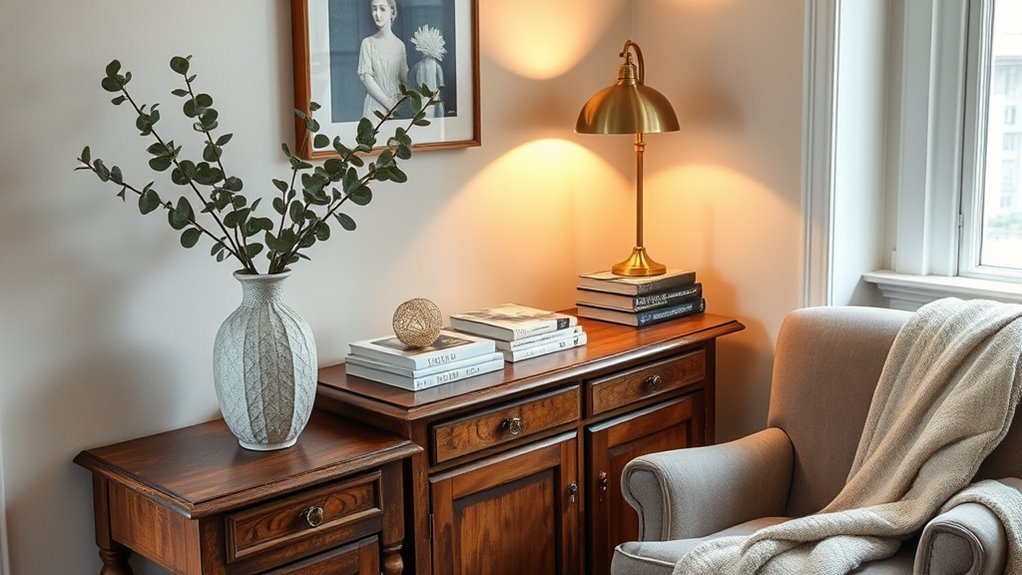
Visual balance in interior design means distributing visual weight so no area of a room dominates without support. Furniture size, color, contrast, shape, texture, height, lighting, and empty space all affect how heavy or light an area appears. The goal is not perfect matching. It is to create a room where the focal point, furniture, decor, and negative space feel intentionally connected.
Last updated: August 19, 2026
Quick Answer
Visual balance in interior design means arranging elements so no single feature overwhelms the room. The three main types are symmetrical, asymmetrical, and radial balance. You create them by controlling visual weight through furniture size, color, contrast, shape, texture, height, position, and negative space.
Key Takeaways
- Visual balance helps a room feel stable, intentional, and easier to understand at a glance.
- Large, dark, highly contrasted, tall, or strongly textured items often carry more visual weight than smaller or quieter elements.
- Symmetrical, asymmetrical, and radial balance are the three main types used in interior design.
- Negative space is an active part of the composition because it gives focal pieces room to stand out.
- Color, scale, texture, height, position, and repetition work together, so changing one element may correct an entire room.
What Is Visual Balance in Interior Design?
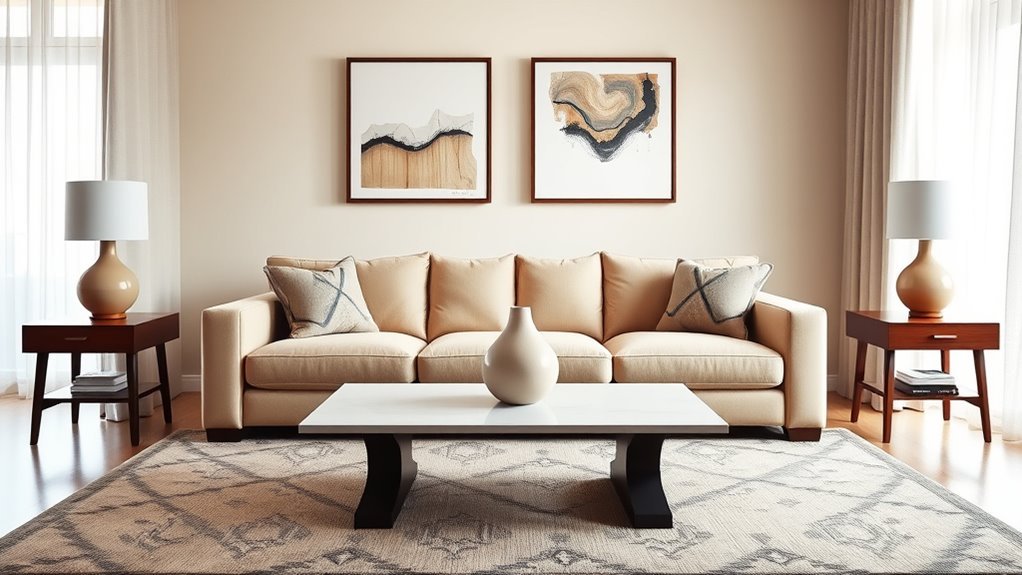
Visual balance in interior design means arranging elements so the room feels steady and complete. It focuses on the distribution of visual weight, which is the amount of attention an object or area seems to demand.
Large furniture, dark colors, strong contrast, bold patterns, tall objects, and rough textures often feel visually heavier. Small accents, pale colors, glass, slim furniture legs, and open areas usually feel lighter.
Balance is perceptual rather than mathematical. Two sides of a room do not need the same number of objects. A large sofa on one side, for example, may be balanced by two smaller chairs, a floor lamp, and artwork on the other if their combined visual pull feels comparable.
You can create balance through furniture placement, color, scale, height, lighting, repetition, and negative space. Negative space is not simply unused room. Intentional open areas can separate visual groups, reduce competition between focal points, and give important objects room to stand out.
Why Is Visual Balance Important for Your Space?
Visual balance matters because it influences how clearly you read a room. When one area contains most of the large, dark, tall, or highly patterned pieces, that side may demand attention while the rest of the room feels unfinished.
Balance can also support movement. Furniture, decor, and open space should work together so walkways remain understandable rather than feeling squeezed by unnecessary pieces.
A visually balanced space does not have to look formal or perfectly coordinated. Personal artwork, plants, books, collected objects, and family photos can remain prominent as long as they have enough surrounding space and a clear relationship to nearby pieces.
What Elements Influence Visual Balance in Interior Design?
Several design elements affect visual balance. The most important include color, contrast, size, shape, texture, height, position, lighting, and empty space.
These elements work together rather than separately. A small object may still carry strong visual weight if it has a bright color or sharp contrast, while a larger object may recede if its color closely matches the background.
Recommended Products

[Framed Wall Art]: Set of 3 large framed neutral abstract wall art, each measuring 16 x 24 inches. Each painting comes with a sturdy frame with a 1.38-inch frame thickness
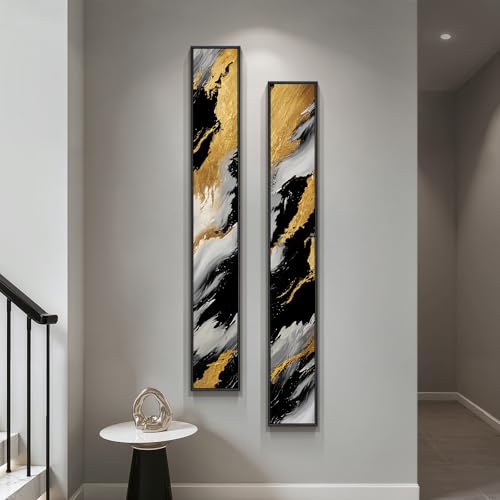
[Framed Wall art]: Set of 2 pieces contemporary large framed luxury black white gold vertical long narrow abstract canvas wall art each 8x56 inches. Each painting comes with a sturdy, rust-proof solid wood frame

Colorful Canvas Wall Art Size:The striking combination of hues creates a lively and vibrant atmosphere, instantly uplifting the mood of your space.
Color Coordination Strategies
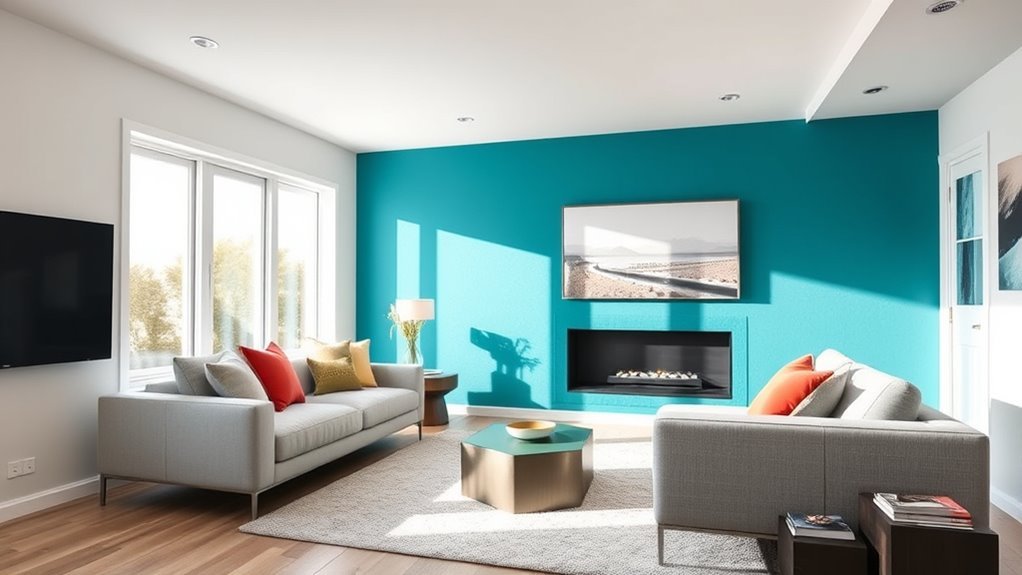
Color changes visual balance quickly because strong contrast and saturation can attract attention. Dark, bright, or highly saturated areas often appear visually heavier than quiet, low-contrast areas around them.
A cohesive palette can reduce visual competition. Repeat an accent color in two or three separated areas, or use related undertones to make furniture, textiles, and decor feel connected without forcing them to match.
| Color Approach | Common Visual Effect | Balance Strategy |
|---|---|---|
| Warm Colors | Can feel energetic or visually forward | Use quieter surrounding tones when the color becomes dominant |
| Cool Colors | Can feel calm or visually restrained | Add contrast or warmer accents when the room feels flat |
| Earthy or Neutral Tones | Often create a stable background | Layer texture, value, and small accents for depth |
Shape and Texture Interaction
Shapes and textures influence balance even when the palette stays simple. Rounded forms often soften a composition, while strong straight lines and angular shapes can create a more structured visual effect.
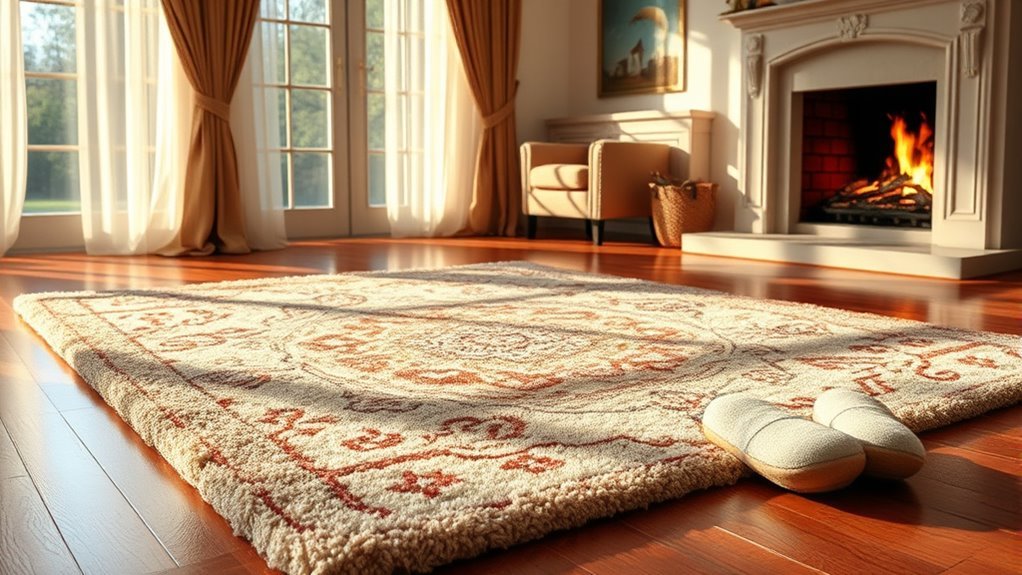
Texture also changes visual weight. A chunky knit throw, heavily grained stone table, deep-pile rug, or ribbed cabinet usually attracts more attention than a similarly colored smooth surface.
- Mix soft curves with straight lines to create controlled contrast.
- Pair smooth fabrics with rough surfaces to add depth without relying only on color.
- Balance large items with smaller accents that have enough color, height, or texture to hold their own.
- Combine geometric forms with organic shapes to keep a room from feeling overly rigid.
- Repeat a texture or finish in small amounts so separated areas feel related.
How Does Color Help Create Visual Balance?
Color helps control where attention goes. A saturated or high-contrast color can become a focal point, while a quieter background can keep that focal point from competing with every other surface.
You do not need every color to match. A successful palette usually has a clear relationship through repeated accents, related undertones, deliberate contrast, or a controlled range of values.
Using Color to Control Visual Weight
Dark colors often carry more visual weight than nearby light colors, especially when the contrast is strong. A dark sofa, rug, wall, or cabinet can therefore anchor a room, but several dark focal pieces grouped in one area may make that side feel dominant.
Lighter or lower-contrast surfaces can visually soften heavier elements. Instead of assuming light colors physically make a room larger, use them as one tool for reducing contrast and giving dark or bulky pieces more breathing room.
- Use one dominant color family when too many competing hues make the room feel busy.
- Repeat an accent color in separated areas to guide the eye around the room.
- Balance strong colors with quieter surrounding surfaces.
- Use contrast intentionally to establish one main focal point.
- Layer lighter and darker values to add depth without adding unrelated colors.
Balancing Bold and Neutral
A useful starting point for planning a color palette is the 60-30-10 decorating guideline: roughly 60% dominant color, 30% secondary color, and 10% accent color.
The percentages are not measurements you need to calculate exactly. They are a planning tool. If a room feels visually noisy, increasing the dominant or secondary color can calm it. If it feels flat, a smaller accent color can create a stronger focal point.
For example, walls and a large rug might form the dominant color, upholstery or curtains the secondary color, and pillows, artwork, or smaller accessories the accent. You can also use several shades of the same hue instead of three sharply different colors.
Emotional Impact of Colors
Colors can influence the mood of a room, but those effects are not fixed. Warm reds, oranges, and yellows are often associated with energy or warmth, while many blues and greens are associated with calm. Saturation, undertone, natural light, surrounding materials, and personal preference can change the result.
Use the intended mood as one part of your balance plan rather than as a strict color rule. A bedroom may benefit from lower contrast, while an entryway or dining area may comfortably support stronger contrast.
- Warm colors can add energy when a room feels visually flat.
- Cool colors can provide contrast to warm wood, leather, or brass tones.
- Neutral colors can give stronger accents a quieter background.
- Dark shades can anchor an area when their weight is distributed intentionally.
- Repeated colors can connect separate furniture groups or zones.
How Can You Achieve Visual Balance at Home?
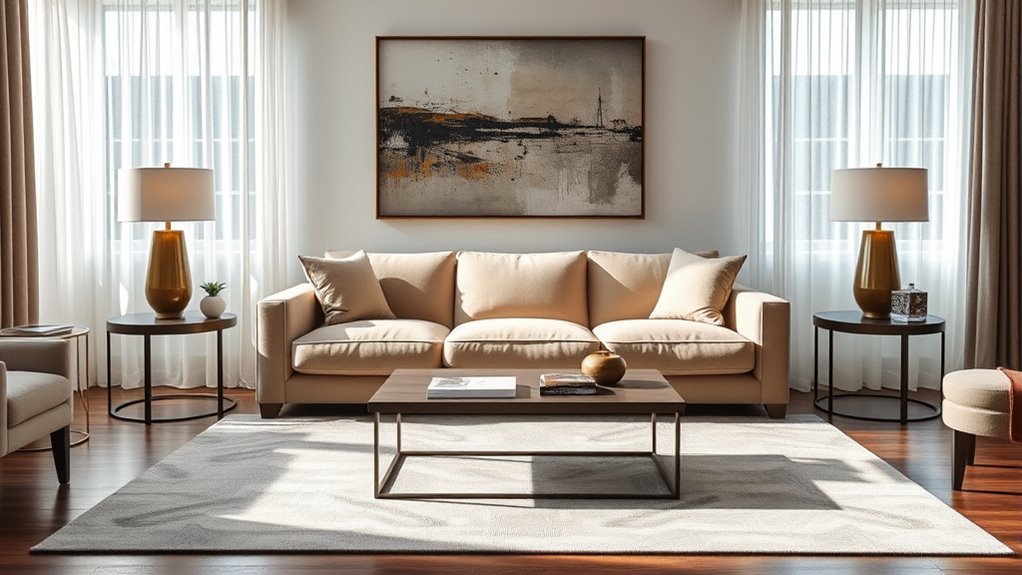
Start by looking at the room from its main entrance. Notice where your eye lands first, which side contains the strongest visual weight, and whether any area feels crowded or disconnected.
Then adjust one variable at a time. Moving a lamp, artwork, plant, side table, or accent chair can change the composition without requiring new furniture.
Recommended Products

White Modern Floor Lamp: This floor light fits in any room from industrial to modern or traditional décor. Its simple and elegant design can make it easy to place in any room of the house.
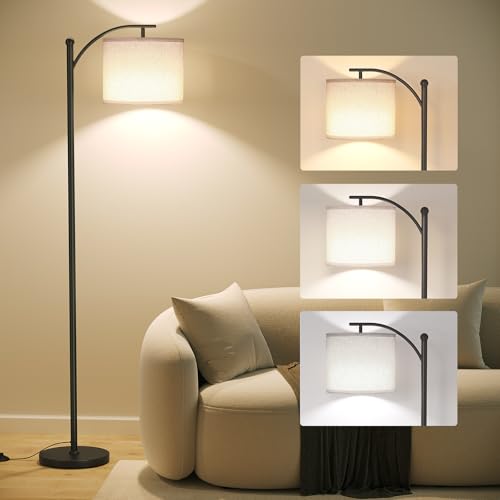
【3 Color Temperature LED Bulbs Included】SUNMORY Modern Floor Lamp includes a 9 watt,800 lumen, LED E26 bulb.This arc floor lamps bulb has 3 color temperatures that can be adjusted:3000K/4000K/5000K.You only need to press the foot switch to switch the arched floor lamp to different color temperatures, freeing your hands,black floor lamp can create different atmospheres for you.This floor lamp is perfect as a reading lamp,office lamp,or lamp for living room.

2026 Upgrade: We always put users first and noticed customers expect greater durability and stability from their floor lamps. In February, we upgraded our materials to include high-quality LED bulbs and a full metal body, earning ETL certification. Our lamp is built to be more stable and durable, eliminating issues like sudden shut-offs and unsteady stands. Enjoy superior quality for a more convenient and comfortable life.
A Four-Step Room Balance Test
- Find the anchor. Identify the main focal point, such as a fireplace, bed, sofa, window, dining table, or artwork.
- Compare visual weight. Look left, center, and right. Note where the largest, darkest, tallest, brightest, or most textured objects are concentrated.
- Check vertical balance. Compare what is happening near the floor, at furniture height, and higher on the walls. A room can feel bottom-heavy if every strong element stops at sofa height.
- Adjust the counterweight. Move, remove, or add one element. A lamp, plant, artwork, lighter textile, or additional negative space may be enough to restore balance.
If the room is difficult to judge, mentally divide your view into a three-by-three grid. The rule-of-thirds approach can help you compare visual weight across the left, center, right, upper, middle, and lower areas instead of judging the room as one undivided scene.
- Pair large furniture with smaller accents that provide enough visual counterweight.
- Add tall plants, floor lamps, shelves, or artwork when all visual interest sits low in the room.
- Leave negative space around important furniture and decor rather than filling every gap.
- Repeat colors, shapes, textures, or materials to connect separated areas.
- Use mirrors, glass, slim furniture profiles, or quieter fabrics when an area feels too visually dense.
Pro tip: Take a photo of the room from the doorway. A flattened image often makes an overly heavy side, crowded wall, weak focal point, or empty vertical area easier to notice.
How Do Different Types of Visual Balance Affect Your Space?
The three main types of balance used in interior design are symmetrical, asymmetrical, and radial balance. Current design-principle guidance also treats these as the core categories. A room may use more than one type at the same time.
| Balance Type | How It Works | Typical Effect | Simple Example |
|---|---|---|---|
| Symmetrical | Similar visual weight mirrors across a center line | Orderly, calm, formal | Matching nightstands and lamps beside a bed |
| Asymmetrical | Different objects create comparable visual weight | Relaxed, dynamic, less formal | A sofa balanced by two chairs and a tall lamp |
| Radial | Elements organize around a central point | Focused, connected | Chairs surrounding a round dining table |
For additional examples of how designers distinguish these categories, see this overview of core interior-design principles.
Two supporting ideas apply to all three types:
- Visual weight: Size, color, contrast, texture, shape, height, and position influence how strongly an element attracts attention.
- Negative space: Open areas reduce visual competition and give important features room to stand out.
Symmetrical Balance
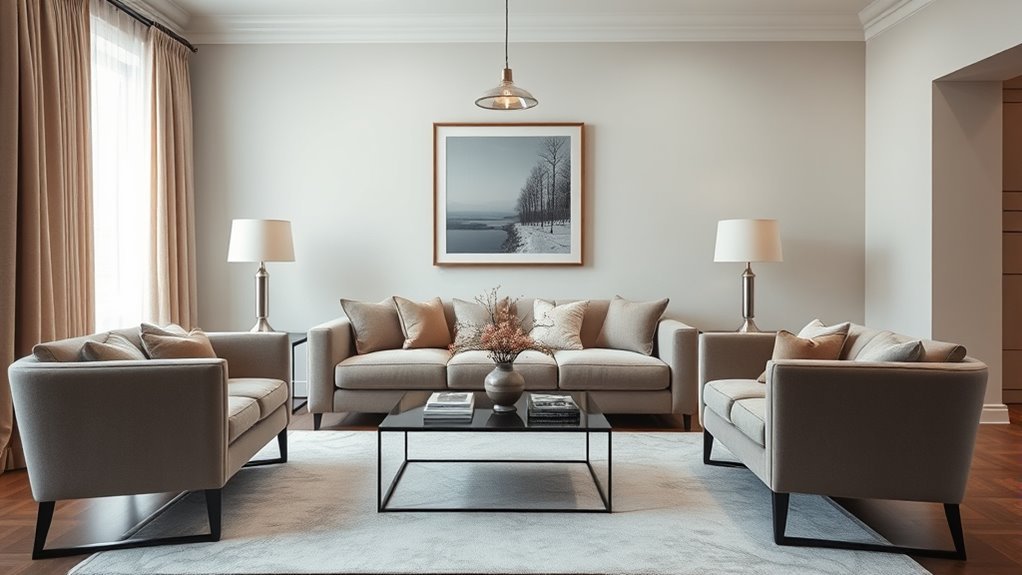
Symmetrical balance uses matching or near-matching visual weight on both sides of a center point. Think of two nightstands beside a bed, matching sconces around a mirror, or two chairs positioned on opposite sides of a fireplace.
This approach works well when you want a space to feel calm, classic, or formal. The two sides do not always have to be perfectly identical, but a clear mirrored relationship should be easy to recognize.
Asymmetrical Balance
Asymmetrical balance uses different elements that still feel comparable in visual weight. A large sofa on one side of a room, for example, may balance two smaller chairs, a side table, and a tall lamp on the other.
This style often feels more relaxed than exact symmetry. Repeating a color, material, line, or shape can connect the different objects so the arrangement feels deliberate rather than random.
Radial Balance
Radial balance organizes elements around a central point. A round dining table surrounded by chairs is one of the clearest examples.
This type naturally draws attention toward the center. It can work in dining rooms, entryways, round seating areas, or any composition organized around a central table, light fixture, rug, or architectural feature.
What Common Mistakes Disrupt Visual Balance?
Small design decisions can make a room feel noticeably unbalanced. One of the most common problems is overcrowding, which removes the negative space that separates focal pieces and visual groups.
Scale also matters. A tiny rug under bulky seating, a small lamp beside a substantial sofa, or oversized decor on a narrow shelf can make nearby elements look unrelated.
- Using more furniture than the room can comfortably support.
- Choosing rugs, lamps, or artwork whose scale feels disconnected from nearby furniture.
- Letting one bold color dominate without repeating or counterbalancing it elsewhere.
- Mixing many unrelated styles, colors, or materials without a connecting element.
- Filling every wall or surface and eliminating places for the eye to rest.
- Ignoring function and creating circulation paths that feel unnecessarily tight.
Note: Balance does not mean every side must match. Each area simply needs a clear visual relationship to the rest of the composition.
Designers also use negative space in living rooms to separate focal areas, preserve circulation, and prevent every object from competing for attention.
What Are Real-Life Examples of Visual Balance in Interior Design?
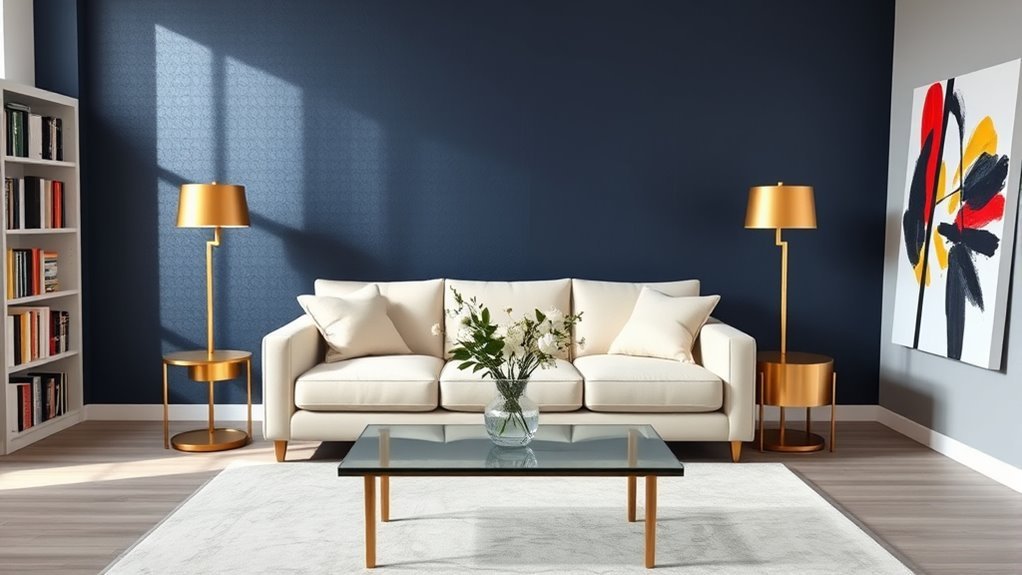
Visual balance becomes easier to understand when you compare real arrangements. The important question is not whether both sides contain identical objects, but whether their combined visual pull feels intentional.
- Two matching sofas facing each other create clear symmetry in a traditional living room.
- A large sectional can balance two smaller accent chairs when their color, height, texture, and placement give the opposite side enough presence.
- A round dining table creates radial balance when chairs organize around its center.
- Bold artwork can balance a quieter furniture arrangement when its colors repeat elsewhere in the room.
- A tall plant and floor lamp can provide vertical counterweight to a visually heavy sofa or cabinet.
- Family photos on one shelf can balance plants, books, or a larger object on the opposite side without creating a mirror image.
These arrangements work because the eye can find a relationship between the pieces. Repetition, scale, contrast, position, and empty space create that relationship even when the objects themselves do not match.
How Can You Evaluate and Improve Visual Balance in Your Home?
To evaluate visual balance, stand at the main entrance and study the whole room before focusing on individual objects. Ask what catches your eye first, which area feels visually heaviest, and whether another area feels disconnected or unfinished.
Next, identify the focal point. A fireplace, bed, sofa, view, or artwork can establish the room’s visual hierarchy. Surrounding objects should support that anchor instead of creating several equally strong competing focal points.
Then make one change at a time. Shift a chair, lower or move artwork, clear a crowded surface, add vertical height, or create more empty space. Recheck the room after each change so you know which adjustment actually improved it.
Recommended Products

Modern Wall Decor: Enhance your space with this contemporary wood wall decor piece that effortlessly complements any decor style.

Vintage Raccoon Wall Art: This framed artwork features a raccoon portrayed in a classic oil painting style, seated calmly at a wooden table with a contemplative posture. The deep green background, subdued lighting, and refined composition evoke a moody dark academia atmosphere with a subtle touch of humor

Raised 3D Floral Cutout Design – Each piece features raised wooden floral cutouts that add texture and depth, setting your new decor apart from the usual prints and pictures. Designed with carefully selected earthy colors that are easy to style in multiple arrangements.
Quick Room Balance Checklist
Use this checklist when a room feels unfinished or visually uncomfortable:
- Check whether one side contains most of the large, dark, bright, tall, or highly textured pieces.
- Confirm that one main focal point is easy to identify.
- Check the upper, middle, and lower parts of the room for uneven visual weight.
- Leave open space around major furniture and statement decor.
- Repeat at least one color, texture, shape, or material across separated areas.
- Make sure furniture scale relates sensibly to nearby pieces and the room.
- Check whether walkways and functional zones remain clear.
- Take a doorway photo and review the room as a flat composition.
Frequently Asked Questions
What Does Visual Balance Mean?
Visual balance means distributing furniture, decor, color, contrast, texture, and empty space so no area unintentionally dominates the room. The pieces do not need to match. They need enough visual relationship and counterweight for the composition to feel intentional.
Are There Three or Four Types of Visual Balance?
Interior-design guides most commonly recognize three main types: symmetrical, asymmetrical, and radial balance. Visual weight is sometimes discussed alongside them, but it is better understood as the perceived heaviness of design elements that helps you judge whether a composition is balanced.
What Are the Three Types of Balance in Interior Design?
The three main types are symmetrical, asymmetrical, and radial balance. Symmetrical balance mirrors visual weight across a center line, asymmetrical balance uses different elements with comparable weight, and radial balance organizes elements around a central point.
What Is the Principle of Visual Balance in Design?
The principle of visual balance is the intentional distribution of visual weight across a composition. Size, color, contrast, shape, texture, height, position, and negative space all affect how heavy an element appears and how it relates to the rest of the room.
Can a Small Room Still Have Visual Balance?
Yes. In a small room, control furniture scale, keep circulation clear, avoid concentrating every bulky piece in one area, and preserve some negative space. Repeating a limited set of colors or materials can also make separate elements feel connected without adding clutter.
How Do You Fix a Room That Feels Unbalanced?
Find the room’s main focal point, identify the area carrying the most visual weight, and change one element at a time. You may need to move furniture, add vertical height, repeat a color or texture, reduce clutter, or create more negative space. Take another doorway photo after each adjustment to compare the result.
Conclusion
Visual balance gives a room structure without requiring perfect symmetry. Start with the focal point, compare the visual weight on each side and at different heights, then adjust one variable at a time. Use scale, color, contrast, texture, repetition, and negative space as tools rather than rigid rules. When every major element has a clear relationship to the rest of the room, the space feels more intentional, functional, and complete.