Affiliate disclosure: As an Amazon Associate I earn from qualifying purchases. This article contains affiliate links to Amazon, so we may earn a commission if you buy through them, at no extra cost to you.
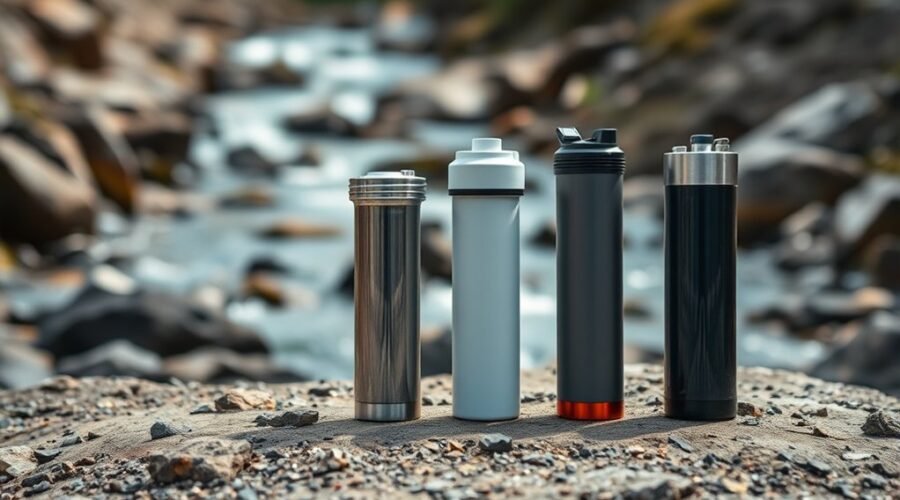
For 2026, the best portable water filters balance capacity, speed, and source flexibility. The Invigorated Water Portable Alkaline Water Filter Pouch suits travelers who want improved taste and pH. The Sawyer SP128 Mini offers ultralight, high-level bacteria and microplastic removal for hiking and emergencies. The Outback Gravity Fed system fits households and off-grid backup. The BKLES Electric Purifier gives fast multi-stage treatment for camping and survival. More details can clarify which one fits each need best.
Invigorated Water Portable Alkaline Water Filter Pouch (3-Pack)
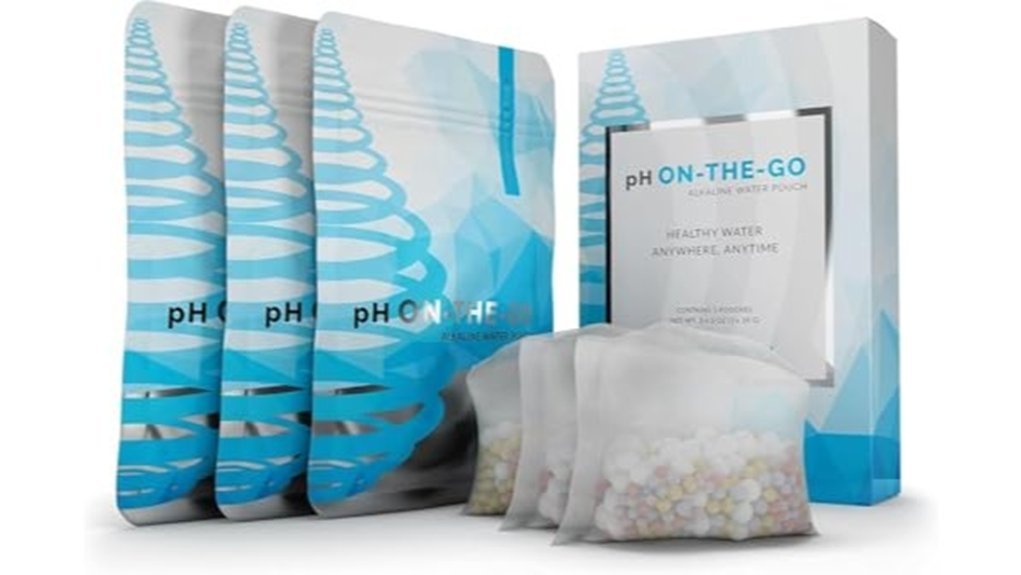
The Invigorated Water pH On-The-Go Portable Alkaline Water Filter Pouch is a strong fit for travelers, gym-goers, and anyone who wants better-tasting water on the move. Each pouch handles up to 416 cups, or 98 liters, and can last about 50 days at an average of eight glasses daily. It raises water alkalinity to pH 9, filters lead, chlorine, and some fluoride, and keeps calcium and magnesium. The BPA-free, resealable design suits hiking, office use, cooking, and coffee or tea. Its portable format also helps reduce reliance on bottled water.
Best For: Travelers, gym-goers, hikers, office workers, and anyone looking for a portable way to improve water taste and alkalinity on the go.
Pros:
- Raises water alkalinity up to pH 9 while retaining beneficial minerals like calcium and magnesium.
- Portable, BPA-free, resealable pouch is convenient for travel, workouts, hiking, and office use.
- Each pouch filters a large volume of water, helping reduce reliance on bottled water.
Cons:
- Requires soaking and setup before use, so it is less instant than a standard bottle or tumbler filter.
- Portable pouch format may be less convenient for users who want a rigid, durable container.
- Filter performance and lifespan depend on usage, and replacement may be needed after the stated capacity is reached.
Sawyer Products SP128 Mini Water Filtration System, Single, Blue
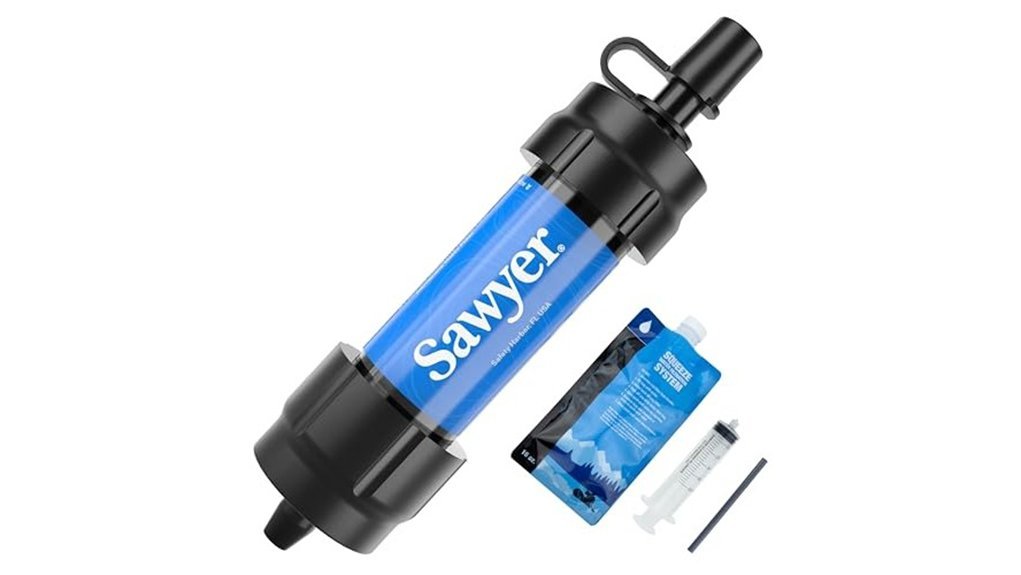
With a 0.1-micron inline filter and 2-ounce weight, the Sawyer MINI suits hikers and emergency kits. The blue SP128 model is a compact, one-pack system from Sawyer Products, built for outdoor recreation, travel, scouting, and camping. It is rated to filter up to 100,000 gallons and each unit is tested three times for performance. The filter removes 99.99999% of bacteria, 99.9999% of protozoa, and 100% of microplastics. Included are a squeeze pouch, straw, and cleaning plunger. It also connects to 28 mm bottles, hydration packs, or direct water sources.
Best For: Outdoor enthusiasts, travelers, campers, scouts, and emergency preppers who want a lightweight, compact water filter for dependable on-the-go use.
Pros:
- Extremely lightweight at just 2 ounces and easy to pack for hiking or travel.
- Strong filtration performance, removing bacteria, protozoa, and microplastics.
- Versatile use with the included pouch, straw, standard bottles, hydration packs, or direct water sources.
Cons:
- The small squeeze pouch may be less convenient or durable than larger reservoir options.
- Flow rate can be slower than bulkier filtration systems due to the compact filter design.
- Best suited for personal use, so it may not be ideal for filtering water for groups.
Outback Water Emergency Drinking Water Filter System, Gravity Fed 24 GPD
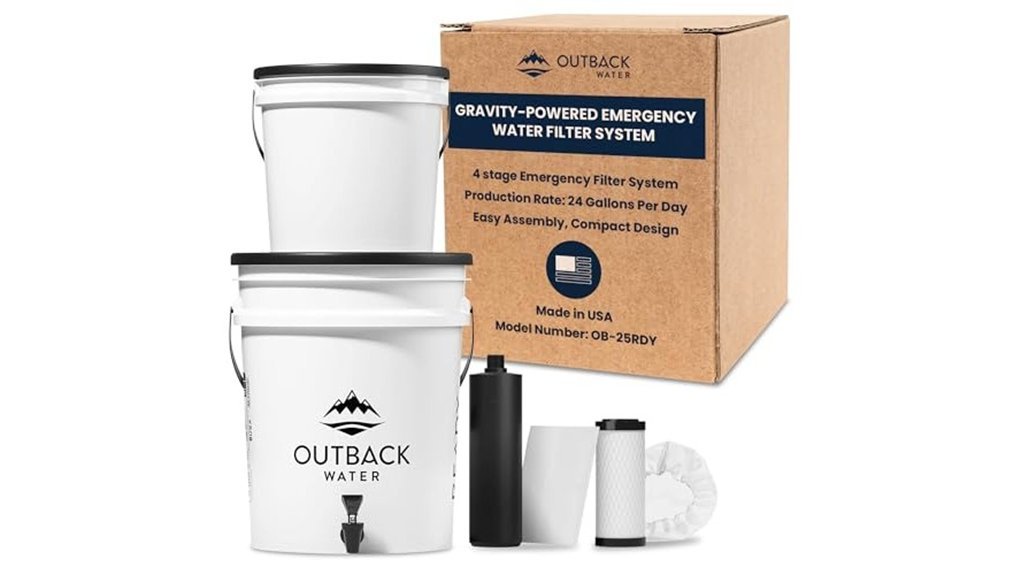
Outback’s gravity-fed system suits households and emergency kits needing reliable, electricity-free drinking water. It filters up to 24 gallons per day, supporting families, preppers, and relief efforts during disasters or off-grid stays. The design needs no pumps, batteries, or power; users simply pour collected water into the upper chamber. It can process water from lakes, rivers, streams, and stored rainwater, making it useful during boil water advisories. Rugged, compact, and portable, it serves camping, RV travel, bug-out plans, and emergency shelter use, while reducing dependence on bottled water supplies.
Best For: Households, preppers, campers, and emergency relief users who need a reliable, electricity-free way to produce drinking water in off-grid or disaster situations.
Pros:
- Filters up to 24 gallons per day for dependable emergency water access.
- Gravity-fed design requires no pumps, batteries, or electricity.
- Works with lakes, rivers, streams, rainwater, and boil-water-advisory sources.
Cons:
- Slower than powered filtration systems for high-volume daily use.
- Requires manually collecting and pouring source water into the unit.
- Best suited for backup or emergency use rather than a full-time household water solution.
BKLES Electric Water Purifier Camping, Survival & Emergency Preparedness
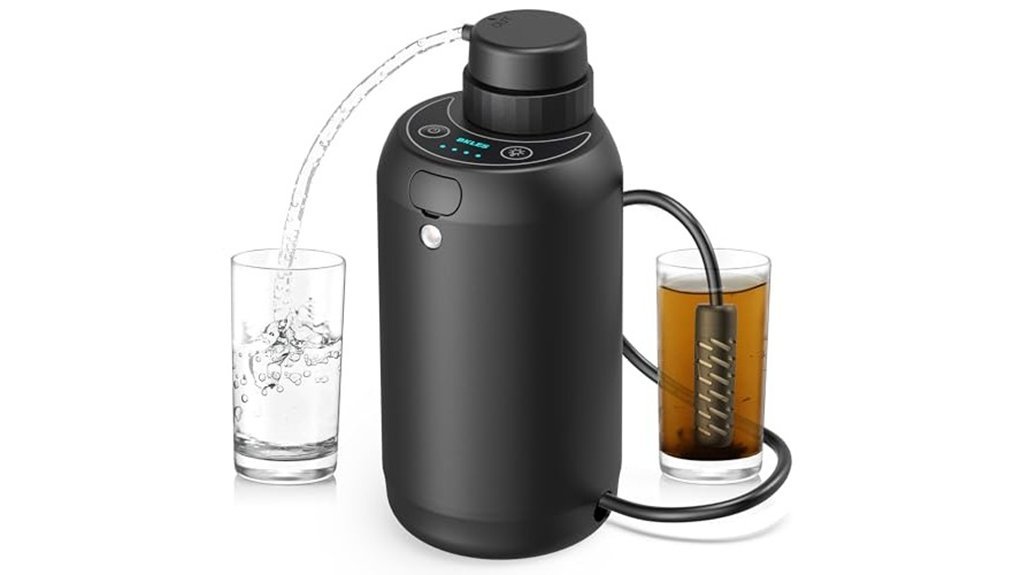
BKLES’s BK-2000 suits campers and emergency preppers needing rapid water purification on the move. The compact black unit weighs 350g and fits easily in a backpack with its storage bag. Its 6-stage system combines ultrafiltration, PP cotton, KDF, activated carbon, and coconut activated carbon fiber to improve taste and remove contaminants. The purifier delivers 700ml per minute, runs on a built-in lithium battery, and can treat 168,000ml per charge. It also supports mobile power, solar, or vehicle input. Rain, spring, lake, and river water are all compatible.
Best For: Campers, hikers, and emergency preparedness users who need a compact, fast, and portable water purifier for treating natural water sources on the go.
Pros:
- Fast purification rate of 700ml per minute for quick access to clean water.
- Lightweight 350g design with a storage bag makes it easy to pack and carry.
- Versatile power options plus compatibility with rain, spring, lake, and river water.
Cons:
- Battery-driven operation may require recharging during extended trips.
- Filter cartridges need replacement after 180 days or 1000L, adding maintenance.
- Not ideal for users needing a larger-capacity or whole-camp water treatment system.
Factors to Consider When Choosing Portable Water Filters 2026: Top Picks and Buying Guide
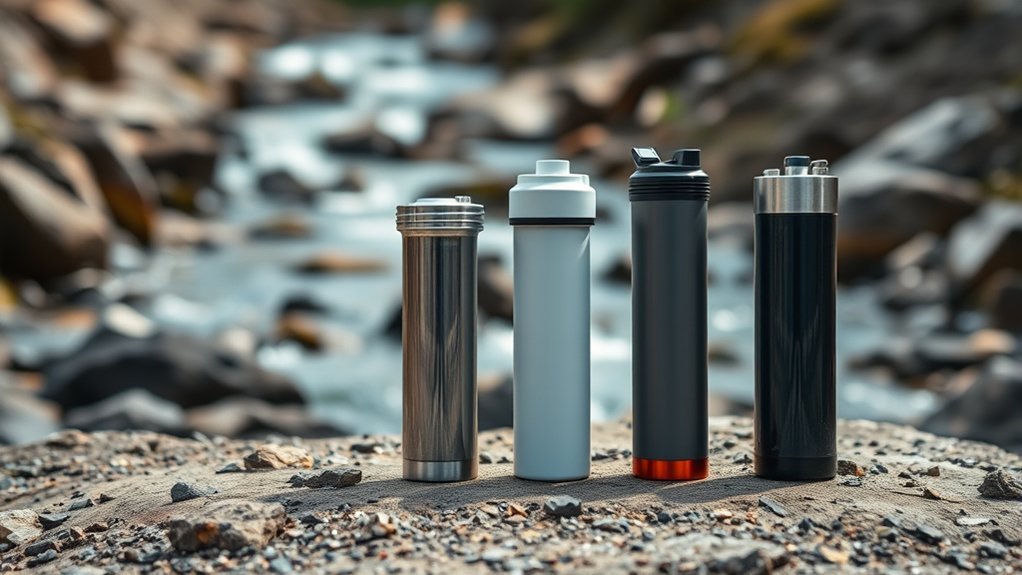
Choosing a portable water filter in 2026 often comes down to filtration capacity, contaminant removal, and compatibility with the intended water source. Portability, weight, and power requirements also shape how practical a unit will be for travel, camping, or emergency use. A careful comparison of these factors helps identify models that balance performance with convenience.
Filtration Capacity
Filtration capacity is a key measure of how practical a portable water filter will be over time, especially for extended outdoor use. Some models can treat up to 100,000 gallons, which makes them well suited to long trips, repeated field use, or emergency preparedness. Others are designed for smaller needs, purifying as little as 26 gallons before replacement. Capacity is also expressed in daily output, with some gravity-fed systems producing 24 gallons per day, or in service life, such as 50 days of normal use. Buyers should compare these figures against expected consumption and trip length. It also helps to confirm whether the filter works with lakes, rivers, or rainwater, since broader source compatibility increases usefulness across changing conditions and locations.
Contaminant Removal
Contaminant removal should be evaluated first, because a portable filter is only useful if it addresses the hazards present in the water source. Effective models can reduce bacteria, viruses, protozoa, and microplastics, with advanced systems reaching 99.99999% pathogen removal and complete microplastic capture. Performance depends on design: 0.1 micron absolute filters offer strong microorganism protection, while multi-stage units combine activated carbon and ultrafiltration membranes to improve water quality and taste. Some products also target heavy metals, chlorine, or sediment, so matching the filter to the intended impurity matters. Removal claims are often paired with lifespan ratings, and certain systems can process up to 100,000 gallons before replacement is needed.
Water Source Compatibility
Water source compatibility is a critical early check, since a portable filter must match the conditions it will actually face in the field. Lakes, rivers, streams, and stored rainwater each present different sediment loads, microbial risks, and chemical debris, so a versatile unit should perform reliably across all of them. The strongest options pair high filtration efficiency with broad source tolerance, removing bacteria and protozoa at very high rates while also addressing microplastics and other pollutants. Some models preserve beneficial minerals, which can be useful in long-term use. Capacity also matters, because durable systems may process thousands of gallons, even up to 100,000 gallons. In emergency or off-grid settings, gravity-fed designs add practical value by operating without pumps or electricity.
Portability And Weight
Once source compatibility is confirmed, portability and weight become the next practical test, especially for users who need a filter that can be carried without strain. Light models, including units near 2 ounces, are easier to pack for hiking, travel, and emergency kits. Compact designs are especially valuable, and filters under 1 pound often suit backpack pockets or small storage pouches. Carrying cases can further improve transport by keeping components organized and protected. Practical portability should not come at the expense of performance: some lightweight systems still purify up to 700 ml per minute. Durable, low-mass materials also matter, since they help the filter survive rough handling while remaining easy to move through demanding outdoor conditions without unnecessary bulk.
Power Requirements
Power requirements can be a decisive factor when selecting a portable water filter, since different models depend on batteries, solar panels, vehicle power, or no power at all. Electric purifiers often include built-in batteries and can handle large volumes per charge, with some models purifying up to 168,000 ml. Their filtration speed also varies, and certain units can process about 700 ml per minute. Manual systems, including squeeze pouches and gravity-fed filters, eliminate power dependence entirely, which makes them practical for off-grid travel and emergencies. The best choice depends on intended use, whether for camping, hiking, or preparedness. Matching the power setup to expected conditions helps guarantee dependable operation, convenience, and fewer limitations in the field.
Filter Lifespan
Filter lifespan is a key buying factor, because portable water filters can range from units that handle only a few hundred liters to models rated for as much as 100,000 gallons. Some products are built for a fixed service window, such as 50 days at eight glasses per day, which helps users estimate replacement timing. Multi-stage filtration systems often last longer because they trap contaminants more efficiently and reduce clogging. Maintenance also matters: replacing pre-filters and internal cartridges every 180 days, or after a specified volume, can preserve performance. Construction quality influences longevity as well; rugged materials generally withstand harsh outdoor conditions better than lighter builds. Buyers should match lifespan expectations to trip length, water quality, and replacement availability to avoid premature failure.
Ease Of Use
Ease of use often determines whether a portable water filter is practical in real-world conditions, especially when quick access to clean water matters most. Models that need little assembly or setup save time and reduce frustration during travel, camping, or emergencies. Clear instructions and intuitive controls are especially valuable for beginners, since they lower the chance of mistakes when conditions are stressful. Hands-free operation and automatic cleaning can further improve convenience, allowing users to focus on other tasks outdoors. Compact, lightweight designs also matter because they are easier to carry, pack, and store. Maintenance should be simple as well, with straightforward cartridge changes or easy cleaning routines. A filter that is simple to operate, maintain, and transport is far more dependable in practice.
Water Taste Quality
Water quality is judged not only by safety but also by how it tastes and smells, making this a key factor when choosing a portable filter. Effective systems remove chlorine, heavy metals, and fluoride, which often cause harsh flavors and odors. Activated carbon filtration is especially valued because it reduces unpleasant tastes while improving overall palatability. Some alkaline filters raise pH levels to around 9, producing a smoother, more invigorating profile. Taste can also improve when beneficial minerals such as calcium and magnesium remain in the water, supporting a naturally clean finish. To preserve these results, regular maintenance and timely cartridge replacement are essential. A neglected filter may allow off-flavors to return, reducing both drinking enjoyment and confidence in the water’s quality.
Frequently Asked Questions
How Long Do Portable Water Filters Typically Last?
Portable water filters typically last from several hundred gallons to thousands, depending on filter type, water quality, and maintenance. Personal straw filters often last months, while pump or bottle systems may serve for years.
Can Portable Filters Remove Viruses From Water?
Portable filters usually cannot remove viruses, since most only trap bacteria and protozoa. Only specialized models with ultrafiltration, activated processes, or chemical treatments may reduce viral risk. Users should verify certified virus removal claims.
Are Portable Water Filters Safe for Saltwater?
No, portable water filters are generally unsafe for saltwater; the theory that they might simply “filter out” salt proves false. Most only remove particles and microbes, not dissolved salts, so desalination requires specialized equipment.
How Often Should Filter Cartridges Be Replaced?
Filter cartridges are usually replaced after the manufacturer’s rated capacity, often every 100 to 1,000 gallons, or sooner if flow slows, taste changes, or water quality worsens. Usage, contamination, and maintenance strongly affect lifespan.
Do Portable Filters Affect Water Taste?
Yes, portable filters can affect water taste. They often reduce chlorine, sediment, and odors, improving flavor. However, some models leave a slight aftertaste or alter mineral balance, depending on filtration type and cartridge condition.
Conclusion
Choosing the right portable water filter can transform travel, trekking, and emergencies into safer, simpler experiences. From lightweight lifelines like the Sawyer Mini to sturdy survival solutions like the Outback gravity system and BKLES electric purifier, each option offers distinct strengths. The Invigorated Water pouch adds convenient everyday clarity. Consider capacity, portability, filtration level, and power needs carefully. With the right reliable filter, clean water becomes a calm, convenient companion.