Affiliate disclosure: This article contains Amazon affiliate links. We may earn a commission from qualifying purchases at no extra cost to you.
Quick Answer: A steam cleaner can help loosen grime on a properly sealed brick floor, but it is not suitable for every brick or mortar installation. Confirm that the brick, mortar, and sealer manufacturer allow steam, test a hidden area, and use the lowest effective output. For large areas and long cleaning sessions, the McCulloch MC1385 is the strongest all-around choice. The BISSELL PowerSteamer 2685A is easier to handle for quicker floor cleaning, while the STEAMBOT 2L offers a large tank and a broad accessory kit.
Key Takeaways
- Use steam only on sound, properly sealed brick when the flooring or sealer instructions permit it.
- Avoid steam on unsealed brick, crumbling mortar, loose sealant, active efflorescence, or floors with moisture problems.
- Start with low output, keep the floor tool moving, avoid prolonged steam on mortar joints, and dry the area promptly.
- Water-only cleaning avoids added detergent residue, but hot steam still creates burn and surface-damage risks.
Quick Comparison
| Product | Best For | Tank / Runtime | Key Advantage | Amazon |
|---|---|---|---|---|
| McCulloch MC1385 | Large sealed brick areas | 64 oz / up to 120 minutes | Variable steam and 23 accessories | Check Price |
| BISSELL PowerSteamer 2685A | Quick floor and spot cleaning | 350 mL tank | 3-in-1 format, variable steam, 25-foot cord | Check Price |
| STEAMBOT Heavy Duty 2L | Long multi-surface sessions | 2 L / up to 40 minutes | Large tank and 28-piece kit | Check Price |
Important Safety Note: Do not assume that “sealed” automatically means steam-safe. Check the care instructions for your brick and sealer. Keep children and pets away while the machine is heating, operating, cooling, or being emptied, and never aim concentrated steam at skin, animals, electrical components, or damaged mortar.
McCulloch MC1385 Deluxe Canister Steam Cleaner (23 Accessories)
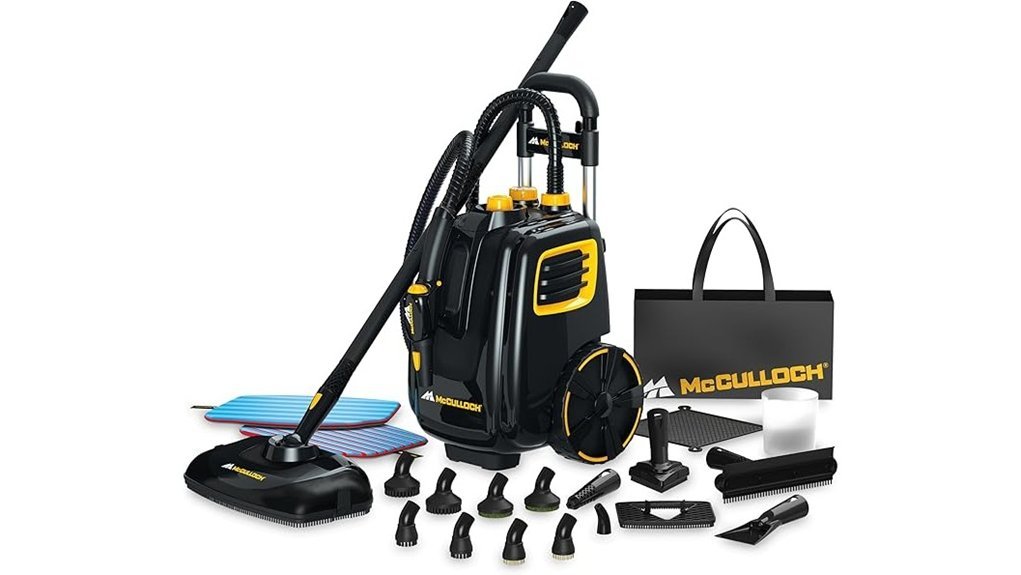
Best Overall for Large Sealed Brick Floors
The McCulloch MC1385 is the best fit here when you need extended runtime and enough attachments to work across textured brick, edges, and recessed joints. Its 64-ounce tank provides up to 120 minutes of continuous steam, while variable output lets you start gently instead of flooding a porous surface with maximum steam.
The unit uses 1500 watts, heats water to over 200°F, and provides up to 58 PSI. Its 18-foot power cord is useful in larger rooms, and the 23-piece kit includes a floor mop and detail tools. For brick, begin with the covered floor tool or a soft nylon attachment rather than an abrasive metal brush.
Why You’ll Like It: It reduces refill interruptions and gives you more control than a basic fixed-output steam mop.
Who Should Buy This: Homeowners with a large, sound, sealed brick floor who want a canister cleaner for floors, grout lines, and other household jobs.
Who Should Avoid This: Anyone with unsealed brick, deteriorating mortar, limited storage space, or a need for instant heat-up.
Pros:
- Variable steam control helps you use the lowest effective output
- Up to 120 minutes of runtime from a 64-ounce tank
- 23 accessories support floor cleaning, edges, and detail work
- 18-foot cord reduces outlet changes in larger rooms
Cons:
- Up to 12 minutes of heating time is slower than a stick-style mop
- Canister format takes more storage space and is less convenient on stairs
- Brick compatibility still depends on the floor’s sealer and condition
BISSELL PowerSteamer 3-in-1 Steam Mop & Handheld (2685A)

Best for Quick Floor and Spot Cleaning
The BISSELL PowerSteamer 2685A is easier to move and store than a large canister cleaner. It works as an upright floor mop, handheld steamer, and extended-reach cleaner. BISSELL lists it for sealed hard floors, including stone, so it is the most straightforward option in this group for a brick-look floor that is fully sealed and approved for steam.
Variable steam modes and an on-demand trigger help control how much moisture reaches the surface. The 25-foot cord provides useful reach, while the 350 mL tank keeps the machine relatively light. Its accessory set includes a grout tool, detail brushes, scraper, angle concentrator, window squeegee, and fabric tool.
Why You’ll Like It: It heats quickly, handles everyday floor passes, and converts for edges and detail cleaning without pulling a separate canister behind you.
Who Should Buy This: Buyers who want a lighter, faster-to-deploy cleaner for modest areas of sealed brick or sealed masonry-style flooring.
Who Should Avoid This: Anyone cleaning unsealed brick, vinyl flooring, a very large floor that would require frequent refills, or damaged mortar joints.
Pros:
- Variable steam and an on-demand trigger improve moisture control
- 3-in-1 design covers floors, corners, grout, and above-floor jobs
- 25-foot cord offers better reach than many compact steam mops
- Lightweight format is easier to store than a canister unit
Cons:
- Small 350 mL tank is better for short sessions than large floors
- Not intended for unsealed surfaces or vinyl floors
- Sanitization results depend on following the manufacturer’s contact-time and use instructions
STEAMBOT Heavy Duty 2L Steam Cleaner (28-in-1)
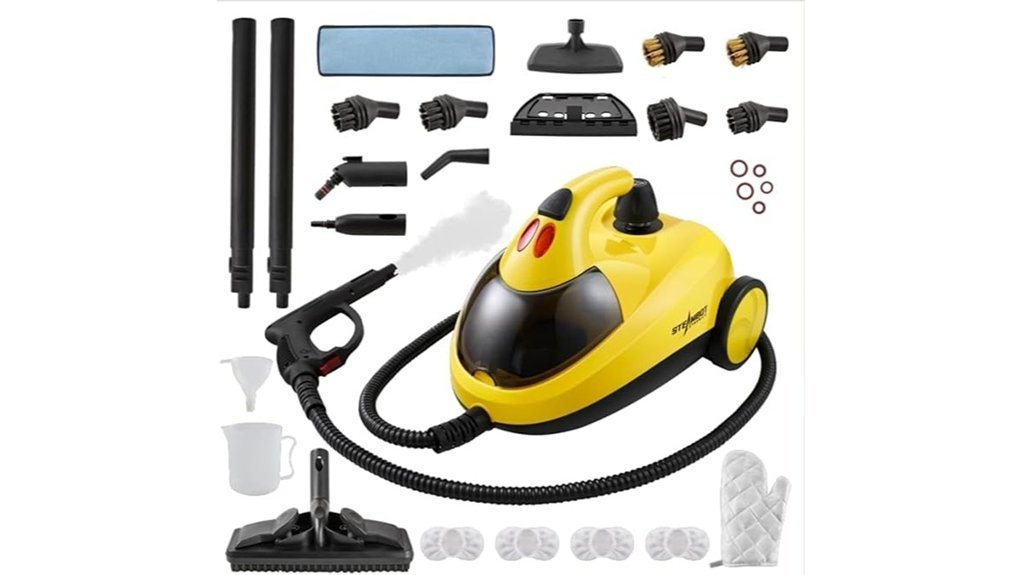
Best Large-Tank Accessory Kit
The STEAMBOT Heavy Duty cleaner is designed for buyers who want one machine for floors, tile, grout, ovens, windows, and vehicle detailing. Its manufacturer lists a 2-liter tank, up to 40 minutes of continuous steam, steam temperatures up to 302°F, and a 28-piece accessory set.
The large tank and rolling canister can reduce refill stops during whole-room cleaning. Grout brushes and a floor attachment add versatility, but the manufacturer does not specifically identify every brick or sealer type as compatible. Use it on brick only after confirming the floor is sealed and steam-approved, and start with a covered floor tool or soft brush.
Why You’ll Like It: The combination of a large tank, rolling base, extended reach, and many attachments suits longer multi-surface cleaning sessions.
Who Should Buy This: Buyers who prioritize tank capacity and accessories and are comfortable storing a full-size canister cleaner.
Who Should Avoid This: Anyone who wants a compact stick mop, has delicate or unsealed masonry, or prefers a product with a longer established support history.
Pros:
- Large 2-liter tank supports longer cleaning sessions
- 28-piece kit covers floor, grout, kitchen, window, and detailing tasks
- Universal wheels and an extended hose improve reach
- Water-only operation avoids adding detergent residue to the floor
Cons:
- Bulkier than an upright steam mop
- High-temperature output requires careful handling and surface testing
- Brick-specific compatibility is not stated for every sealer or installation
Factors to Consider When Choosing a Steam Cleaner for Sealed Brick Floors
The safest buying decision starts with the floor, not the machine. Brick varies in porosity, mortar condition, finish, and sealer chemistry. A cleaner that works well on sealed stone or tile is not automatically approved for every brick installation.
Confirm the Brick Is Sealed and Steam-Safe
Check the care instructions for the brick, mortar, and sealer. Do not steam-clean unsealed brick or a floor with flaking sealer, powdery joints, loose mortar, efflorescence, or unexplained dampness. When instructions are unavailable, use a gentler method or ask the brick or sealer manufacturer for guidance.
Steam Output and Moisture Control
Variable steam or an on-demand trigger is more useful than maximum temperature alone. Start at the lowest setting, keep the tool moving, and avoid holding a concentrated nozzle over mortar. The goal is to loosen surface soil without saturating the brick assembly.
Floor Tool and Brush Selection
Use a microfiber-covered floor head or a soft nylon brush for initial cleaning. Avoid wire brushes, metal scrapers, and aggressive attachments on visible brick because they can scratch the face, alter the finish, or damage joints. Vacuum loose grit before steaming so the pad does not grind debris across the surface.
Water Tank Capacity
Large tanks suit open rooms and long sessions but add bulk and take longer to heat. Smaller tanks make the cleaner easier to carry but may require refilling. Match capacity to the floor area rather than assuming the largest tank is always best.
Cord, Hose, and Maneuverability
Long cords and hoses reduce outlet changes, while swivel heads help around furniture. Canister cleaners offer reach and accessories; upright mops are faster to set up and easier to store. Choose the format that matches the size and layout of your brick floor.
Water Type and Maintenance
Follow the machine’s manual for water type. Some models accept ordinary tap water, while others recommend demineralized or distilled water to reduce scale. Empty and maintain the unit as directed, and never open a pressurized tank before it has cooled and depressurized.
Before You Buy Checklist
- Is the brick fully sealed and in sound condition?
- Does the brick or sealer manufacturer permit steam cleaning?
- Can the machine produce low or on-demand steam?
- Does it include a covered floor tool or soft nylon brush?
- Is the tank size practical for your floor area?
- Are replacement pads, brushes, and warranty support available?
How to Steam Clean a Sealed Brick Floor Safely
- Inspect the floor: Stop if you find loose mortar, damaged sealer, active moisture, or powdery deposits.
- Dry clean first: Vacuum or sweep away grit, hair, and loose soil.
- Test a hidden area: Use the lowest steam setting and a covered floor tool, then allow the area to dry fully before checking for color, sheen, sealer, or mortar changes.
- Work in small sections: Keep the tool moving and avoid repeated passes over joints.
- Use detail steam sparingly: Apply short bursts only where the floor instructions allow it; do not soak grout or mortar.
- Dry and ventilate: Wipe up remaining moisture and improve airflow until the floor is dry.
Frequently Asked Questions
Can I Use a Steam Mop on Unsealed Brick?
It is generally safer not to. Unsealed brick and mortar absorb moisture, and repeated steam exposure can contribute to staining, efflorescence, sealer problems after future treatment, or deterioration in weak joints. Use a method approved by the brick manufacturer or a masonry professional.
Can Steam Cleaning Damage Brick Mortar?
Yes. Concentrated steam, prolonged contact, or repeated wetting can worsen mortar that is already cracked, soft, or deteriorated. Keep steam moving, avoid direct nozzle use on joints, and stop if the surface sheds material.
How Often Should I Steam Clean Sealed Brick Floors?
Use steam as an occasional deep-cleaning method rather than an automatic weekly routine. For regular care, vacuum or sweep and use the cleaning method recommended by the brick or sealer manufacturer. Clean spills promptly without saturating the floor.
Does Steam Remove Mold From Brick or Mortar?
Steam may reduce surface growth under the machine’s specified use conditions, but it does not fix the moisture source or guarantee remediation inside porous masonry. Recurring or widespread mold needs moisture correction and, when appropriate, professional assessment.
Can I Use Tap Water in a Steam Cleaner?
Follow the specific manual. Mineral-rich tap water can create scale in some machines, while other models are designed for ordinary water. Never add detergent, fragrance, vinegar, or descaling chemicals to the tank unless the manufacturer explicitly permits it.
Are Steam Cleaners Safe Around Children and Pets?
Water-only operation avoids added cleaning chemicals, but the steam, hose, floor head, and tank can cause burns. Keep children and pets out of the work area until the machine and floor have cooled and dried.
Conclusion
Final Recommendation
Choose the McCulloch MC1385 for the best balance of runtime, variable steam, and attachments on a large sealed brick floor. Pick the BISSELL PowerSteamer 2685A when you want a lighter, quicker upright cleaner for smaller areas. Consider the STEAMBOT 2L when tank size and accessory variety matter most.
Whichever model you choose, confirm surface compatibility first. A lower-output, moving pass on sound sealed brick is safer than chasing maximum heat or pressure.