Affiliate disclosure: This article contains Amazon affiliate links. We may earn a commission from qualifying purchases at no additional cost to you.
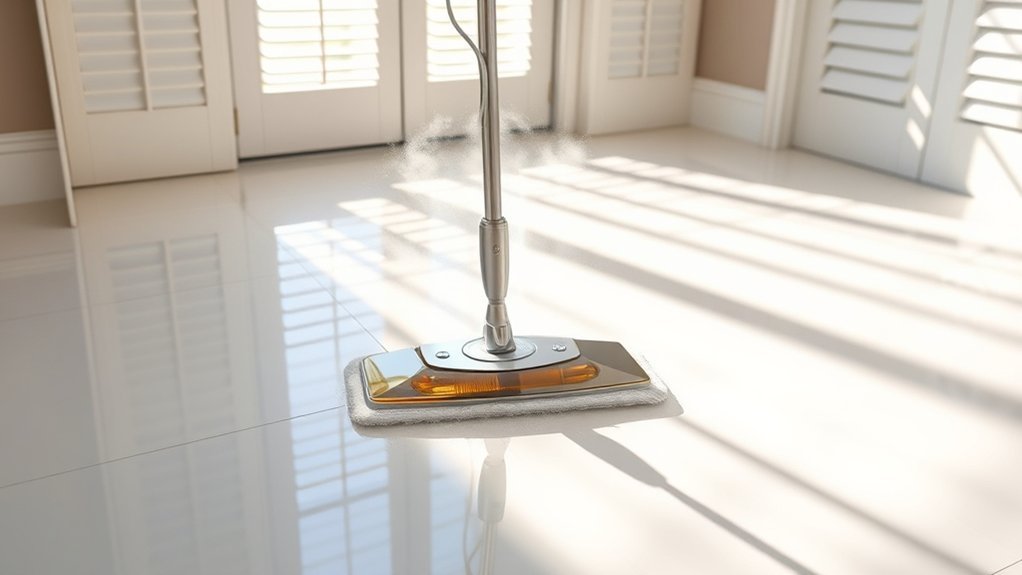
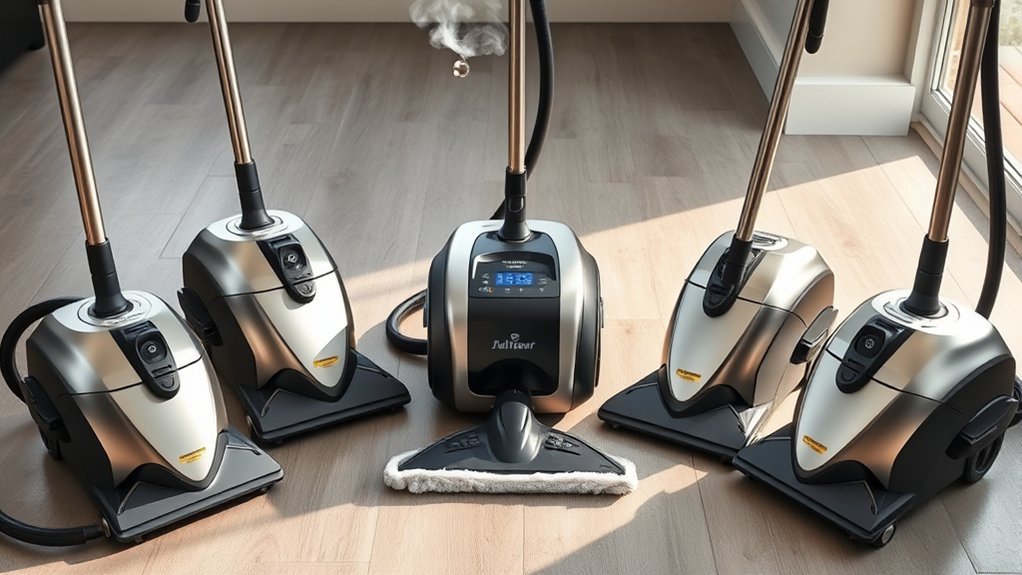
If your marble flooring is approved for steam cleaning, the best steam mop for marble floors should provide more than strong steam. It should be intended for sealed marble or sealed natural-stone surfaces, offer manageable steam delivery, use appropriate washable pads, and remain easy to keep moving across the floor. After reviewing the original selections for surface compatibility, steam control, maneuverability, and buyer limitations, three models remain relevant: the Shark SteamSpot S2001 for the best overall control, the Shark S1000 for simple routine operation, and the DEVOAC VM6 for powered rotating pads and broader cleaning versatility.
Important marble safety note:
Do not assume that sealing alone makes marble suitable for steam. Use a steam mop only when the flooring or stone-care instructions, sealer guidance, warranty requirements, and steam-mop manufacturer all permit it. Test a hidden area first, use the lowest practical steam level when the machine provides adjustable modes, keep the mop moving, and dry the floor promptly. For routine marble care, dry dust-mopping followed by a neutral cleaner or stone soap and a clean soft mop remains the more conservative approach.
Quick Verdict
Best Overall: Shark SteamSpot S2001 because it combines three steam modes, targeted steam, a removable tank, low weight, and explicit Shark support for sealed marble. Choose the Shark S1000 when you prefer a lighter, simpler steam mop and do not need selectable multi-level steam modes. Consider the DEVOAC VM6 when powered rotating pads appeal to you, but use additional caution on polished marble because grit or aggressive scrubbing can affect delicate finishes.
Quick Comparison of Steam Mops for Sealed Marble
| Product | Best For | Steam Control | Main Limitation | Details |
|---|---|---|---|---|
| Shark SteamSpot S2001 | Best Overall | Three modes plus targeted steam | Scrub pad requires caution on delicate polished finishes | Check on Amazon |
| Shark S1000 | Best Simple Pick | On-demand steam; no selectable multi-level modes listed | Less steam-control flexibility than the S2001 | Check on Amazon |
| DEVOAC VM6 | Best for Powered Scrubbing | Three steam modes plus rotating pads | Rotating pads require extra caution on polished marble | Check on Amazon |
How We Evaluated These Steam Mops
These picks were compared using buyer-focused criteria rather than maximum steam power alone. We looked for manufacturer or product-listing support for sealed marble or sealed hard floors, practical steam control, appropriate pad options, maneuverability, tank convenience, cord reach, and limitations that matter on polished or moisture-sensitive natural stone. We also gave more weight to products that make it easier to use a conservative cleaning approach.
This article does not claim hands-on laboratory testing. Product specifications and surface recommendations should always be checked against the current manufacturer instructions and the care requirements for your particular marble installation.
Shark SteamSpot Steam Mop (S2001)
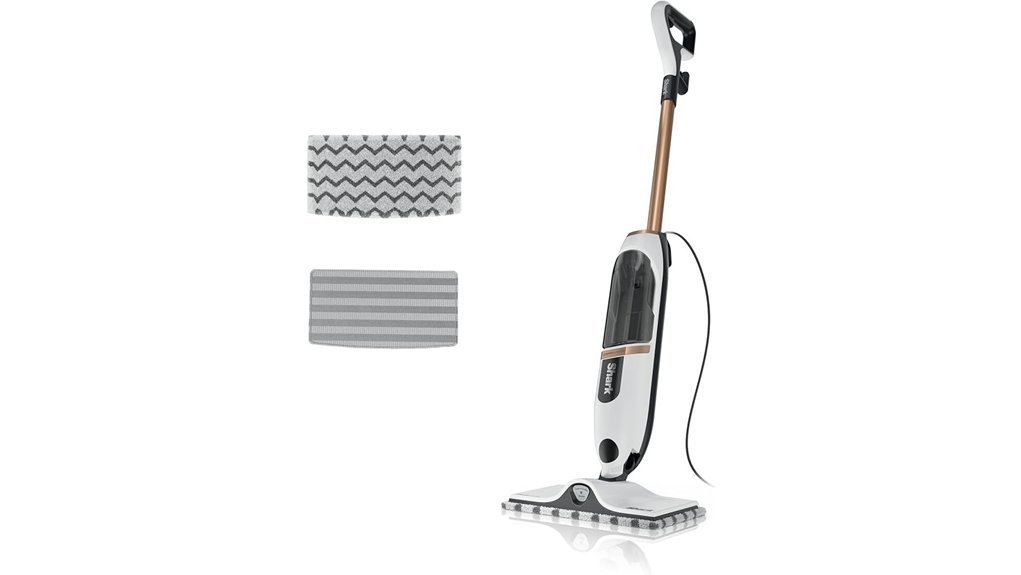
The Shark SteamSpot S2001 is the strongest overall choice in this roundup because Shark specifically lists sealed marble among its supported hard-floor surfaces. Its three steam modes give you more control than a basic steam mop without selectable levels, while the Steam Blaster function provides targeted steam for appropriate surfaces and stubborn spots.
For marble, start conservatively. Use the lowest practical steam mode and begin with the Dirt Grip pad rather than the more aggressive Scrub Pad. Keep the mop moving continuously, and reserve concentrated targeted steam for areas where both the flooring-care instructions and appliance guidance permit it. Test the Scrub Pad in an inconspicuous area before considering it on a polished finish.
The S2001 weighs approximately 4.81 pounds and has a 19-foot cord, a removable water tank, one machine-washable Dirt Grip Pad, and one machine-washable Scrub Pad. Shark lists a one-year warranty for the model. Its lightweight frame and adjustable steam system make it easier to use a controlled approach around furniture, edges, and transitions.
Best For: Homeowners who have confirmed that their sealed marble installation can tolerate steam and want more control over steam intensity.
Why You’ll Like It: The three-mode system lets you choose a more conservative setting instead of applying the same steam level to every cleaning job, while the removable tank and lightweight body simplify routine use.
Who Should Avoid It: Owners of unsealed, cracked, waxed, recently repaired, moisture-sensitive, or professionally finished marble that has not been approved for steam cleaning.
Pros:
- Shark specifically lists sealed marble among supported floor types
- Three steam modes offer better control than a single-level system
- Targeted Steam Blaster function is available for suitable stubborn messes
- Lightweight 4.81-pound design is easy to maneuver
- Removable tank makes filling more convenient
- Includes two different machine-washable cleaning pads
- Shark lists a one-year warranty
Cons:
- Concentrated targeted steam may be unnecessary on delicate marble
- The Scrub Pad requires extra caution on polished finishes
- The 19-foot cord may require outlet changes in larger spaces
- Steam suitability still depends on the marble, sealer, grout, finish, and installation condition
Shark Steam Mop for Hard Floors (S1000)
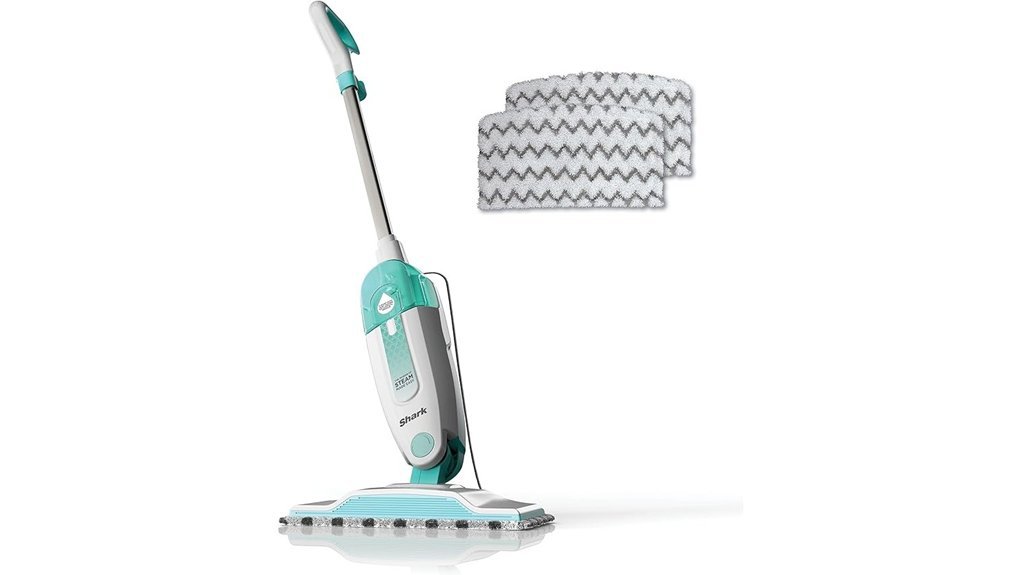
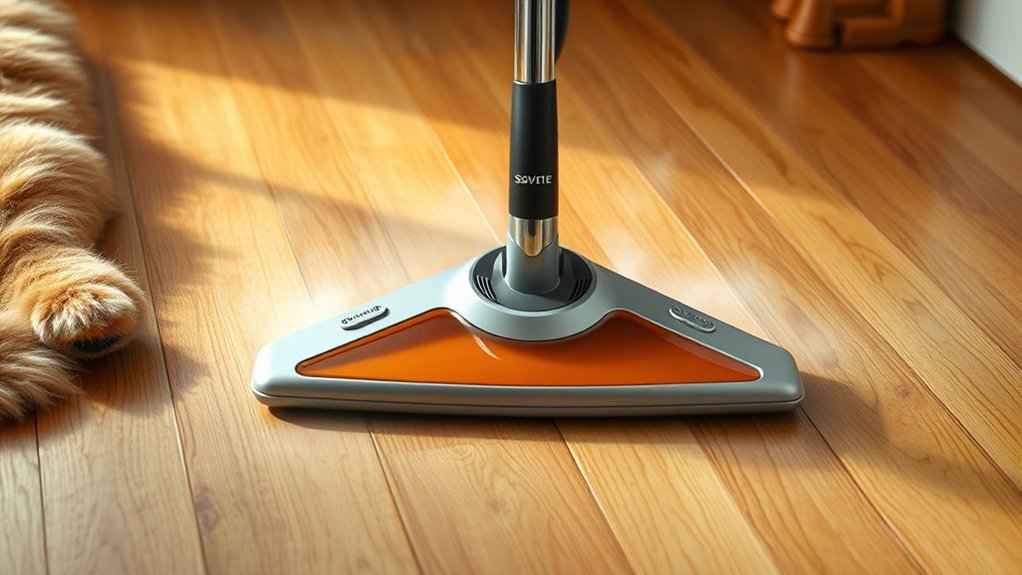
The Shark S1000 is a straightforward option for buyers who prefer fewer controls and a lightweight body. Shark lists the model at 1,050 watts and approximately 4.94 pounds, with on-demand steam ready within about 30 seconds.
Shark’s general steam-mop guidance includes sealed marble among supported sealed hard floors, and the current S1000 Amazon listing also identifies marble as an intended sealed floor surface. Its removable tank, washable Dirt Grip pads, swivel-style maneuverability, and 18-foot cord make it convenient for smaller rooms and quick cleaning sessions.
The main tradeoff is steam-control flexibility. Shark does not list selectable multi-level steam modes for the S1000 as it does for the S2001. Marble owners who want to start with a clearly defined lower mode may therefore prefer the S2001.
Before covering a large marble area, test the S1000 in a hidden location. Keep it moving, avoid lingering over grout joints, repairs, cracks, or transitions, and stop if the finish becomes cloudy, unusually dark, streaked, or dull after the area has dried.
The S1000 has an 18-foot cord, a removable water tank, two machine-washable pads, and a one-year warranty listed by Shark.
Best For: Smaller areas of approved sealed marble and homeowners who prioritize light weight and simple operation over selectable steam levels.
Why You’ll Like It: It keeps operation uncomplicated, heats quickly, has a removable tank, and is light enough to carry easily between rooms.
Who Should Avoid It: Buyers who specifically want selectable low, medium, and high steam modes or who have particularly delicate polished marble.
Pros:
- On-demand steam is ready within approximately 30 seconds
- Lightweight 4.94-pound design
- Removable water tank simplifies filling and emptying
- Two machine-washable Dirt Grip pads are included
- Simple operation suits quick maintenance cleaning
- Shark lists a one-year warranty
Cons:
- No selectable multi-level steam modes are listed by Shark
- Offers less steam-setting flexibility than the S2001
- The 18-foot cord may be limiting in larger rooms
- Delicate marble still requires flooring approval and careful spot testing
DEVOAC VM6 10-in-1 Steam Mop with Rotating Pads (Ink)
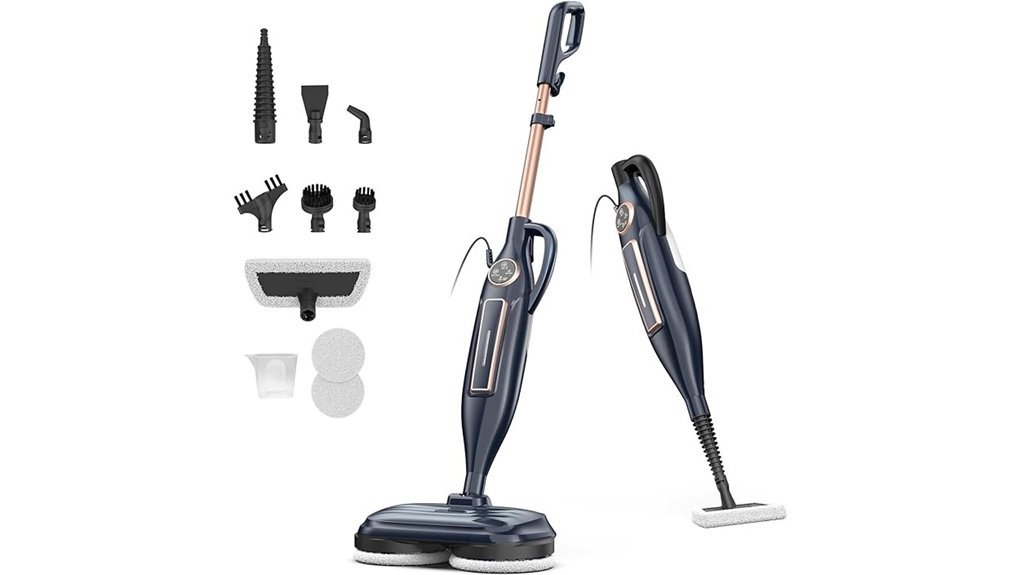
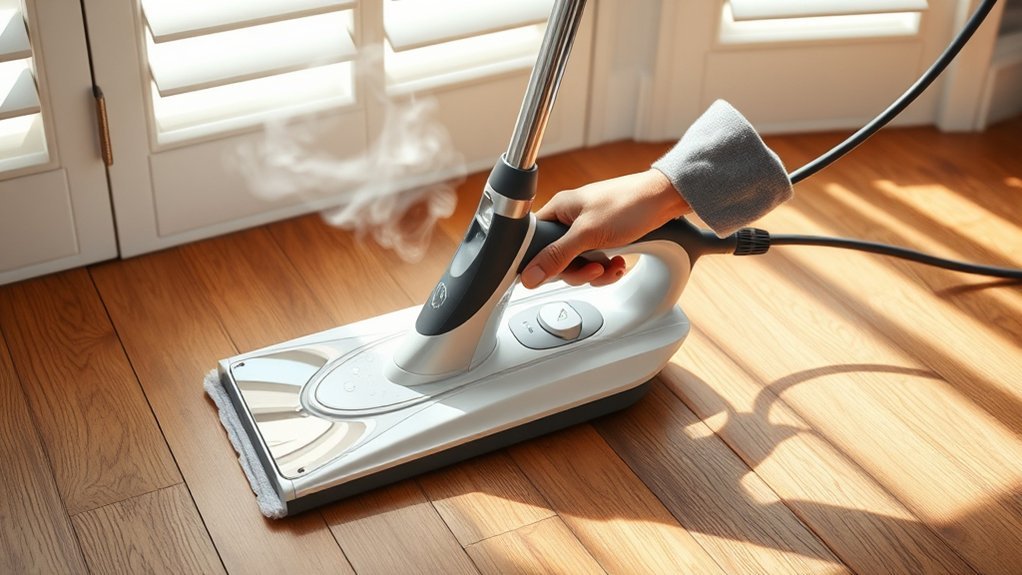
The DEVOAC VM6 combines steam with powered rotating mop pads. DEVOAC’s product information identifies it as a 10-in-1 steam mop with three steam modes for hard floors including marble, and the exact Amazon listing used in this article identifies the Ink version of the VM6.
The powered pad movement is intended to add scrubbing action and may reduce the amount of manual scrubbing required. However, more scrubbing is not automatically better for marble. Sand or grit trapped beneath a moving pad can scratch natural stone, and an unsuitable pad can affect the appearance of a polished surface.
Dust-mop or vacuum thoroughly with a stone-safe attachment before using it. Start with a clean pad, choose the lowest appropriate steam mode, and test the combination of steam and rotating-pad action on a hidden section of the floor. Be especially cautious around joints, edges, inlays, repairs, cracks, and areas with an uncertain finish.
The VM6 is positioned as a multi-function cleaning system, but packages and included accessories can change between listings. Check the exact current package contents before ordering rather than assuming that every advertised VM6 bundle includes the same tools.
Best For: Buyers with approved sealed hard floors who want powered pad movement and three selectable steam levels.
Why You’ll Like It: Powered rotating pads provide additional cleaning action, while three steam modes offer more flexibility than a single-level steam system.
Who Should Avoid It: Owners of highly polished, easily scratched, uneven, cracked, or unsealed marble unless the flooring-care provider approves both steam and powered pad cleaning.
Pros:
- Three steam modes provide different cleaning intensities
- Powered rotating pads add mechanical cleaning action
- Manufacturer product information identifies marble among its intended hard-floor applications
- 10-in-1 design is aimed at broader cleaning versatility
- Washable pad system reduces dependence on disposable floor pads
Cons:
- Rotating pads can move trapped grit across polished marble
- Powered scrubbing may be unnecessary on delicate stone finishes
- The multi-function design may require more storage than a basic steam mop
- Accessory contents should be checked on the exact current listing
Before You Use a Steam Mop on Marble
- Confirm that your marble installation is suitable for steam cleaning.
- If a sealer has been applied, confirm that it has fully cured and that its care instructions allow steam.
- Check for cracks, loose grout, damaged joints, wax, topical coatings, repairs, open seams, or moisture-related discoloration.
- Review the flooring warranty, installer guidance, and stone-care instructions before proceeding.
- Confirm that the steam-mop manufacturer permits your type of sealed hard floor.
- Dust-mop or vacuum with a stone-safe attachment to remove abrasive sand and grit.
- Install a freshly cleaned, debris-free pad suitable for the surface.
- Test the lowest practical steam setting in an inconspicuous area when adjustable settings are available.
- Keep the mop moving and never leave a hot mop head parked on the marble.
- Avoid concentrating steam into grout lines, cracks, edges, repairs, and transitions.
- Dry the surface promptly and inspect it under good lighting after it has fully dried.
Factors to Consider When Choosing a Steam Mop for Marble Floors
The most important buying factor is not maximum steam temperature or cleaning power. It is whether the steam mop, marble finish, stone-care requirements, grout, sealer, and overall installation are compatible with steam. After confirming that point, compare steam-output control, pad design, machine weight, tank design, cord reach, warranty information, and the availability of replacement pads.
Manufacturer and Flooring Approval
Look for a steam mop whose manufacturer or current product information specifically includes sealed marble, marble, sealed natural stone, or an applicable sealed hard-floor category. A broad “hard floor” claim without supporting surface guidance gives you less information about compatibility.
Appliance compatibility is only one half of the decision. Check the marble installer’s care instructions, flooring warranty, stone supplier guidance, sealer instructions, and grout recommendations. Do not use steam when any applicable care or warranty document prohibits it.
Steam Output Control
Consumer steam mops generally describe different steam levels or intensities rather than allowing you to select an exact temperature at the floor. For marble, selectable steam levels can be useful because they let you begin conservatively instead of automatically using the strongest setting.
More steam is not automatically better. Excess heat and moisture are especially undesirable around open joints, damaged grout, cracks, repairs, or other vulnerable parts of the installation. A controlled moving pass is preferable to holding concentrated steam over one mark.
Surface Condition and Sealer
A penetrating sealer can improve resistance to staining, but it does not make marble stain-proof or automatically make the entire installation suitable for steam. Grout, adhesives, repairs, waxes, coatings, fillers, and the condition of the floor can all affect which cleaning methods are appropriate.
Avoid steam on cracked, loose, recently installed, recently treated, waxed, flaking, or visibly moisture-affected marble until the appropriate installer, stone supplier, or restoration professional has advised you.
Pad Material Quality
Use a clean pad suitable for delicate hard flooring and keep it free of sand, grit, or hardened debris. Natural stone can be scratched when abrasive particles become trapped beneath a moving pad, even if the pad itself feels relatively soft.
Wash reusable pads according to the appliance instructions and inspect them before each use. Replace pads that have hardened fibers, damaged fasteners, or embedded material that cannot be removed.
Rotating and Scrubbing Pads
Powered pads can reduce manual scrubbing effort, but they also create repeated mechanical contact with the floor. That can be useful on durable approved surfaces and less desirable on highly polished or easily scratched marble.
Use the least aggressive suitable pad and test it first. Do not assume that a scrub pad is safe merely because the steam-mop manufacturer lists marble among compatible floor types.
Water Tank and Water Quality
A removable tank makes filling and emptying easier. Larger tanks can reduce interruptions, although they can also add weight when full.
Follow the appliance manual regarding tap, distilled, or demineralized water. Distilled or demineralized water may help reduce mineral buildup in some steam appliances or hard-water areas, but the correct water type is determined by the machine instructions, not by marble alone.
Maneuverability and Reach
A lightweight machine with an easy-moving head can make it simpler to keep the mop in motion instead of concentrating heat and moisture in one place. Consider cord length, handle comfort, head width, tank weight, and how easily the mop moves around furniture and transitions.
Warranty and Replacement Parts
Check the current appliance warranty and the availability of replacement pads before buying. Shark currently lists one-year warranties for the S2001 and S1000. For other brands or packages, confirm warranty terms on the current manufacturer’s documentation because seller-specific coverage can differ.
Safer Routine Cleaning for Marble Floors
Steam should not replace basic marble maintenance. For everyday care, remove abrasive grit with a clean untreated dry dust mop or a vacuum attachment that cannot scratch the stone. Clean spills promptly by blotting rather than spreading the liquid across a larger area.
For damp cleaning, follow the stone supplier’s instructions and use a neutral cleaner, stone soap, or other marble-appropriate cleaning method. Use clean mopping materials, avoid flooding the floor, rinse when required, and dry the surface thoroughly.
Avoid vinegar, lemon, acidic cleaners, abrasive powders, and rough scrubbers on marble. Acidic products can etch calcareous stone, while abrasive material can scratch the finish.
Frequently Asked Questions
Can Steam Mops Damage Marble or Grout?
They can cause problems when used on an unsuitable installation or with excessive heat, moisture, or concentrated exposure. Marble floors can include sealers, grout, adhesives, repairs, coatings, joints, and other materials with different care requirements. Use steam only when both the appliance guidance and the flooring or stone-care instructions permit it.
Does Sealing Marble Make Steam Cleaning Safe?
No. A penetrating sealer generally improves stain resistance rather than making natural stone completely impermeable or automatically suitable for every cleaning method. The marble finish, grout, adhesives, repairs, coatings, and flooring-care instructions still matter.
How Often Can Marble Floors Be Steam Cleaned?
There is no universal steam-cleaning schedule that applies to every marble floor. Dry dust-mopping and an approved neutral-cleaning method are better routine defaults. If steam is permitted for your installation, use it according to the flooring and appliance instructions rather than assuming that a weekly schedule is appropriate.
Can a Steam Mop Remove Marble Etching?
No. Etching changes the surface finish of marble and is commonly associated with exposure to acidic substances. Removing surface dirt will not restore lost polish. Persistent etch marks can require refinishing or repolishing by a qualified stone professional.
Is Distilled Water Required for a Marble Steam Mop?
Not necessarily. Follow the steam mop manufacturer’s water instructions. Distilled or demineralized water may help reduce mineral buildup in some machines or hard-water areas, but it is not a universal requirement created by the marble surface itself.
Can I Use a Scrub Pad on Polished Marble?
Use caution. Aggressive pads or abrasive debris trapped beneath a pad can affect polished marble. Start with the least aggressive suitable pad and test a hidden area. Use stronger scrubbing materials only when the flooring or stone-care instructions permit them.
What Should I Do If Steam Leaves a Dull Mark?
Stop using the steam mop and allow the area to dry completely. Do not try to correct the mark with vinegar, acidic cleaners, abrasive powder, or aggressive polishing. If the appearance does not return to normal, contact the stone supplier, installer, or a qualified natural-stone restoration professional.
Which Steam Mop Gives the Most Control for Marble?
Among these three picks, the Shark SteamSpot S2001 provides the clearest combination of three selectable steam modes and targeted steam. That does not make it automatically safe for every marble floor, but it gives buyers more control after their installation has been approved for steam cleaning.
Final Recommendation
Best overall choice: The Shark SteamSpot S2001 offers the best balance of sealed-marble compatibility stated by Shark, three steam modes, low weight, a removable tank, and two pad options. It is the strongest choice when adjustable control is your priority.
Best simple choice: The Shark S1000 suits buyers who want a lightweight, uncomplicated steam mop. It heats quickly and has a removable tank, but it does not provide the same selectable three-mode control as the S2001.
Best powered option: The DEVOAC VM6 combines three steam modes with rotating pads and is marketed for marble and other hard flooring. Its added scrubbing action also means polished marble owners should be especially careful about pad cleanliness and surface compatibility.
No steam mop is automatically suitable for every marble floor. Confirm that your specific marble, finish, sealer, grout, warranty, and installation permit steam before buying or using one. For regular maintenance, frequent dry dust-mopping and an approved neutral stone-cleaning method remain the more conservative starting point.
Sources and Verification
- Natural Stone Institute: Natural Stone Care Guidance
- Shark SteamSpot S2001 Official Product Details
- Shark S1000 Official Product Details
- Shark Steam Mop Surface Compatibility Guidance
- DEVOAC VM6 Official Product Information