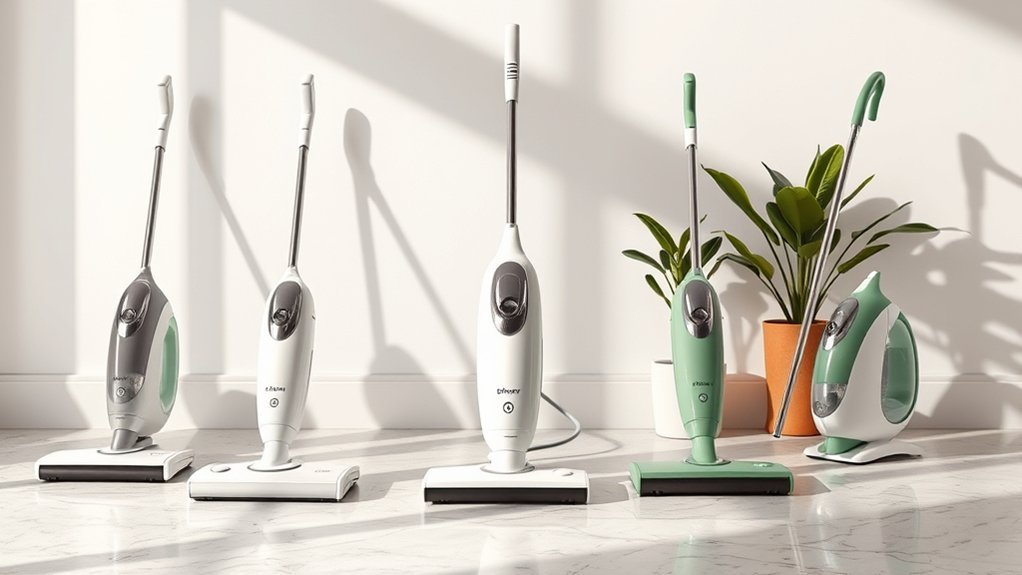
Choosing the best steam mop for a slate floor is not simply a matter of buying the hottest machine. The safer choice is a model with adjustable steam, an absorbent microfiber pad, dependable maneuverability, and instructions that fit your particular slate, grout, finish, and sealer. Among these three options, the BISSELL PowerFresh 1940A is the strongest overall pick because BISSELL’s hard-floor guidance specifically includes indoor stone and slate. The Schenley Iris Steam Mop is a lightweight alternative with three steam levels, while the ACHTFACH 6-in-1 combines a long cord with a flexible multi-purpose design. Every recommendation below is conditional: use steam only when the flooring, sealer, installer, and warranty permit it.
Last updated: August 19, 2026. Product specifications, slate-safety wording, manufacturer guidance, affiliate URLs, and recommendation order were reviewed.
Important Slate Safety Note
Use a steam mop only when your slate, grout, sealer, installer, and flooring warranty permit steam cleaning. Do not use steam on unsealed, loose, cracked, flaking, waxed, oil-finished, or otherwise damaged slate. Start with the lowest effective setting, test a hidden area, keep the mop moving, and dry remaining moisture promptly. BISSELL lists steam as an option for indoor stone and slate, but you should still follow the care instructions for your specific flooring and sealer. Review BISSELL’s hard-floor guidance.
Affiliate disclosure: This article contains Amazon affiliate links. We may earn a commission from qualifying purchases at no extra cost to you.
Quick Verdict
- Best Overall: BISSELL PowerFresh 1940A, with the clearest slate-related manufacturer guidance, three steam settings, a removable 16-ounce tank, and a 23-foot cord.
- Best Lightweight: Schenley Iris Steam Mop, with a 3.6-pound listed weight, three steam levels, a 15.2-ounce tank, and approximately 15-second manufacturer-listed heat-up.
- Best for Long Reach: ACHTFACH 6-in-1, with a 23-foot cord, two steam modes, removable 400 ml tank, and multi-purpose extension components.
Key Takeaways
- “Sealed slate” does not automatically mean steam-safe; the specific sealer, grout, installation, and warranty must permit heat and moisture.
- Adjustable steam is more useful for slate than a high maximum-temperature claim alone.
- BISSELL provides the clearest slate-specific surface guidance of these three products.
- Schenley and ACHTFACH should be treated as conditional choices because their reviewed product guidance does not specifically name slate.
- Use a clean microfiber pad, keep the mop moving, and stop if the floor remains visibly wet.
Quick Comparison
| Steam Mop | Best For | Slate Guidance | Steam Control | Tank and Reach | Amazon |
|---|---|---|---|---|---|
| BISSELL PowerFresh 1940A | Best overall for approved indoor slate | BISSELL support specifically includes indoor stone and slate; flooring approval still required | Three settings | 16 oz removable tank; 23 ft cord | Check Price on Amazon |
| Schenley Iris Steam Mop | Lightweight, adjustable floor cleaning | No slate-specific guidance found; use only with floor and sealer approval | Three levels | 15.2 oz tank; manufacturer support lists 16 ft cord | Check Price on Amazon |
| ACHTFACH 6-in-1 | Long reach and multi-purpose cleaning | No slate-specific guidance found; use only with floor and sealer approval | Two modes | 400 ml removable tank; 23 ft cord | Check Price on Amazon |
How these picks were evaluated: We compared slate-related manufacturer guidance, steam adjustment, tank capacity, heat-up time, cord reach, pad care, maneuverability, specification clarity, and usefulness on a manufacturer-approved slate surface. Official manufacturer documentation was given more weight than marketplace or seller-listed specifications. Maximum temperature alone was not treated as proof of better slate compatibility.
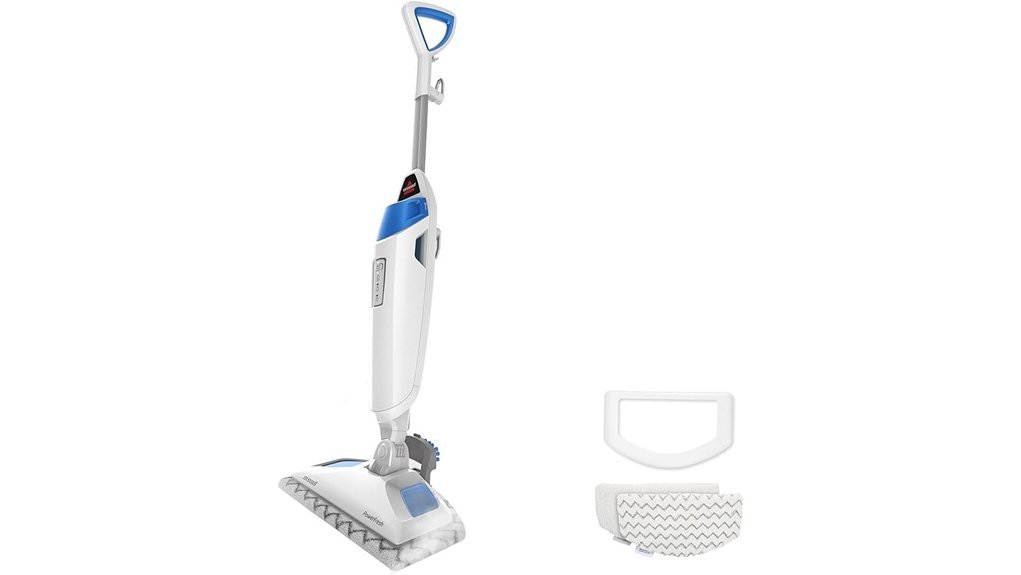
BISSELL 1940A PowerFresh Floor Steam Cleaner
Best Overall
The BISSELL PowerFresh 1940A is the most convincing option in this group for an approved indoor slate floor. BISSELL’s hard-floor support guidance specifically includes indoor stone and slate, while its product information identifies the PowerFresh as a steam mop for sealed hard floors. That gives it a stronger slate-related documentation trail than the other two products in this comparison.
The PowerFresh uses a 1,500-watt heater, reaches operating readiness in about 30 seconds, and provides three steam settings. That adjustment is more useful for slate than a simple high-temperature claim because you can begin conservatively and increase output only when the flooring, sealer, grout condition, and soil level allow it.
A flip-down Easy Scrubber can help loosen localized debris on durable hard floors and intact grout. The 16-ounce removable tank, 23-foot cord, swivel steering, and 6.2-pound body make it suitable for larger rooms without frequent outlet changes. Use the scrubber gently around slate and avoid damaged grout, soft stone edges, or delicate topical sealers.
Why You’ll Like It
It combines the clearest slate-related manufacturer guidance in this comparison with adjustable steam, a removable tank, long cord, washable microfiber cleaning, swivel steering, and a familiar floor-focused design.
Best For: Homeowners whose slate, grout, sealer, installer, and warranty approve steam and who want the strongest documented slate-related guidance among these three products.
Who Should Avoid It: Buyers who need a very light machine, a detachable handheld unit, or a cleaner for unsealed, damaged, waxed, oil-finished, or otherwise steam-sensitive natural stone.
Pros:
- BISSELL specifically includes indoor stone and slate in its hard-floor cleaning guidance
- Three steam settings support more cautious heat and moisture control
- 16-ounce removable tank is convenient to refill
- 23-foot power cord and swivel steering improve room coverage
- Washable microfiber pads reduce dependence on disposable refills
Cons:
- At 6.2 pounds, it is heavier than the Schenley model
- It does not convert into a handheld steam cleaner
- The scrubber is not appropriate for weak grout, soft edges, or delicate sealers
- Steam compatibility still depends on the specific flooring, sealer, installation, and warranty instructions
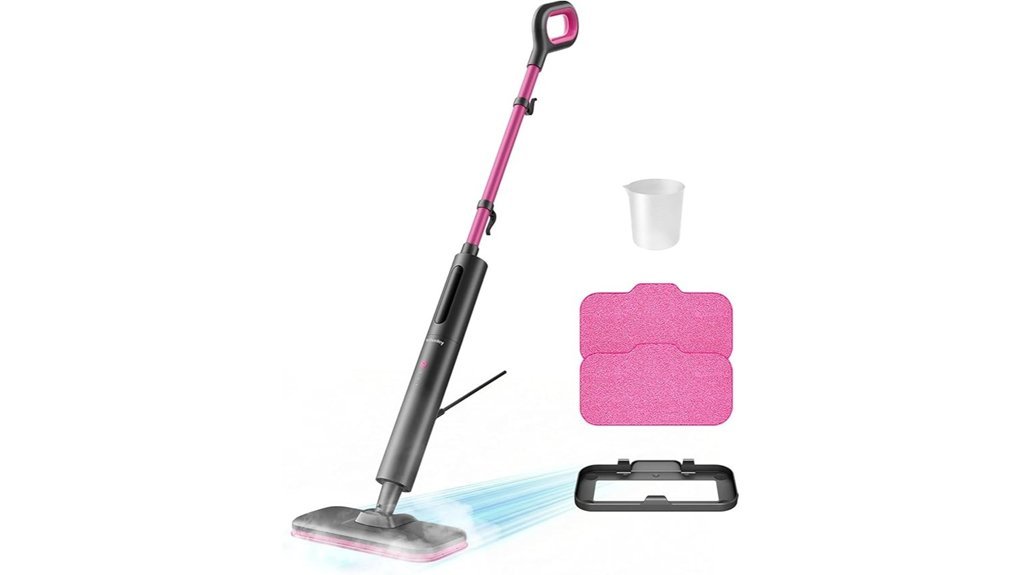
Schenley Iris Steam Mop Cleaner
Best Lightweight
The Schenley Iris Steam Mop SLFCSM054 is a practical option when carrying weight and maneuverability matter most. Schenley’s current technical information lists a weight of about 3.6 pounds and provides three steam levels, allowing you to start with lower output instead of immediately exposing an approved slate installation to maximum steam.
Manufacturer technical information lists a 15-second pre-heat time, a 248°F maximum steam specification, a 15.2-ounce water tank, and washable microfiber pads. Schenley’s own pages are not fully consistent about cord length and continuous runtime, so those figures should be confirmed on the current product listing or manual rather than treated as fixed buying guarantees.
The main limitation is surface guidance. Schenley’s support information names tile, laminate, sealed hardwood, vinyl, and carpet use with the appropriate attachment, but it does not specifically name slate. Treat the Iris as a conditional option for slate rather than proof that every sealed natural-stone floor is compatible.
Why You’ll Like It
Its 3.6-pound listed weight, three steam levels, quick manufacturer-listed heat-up, washable pads, swivel design, and self-standing body make routine floor cleaning easier in rooms with furniture and narrow paths.
Best For: Buyers who want a lightweight, adjustable steam mop for modest areas of slate that have been independently confirmed as steam-safe by the flooring and sealer manufacturers.
Who Should Avoid It: Anyone whose slate or sealer manufacturer prohibits steam, as well as buyers who require slate-specific product guidance or completely consistent published runtime and cord specifications.
Pros:
- Manufacturer-listed 3.6-pound weight makes it easier to carry than the BISSELL
- Three steam levels provide more control than a single-output machine
- Approximately 15-second heat-up is listed in Schenley’s manufacturer documentation
- 15.2-ounce removable water tank
- Self-standing body, swivel design, and washable microfiber pads simplify everyday use
Cons:
- The reviewed manufacturer guidance does not specifically name slate
- Schenley’s own pages contain conflicting cord-length and runtime information
- High maximum temperature does not prove natural-stone compatibility
- No detachable handheld unit for detail cleaning
- Current marketplace specifications should be checked against the manufacturer manual before purchase
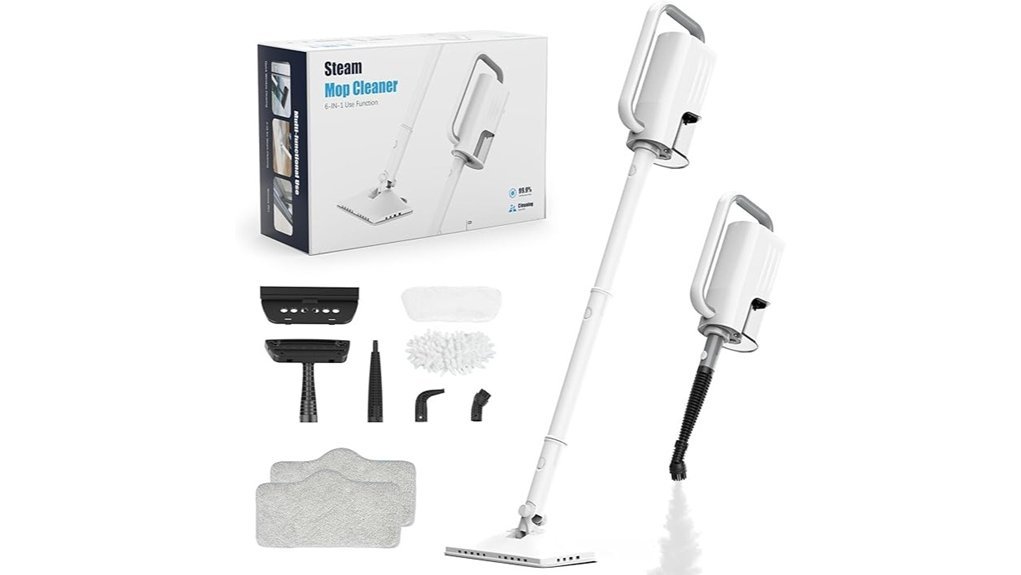
ACHTFACH 6-in-1 Steam Mop Multi-Surface Floor Cleaner
Best for Long Reach
The ACHTFACH 6-in-1 Steam Mop SC-05 is the reach-focused, multi-purpose option in this comparison. Its rotating configuration and extension components are designed to provide more positioning flexibility than a basic upright floor mop, which may appeal to buyers who want one steam system for several manufacturer-approved hard-floor cleaning tasks.
Current listing information for this model identifies a 1,200-watt heater, approximately 15-second heat-up, two steam modes, a removable 400 ml tank, two washable pads, and a 23-foot cord. For approved slate, the lower mode is the sensible starting point. Because detailed first-party manufacturer documentation is limited, these should be treated as listing-based specifications and checked again before ordering.
The rotating head and extension sections may improve access around furniture and edges. However, the reviewed product information names broad hard-floor categories such as hard floor, laminate, and tile rather than specifically identifying slate. Confirm the current accessory bundle, service terms, seller, and surface instructions before purchase.
Why You’ll Like It
The long cord, removable tank, two steam modes, rotating configuration, washable pads, and extension components make it useful for buyers who value reach and multi-purpose cleaning.
Best For: Buyers who prioritize cord reach and a flexible accessory layout and have independently confirmed that their slate installation permits steam.
Who Should Avoid It: Anyone who prefers a brand with extensive first-party floor-care documentation, needs slate-specific manufacturer guidance, or wants every performance and accessory claim supported by a detailed official product page.
Pros:
- Two steam modes let users begin with the lower setting
- 400 ml removable tank is convenient to refill
- 23-foot power cord reduces outlet changes
- Listed 15-second heat-up supports quick setup
- Rotating configuration and extension components improve reach
- Two washable pads are included in the reviewed listing information
Cons:
- The reviewed guidance does not specifically identify slate as a recommended surface
- Key specifications rely more heavily on marketplace and seller information than the BISSELL and Schenley sections
- Runtime should not be treated as guaranteed without checking the current manual or listing
- Accessory bundles, service terms, and seller details may change
- More components require additional storage and organization
Factors to Consider When Choosing a Steam Mop for Slate Floors
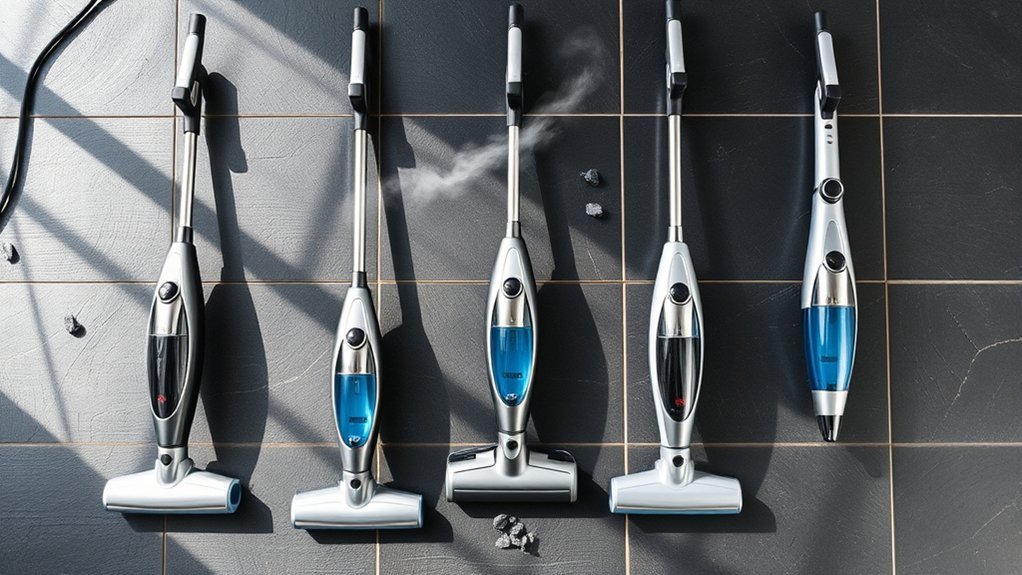
Slate is not one uniform material. Its porosity, cleft texture, grout, finish, installation method, and sealer can vary considerably. Before comparing tank sizes, cord lengths, or heat-up times, confirm whether your specific natural-stone floor can tolerate steam at all.
Slate, Grout, and Sealer Approval
Check the care instructions supplied by the slate manufacturer, sealer manufacturer, installer, and flooring warranty. A steam mop should be considered only when all applicable instructions permit it. Do not assume that the word “sealed” automatically means steam-safe.
Avoid steam on unsealed slate and on floors with peeling sealer, loose tiles, cracked grout, spalling, flaking, wax coatings, oil finishes, or unidentified treatments. When records are unavailable, a natural-stone professional can help identify the finish and recommend a safer cleaning method.
Steam Control Options
Adjustable steam is more useful than a high advertised maximum temperature. Begin with the lowest setting that loosens surface soil, keep the mop moving, and avoid directing concentrated steam at one area for an extended period.
A selectable low mode gives you more control around grout, edges, repaired areas, and sections where the sealer may be thinner. A fixed high-output mop leaves less room to manage heat and moisture.
Maximum Temperature
Do not choose a steam mop for slate simply because it advertises very high steam temperature. The temperature inside the appliance or near its outlet is not necessarily the temperature maintained across the floor, and a hotter specification does not prove better natural-stone compatibility.
Look first for flooring approval, adjustable output, a clean microfiber pad, continuous movement, and instructions that explain how the machine should be used on compatible sealed hard floors.
Water Tank Capacity
A tank of roughly 12 to 16 ounces is often easier to handle than an oversized reservoir and can still be practical for modest rooms. Larger tanks can reduce refill stops but also add weight when full.
A removable tank is convenient because you can fill it at a sink without carrying the entire machine. Do not overfill the reservoir, and never open a hot or pressurized tank unless the manual says it is safe.
Grout and Sealer Condition
Inspect grout before steaming. Missing, cracked, powdery, or loose grout can allow moisture below the surface. Concentrated steam and forceful scrubbing may worsen an existing problem rather than repair it.
Use detail brushes and built-in scrubbers cautiously. A brush that is appropriate for durable ceramic grout may be too aggressive for soft stone, an aging topical sealer, or delicate grout joints.
Maneuverability and Reach
A lightweight body and swiveling head reduce the effort needed to move across textured slate and around furniture. Long cords are helpful in kitchens, hallways, and open rooms because frequent outlet changes interrupt cleaning.
Self-standing designs are convenient, but do not leave a hot, steaming mop stationary on slate. Switch it off or place it on a heat-resistant resting pad according to the manual.
Pad Material and Replacement Availability
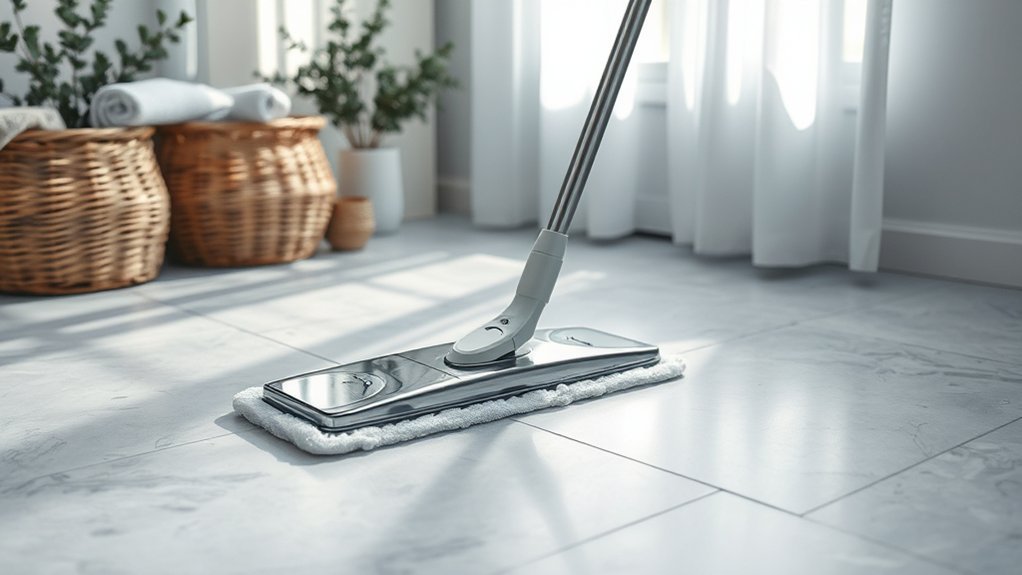
Choose soft, washable microfiber pads that collect loosened soil and absorb moisture without aggressive scrubbing. Replace or rinse a dirty pad instead of continuing to spread grit across the floor.
Keep several pads available for larger rooms. A heavily soiled pad can produce streaks, leave residue in textured areas, and reduce moisture pickup. Check replacement-pad availability before buying the machine.
Water and Machine Maintenance
Use only the water type specified by the steam-mop manufacturer. Distilled or demineralized water may reduce internal scale when the manual permits it, particularly in hard-water areas.
Do not pour floor cleaner, vinegar, essential oils, disinfectant, or fragrance into the tank unless the appliance manufacturer explicitly approves that product. Additives can damage the machine, create residue, or affect the slate sealer.
Moisture and Drying
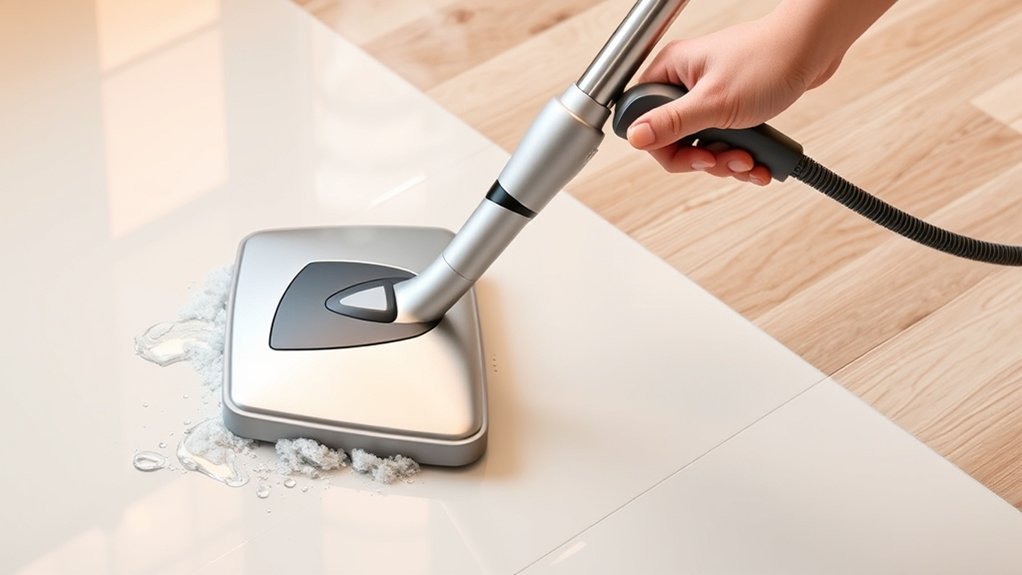
A steam mop should leave only a light amount of moisture behind. If the slate remains visibly wet, reduce the steam setting, use a clean dry pad, or stop using the machine.
Ventilate the room and wipe remaining moisture with a dry microfiber cloth. Avoid foot traffic until the slate and grout are dry to reduce slipping and prevent new soil from sticking to damp areas.
Warranty, Seller, and Replacement Parts
Check the current seller, return policy, warranty or service terms, replacement pads, and accessory availability before ordering. These details matter more for newer or less-established products because listings and included bundles can change.
Keep the manual and order record. They can help with maintenance, replacement-part matching, warranty questions, and confirming which water type or cleaning procedure the manufacturer permits.
Before You Buy
- Confirm that the slate, sealer, grout, installer, and warranty permit steam.
- Choose adjustable steam with at least two output levels when possible.
- Check replacement-pad and parts availability.
- Verify tank capacity, cord length, accessories, seller, and warranty on the current listing or manual.
- Give manufacturer documentation more weight than marketplace marketing copy when specifications conflict.
- Plan to test a hidden area before cleaning the full room.
- Use the lowest effective setting and dry residual moisture promptly.
How to Use a Steam Mop on Approved Slate
- Dry-clean first: Vacuum or sweep away sand, grit, and loose debris that could scratch the slate or collect in textured areas.
- Inspect the floor: Look for loose tiles, cracked grout, flaking stone, worn sealer, or moisture-sensitive repairs.
- Fill the machine correctly: Use only the water type and tank additives permitted by the steam-mop manual.
- Test a hidden area: Start with the lowest steam setting and inspect the slate, grout, and finish after the area dries.
- Keep the mop moving: Use smooth overlapping passes without holding steam over one spot, edge, or grout joint.
- Change dirty pads: Replace or rinse the microfiber pad before it becomes saturated with grit and soil.
- Dry the surface: Wipe residual moisture, ventilate the room, and keep people and pets off the floor until it is dry.
Frequently Asked Questions
Can I Use a Steam Mop on Slate Floors?
You may be able to use one on indoor slate when the slate, sealer, grout, installer, and flooring warranty approve steam cleaning. Do not use a steam mop on unsealed, damaged, waxed, oil-finished, or unidentified slate surfaces.
Which Steam Mop Here Has the Clearest Slate Guidance?
The BISSELL PowerFresh 1940A has the strongest slate-related documentation in this comparison because BISSELL’s hard-floor guidance specifically includes indoor stone and slate. Schenley and ACHTFACH use broader hard-floor guidance and should therefore be treated as conditional choices for slate.
Can Steam Mops Damage Slate Grout Over Time?
They can worsen grout that is already cracked, loose, porous, powdery, or poorly sealed. Inspect the joints first, avoid holding steam in one spot, and do not use aggressive attachments on fragile grout.
Should I Seal Slate Before Using a Steam Mop?
Do not assume sealing alone makes slate compatible with steam. Some sealers may haze, soften, peel, or wear under repeated heat and moisture. Confirm that the specific slate, grout, sealer, and installation permit steam before proceeding.
How Often Can I Steam Clean Slate Floors Safely?
There is no universal weekly or monthly schedule. Follow the slate and sealer manufacturers’ instructions and use steam only as often as necessary. Routine vacuuming, sweeping, and lightly damp microfiber cleaning may reduce the need for frequent steaming.
Will a Steam Mop Damage an Oil or Wax Finish?
Heat and moisture may disturb oil, wax, or other topical treatments. Avoid steam on these finishes unless the finish manufacturer specifically approves it. A pH-neutral natural-stone cleaner and a well-wrung microfiber mop are generally the more conservative approach when steam is not approved.
Can I Use Tap Water in a Steam Mop?
Follow the appliance manual. Tap water may be acceptable in some models, while distilled or demineralized water may help reduce mineral buildup when the manufacturer permits it. Never add cleaning chemicals unless the manufacturer expressly allows them.
Is a Hotter Steam Mop Better for Slate?
Not necessarily. Maximum temperature does not prove that a machine is safer or more effective for natural stone. Adjustable output, floor approval, pad quality, continuous movement, and moisture control are more useful selection factors.
What Is the Safest Alternative If Steam Is Not Approved?
Use the cleaning method recommended by the slate and sealer manufacturers. In many cases, that means dry soil removal followed by a compatible pH-neutral natural-stone cleaner and a well-wrung microfiber mop, without flooding the grout or leaving standing moisture.
Conclusion
The BISSELL PowerFresh 1940A is the best overall choice among these three because BISSELL specifically provides guidance covering indoor stone and slate, while the machine also offers three steam settings, a removable 16-ounce tank, a 23-foot cord, swivel steering, and a documented floor-focused design. The Schenley Iris Steam Mop is the better choice when low carrying weight and three steam levels are priorities, while the ACHTFACH 6-in-1 provides long reach and a more flexible extension layout.
The Schenley and ACHTFACH models remain conditional choices because the product information reviewed does not specifically name slate. Regardless of model, the final decision should come from the slate, grout, sealer, installer, and warranty instructions, not from a generic “sealed hard floor” claim alone.
Final Recommendation
Confirm that your slate and sealer permit steam before purchasing any model. When steam is approved, the BISSELL PowerFresh 1940A has the strongest slate-related manufacturer guidance of these three. Start with the lowest effective setting, use a clean microfiber pad, avoid lingering over grout or damaged areas, and dry the floor promptly. If compatibility is uncertain, use the cleaning method recommended by the slate and sealer manufacturers instead.