Affiliate disclosure: As an Amazon Associate I earn from qualifying purchases. This article contains affiliate links to Amazon, so we may earn a commission if you buy through them, at no extra cost to you.
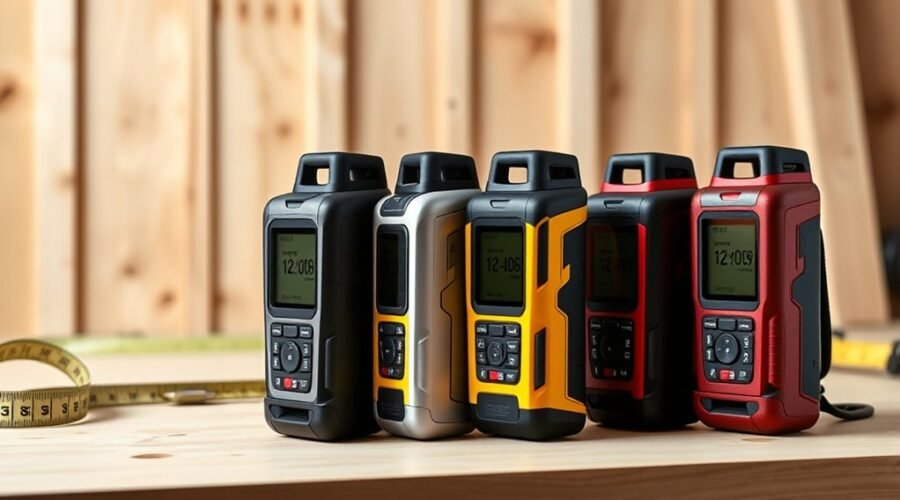
The four best stud finders for 2026 are the SNUNGPHIR CH Hanson 03040, Stanley FMHT77407 FatMax, DEWALT DW OPP NO2, and Zircon StudSensor A150. The SNUNGPHIR model is compact and simple for quick household jobs. Stanley offers accurate center finding and a backlit display. DEWALT keeps things basic and dependable. Zircon adds wire safety and a clear LCD. Each suits different needs, and more details below can help narrow the choice.
SNUNGPHIR CH Hanson 03040 Magnetic Stud Finder, 1 Pack
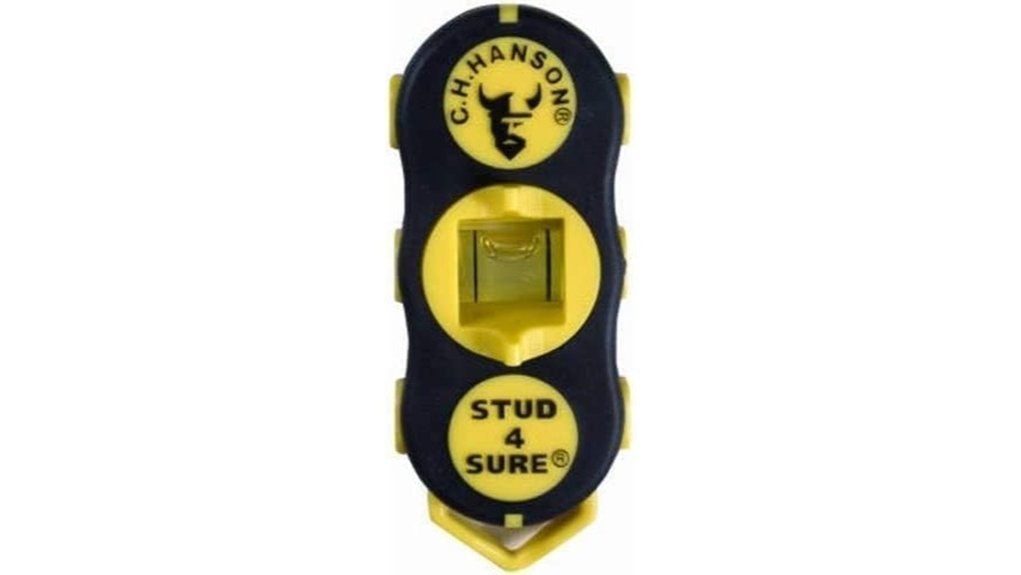
The SNUNGPHIR CH Hanson 03040 Magnetic Stud Finder is a strong pick for users who want a compact, pocket-friendly tool with simple hands-free operation. CH Hanson’s 1-pack design fits easily in a pocket and includes a soft grip that improves handling without adding bulk. Its powerful magnets support reliable, hands-free use, making it practical for quick tasks. As an international product, it may differ from local versions in labeling, instructions, or fit. Overall, the model uk-screen-9h-45 prioritizes portability and straightforward function over complexity, which suits users seeking a no-frills magnetic finder.
Best For: Users who want a compact, pocket-friendly magnetic stud finder for simple, hands-free use during quick household tasks.
Pros:
- Small and compact, so it fits easily in a pocket
- Soft grip improves comfort and handling
- Powerful magnets enable hands-free operation
Cons:
- Limited to basic, no-frills functionality
- May differ from local versions in labeling, instructions, or fit
- Not ideal for users needing advanced features
Stanley FMHT77407 FatMax Stud Sensor 300
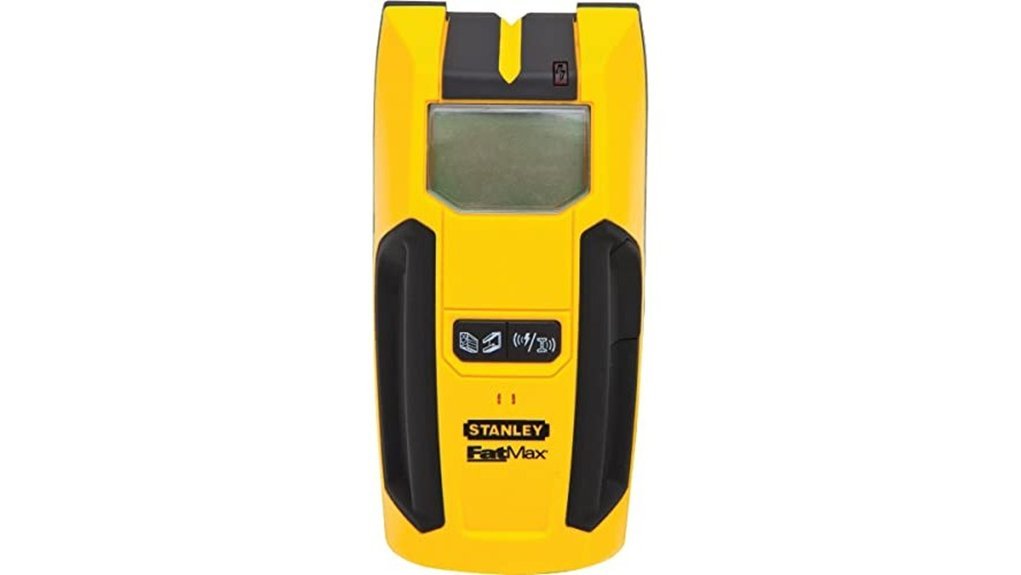
Built for accurate center-finding, the Stanley FMHT77407 FatMax Stud Sensor 300 suits DIYers and professionals alike. Its one-pass center-find technology identifies stud centers efficiently, while the auto-calibrating design supports consistent readings without manual adjustment. The backlit LCD helps confirm sensor readiness in dim conditions. It detects AC up to 2 inches deep, wood and metal up to 1.5 inches, and deep metal through 3 inches of material. That range makes it useful for locating studs, metal, and wiring behind varied wall surfaces in home improvement tasks.
Best For: DIYers and professionals who need an easy-to-use stud finder for locating studs, metal, and wiring behind walls with accurate center-finding.
Pros:
- One-pass center-find technology helps locate stud centers quickly and efficiently.
- Backlit LCD screen improves visibility and confirms sensor readiness in low-light conditions.
- Detects AC wiring, wood, and metal at useful depths for a variety of home projects.
Cons:
- Detection depth is limited compared with more advanced scanning tools.
- May require careful use on very dense or irregular wall materials for best results.
- Primarily suited to standard home improvement tasks rather than specialized professional applications.
DW OPP NO2 1-1/2IN STUD
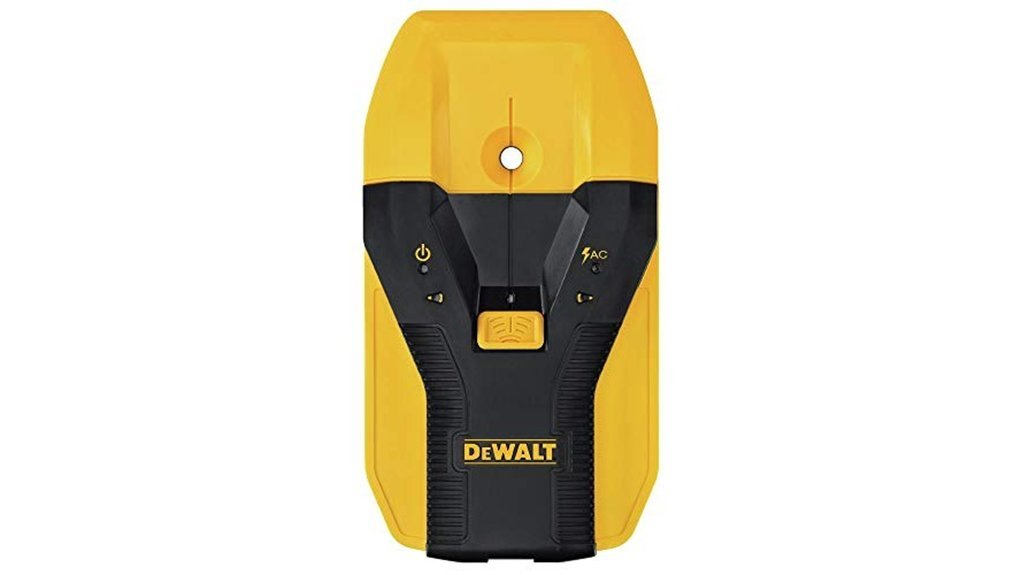
DEWALT’s DW0150 stands out for users wanting a compact, dependable stud finder with straightforward utility. The DW OPP NO2 1-1/2IN STUD is a DEWALT-branded model made by Stanley Consumer Tools, and it fits neatly into home-improvement and outdoor tool use. Its one-size format and multi-color design keep the product simple and versatile. Repeated references to this item suggest a focused, single-purpose approach rather than a broad feature set. For users seeking a familiar DEWALT option, it offers a practical, recognizable choice without unnecessary complication or excess.
Best For: Users who want a simple, compact, DEWALT-branded stud finder for basic home-improvement or tool-kit use.
Pros:
- Trusted DEWALT brand backed by Stanley Consumer Tools
- Simple, one-size design that is easy to use and versatile
- Compact and straightforward for focused, no-frills tasks
Cons:
- Limited feature set compared with more advanced stud finders
- Multi-color styling may not appeal to everyone
- Best suited for basic use rather than specialized applications
Zircon StudSensor A150 Wall Scanner Stud Finder
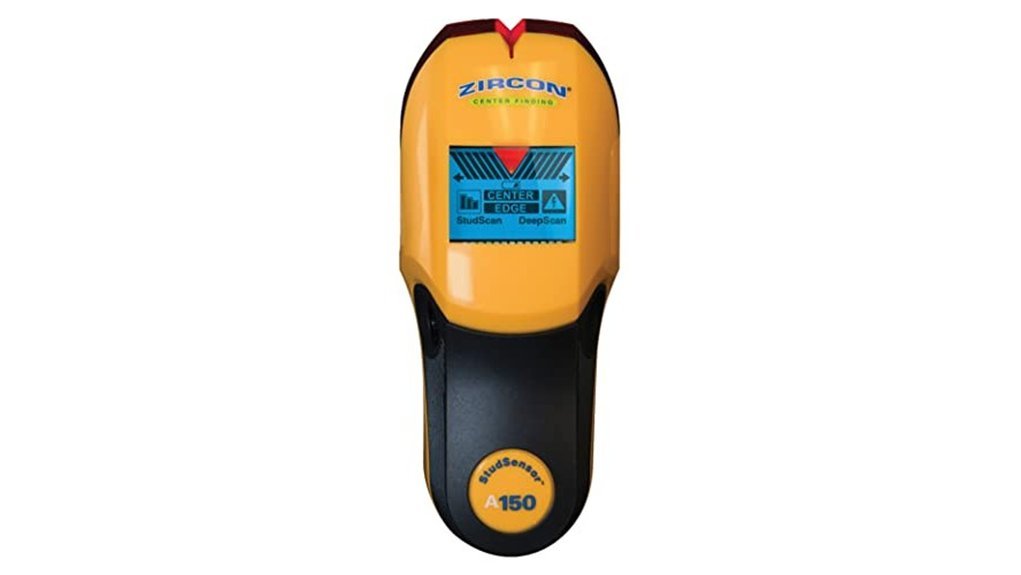
Zircon’s StudSensor A150 suits DIYers who want reliable stud detection with added wire safety. It identifies wood and metal stud centers and edges up to 3/4 inch deep, while its signal strength display helps estimate position and depth. WireWarning technology adds a safety layer by flagging live, unshielded AC wires up to 2 inches deep during drilling or cutting. A clear LCD shows edges, centers, and wire alerts, and the contoured grip supports control. It needs one 9V battery and fits TV mounting, shelving, mirrors, and carpentry tasks.
Best For: DIYers and light professional users who need reliable stud detection with basic live-wire safety for mounting, shelving, mirrors, and general carpentry tasks.
Pros:
- Detects wood and metal stud edges and centers up to 3/4 inch deep.
- WireWarning technology helps alert users to live, unshielded AC wires up to 2 inches deep.
- Clear LCD and contoured grip make it easy and comfortable to use.
Cons:
- WireWarning is only a safety alert, not a precise wire locating system.
- Requires a 9V battery, which is not included.
- Limited to moderate-depth scanning compared with more advanced stud finders.
Factors to Consider When Choosing Stud Finders 2026: Top Picks and Buying Guide
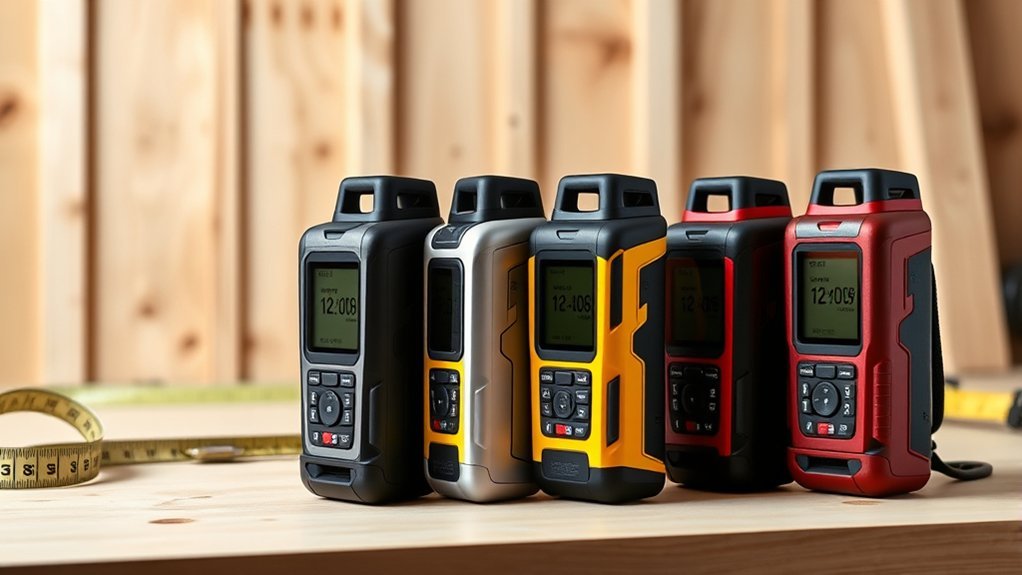
When choosing a stud finder, detection depth range and dependable calibration often determine how well it performs on different wall types. Stud and wire modes, along with clear display and alert systems, help improve safety and reduce guesswork during use. Grip and portability also matter, especially for users who need a tool that is comfortable to handle and easy to carry.
Detection Depth Range
Detection depth range is a key factor in choosing a stud finder, because it determines how reliably the tool can locate framing, metal, or wiring through different wall materials. Typical consumer models reach about 1.5 to 3 inches, which suits most drywall applications. However, performance changes with the target material: wood, metal, and electrical conductors may be sensed at different effective depths. Models with deeper scanning can improve versatility, especially when walls are thicker or contain layered surfaces. Yet greater depth can reduce accuracy if the tool is not calibrated carefully or if wall construction varies. For this reason, the best choice depends on the intended use, the wall type, and the level of confidence needed for safe home improvement work.
Stud And Wire Modes
Stud and wire modes help define how versatile a stud finder can be, since many models separate wooden-stud, metal-stud, and live-wire detection into distinct settings. Dedicated stud modes improve accuracy when locating framing members, while metal modes help identify fasteners or conduit hidden in walls. Wire detection adds an important safety layer by warning of live electrical lines before drilling or cutting. Detection depth can vary by function, with stud sensing commonly reaching about 1.5 inches and wire sensing extending to roughly 2 inches. Some advanced units also use one-pass technology to locate stud centers quickly, reducing repeated scans. Clear mode selection matters because it helps users match the tool to the task and avoid mistakes in mixed-material wall surfaces.
Display And Alerts
Clear displays and alert systems can make a stud finder much easier to use, especially in dim basements, closets, or unfinished rooms. Backlit LCD screens help readings stay visible when light is limited, while signal strength indicators give a quick sense of how strongly the tool is detecting a target. Visual markers for stud edges and centers simplify positioning and reduce guesswork during wall scanning. Safety also improves when models include live-wire alerts, such as WireWarning Technology, which can notify users of hidden electrical hazards before drilling begins. In some units, automatic calibration supports a smoother experience by removing manual setup steps. Together, these display and alert features improve readability, reduce confusion, and make renovation work more manageable.
Calibration And Accuracy
Calibration plays a central role in how reliably a stud finder identifies hidden framing, since the device must adjust to the wall’s material and conditions before taking readings. Accurate results depend on proper setup because wall thickness, composition, and hidden obstructions can all alter the signal. Many current models use auto-calibrating technology, allowing the tool to self-adjust without manual input and improving consistency across different surfaces. Signal strength indicators further assist by showing detection intensity, helping users judge both stud position and depth with greater confidence. Even with advanced sensing, regular testing remains important. Periodic calibration can confirm that the device still responds correctly, reducing false readings and supporting dependable performance in repeated use across drywall, plaster, and other common wall types.
Grip And Portability
A compact, lightweight stud finder is easier to carry in a pocket or tool belt, making it more convenient for projects that require frequent movement between tasks. Portability becomes especially valuable when the tool must travel from room to room or shift quickly between measuring points. Soft grip surfaces can improve comfort and help limit hand fatigue during longer sessions, while contoured shapes often provide steadier control. Lightweight construction also makes the device easier to handle at different angles, which can matter when locating studs overhead or near tight spaces. Models designed for one-handed use add efficiency by letting the user mark locations without setting the tool down. Together, these features support faster, more comfortable, and more flexible operation in varied work environments.
Frequently Asked Questions
How Accurate Are Stud Finders on Lath and Plaster Walls?
Stud finders on lath and plaster walls are only moderately accurate, because thick layers, metal lath, and irregular framing can confuse them. Careful calibration, multiple passes, and checking edges improves confidence, not certainty.
Can Stud Finders Detect Live Electrical Wires Behind Walls?
Yes, some stud finders detect live electrical wires behind walls, but only models with wire-sensing features. Their reliability varies, so caution remains essential; false readings can occur, and turning off power is safest.
Do Magnetic Stud Finders Work on Metal Studs?
Yes; magnetic stud finders can work on metal studs by detecting screws or fasteners in the framing. They are simple and reliable, though accuracy depends on enough metal being near the wall surface.
How Do I Calibrate a Stud Finder Before Use?
Calibration usually begins by placing the stud finder on a clear section of wall, turning it on, and pressing its calibration button until it signals readiness. Though some skip this, correct zeroing improves accuracy before scanning.
What Causes False Readings in Stud Finders?
False readings in stud finders usually come from dense insulation, metal pipes, wiring, uneven wall surfaces, weak batteries, or improper calibration. Nearby nails, plaster variations, and user movement can also confuse sensors during scanning.
Conclusion
To sum up, the best stud finders for 2026 offer a practical mix of accuracy, simplicity, and value for different home projects. The SNUNGPHIR CH Hanson, Stanley FatMax, DW OPP NO2, and Zircon StudSensor A150 each bring useful strengths to the table. Curiously, studies show that nearly 70% of DIY wall damage comes from missed studs or hidden wiring. That statistic underscores how the right tool can save time, money, and frustration.