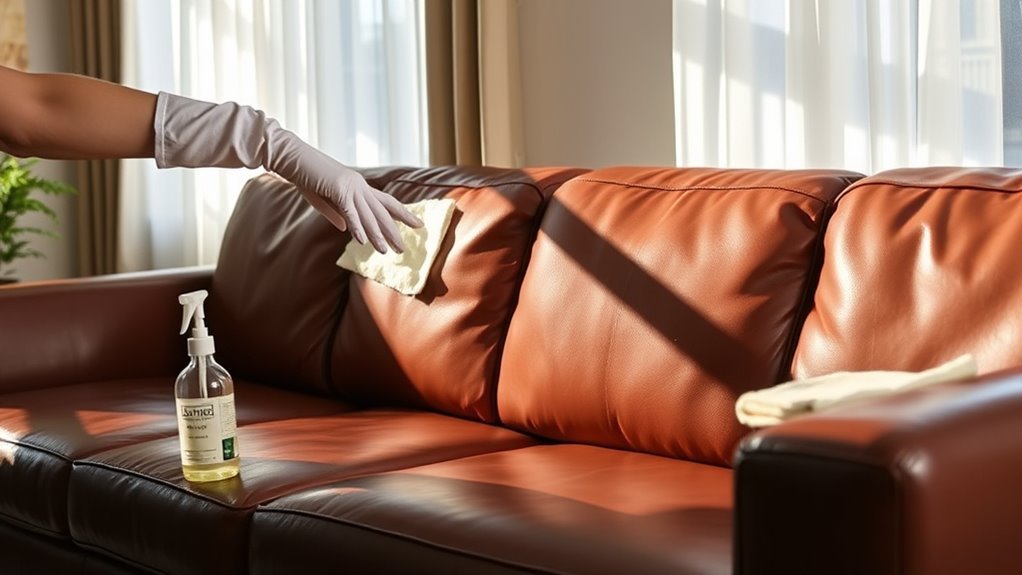
For most protected or pigmented leather couches, the safest routine is simple: check the maker’s care instructions, vacuum with a soft attachment, wipe with a barely damp cloth or an approved leather cleaner, dry the surface, and condition only with a product approved for that finish. Do not assume the same method is safe for aniline, semi-aniline, nubuck, suede, bonded, or faux leather. If the care instructions are missing or the finish changes during a hidden-spot test, stop before treating a visible area.
Last updated: August 19, 2026. Leather-care guidance was rechecked against current manufacturer instructions from Herman Miller, La-Z-Boy, Stressless, and IKEA.
Quick Answer
To clean and condition a leather couch safely, vacuum it first, check the manufacturer’s care instructions, and use a barely damp microfiber cloth or a leather cleaner approved for that finish. If the furniture maker specifically allows mild soap, follow its soap type and dilution instructions rather than using a generic household recipe. Dry the leather after cleaning, then apply only a compatible leather conditioner. Avoid soaking, bleach, ammonia, unapproved vinegar mixes, kitchen oils, and other untested household cleaners.
Key Takeaways
- Always check the manufacturer’s care instructions before using water, soap, cleaner, or conditioner on leather upholstery.
- Protected or pigmented leather is usually the easiest type to maintain at home, but the exact cleaning method still depends on the finish and furniture maker.
- Never soak leather. Use as little moisture as the approved method requires and remove surface moisture promptly.
- There is no universal conditioning schedule. Follow the couch maker and conditioner label first; different manufacturers recommend different intervals.
- Do not treat Dawn, vinegar, olive oil, coconut oil, bleach, ammonia, acetone, hydrogen peroxide, or all-purpose cleaner as universal leather-care products.
At a Glance
| Time Required | Varies by couch size and product directions; allow the leather to dry fully before conditioning |
| Difficulty | Easy for many protected leathers; use extra caution or professional care for unfinished, aniline, suede, nubuck, peeling, or badly stained leather |
| Tools Needed | Soft microfiber cloths, soft-brush vacuum attachment, and the cleaner or conditioner approved for your leather finish |
| Cost | Varies by the manufacturer-approved cleaner or conditioner; routine cleaning may require only cloths, a vacuum attachment, and the approved care product |
How to Prepare Your Leather Couch for Cleaning
Before cleaning your leather couch, look for the manufacturer’s tag, care booklet, product page, or other care instructions. Follow those directions before any general household method. If the instructions call for a specific cleaner or professional service, do not substitute an unapproved recipe.
Next, identify the leather type as accurately as you can. Protected or pigmented leather is commonly more tolerant of gentle surface cleaning, while aniline, unfinished, nubuck, and suede finishes can be much more sensitive to moisture and cleaners. Semi-aniline leather varies by finish, so its name alone is not enough to choose a cleaning method. Bonded and faux leather also need material-specific care and should not automatically receive products intended for natural leather.
| Leather or Upholstery Type | Safest Starting Point | Main Risk |
|---|---|---|
| Protected or pigmented leather | Follow the maker’s approved damp-cleaning or leather-cleaner method and test first. | Excess water, harsh cleaner, or incompatible conditioner can still damage the finish. |
| Semi-aniline leather | Use the furniture maker’s instructions because protection levels vary. | A generic method may darken or alter a lightly protected finish. |
| Aniline or unfinished leather | Limit DIY care to the manufacturer-approved method; professional care is safer when instructions are unclear. | Moisture and cleaner can absorb unevenly and change color. |
| Nubuck or suede | Use only care methods specifically approved for nubuck or suede. | Wet cleaning can alter the nap, color, and texture. |
| Bonded or faux leather | Follow the synthetic or bonded upholstery instructions and use only compatible products. | Natural-leather conditioners or aggressive cleaners may damage the coating or contribute to peeling. |
Warning: Do not wet-clean suede, nubuck, raw, unfinished, or highly absorbent aniline leather unless the manufacturer confirms that the method is safe. If you cannot identify the finish or find the care instructions, stop at dry dusting and vacuuming until the correct method is confirmed.
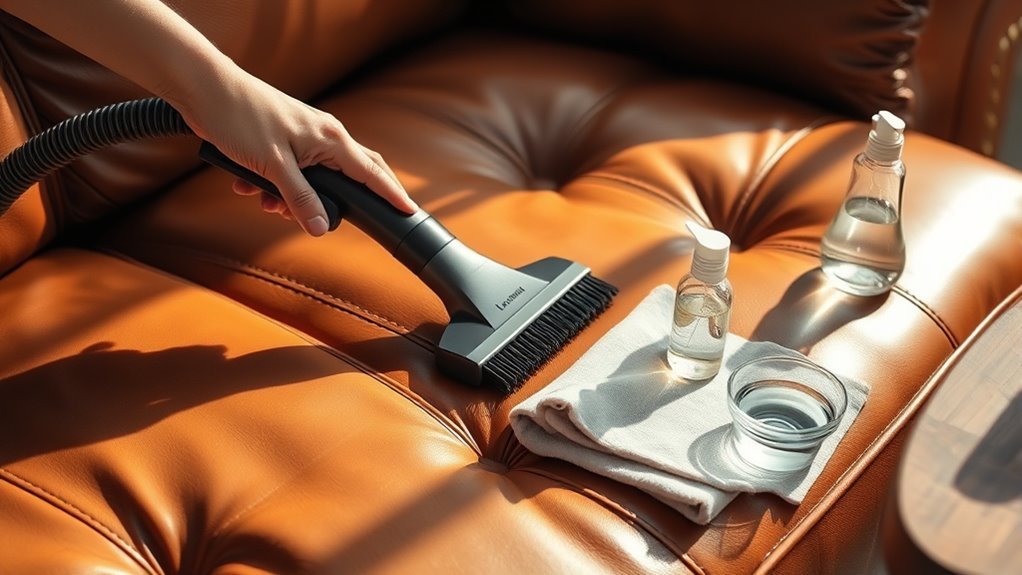
Remove cushions, throws, and decorative pillows so you can reach every surface. Vacuum the couch with a soft-brush attachment, working slowly over seams, corners, piping, and cushion gaps. Removing grit before wiping reduces the chance of rubbing particles across the finish.
Finally, test the approved cleaner and conditioner in a hidden area, such as the back lower edge or under a cushion. Let the test spot dry completely before deciding whether to continue. If the leather darkens unexpectedly, feels sticky, loses color, or changes texture, stop and contact the furniture maker or a leather-care professional.
Essential Materials for Cleaning and Conditioning Leather
The safest leather-cleaning kit is intentionally simple. Start with soft microfiber cloths, a soft-brush vacuum attachment, and the cleaner or conditioner approved for your upholstery. If the furniture maker allows water-based cleaning, distilled water can help avoid mineral residue. If it allows a particular mild soap, use that soap according to the maker’s instructions rather than creating a stronger homemade mixture.
Keep a separate clean, dry cloth nearby for removing surface moisture. Cotton swabs can help apply an approved spot product to a very small area, but concentrated rubbing can remove finish or color. Avoid aggressive toothbrushes, scrub pads, or other tools that rely on abrasion.
Note: Olive oil, coconut oil, vinegar-and-oil mixtures, furniture polish, shoe polish, bleach, ammonia, acetone, hydrogen peroxide, and all-purpose cleaners should not be treated as universal leather-care products. Use only products and household methods your furniture maker approves for that specific upholstery.
Recommended Products
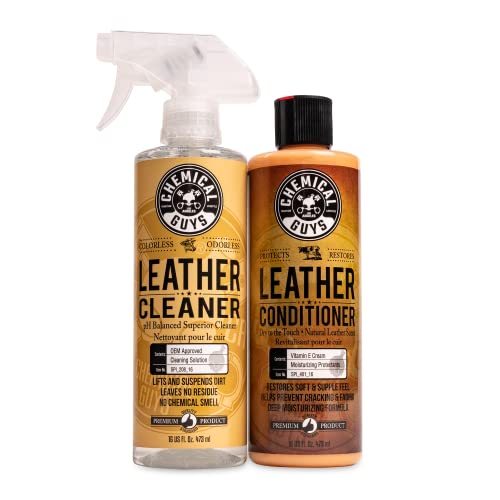
COMPLETE LEATHER CARE KIT (SPI_109_16) - This Chemical Guys kit includes Cleaner and Conditioner, two 16 oz bottles that work together to clean, restore, and protect leather in cars, homes, and more

✅CLEAN, CONDITION & PROTECT WORN LEATHER BOOTS — Bring dull, dusty and dry leather back to a cleaner, richer-looking finish. Saddle soap lifts everyday dirt and buildup, mink oil helps replenish lost moisture, and waterproofing wax adds a protective barrier against water, mud and daily wear.

Complete Leather Cleaner and Conditioner Kit This 5-piece leather care kit includes leather cleaner spray, leather conditioner, microfiber cloth, sponge applicator, and spray nozzle. A complete leather cleaning and conditioning set for car seats, couches, furniture, purses, shoes, boots, bags, and everyday leather accessories.
Can You Use Dawn Dish Soap on a Leather Couch?
There is no universal yes-or-no answer for every leather couch. Some furniture manufacturers allow specific mild soaps on specific finished leathers. For example, Herman Miller names Ivory or Castile bar soap in the care instructions for certain leather cushions, while La-Z-Boy publishes its own mild-soap and distilled-water method. Stressless takes a stricter approach and recommends its tested leather-care products.
Because leather finishes and cleaning formulas vary, Dawn should not be treated as a default leather cleaner. Use dish soap only when the care instructions for your couch specifically allow that type of soap. Otherwise, use the cleaner approved by the furniture maker. Always test the approved method in a hidden area before cleaning a visible surface.
Recommended Products

Cleaning & conditioning: Powerful leather cleaner and conditioner that removes dirt, oils, grime, and residue while restoring natural suppleness and improving the look and feel of leather furniture, car seats, couches, sofas, jackets, handbags, shoes, saddles, and tack. This cleaning leather treatment nourishes and revitalizes finished leather surfaces, helping maintain softness and long-lasting protection
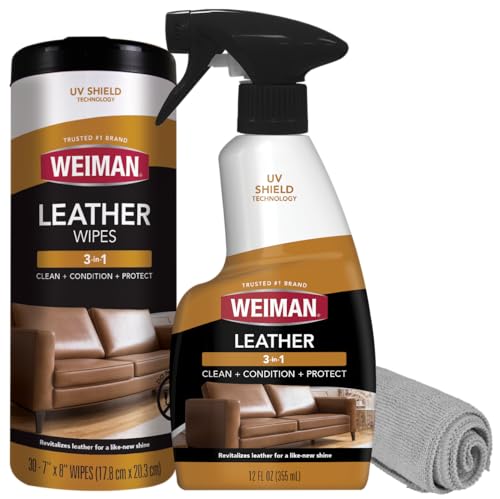
BRING YOUR LEATHER, FAUX LEATHER & VINYL BACK TO LIFE: Weiman leather cleaners safely remove dirt, oil & residue to soften, strengthen & moisturize neglected leather.

✓ Ultimate 4-In-1 Leather Care Formula – Don't settle for just cleaning. EVEO Leather Wipes are expertly formulated to Clean, Condition, Protect, and Restore in one easy step. Leather Couch Cleaner - Our advanced solution lifts away stubborn dirt, soil, and grime while infusing the leather with premium conditioners. This process revitalizes old leather, restoring its natural shine and soft texture without leaving it greasy.
How to Clean Your Leather Couch: A Step-By-Step Guide
Use the following sequence only when your couch’s care instructions allow this type of surface cleaning. If the leather is unfinished, suede, nubuck, unidentified, or badly damaged, stop before wet cleaning and get material-specific guidance.
- Check the approved method. Confirm the manufacturer’s care instructions and identify any cleaner, soap, conditioner, or professional-only requirement.
- Vacuum first. Remove cushions and use a soft-brush attachment to lift dust, crumbs, pet hair, and grit from the surface and seams.
- Prepare only the approved cleaner. Use a leather cleaner according to its label. If the furniture maker allows mild soap, use only the soap type and preparation method it specifies.
- Dampen the cloth, not the couch. When damp cleaning is allowed, apply the solution to a microfiber cloth and wring out excess moisture rather than pouring or spraying liquid directly onto the leather.
- Clean with light pressure. Work evenly and avoid aggressive scrubbing. If your manufacturer says not to spot-clean, clean the entire cushion or leather panel evenly rather than isolating one small patch.
- Remove residue as directed. If the care method calls for a clean damp cloth after washing, use one sparingly, then remove remaining surface moisture with a clean dry cloth.
- Let the leather dry naturally. Keep the couch away from hair dryers, fireplaces, radiators, and other direct heat while it dries.
- Condition only if appropriate. Once the leather is fully dry, apply the conditioner or protective cream approved for that leather. Follow the product amount and buffing instructions rather than assuming more product is better.
Pro Tip: More cleaner or conditioner does not mean better care. Follow the approved amount and remove excess product if the instructions call for buffing.
How to Effectively Remove Stains From Leather
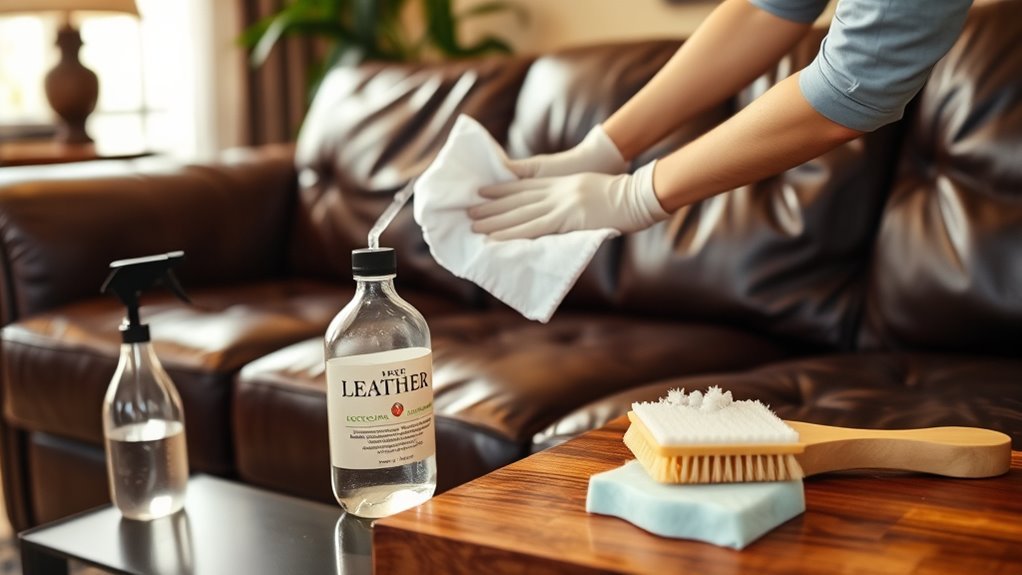
For a spill on a leather couch, act quickly and start with the least aggressive method the furniture maker allows. Blot rather than scrub. If the stain remains after the approved routine-cleaning method, stop before escalating to alcohol, solvent, abrasive cleaner, or another improvised treatment.
| Stain Type | What to Do | What to Avoid |
|---|---|---|
| Water-based spills | Blot immediately with a clean cloth. If the care instructions allow damp cleaning, use that approved method and dry the surface as directed. | Do not soak the area or use direct heat to speed drying. |
| Oil or grease | Blot excess grease with a clean, dry cloth and check the manufacturer’s stain instructions. Use an absorbent powder only if the maker specifically approves that treatment; otherwise seek professional advice for a persistent spot. | Do not add water, vinegar, oil, or an unapproved stain remover to the grease spot. |
| Ink | For valuable or delicate leather, contact a professional. If your furniture maker approves a leather ink remover, test it first and follow its directions exactly. | Do not default to alcohol, acetone, or nail polish remover; these can damage color or finish. |
| Dye transfer from jeans or blankets | Use a cleaner or dye-transfer treatment approved for your couch. Seek professional help if normal approved cleaning does not remove it. | Do not scrub with abrasive pads, bleach, or whitening cleaners. |
| Pet accidents or odor | Blot liquid promptly and use only a cleaner approved for the upholstery. Contact a professional if liquid has penetrated seams, cushions, or backing or if odor remains. | Do not use an enzyme cleaner unless it is specifically approved for that leather or synthetic finish. |
| Scratches, cracks, peeling, or tears | Clean only as the care instructions permit. For cuts, peeling, exposed backing, finish loss, or major color damage, use a leather repair specialist. | Do not fill, dye, glue, sand, or coat a visible couch area unless the repair system is confirmed compatible with the upholstery. |
Recommended Products

POWERFUL ON DIRT, GRIME & TOUGH STAINS – Our concentrated formula cuts through embedded dirt, oil, grease, and stains other interior car cleaners leave behind. Set-in spills, ground-in dirt, and stubborn grime lift with light agitation — minimal effort, no second product needed. If you've cycled through cleaners that fail on tough messes, stop and try Super Cleaner.

✅ SNEAKER CLEANER: Grandma's secret sneaker cleaner is the perfect shoe care for your favorite shoes. Whether women's shoes, men's shoes or children's shoes – our shoe cleaner is an ideal choice. Developed and manufactured by sneakers cleaner experts, the special canvas shoe cleaner with its high-end formula removes the most stubborn dirt on materials of all kinds without attacking the shoes.

NON TOXIC, GENTLE CLEANER: Our proven, rejuvenating formula is a powerful, fragrance-free cleaner ideal for all your leather goods (except suede). EPA Safer Choice certified
How Often Should You Condition Your Leather Couch?
Conditioning or applying a manufacturer-approved protection cream can help suitable leather stay flexible and maintain its surface, but there is no universal conditioning interval for every couch. The correct product and schedule depend on the leather finish and furniture maker.
For example, Stressless recommends cleaning its leather at least every six months and applying its protective cream after cleaning, while IKEA describes conditioning some leather sofas a few times a year. Other manufacturers may specify a different schedule or product system. Follow your couch’s instructions rather than conditioning automatically because a fixed number of months has passed.
If the leather looks unusually sticky, oily, cracked through, peeling, or discolored, adding more conditioner may not solve the underlying problem. Stop adding products and get material-specific advice.
| Benefit | What It Means |
|---|---|
| Helps maintain flexibility | A compatible conditioner or protection product can help suitable leather remain supple when used according to its directions. |
| Maintains feel | Correct care can help prevent a suitable leather surface from becoming unnecessarily dry or stiff. |
| Maintains appearance | An approved product may refresh a dry-looking finish without relying on kitchen oils or furniture polish. |
| Supports routine care | Conditioning works best as one part of a broader routine that also limits dirt, spills, direct heat, and excessive sunlight. |
Essential Tips for Long-Lasting Leather Couch Maintenance
Routine maintenance is safer than waiting for heavy soil or stains to build up. Match the frequency to how heavily the couch is used and to the furniture maker’s instructions.
Regular Dusting Routine
Dust the couch routinely with a soft, dry microfiber cloth and vacuum seams and cushion gaps with a soft-brush attachment. Homes with pets, frequent couch dining, or heavy daily use may need this more often because crumbs, hair, and grit accumulate faster.
Immediate Spill Management
When a spill happens, blot it promptly with a clean cloth rather than scrubbing. Continue with a damp cloth or cleaner only if that method is approved for the upholstery. Quick removal of surface liquid reduces the amount of time it has to spread into seams or absorb into a sensitive finish.
Periodic Deep Cleaning
Deep-clean only as often as the furniture maker recommends or visible soil warrants. A manufacturer may specify a six-month schedule, a few treatments per year, or another interval for its own leather system. Dust and vacuum first, use the approved cleaner, let the leather dry as directed, and then use the approved conditioner or protection product when required.
| Step | Action | Purpose |
|---|---|---|
| 1. Dust and vacuum | Remove surface dirt and crumbs | Reduces the chance of rubbing grit across the finish |
| 2. Clean as approved | Use the manufacturer-approved leather cleaner or permitted soap method | Removes everyday surface soil without improvising a stronger cleaner |
| 3. Dry as directed | Remove excess surface moisture and allow natural drying | Avoids unnecessary moisture exposure and direct-heat damage |
| 4. Condition if required | Apply the compatible conditioner or protective cream at the recommended interval | Maintains the leather according to its intended care system |
Protect the Couch From Sun, Heat, and Scratches
Keep leather furniture away from prolonged direct sunlight and strong heat sources when possible. Manufacturer care guidance warns that sunlight can fade leather and nearby heat can affect its surface. Also reduce contact with sharp objects, rough hardware, and pet claws that can scratch or puncture the upholstery.
Common Mistakes to Avoid When Cleaning Leather Furniture
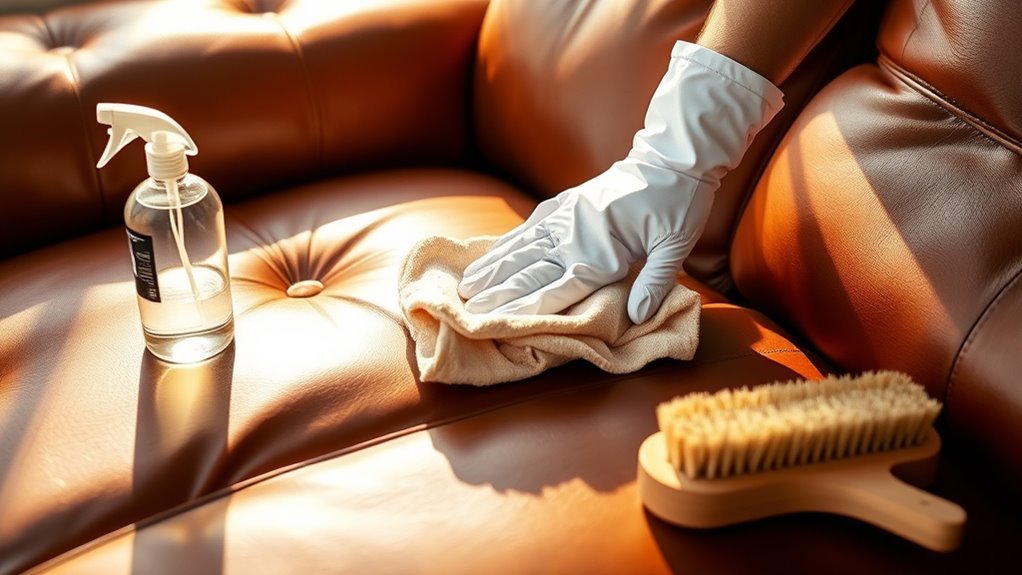
A leather couch can be difficult to restore after its finish is stripped, stained, or coated with the wrong product. Avoid these common shortcuts.
Using Harsh Chemicals
Do not default to bleach, ammonia, acetone, hydrogen peroxide, glass cleaner, all-purpose cleaner, or abrasive scrubbers on leather. Use a cleaner specifically approved for the upholstery and test the approved method in a hidden spot before treating a visible area.
Over-Wetting Leather Surfaces
Do not soak leather during routine cleaning. When damp cleaning is approved, use only the amount of moisture the care instructions require. Blot pooled liquid from seams or cushion edges promptly and let the upholstery dry without direct heat.
Using Kitchen Oils or Vinegar Mixes
Olive oil, coconut oil, and vinegar-and-oil mixtures are common online suggestions, but they should not be treated as universal couch-care methods. Oils can leave residue or alter the appearance of some finishes, and homemade acid-and-oil mixtures may conflict with the manufacturer’s care system. Use the approved leather conditioner or protection product instead.
Neglecting Regular Maintenance
Allowing grit, body oils, food residue, and spills to build up makes later cleaning harder. Dust and vacuum routinely, blot spills promptly, and use the approved cleaning and conditioning schedule for the upholstery.
Treating Every Leather Type the Same
A method approved for protected leather may not suit aniline, semi-aniline, unfinished, suede, nubuck, bonded, or faux upholstery. When the leather type or care instructions are unclear, avoid escalating beyond dry dusting and vacuuming until you know the correct method.
When to Call a Professional Leather Cleaner
Professional help is the safer choice when the upholstery is highly absorbent or unidentified, when its care instructions require professional service, or when it is badly stained, sticky, peeling, cracked through, faded, or losing color. Professional assessment is also sensible for difficult ink or dye transfer, persistent pet contamination or odor, visible mold, large grease stains, tears, exposed backing, or a repair that requires matching the existing finish.
Frequently Asked Questions
What is the best thing to clean leather couches?
The best choice is the cleaning method approved by the couch manufacturer for that leather finish. For many protected leathers, this may involve a barely damp cloth, a leather-specific cleaner, or a particular mild soap. Vacuum first, test the approved method in a hidden area, and avoid soaking the leather.
How do you clean leather sofas at home?
Check the manufacturer’s care instructions, remove cushions, vacuum with a soft-brush attachment, and test the approved cleaner in a hidden spot. If damp cleaning is allowed, apply the cleaner to a cloth rather than soaking the sofa, clean with light pressure, remove residue as directed, and let the leather dry naturally before applying any approved conditioner.
Can I use Dawn dish soap to clean my leather couch?
Do not assume Dawn is safe for every leather couch. Some manufacturers allow particular mild soaps on specific finished leathers, while others recommend only their tested leather-care products. Use dish soap only if the care instructions for your couch specifically allow that type of soap, and test the approved method first.
What household products can you use to clean leather?
There is no universal household recipe for every leather finish. Some furniture makers allow water and a specific mild soap on certain protected leathers, while others require dedicated care products. Follow the manufacturer’s instructions and avoid improvising with vinegar, kitchen oils, bleach, ammonia, acetone, hydrogen peroxide, or all-purpose cleaner.
Can I condition a leather couch with olive oil or coconut oil?
Do not use olive oil or coconut oil as a default leather conditioner. Oils can leave residue or change the appearance of some upholstery finishes. Use the conditioner or protection product approved for your couch instead.
How often should I condition a leather couch?
There is no universal interval for every leather couch. Some manufacturers recommend care about every six months, while others suggest conditioning a few times per year. Follow the furniture maker and conditioner instructions for your specific leather rather than using one schedule for every couch.
When should I stop DIY cleaning and call a professional?
Call a professional when the leather type is unknown or highly sensitive, the maker requires professional care, or the couch is peeling, cracked through, sticky, losing color, badly stained, torn, mold-affected, or contaminated by a spill that has penetrated beneath the surface.
Sources
- Herman Miller: Eames Lounge Chair and Ottoman Care and Maintenance — first-party guidance on mild soap, damp-cloth rinsing, whole-surface cleaning, drying, and avoiding oils on specified leather cushions.
- La-Z-Boy: Fabric & Leather Care — first-party guidance on prompt spill care, blotting, mild soap, distilled water, and leather maintenance.
- Stressless: Leather Care — first-party guidance on approved care products, cleaning frequency, protective cream, sunlight, and heat exposure.
- IKEA: Restore Your Leather — first-party guidance on cleaning before conditioning, hidden-spot testing, drying, and leather conditioner use.
- Better Homes & Gardens: Leather Furniture Care Tips — supplementary guidance on routine dusting, vacuuming, manufacturer checks, conditioning, and sunlight exposure.
Conclusion
The safest way to clean and condition a leather couch is to start with the upholstery maker, not a universal DIY recipe. Identify the finish, vacuum away grit, use only the cleaning method approved for that leather, control moisture, let the surface dry naturally, and apply a compatible conditioner only at the recommended interval. If the leather type is unknown, highly absorbent, peeling, badly stained, or changing color during a test, stop before escalating the treatment. That approach protects the finish better than experimenting with dish soap, kitchen oils, vinegar mixtures, solvents, or other household shortcuts.