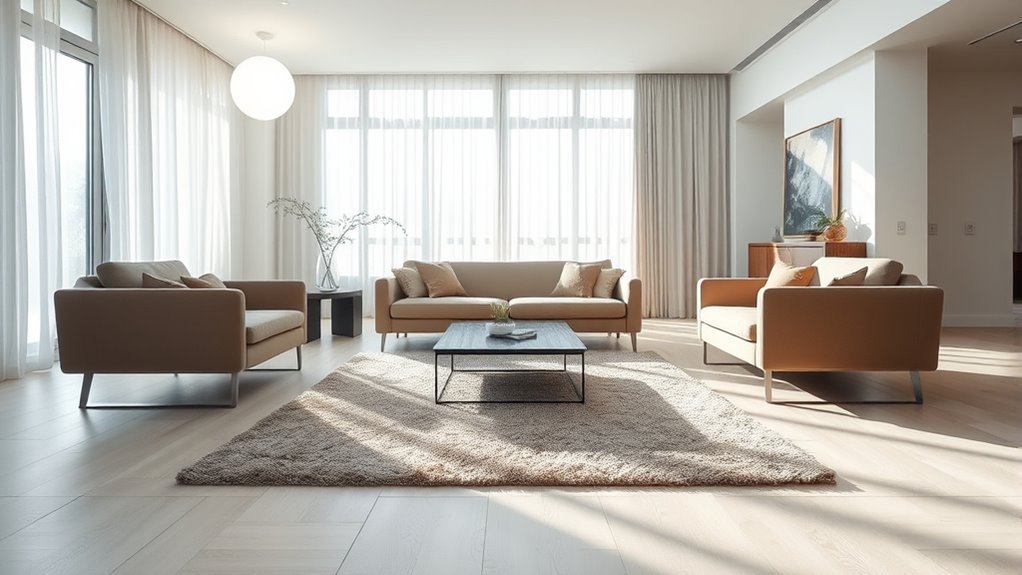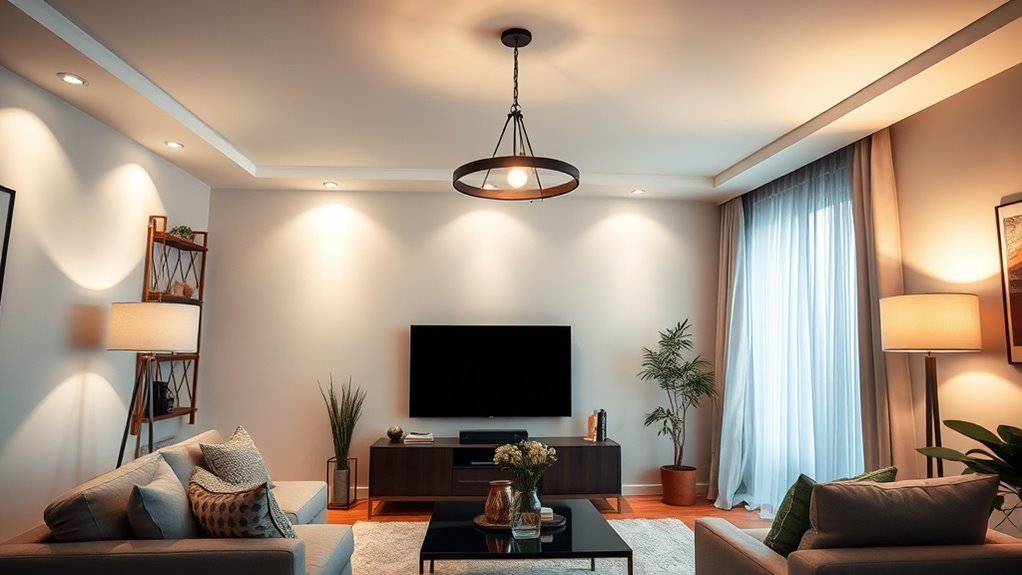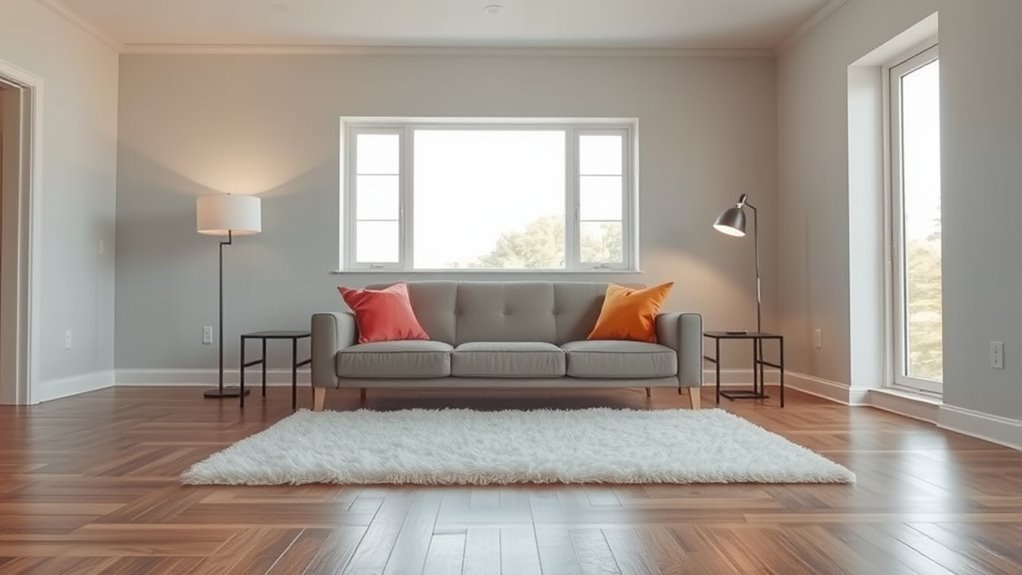
Decorating a living room is much easier when you make the permanent and expensive decisions first, then save the flexible styling details for last. Start with measurements, function, budget, and a clear style direction before you buy furniture. Then choose your color palette, plan the layout, buy the main furniture, select the rug, add lighting and window treatments, hang art, layer textures, and finish with personal decor.
Last updated: August 19, 2026. This update clarified accessibility guidance, added room-planning checkpoints and a cost-and-commitment decorating framework, strengthened relevant internal links, and removed structured data that did not comply with this article’s schema rules.
Quick Answer
The best order to decorate a living room is: measure the room, define how you use it, set a budget, choose a style and color palette, plan the layout, buy the main furniture, select the rug, add lighting and window treatments, hang art, layer textures, then finish with personal decor. Make the hardest and most expensive decisions first so later styling choices can adapt to them.
Key Takeaways
- Measure the room, doorways, walkways, and existing features before you order furniture or rugs.
- Choose the room’s purpose first so the layout supports real life, not just a pretty photo.
- Make high-commitment decisions first, then layer in rugs, lighting, art, textiles, and accessories.
- Use design rules like 60/30/10 or front-legs-on-the-rug as flexible guidelines, not strict laws.
- Finish with meaningful details, but edit carefully so the room feels personal rather than cluttered.
At a Glance
| Time Required | One weekend for planning; several weeks to several months if ordering furniture, rugs, curtains, or custom pieces |
| Difficulty | Beginner to intermediate |
| Tools Needed | Measuring tape, painter’s tape, notebook or phone notes, floor-plan app or graph paper, paint/rug/fabric samples |
| Cost | Flexible: refresh with styling pieces for a few hundred dollars, or fully furnish the room over time based on your budget |
Decorate by Cost and Commitment, Not Just by Looks
A useful way to decide what comes first is to ask how difficult a choice will be to undo. Measurements, traffic flow, furniture scale, and expensive anchor pieces affect almost every decision that follows. Pillows, throws, books, trays, and small decorative objects are much easier to change.
| Decision Level | Examples | When to Decide |
|---|---|---|
| High commitment | Room function, traffic flow, major furniture scale, fixed finishes | First |
| Medium commitment | Area rug, lighting, curtains, larger artwork, storage | After the layout and anchor furniture are clear |
| Low commitment | Pillows, throws, trays, books, small objects, seasonal accents | Last |
Use one simple checkpoint as you decorate: if a new choice would force you to replace or reposition an earlier expensive choice, stop and recheck the plan. This keeps flexible decor working around the room instead of forcing the room to work around flexible decor.
How Should You Measure a Living Room Before Decorating?
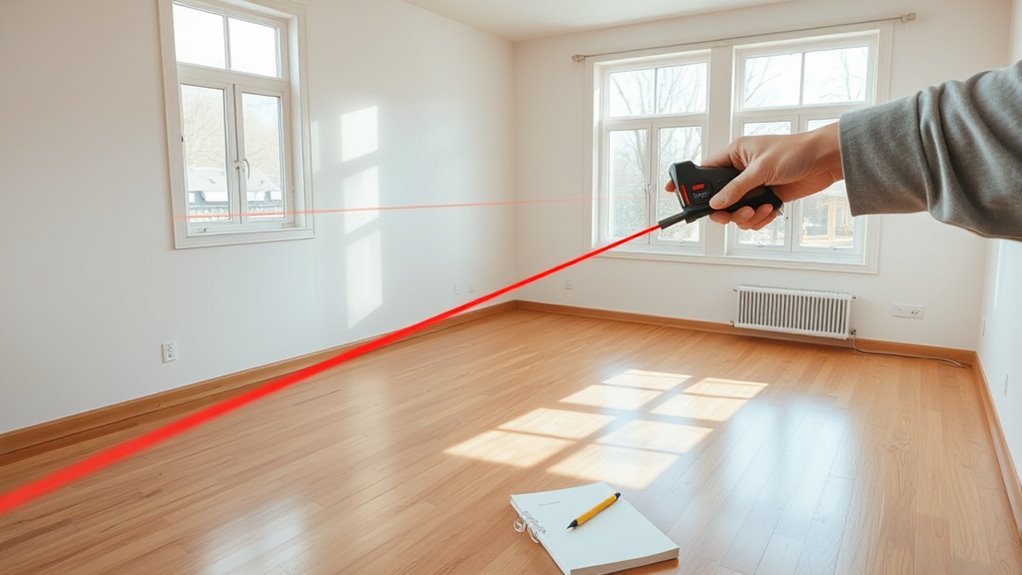
Before you choose a sofa, rug, paint color, or coffee table, measure the room carefully. Write down the length and width of the room, ceiling height, window sizes, doorway widths, hallway turns, stair openings, fireplace dimensions, built-ins, radiators, floor vents, outlets, and light switches.
Next, sketch a simple floor plan. It does not have to be professional. A rough drawing on graph paper or in a free room-planning app is enough to help you see what will actually fit. This prevents one of the most expensive decorating mistakes: buying a beautiful piece that overwhelms the room or cannot fit through the door.
Warning: Measure delivery paths, not just the room. A sofa may fit your living room but still fail to fit through a narrow entry, stairwell, elevator, or tight hallway turn.
Plan clear walkways at the same time. For everyday furniture layouts, about 30 inches of circulation space is a useful planning target where the room allows it. If you are intentionally planning an accessible route, 36 inches is a stronger benchmark: the 2010 ADA Standards for Accessible Design specify a 36-inch minimum clear width for accessible walking surfaces, subject to limited exceptions. Treat that ADA measurement as an accessibility benchmark rather than a universal decorating rule for every private living room.
What Will You Use Your Living Room For?
Now define the room’s real purpose. A living room used for movie nights needs a different layout than one used for conversation, reading, entertaining, gaming, working from home, or hosting children and pets.
Ask yourself these questions before you buy anything:
- How many people usually sit in the room?
- Is the main focal point a TV, fireplace, view, artwork, or conversation area?
- Do you need hidden storage for toys, remotes, blankets, games, or pet supplies?
- Will people eat, work, read, or nap here?
- Do fabrics need to be washable, stain-resistant, pet-friendly, or kid-friendly?
- Should the room feel formal, casual, cozy, bright, minimal, layered, or collected?
Once you know the purpose, your design decisions become easier. A family room may need a deep sofa, washable rug, storage ottoman, and layered lighting. A more formal sitting room may need upright seating, side tables for drinks, a statement rug, and art that sets the tone.
If floor space is especially tight, use the dedicated small living room layout guide for more detailed space-planning ideas.
Set a Realistic Budget Before You Shop
Budget comes before shopping because it helps you decide where to invest and where to save. In most living rooms, the best investment pieces are the sofa, rug, lighting, and any storage that must work hard every day. Accessories, pillows, throws, small tables, baskets, and decorative objects are easier to swap later.
Divide your budget into three groups:
- Must-haves: sofa, main seating, rug, storage, essential lighting.
- Nice-to-haves: accent chairs, side tables, curtains, art, ottomans, bookshelves.
- Finishing touches: pillows, throws, trays, candles, vases, frames, seasonal decor.
Note: You do not have to finish the room in one shopping trip. A slower decorating process often leads to a more personal room because you have time to find pieces with better scale, quality, and meaning.
How Do You Choose a Living Room Style?
Your living room should look like it belongs to you, not like a showroom copied all at once. Start by studying what you already love. Look at your favorite outfits, saved interior photos, travel memories, artwork, family heirlooms, and objects you never get tired of seeing.
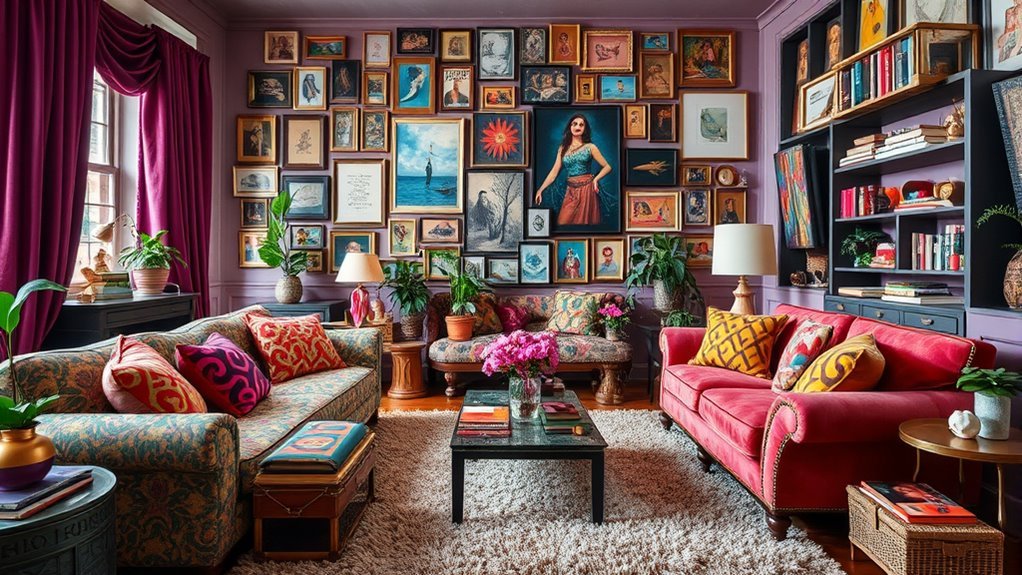
Then describe your ideal room in two or three words. Examples include “warm minimalist,” “cozy traditional,” “organic modern,” “colorful eclectic,” “soft Scandinavian,” “collected vintage,” or “calm coastal.” These words will guide your choices when you are comparing sofas, rugs, paint colors, and accessories.
Also consider the architecture of your home. A sleek modern sofa can work in an older home, and antique pieces can work in a new build, but the most successful rooms usually create a conversation between your style and the bones of the space.
If warmth, natural texture, and relaxed comfort are central to your style, the guides to hygge living room design and natural materials in living rooms explore those directions in more depth.
Create a Mood Board to Guide Your Decor Choices
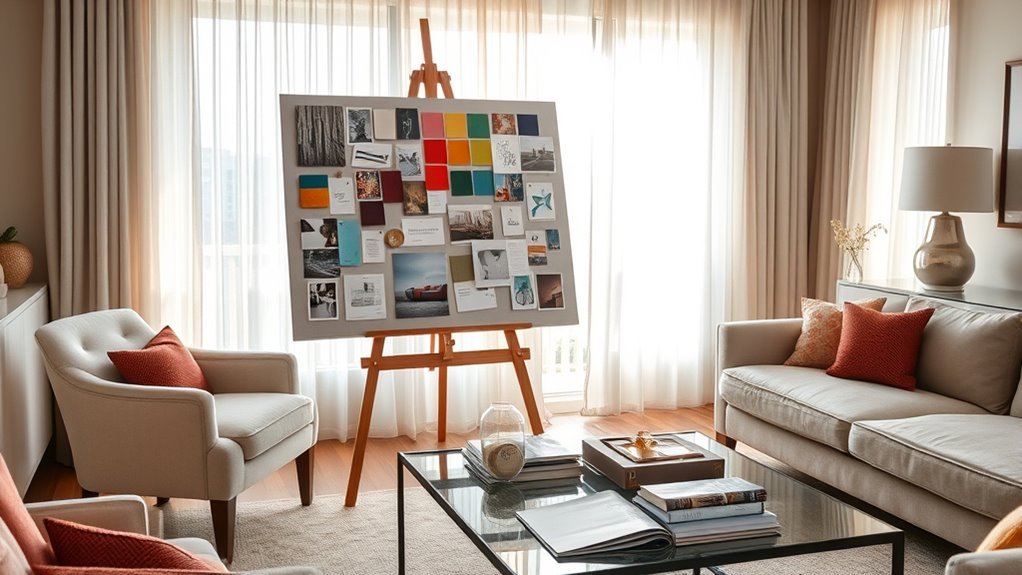
A mood board keeps your living room decorating plan focused. It can be a digital board, a folder of screenshots, a printed collage, or a tray of fabric, rug, wood, metal, and paint samples.
Gather Inspirational Images
Collect at least 10 living room images that feel close to your goal. Do not just save rooms you think are pretty. Save rooms that match your lifestyle, room size, light level, and comfort needs.
As you collect images, look for patterns:
- Do you keep saving light or dark rooms?
- Are the sofas structured or soft?
- Do you prefer warm wood, black metal, brass, chrome, painted finishes, or natural fibers?
- Are the rooms minimal, layered, colorful, neutral, formal, or casual?
- Do you like symmetry, relaxed asymmetry, or a collected look?
Assess Visual Interactions
Once your mood board is built, check how the pieces relate to one another. A sofa, rug, curtain fabric, wood tone, and wall color may each look beautiful alone, but they still need to work together. Watch for clashing undertones, too many busy patterns, or a room that has all heavy pieces on one side.
This is also where you can catch mistakes early. If your inspiration board has five different wood finishes, three competing metals, and four strong patterns, decide which ones are the stars and which ones need to step back.
Refine Your Selections
Edit the board until it feels clear. Keep the images, colors, and materials that support your style words. Remove anything that feels like a passing trend, a duplicate, or a piece that belongs to someone else’s home more than yours.
Pro Tip: Before buying a statement piece, place it on your mood board beside your sofa, rug, curtain, and wall-color options. If it fights everything else, it is probably not the right statement for this room.
Choose a Harmonious Color Palette
A strong living room color palette usually starts with the pieces that are hardest to change: flooring, fireplace stone, built-ins, large furniture, and rugs. Once those are considered, choose a dominant color, a secondary color, and one or two accent colors.
The 60/30/10 rule is a helpful starting point: about 60% dominant color, 30% secondary color, and 10% accent color. In a living room, that might mean neutral walls and sofa, wood and green as the secondary tones, and small hits of rust, blue, or black in pillows, art, and accessories. Treat this as a guide, not a law.
Test paint and fabric samples in the actual room before committing. Natural light, artificial lighting, shadows, flooring, and nearby furniture can all change how a color looks. For paint, view samples in the morning, afternoon, evening, and under lamps. For fabrics and rugs, place samples near the sofa, flooring, and window so you can see the undertones together.
How Should You Plan the Living Room Layout?
Before you shop for essential living room furniture, decide where the room naturally wants your attention to go. The focal point may be a fireplace, TV, large window, built-in shelves, piano, artwork, or a central conversation area.
Once you know the focal point, plan the seating around it. In a conversation-focused room, seats should face one another comfortably. In a TV room, the sofa should have a practical viewing angle. In a room with a fireplace and TV, you may need a balanced layout that gives both features a role.
Use painter’s tape to mark the footprint of your sofa, chairs, coffee table, rug, and storage pieces on the floor. Walk through the room as if the furniture were already there. Check whether people can enter, sit, reach a table, open storage, and move through the space without squeezing around corners.
Check Your Layout Before Buying
- Main circulation: protect the clearest route through the room instead of forcing people to weave through the seating area.
- Coffee-table spacing: about 14 to 18 inches between the sofa and coffee table is a useful starting range for comfort and reach.
- Everyday access: make sure doors, drawers, cabinets, recliners, and storage pieces can open without hitting another item.
- Useful surfaces: primary seats should have practical access to a coffee table, side table, or another landing surface.
- Real movement: test the taped layout by entering the room, walking to the main seats, reaching storage, and moving toward adjoining rooms.
If the taped plan fails one of these checks, change the layout before you change the decor. A beautiful pillow or lamp cannot solve a circulation problem.
Shop Wisely for Essential Living Room Furniture
Shop for the largest and most functional pieces first. In most living rooms, that means the sofa, main chairs, media cabinet or storage, coffee table, and side tables. These pieces create the structure of the room, so their size and comfort matter more than small accessories.
Start with the sofa because it is often the room’s anchor. Choose a size that fits your layout, not just the largest sofa your wall can hold. A sofa that is too deep can overwhelm a small room, while one that is too small can make a large room feel unfinished.
Then add chairs, tables, and storage based on how the room is used. Side tables should be close enough to reach from seats. Coffee tables or ottomans should leave comfortable legroom. Storage should be placed where clutter actually happens, not where it looks good in theory.
When possible, mix finishes and shapes so the room does not feel like a matching furniture set. Pair straight lines with curves, smooth surfaces with texture, and new items with vintage or meaningful pieces.
Recommended Products

𝐕𝐄𝐑𝐒𝐀𝐓𝐈𝐋𝐄 𝐋-𝐒𝐇𝐀𝐏𝐄𝐃 𝐒𝐄𝐂𝐓𝐈𝐎𝐍𝐀𝐋 – This 4-piece convertible sofa set includes 2 Set of 35" accent chairs, 80" 3-seater sofa, and a reversible storage ottoman. The modular design lets you fit any corner, divide an open space, or create a cozy nook — ideal for maximizing every square foot. Perfect for apartments, living rooms, and home offices — adapts to any space in minutes.

Setup Guide: Delivered in 3 boxes with clear instructions. Cushions vacuum-packed; allow 48h for 80% recovery, gently pat to fluff fully in a week. Please ensure full assembly before use

1.Charging Station on Your Couch: The Sectional Sofa center console’s flip-top table hides a high-speed charging pad, while the power control panel adds a direct USB port. Whether it’s your game controller, tablet, or phone, this sofa ensures you’re always powered up.
How Do You Choose the Right Living Room Rug Size?
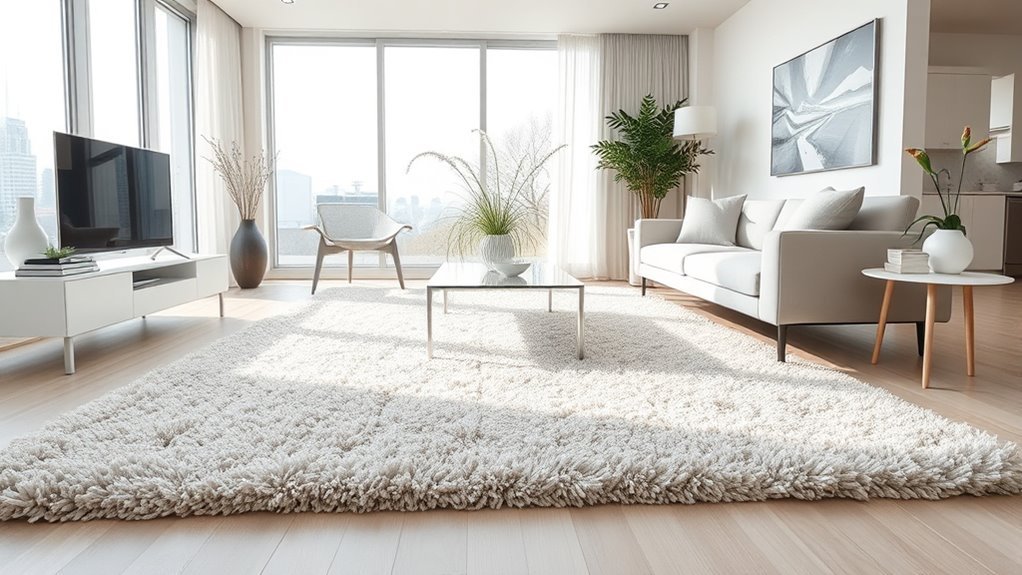
The right area rug anchors the living room and makes the furniture feel connected. A rug that is too small can make the seating area look disconnected, even if the furniture itself is beautiful. For most living rooms, choose a rug large enough for all furniture legs or at least the front legs of the sofa and chairs to rest on it. This approach is also recommended in current area rug sizing guidance.
Recommended Products

Machine Washable Area Rugs: Our living room rug, one of the 8x10 area rugs, surfaces is resistant to stains and dirt, and can be easily cleaned with a rag or vacuum cleaner; for deep cleaning, use a washing machine

Durable & Premium Quality: Crafted from soft faux wool and top-notch recycled polyester fibers, our area rugs 8x10 boast robust, meticulously hand-wrapped edges. So Lbris's living room rugs 8x10 offer not just long-lasting durability and resistance to shedding, but also unparalleled comfort, making them ideal for high-traffic spots like living rooms and bedrooms

Soft Faux Cashmere for Everyday Comfort: Made with a 280GSM faux cashmere velvet surface, this 8'x10' large area rug feels smooth and cozy under bare feet for daily routines, quiet lounging, family time, or pets resting nearby
Determine Optimal Rug Size
Your ideal rug size depends on the room size, furniture layout, and how much floor you want visible. Use this as a starting point:
| Rug Size | Best For | Placement Goal |
|---|---|---|
| 5×7 ft | Very small seating areas | Use carefully; often works best layered over a larger neutral rug |
| 8×10 ft | Average living rooms | Front legs of sofa and chairs on the rug |
| 9×12 ft | Larger living rooms or sectionals | Front legs or all legs on the rug |
| 10×14 ft | Large rooms or open-plan zones | All main furniture pieces fully or mostly on the rug |
In larger rooms, leave visible flooring around the rug so it frames the seating area rather than looking like wall-to-wall carpet. In smaller rooms, a slightly larger rug often makes the room feel more generous than a tiny rug floating under the coffee table.
Visualize Placement With Tape
Before ordering a rug, outline the rug size on the floor with painter’s tape. Place the sofa, chairs, and coffee table inside the taped area visually. This helps you catch sizing problems before you spend money.
If you are torn between two rug sizes, the larger option is often better for a living room because it anchors the furniture more successfully. Add a rug pad underneath to reduce slipping, protect floors, and make the rug feel more comfortable underfoot.
Plan Lighting, Window Treatments, and Wall Decor
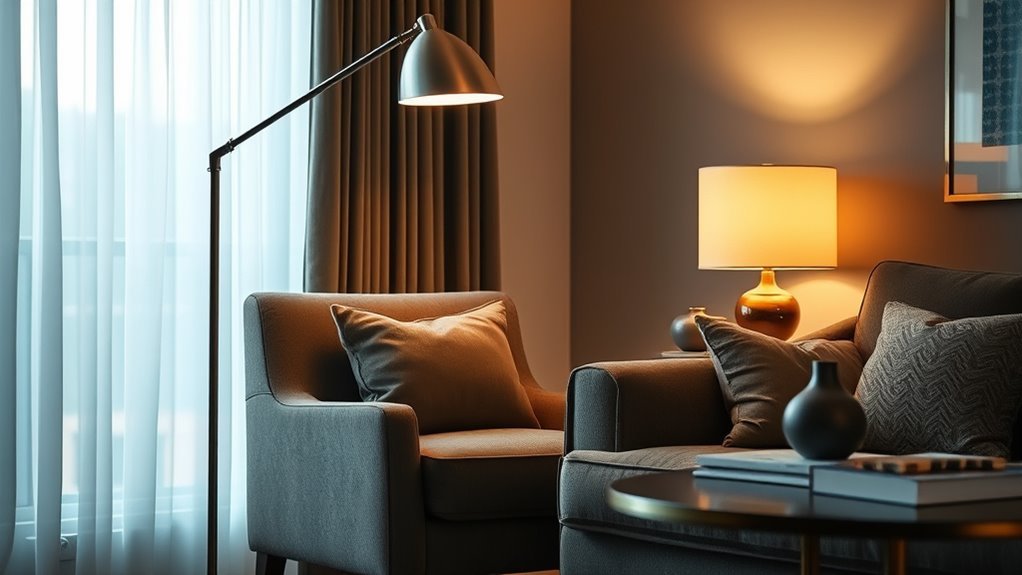
Lighting should not be an afterthought. A living room feels more finished and flexible when it has three layers of light:
- Ambient lighting: ceiling fixtures, recessed lights, or a central pendant for overall brightness.
- Task lighting: table lamps, floor lamps, or reading lights near seats.
- Accent lighting: picture lights, sconces, shelf lighting, or small lamps that create mood.
Place lamps where people actually sit, read, talk, and relax. If the only light source is overhead, the room may feel flat or harsh at night. Softer pools of light make the room feel warmer and more inviting.
Window treatments come next because they affect color, softness, privacy, and the perceived height of the room. Hang curtains high and wide when possible so windows look taller and more generous. Choose lined curtains for a tailored look, woven shades for texture, or simple panels for softness.
Finally, plan wall decor. Art should relate to the furniture below it. A tiny frame above a large sofa often looks lost, while a large piece or balanced gallery wall can make the room feel intentional. Leave some blank space too; every wall does not need to be filled. For sizing and placement details, see the dedicated guide to choosing living room wall art.
Recommended Products

Multi-Function Dimmable Lamp: Vertical lamp includes an 12W dimmable LED bulbs that can be set to different color temperatures (3000K-6500K). 5%-100% dimmable brightness can be used to create different atmospheres and customize your favorite bedroom floor lamp.

2026 Upgrade: We always put users first and noticed customers expect greater durability and stability from their floor lamps. In February, we upgraded our materials to include high-quality LED bulbs and a full metal body, earning ETL certification. Our lamp is built to be more stable and durable, eliminating issues like sudden shut-offs and unsteady stands. Enjoy superior quality for a more convenient and comfortable life.

[DIMMABLE FLOOR LAMP FOR BRIGHTNESS & COLOR] This tall lamp can use the remote control to adjust the brightness by stepless from 10% to 100% and color temperature from 3000K to 6000K, for warm white, natural white, and cool white light. You can adjust the brightness from super soft and cozy to bright and energizing, and switch between warm, natural, and cool light depending on your mood.
How Do You Layer Texture Without Creating Clutter?
Layering textures gives a living room warmth and depth. Without texture, even an expensive room can feel flat. Combine soft textiles, smooth surfaces, natural materials, and a few contrasting finishes.
Try these texture combinations:
- A wool or washable rug with linen curtains.
- A smooth leather chair with a chunky knit throw.
- A velvet pillow beside a cotton or boucle sofa.
- Wood tables with ceramic lamps or stone accessories.
- Woven baskets with books, framed photos, or plants.
Texture is what makes a living room feel comfortable before anyone even sits down.
The goal is not to add everything at once. Choose a few textures that support your style words. A calm Scandinavian room may use pale wood, linen, wool, and ceramics. A moody traditional room may use velvet, dark wood, brass, framed art, and patterned rugs.
For more detail on soft-texture styling, see the guide to layering throws and blankets in a living room.
Personalize Your Space With Meaningful Touches
Personal details are what turn a decorated living room into your living room. Add family photos, travel souvenirs, heirlooms, books, handmade ceramics, meaningful artwork, favorite colors, or pieces that remind you of people and places you love.
The key is editing. A few meaningful objects displayed with space around them often feel more powerful than every keepsake placed on every surface. Use trays, shelves, baskets, and frames to give personal pieces a sense of order.
Rotate smaller decor seasonally if you enjoy change. Keep the foundational pieces steady, then refresh pillows, throws, branches, flowers, books, or small objects when the room starts to feel stale.
Common Living Room Decorating Mistakes to Avoid
Even a beautiful room can feel off if the scale, lighting, or layout is wrong. Watch for these common mistakes:
- Buying before measuring: always measure the room and delivery path first.
- Choosing a rug that is too small: at least the front legs of main seating should usually sit on the rug.
- Pushing every piece against the wall: floating furniture can create a better conversation zone when space allows.
- Using only overhead lighting: add lamps and accent lighting for warmth.
- Ignoring storage: plan a home for remotes, blankets, toys, chargers, games, and everyday clutter.
- Hanging art too high or too small: art should feel connected to the furniture below it.
- Following trends too closely: choose a room that fits your life, not just what is popular this year.
- Over-accessorizing: leave breathing room so the best pieces can stand out.
Frequently Asked Questions
How do you decorate a living room step by step?
Start by measuring the room, defining how you use it, setting a budget, and choosing a style direction and color palette. Then plan the layout, buy the main furniture, choose the rug, add lighting and window treatments, hang art, layer textures, and finish with personal decor.
What is the 3-5-7 rule of decorating?
The 3-5-7 rule is a styling guideline for grouping decorative objects in odd numbers, especially three, five, or seven. It works well on coffee tables, shelves, consoles, and mantels because asymmetrical groupings can feel relaxed and intentional. Use it as a starting point, not a requirement.
In what order should I decorate a room?
Decorate from high-commitment decisions to flexible details: measurements, function, budget, style and color direction, layout, large furniture, rug, lighting, window treatments, wall decor, textiles, accessories, and personal touches. This order reduces the chance that a small decorative purchase forces you to change a larger, more expensive decision.
What are the 7 layers of decorating?
There is no single universal seven-layer decorating standard. One useful framework is flooring, walls, furniture, lighting, textiles, art, and accessories. In a living room, think of those layers as coordinated decisions rather than a rigid formula.
Should I choose the sofa or rug first?
Choose the sofa first when seating size, comfort, or room function is the main constraint. Choose the rug first when you already have a statement rug that will define the palette and furniture direction. There is no single correct order between those two pieces, but settle both before buying pillows, throws, art, and small accessories.
How can I decorate a small living room without making it feel crowded?
Use fewer pieces with better scale, choose multifunctional furniture, keep the main walkway clear, select a rug large enough to anchor the seating, use vertical or hidden storage, and layer lighting instead of relying only on overhead light. Avoid tiny rugs, oversized sectionals, and too many small accessories.
Conclusion
Decorating a living room in the right order helps every decision support the next one. Begin with measurements, purpose, budget, style, color direction, and layout. Then choose your main furniture, rug, lighting, window treatments, art, textures, and meaningful finishing touches. Make the expensive and difficult-to-change decisions first, then let flexible decor adapt around them. Before buying anything else, measure the room and map your main furniture footprints with painter’s tape.
Sources
- 2010 ADA Standards for Accessible Design — supports the 36-inch accessible walking-surface benchmark.
- U.S. Access Board: Chapter 4, Accessible Routes — explains accessible-route clearances and the limited circumstances where width may be reduced.
- Architectural Digest: Rug Sizes Guide — supports scaling a living room rug to the furniture and seating area.
- Better Homes & Gardens: How to Arrange Furniture — supports practical living-room circulation and sofa-to-coffee-table spacing guidance.
- Livingetc: 3-5-7 Decorating Rule — supports describing the 3-5-7 rule as an odd-number grouping guideline for decorative objects.