
Last updated: August 19, 2026
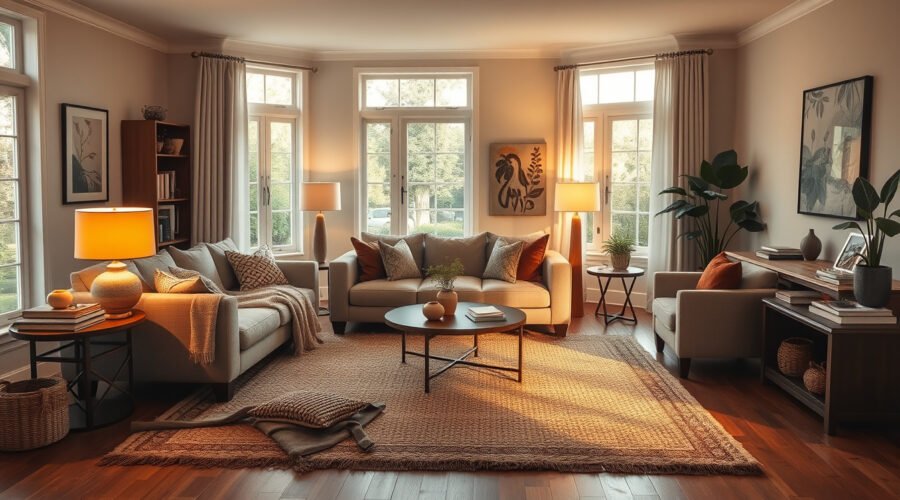
To make a living room less formal, focus first on how the room feels to use, not on buying new furniture. Pull seating into a conversation-friendly layout, soften rigid pieces with textiles, layer warm light at different heights, use a rug large enough to connect the seating, and add personal objects. If the room still feels stiff, look for too much symmetry, matching furniture, bare surfaces, or delicate decor that makes people afraid to touch anything.
Quick Answer
To make a living room less formal, swap stiff or delicate pieces for comfortable seating, add soft textiles, use warm layered lighting, bring furniture closer for conversation, ground the seating area with a properly sized rug, and display meaningful decor. Start by rearranging and editing before buying anything new.
Key Takeaways
- A formal room feels stiff when everything is too symmetrical, polished, matching, or precious to use.
- Rearranging furniture is often more effective than buying new pieces.
- Warm bulbs, table lamps, floor lamps, and dimmers make the room feel softer than one bright overhead light.
- A rug should anchor the seating area, ideally with all legs or at least the front legs of the main furniture on it.
- Personal items, books, art, baskets, plants, and relaxed textiles make the room feel collected instead of staged.
At a Glance
| Time Required | Varies by room; rearranging is the fastest change, while lighting, rug, and textile updates take longer |
| Difficulty | Beginner |
| Useful Items | Tape measure, painter’s tape, lamp bulbs, rug pad, baskets or trays, cushions, throws |
| Cost | $0 if you rearrange and reuse what you already own; otherwise the cost depends on what you choose to buy |
What Should You Change First?
If you want the biggest change with the least unnecessary spending, work in this order. Each step helps you decide whether the next purchase is actually needed.
- Fix the layout first. Move seating into a more connected arrangement and clear awkward traffic paths.
- Fix the lighting second. Use lamps and warmer bulbs before assuming the furniture or wall color is the problem.
- Add softness third. Bring in cushions, throws, curtains, baskets, and other tactile materials you already own.
- Check the rug scale fourth. A rug that is too small can make otherwise comfortable furniture feel disconnected.
- Replace furniture last. Only replace a sofa, chair, or table after the lower-cost changes show that the piece itself is still making the room difficult to use.
This order separates a layout problem from a shopping problem. In many rooms, moving furniture and changing the lighting does more to reduce formality than replacing the main seating.
Why Does Your Living Room Feel Too Formal?
A living room usually feels too formal when it looks more like a showroom than a place where people can sit, talk, read, snack, or unwind. Before you buy anything, walk into the room and look for the signs that make it feel stiff.
- All the furniture is pushed against the walls.
- The seating is too far apart for easy conversation.
- The sofa, chairs, and tables are a matching set with no contrast.
- The room has one bright overhead light and few softer light sources.
- Most surfaces are hard: glass, polished wood, metal, stone, or bare floors.
- The rug is too small or missing entirely.
- There are no books, photos, art, plants, baskets, or personal objects.
- Everything is arranged perfectly, so guests feel like they should not move anything.
The goal is not to make the room messy. The goal is to make it feel relaxed, layered, and easy to use.
What Should You Edit Before Buying Anything?
The cheapest way to make a living room less formal is to remove the items that make it feel overly staged. Take out anything that looks decorative but does not support comfort, function, or personality.
- Remove fragile decor from low tables if it makes people afraid to set down a drink.
- Break up matching sets by moving one table, chair, or lamp to another room.
- Clear one or two surfaces so the room feels calmer, not cluttered.
- Replace a few stiff decorative pillows with softer covers in linen, cotton, velvet, boucle, or knit textures.
- Bring in books, framed photos, ceramics, or travel pieces you already own.
Pro Tip: Take a quick phone photo of the room before you start. A photo makes awkward spacing, blank corners, harsh lighting, and too-small rugs easier to notice.
Recommended Products

QUALITY MATERIAL: The pillow cover is composed of a soft and comfy corduroy which is a kind of polyester fabric, features a cute and elegant boho stripe design. Our pillow covers are of good workmanship, they are tightly sewn without loose threads.

Premium Chenille: Crafted from substantial, high-grade chenille, these decorative pillow covers offer a luxuriously soft, velvety touch and a beautiful drape. Features impeccable stitching with zero loose threads, delivering a premium, heavyweight feel that elevates any space.

Super Soft: Crafted from velvet and faux rabbit fur, our cream white pillow covers offer a fluffy touch and a soft cozy feel while remaining gentle on the skin
How Can You Make Formal Furniture Feel More Casual?
Rigid furniture is one of the biggest reasons a living room feels too formal. You do not have to replace every piece. Start with the items people actually touch: seating, ottomans, pillows, and tables.
Look for softer shapes and more forgiving materials. Rounded arms, upholstered chairs, cushioned ottomans, slipcovered sofas, and textured fabrics make the room feel easier to use. If your current sofa is structured and formal, soften it with oversized pillows, a textured throw, and a relaxed side table instead of replacing it right away.
Here’s a quick reference table to guide your choices:
| Furniture Type | Less Formal Choice | Why It Works |
|---|---|---|
| Sofas | Slipcovered, deep-seat, curved, or sectional styles | They invite lounging instead of upright, formal sitting. |
| Chairs | Upholstered, swivel, rounded, or mixed vintage chairs | They make conversation feel more natural. |
| Coffee Tables | Round tables, ottomans, or wood tables with softened edges | They reduce sharp, formal lines and feel more family-friendly. |
| Ottomans | Soft, upholstered, storage, or pouf styles | They add flexible seating and a place to put up your feet. |
| Layouts | Grouped, inward-facing, and open enough for traffic | They support conversation instead of display-only design. |
Recommended Products

GREAT FIT: Set of 1. This innovated cushion slipcover is crafted from durable and soft high stretch knitted jacquard fabric. Chaise Lounge Cover for Both Left/Right L Shaped Couch(fits up to 33-37 inch width, 55-61 inch depth, 3-8 inch thickness). Feature one-size-fits-most, kindly measure before ordering

SELECTED FABRIC: These two sofa covers are made of high-quality fabric, with strong stitching, exquisite tassels, breathable, soft, and durable.

【𝗖𝗹𝗼𝘂𝗱-𝗟𝗶𝗸𝗲 𝗦𝗼𝗳𝘁𝗻𝗲𝘀𝘀】 Sink into comfort with our Cloud Couch. It’s soft, airy, and feels just like lounging on a fluffy cloud. The plush, boneless cushions gently hug your body without ever feeling stiff or heavy, giving you a cozy spot to relax anytime. Whether you’re watching TV, reading, or just unwinding, this cloud couch makes every moment feel extra comfy.
How Do You Add Soft Textures Without Creating Clutter?
Texture is what makes a room feel relaxed even when the color palette is simple. Add a mix of fabrics instead of relying on one polished finish. Try cotton, linen, velvet, boucle, wool, chunky knit, jute, rattan, and washed wood.
Start with pillows in different sizes rather than a row of identical cushions. Then add a throw blanket over the arm of a sofa, across the back of a chair, or folded in a basket. The throw should look easy to grab, not perfectly staged.
A good texture mix might include:
- Two larger sofa pillows in a solid fabric.
- One smaller patterned pillow for contrast.
- A soft throw in a knit, fleece, linen, or wool blend.
- A basket for blankets or magazines.
- A woven tray on the coffee table to organize remotes and small items.
Keep the palette connected so the room still feels intentional. For example, pair cream, tan, rust, and olive for warmth, or mix navy, oatmeal, cognac, and warm white for a relaxed but tailored look.
How Do Personal Touches Make a Living Room More Welcoming?
A room feels less formal when it reflects real life. Personal touches do not have to mean clutter. Choose a few meaningful pieces and give them room to breathe.
| Element | Purpose | Example |
|---|---|---|
| Family Photos | Create warmth and connection | A small group of framed snapshots on a console |
| Books | Make the room feel used and personal | A stack of design, travel, or hobby books on a side table |
| Travel Finds | Add character and story | A handmade bowl, small sculpture, or framed print |
| Colorful Textiles | Soften the room and add energy | Pillows, throws, curtains, or a patterned rug |
| Heirloom or Vintage Pieces | Break up a showroom look | A refinished side table, framed textile, or old trunk |
If you like gallery walls, keep them relaxed by mixing frame sizes and art types. Combine photos, prints, small drawings, and one or two personal pieces instead of using a perfectly matched set of generic prints.
Warning: If you move or add bookcases, cabinets, media consoles, dressers, or tall shelving, anchor them securely to the wall. The U.S. Consumer Product Safety Commission’s Anchor It campaign emphasizes anchoring furniture with drawers, doors, and shelves to help prevent tip-over injuries and deaths.
What Lighting Makes a Living Room Feel Cozier?
Lighting can make a formal room feel instantly softer. A single bright overhead fixture often creates flat shadows and a staged feeling. Instead, use several light sources at different heights.
For a cozy living room, choose warm bulbs in the soft white range. A 2700K to 3000K bulb gives living rooms and other gathering spaces a softer effect than cooler daylight-colored bulbs.
Try this simple lighting plan:
- Use a dimmable overhead fixture for general light.
- Add a table lamp beside the sofa or reading chair.
- Add a floor lamp in a dark corner.
- Use sconces, picture lights, or small accent lamps to highlight shelves or art.
- Choose LED-compatible dimmers and dimmable bulbs if you want brightness control.
Note: If the room still feels harsh after changing bulbs, the issue may be placement, not color temperature. Add light at eye level with lamps so the room is not lit only from above.
Recommended Products

Unique & Exquisite Modern Design ✨ This 63-inch black floor lamp boasts a mid-century inspired silhouette with three globe lights artfully arranged on a U-shaped triple metal frame. The elegant minimalist structure blends seamlessly with contemporary, vintage, or industrial decor, adding a touch of sophistication to living rooms, bedrooms, or offices.

Smooth dimming: Compatible with most dimmers on the market, these LED bulbs provide smooth dimming control from 10% to 100% without flickering or buzzing, giving you the perfect brightness for any moment

【3 Way Light Bulbs】 :Our 3 way LED light bulbs offers 3 brightness settings to match your lighting needs. With a soft white light and a high color rendering index, it effectively illuminates any space with vibrant, natural colors. At 360lm, 720lm, and 1080lm, it is perfect for a variety of settings, from reading to entertaining guests
How Should You Arrange Seating for Easier Conversation?
A formal living room often has furniture arranged around the perimeter. That can make the center feel empty and the seating feel too far apart. When space allows, pull the furniture inward and create a clear conversation area.
Start by choosing a focal point: a fireplace, coffee table, window view, artwork, or media wall. Then arrange the main seating so people can face or angle toward each other without twisting their bodies.
How Close Should Living Room Furniture Be?
Use measurements as a guide, not a rigid rule. A comfortable living room needs both closeness and clear movement.
- Keep about 18 inches between the sofa or chair and coffee table when the room allows, so the table stays reachable without crowding your legs.
- Keep main walkways clear. If accessibility is part of the plan, the U.S. Access Board specifies 36 inches of continuous clear width for ADA accessible routes in covered facilities. Treat that as accessibility guidance, not as a universal private-home code requirement, and check any residential rules that apply to your project.
- Place side tables within easy reach of seats.
- Use swivel chairs, ottomans, or poufs if you need flexible seating.
- Avoid placing every piece against the wall unless the room is too small for a floated arrangement.
Designers often recommend floating furniture slightly away from walls because it can improve flow and help a room feel more intentional. If your living room is small, even a few inches of breathing room behind an accent chair can help, but a sofa may still need to sit against a wall when space is tight.
How Do You Centralize a Conversation Area?
A conversation area feels best when every seat has a purpose. Try placing the sofa across from two chairs, or pair a sofa with one chair and an upholstered ottoman. In a long room, create two smaller zones instead of one stretched-out arrangement.
If the room includes a TV, avoid letting the screen control every decision. Angle one chair toward the sofa instead of the TV, add a reading lamp, and use a coffee table or ottoman as the shared center point.
How Should the Layout Change for a Small, Long, or Large Room?
- Small room: It is fine to keep the sofa against a wall if floating it would block circulation. Float a lighter chair, pouf, or small table instead so every piece is not pressed against the perimeter.
- Long room: Create two connected zones, such as a main conversation area and a smaller reading or game area, rather than stretching every seat around one distant focal point.
- Large room: Pull the main seating away from the walls and build a tighter group around a rug or coffee table so the center of the room has a clear purpose.
How Can Color Make a Formal Living Room Feel More Relaxed?
Color helps a formal living room feel more relaxed, but you do not need to repaint the entire room. Start with accents you can change easily.
- Add throw pillows in warm, earthy, or cheerful tones.
- Use patterned curtains or woven shades to soften hard window lines.
- Choose artwork that includes colors already found in the room.
- Bring in flowers, plants, or branches for natural color.
- Use a tray, vase, lamp base, or ceramic bowl as a small color moment.
The easiest way to make a formal living room feel lived-in is to repeat one or two accent colors in soft, useful pieces: pillows, art, books, lamps, throws, or a rug.
If your room is mostly gray, white, or beige, try warm accents such as rust, camel, moss, terracotta, ochre, navy, chocolate, or muted burgundy. These colors add depth without making the room feel chaotic.
What Rug Size Makes a Living Room Feel More Connected?
An area rug can make a formal living room feel grounded, especially if the room has hardwood, tile, stone, or a lot of open floor. The rug should connect the furniture instead of floating like a small island in the middle of the room.
As a general design rule, choose a rug large enough for all furniture legs to sit on it. If that is not possible, at least place the front legs of the main upholstered pieces on the rug. This visually ties the seating area together.
For a more relaxed look, consider:
- A wool rug for softness and durability.
- A jute or sisal rug layered under a smaller patterned rug.
- A vintage-style rug to break up matching furniture.
- A round or oval rug to soften angular furniture lines.
- A rug pad to add cushion and reduce slipping.
If your current rug is too small, layer it over a larger natural-fiber rug instead of replacing it immediately. This adds texture and can help the smaller rug make more visual sense within the seating area.
How Do Functional Zones Make a Formal Room Easier to Use?
Formal rooms often go unused because they do not have a clear purpose. Give each part of the living room a job. A balanced room can include more than one function as long as the zones connect visually.
- Conversation zone: Sofa, chairs, coffee table, side tables, and rug.
- Reading zone: Comfortable chair, lamp, small table, and basket for books.
- Media zone: TV or projector, low console, storage for remotes, and softer lighting.
- Game or hosting zone: Ottoman, stools, nesting tables, or a small cabinet for games and serving pieces.
- Display zone: Bookshelves, art, photos, ceramics, and plants.
Use rugs, lamps, and furniture placement to define zones instead of using bulky dividers. Repeat colors and materials across the room so the zones feel connected rather than random.
How Can You Make the Room Less Formal Without Replacing Everything?
You can soften a formal living room on a small budget by changing what people see and touch first.
- Move one chair from another room to break up a matching set.
- Swap shiny or delicate decor for books, bowls, baskets, or plants.
- Replace cool bulbs with warm white bulbs.
- Add a throw blanket and two relaxed pillows to a structured sofa.
- Use a tray to make the coffee table feel useful instead of decorative only.
- Hang curtains higher and wider to add softness around windows.
- Bring in one vintage, handmade, or natural-material piece to reduce the showroom feel.
- Move furniture inward where space allows so the seating area feels more connected.
Even one or two of these changes can shift the mood of the room from formal to comfortable.
Common Mistakes That Keep a Living Room Feeling Too Formal
If the room still feels stiff after you add pillows or a rug, check for these common mistakes:
- Too much symmetry: Symmetry itself is not a problem. One balanced pair of chairs or lamps can look calm. The room starts to feel rigid when matching lamps, tables, chairs, art, and accessories repeat the same formal pattern everywhere.
- Too many delicate pieces: If every surface feels breakable, people will not relax.
- A rug that is too small: A small rug can make the room feel disconnected and unfinished.
- No reachable surfaces: Every seat should have a place nearby for a drink, book, or phone.
- Only overhead lighting: Add lamps to create lower, softer pools of light.
- No personal items: A room with only store-bought decor often feels impersonal.
- Too much clutter: Casual does not mean crowded. Edit first, then layer intentionally.
Where Can You Find Useful Living Room Design Inspiration?
When you need ideas, look for rooms that feel comfortable, layered, and personal rather than perfectly matched. Save examples that match your actual lifestyle: movie nights, reading, hosting, pets, kids, or quiet evenings.
Which Interior Design Publications Are Useful?
Active design publications such as Apartment Therapy, The Spruce, Better Homes & Gardens, Real Simple, and Good Housekeeping are useful for practical living room ideas, especially layout, lighting, rugs, and budget-friendly updates.
Design*Sponge should be treated as a legacy archive rather than a current design blog. Its older home tours and design material can still provide timeless inspiration, but it is not a source for current trends.
What Types of Design Books Are Most Useful?
Books can help you understand why some rooms feel relaxed while others feel stiff. Look for books that focus on comfort, personal style, and real-life homes instead of perfection. Good categories include:
- Collected-home design books with lived-in interiors.
- Small-space decorating books.
- Color and styling guides.
- Books by designers known for approachable, personal interiors.
- Vintage or flea-market decorating books if you want a less polished look.
How Should You Use Social Media for Design Inspiration?
Social media is helpful when you use it as a tool, not a rulebook. Follow designers, stylists, and homeowners who show real rooms from several angles, explain why a layout works, and share sources without making every post feel like a shopping list.
When saving inspiration, ask yourself three questions: Does this room look comfortable? Would I use it the way I live? Can I copy the idea with what I already own?
Frequently Asked Questions
How do you make a living room less formal?
Make a living room less formal by softening the seating, adding throws and cushions, using warm layered lighting, bringing furniture closer for conversation, choosing a larger rug, and displaying personal decor. Start with rearranging and editing before buying new furniture.
How can I make a formal living room cozy on a budget?
Use what you already have first. Pull furniture away from the walls where space allows, remove fragile decor, add books or framed photos, swap in warm light bulbs, bring in a throw blanket, and move a lamp from another room. If you spend money, start with small changes such as pillows, a rug pad, a lamp, or a better-scaled secondhand rug.
What colors make a living room feel less formal?
Warm, muted, and nature-inspired colors usually feel more relaxed than stark white, icy gray, or high-contrast black and white. Try camel, cream, olive, rust, terracotta, navy, warm taupe, chocolate, ochre, or soft green. Use color in pillows, art, lamps, rugs, or curtains if you do not want to repaint.
Should all living room furniture match?
No. A room usually feels more relaxed when furniture is coordinated but not identical. Keep one or two repeated elements, such as wood tone, metal finish, or fabric color, then mix shapes, textures, and eras so the space feels collected over time.
How do I make a living room casual without making it messy?
Use storage and styling zones. Keep blankets in a basket, remotes on a tray, books in small stacks, and toys or games in closed storage. A casual living room should feel usable, not cluttered. Edit decorative items, then add softness and personality where they serve a purpose.
Conclusion
Making a living room less formal is about comfort, not chaos. Start with a no-buy reset: remove delicate or staged decor, move seating into a more conversational layout, and use lamps instead of relying only on overhead light. Then check the rug scale, add soft textures, and bring in personal pieces. Replace major furniture only if those changes still leave the room uncomfortable or difficult to use. The result can stay polished while feeling relaxed enough for everyday life.
Sources
- Better Homes & Gardens: Soft White vs. Warm White vs. Daylight — supports living-room bulb color-temperature guidance.
- The Spruce: Choosing the Right Living Room Area Rug — supports rug sizing and front-leg placement guidance.
- Good Housekeeping: Why Designers Are Begging You to Stop Making This One Furniture Mistake — supports floating furniture and conversation-friendly layouts.
- Good Housekeeping: Designers Say This Is the Best Living Room Seating Arrangement — supports conversation-oriented seating and the approximately 18-inch coffee-table spacing guideline.
- U.S. Access Board: Chapter 4 Accessible Routes — supports the 36-inch continuous clear-width accessibility guidance.
- CPSC Anchor It — supports furniture anchoring safety guidance.
- Design*Sponge — confirms that Design*Sponge is now an archive rather than a current design publication.

[…] How to Fix a Living Room That Feels Too Formal: Step-by-Step Guide […]