
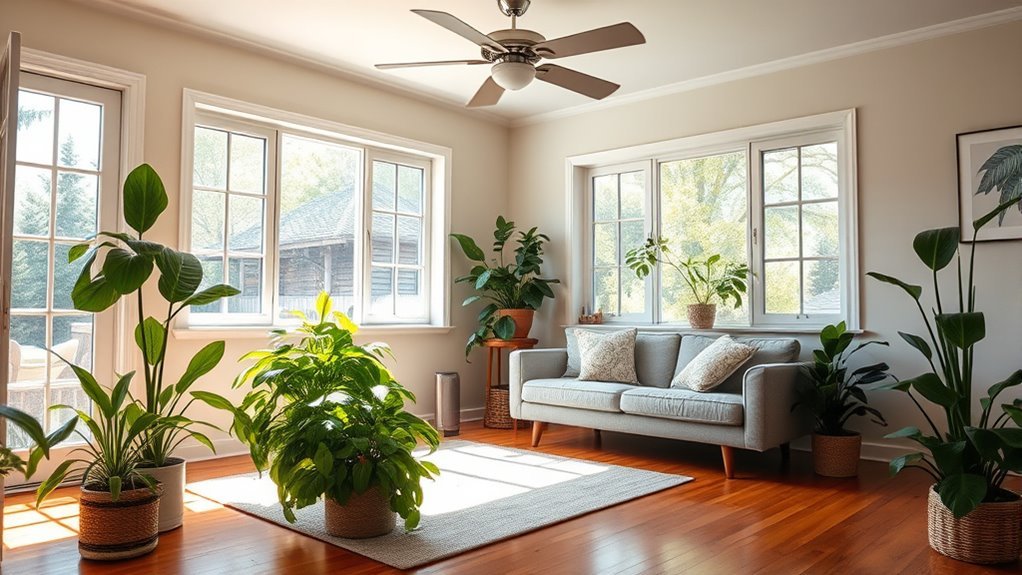
To improve indoor air quality in your living room, start by ventilating the space regularly—open windows for at least 10 minutes daily. Use exhaust fans in kitchens and bathrooms, and run air purifiers with HEPA and activated carbon filters. Maintain cleanliness by vacuuming with a HEPA-filter vacuum and dusting surfaces weekly. Control humidity levels to prevent mold growth, and consider non-toxic cleaning products to reduce VOCs. Discover additional strategies and tips to further enhance your living space’s air quality.
Common Indoor Air Quality Issues and Their Impact
When you spend time in your living room, it’s crucial to be aware of common indoor air quality issues that can affect your health. Indoor air pollutants like particulate matter (PM) from dust, smoke, and pet dander can lead to respiratory problems and allergies. Volatile organic compounds (VOCs) emitted from furniture and cleaning products cause eye irritation and may result in long-term health effects. Poor ventilation traps these pollutants, often leading to concentrations 2 to 5 times higher than outside. High humidity levels foster mold and mildew growth, exacerbating asthma and allergies. Additionally, tobacco smoke introduces over 7,000 harmful chemicals, severely deteriorating air quality and raising the risk of serious health issues. Awareness is your first step toward liberation.
Key Sources of Indoor Air Quality Pollution
Indoor air quality can considerably suffer from various pollution sources in your living room. Volatile organic compounds (VOCs) emitted from paints, furniture, and cleaning products can irritate your respiratory system. Additionally, dust mites, pet dander, and mold often accumulate in fabrics and upholstery, worsening asthma and allergy symptoms. Secondhand smoke is another major concern, releasing over 7,000 harmful chemicals that linger in the air long after smoking stops. Outdoor pollutants, including traffic exhaust and pollen, can infiltrate your living space through open windows and doors, especially during certain seasons. Moreover, household activities like cooking and using candles can release particulate matter and other harmful emissions, further degrading indoor air quality. Awareness of these sources is essential for maintaining a healthier living environment.
Step-by-Step Ventilation Tips
To guarantee your living room maintains ideal air quality, implementing effective ventilation strategies is essential. Start by opening windows for at least 10 minutes daily to promote fresh air circulation and reduce indoor pollutants. Utilize exhaust fans in the kitchen and bathroom to efficiently remove contaminants and enhance overall ventilation. When outdoor air quality is acceptable, run your air conditioning units with open vents to improve airflow. Additionally, consider using ceiling or portable fans to foster air movement throughout the space. Regularly check and clean your HVAC filters, choosing high-efficiency options (MERV-13 or higher) to effectively capture airborne particles. These steps will greatly contribute to a healthier living environment and better overall air quality.
How to Choose the Best Air Purifier for Your Needs?
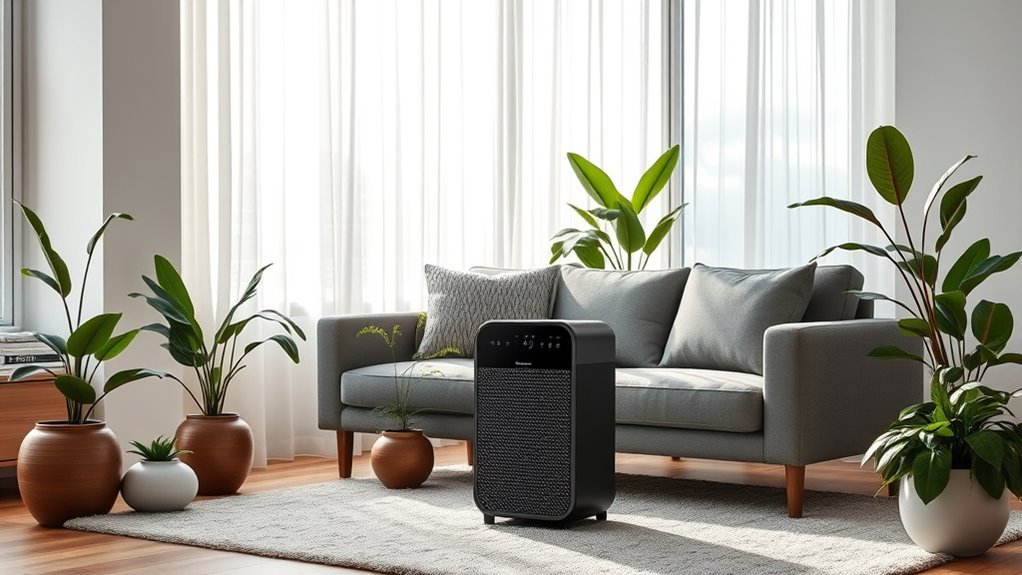
Effective ventilation sets the foundation for good air quality, but adding an air purifier can greatly enhance your living environment. When selecting the best air purifier for your needs, consider the following:
Effective ventilation is crucial for air quality, but an air purifier can significantly improve your home environment.
- HEPA filters: Capture 99.97% of particles as small as 0.3 microns, including dust and pollen.
- Clean Air Delivery Rate (CADR): Confirm it matches your living room size for ideal performance.
- Activated carbon filters: Remove volatile organic compounds (VOCs) and odors.
Additionally, check the noise levels to confirm quiet operation, especially in spaces meant for relaxation. Opt for models that are ENERGY STAR certified to enjoy energy efficiency and lower electricity costs while guaranteeing excellent indoor air quality. With these features, you can breathe easier and create a healthier home.
Essential Cleaning Habits for Maintaining Air Quality
While maintaining clean surfaces might seem like a simple task, it plays an essential role in ensuring good air quality in your living room. Establishing a consistent cleaning schedule is vital. Regularly vacuum carpets and rugs at least twice a week with a HEPA-filter vacuum to capture dust and allergens. Dust surfaces weekly using a microfiber or damp cloth to prevent particles from becoming airborne. Don’t forget your soft furnishings; wash removable covers and use fabric-safe sanitizing sprays every few months. A no-shoes policy can minimize outdoor pollutants. Finally, opt for non-toxic cleaning products to avoid volatile organic compounds (VOCs) that can irritate the respiratory system.
| Task | Frequency | Tools/Products |
|---|---|---|
| Vacuum carpets and rugs | Twice a week | HEPA-filter vacuum |
| Dust surfaces | Weekly | Microfiber or damp cloth |
| Clean soft furnishings | Every few months | Fabric-safe sanitizing sprays |
| Use non-toxic cleaning products | As needed | Non-toxic, unscented products |
How to Manage Humidity Levels for Healthy Air?
To maintain healthy air quality, you should keep indoor humidity levels between 30% and 50%. Using dehumidifiers in damp areas can effectively reduce excess moisture, while humidifiers help during dry seasons. Regularly checking humidity with a hygrometer will guarantee your living space remains comfortable and free from mold and dust mites.
Ideal Humidity Range
Maintaining indoor humidity levels between 30% and 50% is essential for guaranteeing a healthy living environment. This ideal humidity range helps prevent the growth of mold spores and dust mites, which thrive in higher moisture levels. To effectively manage your humidity, consider the following:
- Use a hygrometer to monitor indoor humidity levels accurately.
- Guarantee proper ventilation by employing exhaust fans in areas prone to moisture, like bathrooms and kitchens.
- Check regularly for signs of mold and moisture accumulation.
Dehumidifiers and Humidifiers
When managing indoor humidity levels, dehumidifiers and humidifiers play essential roles in ensuring a healthy living environment. Maintaining humidity levels between 30% and 50% prevents the growth of mold and dust mites, which negatively impact indoor air quality. Use dehumidifiers to reduce excess moisture in damp areas, while humidifiers add necessary moisture during dry winter months, alleviating respiratory discomfort. Regularly monitor humidity levels with a hygrometer to keep them within the ideal range. Proper ventilation, especially in bathrooms and kitchens, is vital for managing humidity and reducing moisture accumulation. Additionally, perform routine maintenance and cleaning of your dehumidifiers and humidifiers to prevent mold and bacteria buildup, ensuring they function effectively for healthier air.
Natural Methods to Enhance Indoor Air Quality
Improving indoor air quality naturally involves a combination of strategic choices and regular practices that can greatly enhance the atmosphere of your living room. Here are some effective methods:
- Incorporate indoor plants like spider and snake plants to absorb carbon dioxide and filter out pollutants such as formaldehyde and benzene.
- Open windows for at least 10 minutes daily to boost ventilation and reduce indoor pollutant levels.
- Maintain humidity levels between 30% and 50% using dehumidifiers or humidifiers to prevent mold and dust mites.
Additionally, opt for natural cleaning products and regularly clean soft surfaces to minimize dust and allergens. By following these steps, you can markedly improve indoor air quality, creating a healthier living space.
Frequently Asked Questions
How Often Should I Replace Air Purifier Filters?
You should replace air purifier filters every 6-12 months, depending on filter type and usage. Check for signs of clogging, follow manufacturer’s recommendations, and explore budget-friendly options for ideal HEPA and activated carbon benefits.
Can Pets Affect Indoor Air Quality?
Sure, your furry friend’s a joy, but pet dander, fur accumulation, and odors can worsen indoor air quality. Regular cleaning routines, ventilation, and proper pet care help minimize allergens exposure and respiratory effects you might face.
What Are the Best Plants for Air Purification?
For air purification, consider spider plants for their benefits, peace lilies for easy care, snake plants for their properties, bamboo palms for advantages, pothos for growth tips, rubber plants for features, dracaena types, and philodendron varieties.
How Does Indoor Air Quality Affect Sleep?
Indoor air quality greatly impacts your sleep quality; poor air circulation and high bedroom humidity can disrupt rest. Additionally, mattress materials, room temperature, noise levels, and lighting effects influence relaxation techniques essential for restful sleep.
Are Essential Oils Safe for Improving Air Quality?
Essential oils can enhance air quality, but you should be aware of safety concerns. Choose diffusing methods carefully, consider scent preferences, and follow usage guidelines to avoid allergic reactions while enjoying health benefits.
Conclusion
Improving your living room’s air quality is like tuning a finely crafted instrument; every adjustment matters. By addressing pollution sources, enhancing ventilation, and maintaining cleanliness, you’ll create a harmonious environment that supports your health. Managing humidity and incorporating natural enhancements further fine-tunes your indoor atmosphere. With these steps, you’re not just breathing air; you’re cultivating a sanctuary. Prioritize these practices, and you’ll enjoy fresher, healthier air in your living space.

Leave a Reply