To prevent carpet dents from furniture, spread each leg’s load with a wide, firm coaster or caster cup, keep narrow feet and wheels from pressing directly into soft pile, and shift stationary furniture occasionally. If dents already exist, start with vacuuming and gentle fluffing; use moisture or steam only when the carpet manufacturer’s care guidance allows it.
Last updated: August 19, 2026. This guide was reviewed for current carpet-care, moisture, and heat-safety guidance.
Quick Answer
Use wide, firm furniture coasters or caster cups under stationary legs to spread pressure across more carpet. Shift heavy furniture occasionally and vacuum on a regular schedule. For existing dents, try vacuuming and gentle fluffing first. Use ice or steam only if the carpet care instructions allow moisture or heat, and let the area dry fully before replacing furniture.
Key Takeaways
- Wide, firm coasters and caster cups reduce concentrated pressure better than narrow contact points.
- Soft or high-pile carpet can show furniture impressions clearly, but no protector can guarantee a dent-free result under very heavy furniture.
- Lift furniture instead of dragging it. Use moving sliders for moving pieces, then switch to stable long-term protectors.
- Treat moisture and heat as carpet-specific tools. Check the manufacturer’s care guidance before using ice, steam, or any heated method.
At a Glance
| Time Required | A few minutes to place protectors; dent recovery varies by carpet type, dent depth, method, and drying time |
| Difficulty | Easy |
| Tools Needed | Furniture coasters, caster cups, firm pads, area rug or rug pad, vacuum, spoon or soft brush, ice cubes, clean white towel |
| Cost | Varies by protector type and quantity; basic dent removal may use household tools you already have |
Why Protecting Your Carpet From Dents Is Essential
Protecting your carpet from furniture dents matters because heavy pieces can flatten the pile, leave visible pressure marks, and make a room look worn even when the carpet is clean. The longer a sofa, table, cabinet, or bed stays in one exact position, the more time the fibers spend compressed.
Good carpet care also supports the long-term look and performance of the floor. The Carpet and Rug Institute recommends regular vacuuming, fast spot treatment, dirt-control mats, and professional deep cleaning every 12 to 18 months as part of proper carpet maintenance.
What Causes Carpet Dents?
Carpet dents form when pressure pushes the pile down and holds it there. The most common causes are heavy furniture, narrow furniture legs, small casters, long-term furniture placement, and soft or high-pile carpet that compresses easily.
Several factors affect how severe a dent becomes:
- Furniture weight: Sofas, beds, bookcases, cabinets, and dining tables create more pressure than lightweight accent pieces.
- Leg shape: Thin legs and small wheels press weight into a small area, which makes deeper indentations.
- Carpet pile: Plush and high-pile carpets tend to show dents more than low-pile or dense loop carpets.
- Time: A dent that has been there for a few days is usually easier to lift than one hidden under furniture for years.
- Existing wear and soil: Worn or heavily soiled pile may not recover as evenly as carpet that is in better condition.
Effective Methods to Prevent Carpet Dents From Furniture
The most reliable prevention strategy is to reduce concentrated pressure at each furniture foot. Use a wider, firm contact surface, keep the furniture stable, and avoid leaving a narrow leg or small caster pressing into the same fibers indefinitely. These steps reduce the risk and depth of dents, but very heavy furniture may still leave some impression.
- Use wide furniture coasters or caster cups. Choose protectors wider than the furniture leg so the weight spreads across more carpet fibers.
- Add firm furniture pads. Choose a dense, stable material that does not collapse flat or stain the carpet. Check the protector maker’s surface-compatibility guidance.
- Use area rugs as a secondary layer, not the only protection. A rug can shield the carpet from wear, but heavy furniture can still compress the rug, pad, and carpet below. Keep wide coasters under concentrated furniture feet.
- Shift stationary furniture occasionally. A small change in position moves the pressure point to different fibers. There is no universal schedule, so base the timing on furniture weight, carpet pile, and how quickly impressions appear.
- Vacuum regularly. Slow, steady vacuuming removes abrasive soil and can help lift accessible pile around furniture legs. Follow the carpet maker’s vacuum guidance.
- Lift instead of dragging. Dragging can stretch, snag, or distort carpet fibers.
Pro Tip: Match the protector to the pressure point. A narrow metal leg or small caster needs a wider, rigid base than a broad wooden foot. The protector should sit flat and remain stable when the furniture is loaded.
Recommended Products

Easy movement of heavy furniture: Furniture Sliders are designed to easily move heavy furniture in a household setting. Whether it's a sofa, bookshelf, or bed, using these furniture sliders helps reduce the effort required to adjust the position of furniture.
Choosing the Best Coasters and Pads for Carpets
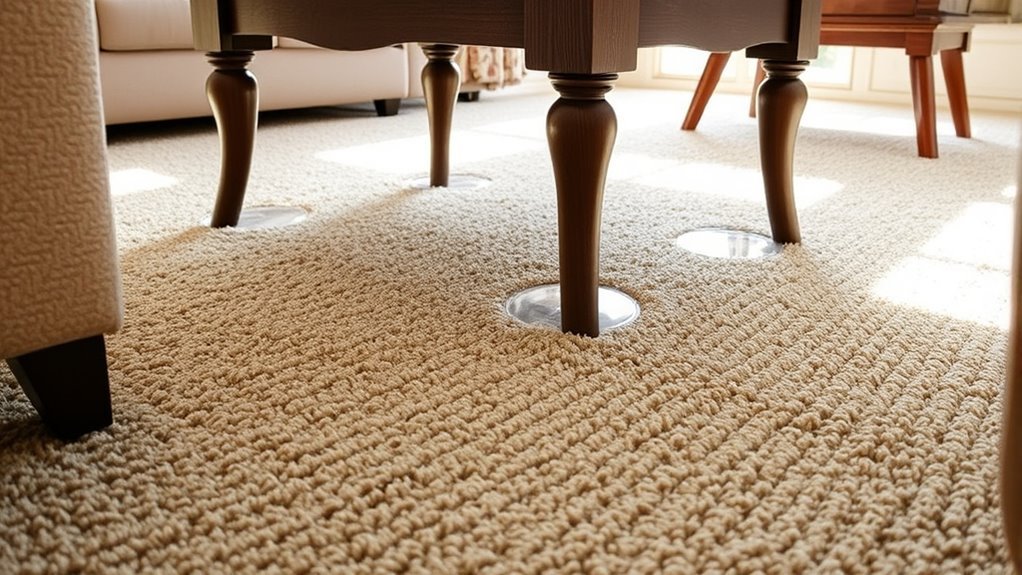
The best coaster or pad depends on the furniture leg, carpet pile, and how often the furniture moves. The goal is simple: choose a protector that is wide, stable, and firm enough to keep the leg from sinking into the carpet.
Material Types to Consider
- Hard plastic caster cups: A strong choice for small round feet or stationary casters because the rigid base spreads the contact area.
- Wood or bamboo cups: A rigid decorative option for stationary furniture when the cup is smooth, stable, and approved for the carpet surface.
- Rubber or silicone: Useful for grip when the material is dense, non-staining, and does not collapse under the load.
- Felt pads: Common on hard floors, but soft felt can compress into plush carpet. Use only a firm, adequately sized pad intended for carpet.
- Cork: Can spread pressure when it is dense and stable, but soft or crumbling cork is a poor choice under heavy furniture.
Size and Design Factors
Look for these features when choosing carpet protectors:
- Wide surface area: Bigger is usually better for heavy furniture.
- Stable edge: The cup or pad should not tilt when someone sits on the furniture.
- Firm structure: Avoid soft foam that flattens under weight.
- Right depth: Caster cups should hold wheels or round feet in place without letting them roll out.
- Non-staining material: Avoid dark rubber or dyed pads if the manufacturer warns they may transfer color.
| Pressure Point | Better Protector Choice | Why |
| Narrow metal or wood leg | Wide, rigid coaster | Increases the contact area and reduces concentrated pressure. |
| Small stationary caster | Caster cup sized to hold the wheel | Creates a broader, more stable footprint and keeps the wheel from rolling. |
| Broad furniture foot | Firm, non-staining pad or coaster at least as wide as the foot | Maintains stability without creating a smaller pressure point. |
| Rolling office chair | Chair mat designed for the carpet type and pile | Reduces repeated wheel pressure and wear across the rolling area. |
Best Protection by Furniture Type
Different furniture leaves different dents. Match the protector to the pressure point:
- Sofas and armchairs: Use wide cups or square pads under each leg. Check the back legs too, because they often carry more weight than expected.
- Beds: Use large caster cups or bed-leg coasters. A bed frame can create deep marks because it stays in place for years.
- Dining chairs: Use firm glides or cups only if they do not make the chair unstable. Since chairs move often, lift instead of dragging whenever possible.
- Bookcases and cabinets: Use wide, hard pads under the base or feet. Anchor tall furniture for safety when needed.
- Stationary furniture with wheels: Use caster cups designed to hold the wheel securely on carpet. For a rolling office chair, use a chair mat designed for the carpet type instead of fixed cups.
- Metal legs: Add non-staining pads or cups so the leg does not create sharp pressure points.
DIY Solutions for Preventing Carpet Indentations
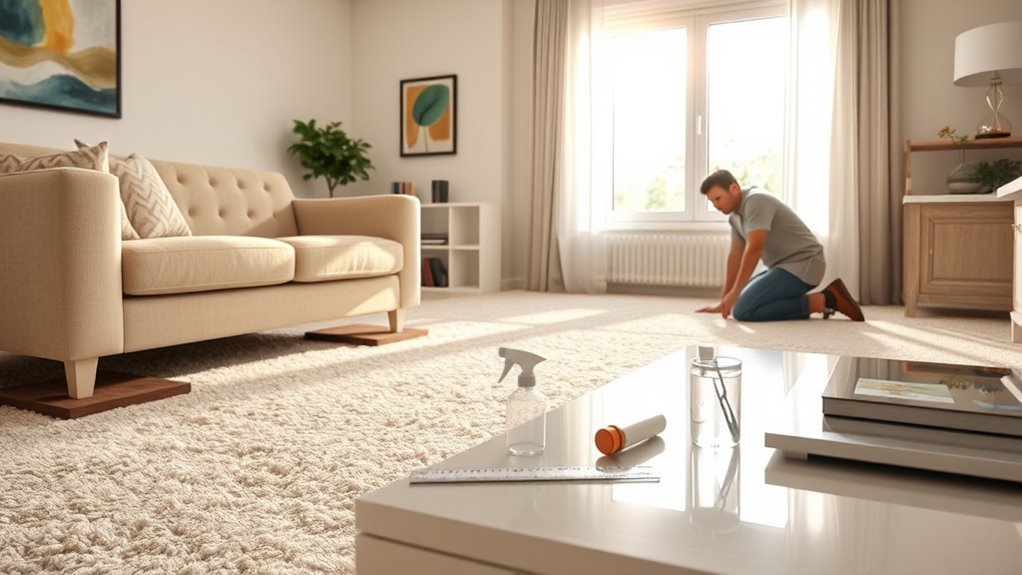
Purpose-made carpet coasters are the safest default because their material and shape are designed for floor contact. If you need a temporary DIY solution, the same rules still apply: the support must be rigid enough not to collapse, wider than the furniture foot, stable under load, clean, dry, smooth-edged, and colorfast.
- Rigid plastic square: A smooth, clean, colorfast piece can temporarily spread the footprint if it stays flat and does not have sharp edges.
- Sealed wood square: A smooth, sealed piece wider than the furniture foot can work temporarily when it cannot splinter, tip, or transfer finish.
- Dense cork: Use only if it remains firm under the load and does not crumble or shed onto the carpet.
- Avoid soft foam and improvised fabric: Yoga-mat foam, cardboard, newspaper, and dyed fabric can compress, trap moisture, or transfer color.
- Do not rely on a rug alone: A rug can protect against wear, but concentrated furniture feet may still leave impressions through the rug and pad.
Note: DIY pads should be clean, dry, and colorfast. Do not use cardboard, newspaper, dyed fabric, or anything that may bleed color or trap moisture against the carpet.
Easy Ways to Keep Your Carpets Looking Fresh
Furniture protectors address concentrated pressure, while routine maintenance limits abrasive soil and matting. The Carpet and Rug Institute recommends regular vacuuming, prompt spot care, and periodic professional deep cleaning as part of carpet maintenance.
Regular Vacuuming Schedule
The Carpet and Rug Institute gives a rule of thumb of at least weekly vacuuming, with more frequent vacuuming where foot traffic is higher. Move slowly, use a vacuum setting suitable for the carpet construction, and follow the carpet manufacturer’s care instructions.
For best results:
- Vacuum around furniture legs where dust collects and pile starts to flatten.
- Use a suitable brush setting for the carpet. Some loop or delicate carpets may need suction-only vacuuming.
- Clean corners and edges with a crevice tool.
- Schedule professional cleaning every 12 to 18 months, or more often if pets, heavy traffic, or warranty instructions call for it.
Can Area Rugs Help Prevent Furniture Dents?
Area rugs can reduce wear and add a sacrificial layer under a furniture grouping, but they are not a complete dent-prevention system. Very heavy legs can still compress the rug, rug pad, and carpet underneath. Use wide coasters under concentrated feet even when a rug is present.
If you use a rug pad over wall-to-wall carpet, choose one specifically labeled for carpet-on-carpet use and compatible with both surfaces. This helps reduce slipping, rippling, staining, or residue problems.
Rotate Furniture Placement
Shift stationary furniture occasionally so the same fibers are not compressed indefinitely. There is no one schedule that fits every room. Check more often under very heavy pieces, narrow legs, and soft pile, and move the pressure point when you notice a persistent impression forming.
- Lift heavy furniture with help instead of dragging it.
- Use sliders only while moving furniture, then replace them with proper coasters or pads.
- Vacuum the exposed dented area after moving furniture.
- Let the carpet settle before deciding whether a dent needs a deeper fix.
Carpet-Type Cautions Before You Use Heat or Water
Not every carpet or rug should be treated the same way. Before using ice, steam, a blow dryer, or an iron method, check the carpet or rug care label if you have it.
- Wool: Use minimal moisture and low heat. Avoid harsh cleaners unless the label allows them.
- Silk or viscose rugs: Skip DIY heat and water methods. Call a rug professional.
- Jute or natural-fiber backing: Avoid soaking because moisture can distort the backing.
- Berber or loop pile: Do not aggressively rake or pull loops. Use gentle vacuuming and light fluffing.
- Carpet over hardwood: Use very little water and blot thoroughly so moisture does not reach the wood floor below.
Warning: Check the carpet or rug manufacturer’s care instructions before using heat. Never let an iron, steamer plate, or hot nozzle touch carpet fibers. Stop immediately if you notice color transfer, odor, melting, scorching, or texture change.
Will Carpet Dents Go Away on Their Own?
Some fresh, shallow furniture impressions can improve after the furniture is moved, especially when you vacuum and gently lift the pile. Deep dents from heavy furniture that has stayed in one place for a long time may recover slowly, need moisture-assisted treatment, or remain partly visible. The carpet’s age, fiber type, pile construction, backing, and existing wear all affect the result.
If the dent is not urgent, start by vacuuming the area in several directions and give the pile time to recover before adding water or heat. This is the lowest-risk approach for an unknown carpet type.
How to Fix Carpet Dents Quickly?
If dents are already visible, start with the gentlest method and escalate only when the carpet care instructions allow it. Vacuuming and gentle pile lifting add no moisture or heat, so they are the best first steps for an unknown carpet type.
Ice Cube Method
- Place one or two ice cubes in the dent.
- Let the ice melt naturally.
- Blot excess water with a clean white towel.
- Use your fingers, a spoon edge, or a soft brush to gently lift the pile.
- Let the area dry fully before putting furniture back.
Use the ice method only when the carpet or rug care instructions allow moisture. For an area rug, protect the surface underneath from seepage. Skip this method on moisture-sensitive fibers, backing, or flooring unless the manufacturer says it is safe.
Steam or Damp Towel Method
Use steam only if the carpet manufacturer allows heat and moisture. Hold a garment steamer above the dent without touching the fibers, then gently lift the pile with your fingers or a spoon. If the care instructions do not clearly permit heat, skip this method and use vacuuming, gentle fluffing, or professional help instead.
Blow-Dryer Method
If the carpet care instructions allow light moisture, mist the dent sparingly with plain water. Use a blow dryer on low or warm, not hot, while lifting the fibers with your fingers or a spoon. Keep the dryer moving and several inches from the carpet, and stop if the surface becomes hot.
Vacuum and Fluff Method
For shallow dents, vacuum slowly in several directions, then fluff the fibers by hand. This is the safest first step for delicate carpets because it does not add moisture or heat.
What Not to Do When Preventing or Fixing Carpet Dents
- Do not drag heavy furniture. Dragging can stretch carpet, tear fibers, or leave long marks.
- Do not soak dents with water. Too much moisture can reach the backing, pad, or floor below.
- Do not scrub aggressively. Scrubbing can fray fibers and change the texture.
- Do not use unapproved cleaners or home mixtures. Follow the carpet manufacturer’s care instructions and pretest any permitted cleaner in an inconspicuous area.
- Do not leave furniture on damp carpet. Let the area dry completely to reduce odor, mildew, and staining risk.
- Do not ignore musty smells. Odor after moisture may signal a deeper pad or mold issue.
Troubleshooting Common Carpet Dent Problems
| Problem | Best First Fix |
| Shallow dent from a chair or table | Vacuum in several directions, then fluff by hand. |
| Deep dent from a sofa, bed, or cabinet | Check the care label. If moisture is allowed, try the ice method, blot dry, then use wider coasters before replacing furniture. |
| Old dent that will not lift | If the manufacturer allows steam, use it without direct contact; otherwise call a carpet professional. |
| Dent plus stain or odor | Treat the stain first with a carpet-safe product, blot dry, and avoid adding heat until the stain is gone. |
| Damp carpet or musty smell | Stop DIY treatment, dry the area, and call a professional if moisture reached the pad or backing. |
When to Call Professionals for Carpet Repair and Cleaning?
Call a carpet repair or cleaning professional when a dent remains after gentle DIY methods, when the carpet is delicate or expensive, or when there is a stain, odor, damp pad, loose seam, ripple, burn mark, or suspected mold issue.
Professional help is also smart when:
- DIY methods do not work: A long-standing dent may need professional assessment to determine whether cleaning, pile correction, repair, or replacement is appropriate.
- The rug is wool, silk, viscose, antique, or handmade: These materials can be damaged by moisture and heat.
- There is water damage: Porous materials like carpet and padding can hold moisture, and mold may be difficult to remove completely.
- The carpet has heavy wear: A professional can tell whether cleaning, repair, stretching, patching, or replacement is the better option.
Frequently Asked Questions
How do I keep furniture from making dents in carpet?
Use wide furniture coasters, caster cups, or firm pads under each furniture leg. Shift heavy pieces occasionally, vacuum regularly, and avoid narrow legs sitting directly on soft carpet pile.
How do you spread the weight of furniture to avoid carpet indentations?
Choose protectors with a wider base than the furniture foot. Caster cups, hard plastic coasters, wood cups, or dense pads spread the load better than thin felt or soft foam.
What is the best way to get furniture indentations out of carpet?
Start by vacuuming and fluffing the pile. If the dent remains and the carpet care instructions allow moisture, place an ice cube in the indentation, let it melt, blot the area, and gently lift the fibers with a spoon or soft brush.
How do I stop furniture from sinking into carpet?
Use large, firm furniture cups or pads under each leg. For very heavy pieces, choose rigid, stable protectors that do not collapse under the load. Wider furniture bases also reduce concentrated pressure compared with narrow legs.
Can ice cubes damage carpet?
Ice adds moisture, so check the carpet or rug care instructions first. Avoid soaking the area, protect flooring beneath rugs, blot excess water, and skip the method on moisture-sensitive fibers or backing unless the manufacturer allows it.
Are furniture sliders good for preventing carpet dents?
Furniture sliders are best for moving furniture, not for permanent dent prevention. After moving the piece, replace sliders with stable coasters, caster cups, or firm pads made for long-term use.
Do carpet dents go away on their own?
Fresh, shallow dents may improve after the furniture is moved and the pile is vacuumed or gently lifted. Deep or long-standing dents can recover more slowly and may remain partly visible, especially in worn carpet.
Can an area rug stop heavy furniture from denting carpet?
An area rug can reduce wear, but it cannot guarantee that heavy furniture will not leave an impression through the rug and pad. Use wide, firm coasters under concentrated furniture feet for better pressure distribution.
Conclusion
To reduce furniture dents, use wide, firm coasters or caster cups, keep narrow pressure points off soft pile, shift stationary pieces occasionally, and maintain the carpet on a regular vacuuming schedule. If a dent appears, start with vacuuming and gentle fluffing. Use ice or steam only when the carpet care instructions allow it, dry the area fully, and improve the furniture support before putting the piece back.
Sources
- The Carpet and Rug Institute – Cleaning and Maintenance – supports regular vacuuming, prompt spot care, and professional deep cleaning every 12 to 18 months.
- The Carpet and Rug Institute – Spot Solver – supports carpet-safe spot and stain treatment practices.
- U.S. Environmental Protection Agency – A Brief Guide to Mold, Moisture and Your Home – supports drying wet materials completely and the caution that mold can be difficult to remove from porous carpet.
- Martha Stewart – 3 Easy Ways to Get Furniture Dents Out of Carpet – provides current expert-sourced guidance on ice, moisture control, carpet-care checks, and avoiding direct heat.
- ServiceMaster Clean – How to Fix Carpet Dents – supports vacuuming, gentle pile lifting, ice, low-heat blow-drying, and furniture protectors as practical dent-management methods.