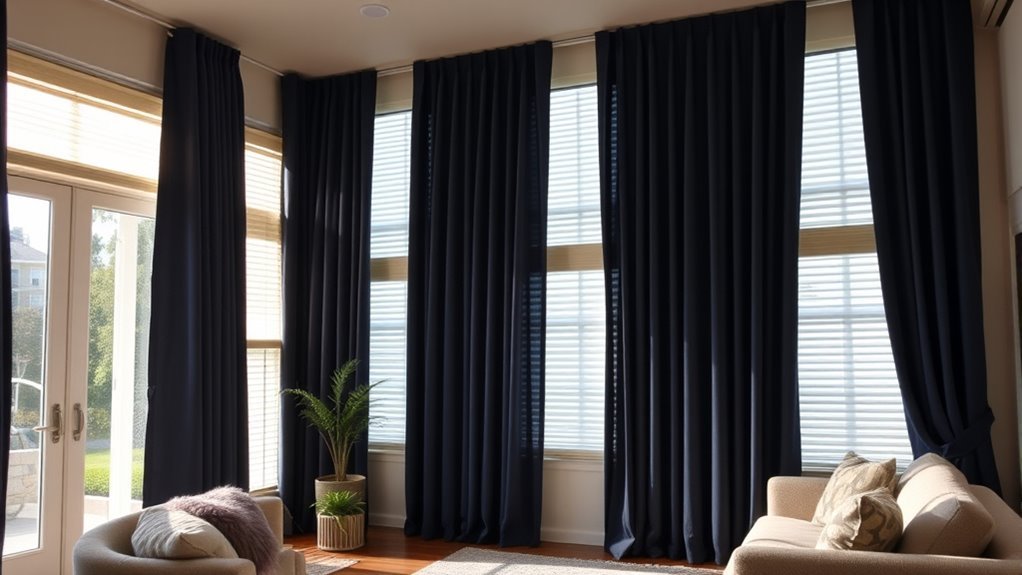
The best energy-efficient living room window treatments are tightly fitted cellular shades for winter insulation and exterior shading for strong summer sun. Thermal-lined curtains work well as a second insulating layer, while solar-control window film can reduce glare and unwanted solar heat without fixing drafts. If air leaks around the frame, seal those leaks first or at the same time.
Last updated: August 19, 2026. Evidence basis: Recommendations were checked against current U.S. Department of Energy, AERC, NFRC, Efficient Window Coverings, and U.S. Consumer Product Safety Commission guidance.
Quick Answer
For a cold living room, start with tightly fitted cellular shades and add thermal-lined curtains if you want another insulating layer. For a living room that overheats in direct sun, exterior awnings or solar screens are usually the strongest first move because they intercept sunlight before it reaches the glass. Solar-control film can also help with heat, glare, and UV exposure, but it does not stop air leaks. Seal drafts with caulk, weatherstripping, or window repair.
Key Takeaways
- Tightly fitted cellular shades are one of the strongest interior options for reducing winter heat loss, especially when edge gaps are minimized.
- Thermal curtains perform better when they overlap, hang close to the window, and limit air movement around the top and sides.
- Exterior awnings and solar screens are strong cooling-season options because they shade the glass before solar heat reaches the room.
- Window film can reduce solar heat gain, glare, and UV exposure, but it does not seal a drafty window.
- For shades and other window attachments, compare AERC ratings where available. For windows, use NFRC ratings such as U-factor, SHGC, visible transmittance, and air leakage.
- Fit, window direction, climate, and how consistently you open and close the treatment can matter as much as the product category.
At a Glance
| Main Problem | Best First Option |
| Cold glass and winter heat loss | Tightly fitted cellular shades; add lined drapes for more coverage and comfort |
| Hot direct summer sun | Exterior awning or solar screen; compatible solar-control film is an interior alternative |
| Glare while preserving a view | Solar screen or high-visible-transmittance solar-control film selected for the window |
| Air movement around the frame | Weatherstripping, caulk, or window repair before relying on curtains or shades |
| Balanced year-round setup | Cellular shade plus side-drawn lined curtains, adjusted by season and time of day |
Start With the Window Problem You Actually Have
Before buying anything, decide whether your living room needs less winter heat loss, less summer solar heat, fewer drafts, better glare control, more privacy, or a combination of those goals. Different treatments solve different problems. The most efficient setup is often a sequence: fix air leakage first, control heat transfer at the glass, then add a second layer for privacy, light control, or appearance.
- Cold drafts near the sofa: check for air leaks first, then add cellular shades, lined drapes, or tightly fitted shutters.
- Hot afternoon sun: prioritize exterior shades, awnings, solar screens, or compatible solar-control window film.
- Fading furniture or screen glare: choose solar-control film, solar shades, lined curtains, or adjustable blinds.
- Large picture windows: use layered treatments, such as a cellular shade or solar shade plus side-drawn drapes.
- Older single-pane windows: consider tightly fitted cellular shades, interior or exterior storm windows, and air sealing before assuming full replacement is necessary.
Note: Window treatments improve comfort, but they do not replace air sealing. If you feel air movement around the frame, use weatherstripping on movable joints, caulk appropriate fixed gaps, or have a damaged window repaired.
What Are the Best Energy-Efficient Living Room Window Treatments?
Cellular shades are one of the strongest interior choices when insulation is the main goal. Their honeycomb structure traps air within the shade and between the shade and window. A U.S. Department of Energy fact sheet on interior cellular shades reports that cellular shades outperformed conventional vinyl blinds in heating-energy performance in its testing and modeling.
Fit matters. Side tracks and other tight perimeter designs reduce the air movement that can bypass an insulating shade. Multiple-cell construction or low-emissivity surfaces can also improve some products, but do not assume that a higher cell count automatically makes one shade better. Compare an independent energy rating and the actual fit to your window.
Thermal curtains and lined drapes are useful as a second layer. They perform better when they hang close to the window, overlap at the center, reach the sill or floor, and limit air movement around the top and sides. The Efficient Window Coverings guidance on drapes and curtains specifically notes that tighter edge sealing can improve their energy performance.
Exterior awnings and solar screens are strong choices for windows that overheat in direct sun. They work on a different part of the problem from an insulating shade: they intercept solar radiation before it reaches the glass. Efficient Window Coverings notes that awnings can be much more effective than interior blinds and shades at limiting indoor temperature increases caused by solar heat gain.
Window film can reduce solar heat gain, glare, and UV exposure while preserving more of the view than an opaque shade. It does not reduce air leakage. Choose film by its rated solar performance rather than by tint darkness alone, and confirm compatibility with the existing glazing before installation.
Interior shutters can provide privacy, light control, and some thermal benefit when they fit closely. They are usually selected for their combination of durability, appearance, and adjustability rather than because they universally outperform a well-fitted insulating cellular shade.
Fit and operation matter as much as the product name. An insulating shade with large edge gaps or one that stays open through cold nights cannot deliver its full potential, while exterior shading only helps with solar heat when it is actually shading the glass.
Recommended Products
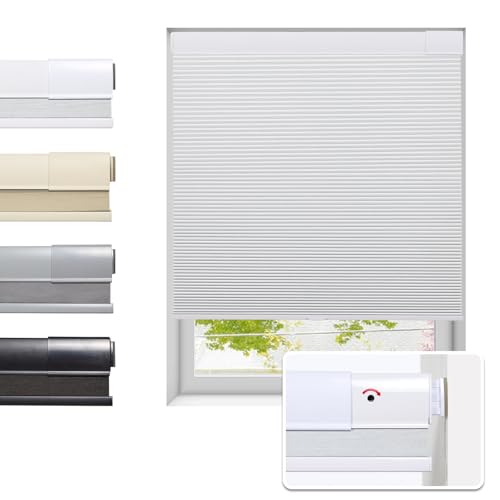
How to Custom Your Siz? Click the yellow "Customize Now" button, choose your actual inside window width and window height, we will deduct 0.12" for the security gap.

Measure Accurate Size for Inside Mounts: These blinds are highly recommended for indoor installation. To ensure a proper inside mount, the width of the cellular shade should be equal to or less than the inside width of the window frame, with a maximum reduction of 0.25 inches. The more accurately the blinds fit the window, the better the blackout performance will be.

How to Order Inside Mount: Each cellular shade is produced at the exact size you order. For an inside mount, order the shade width 1/4" to 1/2" narrower than the window opening width. IMPORTANT: This shade fits windows measuring 24-1/4" to 24-1/2" wide for inside mount.
How Much Energy Can Cellular Shades Save?
The percentage depends on what the shade is being compared with. DOE testing and modeling reported cellular shades saving up to 20% of heating energy and up to 15% of combined heating-and-cooling energy compared with a scenario that had no shades. AERC separately lists energy-savings potential of 5–16% for cellular shades against a specific baseline using aluminum-frame, double-pane clear-glass windows with vinyl blinds.
Those percentages should not be read as guaranteed utility-bill savings. Your result depends on the existing glazing, frame leakage, climate, window area, shade construction, installation quality, HVAC system, thermostat settings, and whether the shades are actually opened and closed at useful times.
Recommended Products

【Cordless Safety Design】The celluler shades adopts cordless push-pull design that is safe for children and pet. Just simply lift up or pull down from the bottom, it will stay at where you stopped. In the laboratory test, MYshade cordless mechanical system can with stand 8008 times of up and down pull and keep smooth.
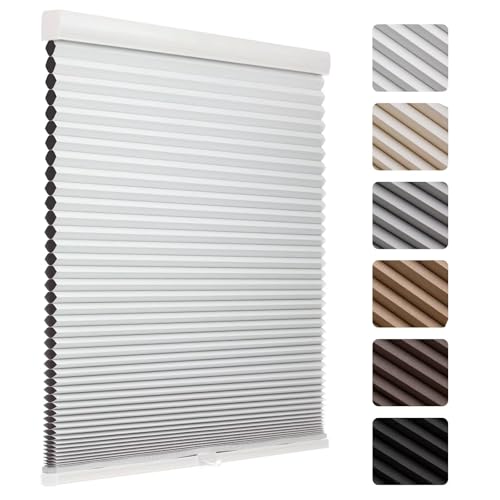
Sleep Better with True Blackout Performance – These cordless cellular blackout shades are designed to block light for bedrooms, nurseries, and daytime sleepers. Ideal for street-facing windows, baby naps, and home theaters where light control and privacy matter most.
Which Energy Ratings Should You Compare?
Do not assume every window product uses the same label. Shades, windows, and applied films are rated through different programs.
- Cellular shades, blinds, shutters, and other attachments: Start with the Attachments Energy Rating Council Energy Improvement rating and certified-product search where a rated product is available. AERC ratings are intended to compare window attachments for energy performance.
- Replacement windows, doors, and skylights: Use NFRC ratings. U-factor measures heat transfer through the product, SHGC measures solar heat admitted, visible transmittance measures daylight, and air leakage measures air passing through the assembly.
- Applied window film: Look for an NFRC label showing SHGC and visible transmittance when available. Applied-film guidance from Efficient Window Coverings also recommends comparing the film’s solar and visible-light performance instead of judging it by appearance alone.
Lower U-factor generally means less non-solar heat transfer through a rated window. Lower SHGC admits less solar heat and is useful when reducing overheating is the goal. Do not automatically choose the lowest SHGC in every climate because useful winter solar gain can also matter. Higher visible transmittance generally means more daylight.
Recommended Products

No Drill Blinds: LazBlinds patented technology No Tools-No Drill system allows installation without drilling any holes on your window frame, perfect for renters, landlords, and home buyers. Easy to install in 30 seconds. Fits all kinds of walls, like wooden walls, tile marble, concrete wall and rough tile

Important Inside Mount Measuring Instructions: This cellular shade is the exact size - no deductions are made. Measure the width across the top, middle, and bottom of window. Ensure your window measures 36.25" to 37" wide for a 36" wide cellular shade. This allows proper fit with minimal light gaps. Measure the height from the top of the window to the windowsill on the left, middle, and right of the window. The largest measurement will be the height you order.
Why Energy Efficiency Matters in Your Living Room
Living rooms often combine large glazed areas with long periods of occupancy, so uncomfortable window surfaces are easy to notice. In winter, cold glazing and leakage can make a sofa beside the window feel chilly even when the thermostat is set normally. In summer, direct solar radiation can make the same area feel much hotter than the rest of the room.
Window treatments can address several parts of that problem at once: insulation, solar heat gain, glare, privacy, UV exposure, and visual comfort. They work best when the treatment matches the actual source of discomfort instead of being chosen only by appearance.
Match the Treatment to Your Climate and Window Direction
For homes in the United States and other Northern Hemisphere locations, the amount and angle of direct sun change with orientation and season. Use the following as a starting point, then observe when sunlight actually reaches your living-room glass.
- South-facing windows: Exterior awnings can be designed to block high summer sun while admitting more low-angle winter sun. Adjustable shades and curtains give additional seasonal control.
- West-facing windows: Low late-afternoon sun can be difficult to stop with a shallow overhang. Exterior solar screens, deeper or adjustable exterior shading, solar-control film, and lined curtains are useful options.
- East-facing windows: Morning sun can create glare and early heat gain. Solar shades, exterior screens, film, or light-filtering lined curtains can help.
- North-facing windows: Direct solar gain is usually lower in the Northern Hemisphere, so insulation, drafts, privacy, and daylight may be more important than aggressive solar-control tint.
- Heating-dominated climates: Prioritize insulation, air sealing, nighttime closing, and products that still let you use beneficial winter sun when appropriate.
- Cooling-dominated climates: Prioritize exterior solar control, solar screens, suitable film, reflective surfaces, and daytime closing on windows receiving direct sun.
Pro Tip: If the room overheats in summer but feels cold in winter, favor adjustable treatments over a one-season solution. Cellular shades, drapes, blinds, retractable awnings, and automated exterior or interior shades let you change the window’s behavior as conditions change.
How Should You Measure for Energy-Efficient Shades?
Accurate measurement matters because edge gaps can reduce insulation, light blocking, and comfort. Measure every window separately. Even windows that appear identical can have small differences in frame width, height, depth, or squareness.
Gather Necessary Tools
Use a rigid metal tape measure, level, pencil, and notepad. Check for handles, locks, trim, radiators, deep sills, nearby furniture, and anything else that could interfere with the treatment. Also confirm that the frame has enough mounting depth for an inside-mount product.
Measure Window Dimensions
For an inside mount, measure the inside width at the top, middle, and bottom, then measure the height at the left, center, and right. Record every measurement. Use the shade manufacturer’s ordering instructions for the final width, height, and any factory deductions rather than making an unsupported deduction yourself.
For an outside mount, measure the full area you want the treatment to cover, including the overlap beyond the glass or frame. More overlap can reduce light gaps and bypass airflow, but the exact amount should follow the product manufacturer’s installation requirements and available wall or trim space.
Record Measurements Accurately
Write down width and height clearly and label each opening by location, such as “living room west window.” Double-check every number before ordering. If the frame is visibly out of square or has very little mounting depth, an outside mount or professional measurement may be safer than forcing a tight inside mount.
How to Layer Window Treatments for Better Energy Efficiency
Layering works best when each layer has a distinct job. A cellular shade can insulate close to the glass, while lined drapes can cover perimeter gaps and improve comfort. A solar shade can control glare, while curtains provide nighttime privacy.
Choosing Energy-Efficient Fabrics
Choose fabric by construction and function, not by color name or marketing label alone. Tightly woven fabrics and insulating linings can improve thermal performance. A light or reflective exterior-facing backing can help reject solar radiation on sunny windows. Sheers are useful for diffusing daylight and adding daytime privacy, but they provide relatively little insulation by themselves.
- Cellular shades: Best first interior choice when insulation is the priority, particularly with a tight perimeter fit.
- Thermal-lined curtains: Useful for another insulating layer, privacy, and reducing air circulation around the window.
- Reflective or light-backed drapes: Useful on sunny windows when the outward-facing surface reflects more solar energy.
- Window film: Useful for solar heat, glare, and UV control when preserving the view matters.
- Exterior awnings or solar screens: Strong cooling options because they reduce solar radiation before it reaches the glazing.
Optimal Layering Techniques
For a cold living room, pair a well-fitted cellular shade with thermal-lined drapes and close both at night. For a hot living room, start with exterior shading where practical, then add a solar shade, suitable film, or light-backed interior treatment as needed. For balanced year-round control, top-down/bottom-up cellular shades plus side-drawn curtains let you adjust daylight, privacy, and insulation independently.
Warning: Accessible window-covering cords can create a strangulation hazard for children. The U.S. Consumer Product Safety Commission states that cordless window coverings are the safest option when young children are present. Also keep furniture and toys away from accessible cords.
Watch for Condensation Behind Insulating Shades
More insulation is not automatically better in every moisture situation. A tight interior shade can improve comfort on the room side while changing the temperature and airflow at the glass. If you already experience heavy winter condensation, check the window after installing a highly insulating shade instead of assuming the treatment will solve the moisture problem.
Persistent water, damaged trim, mold growth, or condensation between sealed panes points to a window or moisture problem that should be diagnosed separately. Do not cover ongoing moisture damage with heavier fabric and ignore it.
When Professional Installation Can Improve Performance
Many curtains, blinds, basic cellular shades, and simple weatherstripping projects are suitable for DIY installation. Professional help becomes more valuable when performance depends on a very tight fit, when the window is large or hard to reach, or when you are installing side tracks, shutters, motorized systems, exterior awnings, or large areas of window film.
A professional can help align uneven frames, secure heavy hardware, and minimize gaps. For window film, check the glazing type, film specifications, and existing window warranty before installation. Some high-absorption or poorly matched glazing retrofits can increase thermal stress, so compatibility matters more than choosing the darkest film.
Professional installation does not substitute for repairing an air leak. Current DOE air-sealing guidance distinguishes caulk for cracks and openings around stationary components from weatherstripping used around moving components such as operable windows and doors.
When Window Treatments Are Not Enough
A covering can improve a sound window, but it cannot restore a failed one. Consider window repair or replacement when you find structural or glazing problems rather than simply adding another layer of fabric.
- Rot or decay: Soft or deteriorated wood frames need repair rather than concealment.
- Failed insulated glass: Persistent fogging or condensation trapped between panes can indicate a failed glazing seal.
- Broken or badly distorted sash: A window that cannot close or lock correctly may remain leaky regardless of the treatment.
- Severe leakage: If normal weatherstripping cannot create a workable seal, the window assembly itself may need professional repair.
- Water intrusion: Staining, damp trim, or recurring water entry should be corrected before installing a new shade or curtain.
Use Your Window Treatments Seasonally
Energy-efficient window treatments only deliver their full benefit when their position matches the weather and sun. Use a simple seasonal routine:
- Winter mornings: Open coverings on windows receiving useful direct sun when that solar gain helps warm the room.
- Winter nights: Close cellular shades, shutters, and drapes to improve comfort near cold glass and reduce heat transfer.
- Summer days: Shade windows before or while direct sun reaches them, with particular attention to strong afternoon exposure.
- Summer evenings: Open windows only when outdoor conditions are suitable and doing so will actually cool the room rather than introduce warmer air.
- Shoulder seasons: Use adjustable blinds or top-down shades to control glare while keeping useful daylight.
If you regularly forget to adjust large or hard-to-reach shades, motorization or automation can make the energy strategy more consistent. Scheduled shades are especially useful on high windows or strong east- and west-facing exposures where the useful position changes predictably during the day.
Maintaining Your Window Treatments for Long-Term Efficiency
Dust cellular shades with a vacuum brush attachment or microfiber duster according to the manufacturer’s care instructions. Clean drapes according to their care label, and avoid washing lined fabric in a way that shrinks one layer more than another.
Check brackets, tracks, wands, motorized components, and perimeter seals periodically. If a shade no longer sits squarely, edge gaps can increase. For window film, use cleaners and cloths approved by the film manufacturer to avoid damaging the surface.
Inspect the window at the same time. Look for cracked caulk, worn weatherstripping, water staining, deteriorated trim, failed hardware, or fogging between panes. Those are window or air-sealing problems, not curtain problems.
Common Mistakes to Avoid
- Buying by looks only: Style matters, but fit, window direction, climate, and performance ratings determine how well a treatment addresses heat transfer.
- Ignoring side gaps: An insulating shade can lose some of its advantage when room air can easily circulate around both edges.
- Assuming blackout automatically means energy efficient: Blackout describes light control. For thermal performance, look at construction, lining, reflective surfaces, perimeter fit, and independent energy ratings where available.
- Choosing by room-side color alone: Solar performance depends on the complete material and the surface facing the glass, not simply whether the fabric looks dark or light inside the room.
- Using film without checking compatibility: Confirm that the film is appropriate for the existing glazing and check the window and film warranty terms before installation.
- Trying to fix a draft with fabric: Curtains can improve comfort, but actual frame leakage needs weatherstripping, caulk, repair, or another air-sealing solution.
- Leaving adjustable treatments in one position all year: Winter sun, summer sun, nighttime heat loss, and glare require different positions.
Frequently Asked Questions
What type of window covering is most energy-efficient?
For interior insulation, tightly fitted cellular or honeycomb shades are among the strongest options, particularly when edge gaps are minimized. For controlling intense summer solar heat, exterior shading can be more effective because it stops much of the sunlight before it reaches the glass. The best choice therefore depends on whether the main problem is heat loss, solar heat gain, or air leakage.
How do I make a living room more energy-efficient?
Start with the windows that cause the biggest comfort problem. Seal air leaks, add insulating treatments such as cellular shades or lined curtains for winter heat loss, and use exterior shading, solar screens, or compatible solar-control film on windows that overheat in direct sun. Adjust movable treatments by season and time of day.
How can I improve the energy efficiency of windows without replacing them?
Use a combination of air sealing and window attachments. Options include cellular shades, lined drapes, interior or exterior storm windows, shutters, solar screens, compatible window film, caulk, and weatherstripping. Choose the retrofit based on whether the existing problem is heat transfer through the glass, direct solar heat, or air leakage around the frame.
How do I insulate a room with lots of windows?
Treat the windows as a system. Seal actual frame leaks, place an insulating shade close to the glass, and add lined drapes where more perimeter coverage is useful. For sunny rooms, use exterior shading, solar screens, or suitable solar-control film so you are reducing solar heat as well as conductive heat transfer.
Are cellular shades or thermal curtains better?
A well-fitted cellular shade is generally the stronger first choice when insulation at the glass is the priority. Thermal-lined curtains are useful for covering a larger area around the window, improving privacy, and adding another layer. A cold living room often benefits from using both rather than treating them as competing products.
Does window film help with energy efficiency?
Yes. Properly selected window film can reduce unwanted solar heat gain, glare, and UV exposure. It is most useful when solar radiation through the glass is the problem. Film does not stop air leakage, and its SHGC, visible transmittance, glazing compatibility, and warranty requirements should be checked before installation.
What window treatment is best for keeping summer heat out?
Exterior shading such as an awning or exterior solar screen is usually a strong first choice because it blocks sunlight before it reaches the glass. Where exterior shading is not practical, use suitable solar-control film, solar shades, reflective treatments, or light-backed curtains selected for the window’s orientation and the amount of daylight you want to keep.
Conclusion
Energy-efficient living room window treatments work best when they solve the window’s actual problem. Use tightly fitted cellular shades for insulation, lined curtains for another layer of comfort and coverage, exterior shading for strong solar heat, compatible window film for glare and solar control, and weatherstripping or caulk for real air leaks. Start with the living-room window that causes the biggest comfort problem, identify whether the issue is leakage, cold glass, or direct sun, and solve that problem before upgrading every window.
Sources
- U.S. Department of Energy — Interior Cellular Shades Boost Home Energy Performance — DOE fact sheet and supporting research on cellular-shade energy performance
- Attachments Energy Rating Council — independent energy ratings and certification for window attachment products
- National Fenestration Rating Council — U-factor, SHGC, visible transmittance, air leakage, and fenestration rating guidance
- Efficient Window Coverings — Cellular Shade — cellular-shade construction, side tracks, insulation, operation, and cautions
- Efficient Window Coverings — Drapes & Curtains — curtain fit, edge sealing, heat-loss control, and performance considerations
- Efficient Window Coverings — Applied Film — film SHGC and VT guidance, solar control, UV performance, and installation cautions
- Efficient Window Coverings — Retractable Awning — exterior shading, window orientation, solar heat gain, and seasonal operation
- U.S. Department of Energy — Insulation and Air Sealing — caulk and weatherstripping applications for fixed and movable building components
- U.S. Consumer Product Safety Commission — Window Covering Cords — cordless window-covering safety guidance for homes with children