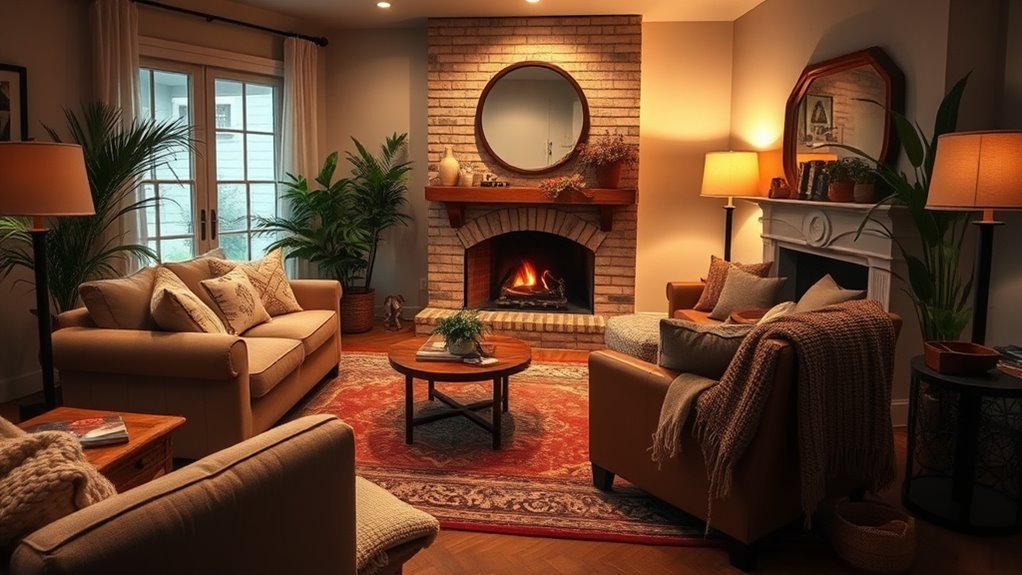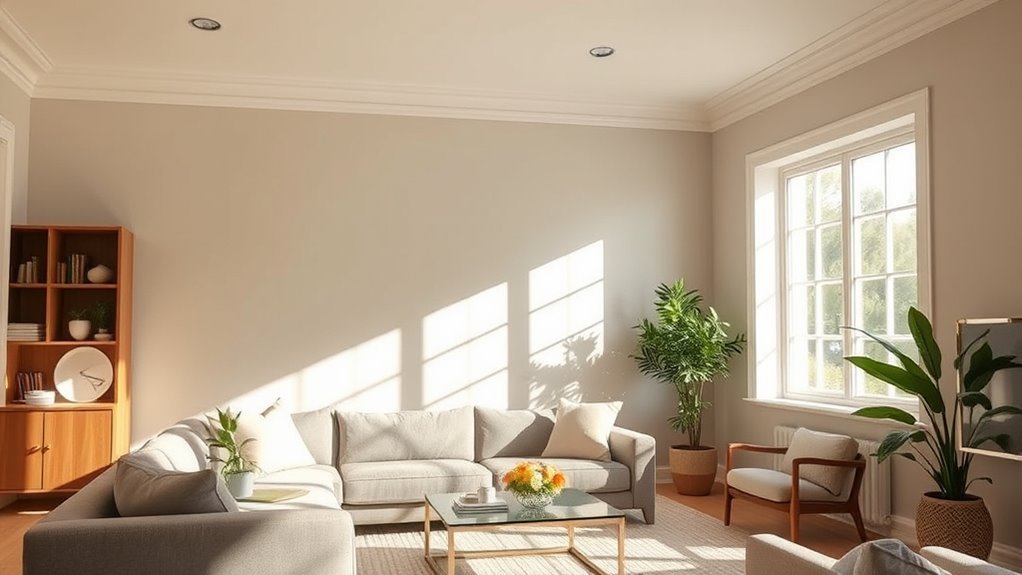
Choosing the best paint sheen for a living room comes down to three practical factors: how much light you want your walls to reflect, how often you need to wipe away marks, and how smooth your drywall actually is. While matte, eggshell, and satin can all look great, each finish handles glare, surface flaws, and scrubbing differently. Understanding where each finish sits on the gloss scale helps you avoid shiny roller marks or walls that stain on contact.
Quick Answer
Eggshell (10 to 25 gloss units) is the best paint sheen for most living room walls because it pairs a soft, low-glare look with reliable everyday washability. Choose matte (under 10 gloss units) to hide flaws on low-traffic walls, and choose satin (20 to 35 gloss units) for active family rooms, kids, pets, trim, and doors.
At a Glance
| Time Required | 15–30 minutes to select a sheen; 24–48 hours to test sample boards in morning, afternoon, and evening light. |
| Difficulty | Easy for sheen selection; moderate for wall prep and rolling if drywall needs patching, sanding, or priming. |
| Tools Needed | Peel-and-stick or liquid paint samples, 2.5-inch angled sash brush, 3/8-inch nap roller, painter’s tape, drop cloth, spackle, fine-grit sandpaper, and microfiber sponges. |
| Cost | $5–$10 per sample pot or swatch; $18–$90 per gallon depending on paint brand, product line, and sheen level (higher sheens typically cost $2–$10 more per gallon than flat). |
Understanding Paint Sheen: Importance and Impact
Paint sheen measures how much light a dry paint film reflects, rated in specular gloss units (GU) at a 60-degree viewing angle and sheen units at an 85-degree grazing angle under ASTM D523 standards. Low-sheen finishes scatter light to hide wall flaws, while higher-sheen finishes form a tighter resin film that resists stains and scrubbing.
On the Master Painters Institute (MPI) scale, interior finishes run from Gloss Level 1 (flat, maximum 5 GU at 60 degrees) up to Gloss Level 7 (high gloss, over 85 GU). For living room walls, most homeowners compare three neighbor finishes: matte (MPI Level 1 to 2), eggshell (MPI Level 3), and satin (MPI Level 4). Benjamin Moore notes that sheen levels change how paint colors read and add visual dimension to a room, while Sherwin-Williams recommends weighing room function, drywall imperfections, and cleaning frequency before picking a finish.
Chemically, the difference comes down to the binder-to-pigment ratio. Flat and matte paints have a higher pigment volume concentration, creating a microscopically rough surface that diffuses incoming light in every direction. As you move up to eggshell and satin, manufacturers increase the acrylic resin binder. That extra resin seals the pores in the paint film so dirt and grease cannot sink in easily, though the smoother surface bounces more light back to your eyes.
Keep in mind that sheen names are marketing terms rather than strict legal measurements. Under MPI standards, eggshell (10 to 25 GU at 60 degrees) and satin (20 to 35 GU at 60 degrees) overlap between 20 and 25 gloss units. One brand’s “pearl,” “low-lustre,” “velvet,” or “eg-shel” may shine just like another brand’s satin, so always check the 60-degree and 85-degree gloss numbers on the product’s technical data sheet before buying gallons.
Matte vs. Eggshell vs. Satin: Quick Comparison
Matte, eggshell, and satin step up progressively in light reflection and scrub resistance. Matte reflects under 10 gloss units at a 60-degree angle to mask bumpy drywall, eggshell sits in the middle at 10 to 25 gloss units for balanced wall performance, and satin reflects 20 to 35 gloss units for heavy-duty cleaning.
| Finish | MPI Gloss Level (60° / 85°) | Best For | Main Advantage | Main Tradeoff |
|---|---|---|---|---|
| Matte | Level 1–2 (5–10 GU at 60°; 10–35 at 85°) | Low-traffic walls, formal living rooms, dark accent walls, older or patched drywall | Soft, velvety, non-reflective finish that hides tape joints and minor dents | Standard matte can burnish (develop shiny rub marks) when scrubbed hard |
| Eggshell | Level 3 (10–25 GU at 60°; 10–35 at 85°) | Most main living room walls and open-concept living areas | Low-sheen warmth with much better stain release and wipeability than flat | Less scrub-resistant than satin in heavy pet or child traffic zones |
| Satin | Level 4 (20–35 GU at 60°; 35+ at 85°) | Busy family rooms, kids and pets, baseboards, doors, trim, built-ins, and wainscoting | Tight, moisture-resistant film that stands up to frequent wiping and scuffs | Highlights drywall seams, patches, roller stipple, and touch-up edges |
The Characteristics of Matte Paint for Living Rooms
Matte paint delivers a calm, nearly shine-free surface that reflects only 5 to 10 gloss units at a 60-degree angle. Unlike dead-flat ceiling paint (0 to 5 gloss units), modern matte wall paint includes slightly more resin for basic spot cleaning while still absorbing glare and disguising uneven drywall texture.
Choose matte paint in a living room for three specific situations:
- Formal or low-traffic sitting rooms: Matte thrives in adult-focused living rooms where walls rarely face sticky hands, dog noses, or bumped dining chairs.
- Deep or saturated accent walls: Navy, forest green, terracotta, and charcoal look richer in matte because surface glare does not wash out the pigment depth under lamps or recessed lights.
- Older plaster or patched drywall: If your living room has wavy plaster, settled drywall seams, or multiple spackle repairs, matte scatters raking light so those blemishes stay hidden.
The primary limitation of traditional matte paint is burnishing. When you rub a standard low-sheen wall aggressively with a sponge, friction polishes the microscopic pigment particles and leaves a permanently shiny smudge. Premium washable matte enamels use ceramic microspheres or cross-linking acrylic binders to resist burnishing, but budget matte lines still mark easily.
Warning: Do not assume every matte paint is scrubbable just because a store swatch looks tough. Using standard non-washable matte in a high-traffic family room can leave permanent burnish marks the first time you scrub off a stain, forcing a full corner-to-corner repaint.
Recommended Products

ACRYLIC PAINT & PRIMER (2 in 1) – PRO matte black paint with 35%+ high-performance binder delivers strong adhesion, smooth coverage and a rich charcoal-black, low-sheen finish on properly prepared surfaces.

PROFESSIONALLY RECYCLED PAINTS: Lower cost alternative to virgin paint, without sacrificing quality. One quart of Recolor Chalk Finish, Chalkboard covers about 100 square feet. This is chalk, latex paint with a very matte chalkboard finish. Can be used to turn any wall into a chalkboard and give an old piece of furniture a new life—produced in the USA!

PAINT + PRIMER IN ONE: Evolve’s paint-and-primer formula helps you get great coverage from the start, sealing your surface and reducing the extra work of multiple coats.
Why Eggshell Is the Best Paint Sheen for a Living Room
Eggshell is the best paint sheen for a living room because it sits in the functional sweet spot between matte and satin, reflecting 10 to 25 gloss units at a 60-degree angle. Named after the subtle luster of a chicken’s eggshell, it avoids a plastic shine while providing a wipeable acrylic surface.
Eggshell solves the everyday challenges of a main living space when you want:
- A low-glare wall finish: It diffuses direct sunlight from picture windows without looking chalky or dead flat.
- Practical everyday cleanability: Its tighter resin film releases dust, light fingerprints, and couch scuffs with a damp microfiber cloth and mild dish soap.
- True color versatility: Eggshell flatters both high-LRV (Light Reflectance Value) warm whites and greiges and lower-LRV muted blues, sages, and earth tones.
- Forgiving wall coverage: It hides standard Level 4 drywall seams and minor roller texture significantly better than satin.
Major paint manufacturers consistently point to eggshell as the benchmark living room finish. Behr’s interior sheen guide recommends eggshell enamel for moderate-traffic rooms like living rooms, matching Benjamin Moore and Sherwin-Williams guidance that pairs soft appearance with family-ready durability.
Pro Tip: Paint your main living room walls in eggshell and step up to satin or semi-gloss in the exact same color on baseboards, window casings, and interior doors. The subtle 15-to-25-unit jump in gloss creates crisp architectural contrast without introducing a second paint color.
Choosing Satin Paint: The Smart Move for Busy Spaces
Satin paint reflects 20 to 35 gloss units at a 60-degree angle and at least 35 sheen units at an 85-degree angle, giving walls a noticeable pearl-like glow and superior scrub resistance. It is the smartest choice when your living room doubles as a high-traffic family hub, play zone, or pet hangout.
Step up to satin when your living room demands:
- Repeated wet scrubbing: Satin’s higher binder content stands up to frequent wiping around crayons, muddy paws, food spills, and handprints without dulling the paint film.
- Protection at high-contact pinch points: Walls beside hallway openings, light switches, thermostats, and media consoles take constant hand contact that can wear down flatter finishes.
- Sharp definition on woodwork and built-ins: Satin forms a smoother, harder coat on baseboards, crown molding, fireplace mantels, wainscoting, and built-in bookshelves.
The tradeoff with satin on large living room walls is surface reflection. Because satin bounces back 20% to 35% of incoming light, it acts like a magnifying glass over poorly sanded drywall joints, nail pops, patch edges, and uneven roller stipple. Unless your walls have a smooth Level 4 or skim-coated Level 5 drywall finish, satin can look overly reflective across long walls hit by angled window light.
Recommended Products
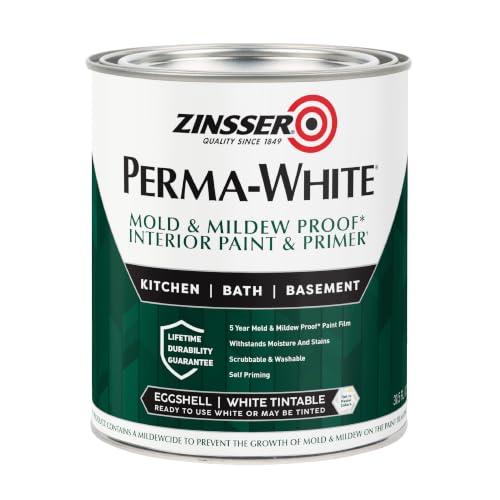
Self-Priming formula - requires no sanding

Ready to use, pre-mixed door and trim paint offers a fresh new look on interior or exterior metal, wood and fiberglass
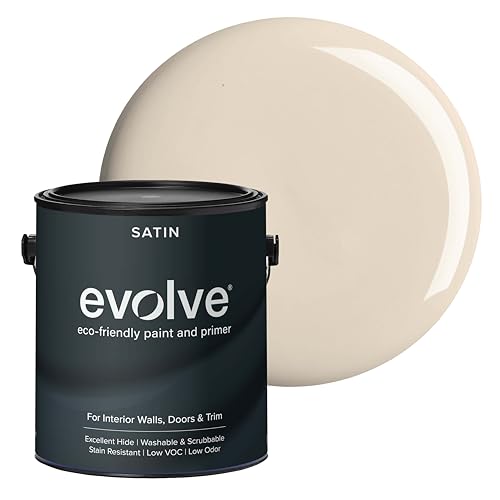
PAINT + PRIMER IN ONE: Evolve’s paint-and-primer formula helps you get great coverage from the start, sealing your surface and reducing the extra work of multiple coats.
Washability of Matte, Eggshell, and Satin Paints
Washability increases directly with sheen level, but even the toughest satin or eggshell paint can be ruined if you scrub it before it cures. Water-based latex paint dries to the touch in 1 to 2 hours and can be recoated in 2 to 4 hours, yet the acrylic film takes 14 to 30 days to cure fully.
According to Benjamin Moore’s wall cleaning instructions, you should wait at least two weeks after painting before dusting or washing walls with soap and water. Once the paint has cured, match your cleaning method to the finish:
| Finish | Cleaning Tolerance | Best Cleaning Method | What to Avoid |
|---|---|---|---|
| Matte | Light spot blotting (higher if labeled washable matte) | Vacuum dust with a soft brush attachment, then dab gently with a damp microfiber cloth and warm water | Heavy circular scrubbing, melamine foam erasers, abrasive pads, and solvent sprays |
| Eggshell | Moderate periodic washing | Non-abrasive sponge dampened with warm water and a few drops of mild dish soap, working from the bottom up | Glass cleaners, harsh degreasers, or scrubbing a single spot until the sheen shifts |
| Satin | Frequent wiping and gentle scrubbing | Soft sponge with warm soapy water or a mild all-purpose cleaner, rinsed with clean water and wiped dry | Scouring powders, stiff bristles, or alcohol-based cleaners that scratch or cloud the resin |
When washing any full wall section, always wash from the baseboard upward and rinse with a second bucket of plain warm water. Starting at the bottom stops soapy drips from running down dry dirty paint, which can etch permanent vertical streak lines into the finish.
How to Choose the Right Sheen for Your Living Room
Selecting the right living room finish requires matching four real-world room conditions: daily foot traffic, drywall smoothness, window lighting angles, and who uses the space. Evaluating these four factors together prevents the common mistake of picking a sheen based on a tiny store color chip alone.
Choose by Traffic Level
- Low traffic (formal sitting rooms): Matte or eggshell delivers a relaxed, glare-free backdrop where walls are rarely touched.
- Normal traffic (everyday living rooms): Eggshell handles occasional guest contact, vacuum bumps, and light dusting without looking shiny.
- High traffic (active family rooms and pass-throughs): Satin protects walls along narrow walkways, entry doors, and sectional seating zones.
Choose by Wall Condition
- Smooth Level 4 or Level 5 drywall: New or skim-coated walls can wear eggshell or satin cleanly without telegraphing tape joints.
- Older walls with spackle patches or settling cracks: Matte or low-luster eggshell hides slight surface waves and repaired nail holes.
- Textured walls (orange peel, knockdown, or plaster swirl): Matte or eggshell keeps the texture soft; satin catches light on every raised ridge and makes heavy texture dominate the room.
Choose by Lighting
- South- or west-facing rooms with large windows: Matte or eggshell prevents harsh afternoon hotspots and mirror-like wall glare.
- North-facing or low-light living rooms: Eggshell or satin bounces 10% to 35% of ambient light back into the room, keeping darker corners from feeling cave-like.
- Long walls with grazing side light: If a floor-to-ceiling window or hallway sconce shines parallel across a long wall, avoid satin; grazing light at an 85-degree angle exposes every drywall seam and roller mark.
Choose by Household
- Adults-only households: Standard matte or washable matte offers a velvety designer finish with minimal maintenance concerns.
- Households with young kids or dogs: Washable eggshell or satin saves hours of repainting around play areas and pet beds.
- Rentals or homes preparing for resale: Eggshell in a neutral tone is the easiest all-around finish to maintain and touch up between occupants.
The best living room sheen is not always the shiniest or the most stylish. It is the finish that looks good in your light and survives the way your household actually uses the room.
Best Application Techniques for Matte, Eggshell, and Satin Paints
Even a premium paint will leave visible lap marks or orange-peel texture if you pair the wrong roller nap with your sheen or let the edge dry mid-wall. Benjamin Moore’s 7-step interior wall painting guide stresses washing walls first, priming bare spackle, choosing the right roller sleeve, and maintaining a continuous wet edge.
Match your roller nap thickness and rolling technique to the surface and sheen:
- Pick the right roller nap: Use a 3/8-inch nap sleeve for most smooth drywall walls with matte, eggshell, or satin. Step down to a 1/4-inch nap when applying satin or semi-gloss on ultra-smooth surfaces or trim to minimize stipple, and step up to a 1/2-inch or 3/4-inch nap for rough or textured walls.
- Cut in one wall at a time: Brush a 2-to-3-inch border along the ceiling, corners, and baseboards using a 2.5-inch angled sash brush, then immediately roll that wall while the brushed edge is still wet. Letting cut-in edges dry before rolling creates a visible sheen band called “picture framing.”
- For matte paint: Keep roller pressure light and overlap each vertical pass by 3 to 5 inches so pigment lays down evenly without thin spots.
- For eggshell paint: Work in 3-by-3-foot sections from top to bottom, always rolling from the dry unpainted area back into the wet paint to prevent lap marks.
- For satin paint: Feather out heavy roller edges immediately and never go back over half-dry satin paint; re-rolling partially set satin tears the skinning resin film and leaves permanent shiny streaks.
Plan on applying two full topcoats over primed surfaces for true color depth and uniform sheen. Wait the manufacturer’s specified recoat time (typically 2 to 4 hours for latex paints) between coats, and allow several days of curing before hanging heavy picture frames that could stick to the fresh film.
Effective Touch-Up Tips for Matte, Eggshell, and Satin Paints
Spot touch-ups succeed or fail based on how closely your patch matches the original wall’s porosity, texture, and gloss angle. As Sherwin-Williams’ wall touch-up tips explain, using the exact same paint batch, sheen, and application tool while feathering the edges is essential to avoid a noticeable patch.
Best Touch-Up Techniques
- Wash before repainting: Wipe the scuffed area gently with warm water and a microfiber cloth first; many dark shoe or furniture marks lift off eggshell and satin without needing paint.
- Spot-prime bare spackle: After filling nail holes or dents and sanding smooth with 180-to-220-grit sandpaper, seal the bare compound with primer. Unprimed spackle sucks binder out of eggshell and satin topcoats, leaving a dull, dead-flat halo called “flashing.”
- Match the original tool texture: If the wall was rolled with a 3/8-inch nap roller, apply the touch-up with a 4-inch mini roller of the same nap rather than a paintbrush, which leaves flat brush strokes against rolled stipple.
- Feather the outer edges: Load a small amount of paint onto the center of the repair and roll outward with lessening pressure so the new film blends gradually into the surrounding wall.
- Judge the match only after full drying: Fresh latex paint looks darker and glossier while wet; give the repair 2 to 4 hours to dry completely before deciding if it needs a second pass.
Matching Paint Colors
Even when you know the color name, touching up with a different brand or sheen will show every time someone looks down the wall from an angle. If you do not have leftover paint from the original can, cut a 1-inch square paint chip from an inconspicuous spot (such as behind a sofa or inside a return vent edge) and have a paint store spectrophotometrically match both the color and the 60-degree gloss level.
Matte is the easiest finish to spot-touch because its low reflectivity hides minor texture transitions. Eggshell touches up well on walls painted within the last year or two. Satin is the hardest to touch up invisibly; on sun-exposed satin walls, professional painters often repaint the entire wall from corner break to corner break so the sheen stays uniform.
Tools and Materials Needed
- Leftover paint stirred thoroughly (or a store match in the identical brand, product line, color, and sheen)
- PVA or multi-purpose latex primer for sealing bare spackle patches
- 4-inch mini roller with 3/8-inch nap sleeve (or a sash brush if touching up brushed trim)
- Lightweight spackle, putty knife, and 220-grit sanding sponge
- Damp microfiber cloth for removing sanding dust
- Painter’s tape and a small drop cloth
Ideal Spaces for Matte, Eggshell, and Satin Finishes
You do not have to use a single paint sheen on every surface in your living room. Professional painters routinely layer two or three sheens within the same space—matching each surface’s gloss level to the abuse it takes and the architectural role it plays.
- Living room ceilings (Flat, 0–5 GU): Use dead-flat ceiling paint overhead so overhead fixtures and window light do not reflect off drywall tape joints.
- Main living room walls (Eggshell, 10–25 GU): Use eggshell across the primary perimeter walls for a warm, cohesive wrap that wipes clean easily.
- Fireplace surrounds and media walls (Matte, 5–10 GU): A matte finish behind a mounted TV or around a fireplace eliminates screen glare and makes dark accent colors look velvety.
- Baseboards, doors, window casings, and built-ins (Satin, 20–35 GU, or Semi-Gloss, 35–70 GU): Higher-sheen enamel protects woodwork from vacuum strikes, pet claws, and hand oils while framing the room cleanly.
If your living room is part of an open-concept floor plan where one continuous wall runs directly into the dining area or kitchen without a corner break, avoid switching sheens mid-wall. Changing from eggshell to satin along a flat wall leaves a visible vertical line; instead, run a premium washable eggshell across the entire shared wall and reserve satin for the kitchen backsplash or trim.
Making the Right Choice: Factors for Your Living Room
Before buying full gallons, test your top sheen choice on a 2-by-2-foot poster board or peel-and-stick sample in your living room. Move the board from bright window walls to shadowed corners and view it at 9 a.m., 2 p.m., and 8 p.m. under warm LED lamps, checking both straight-on (60 degrees) and from a sharp side angle (85 degrees).
Sheen Impact on Aesthetics
Paint sheen alters how light interacts with a color’s Light Reflectance Value (LRV). On pale neutrals with an LRV above 65, eggshell and satin bounce extra daylight into the room without washing out the hue. On deep colors with an LRV below 20—such as charcoal, espresso, or navy—satin can create distracting specular highlights that make the wall look lighter and plasticky, whereas matte and eggshell keep dark tones rich and velvety.
Durability in High Traffic
Resin quality matters just as much as sheen label when judging durability. A top-tier 100% acrylic washable matte or eggshell from a flagship line will resist scuffing and staining far better than a contractor-grade vinyl-acrylic satin. If your living room sees heavy daily traffic from kids, dogs, or entertaining, invest in a scuff-resistant 100% acrylic formula in eggshell or satin rather than relying on high gloss alone.
Cleanability and Maintenance Needs
For easy long-term maintenance, pour a pint of leftover paint into an airtight glass mason jar labeled with the room name, brand, product line, color code, sheen, and date. Storing touch-up paint in a small glass jar prevents air inside a half-empty metal gallon can from rusting the lid or skinning over the paint, giving you an exact sheen match for quick touch-ups years later.
Note: Fresh interior paint releases volatile organic compounds (VOCs) that can affect indoor air quality while walls dry and cure. According to the U.S. EPA, indoor VOC levels average 2 to 5 times higher than outdoor air and can trigger eye, nose, or throat irritation and headaches. Look for low-VOC (under 50 g/L) or zero-VOC (under 5 g/L) paints that meet third-party standards listed by the Building America Solution Center, such as GREENGUARD Gold or Green Seal GS-11, keep windows open with box fans exhausting outward for 48 to 72 hours, and consult a healthcare professional if anyone in your home has asthma or chemical sensitivities.
Key Takeaways
- Compare gloss units, not just names: MPI standards overlap between eggshell (10–25 GU at 60°) and satin (20–35 GU at 60°), so check the technical data sheet before mixing brands.
- Layer sheens by surface: Pair flat paint (0–5 GU) on ceilings, eggshell (10–25 GU) on main walls, matte (5–10 GU) on dark media or fireplace walls, and satin (20–35 GU) on trim and doors.
- Respect the 14-day cure window: Even washable eggshell and satin need at least two weeks of curing before you wash them with warm soapy water.
- Prime repairs before touching up: Always seal bare spackle with primer and use a matching 3/8-inch nap roller so patches do not flash dull under angled window light.
Frequently Asked Questions
What is the best sheen for a living room?
Eggshell is the best sheen for most living room walls because it balances a soft, low-glare finish (10 to 25 gloss units) with practical everyday washability. It hides minor drywall flaws much better than satin while resisting scuffs and gentle cleaning better than standard matte paint.
Is eggshell or satin better for a living room?
Eggshell is better for main living room walls because it looks softer in natural window light and masks small drywall imperfections. Satin is better for busy family rooms with kids or pets, narrow pass-through walls, baseboards, interior doors, and built-in bookcases that need frequent wiping.
Should I use matte paint in a living room?
Yes, you can use matte paint in a living room if you want a rich, velvety look and your walls have low traffic or older, patched drywall. For active households that still want a shine-free wall, choose a premium washable matte enamel rather than a traditional flat paint.
Does satin paint show wall imperfections?
Yes, satin paint highlights wall imperfections noticeably more than matte or eggshell because it reflects 20 to 35 gloss units of light. Under angled window or lamp light, satin can reveal tape joints, spackle patches, sanding scratches, and uneven roller texture across large walls.
Can I use satin on living room walls and eggshell on trim?
It is almost always better to do the reverse: apply eggshell on the living room walls and satin or semi-gloss on the trim, doors, and built-ins. Putting the higher sheen on woodwork protects high-contact edges from scuffs while keeping the large wall surfaces calm and low-glare.
Which sheen is easiest to touch up?
Matte is the easiest sheen to touch up invisibly because its low light reflection disguises transitions between old and new paint. Eggshell touches up well when you prime bare spackle and use a matching roller nap, while satin often shows patch halos and may require repainting corner to corner.
What sheen should I use on a living room ceiling?
Flat paint (0 to 5 gloss units at 60 degrees) is the best sheen for a living room ceiling. Because ceilings receive broad raking light from windows and floor lamps, a dead-flat finish scatters glare and hides drywall seams and roller marks that eggshell or satin would expose.
How long after painting a living room can I wash the walls?
Wait at least 14 days before washing freshly painted living room walls with soap and water. Although latex paint feels dry to the touch in 1 to 2 hours, it takes two to four weeks for the acrylic film to cure hard enough to handle wet wiping without damage.
Conclusion
Eggshell remains the safest, most versatile paint sheen for most living room walls because it pairs a soft, low-glare glow with dependable everyday wipeability. Step down to matte for formal rooms, dark accent walls, or bumpy drywall, and step up to satin for high-contact family rooms, trim, doors, and built-ins. Before buying full gallons, tape up two sample boards in your top color and check the sheen under morning daylight and evening lamps to be sure the finish fits your space.
Sources
- Benjamin Moore: How to Choose a Paint Finish: Supports sheen definitions, common interior finish uses, burnishing warnings, and matte, eggshell, and satin guidance.
- Sherwin-Williams: How to Choose Paint Finishes: Supports room-function, durability, wall imperfection, and living room sheen selection advice.
- Behr: How to Choose an Interior Paint Sheen: Supports eggshell and satin enamel applications for moderate- and high-traffic living spaces.
- Benjamin Moore: How to Clean Walls Without Damaging Paint: Supports the two-week cure wait before washing, bottom-up washing technique, and finish-specific cleaning methods.
- Benjamin Moore: How to Paint Interior Walls: Supports surface preparation, 1/4-inch to 3/4-inch roller nap sizing, cutting in, wet-edge technique, and recoat timing.
- Sherwin-Williams: Tips for Touch-Ups: Supports matching brand, color, sheen, and application tool, as well as feathering touch-up edges.
- U.S. EPA: Volatile Organic Compounds’ Impact on Indoor Air Quality: Supports indoor vs. outdoor VOC concentration comparisons, health impacts, and ventilation guidance.
- Building America Solution Center: Certified Low/No Emission Interior Paints and Finishes: Supports third-party low- and zero-VOC certification standards including GREENGUARD Gold and Green Seal GS-11.