
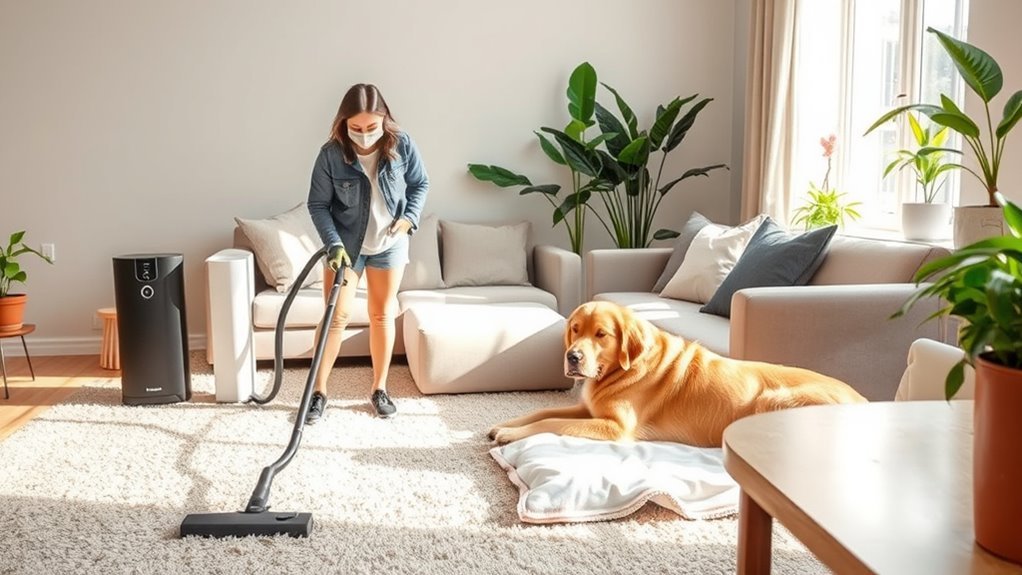
To reduce allergens like dust mites and pet dander in your living room, keep humidity below 50% using dehumidifiers. Frequently wash bedding, pet items, and surfaces with hot water and damp cloths. Switch from carpets to hard flooring for easier cleaning, and use HEPA filter vacuum cleaners to capture allergens. Incorporate air purifiers with Certified Asthma & Allergy Friendly® filters, ensuring proper placement and maintenance. Implementing these steps will greatly enhance your indoor air quality, and there’s more to explore.
Practical Steps to Reduce Dust Mites and Pet Dander
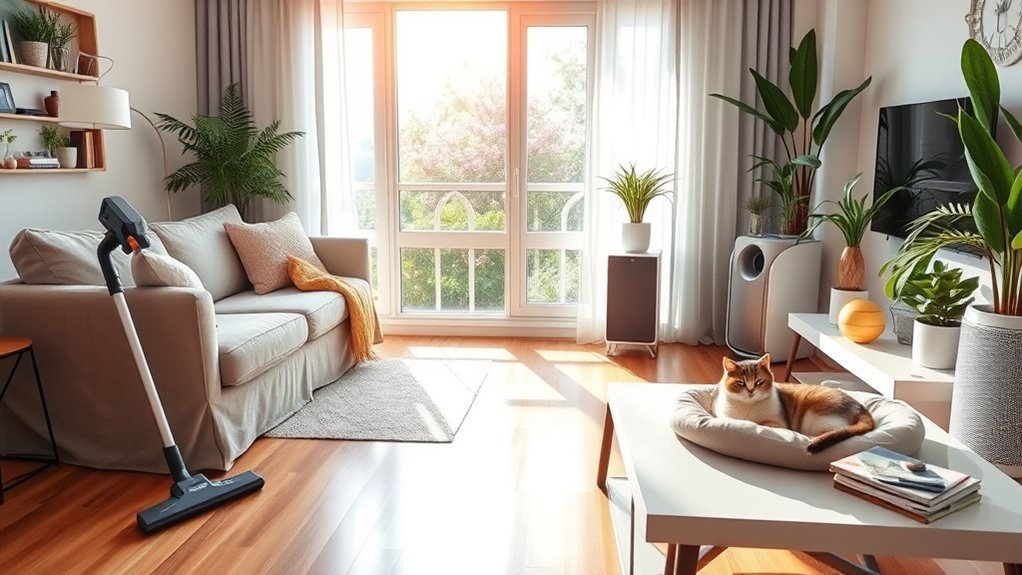
To effectively reduce dust mites and pet dander in your living room, it is essential to take proactive measures. Start by maintaining indoor humidity below 50% using dehumidifiers or air conditioning, as dust mites thrive in humid conditions. Regularly wash pet bedding, toys, and blankets in hot water (at least 130°F) to eliminate pet dander. Employ allergen-proof covers on upholstered furniture and pillows, which minimize dust mites and pet dander accumulation. Vacuum carpets and upholstered furniture frequently with a HEPA filter vacuum cleaner to trap allergens effectively. Finally, consider replacing wall-to-wall carpeting with hard flooring, as carpets can harbor dust mites and pet dander, complicating allergen avoidance. By following these steps, you can greatly enhance your living environment.
Understanding Humidity’s Role in Allergen Growth
Humidity plays an essential role in the growth of allergens, particularly dust mites and mold, which thrive in environments with elevated moisture levels. When humidity levels exceed 50%, conditions become ideal for dust mites, allowing them to absorb moisture from the air and reproduce rapidly. This proliferation can lead to increased allergy symptoms and asthma triggers for sensitive individuals. To combat this, aim to reduce humidity to below 50%. Utilizing dehumidifiers and air conditioners can effectively control indoor humidity levels, minimizing allergen growth. Regularly monitor humidity with hygrometers to guarantee a healthy indoor environment. By managing humidity, you can considerably decrease dust mite populations and create a more comfortable living space free from allergens.
Carpet vs. Hard Flooring: Which Is Better for Allergens?
When considering flooring options, it’s essential to weigh the allergen implications of carpets versus hard flooring. Carpets often trap dust mites and pet dander, leading to higher allergen levels in your home. In contrast, hard flooring surfaces simplify cleaning and considerably reduce allergen accumulation, potentially improving your indoor air quality.
Dust Mite Habitats
Although carpets can create a cozy atmosphere, they also serve as prime habitats for dust mites, which thrive in the moisture and organic matter they trap. In homes with carpets, dust mite allergens are more prevalent, leading to higher allergen levels and increased exposure for you and your family. Hard flooring options, like tile or hardwood, don’t harbor dust mites as effectively, allowing for easier cleaning and maintenance of lower allergen levels. While regular vacuuming may help, it often doesn’t completely eliminate these allergens, as dust mites can cling to fibers. By replacing carpets with hard surfaces, you can considerably reduce dust mite allergen accumulation, ultimately improving indoor air quality for allergy sufferers and enhancing your living environment.
Maintenance and Cleaning Ease
While many homeowners appreciate the warmth and comfort of carpets, the maintenance and cleaning ease of hard flooring makes it a superior choice for reducing allergens. Hard surfaces, like tile or hardwood, don’t trap dust mites and pet dander as carpets do, which can retain up to 10 times more allergens. Regular vacuuming often fails to eliminate all dust mites, whereas a simple damp mop easily cleans hard floors, removing allergens effectively. Hard flooring also helps maintain lower indoor humidity levels, vital for controlling dust mite populations. Studies indicate that switching from carpets to hard flooring can result in a 50% reduction in allergen levels, enhancing your indoor air quality and providing a liberating environment for allergy sufferers.
Allergens in Flooring Types
The choice of flooring greatly influences allergen levels in your living space. When considering flooring types, it’s essential to know how they affect dust mites and other allergens. Here’s what you should keep in mind:
- Carpets can harbor up to 100 times more allergens than hard flooring.
- Dust mites thrive in the warm, fibrous environment of carpets.
- Hard flooring options like tile, hardwood, or laminate don’t trap allergens as effectively.
- Cleaning hard floors is easier, allowing for regular mopping to minimize allergens.
- Improved indoor air quality is often linked to using hard flooring.
Opting for hard flooring can greatly reduce allergen exposure and enhance your respiratory health, promoting a cleaner, more liberating living environment.
Best Cleaning Products for Allergen Control
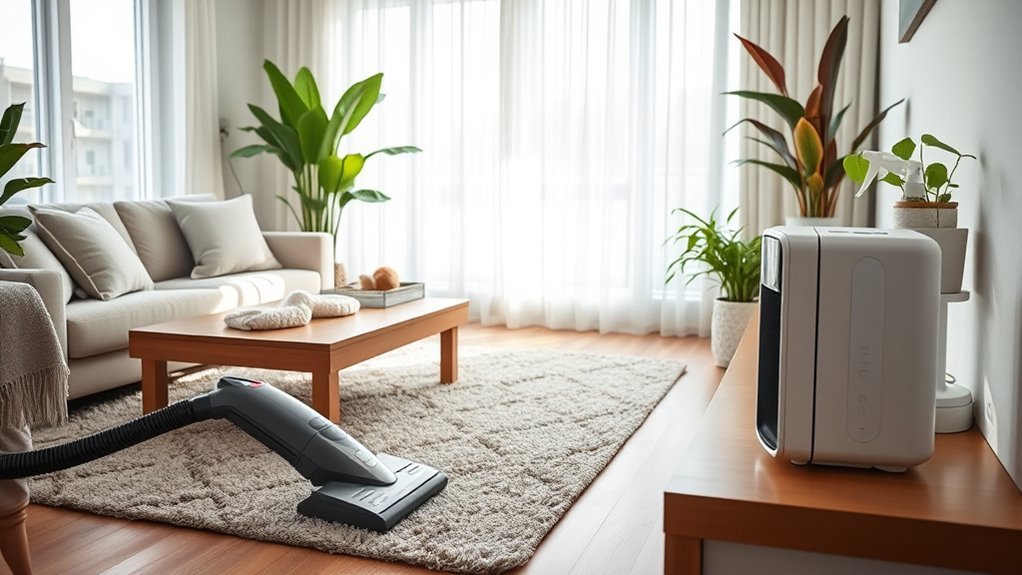
To effectively reduce allergens in your living room, prioritize allergen-proof cleaning supplies and products labeled as “Certified Asthma & Allergy Friendly®.” These options guarantee you minimize allergen exposure while maintaining a safe indoor environment. By choosing the right cleaning products, you can greatly improve your living space’s air quality and comfort.
Allergen-Proof Cleaning Supplies
When you’re tackling allergens in your living room, using allergen-proof cleaning supplies can make a significant difference. Opt for products specifically designed to trap and minimize allergens, ensuring a healthier environment.
- HEPA-filter vacuum cleaners to capture 99.7% of particles as small as 0.1 microns
- Microfiber cloths for effective dusting without releasing allergens
- Allergen-proof covers for cushions and upholstery to create a protective barrier
- Air purifiers with Certified Asthma & Allergy Friendly® filters for cleaner air
- Hypoallergenic cleaning products that reduce irritants during your cleaning routine
Certified Asthma-Friendly Products
Choosing certified asthma-friendly products for your cleaning routine can greatly enhance your living environment, especially if you or your loved ones suffer from allergies or asthma. These products are specifically tested to guarantee they don’t worsen your symptoms. Using HEPA-filtered vacuums and air purifiers captures 99.97% of dust mite allergens and pet dander, improving indoor air quality.
| Product Type | Benefits |
|---|---|
| HEPA Vacuum Cleaners | Captures tiny allergens |
| Allergen-Resistant Covers | Prevents dust mites in bedding |
| AAFA Certified Cleaners | Reduces indoor allergens |
Incorporating these certified products into your routine not only assists in managing allergens but also enhances the overall health of your home.
The Importance of Air Purifiers in Your Home
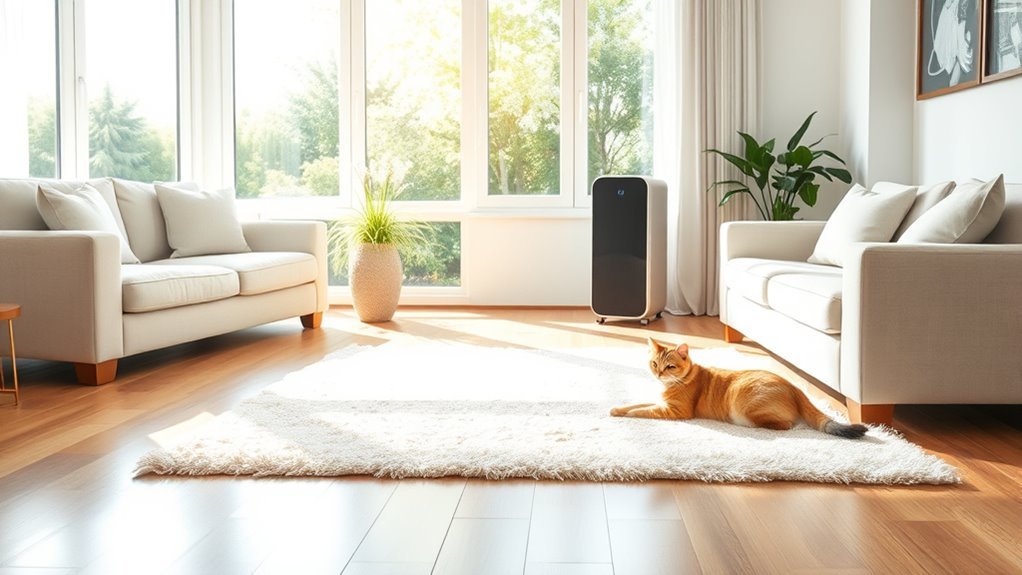
Air purifiers play an indispensable role in maintaining a healthy home environment, especially for those sensitive to allergens. These devices effectively reduce dust mite allergens and pet dander, enhancing indoor air quality.
- HEPA filters capture 99.97% of particles as small as 0.3 microns.
- Activated carbon filters reduce odors and volatile organic compounds (VOCs).
- Placement in bedrooms and living areas is essential for peak performance.
- Regular filter maintenance is critical to guarantee efficiency.
- Selecting a model with a Clean Air Delivery Rate (CADR) suited for your room size maximizes effectiveness.
Creating an Allergen-Free Zone for Pets
Creating a comfortable living space while managing pet allergens requires strategic planning and implementation. Start by designating specific areas in your living room where pets aren’t allowed, like sofas or beds, to minimize dust mites, dander, and hair accumulation. Opt for washable pet bedding and toys, cleaning them regularly in hot water to eliminate allergens that can trigger sensitivities. Replace carpets with hardwood or tile flooring, as these surfaces don’t trap pet dander and are easier to maintain. Additionally, use air purifiers with HEPA filters to capture airborne pet dander and improve air quality. Regularly vacuum with a HEPA-equipped vacuum cleaner to effectively remove pet hair and dander from surfaces, keeping your living room allergen-free.
Additional Tips for Long-Term Allergen Management
While managing allergens in your living room, it’s vital to adopt a thorough approach that includes regular cleaning and targeted strategies. Implementing these practices will help you guarantee a long-term reduction in dust mites and other allergens:
To effectively manage allergens in your living room, prioritize regular cleaning and targeted strategies for lasting relief.
- Vacuum carpets and upholstery weekly with a HEPA filter vacuum.
- Wash bedding, throw pillows, and blankets in hot water weekly.
- Maintain indoor humidity below 50% using dehumidifiers or air conditioning.
- Use allergen-proof covers on mattresses and pillows.
- Dust surfaces with damp cloths to trap allergens effectively.
How to Maintain a Dust Mite-Free Environment
To maintain a dust mite-free environment in your living room, focus on several key strategies that effectively reduce humidity and minimize allergen accumulation. Use dehumidifiers to keep indoor humidity levels below 50%, as dust mites thrive in warm, humid conditions. Wash your bedding, curtains, and throw rugs weekly in hot water (at least 130°F) to eliminate dust mites and allergens. Invest in allergen-proof covers for mattresses and pillows to prevent accumulation. Regularly vacuum with a HEPA filter vacuum cleaner to trap allergens effectively and consider replacing wall-to-wall carpeting with hard flooring to reduce habitats. Finally, dust surfaces with damp cloths to prevent allergens from becoming airborne and minimize clutter to further enhance your living room’s cleanliness.
Frequently Asked Questions
How Do I Get Rid of Dust Mite Allergy in My House?
To get rid of dust mite allergy in your house, invest in allergy-friendly bedding, practice dust mite prevention through regular vacuuming with HEPA filters, and maintain low humidity levels to diminish their presence effectively.
How to Clear a Room of Dust and Allergens?
To clear a room of dust and allergens, identify allergen sources, employ thorough cleaning techniques like damp dusting and vacuuming with HEPA filters, and adopt preventive measures such as maintaining low humidity and minimizing clutter.
Does Opening a Window Help With Dust Mite Allergy?
Opening a window can worsen dust mite allergies due to increased humidity. For effective humidity control, rely on air conditioning and dehumidifiers, while maintaining allergen barriers by keeping windows closed during high pollen seasons.
Do Air Purifiers Work for Dust Mite Allergies?
Air purifiers effectively improve indoor air quality and provide allergy relief by capturing dust mite allergens. However, combining them with other allergy relief methods, like cleaning and humidity control, enhances their effectiveness for dust mite allergies.
Conclusion
By following these steps, you can create a sanctuary free from dust mites and pet dander in your living room. Think of your space as a well-tuned instrument, where every detail harmonizes to reduce allergens. Regular cleaning, humidity control, and strategic flooring choices work together like a symphony, promoting a healthier environment. With persistence and the right tools, you’ll transform your home into a refuge, allowing you and your loved ones to breathe easier and live better.

Leave a Reply