
A wobbly coffee table usually comes from one of five culprit issues: loose fasteners, stripped screw holes, failing glue joints, uneven legs, or an uneven floor. If you want to reinforce a wobbly coffee table so the fix actually lasts, start with the simplest mechanical checks before reaching for wood glue, shims, or metal brackets. This step-by-step guide walks you through diagnosing the exact source of the movement and stabilizing your table without damaging the finish.
Quick Answer
To reinforce a wobbly coffee table, test it on a flat floor first, then flip it over and tighten all bolts, screws, or cam locks evenly. If fasteners spin freely, pack stripped wood holes with glued toothpicks or dowels. Secure loose mortise, tenon, or dowel joints with PVA wood glue and clamps, or install steel corner braces underneath.
At a Glance
| Time Required | 15–60 minutes of active work; 30–60 minutes of clamping and 24 hours of curing if wood glue is used |
| Difficulty | Easy to moderate |
| Tools Needed | Spirit level, screwdriver set, socket wrench, hex keys, PVA wood glue, bar or strap clamps, felt pads or shims, L-brackets, drill and pilot bits |
| Cost | $0–$25 for basic tightening, pads, toothpicks, or glue; $25–$60+ if buying bar clamps, threaded inserts, or heavy-duty corner braces |
Common Causes of a Wobbly Coffee Table
Before you reinforce a wobbly coffee table, identify whether the movement comes from loose joinery or the surface underneath it. A table that rocks rigidly like a three-legged stool usually has an uneven leg or floor, whereas a table that shifts sideways (called racking) has loose hardware or failing joints.
- Loose screws, bolts, or cam locks: Metal fasteners back out over time as the table is bumped, dragged across rugs, or exposed to seasonal indoor humidity shifts.
- Stripped screw holes: When a wood screw spins freely without biting, the surrounding wood fibers have sheared away and can no longer grip the threads.
- Loose wooden joints: Traditional mortise-and-tenon joints, wooden dowels, aprons (the horizontal frame boards under the tabletop), and diagonal corner blocks loosen as old adhesive dries out and turns brittle.
- Uneven legs: One leg may be slightly shorter from wood shrinkage, missing a factory plastic glide, or resting on the thick border of an area rug.
- Uneven flooring: Tile grout lines, cupped hardwood planks, or uneven subfloors can make a structurally sound table rock in one spot of the room.
- Damaged structural parts: Cracked legs, sheared metal welds, split aprons, or pulled-out threaded inserts require part replacement or epoxy reinforcement rather than simple tightening.
- Uneven weight distribution: Heavy stone trays, stacked art books, or planters placed near one edge amplify minor play in the frame.
| Symptom | Likely Cause | Best Fix |
|---|---|---|
| Table feels rigid but rocks diagonally on two corners | Uneven floor, rug edge, or one slightly short leg | Level with felt pads, rubber shims, or adjustable threaded glides (Steps 1 & 6) |
| Table sways side to side when nudged; legs pivot at top | Loose hanger bolts, wood screws, or cam locks | Tighten hardware evenly in stages; add blue threadlocker on metal bolts (Step 4) |
| Screw turns continuously without pulling the bracket tight | Stripped wood screw hole or spinning threaded insert | Plug wood hole with glued hardwood dowels/toothpicks, or re-anchor metal insert (Step 5) |
| Visible gap opens between wooden leg and apron under pressure | Failed factory glue joint or shrunken wooden dowel | Scrape old adhesive, apply fresh PVA wood glue, clamp, and add corner blocks (Steps 7 & 8) |
Warning: Stop using a coffee table immediately if it has a split leg, cracked apron, unseated glass top, or wobble that worsens under light hand pressure. Damaged structural components can collapse suddenly under weight and must be repaired or replaced before regular use.
Tools and Supplies You May Need
You only need the tools that match your table’s specific fasteners and construction material. Gather basic hand tools for your initial inspection, then pick up adhesives or brackets only if tightening does not eliminate the movement.
- Screwdriver set (Phillips and flathead): Match the bit tip (such as #2 Phillips) precisely to the screw head to prevent cam-out and stripping.
- Socket set, box wrench, or hex keys (Allen wrenches): Used for tightening corner hanger bolts, locknuts, and ready-to-assemble (RTA) hex bolts.
- Spirit level or straightedge: Confirms whether the floor and tabletop sit horizontally plumb.
- Felt pads, rubber feet, furniture glides, or composite shims: Correct minor height differences on solid tables and protect hard flooring.
- PVA wood glue (such as Titebond Original or Titebond II): Creates a bond stronger than the wood itself on clean, bare, close-fitting wooden joints.
- Bar clamps or a ratcheting strap clamp: Applies steady inward pressure to hold glued joints square while the adhesive cures.
- Hardwood toothpicks, wooden golf tees, or 1/4-inch hardwood dowels: Rebuilds solid wood material inside stripped screw holes.
- Steel L-brackets, corner braces, or hardwood corner blocks: Reinforce the underside angle where the legs meet the apron or tabletop.
- Drill and twist drill bits (3/32-inch to 5/32-inch): Needed for drilling pilot holes when installing new screws or corner brackets.
- Removable medium-strength threadlocker (optional): A drop of blue threadlocker keeps metal machine bolts from vibrating loose again.
Note: Furniture fastener sizes vary between metric and imperial standards. Most flat-pack tables use a 4 mm or 5 mm hex key, while corner hanger bolts commonly use a 1/2-inch or 13 mm socket; always test-fit your driver or socket so it seats snugly before applying torque.
Recommended Products

Cam locks for furniture are crafted from durable alloy steel with nickel plating, ensuring rust and corrosion resistance for long-term use in humid or high-temperature environments. Before purchasing, measure your pre-drilled hole’s diameter, depth, and connecting hole length to ensure compatibility

ALL ON ONE MOUNTING PLATES KIT - You will get - 2 Drills Bits (12mm, 3mm), M8 Insert Nuts, Mounting Screw, Rubber Pads. This set comes with all the things you need to replacement legs for your Furniture.

KIT INCLUDES our most powerful wood repair compounds, so you can repair all levels of damage to wood furniture by yourself. Includes 12 touch up fillers, 8 touch up markers, 1 wood putty, 1 beewax, 2 brushes, 2 sandpaper, 1 sponge and 1 scraper
Step 1: Check Whether the Floor or the Table Is the Problem
Test the coffee table on a hard, flat floor before loosening or tightening any hardware. If the wobble disappears when you move the table off an area rug or rotate it in place, the floor surface is uneven rather than the table frame.
- Clear all decor, books, and trays off the tabletop.
- Move the coffee table onto bare tile, hardwood, or flat concrete if it normally sits on a rug.
- Press down firmly on opposite diagonal corners to see if one leg lifts slightly off the floor.
- Rotate the table 90 degrees in the exact same spot and press the corners again.
- Lay a spirit level across the tabletop from front to back and left to right.
How to interpret the test: If the same leg lifts off the ground even after rotating the table 90 degrees, the problem is inside the table (either a loose joint or a short leg). If a different leg lifts after rotation, your floor is uneven—skip ahead to Step 6 to add leveling glides or pads.
Step 2: Flip the Table Safely for Inspection
Turn the cleared coffee table upside down onto a padded surface so you can inspect every joint without scratching the top finish. If your table has a removable glass, marble, or stone insert, lift the insert out and set it flat in a safe area before flipping the frame.
Spread a thick moving blanket, folded towel, or clean rug on the floor. With a helper for heavy wood or metal frames, roll the table carefully onto its side and then onto its top. Wiggle each leg gently by hand and watch where the leg meets the apron, mounting plate, or tabletop to pinpoint play, missing washers, split wood, or open glue lines.
Step 3: Identify the Fasteners and Joints
Examine the underside corners to determine how your coffee table transfers load from the tabletop to the legs. Most residential coffee tables rely on one or two of seven common connection systems:
- Wood screws: Driven directly through wooden corner blocks, mounting cleats, or lower shelves into the legs and tabletop underside.
- Hanger bolts and corner blocks: A dual-threaded bolt screwed into the wooden leg passes through a diagonal corner block and is secured with a flat washer, split lock washer, and hex nut.
- Hex machine bolts and threaded inserts: Allen-head bolts thread into brass or steel inserts embedded inside the leg or frame.
- Cam locks and connecting pins: Quarter-turn circular metal drums found in flat-pack particleboard or MDF furniture that lock onto protruding metal dowel pins.
- Wooden dowels: Fluted hardwood pins glued into matching holes for alignment and shear strength.
- Mortise-and-tenon glue joints: A rectangular wood tongue (tenon) on the apron glued into a matching slot (mortise) in the leg.
- Surface metal mounting plates or brackets: Stamped steel plates screwed to the underside of the tabletop that accept screw-in tapered legs.
If you see no exposed hardware at all, the joints are likely mortise-and-tenon, doweled, or concealed beneath glued wooden button plugs. Never pry hidden joints apart with a metal screwdriver, which will crush the visible wood edges.
Step 4: Tighten Loose Hardware Evenly
Tighten all loose bolts, nuts, and screws gradually in a criss-cross pattern around the table rather than cranking one leg to maximum tightness first. Tightening in even stages pulls the frame square and prevents warping the tabletop or cracking wooden corner blocks.
- If a hanger bolt is missing its flat washer or split lock washer, slide replacement washers onto the bolt before threading the nut back on.
- Seat your screwdriver, hex key, or socket wrench squarely into the fastener.
- Tighten each fastener to about 75% snugness, moving from one corner to the diagonal opposite corner.
- For metal machine bolts that repeatedly vibrate loose, back the bolt out, apply a single drop of removable blue threadlocker to the threads, and thread it back in.
- Make a final pass around all four legs until each fastener feels firm, stopping as soon as the washer compresses or the screw head seats flush.
- For flat-pack cam locks, turn the circular cam clockwise (usually a half-turn to the arrow stop) until it grips the connecting pin tightly.
Furniture restorers emphasize checking existing hardware first because seasonal wood movement naturally loosens mechanical joints over time. However, they warn against over-torquing fasteners, which strips softwood fibers and cracks brittle aprons. Southern Living’s furniture expert guidance recommends this same cautious tightening sequence as the first line of defense for wobbly wooden furniture.
Pro Tip: Before flipping the table upside down, stick a piece of blue painter’s tape on the leg or corner that feels loosest. Once the table is inverted, it is easy to lose track of which corner was moving.
Step 5: Fix Stripped Screw Holes and Loose Threaded Inserts
When a wood screw or machine bolt spins endlessly without tightening, you must rebuild the threads in the hole before the joint can hold load. Switching to a slightly larger screw often splits narrow furniture aprons; plugging the stripped hole restores full holding strength using the original hardware.
How to Repair a Stripped Wood Screw Hole
- Unscrew the spinning fastener completely and clean out any loose wood dust from the hole.
- Coat two or three flat hardwood toothpicks, wooden matchsticks (heads removed), or a 1/4-inch fluted hardwood dowel in PVA wood glue.
- Tap the glue-coated wood pieces firmly into the hole until no more will fit.
- Wait 30 to 60 minutes for the glue to set firm, then pare or cut the protruding wood flush with the surface using a utility knife or sharp chisel.
- Drill a centered pilot hole approximately the same diameter as the screw’s solid inner shank (for a common #8 wood screw, use a 7/64-inch bit in softwood or a 1/8-inch bit in hardwood).
- Drive the original screw back in by hand until snug.
How to Fix a Spinning Metal Threaded Insert
Never pack toothpicks inside a metal threaded insert meant for a machine bolt. If the outer brass or zinc insert spins inside the wooden leg, back the bolt out and unscrew the insert using a hex key or wide flathead screwdriver. Scuff the outside of the metal insert with sandpaper, coat the outer wood threads carefully with two-part structural epoxy (keeping epoxy out of the inner machine threads), thread the insert flush into the wood, and let the epoxy cure for 24 hours before reinstalling the leg bolt.
Step 6: Level Uneven Legs
If all joints and fasteners are rock-solid but the coffee table still rocks on two diagonal legs, level the shortest leg at floor level. Leveling compensates for minor floor dips or a leg that has shrunk slightly without altering the table’s joinery.
- For gaps under 1/8 inch (3 mm): Stick a high-density felt pad or non-slip rubber bumper under the short leg.
- For gaps between 1/8 inch and 3/8 inch (3–10 mm): Slide a composite furniture shim under the foot, or install a nail-on or screw-in adjustable leveling glide into the bottom of the legs.
- For hardwood, laminate, or tile floors: Use heavy-duty wool felt pads on all four legs (stacking a slightly thicker pad on the short leg) to prevent scratches and quiet movement.
- For plush carpet or thick rugs: Use smooth plastic or metal nail-on glides rather than felt pads, which peel off when the table shifts against carpet pile.
Only apply pads or shims after confirming every structural joint is tight. Hiding a loose leg joint with a wedge puts uneven leverage on the remaining fasteners and accelerates joint failure. Its repair guide on The Spruce underscores why addressing loose fasteners and worn joinery must come before adding floor sliders or shims.
Recommended Products

TRUE 3/8"-16 UNC THREAD: Not for metric M10. WARNING: Ensure furniture's 3/8" (9.52mm) threaded hole. Measure outer diameter(avoid ruler for accuracy) & thread count. Longer steel threads for custom workbenches.
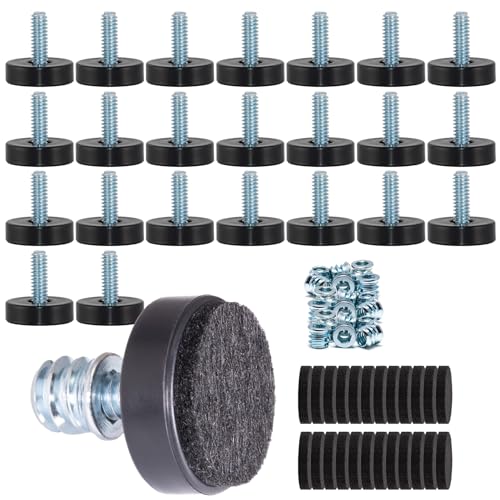
1/4"-20 COARSE THREAD ONLY: Not for metric M6/M8 used in European or imported furniture. To verify: test your old screw with a standard 1/4"-20 nut. Use calipers(Rulers are inaccurate) to verify thread diameter & Count 20 threads per inch. Not sure? Send us a photo of your leg, we'll reply within 8 hrs.

!!If you find any parts missing after receiving the goods, please email us and we will respond within 24 hours and give you a satisfactory answer.
Step 7: Re-Glue Loose Wooden Joints
When a wooden leg rocks inside its mortise or dowel socket despite tight screws, the factory adhesive bond has failed and must be cleaned and re-glued. Standard polyvinyl acetate (PVA) wood glue bonds by penetrating bare wood pores—it will not stick reliably to dried, crusty old glue.
- Label the mating leg and apron pieces with painter’s tape so they return to the exact same orientation.
- Gently tap the loose joint open using a non-marring rubber mallet, or open the gap slightly without forcing intact neighboring joints apart.
- Scrape away flaky old glue from both the tenon (or dowel) and the socket using a small chisel, craft knife, or 120-grit sandpaper until bare wood shows, being careful not to remove fresh wood.
- Dry-fit the joint together; if a dowel or tenon rattles loosely inside its hole, wrap a thin strip of wood veneer or cotton cloth coated in glue around the pin so it fits snugly.
- Brush a thin, even coat of PVA wood glue onto both mating wood surfaces.
- Press the joint closed, set the table upright on a flat floor so the legs sit square under their own weight, and tighten bar clamps or a ratcheting strap clamp across the frame.
- Wipe away squeezed-out glue beads immediately with a warm, damp cloth so the dried glue does not stain the finish.
According to Titebond’s official wood glue guidelines, unstressed wood joints require 30 to 60 minutes in clamps, stressed joints require 24 hours in clamps, and any newly glued furniture joint should cure for a full 24 hours before bearing weight. Clamping pressure is essential for a durable repair: a Washington Post furniture repair column notes that wood glue requires firm clamping pressure while drying rather than simply pressing loose parts together by hand.
Step 8: Add Brackets or Corner Blocks for Extra Support
If your coffee table lacks corner blocks or sways because the apron-to-leg joint is shallow, installing metal corner braces or hardwood blocks underneath locks the corners against side-to-side racking. Place hardware on the inner faces of the frame where it stays hidden from normal room sightlines.
How to Brace a Coffee Table
- Select heavy-gauge steel L-brackets, flat corner mending plates, or mitered hardwood corner blocks sized to fit inside the apron or under the tabletop.
- Position the brace against solid wood or structural metal—never screw structural brackets into thin decorative veneer, hollow-core tabletops, or loose trim.
- Mark the screw hole locations with a sharp pencil.
- Compare your mounting screws against the thickness of the tabletop and leg to verify the screws will penetrate about two-thirds of the wood thickness without poking through the finished outer surface.
- Drill straight pilot holes matching the screw’s root diameter—as detailed in the U.S. Forest Service Wood Handbook, pre-drilling pilot holes prevents splitting and maximizes wood screw withdrawal resistance, especially in dense hardwoods.
- Drive the screws in until snug, installing matching braces on all four corners so the frame distributes stress evenly.
Warning: Always hold your replacement screw up against the side of the tabletop or leg before driving it in. A screw that is even 1/4 inch too long will burst through the finished top surface and permanently scar the table.
Pro Tip: Wrap a strip of painter’s tape around your drill bit at the exact depth you want the pilot hole to stop (usually 1/8 inch shorter than the screw length). The tape acts as a visual depth stop so you never drill through the tabletop.
Special Cases: Glass, Metal, Antique, and Flat-Pack Coffee Tables
Different coffee table materials require specific adjustments so your repair does not crack fragile tops, crush composite board, or lower an antique’s value. Match your reinforcement method to your table’s construction style:
- Glass-top coffee tables: Always lift off removable glass panels before working on the base. Replace flattened clear rubber bumper pads or worn suction cups that let the glass slide, and tighten metal frame screws by hand so you do not bend the frame out of alignment with the rigid glass top.
- Metal-frame coffee tables: Inspect where tubular steel or aluminum legs meet the upper frame. Tighten machine bolts evenly with a hex key, replace missing split lock washers, and check for hairline cracks in corner welds (cracked welds require professional brazing or welding, or an internal corner bracket).
- Antique wooden tables: Avoid driving modern metal L-brackets, drywall screws, or polyurethane glue into valuable period pieces. Conservation specialists at the Smithsonian Museum Conservation Institute recommend minimizing invasive alterations on historic furniture and using reversible liquid hide glue or consulting a professional conservator for structural repairs.
- Flat-pack (MDF or particleboard) tables: Standard wood screws strip quickly in particleboard. If a cam lock or screw pulls out of crushed particleboard, rebuild the damaged cavity with two-part wood epoxy before redrilling, or reinforce the corner using a wider dual-wing corner brace that spreads load across intact board.
- Coffee tables with lower shelves: Check the fasteners attaching the bottom shelf to the legs. A lower shelf acts as a structural stretcher; when its corner screws loosen, the entire table rocks side to side.
How to Check the Table’s Stability After Repair
Once all fasteners are tightened and any glued joints have cured for 24 hours, turn the coffee table upright and run a five-point stability check before placing heavy items back on top.
- Set the table in its normal spot in the room.
- Press down with moderate hand weight on each of the four corners in turn to verify no leg lifts.
- Push gently horizontally against the long and short edges of the tabletop to confirm side-to-side racking is gone.
- Listen for creaks or clicking sounds that indicate a fastener or joint is still shifting under load.
- Inspect underneath one final time to confirm brackets sit flush and dried glue lines remain tightly closed.
If the table feels firm and quiet, return your books, trays, and decor to the top. If slight movement returns after a few days, recheck metal bolts—new wood repairs sometimes settle slightly and benefit from one final quarter-turn with a wrench.
When to Replace Parts or Call a Professional
Call a professional furniture restorer or replace the damaged component when structural parts are fractured or when a DIY fix risks ruining a high-value piece. Attempting to glue or bracket severely compromised materials can lead to sudden failure.
- A wooden leg is split vertically along the grain or sheared across the ankle.
- The solid wood tabletop has warped or cupped severely, pulling the apron frame twisted.
- Multiple metal welds on a steel or wrought-iron base have cracked through.
- The table features chipped, cracked, or unbonded tempered glass, marble, travertine, or slate.
- The piece is a signed mid-century modern design, family heirloom, or antique where visible brackets would destroy its market value.
If young children are in the home, remove unstable tables or heavy stone tops from living areas immediately until repairs are complete. For taller storage furniture, media consoles, and televisions in the same room, follow the U.S. Consumer Product Safety Commission’s anchoring safety guidelines at AnchorIt.gov.
Tips for Maintaining Your Coffee Table’s Strength
A five-minute seasonal check keeps minor hardware loosening from turning into stripped holes or broken mortise joints. Follow this maintenance schedule to keep your coffee table sturdy year-round.
| Maintenance Action | When to Do It | Why It Matters |
|---|---|---|
| Check and snug corner bolts, screws, and cam locks | Every 6 months (spring and fall) or after moving | Seasonal indoor humidity changes expand and contract wood around metal threads |
| Lift—never drag—the table when vacuuming or rearranging | Every time the table is moved across rugs or floors | Dragging catches leg bottoms on rug pile and applies heavy lateral leverage to joints |
| Inspect legs, aprons, and lower shelves for hairline gaps | During routine cleaning or whenever a slight wobble starts | Catching a loose joint early prevents tenons, dowels, and screw holes from wallowing out |
| Replace compressed felt pads, rubber bumpers, or glides | Annually or when a pad flattens, shifts, or falls off | Missing or uneven foot pads create a diagonal rock that stresses corner joints |
| Center heavy decor and avoid sitting or standing on the top | Daily use | Coffee tables are engineered for distributed static loads, not concentrated edge weight |
Key Takeaways
- Rotate your coffee table 90 degrees on a hard floor first to separate floor unevenness from loose table joinery.
- Tighten hanger bolts, screws, and cam locks evenly in stages using the exact driver or socket size to avoid stripping heads.
- Use felt pads, shims, or adjustable glides only for uneven legs or floors—never to disguise a loose joint.
- Scrape old glue down to bare wood before applying fresh PVA wood glue, clamp for 30–60 minutes, and allow 24 hours to cure fully.
- Consult a furniture restorer if your table is a valuable antique or has a cracked leg, split apron, or damaged glass top.
Frequently Asked Questions
How do I make a wobbly coffee table more sturdy?
Flip the table onto a soft blanket and tighten all visible bolts, screws, and cam locks evenly with the matching tool. If any wood screw spins freely, plug the stripped hole with wood-glued hardwood toothpicks or dowels before driving the screw back in. For joints that still shift, re-glue and clamp the wooden joint or install steel L-brackets underneath where the legs meet the apron.
How should I brace my coffee table?
Brace a coffee table from underneath by attaching heavy-gauge steel L-brackets, corner braces, or mitered hardwood blocks to the inner corners where each leg meets the frame. Drill pilot holes sized to the screw’s inner shank first to prevent splitting the wood. Always measure your screws beforehand so they penetrate about two-thirds of the wood thickness without piercing the visible tabletop.
What should I put under a wobbly table?
Place high-density felt pads, rubber feet, composite furniture shims, or screw-in adjustable leveling glides under the short leg once you confirm the table frame itself is tight. Felt pads work best on hardwood and tile for tiny gaps under 1/8 inch, while rigid plastic glides or threaded levelers work better on carpet or larger gaps. Never use floor pads as a substitute for tightening loose hardware.
Can I use wood glue without taking the table apart?
You can inject PVA wood glue into a slightly open joint and clamp it tightly for a quick fix, but it will not be as strong as a full disassembly. PVA wood glue bonds best to clean, bare wood fibers rather than old dried glue. Whenever possible, gently separate the loose joint, scrape out flaky adhesive residue, apply fresh glue, and clamp the frame square for 30 to 60 minutes.
Why is my coffee table still wobbly after I tightened the screws?
If tightening the screws does not stop the wobble, the cause is usually an uneven floor, a stripped screw hole, a spinning metal threaded insert, a failed glue joint, or a missing washer. Test the table on a flat hard floor first to rule out uneven flooring. Then flip the table over and wiggle each leg to see if the fastener is bottoming out without clamping the wood.
Should I cut the legs to stop a coffee table from wobbling?
Avoid sawing or sanding down coffee table legs unless every other leveling method has failed, because hand cuts are permanent and frequently leave the leg foot angled. Even a 1/16-inch error when trimming one leg can force you to trim the remaining three legs repeatedly. Instead, add a felt pad, composite shim, or threaded leveling glide under the single short leg.
How long does wood glue take to dry on a coffee table repair?
Standard PVA wood glue requires 30 to 60 minutes of clamping on unstressed joints and up to 24 hours of clamping on stressed joints. Even after you remove the clamps, allow the repaired coffee table to cure undisturbed for a full 24 hours before flipping it upright and placing heavy items on top.
Conclusion
Reinforcing a wobbly coffee table comes down to fixing the exact source of the movement in order from simplest to most involved. Test the floor first, tighten loose hardware evenly, rebuild stripped screw holes, re-glue bare wooden joints with proper clamping pressure, and add hidden corner brackets only where extra support is needed. Start by clearing your tabletop and testing the four corners on a flat surface today so you can lock down a rock-solid repair.
Sources
- Southern Living: How to Fix Wobbly Dining Chairs: Supports tightening loose hardware first, avoiding over-tightening, repairing stripped holes, gluing loose joints, and knowing when to call a pro.
- The Spruce: How to Fix a Wobbly Chair: Supports diagnosing common wobble causes, distinguishing structural joint repairs from floor shims or sliders, and replacing worn hardware.
- Titebond (Franklin International): Wood Glue FAQs: Supports 30–60 minute clamping times for unstressed joints, 24-hour clamping for stressed joints, and waiting 24 hours before stressing repaired wood joints.
- The Washington Post: DIY Wood Furniture Repair: Supports cleaning old glue from joints, applying firm clamping pressure, and letting glued repairs cure fully.
- USDA Forest Service, Forest Products Laboratory: Wood Handbook (FPL-GTR-282): Supports pre-drilling properly sized pilot holes in hardwoods and softwoods to prevent splitting and maximize screw holding strength.
- Smithsonian Museum Conservation Institute: Furniture Conservation: Supports avoiding invasive hardware on historic or antique furniture and consulting a conservator for structural repairs.
- U.S. Consumer Product Safety Commission: AnchorIt.gov: Supports furniture and television tip-over prevention guidance in homes with children.