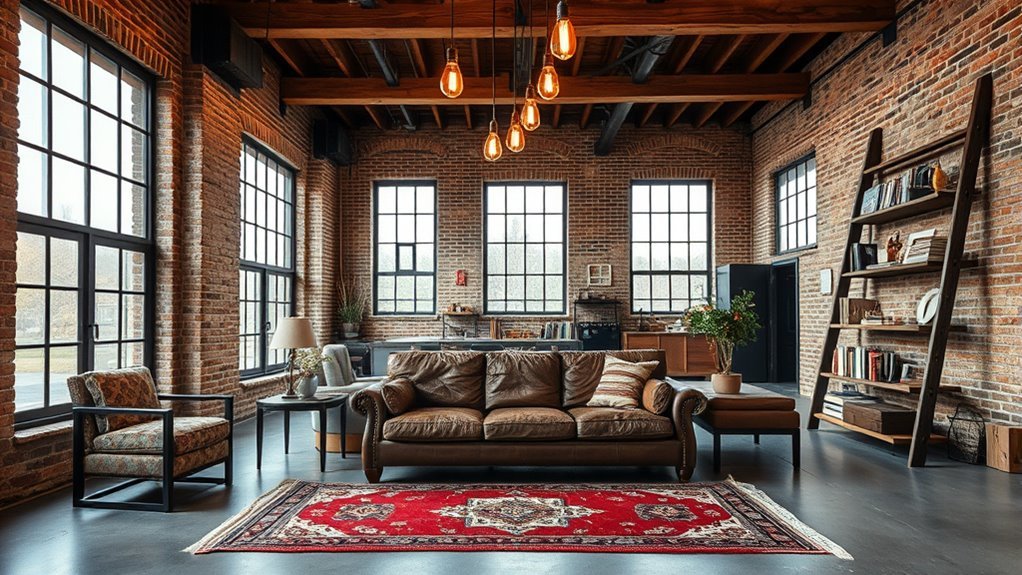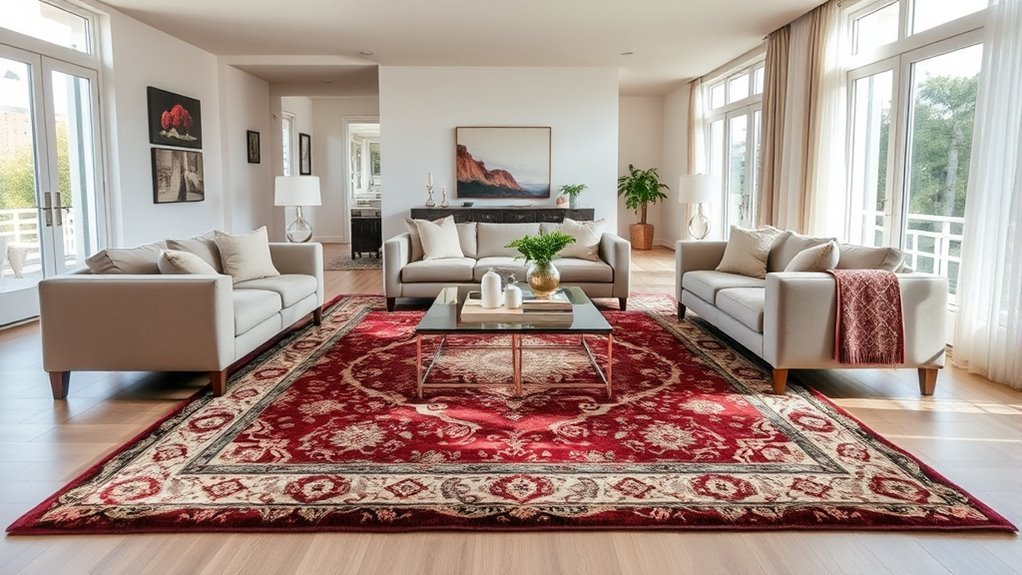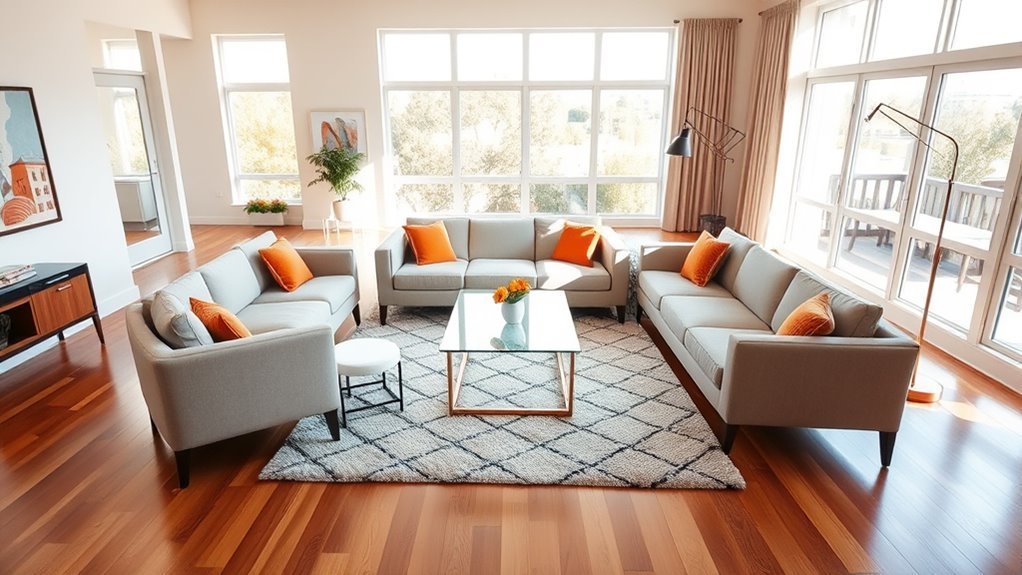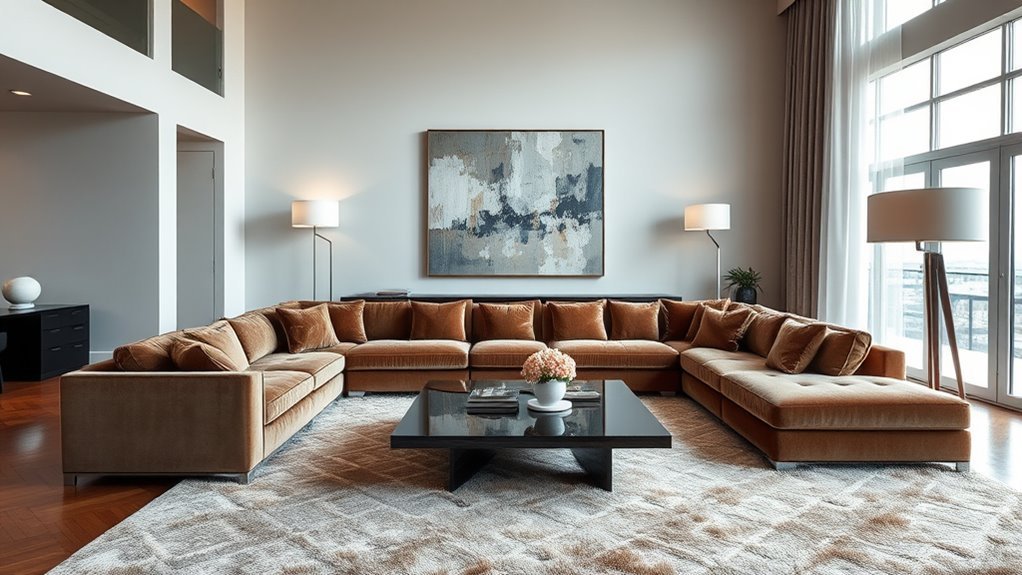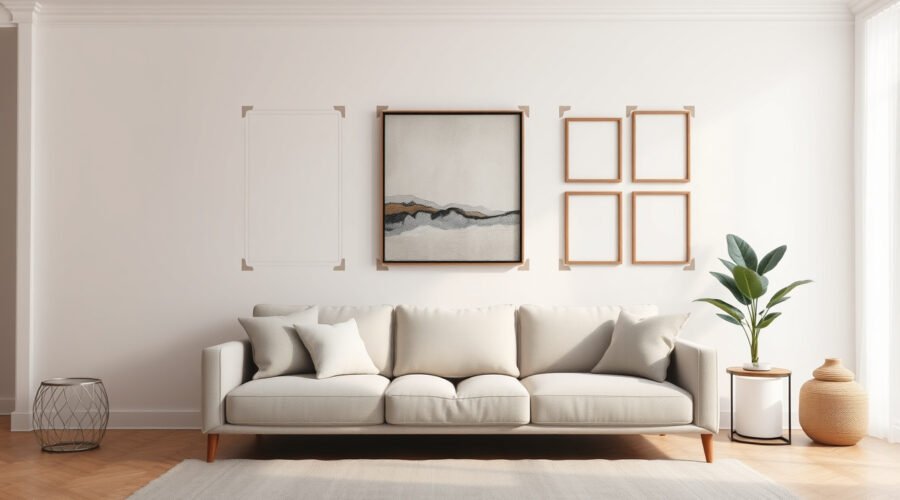
Choosing between a gallery wall and a single large artwork above your sofa comes down to the mood, scale, and maintenance level you want. A gallery wall feels collected, personal, and layered. One oversized piece feels calm, bold, and intentional. The best choice is the one that fits your sofa width, room style, ceiling height, and how often you like to refresh your decor.
Quick Answer
Choose a gallery wall if you want personality, variety, and the freedom to add pieces over time. Choose one large artwork if you want a cleaner, calmer focal point. In either case, aim for the full display to span about 60–75% of the sofa’s width and hang it roughly 6–10 inches above the sofa back.
Key Takeaways
- A gallery wall works best when you want a personal, evolving display with mixed art, photos, prints, and objects.
- A single large artwork works best when you want a strong focal point with less visual clutter.
- For balanced scale, keep the total art width around 60–75% of the sofa width.
- Keep the bottom edge of the artwork or gallery arrangement about 6–10 inches above the sofa, adjusting for sofa height and head clearance.
- Use hardware rated for the artwork’s weight, especially for oversized framed pieces.
At a Glance
| Time Required | 30–60 minutes to plan and tape the layout; longer if you are framing, sourcing, or installing heavy pieces. |
| Difficulty | Easy for lightweight art; moderate for gallery walls or large framed pieces. |
| Tools Needed | Tape measure, painter’s tape, pencil, level, stud finder, picture hooks, wall anchors, D-rings, wire, or cleats rated for the artwork’s weight. |
| Cost | $0–$25 for basic layout and hanging supplies, not including art, frames, custom mats, or professional installation. |
Understanding the Impact of Art Above Your Sofa
Art above a sofa does more than fill an empty wall. It anchors the seating area, adds color, and helps set the room’s tone. A gallery wall brings movement and personal storytelling, while one large artwork creates a stronger, simpler focal point.
The most important rule is proportion. Your artwork should relate to the sofa rather than floating awkwardly above it. As a general guide, the total art display should measure about 60–75% of the sofa’s width. That can be one wide canvas, a framed print, a diptych, or the full outside width of a gallery wall.
Note: These measurements are design guidelines, not strict rules. If your sofa is extra deep, your ceiling is very high, or your room has strong architectural features, adjust by eye after taping the layout on the wall.
The Appeal of a Gallery Wall
A gallery wall is ideal when you want the space above your sofa to feel layered, collected, and personal. It can include framed prints, family photos, small paintings, textiles, mirrors, sketches, or meaningful objects. The result feels more lived-in than a single polished statement piece.
Recommended Products

Versatile Sizes for Display: Vittanly 15-Pack Multi-Size Picture Frame Set includes 3x 8x10", 6x 5x7", and 6x 4x6" frames. Ideal for showcasing family photos, artwork in living rooms, bedrooms, and offices

Durable Material: YESKAY 11x14 picture frames made of MDF wood, stable structure, premium texture, and well-made quality. The HD plexiglass front also protects your treasured photos from damage and keeps them in good shape for years.

【Durable Material】Our collage frame is made of well made wood frame. Comes with a plastic cover, which provides a clear view of photos and is lighter than glass. No need to worry about hurt by glass broken.
Visual Variety and Interest
Gallery walls work especially well in rooms that need texture or energy. By mixing sizes, orientations, and frame styles, you create rhythm across the wall. The key is to keep the arrangement intentional, not random.
For a balanced gallery wall above a sofa:
- Keep the full arrangement about 60–75% of the sofa width.
- Leave about 2–3 inches between smaller frames, or up to 4 inches for larger pieces.
- Use one larger anchor piece to keep the wall from feeling scattered.
- Repeat at least one element, such as frame color, mat color, art palette, or subject matter.
- Keep the bottom edge of the grouping about 6–10 inches above the sofa.
Personal Expression and Style
When you curate a gallery wall, you are not just decorating; you are telling a visual story. This option is best if you enjoy changing your space over time or want to display pieces with personal meaning.
Consider these elements to make your gallery wall feel cohesive:
- Diverse mediums, such as paintings, photos, drawings, and prints
- A repeated color palette that connects the pieces
- Eclectic frames balanced by consistent spacing
- A mix of vertical and horizontal shapes
- Personal pieces that make the room feel like yours
Pro Tip: Lay the gallery wall on the floor first, then tape the outer shape on the wall before hanging anything. If the taped outline looks too small from across the room, the finished gallery wall will also look too small.
Why Choose a Single Large Artwork?
A single large artwork is the better choice when you want a cleaner, calmer, more dramatic focal point. It works well in modern, minimalist, transitional, and formal rooms where too many small pieces would feel busy.
Recommended Products
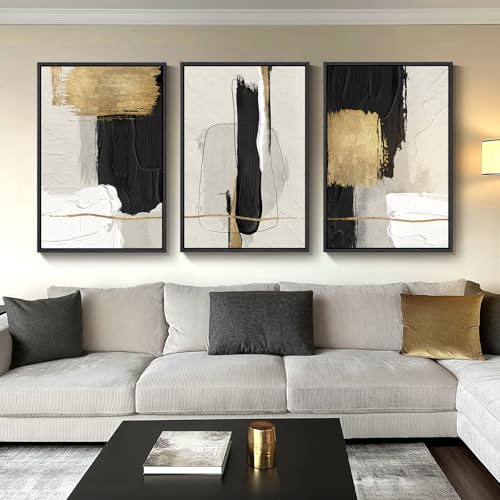
[Framed Wall art]: A set of 3 large contemporary minimalist black white and gold abstract wall art each 24x36 inches, 3 pieces totaling 36" H x 72" W. The sturdy 1.38-inch solid wood frames feature a sleek black finish that complements a variety of home decor styles

【Canvas Wall Art Size】 This is a modern canvas print measuring 29" H x 58" W.(73cm*147cm) For the best look, please measure your wall space before buying to make sure this size is just right for your decorating expectations.

【Framed Wall Art】Large framed pastel grunge forest tree landscape wall arts, encased in robust wood-colored frames, each measuring 24x36 inches (totaling 36"H x 72"W). These nature-inspired abstract artwork pieces enhance any space with a sense of tranquility and modern charm, adding a touch of vintage elegance with their minimalist design.
Visual Impact Amplified
One oversized artwork can make the sofa wall feel finished in a simple way. It draws the eye immediately and gives the room a clear center. This is especially helpful if the rest of the room already has patterned rugs, bold pillows, open shelving, or lots of furniture lines.
- Simplicity: One piece reduces visual clutter.
- Scale: A large piece can make the sofa feel intentionally anchored.
- Drama: Oversized artwork creates a strong focal point.
- Maintenance: One piece is easier to dust, straighten, and style than many frames.
- Flexibility: A single statement piece can be swapped seasonally if the frame size stays the same.
Simplified Aesthetic Balance
A large artwork is also easier to balance visually. Instead of arranging many small pieces, you only need to get the scale, height, and centering right. For a sofa that is 84 inches wide, a good artwork width is usually about 50–63 inches. For a 108-inch sofa, aim for roughly 65–81 inches.
Choose a horizontal artwork if you want the room to feel wider and more grounded. Choose a vertical piece if your ceiling is high or the wall feels tall and empty. If the sofa is a sectional, center the artwork over the main seating span rather than the entire L-shape.
The best sofa art usually looks connected to the furniture below it, not like it is floating alone on the wall.
Gallery Wall vs. Large Artwork: Which One Fits Your Room?
Use the mood of the room to guide your choice. A gallery wall adds personality and movement. A single large artwork adds calm and authority. Neither option is automatically better; the right answer depends on how you want the room to feel.
| Choose a gallery wall if… | You like personal collections, layered rooms, mixed frames, family photos, eclectic style, or the option to add art over time. |
| Choose one large artwork if… | You want a bold focal point, fewer decisions, a calmer wall, modern styling, or a room that already has many patterns and accessories. |
| Choose a pair or triptych if… | You want the clean feel of large art but need more width, symmetry, or flexibility than one single piece provides. |
Sizing Your Artwork for Maximum Impact
Sizing your artwork correctly can make the difference between a polished sofa wall and one that feels unfinished. Start by measuring the full sofa width from arm to arm. Then multiply that number by 0.6 and 0.75. That range gives you a strong target width for the art display.
Here are simple examples:
- 72-inch sofa: aim for art or a grouping about 43–54 inches wide.
- 84-inch sofa: aim for about 50–63 inches wide.
- 96-inch sofa: aim for about 58–72 inches wide.
- 108-inch sofa: aim for about 65–81 inches wide.
For a gallery wall, measure the outside edges of the full arrangement, not each individual frame. For one large artwork, measure the outer frame or canvas edge. If your art is much narrower than the sofa, add sconces, tall lamps, plants, or side tables to help balance the wall.
Getting the Right Balance Above Your Sofa
For most sofas, hang the bottom of the artwork or gallery wall about 6–10 inches above the sofa back. This keeps the art visually connected to the furniture without making the wall feel crowded. If your sofa has a tall back or people often lean their heads against it, stay closer to 8–10 inches for comfort.
The center of the artwork should usually line up with the center of the sofa, not necessarily the center of the entire wall. If the sofa is off-center because of a window, doorway, fireplace, or built-in shelves, align the art with the furniture zone so the seating area feels intentional.
Warning: Heavy framed art, mirrors, and oversized canvases need hardware rated for their weight and wall type. The Canadian Conservation Institute recommends choosing hanging devices that can support the combined weight of the frame, artwork, and glazing, and using suitable anchors for hollow-core walls such as drywall.
How to Select Art That Reflects Your Personal Style
Start with the feeling you want in the room. Calm rooms often look best with one large abstract, landscape, textile, or tonal piece. Collected rooms can handle a gallery wall with family photos, sketches, small paintings, vintage finds, and travel pieces.
Use these style checks before you buy or hang:
- Color: Pull one or two colors from the room, or choose art that intentionally contrasts with the sofa.
- Scale: Avoid tiny pieces floating above a large sofa unless they are part of a wider grouping.
- Frame weight: Slim frames feel modern; thicker frames feel traditional or gallery-like.
- Subject matter: Pick art you want to see every day, not just art that matches the pillows.
- Negative space: If the room is already busy, leave more breathing room around the art.
Practical Tips for Arranging Your Artwork
Before you make holes in the wall, plan the arrangement at full size. This prevents the most common mistakes: hanging too high, choosing art that is too small, or spacing a gallery wall unevenly.
- Measure the sofa. Write down the target art width using the 60–75% guideline.
- Mark the outer boundary. Use painter’s tape to show the full width and height of the artwork or gallery wall.
- Set the bottom edge. Keep it about 6–10 inches above the sofa back.
- Build from the center. For a gallery wall, place the largest or strongest piece first, then arrange smaller pieces around it.
- Check spacing. Keep most gallery pieces 2–3 inches apart for a tight, intentional look.
- Step back. View the layout from the room entrance and from the main seating position before installing hardware.
If you rent or do not want many wall holes, consider a picture rail, a ledge shelf, removable hanging strips rated for the frame weight, or one large lightweight canvas instead of multiple framed pieces.
Lighting, Preservation, and Safety Checks
Good lighting can make art look beautiful, but harsh light can damage it over time. The Canadian Conservation Institute explains that visible light and UV radiation can fade or discolor pigments, and that light damage is cumulative and irreversible.
To protect artwork above your sofa:
- Avoid direct sunlight when possible.
- Use window shades, curtains, or UV-filtering options in bright rooms.
- Keep art away from fireplaces, heat vents, damp exterior walls, and humid rooms.
- Use soft ambient lighting instead of hot lamps placed close to the artwork.
- For valuable, fragile, or original art, ask a framer or conservator about glazing, backing boards, and UV-filtering materials.
If you have young children, pets, or climbable furniture nearby, also secure tall furniture and shelving. The U.S. Consumer Product Safety Commission’s Anchor It! campaign recommends anchoring furniture with drawers, doors, and shelves to help prevent tip-over injuries and deaths.
Frequently Asked Questions
How big should artwork be above a couch?
Artwork above a couch should usually span about 60–75% of the sofa’s width. For example, an 84-inch sofa usually looks best with art or a gallery wall about 50–63 inches wide. This can be one large piece or the total outside width of several smaller pieces.
Should I choose a gallery wall or one large picture above my sofa?
Choose a gallery wall if you want personality, variety, and room to add pieces over time. Choose one large picture if you want a cleaner focal point, less visual clutter, and easier installation. If you like both looks, try a pair, triptych, or one large anchor piece with two smaller companions.
How high should art hang above a sofa?
For most sofas, place the bottom edge of the artwork or gallery wall about 6–10 inches above the sofa back. Use the higher end of that range if the sofa has a tall back, deep cushions, or if people might lean back and touch the frame.
How far apart should gallery wall frames be?
Most gallery walls look best with about 2–3 inches between frames. Larger pieces can handle up to 4 inches. Keep spacing consistent so the gallery wall reads as one intentional arrangement rather than scattered individual frames.
What should I do if my art is too small for the sofa?
If the art is too small, add a larger mat and frame, pair it with companion pieces, place it inside a gallery wall, or balance it with sconces, lamps, or tall decor on each side. Avoid hanging one small piece alone above a wide sofa because it can look disconnected.
Can I hang heavy art above a sofa?
Yes, but use the right hardware. Check the combined weight of the artwork, frame, and glass, then choose hooks, anchors, D-rings, wire, or cleats rated for that weight. For very heavy pieces, secure hardware into studs or use a professional installer.
Conclusion
Ultimately, both a gallery wall and a single large artwork can look beautiful above a sofa. A gallery wall brings personality, movement, and storytelling. One large artwork creates a clean focal point with less visual noise. Measure first, keep the display around 60–75% of the sofa width, hang it close enough to feel connected, and use safe hardware for the weight and wall type. When the scale, spacing, and style work together, the sofa wall will feel intentional instead of simply decorated.
Sources
- Canadian Conservation Institute — Storage and Display Guidelines for Paintings — supports safe hanging hardware, wall anchors, heavy artwork guidance, and display-location cautions.
- Canadian Conservation Institute — Environmental Guidelines for Paintings — supports advice on light, UV exposure, humidity, heat, and long-term preservation.
- Canadian Conservation Institute — Agent of Deterioration: Light, Ultraviolet and Infrared — supports guidance on glare, visible light, UV, and cumulative light damage.
- U.S. Consumer Product Safety Commission — Anchor It! — supports furniture anchoring and tip-over prevention guidance for safer living spaces.