
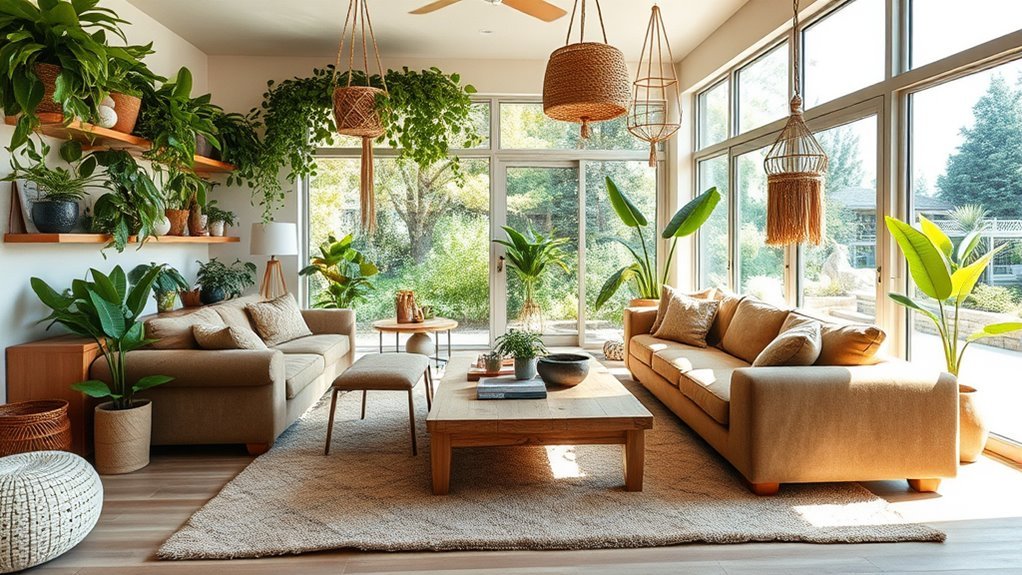
Biophilic design in a living room means shaping the space so it feels connected to nature: daylight, views, plants, natural textures, earthy colors, fresh air, and calming sensory details. Done well, it creates a room that feels grounded and restorative without turning your home into a greenhouse or relying on unsupported wellness claims.
Quick Answer
To create a biophilic living room, maximize natural light, frame outdoor views, use wood, stone, linen, wool, and other natural textures, choose an earthy color palette, add easy-care plants, and include small sensory cues such as flowing water, natural scents, or organic patterns.
Key Takeaways
- Biophilic design works best when it supports daily comfort, not just a “nature-inspired” look.
- Natural light, outdoor views, plants, breathable textures, and earthy colors are the easiest starting points.
- Houseplants can make a room feel calmer and more alive, but they should not be treated as a replacement for ventilation, filtration, or removing pollution sources.
- Choose plants and materials based on your light levels, pets, maintenance habits, and available floor space.
At a Glance
| Time Required | 1 weekend for a simple refresh; 2–6 weeks for lighting, furniture, or window-treatment changes |
| Difficulty | Beginner to intermediate |
| Tools Needed | Tape measure, plant saucers, pruning scissors, soft cloth for dusting leaves, optional grow light, and basic styling supplies |
| Cost | $50–$300 for plants, textiles, and small decor; $500+ for new furniture, lighting, or custom window treatments |
What Is Biophilic Design and Why It Matters for Living Rooms?
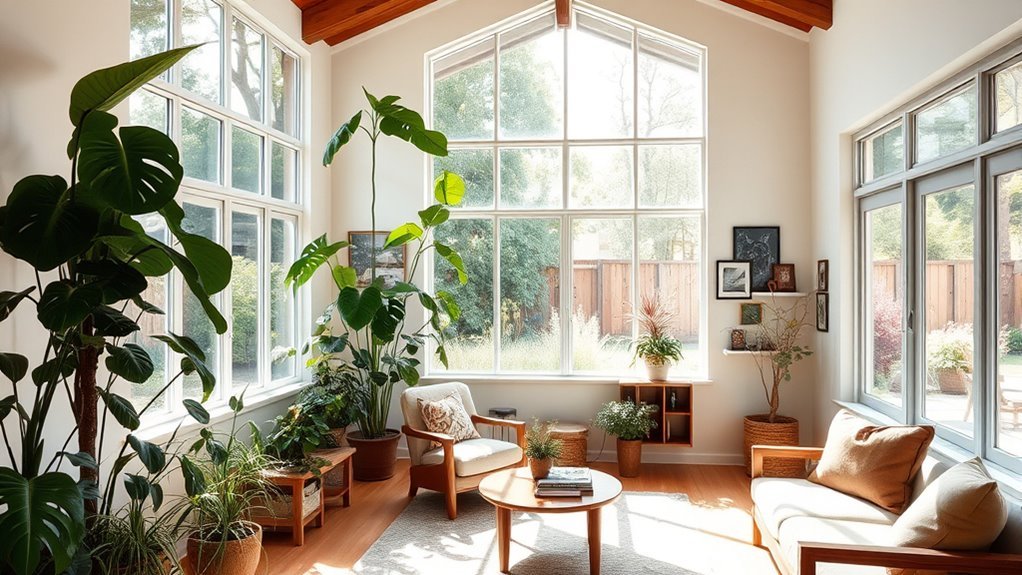
Biophilic design is an approach to interiors that strengthens your connection to the natural world. In a living room, that can mean a view of trees through the window, sunlight moving across the floor, a wood coffee table, stone accents, leafy plants, natural fibers, organic shapes, and colors pulled from soil, moss, sand, sky, and bark.
The idea is broader than adding plants. The 14 Patterns of Biophilic Design include direct nature, natural analogues, and spatial qualities such as refuge, prospect, water, dynamic light, and material connection with nature. For living rooms, the goal is simple: make the room feel more alive, comfortable, and connected to daily natural rhythms.
This matters because the living room is where many people decompress, host, read, watch TV, and spend quiet time. A biophilic living room can help the space feel less flat and more restorative by using natural light, layered textures, views, and sensory variety.
Essential Components of Biophilic Design to Create a Calming Living Room
A calming biophilic living room usually combines five elements: daylight, views, plants, natural materials, and an earthy palette. You do not need every feature at once. Start with the parts your room already has, then layer in what is missing.
Natural Light Integration
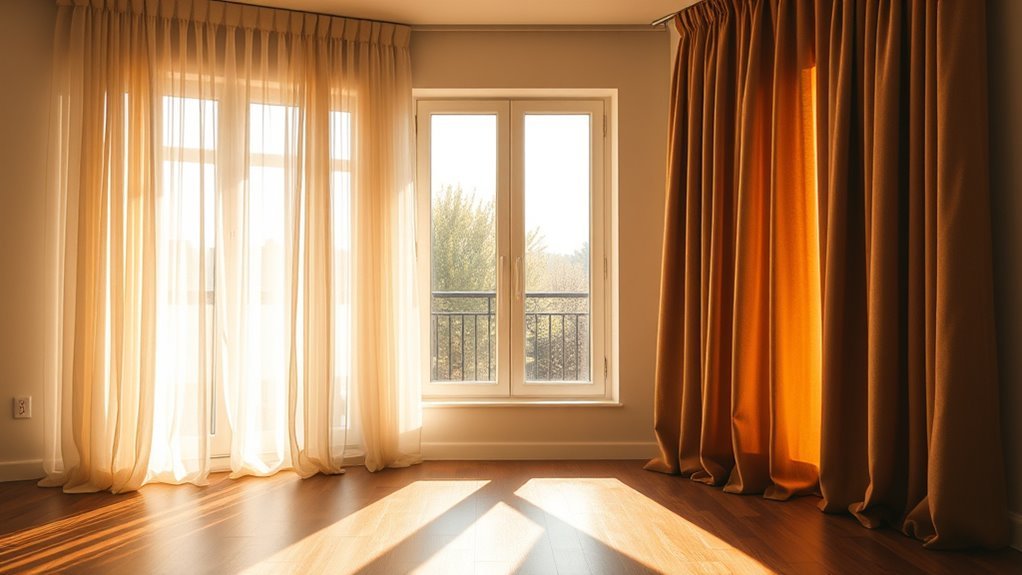
Natural light is one of the strongest biophilic features because it changes throughout the day. It creates movement, shadow, warmth, and a sense of time. If your living room has windows, make them a design feature instead of an afterthought.
| Feature | Benefit | Practical Tip |
|---|---|---|
| Large Windows | Maximizes daylight and outdoor connection | Angle seating toward the best view, not only toward the TV |
| Sheer Curtains | Softens glare while keeping the room bright | Choose linen, cotton, or light-filtering roller shades |
| Reflective Surfaces | Bounces light deeper into the room | Use mirrors, pale walls, glass lamps, or satin-finish ceramics |
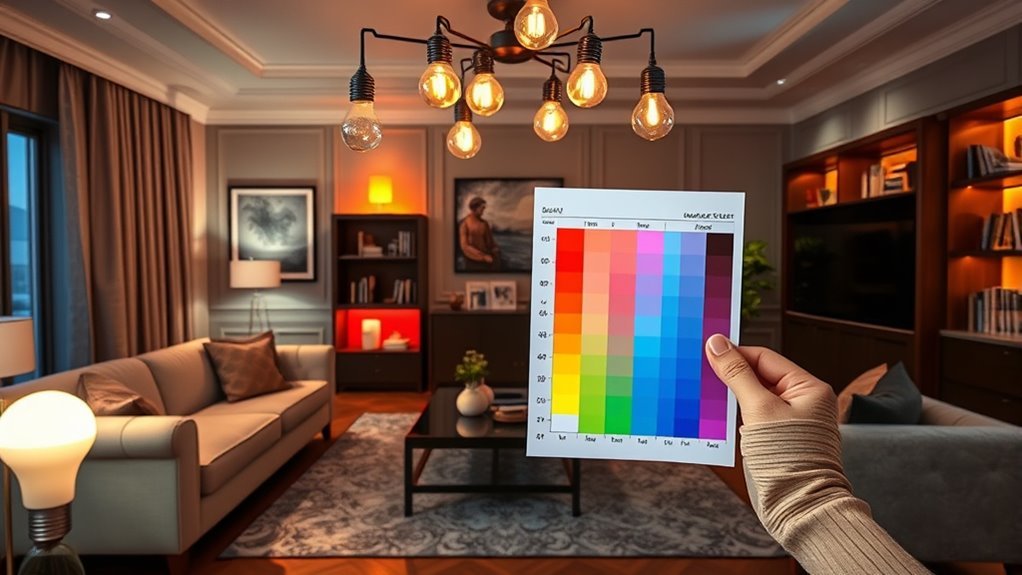
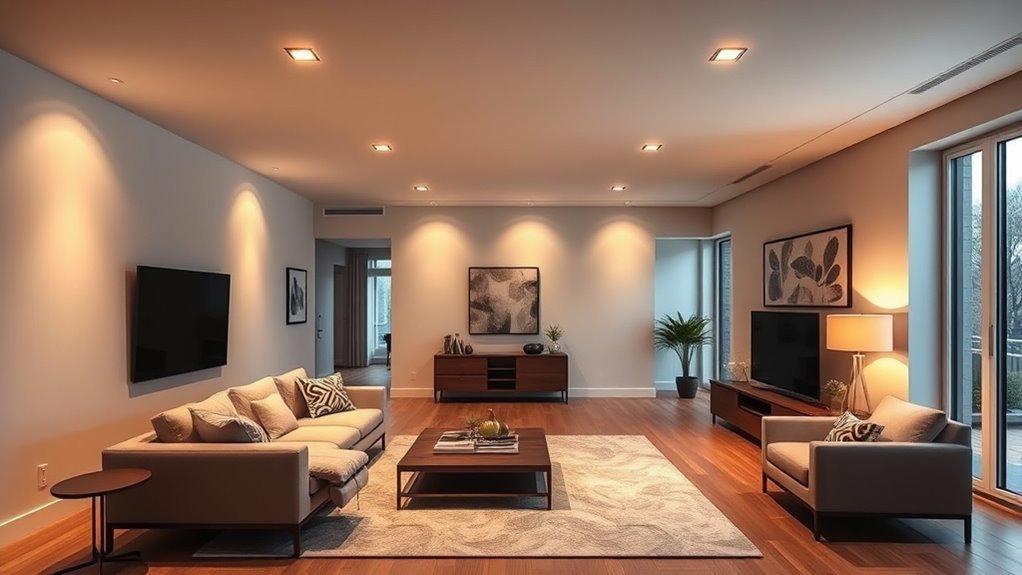
| Layered Lighting | Keeps the room comfortable after sunset | Use warm lamps, dimmers, and shaded bulbs instead of one harsh overhead light |
Earthy Color Palette
An earthy color palette helps the room feel grounded. Think moss green, clay, rust, sand, stone, ivory, warm brown, muted blue, olive, charcoal, and soft terracotta. These shades work especially well because they pair naturally with wood, leather, linen, rattan, stone, and greenery.
- Forest greens add depth and pair beautifully with wood tones.
- Soft blues bring in a sky or water feeling without making the room cold.
- Warm ambers and browns create a cozy, grounded backdrop.
- Stone, sand, and cream keep the room bright and flexible.
Pro Tip: Use the 60-30-10 approach: 60% soft neutral, 30% wood or earthy mid-tone, and 10% deeper nature color such as moss, rust, or slate blue.
How to Create a Biophilic Living Room Step by Step
Before buying anything, study how the room behaves during a normal day. Notice where light enters, where glare hits, which corner feels too dark, what view you want to highlight, and where people naturally sit. Then build your design around those observations.
- Start with light and views. Open up window areas, move bulky furniture away from glass, and use curtains that filter rather than block daylight.
- Choose a natural base palette. Pick two or three grounding colors from nature, such as sand, olive, clay, stone, or warm white.
- Add natural materials. Bring in wood, rattan, bamboo, cork, stone, clay, linen, cotton, wool, or jute.
- Layer plants thoughtfully. Use one tall plant, one medium plant, and one trailing or tabletop plant instead of scattering many small pots everywhere.
- Create a refuge zone. Make at least one seat feel protected with a lamp, side table, soft throw, plant, and view.
- Add subtle sensory cues. Consider a small tabletop fountain, textured rug, natural fragrance from fresh herbs, or organic-patterned textiles.
- Keep maintenance realistic. Choose finishes and plants that match your schedule, light levels, pets, and cleaning habits.
Enhancing Your Living Room With Natural Light
Natural light can transform a living room from flat to vibrant. If you have good windows, make them the visual anchor. Position your main seating so at least one seat has a view outdoors. Avoid blocking lower window glass with heavy storage pieces, and use lower-profile furniture where possible.
If the room is too bright, soften the light instead of shutting it out completely. Sheer curtains, woven shades, solar shades, and light-filtering linen panels can reduce glare while keeping the daylight effect. If the room is too dark, use mirrors opposite or adjacent to windows, choose light-reflective paint, and place lamps at different heights.
After sunset, switch from bright overhead lighting to warmer, lower lamps. A biophilic room should feel connected to daytime brightness and evening softness. Use floor lamps, table lamps, wall sconces, and dimmable bulbs to create a gentle transition.
Best Indoor Plants for Biophilic Design: Benefits and Care Tips
Indoor plants are one of the easiest ways to bring living nature into your living room. They add shape, texture, color, and a sense of care. Use them for visual calm and natural beauty, but keep air-quality claims realistic. According to the U.S. Environmental Protection Agency, the main indoor-air strategies are source control, ventilation, and filtration; houseplants should not be treated as an air-cleaning system.
Note: Plants can make a living room feel fresher and more connected to nature, but they do not replace opening windows when outdoor air is clean, using kitchen/bath exhaust fans, reducing pollutant sources, or choosing an appropriate air filter.
Recommended Products

LIVE INDOOR HOUSEPLANTS: Includes a rotating assortment of 6 popular indoor plants in 2 in. grower pots, ranging in height by variety - approximately 4 - 6 in. tall

HARDY INDOOR PLANT: Sansevieria Laurentii is a drought tolerant, durable, and adaptable houseplant for beginners

FULL SPECTRUM & NATURAL LIGHT: A19 full spectrum grow light appears 4000K white to eyes but has a red/blue light spectrum. Same as natural sun shine, perfect for tomatoes, cucumbers, peppers, leafy greens and herbs at all growth stages.
Best Low-Light Plants
Low-light plants tolerate dimmer rooms, but most still grow better with bright, indirect light. If your living room has very little natural light, consider rotating plants closer to a window, using a discreet grow light, or choosing natural materials and botanical patterns instead of forcing plants to survive in the wrong spot.
- Snake Plant: Sculptural, upright, and very forgiving. NC State Extension notes that it tolerates very low light but needs well-drained soil and careful watering.
- ZZ Plant: Glossy, architectural, and low-maintenance. NC State Extension says it can grow in very low light, even under fluorescent light, but does best with bright indirect sunlight.
- Pothos: A trailing plant that works well on shelves, bookcases, and hanging planters. Keep it out of reach of pets and children because golden pothos is listed by the ASPCA as toxic to dogs and cats.
- Cast Iron Plant: A durable choice for corners with low to medium indirect light.
- Parlor Palm: A softer, pet-friendlier-looking alternative for adding height and movement.
Plant Placement for a Natural Look
The most natural-looking plant styling uses variation. Combine different heights, leaf shapes, and pot textures. A tall plant can soften a blank corner, a trailing plant can loosen a bookcase, and a compact plant can bring life to a coffee table or sideboard.
- Use odd-numbered groupings, such as three plants with different heights.
- Place saucers under pots to protect wood, stone, and rugs.
- Keep leaves dust-free so plants look healthy and receive better light.
- Choose heavier pots for tall plants so they are less likely to tip.
Care Tips for Success
The most common houseplant mistake is overwatering. Many beginner-friendly plants prefer drying slightly between waterings. Check soil with your finger before watering, use pots with drainage holes, and avoid letting plants sit in standing water.
- Match plant to light: Bright indirect light suits more plants than a dark corner.
- Water by soil, not schedule: A plant in low light usually needs less water than the same plant near a bright window.
- Use natural-looking pots: Clay, terracotta, stoneware, baskets, and matte ceramic strengthen the biophilic effect.
- Watch for stress: Yellowing, mushy stems, gnats, or sour-smelling soil often point to too much water.
Warning: Some popular houseplants, including pothos, ZZ plant, and snake plant, can be toxic if chewed by pets or children. Place risky plants out of reach, use stable pots, and confirm plant safety before buying.
Pick Natural Materials for a Cozy Living Room
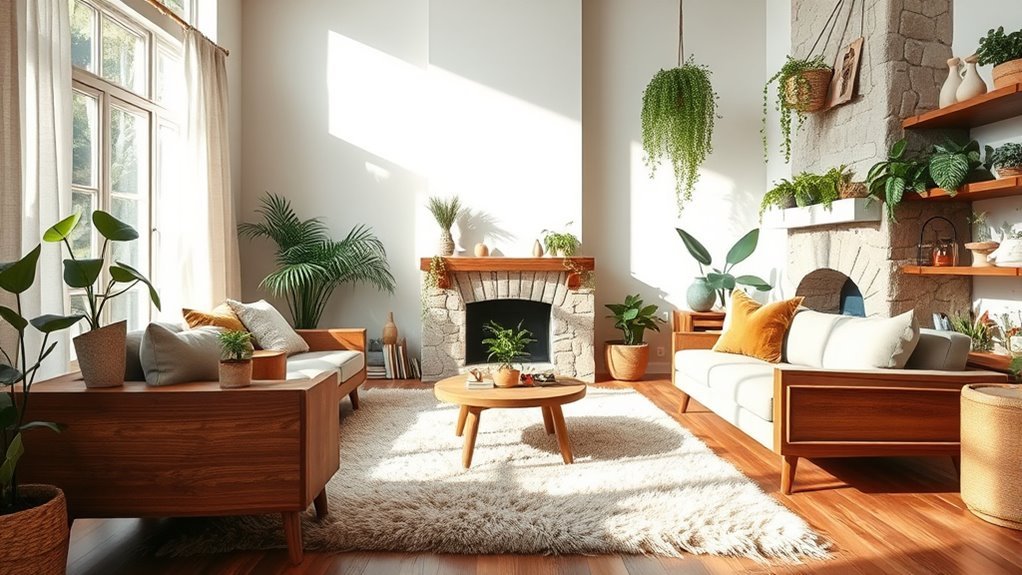
Natural materials are the backbone of a cozy biophilic living room. They add tactile interest and age more gracefully than shiny synthetic finishes. Wood grain, stone veining, woven baskets, linen slubs, wool texture, and clay ceramics all bring small irregularities that make a room feel human and grounded.
Start with one or two large natural surfaces, such as a wood coffee table, jute rug, linen curtains, stone side table, or wool throw. Then repeat smaller touches around the room so the design feels intentional.
- Wood: Use oak, walnut, pine, teak, or reclaimed wood for warmth.
- Stone: Try travertine, slate, marble, river stone, or stoneware accessories.
- Fibers: Choose linen, cotton, wool, hemp, jute, sisal, or rattan.
- Clay and ceramics: Add handmade bowls, planters, lamps, or vases.
- Low-odor finishes: When repainting or refinishing, prioritize low-VOC products and good ventilation.
Natural does not have to mean rustic. A clean-lined walnut console, a pale linen sofa, a stone lamp, and a single sculptural plant can feel modern while still supporting a biophilic design approach.
Creating a Seamless Indoor-Outdoor Connection in Your Living Room
An indoor-outdoor connection is not only for homes with sliding glass doors or garden views. Even an apartment living room can feel more connected to nature when you frame the view, repeat outdoor colors, and make the window area feel open and intentional.
The best biophilic living rooms do not just contain natural objects; they help you notice light, weather, seasons, texture, and the life outside your walls.
- Frame the best view: Even a small tree, balcony planter, or patch of sky can become a focal point.
- Repeat outdoor colors inside: Pull greens, browns, grays, and blues from what you see outside.
- Keep window zones uncluttered: Avoid tall furniture that blocks light and sightlines.
- Add balcony or sill planters: If allowed, outdoor greenery strengthens the connection from both sides of the window.
- Use natural airflow when appropriate: Open windows when weather and outdoor air quality are good.
Biophilic Color and Texture Tips for Your Living Room
Color and texture decide whether your biophilic living room feels calm or chaotic. Choose a palette that feels like one natural landscape rather than mixing every earthy color at once. A coastal palette might use sand, ivory, driftwood, soft blue, and sea-grass green. A forest palette might use mushroom, moss, bark brown, charcoal, and cream. A desert palette might use clay, warm white, stone, rust, and muted sage.
Texture should be layered from soft to structured. Pair a wool rug with a smooth wood table, linen pillows with a leather chair, or a ceramic lamp with a woven shade. The mix creates quiet sensory richness.
- Use matte finishes more than glossy ones.
- Repeat each main texture at least twice so the room feels cohesive.
- Balance rough materials with soft textiles for comfort.
- Use botanical or organic patterns sparingly: pillows, art, curtains, or a rug are enough.
- Leave negative space so plants and materials can breathe visually.
Small-Space and Renter-Friendly Biophilic Living Room Ideas
You do not need built-ins, skylights, or expensive renovations to create a biophilic living room. Small, reversible choices can still change the mood of the space.
- Use a plant stand: Lift greenery off the floor to save space and create height.
- Add peel-and-stick texture carefully: Wood-look, grasscloth-look, or stone-look removable wallpaper can work on one accent wall or cabinet back.
- Hang linen curtains high: This makes windows feel larger and softer.
- Bring in natural baskets: Use them for blankets, toys, remotes, or plant cachepots.
- Choose botanical art: Pressed leaves, landscape prints, or abstract organic forms add nature without maintenance.
- Use a tabletop fountain only if practical: Choose a quiet, easy-clean design and keep cords safely tucked away.
Recommended Products

>10 Pots Large Plant Table: The wooden plant shelf includes 10 shelves, which can hold 11-25 pots of regular size. it can hold a high plant pot plant; Bearing up to 150 pounds, it is recommended to place a heavier flower pot below and a lighter flower pot on the upper layer.
Common Biophilic Design Mistakes to Avoid
Biophilic design should make a living room easier to enjoy, not harder to maintain. Avoid these common mistakes:
- Buying too many plants at once: Start with three healthy plants and learn their care before adding more.
- Ignoring light levels: A dark room needs tolerant plants, grow lights, or non-plant natural elements.
- Blocking windows: Heavy furniture and dark curtains can work against the entire design.
- Using only green decor: Biophilic design is about nature connection, not just the color green.
- Overusing fake “natural” finishes: Plastic greenery and glossy imitation wood can make the room feel less authentic if overdone.
- Forgetting comfort: A beautiful chair still needs to support real sitting, reading, and conversation.
Real-Life Examples of Biophilic Design in Living Rooms
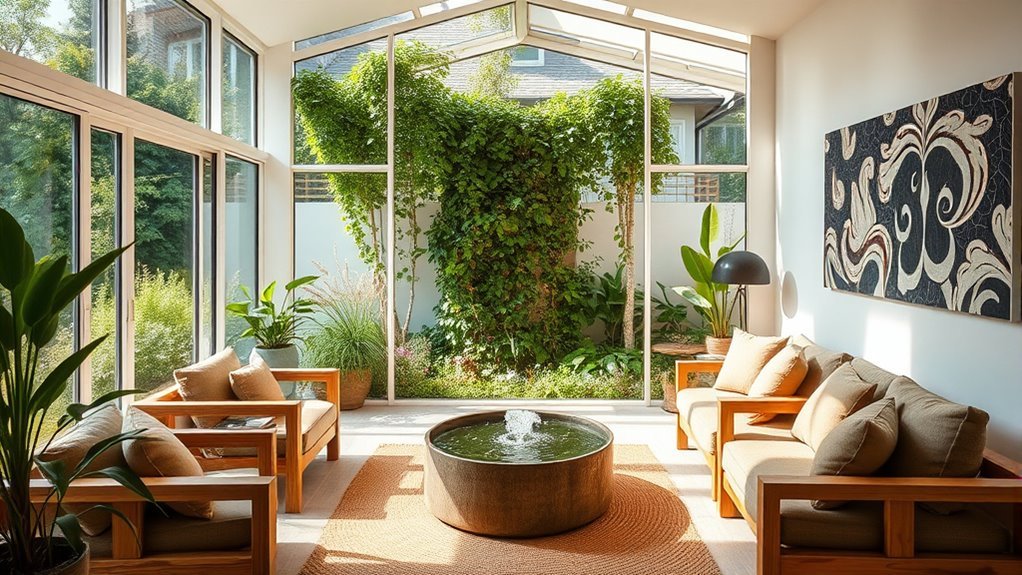
Biophilic design can look different depending on your home style. The best version is the one that feels natural for your light, layout, and lifestyle.
- Modern apartment: A pale sofa, oak coffee table, linen curtains, one tall snake plant, one trailing pothos placed safely out of pet reach, and framed landscape art.
- Cozy family living room: A washable wool-blend rug, storage baskets, durable wood side tables, warm lamps, a rubber plant, and nature-inspired pillows.
- Minimalist living room: Soft white walls, a sculptural olive tree or ZZ plant, stone bowl, wood bench, and one large artwork with organic movement.
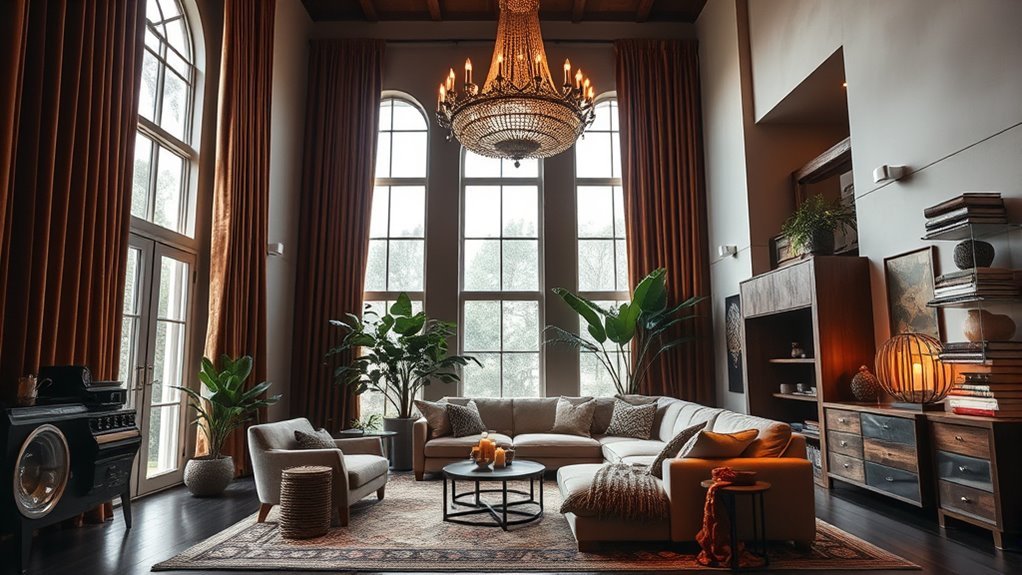
- Bohemian living room: Rattan chairs, layered jute and wool rugs, clay planters, trailing plants, warm earth tones, and textured curtains.
- Low-light living room: Warm wood, stoneware, botanical prints, a grow light tucked into a floor lamp, and tolerant plants placed near the brightest available window.
Frequently Asked Questions
What is biophilic design in a living room?
Biophilic design in a living room means using natural light, plants, views, natural materials, organic shapes, earthy colors, and sensory details to create a stronger connection with nature. The goal is a room that feels calmer, more comfortable, and more alive.
What does biophilic design look like?
It often looks like a bright room with outdoor views, wood furniture, stone or clay accents, linen or wool textiles, indoor plants, organic patterns, soft natural colors, and seating arranged to enjoy light and views. It can be modern, rustic, minimal, or traditional.
Can I create a biophilic living room without many plants?
Yes. Plants help, but they are not required. You can use daylight, nature views, wood, stone, natural textiles, landscape art, botanical patterns, fresh air, water sounds, and earthy colors to create a biophilic effect.
Do indoor plants really purify living room air?
A few houseplants can add beauty and a sense of freshness, but they should not be treated as an air purifier. For indoor air quality, focus first on reducing pollutant sources, ventilating when outdoor air is suitable, using exhaust fans, and choosing proper filtration.
What are the best plants for a low-light biophilic living room?
Snake plant, ZZ plant, pothos, cast iron plant, and parlor palm are common low-light-tolerant choices. Low light does not mean no light, so place plants near the brightest available window or use a grow light if needed.
What are the five senses of biophilic design?
Biophilic design can engage sight through views and plants, touch through natural textures, smell through fresh herbs or clean air, sound through water or birdsong, and even subtle taste through edible herbs near the living area. The key is to keep sensory details gentle, not overwhelming.
Conclusion
Incorporating biophilic design into your living room can transform it into a calmer, more grounded space. Start with what nature already gives you: daylight, views, fresh air when conditions allow, and natural textures. Then layer in plants, earthy colors, wood, stone, soft textiles, and sensory details that match your lifestyle. With thoughtful choices, your living room can feel less like a decorated box and more like a restorative place to breathe, gather, and unwind.
Sources
- Terrapin Bright Green — 14 Patterns of Biophilic Design — supports the biophilic design framework, including light, materials, water, plants, and nature-connected spatial patterns.
- U.S. Environmental Protection Agency — Improving Indoor Air Quality — supports the source control, ventilation, filtration, and houseplant caveats.
- Cummings & Waring — Potted plants do not improve indoor air quality — supports the correction of overstated houseplant air-purifying claims.
- NC State Extension — Dracaena trifasciata — supports snake plant light and watering guidance.
- NC State Extension — Zamioculcas zamiifolia — supports ZZ plant care, light, and watering guidance.
- ASPCA — Golden Pothos — supports the pet-toxicity warning for pothos.



[…] What Is Biophilic Design in Living Rooms? Definition, Examples & Tips […]
[…] What Is Biophilic Design in Living Rooms? Definition, Examples & Tips […]