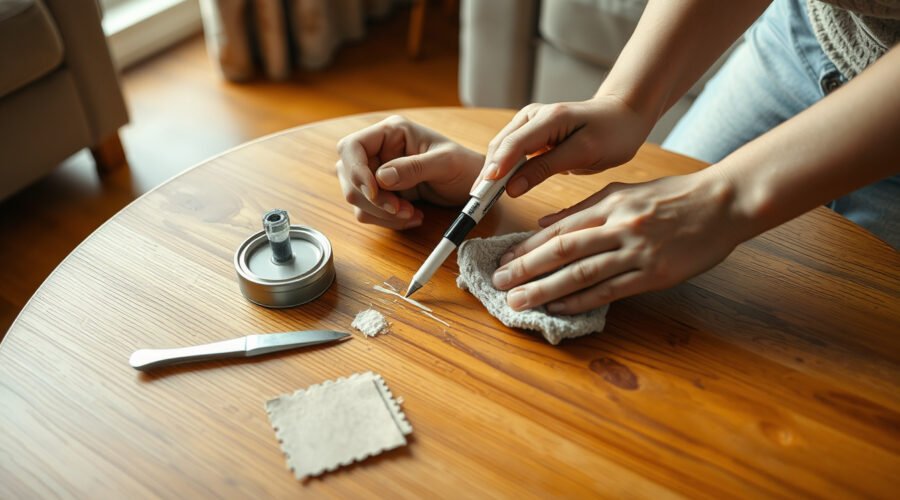
Knowing how to repair scratches on wood furniture starts with matching your fix to the depth of the mark and the type of finish on the piece. Most shallow scuffs sit only in the clear topcoat and disappear with gentle cleaning, paste wax, or a color-matched marker, while deeper grooves need filler and stain. Testing your finish in a hidden spot first prevents accidental clouding or stripping.
Quick Answer
To repair scratches on wood furniture, clean the area and run your fingernail across the mark. If your nail glides smoothly, buff in paste wax, a touch-up marker, or a wax stick. If your nail catches in a groove, fill it with hard wax or stainable wood filler, level, stain, and seal.
At a Glance
| Time Required | 10–30 minutes for light scratches; several hours to overnight for filled, stained, or sealed repairs |
| Difficulty | Easy for surface scratches; moderate for deep scratches that need filler, stain, and clear finish |
| Tools Needed | Microfiber cloth, mild wood-safe cleaner, touch-up marker, wax fill stick, paste wax, plastic putty knife, fine-grit sandpaper (220- to 400-grit), matching stain, clear finish |
| Cost | About $5–$35 for most small DIY repairs, depending on whether you need filler, stain, or finish |
Before You Start: Test the Finish First
Before you rub, fill, sand, or stain, check how delicate the existing coating is so your repair product does not dissolve it. Wood furniture is typically protected either by penetrating finishes (such as tung oil or linseed oil that soak into the pores) or film-forming finishes (such as polyurethane, varnish, lacquer, or shellac), as categorized in the USDA Forest Products Laboratory Wood Handbook. Each coating reacts differently to alcohol, solvents, moisture, and friction.
Warning: Mineral spirits, stains, varnishes, waxes, and many solvent-based products release volatile organic compounds (VOCs) that can irritate eyes and airways. Work in a well-ventilated room, keep solvents away from open flames, follow the product label, and review the EPA’s guidance on VOCs and indoor air quality.
Run these four checks on an inconspicuous spot—such as the inside of a back leg or underside of a table apron—before touching a visible surface:
- Clean a hidden area first. Wipe with a barely damp microfiber cloth and a single drop of mild dish soap if greasy grime is present, then buff dry right away.
- Identify the coating with a cotton-swab test. Dab a hidden spot with mineral spirits first; if a soft coating wipes off, the piece has a paste-wax surface. If nothing happens, dab denatured alcohol on a fresh hidden spot—if the finish turns tacky or dissolves, it is shellac (common on older pieces) and will be ruined by alcohol-based markers. Lacquer softens only with lacquer thinner, while cured polyurethane resists common household solvents.
- Check whether the surface is solid wood or veneer. Veneer is a thin decorative wood sheet—often 1/32 to 1/16 inch thick—glued over plywood, MDF, or a secondary wood core. Look at the underside or back edge of the tabletop: if the end-grain does not continue over the edge or you see a thin seam line, it is veneer and should not be heavily sanded.
- Protect antiques and heirlooms. If the piece is valuable, historic, unstable, or sentimental, consult a specialist through the American Institute for Conservation’s Find a Professional Member directory before attempting a visible repair.
What Type of Scratch Do You Have?
The right repair method depends on whether the damage affects only the surface sheen, cuts through the tinted finish layer, or gouges into the raw wood fibers underneath. Start with the fingernail test by lightly dragging the back of your nail across the mark perpendicular to the line. If your nail glides across smoothly, the scratch is shallow; if it catches, the groove needs filling.
| Scratch Type | Fingernail Test | What It Looks Like | Best First Fix |
|---|---|---|---|
| Surface scuff | Glides smoothly | Dull gray or cloudy white mark in the topcoat; no missing color | Clean, dry, buff with the grain, then apply paste wax |
| Finish-level scratch | Glides or barely catches | Thin pale line or stain loss where the clear coat was scraped | Color-matched touch-up marker or soft wax fill stick |
| Deep gouge | Catches firmly | Torn wood fibers, visible groove, and lighter raw wood showing | Hard wax stick or stainable wood filler, fine sanding, stain, and clear topcoat |
| Veneer scratch | Glides or catches | Scratch on a thin decorative wood layer; core may show if deep | Touch-up marker or wax stick levelled with a plastic card; avoid sanding |
| Dent (not a scratch) | Smooth dip, no sharp edge | Compressed depression where fibers are crushed but not torn | Do not fill immediately; use localized moisture or steam if the finish allows |
Wood species and grain structure also affect how a repair blends. Softer woods like pine, fir, and cedar dent and gouge easily, whereas dense hardwoods like maple, cherry, and walnut show pale micro-scratches in the clear coat more sharply. Open-pored woods like oak and ash have deep grain lines that can trap light-colored filler or excess wax if you do not mask around the scratch first.
What Tools and Materials Will You Need?
You only need the supplies that match the depth of your specific scratch. For most household marks, a microfiber cloth, paste wax, and a multi-tone pack of furniture markers and wax sticks cover the entire job.
- For cleaning and prep: lint-free microfiber cloths, mild liquid dish soap, warm water, cotton swabs, and mineral spirits (only for solvent-safe finishes).
- For light scuffs and finish scratches: clear or tinted paste wax (such as carnauba or microcrystalline wax), compatible silicone-free polish, felt-tip furniture touch-up markers in two or three shades, and soft wax fill sticks.
- For deep gouges: hard wax fill sticks or stainable wood filler, a flexible plastic putty knife or old plastic gift card, low-tack painter’s tape, 220-grit and 320-grit sandpaper for leveling filler, 400-grit sandpaper for smoothing topcoat nibs, and a small cork or rubber sanding block.
- For color and sealing: matching wood stain or gel stain, a fine-point artist brush (for redrawing grain lines), and a compatible clear finish in matte, satin, semi-gloss, or gloss.
- For personal and fire safety: nitrile gloves, eye protection, cross-ventilation, and a safe disposal setup for oil-soaked rags.
If your repair uses oil-based stain, tung oil, linseed oil, or oil-based varnish, never toss crumpled application rags into a household trash can. Drying oils generate heat as they oxidize and can ignite on their own; follow the National Fire Protection Association oily-rag safety guidance by spreading rags flat outdoors in a single layer weighted down to dry completely, or submerging them in water inside a tightly sealed metal container before hazardous-waste disposal.
Note: Skip aerosol polishes that contain silicone oil and avoid using random kitchen oils as a universal cure-all. Silicone contaminates wood pores and causes later stains or topcoats to bead up into craters (“fish-eye”), making future refinishing much harder.
Recommended Products

PRODUCT DETAILS - This 13 piece kit includes 6 Repair Markers, 6 paper wrapped wax sticks and 1 wax stick sharpener packaged in a blister card.

KIT INCLUDES our most powerful wood repair compounds, so you can repair all levels of damage to wood furniture by yourself. Includes 12 touch up fillers, 8 touch up markers, 1 wood putty, 1 beewax, 2 brushes, 2 sandpaper, 1 sponge and 1 scraper

Wood Furniture Repair Kit: Do you have damaged or scratched beautiful furniture in your home? If your furniture is damaged and its life has not expired, you need to quickly repair it at home in furniture markers touch up pen instead of investing in new furniture. The wood furniture repair Kit includ many colors furniture touch up markers pen can help you repair quickly and makes expensive wood furniture look like new
How to Fix Light Surface Scratches Step-by-Step
Light scratches and white scuffs sit strictly in the clear protective coat rather than the stained wood below. Because microscopic edges in the scratched finish scatter room light, filling those tiny ridges with wax restores clarity and makes the line vanish.
- Dust the surface thoroughly. Wipe along the wood grain with a dry microfiber cloth to lift abrasive grit that could cause fresh swirl marks during buffing.
- Wash away surface grime. Dampen a corner of your microfiber cloth with warm water and a tiny drop of mild dish soap, wring it until nearly dry, and wipe the scratch. Immediately go over the area with a clean, damp cloth and buff dry with a towel.
- Buff lightly with the grain. Rub the mark gently in the direction of the wood grain using a clean, dry microfiber cloth. Avoid scrubbing in tight circles on high-gloss or delicate finishes, which can create a dull halo.
- Apply a thin coat of paste wax. Scoop a pea-sized dab of paste wax onto a soft cloth and rub it across the scratch to fill the microscopic surface grooves, then smooth it out in the direction of the grain.
- Let the wax haze and buff clean. Wait 5 to 15 minutes (or the time listed on the tin) until the wax looks slightly dull, then buff briskly with a clean lint-free cloth along the grain.
- Inspect at a 45-degree angle. Check the table or cabinet under natural side light. If the white reflection is gone, stop immediately so you do not build up excess wax.
Pro Tip: Always stop as soon as the scratch blends in under normal room light from standing height. Over-buffing, layering heavy coats of wax, or rubbing repeatedly with solvents often creates a shiny or cloudy patch that draws more attention than the original mark.
Recommended Products

Product Details: 13 pieces furniture repair kit, 6 touch up markers and 6 wax sticks with 1 sharpener.It has both markers and crayon type filler, very easy to fill the scratch, discoloration, hole or separation gaps, Ideal for any kind of wooden furniture.

WIDE RANGE OF USE - It has both markers and crayon type filler, very easy to fill the scratch, discoloration, hole or separation gaps, Ideal for any kind of wooden furniture.
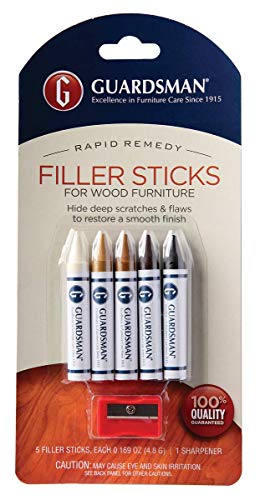
Keep your wood furniture looking new with our furniture repair kit, including 5 color blends of wood filler sticks and 1 sharpener for quick and easy repairs; touch up surface scratches or blemishes and fill in scuffs on your wooden furniture
How to Fix Finish-Level Scratches Without Sanding
When a scratch scrapes away the tinted finish and leaves a pale or tan line, restoring the missing color hides the damage without sanding. Felt-tip furniture touch-up markers and soft wax fill sticks are the safest choices for dining tables, desks, dressers, and veneered cabinets.
- Select a slightly lighter shade first. Exposed wood fibers absorb pigment quickly and dry darker than the cap color. Start with a touch-up marker or wax stick that is half a shade lighter than the surrounding wood; you can always layer a darker tone on top.
- Test on a hidden edge. Stroke the marker or wax stick onto an unseen underside rail to verify both the color and chemical compatibility with the existing finish.
- Mask tight borders if needed. Press low-tack painter’s tape along the edges of the scratch if you are working next to pale inlay, contrasting grain, or open oak pores that could catch stray pigment.
- Apply color strictly inside the scratch. For a narrow scratch with no depth, draw along the line with the corner of a touch-up marker and wipe any overflow off the intact finish within 3 seconds using a soft cloth. For a slightly deeper finish scratch, rub a matching wax fill stick back and forth across the line at a 90-degree angle until the shallow channel packs full.
- Scrape the wax flush. Hold a plastic putty knife or stiff plastic card at a 45-degree angle and glide it lightly along the scratch to shave off excess wax without marring the surrounding topcoat.
- Buff and blend the sheen. Rub gently with the wood grain using a clean microfiber cloth until the repaired line matches the gloss level around it. If the piece gets heavy daily wear, apply a thin coat of paste wax or compatible topcoat over the spot once dry.
Recommended Products

EXACT MATCH MARKERS: Covers scratches, scuffs and damage to wood furniture and flooring

Ideal for quick and easy scratch repair

☑【RICH SET CONTENTS】A set of wood pens includes 21 Piece Furniture Repair kit, 10 touch up Markers and 10 Wax Sticks With 1 Sharpener. Provide a no-fuss solution for wood furniture stain & scratch repair !
Do Household Tricks Like Walnuts, Olive Oil, or Shoe Polish Work?
Popular pantry remedies can temporarily darken a pale scratch, but they do not seal or level the surface and can harm fine finishes. Before reaching for household items, weigh how each one behaves on wood:
- Raw walnut kernel: Rubbing the meat of an unsalted walnut along a shallow scratch releases natural oils that darken pale exposed wood on medium-to-dark finishes. However, nut oils are non-drying oils that can turn rancid over time, attract dust, and pose a risk to anyone with severe tree-nut allergies.
- Olive oil and white vinegar: A 1:1 mix briefly masks micro-scratches because vinegar cleans while olive oil wets the dull finish. Once the moisture evaporates, non-drying olive oil remains tacky in the pores and can leave a sticky film.
- Black tea, coffee, or shoe polish: Concentrated brewed tea or coffee acts as a weak water-based dye on bare wood, while wax shoe polish acts like an improvised tinted wax stick. Both stain raw wood unevenly and can interfere with proper wood stains later.
- Toothpaste or baking soda paste: Avoid rubbing baking soda or non-gel toothpaste on wood furniture. Both act as uncontrolled abrasives that scratch the surrounding clear coat and leave white powder trapped in open wood pores.
What to Do About Deeper Scratches?
Deep scratches and gouges cut through the finish into the wood fibers below, leaving a groove that catches your fingernail. To make a deep gouge disappear, you must fill the void flush with the surrounding surface, recreate the base color and grain lines, and seal the patch with a matching clear topcoat.
- Clean out dust and wax residue. Wipe the groove with a dry microfiber cloth. If furniture polish or wax has been used on the piece, lightly wipe the scratch with a cotton swab dampened with mineral spirits (after passing a hidden-spot test) so the filler can bond. Let it dry for 15 minutes.
- Tape closely around the gouge. Frame the scratch with low-tack painter’s tape about 1/16 inch from the torn edges. This shields the intact factory finish from filler smears and sandpaper scratches.
- Fill the groove slightly proud. For narrow gouges on low-wear surfaces, press in a hard wax fill stick. For wider gouges or tabletops that need durability, press stainable wood filler into the groove with a flexible plastic putty knife, leaving the mound slightly higher than the surface to allow for shrinkage as it dries.
- Allow full drying time. Wait the full time stated on the label—typically 2 to 8 hours depending on depth and humidity—before sanding. Sanding damp filler pulls it out of the groove.
- Level the patch with fine sandpaper. Wrap 220-grit sandpaper around a small flat block and sand strictly in the direction of the wood grain until the filler sits nearly flush, then peel off the painter’s tape and finish leveling with 320-grit paper without cutting through the surrounding clear coat.
- Build color and paint the grain. Wipe away sanding dust with a tack cloth or dry microfiber towel. Apply a thin coat of matching gel stain or base touch-up marker over the filler. Once dry, use a fine-tip dark furniture marker or a pointed artist brush dipped in darker stain to draw 2 or 3 thin, broken grain lines across the patch connecting the natural grain on either side.
- Seal with a matching clear finish. Dab on two thin coats of compatible clear finish (matte, satin, semi-gloss, or gloss) using a small artist brush, waiting for the first coat to dry and lightly smoothing any dust nibs with 400-grit paper before applying the second.
How to Fix a Wood Dent vs. a Deep Scratch
If an impact pressed a smooth valley into the wood without tearing the fibers or scraping off the color, you have a dent rather than a scratch. Instead of packing a dent with wood filler, you can often swell the compressed wood fibers back to their original height using localized moisture and heat—provided the piece is solid wood with an oil or durable polyurethane finish.
Place a single drop of water in the dent, lay a damp folded cotton cloth over the spot, and press a clothes iron set to medium-high heat onto the cloth in brief 5- to 10-second circles until the fabric dries and the wood swells level. Never use steam or a hot iron on shellac, lacquer, wax finishes, or thin veneer, as heat and moisture will turn shellac or lacquer milky white (“blushing”) and loosen veneer glue.
Finishing Touches: Sealing Your Repairs
Sealing locks in your color touch-up and protects filled wood from water rings, grease, and everyday cleaning. Matching the gloss level of the surrounding surface is just as important as matching the stain color, because an overly shiny patch on a satin tabletop catches the eye from across the room.
The best scratch repair is not the one with the most filler or finish. It is the one that uses the least aggressive method and disappears under normal room light.
Follow these five rules for an invisible topcoat blend:
- Match the exact sheen level. Check the furniture under angled light and choose matte, satin, semi-gloss, or gloss accordingly. Satin is the most common sheen on modern indoor wood furniture.
- Apply two or three whisper-thin coats. Dab or brush thin layers rather than flooding the groove with one heavy puddle that dries with raised edges.
- Feather the edges slightly outward. Extend the second thin coat a hair beyond the filled line, then wipe the outer edge softly so there is no hard ridge.
- Respect recoat and cure windows. Water-based clear finishes often dry to the touch in 1 to 2 hours, while oil-based varnishes need 8 to 24 hours between coats.
- Allow full curing before heavy use. A repaired tabletop may feel dry overnight, but most clear finishes take 7 to 30 days to cure to full hardness before they can handle hot coffee mugs, laptops, or wet wiping.
When Not to DIY the Repair
Some wood surfaces and historical finishes lose both beauty and monetary value if sanded, stripped, or spotted with hardware-store markers. Stop immediately and consult a professional furniture restorer or conservator if any of these conditions apply:
- The piece is a genuine antique, family heirloom, signed designer item, or high-value collectible.
- Your hidden-spot test makes the coating sticky, cloudy, or transfers original pigment onto your swab.
- The damaged area crosses thin veneer, marquetry, mother-of-pearl or brass inlay, French polish (shellac), Asian lacquer, gilding, or hand-painted decoration.
- The scratch is accompanied by structural issues such as loose mortise-and-tenon joints, blistering or lifting veneer, deep splits, or black water stains that have penetrated into the oak or walnut tannin.
For historic or valuable pieces, preserving the original patina matters far more than making a surface mark vanish completely. The Canadian Conservation Institute’s guide on basic care for furniture and wooden objects and the National Park Service’s curatorial care guidance for wooden objects explain why museum conservators avoid stripping original coatings and rely on reversible microcrystalline waxes instead.
Troubleshooting Common Scratch Repair Problems
Even careful DIY touch-ups can dry slightly too dark, too glossy, or slightly sunken once the solvent evaporates. Most of these issues can be corrected quickly without sanding down the surrounding finish if you address the specific cause listed below.
| Problem | Likely Cause | How to Fix It |
|---|---|---|
| Repair looks too dark | Exposed end-grain soaked up too much marker or stain | Wipe immediately with a clean cloth (or a tiny dab of tested mineral spirits for oil stain). If dry, layer a lighter wax stick over the line to mute the dark tone. |
| Repaired spot looks too shiny | Clear topcoat sheen is glossier than the table’s satin finish | Let the topcoat cure completely, then buff very lightly along the grain with paste wax on a soft cloth or apply a thin coat of satin/matte finish. |
| Filler sank below the surface | Water- or solvent-based wood filler shrank as it dried | Apply a second thin skim coat of filler slightly proud of the surface, let it dry fully, sand flush with 320-grit paper, and touch up the color. |
| Filled patch looks like a solid blob | Filler is a single flat color that interrupts natural wood grain | Use a fine-point furniture marker one shade darker than the base color to draw thin, broken grain lines across the patch to connect surrounding pores. |
| Area turned cloudy or hazy | Trapped moisture, alcohol reaction on shellac, or heavy polish buildup | Stop applying liquids immediately. Let the spot dry for 24 hours, then test gentle dry buffing in one corner; consult a pro if shellac or lacquer blushed. |
| Scratch still looks white | Uncolored paste wax dried in deep pores or clear coat is still fractured | Clean out chalky wax residue with a dry toothpick or soft brush, then apply a color-matched touch-up marker or tinted wax stick inside the line. |
Best Practices for Maintaining Your Wood Furniture
Preventing abrasion and finish breakdown is much easier than repairing gouges later. Routine dusting, physical barriers under everyday items, and stable indoor humidity keep wood finishes resilient and prevent microscopic cracks from turning into deep scratches.
Regular Cleaning Schedule
Dust wood furniture once a week using a clean, dry or barely dampened microfiber cloth, always wiping in the direction of the grain. Household dust contains tiny mineral particles that act like fine sandpaper whenever books, plates, or laptops slide across a tabletop. When removing sticky fingerprints, use a cloth wrung out nearly dry in warm water with a drop of mild dish soap, then dry the surface immediately with a second towel.
- Never soak wood surfaces or leave damp cloths sitting on a finished tabletop.
- Mist water or cleaner lightly onto your cloth rather than spraying directly onto the furniture.
- Clean carved grooves with a soft natural-bristle brush or cotton swab instead of flooding recesses with liquid.
- Apply paste wax sparingly—at most once a year on high-wear surfaces—and avoid silicone-based spray polishes.
Protective Measures Implemented
Place felt pads underneath lamp bases, decorative trays, ceramic planters, and laptop stands, and always lift items rather than dragging them across the wood. Use cork-backed coasters and thick placemats at dining tables to block both moisture rings and heat marks from serving dishes, and keep pets’ claws trimmed to prevent gouges on chair rungs and low tabletops.
Position wood furniture away from direct sunlight, radiators, fireplaces, and forced-air heating vents. Direct ultraviolet light bleaches dark woods like walnut and darkens pale woods while making clear finishes brittle. Maintaining indoor relative humidity between 40% and 60% year-round prevents solid wood from swelling and shrinking excessively, which protects both the glue joints and the surface finish.
Key Takeaways
- Use the fingernail test first: If your nail glides over the mark, stick to cleaning, buffing, paste wax, or a touch-up marker rather than filler.
- Test finishes on a hidden spot: Alcohol dissolves shellac and lacquer thinner dissolves lacquer, so always swab an unseen leg or rail before applying repair products.
- Start half a shade lighter: Exposed wood fibers soak up dye and stain darker than expected; layer lighter color first and draw thin grain lines so filled spots blend in.
- Never sand thin veneer or antiques: Veneer is often only 1/32 to 1/16 inch thick and sands through quickly; leave heirloom, veneered, or unstable finishes to a professional conservator.
- Dispose of oily rags safely: Dry oil- or stain-soaked cloths flat outdoors or seal them in water inside a metal can to prevent spontaneous combustion.
Frequently Asked Questions
How do you get scratches out of wooden furniture without sanding?
You can remove shallow scratches without sanding by cleaning the area, buffing in paste wax, or coloring the line with a furniture touch-up marker or soft wax fill stick. Scrape any excess wax flush using the edge of a plastic card and buff along the wood grain with a microfiber cloth.
How do you make scratches on wood less noticeable?
Make scratches less noticeable by cleaning out white dust and polish residue, applying a touch-up marker half a shade lighter than the finish, and filling any shallow groove with a wax stick so light no longer catches the sharp edge. Finish by buffing along the grain to match the surrounding sheen.
Can I use mineral spirits on scratched wood furniture?
Yes, you can use a small amount of mineral spirits on cured polyurethane or varnish to remove old wax and oily grime before filling a scratch, provided you test a hidden spot first. Work in a ventilated room, wear nitrile gloves, and stop immediately if the finish softens or dulls.
Should I use wood filler or a wax stick for deep scratches?
Use a wax fill stick for narrow scratches, small gouges, and veneered surfaces where you want a quick no-sand cosmetic blend. Use stainable wood filler for wider gouges or missing wood fibers on solid wood furniture that you plan to sand level, stain, and seal with a clear topcoat.
Can scratches be removed from veneer furniture?
Light scratches on veneer furniture can be hidden with a color-matched touch-up marker or soft wax stick leveled with a plastic card. Avoid sanding veneer because the decorative wood layer is typically only 1/32 to 1/16 inch thick and is easy to sand right through to the core.
Do walnuts or olive oil and vinegar really fix scratches on wood furniture?
Walnuts and olive-oil mixtures only darken pale scratches temporarily by wetting the exposed wood fibers with non-drying food oil. Because culinary oils never cure into a protective film, they can turn rancid, attract dust, or interfere with future stains, making paste wax or touch-up markers a safer choice.
How do you tell if a mark on wood furniture is a scratch or a dent?
A scratch cuts or scrapes away the finish or wood fibers and leaves a rough edge or pale line, whereas a dent is a smooth depression where the wood fibers were crushed inward without breaking the surface. Dents on solid wood can often be lifted with steam rather than wood filler.
Conclusion
Restoring scratched wood furniture works best when you start with the fingernail test and choose the mildest repair that blends the mark. Clean the surface gently, test your product on an unseen spot, and rely on paste wax, touch-up markers, or wax sticks before reaching for wood filler and sandpaper. Grab a microfiber cloth, check your scratch under natural side light, and test your finish on a hidden leg to start your repair safely.
Sources
- USDA Forest Service — Forest Products Laboratory: Wood Handbook (Wood as an Engineering Material): Supports penetrating versus film-forming wood finish classifications and wood property guidance.
- U.S. Environmental Protection Agency: Volatile Organic Compounds’ Impact on Indoor Air Quality: Supports solvent, finish, ventilation, and label-precaution safety guidance.
- American Institute for Conservation: Find a Professional Member: Supports the recommendation to seek qualified conservation help for antiques, heirlooms, veneer, and valuable furniture.
- National Fire Protection Association: Safety with Oily Rags: Supports spontaneous combustion prevention and safe drying or disposal of oil- and stain-soaked cloths.
- Canadian Conservation Institute: Basic Care — Furniture and Objects Made of Wood: Supports careful cleaning, handling, microcrystalline wax use, and preservation-minded wood furniture care.
- National Park Service: Curatorial Care of Wooden Objects: Supports environmental, light, relative humidity, and preventive-care guidance for wooden objects.