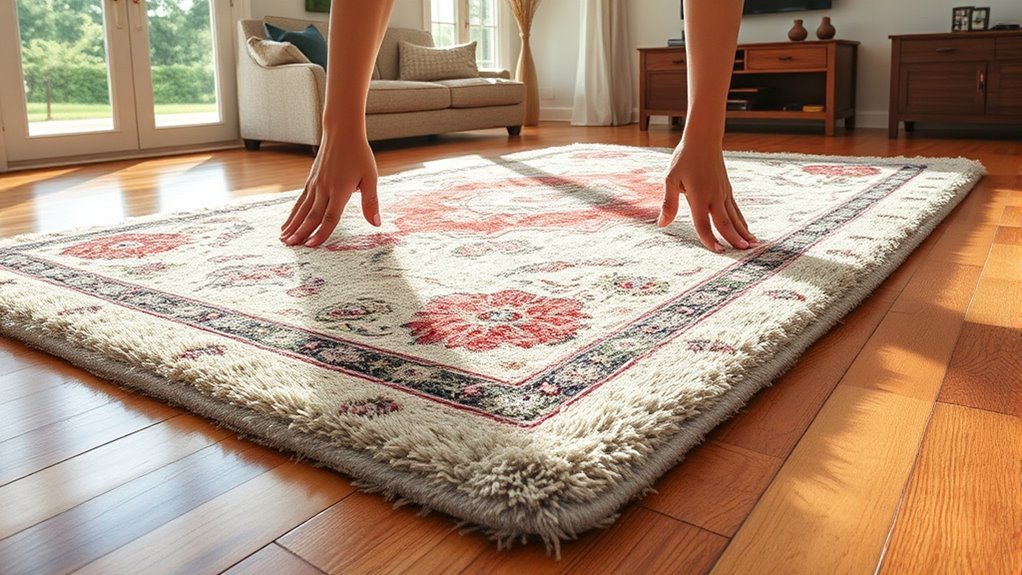
If you keep asking why do rugs slide on hardwood floors in your home, the culprit is low mechanical friction between two slick surfaces. Sealed wood planks offer almost nothing for a lightweight cotton, synthetic, or flatweave rug backing to grab onto. Every footstep, vacuum pass, or pet sprint pushes the rug across the floor until you add a breathable, high-friction barrier underneath.
Quick Answer
Rugs slide on hardwood floors because sealed wood finishes and lightweight rug backings lack friction, especially when fine dust collects underneath. The safest long-term fix is a breathable felt-and-natural-rubber rug pad trimmed 1 to 2 inches smaller than your rug, with the rubber side facing down. For small runners or curling corners, use removable hardwood-safe grippers.
Last checked: October 14, 2026. Dates and figures were verified against official sources.
At a Glance
| Time Required | 10–20 minutes for a rug pad, furniture anchoring, or grippers; 24 hours if curing DIY silicone caulk |
| Difficulty | Easy beginner DIY |
| Tools Needed | Tape measure, heavy-duty household shears or utility knife, vacuum (bare-floor mode), dry microfiber mop, rug pad or grippers |
| Cost | $5–$15 for corner grippers or hardwood-safe tape; $20–$100+ for a dense felt-and-natural-rubber rug pad (based on rug size) |
Why Do Rugs Slide on Hardwood Floors?
Rugs slide on hardwood floors because polyurethane, aluminum oxide, and oil-wax finishes create a hard, low-friction surface with minimal microscopic texture. When you step onto a rug at an angle, your foot pushes forward and downward. If that horizontal force exceeds the friction between the rug backing and the wood finish, the rug skids.
Mass and backing rigidity determine how easily a rug shifts. Heavy hand-knotted wool rugs resist movement better than thin cotton runners, washable rugs, polypropylene flatweaves, or stiff jute weaves. Because lightweight rugs cannot press down firmly on the planks, they ripple and creep a few inches at a time under daily foot traffic.
Fine household dust, sand, and pet dander make slipping worse by acting like microscopic ball bearings under the backing. Seasonal humidity shifts also change how wood and textile fibers interact. Maintaining indoor relative humidity between 35% and 55%—as recommended in the Shaw Floors hardwood care guidelines—keeps planks stable so gapping and board edges do not catch or curl your rug.
Warning: A loose rug is a serious fall hazard, especially near stairs and doorways. Mayo Clinic recommends securing loose rugs with double-faced tape, tacks, or slip-resistant backing, or removing throw rugs entirely when they cannot be anchored safely.
Common Causes of Rug Movement
Identifying how your rug moves tells you which fix will actually hold. A runner that skates down a hallway needs full-surface traction, whereas a large living room rug with lifting corners only needs perimeter flattening and edge grip.
- Slick topcoat finishes: Factory-applied aluminum oxide and site-applied polyurethane sealers leave wood smooth and non-porous, reducing surface traction compared with carpet or textured tile.
- Lightweight or abrasive backings: Washable polyester rugs, thin kilims, and cotton mats lack downward weight. Meanwhile, stiff natural fibers like bare jute slide easily and can scuff wood coatings, according to Bruce Hardwood Flooring maintenance recommendations.
- Missing or degraded rug pad: Placing a rug bare on wood leaves nothing to absorb horizontal shear forces. Old pads that have oxidized, flattened, or turned crumbly also lose their grip.
- Fine grit and dust buildup: Tracked-in silt and pet hair break the contact seal between a rubber pad and the floor while grinding into the clear coat like fine sandpaper.
- High-velocity pivot zones: Hallways, kitchen sink areas, entryways, and sofa step-off points experience repeated lateral push-off forces from shoes, kids, and pets.
- Upward corner memory: Rugs shipped in tight rolls retain tension along their bound edges. Lifted corners catch shoes, pet paws, and vacuum heads, yanking the whole rug out of alignment.
For adults 65 and older, the CDC reports that falls are the leading cause of injury, with more than 14 million older adults (1 in 4) reporting a fall each year. Securing loose rugs is one of the fastest home-safety upgrades you can make.
Top Solutions to Prevent Rug Slippage
The best way to stop a rug from sliding on hardwood floors is to add friction between the rug and the planks without trapping moisture or leaching chemicals into the finish. Below are the seven most reliable methods, ranked from the safest permanent setup to short-term fixes.
Recommended Products

Upgraded Cushioning and Grip: Unlike other pure felt pads, our pad has a durable natural rubber backing to increase gripping and durability. 1/4" thick felt forming a dense, cushioned surface, aims to make your rugs cozier and provide extra comfort underfoot, even the thinnest rugs can feel soft and comfortable. Dense fibers surface securely holds rugs in place without bunching, while offering noise reduction and insulation

Unique Design: Do you still worry about the traditional glue rug tape harm your floor ? This gripper uses VACUUM TECH design which grips hard smooth floors firmly and easily, this design can protect your floor perfectly as no glue used on floor. But it does not work for rug on carpeted floor. It does not work for rubber backed rug ,jute rug or fluff backing rug.
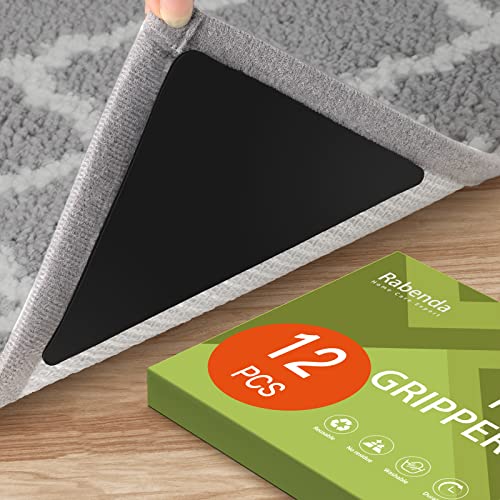
Advantaged Triangle Design: The Triangle Design grippers for area rugs and hardwood floors will maximum increase the contact surface. The strong adhesion will help stick firmly and keep your area rugs in place. Moreover, the rug stickers for wood floors will prevent the rug corners and edges curling and always keep your rugs steady and safe
1. Use a Floor-Safe Non-Slip Rug Pad
A dual-surface rug pad made from needle-punched recycled felt and 100% natural rubber is the gold standard for area rugs on hardwood. Unlike synthetic adhesives that stick to wood, natural rubber grips through high surface friction and elasticity without bonding to polyurethane or aluminum oxide coatings.
Choose a pad density of 28 to 40 ounces per square yard and a thickness of 1/8 inch to 1/4 inch. Trim the pad so it sits 1 to 2 inches inside the rug perimeter on all four sides. This bevels the rug edge down to the floor smoothly, hiding the pad and eliminating a raised tripping lip.
Pro Tip: Always place a dual-surface pad with the textured natural rubber side facing down on the hardwood and the rough felt side facing up against the rug backing. Putting the felt side down turns the rug into a toboggan on wood floors.
2. Anchor the Rug Perimeter With Heavy Furniture
Combining a non-slip rug pad with furniture weight stops large and medium rugs from creeping in open-concept living rooms. Place the front legs of your sofa, sectional, or accent chairs at least 6 to 8 inches onto the rug border, or center a heavy coffee table or dining table over the middle.
Always stick non-staining felt protector pads under furniture feet that rest on the wood floor outside the rug. If only the front sofa legs sit on a thick rug and pad, add 1/4-inch felt risers under the back legs to keep the frame level.
3. Try Corner Rug Grippers for Curled Edges
V-shaped or triangular corner grippers solve curling edges on runners, kitchen mats, and flatweave rugs that already stay mostly centered. Look for dual-sided grippers that use a permanent fabric adhesive on the top side (which sticks to the rug backing) and a washable, non-adhesive micro-suction or silicone grip face on the bottom side (which rests on the wood).
Before sticking grippers on, flatten stubborn curled corners so they do not pull the gripper up. Reverse-roll the corner tightly for 24 hours, or warm the backing gently with a hairdryer on low held 6 inches away, then weight it down overnight with heavy books.
4. Use Hardwood-Safe Rug Tape for Small Rugs and Runners
Double-sided rug tape works well for narrow hallway runners and entry mats where foot traffic pushes in one direction. Only buy tape explicitly labeled safe for finished hardwood floors, which uses low-tack acrylic or silicone adhesive rather than aggressive solvent-based carpet glue.
Apply short strips along the four corners and every 24 to 36 inches along the outer border instead of taping a solid grid. Peel up one corner every 2 to 3 months to confirm the adhesive has not softened from floor heat or sunlight.
5. Use 100% Silicone Caulk as a Budget DIY Backing
If you have an inexpensive cotton bath mat, washable throw rug, or Rag rug that slides, you can create a custom non-slip backing with a tube of clear 100% silicone caulk. Flip the clean rug face-down on kraft paper and squeeze thin beads in a crosshatch or wave pattern across the backing, concentrating near the edges.
Smooth the beads slightly with a putty knife or gloved finger so they bond into the fabric weave. Let the silicone cure in a ventilated room for a full 24 hours until completely dry and rubbery before placing the rug on your hardwood floor. Never apply wet caulk directly to wood, and skip this DIY method on antique, wool, or hand-knotted rugs.
6. Use Hook-and-Loop (Velcro) Strips Only for Short-Term Setups
Adhesive hook-and-loop strips lock rugs down firmly for short-term event staging or play mats, and the National Institute on Aging home fall-prevention guide notes that hardware-store no-slip strips help prevent throw rugs from skidding. However, the floor-side pressure-sensitive adhesive on standard Velcro strips can bond too tightly to polyurethane over time and lift the clear coat when removed.
If you use hook-and-loop fasteners, choose removable low-residue strips rated for finished wood, test one strip inside a closet for 72 hours first, and warm the strip slightly with a hairdryer when peeling it off.
7. Avoid Cheap PVC Waffle Pads and Plastic Shelf Liner
Never put dollar-store rubberized shelf liner, vinyl mesh (“waffle”) pads, or synthetic latex pads under a rug on hardwood. Manufacturers soften polyvinyl chloride (PVC) with chemical additives called plasticizers (often phthalates). Under foot pressure and room warmth, these plasticizers migrate out of the pad and react with polyurethane, oil, and wax floor finishes.
This chemical reaction—known in the flooring trade as plasticizer migration—etches a permanent yellow, amber, or cloudy grid pattern into the wood finish that cannot be scrubbed off and often requires sanding and refinishing. Cheap vinyl and closed-cell foam pads also block airflow, trapping humidity that causes solid wood planks to cup upward along their seams.
How to Choose the Right Products for Your Rugs
Match your anti-slip product to your rug’s size, weave thickness, door swing clearance, and room traffic. Using a plush pad under a low hallway door will jam the door and bunch the rug, while using tiny corner grippers alone under an 8-by-10-foot living room rug will fail to stop center shifting.
| Product Type | Ideal Thickness & Spec | Best For | Hardwood Floor Safety & Lifespan |
|---|---|---|---|
| Felt + natural rubber pad | 1/4 in. thick (28–40 oz felt) | 5×8 ft and larger area rugs, living rooms, dining rooms, abrasive jute backings | Safest all-around choice; breathable and plasticizer-free. Lasts 5–10 years. |
| Thin natural rubber pad | 1/16 to 1/8 in. perforated rubber | Hallway runners, entryways with low door clearance, thin flatweave or washable rugs | Maximum low-profile grip; verify label states 100% natural rubber, not PVC/vinyl blend. Lasts 3–5 years. |
| 100% needle-punched felt pad | 1/4 to 3/8 in. dense felt (no rubber) | Oversized rugs (9×12 ft+) already anchored by heavy sofas or beds | Zero chemical reactivity and high breathability, but offers cushioning rather than active anti-slip grip. |
| Micro-suction corner grippers | Under 1/16 in. (4–8 corner pieces) | Curling corners, small kitchen or bath mats, pairing with a thin pad | Choose grippers with washable silicone/micro-suction on the floor side instead of permanent floor glue. |
| Hardwood-safe rug tape | Film thickness (1.5–2 in. wide roll) | Small runners and short-term anchoring in high-traffic paths | Must be rated for finished wood; inspect every 2–3 months and replace before adhesive hardens. |
| Cured 100% silicone caulk | 1/16 in. cured beads on rug back | Inexpensive cotton scatter rugs and machine-washable mats | Cure a full 24 hours off the floor before use; do not use on fine wool or antique rugs. |
Before installing a pad or adhesive across a full room, perform a quick 72-hour spot test in a closet or corner. Place a 4-inch swatch of the product on the hardwood under a heavy book for three days, then lift it and check the finish under angled light for tackiness, dulling, or color change.
Note: Never lay a rug or pad on freshly refinished hardwood until the topcoat has fully cured. Bona floor finishing curing guidance specifies waiting a full 7 days before placing area rugs over waterborne finishes, while traditional oil-based polyurethane finishes typically require 30 days to cure completely.
Recommended Products

Helps Prevent Rug Slippage: Designed with a unique high-density cross-bar texture and silicone backing, this carpet underlay provides a powerful anti-slip grip. Keeps area rugs securely in place, preventing sliding, bunching, and wrinkling.
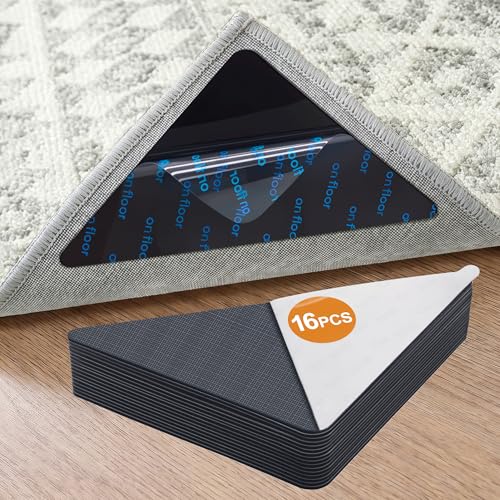
Advantaged Triangle and Innovative Grid Design: The Triangle Design grippers for area rugs and hardwood floors will maximum increase the contact surface. The strong adhesion will help stick firmly and keep your area rugs in place. Unlike traditional full-glue carpets, our grid adhesive provides strong grip while allowing airflow, ensuring no residue is left on your floors

Helps Prevent Rug Slippage: Designed with a unique high-density cross-bar texture and silicone backing, this carpet underlay provides a powerful anti-slip grip. Keeps area rugs securely in place, preventing sliding, bunching, and wrinkling.
Simple Ways to Keep Your Rugs Secure on Hardwood Floors
Installing a non-slip rug pad takes about 15 minutes and requires no special hardware. Follow these seven steps in order so trapped dust or oversized padding does not undo your work.
- Clear the area and vacuum the hardwood. Roll up the rug and vacuum the floor using a bare-floor brush setting (with the rotating beater bar turned off) to pick up sand and pet hair.
- Dry-mop or wipe with a neutral-pH wood cleaner. Wipe away fine dust and cooking oil film with a slightly damp microfiber pad and a manufacturer-approved hardwood cleaner, then let the planks dry completely for 15 minutes.
- Clean and flatten the rug underside. Vacuum the back of the rug on low suction, and reverse-roll any curled corners so the edges relax flat before installation.
- Measure the exact rug footprint. Measure the length and width of the rug textile itself, excluding any loose fringe on the ends.
- Trim the rug pad 1 to 2 inches smaller on all sides. Subtract 2 to 4 inches from both the length and width (for example, trim an 8×10 ft pad down to 7 ft 8 in. × 9 ft 8 in.) and cut straight lines with heavy-duty household shears.
- Position the pad with the rubber side facing down. Lay the natural rubber grid flat against the hardwood and the felt side facing up. Center the rug over the pad so a uniform 1- to 2-inch border of rug overhangs every edge.
- Smooth from the center out and test foot traffic. Walk across the rug from multiple angles and open any nearby doors to verify clearance. If a thin corner still lifts, press a removable micro-suction gripper onto that corner.
Recommended Products
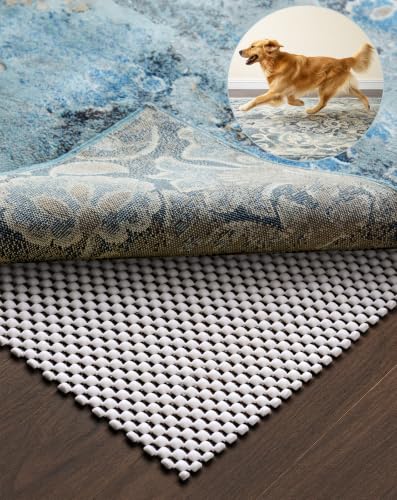
Non-slip Protection: Our pad's signature grip keeps rugs securely in place, preventing bunching and sliding during daily use. It also protects your floors from wear and tear, including damage from high heels, children at play, and more.

THE ORIGINAL EXTRA STRONG GRIPPER: our trusted Gorilla Grip nonadhesive rug pads offer a unique, dual sided grip that firmly holds onto both the rug pad and your hard floor to help prevent rug movement

Grip Design: the original Gorilla Grip grippers for hard floors help to keep your rugs in place and prevent corner and side curling; easy to apply to the underside of carpet corners and floors to help rugs stay in place and flat against the floor
What to Do If Your Rug Still Slides
If your rug continues shifting after you add a pad or grippers, one of six mechanical issues is usually at fault. Match the symptom below to the direct fix:
- The rug and pad slide together across the wood: Check that the pad isn’t upside down (the rubber side must touch the wood, not the felt side). If oriented correctly, wipe both the rubber surface and the floor with a damp microfiber cloth to remove invisible dust glazing.
- The rug slides off the top of the pad: You likely have a thin, slick-backed rug on a smooth rubber-only pad. Switch to a dual-surface pad whose needle-punched felt top grabs woven rug backings, or apply removable rug-to-pad tape between the rug and the pad (never touching the wood).
- The rug buckles or waves in the middle: The pad is either too thick (over 3/8 inch) or slightly larger than the rug. Trim the pad back so it sits 1.5 to 2 inches inside the border, and pull the rug taut from the center outward.
- A swinging door pushes the rug crooked every day: Measure the gap between the bottom of the door slab and the floor. Swap a 1/4-inch cushioned pad for a 1/16- to 1/8-inch thin natural rubber pad so the door clears the rug without rubbing.
- Only the corners curl and catch shoes: Avoid placing raw ice cubes directly on rug corners over hardwood (melting water seeps through the weave and swells wood seams). Instead, reverse-roll the corners or place a waterproof plastic tray under the corner while conditioning the fibers, then secure with washable corner grippers.
- Sticky marks or a grid shadow appear on the wood: Remove the pad immediately—it is leaching plasticizers. Wipe the affected planks with your floor manufacturer’s cleaner (or test a cloth lightly dampened with mineral spirits in an inconspicuous spot if allowed for cured polyurethane, avoiding vinegar, ammonia, or steam), and replace the pad with 100% natural rubber and felt.
How to Maintain Rug Grip Without Damaging Hardwood
Even the best natural rubber rug pad loses traction once a layer of fine household dust coats its underside. Once a month—and weekly in high-traffic entryways or homes with shedding pets—fold back half the rug, lift the pad, and vacuum or dry-mop the hardwood underneath.
Refresh washable silicone corner grippers by wiping their floor-contact face with a damp cloth or mild dish soap and letting them air-dry; once the dust film is gone, their micro-suction tack returns. Rotate your rug and pad 180 degrees every 6 months to equalize foot-traffic compression and prevent permanent UV sunlight “tan lines” on the surrounding hardwood planks.
Inspect the pad itself once a year. A high-density felt-and-natural-rubber pad typically lasts 5 to 10 years, while thin perforated rubber runners last 3 to 5 years. Replace any pad as soon as the rubber turns brittle, powdery, flat, or tacky to the touch.
Key Takeaways
- Orient dual-surface pads with the natural rubber side down against the wood and the needle-punched felt side up to lock into the rug backing.
- Choose a 1/8-inch thin natural rubber pad near low-clearance doors and hallways, and a 1/4-inch (28–40 oz) felt-and-rubber pad for living room area rugs.
- Never use PVC waffle pads, vinyl shelf liner, or synthetic latex on hardwood; leaching plasticizers permanently stain polyurethane and oil finishes.
- Wait at least 7 days after refinishing floors with water-based polyurethane (and up to 30 days for oil-based finishes) before putting down any rug or pad.
- Vacuum under your rug and pad monthly, maintain 35%–55% indoor humidity, and rotate rugs every 6 months to prevent grit scratches and UV color lines.
Frequently Asked Questions
How do I stop rugs from slipping on wooden floors?
Place a hardwood-safe felt-and-natural-rubber rug pad underneath the rug, trimmed 1 to 2 inches smaller than the rug on all sides with the rubber side facing down. Clean the floor and rug backing first so trapped dust does not reduce friction, and add washable corner grippers if the edges lift.
Which side of a felt and rubber rug pad goes down on hardwood?
Put the textured natural rubber side face-down against the hardwood floor and the rough felt side face-up against the bottom of your rug. The rubber grips the smooth wood through friction, while the dense felt fibers grab the rug’s woven backing so the rug cannot slide off the pad.
How do I get rugs to lay flat on hardwood?
Trim your rug pad 1 to 2 inches smaller than the rug perimeter so the edges drape smoothly down to the boards, and choose a 1/8- to 1/4-inch pad thickness. Reverse-roll curled corners for 24 hours before securing them with removable micro-suction corner grippers.
Why do rugs move on their own?
Rugs shift from repeated angled foot pressure rather than moving on their own. Walking, running pets, vacuuming, curled edges, and fine dust acting like ball bearings under the backing push the rug across slick polyurethane wood finishes a few millimeters per step.
Are rubber rug pads safe for hardwood floors?
Pads made with 100% natural rubber are safe for properly cured hardwood floors because they grip through friction without leaching softening chemicals. Avoid cheap PVC waffle pads, vinyl shelf liners, and synthetic latex blends, which release plasticizers that permanently stain and haze wood finishes.
Can rug tape damage hardwood floors?
Yes, standard double-sided carpet tape can strip polyurethane finishes or leave stubborn glue residue when removed. Only use removable rug tape explicitly labeled safe for finished hardwood, test it in a hidden spot for 72 hours first, and inspect the tape every 2 to 3 months.
What is the best rug pad for hardwood floors?
A breathable needle-punched felt pad with a 100% natural rubber backing (1/4 inch thick and 28 to 40 ounces per square yard in density) is the best choice for most hardwood floors. For narrow runners or rugs under low doors, use a 1/8-inch perforated natural rubber pad instead.
Conclusion
Stopping a rug from sliding on hardwood floors comes down to pairing clean planks with a breathable, non-reactive friction layer. Measure your rug today, install a 100% natural rubber and felt pad trimmed 1 to 2 inches inside the border (rubber side down), and vacuum underneath once a month to keep your floor finish spotless and slip-free.
Sources
- Mayo Clinic — Fall prevention: Simple tips to prevent falls: Supports securing or removing loose rugs as a primary home fall-prevention measure.
- CDC — Older Adult Falls Data: Supports national statistics showing over 14 million older adults (1 in 4) fall each year.
- Shaw Floors — Hardwood Floor Care & Maintenance: Supports maintaining 35%–55% relative humidity, cleaning under rugs regularly, and avoiding plastic or foam-backed mats.
- Bruce Hardwood Flooring — Hardwood Flooring FAQs: Supports using breathable non-staining rug pads, protecting wood from abrasive jute backings, and rotating rugs against UV shading.
- Bona — What to Expect When Sanding and Finishing Hardwood Floors: Supports waiting 7 days for waterborne wood finishes to cure before laying area rugs.
- National Institute on Aging — Preventing Falls at Home: Room by Room: Supports securing carpets and rugs on wooden floors with non-slip strips and keeping walkways hazard-free.
- Better Homes & Gardens — How to Keep Rugs from Sliding: Supports practical rug-pad, gripper, tape, and DIY silicone caulk applications.
- Real Simple — Do You Really Need a Rug Pad?: Supports rug pad material selection, sizing rules, and maintenance intervals.
- The Spruce — 11 Ways to Keep Rugs From Sliding: Supports cautions regarding PVC waffle pads, shelf liner, adhesives, and corner fixes.