A dehumidifier is most useful when your home feels damp, smells musty, or measures above a healthy indoor humidity range. Instead of guessing, use a hygrometer and aim for about 30% to 50% relative humidity in most living spaces. If readings stay above 50% to 60%, or you see condensation, mold, or damp fabrics, it is time to remove moisture.
Quick Answer
Use a dehumidifier when indoor humidity stays above 50% to 60%, when windows collect condensation, or when a room smells musty or feels damp. The best target for most homes is 30% to 50% relative humidity. Run the unit until humidity returns to range, then let the humidistat cycle it on and off.
Key Takeaways
- Use a hygrometer first; damp air is easiest to manage when you know the actual humidity reading.
- Aim for 30% to 50% indoor humidity, and keep it below 60% whenever possible.
- Run a dehumidifier after showers, cooking, laundry, leaks, heavy rain, or flooding once the area is electrically safe.
- A dehumidifier helps prevent moisture problems, but it does not remove existing mold or fix leaks.
- Clean the filter, empty or drain the bucket, and place the unit where air can move freely.
At a Glance
| Time Required | 10 minutes to check humidity and set up; several hours to several days to dry a damp room. |
| Difficulty | Easy for everyday humidity control; moderate after leaks or flooding. |
| Tools Needed | Dehumidifier, hygrometer, grounded outlet, clean filter, drain hose or empty bucket. |
| Cost | Low if you already own a unit; higher for large rooms, basements, pumps, or whole-home systems. |
When Should You Use a Dehumidifier?
Use a dehumidifier when indoor humidity stays too high, especially if it remains above 50% to 60% for long periods. The U.S. Environmental Protection Agency recommends keeping indoor relative humidity below 60% and ideally between 30% and 50%. The Centers for Disease Control and Prevention gives a stricter mold-prevention target: no higher than 50% all day long.
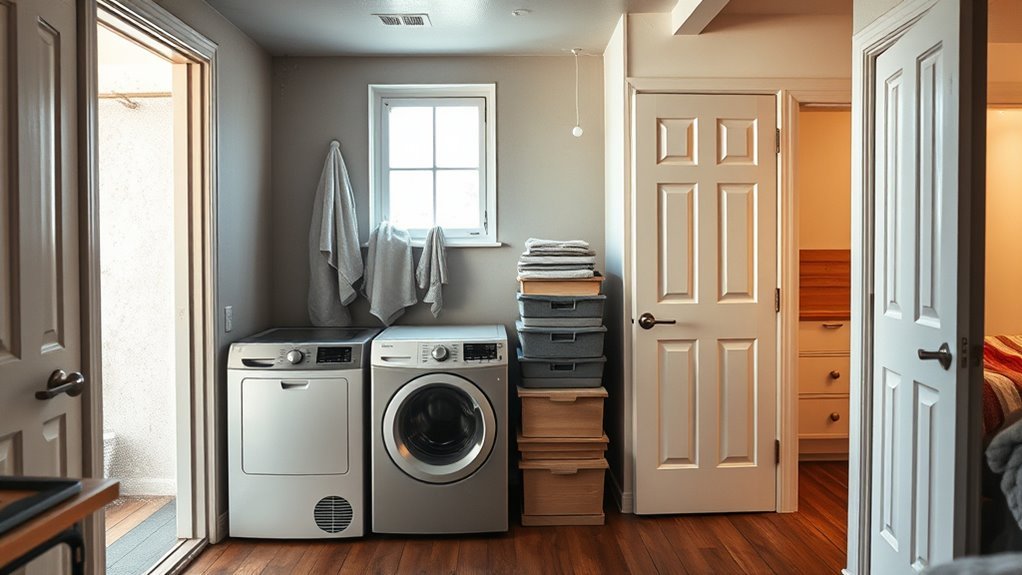
You should also run a dehumidifier when a room feels sticky, fabrics stay damp, wood feels swollen, or the air has a stale, musty smell. Basements, bathrooms, laundry rooms, crawl spaces, and poorly ventilated bedrooms often need extra moisture control because they collect water vapor faster than the rest of the home.
The safest rule is simple: measure first, then run the dehumidifier until the room returns to about 30% to 50% relative humidity.
Signs Your Home Needs a Dehumidifier
You can usually tell your home needs a dehumidifier when moisture leaves visible or smellable clues. Watch for these signs:
- Condensation on windows, walls, pipes, or cool surfaces
- Musty odors in basements, closets, bathrooms, or laundry areas
- Visible mold or mildew on walls, grout, ceilings, furniture, or stored items
- Sticky or clammy air even when the room temperature is comfortable
- Peeling paint, bubbling wallpaper, or warped wood
- Damp fabrics, towels, rugs, bedding, or laundry that take too long to dry
- Allergy or asthma flare-ups that seem worse in damp rooms
These signs do not always mean the dehumidifier is the only fix. They mean excess moisture is present. You still need to check for leaks, poor ventilation, clogged gutters, foundation seepage, or an oversized air conditioner that cools quickly without removing enough moisture.
Warning: Do not run a dehumidifier in standing water, near damaged wiring, or in a flooded area until the electrical system is safe. If flooding involved sewage, chemicals, or a large contaminated area, get professional help before drying the space.
How a Dehumidifier Changes Indoor Air
A dehumidifier pulls moist air into the unit, removes water from that air, and sends drier air back into the room. Most portable units use refrigerated coils. Moisture condenses on the coils, drips into a bucket or drain hose, and the unit repeats the cycle until the room reaches the humidity setting.
This does three useful things. It reduces condensation, makes humid rooms feel less sticky, and helps keep mold and dust mites from thriving. The American Lung Association recommends keeping homes below 50% humidity to help reduce dust mites.
Moisture Removal Process
When the dehumidifier runs, it continuously draws room air across cold coils. Water vapor turns into liquid water, collects in the tank, or drains through a hose. The drier air then returns to the room.
For best results, close windows and exterior doors while the unit is running. Otherwise, humid outdoor air keeps entering the room, and the dehumidifier has to work harder.
Drier Air Circulation
Drier air circulates more easily and feels more comfortable at the same temperature. That is why a dehumidifier can make a basement or bedroom feel cooler without lowering the thermostat. In humid summer weather, it can also help your air conditioner feel more effective.
Pro Tip: Place the unit at least several inches away from walls, furniture, curtains, and storage boxes so air can move through the intake and outlet. Check your manual for the exact clearance requirement.
Best Times to Run a Dehumidifier in Summer
Summer is the most common time to use a dehumidifier because warm air can hold more moisture. Run the unit when your hygrometer shows humidity above your target range or when the room feels damp even after the air conditioner runs.
The best times to run a dehumidifier in summer include:
- During the warmest, muggiest part of the day
- After heavy rain or storms
- After showers, cooking, or laundry
- When drying damp rugs, towels, or stored items
- When a basement smells musty or feels clammy
- After a minor leak once the area is safe and the leak is fixed
If the unit has a humidistat, set it around 45% to 50% for everyday use. Let it cycle automatically instead of running nonstop when humidity is already in range.
Why Winter Humidity Still Matters
Winter air is often dry, but some homes still develop hidden moisture problems. Cooking, showers, laundry, damp basements, sealed windows, poor ventilation, and cold surfaces can all raise indoor humidity in certain rooms. When warm indoor air touches cold glass, pipes, or walls, condensation can form.
Use a dehumidifier in winter only when the room is truly damp or the hygrometer shows high humidity. Many homes need a humidifier in winter, not a dehumidifier, so measuring matters.
Winter Condensation Risks
Winter condensation can collect on windows, sills, exterior walls, and poorly insulated corners. If it happens repeatedly, it can damage paint, drywall, wood trim, and window frames. It can also create damp surfaces where mold can grow.
A dehumidifier can help if the room’s humidity is high, but it will not solve cold-surface condensation by itself. You may also need better ventilation, insulation, air sealing, or leak repair.
Hidden Indoor Moisture
Hidden moisture often shows up first in closets, basements, laundry areas, bathrooms, and behind furniture placed against exterior walls. Use this guide to decide what to do:
| Sign | Possible Risk | Best Action |
| Window condensation | Water damage or mold on frames | Measure humidity, ventilate, and dehumidify if RH is high |
| Musty odor | Hidden dampness or mold | Inspect for leaks and run a dehumidifier after fixing the source |
| Warped wood | Long-term moisture exposure | Lower humidity and check for plumbing or foundation leaks |
| Peeling wallpaper or paint | Moisture trapped behind finishes | Find the moisture source before repainting or refinishing |
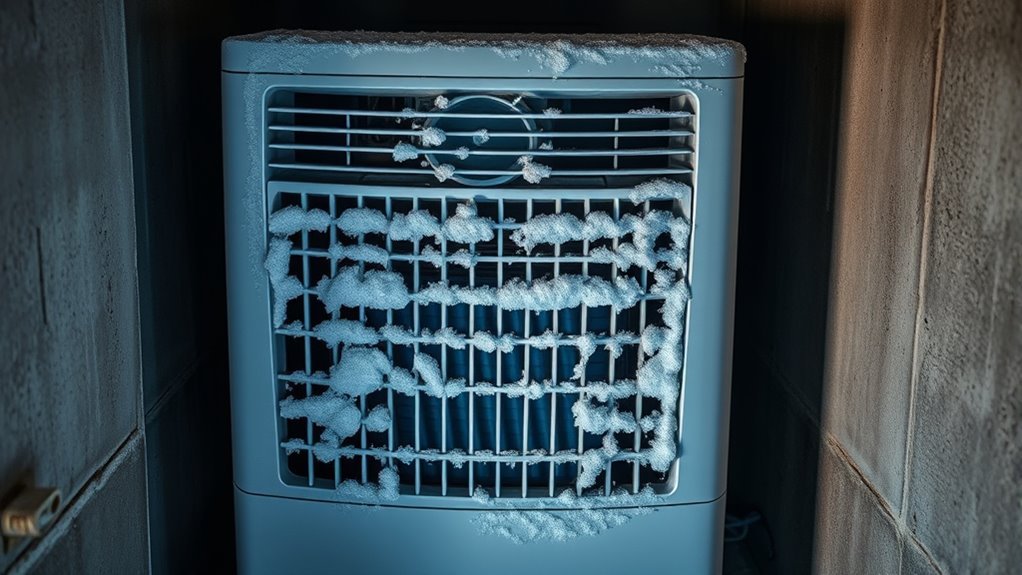
Note: Compressor dehumidifiers can lose efficiency in cold rooms. Check your owner’s manual for the minimum operating temperature. Some manuals specify that the unit should not be placed where temperatures fall below 41°F.
Should You Run Your Dehumidifier All Day?
You can run a dehumidifier all day if humidity stays high, the unit is in good condition, and the bucket or drain setup can handle continuous operation. This is common in damp basements, laundry rooms, and humid climates.
However, all-day use is not always necessary. Use the humidity reading as your guide:
- Above 60%: Run the dehumidifier and look for the moisture source.
- 50% to 60%: Run it if the room feels damp, smells musty, or has condensation.
- 30% to 50%: This is usually a comfortable target range.
- Below 30%: Stop dehumidifying because the air may become too dry.
If your unit has a continuous drain option, use a hose that slopes properly to a floor drain or sink. If it uses a bucket, empty it before it fills so the unit does not shut off early.
How to Know If Humidity Is Too High
The most reliable way to know if humidity is too high is to use a hygrometer. Place it in the room you are worried about, away from direct sunlight, vents, showers, and cooking steam. Check it at different times of day because humidity changes with temperature, weather, and household activity.
Your humidity is probably too high if readings stay above 50% to 60% or if you notice dampness signs even when the number looks borderline. Basements and bathrooms often need separate checks because they can be much wetter than the main living area.
Do not rely only on how the air feels. A cool basement can feel damp even before moisture damage is obvious, and a warm room can hide high humidity until condensation appears.
Best Dehumidifier Setting for Most Homes
For everyday use, set your dehumidifier around 45% to 50% relative humidity. This keeps the room below the range where moisture problems become more likely without making the air too dry.
Use a lower setting only for short periods, such as after a leak, during a very humid week, or while drying a damp basement. Once the room is stable, return to a moderate setting so the unit does not waste energy or over-dry the air.
Recommended Products

2500 Sq.Ft High Capacity Dehumidifier- The GoGuess basement dehumidifier is equipped with a quiet yet powerful compressor that efficiently extracts up to 34 pints of moisture per day (tested at 95°F and 90% RH). Perfect for use in basements, offices, bathrooms, bedrooms, kitchens, storage areas, living rooms, laundry spaces, garages, crawl spaces, and RVs. It helps maintain a healthy humidity level between 30% and 70%, promoting a more comfortable and healthier indoor environment.

POWERFUL 2,500 SQ. FT. COVERAGE - Stop letting sticky, heavy air dictate your comfort. The BANABIE dehumidifier utilizes a high-efficiency rotary compressor to deliver heavy-duty moisture removal, extracting 32 pints daily (at 95°F, 90%RH). Engineered with a smart integrated airflow system, this unit effectively covers up to 2,500 Sq. Ft., ensuring that your basement, crawl space, or large open floor plans stay bone-dry

1600 Sq.Ft High Capacity Dehumidifier- The GoGuess basement dehumidifier is equipped with a quiet yet powerful compressor that efficiently extracts up to 21 pints of moisture per day (tested at 95°F and 90% RH). Perfect for use in basements, offices, bathrooms, bedrooms, kitchens, storage areas, living rooms, laundry spaces, garages, crawl spaces, and RVs. It helps maintain a healthy humidity level between 30% and 70%, promoting a more comfortable and healthier indoor environment
Where to Place a Dehumidifier
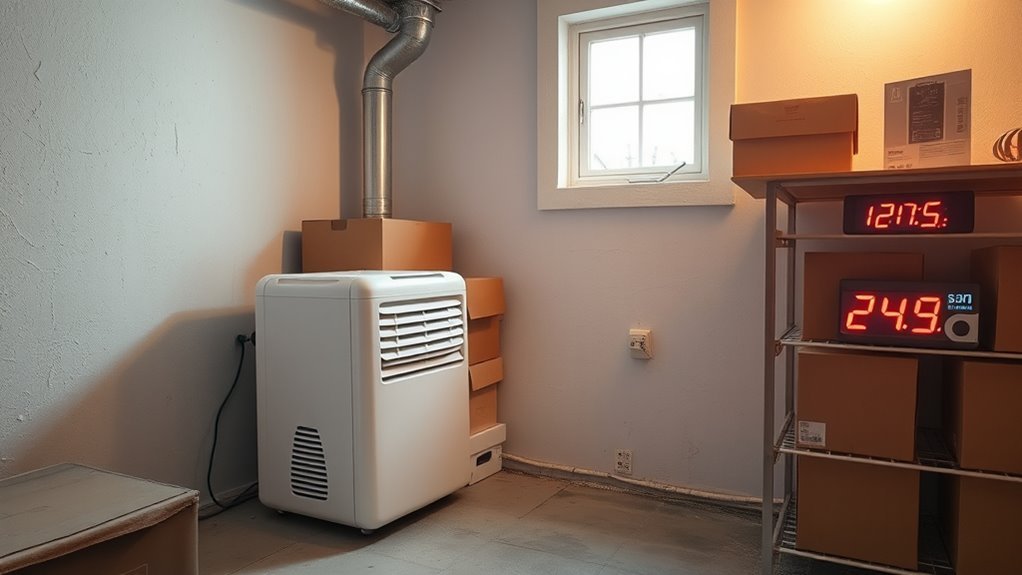
Place the dehumidifier in the dampest part of the room, but keep it where air can circulate. A central location is usually better than a tight corner. Keep the intake and exhaust clear, and avoid blocking the unit with curtains, boxes, beds, or furniture.
Good placement matters most in these areas:
- Basement: Place it near the center of the damp zone or near the floor drain if using a hose.
- Bathroom: Use exhaust ventilation first; run the dehumidifier nearby only if the room remains damp and the outlet location is safe.
- Laundry room: Run it while drying clothes indoors or after heavy laundry use.
- Bedroom: Use it if the room has condensation, musty odor, or high readings; do not over-dry the air while sleeping.
- Crawl space: Use only units designed for that environment and address ground moisture, vents, and drainage first.
Recommended Products

120 PPD Crawl Space Dehumidifier: The Sentinel HD55S Energy Star Certified dehumidifier removes up to 120 pints of moisture per day at saturation (55 PPD at AHAM) and effectively controls humidity in spaces up to 1,300 sq. ft. Its rugged metal housing is built for demanding environments and long-term reliability, making it ideal for crawl spaces, basements, warehouses, offices, factories, and storage areas

PRO-GRADE 70-PINT PERFORMANCE – This AlorAir Crawl Space Dehumidifier removes up to 70 pints per day under saturated conditions (35 pints per day under AHAM standards). The advanced R32 system efficiently controls humidity in areas up to 1,000 sq. ft. Ideal for crawl spaces, basements, garages, attics, commercial and industrial environments. Serious performance meets modern efficiency.
When Not to Use a Dehumidifier
A dehumidifier is not the right tool in every situation. Do not run one when:
- Indoor humidity is already below 30% to 35%.
- The room has standing water or unsafe electrical conditions.
- The unit is outside its rated temperature range.
- You have active mold growth that needs cleaning or remediation.
- The moisture source is a leak that has not been repaired.
- Windows are open during humid weather.
- The unit’s filter is dirty or the bucket is full.
A dehumidifier can reduce moisture, but it cannot fix a roof leak, plumbing leak, poor drainage, or missing ventilation. If humidity returns quickly after the unit shuts off, look for the source instead of simply lowering the setting.
How to Stop Humidity at the Source
To lower indoor humidity for good, remove moisture before it builds up. Start with the most common causes: leaks, poor ventilation, wet basements, unvented dryers, and long showers.
Use these steps:
- Measure first. Use a hygrometer in the damp room and write down the reading.
- Fix leaks quickly. Repair roof, plumbing, foundation, window, or appliance leaks before relying on a dehumidifier.
- Vent steam outside. Run bathroom and kitchen exhaust fans that vent outdoors, not into an attic or wall cavity.
- Dry wet materials fast. After leaks or minor water events, dry damp items as quickly as possible once the area is safe.
- Keep air moving. Open interior doors, use fans safely, and avoid pushing furniture tightly against cold exterior walls.
- Use air conditioning wisely. A properly sized, well-maintained AC system removes moisture while cooling.
- Limit indoor moisture sources. Cover aquariums, avoid drying laundry indoors when possible, and reduce overwatering houseplants.
If the problem is severe, recurring, or tied to mold growth, bring in a qualified mold, HVAC, plumbing, or waterproofing professional. Moisture problems usually get worse when the source is ignored.
How to Maintain a Dehumidifier
A dirty dehumidifier can lose performance and may spread musty odors. Basic maintenance keeps it safer and more effective.
- Empty and rinse the bucket regularly.
- Clean or replace the filter according to the manual.
- Check the drain hose for clogs, kinks, and algae buildup.
- Wipe dust from the intake and outlet grilles.
- Keep the unit level so water drains correctly.
- Unplug the unit before cleaning it.
- Store it dry if you stop using it for the season.
If you are buying a new unit, look for the right capacity for the room and consider an ENERGY STAR certified dehumidifier. ENERGY STAR notes that certified models remove the same amount of moisture as standard models while using less energy.
Recommended Products

True ENERGY STAR Most Efficient 2025 Compressor Dehumidifier (2600 Sq.Ft) - High-Efficiency Dehumidifier - Dr.Prepare dehumidifier features a high-performance and quiet compressor that removes up to 38 pints of moisture per day (at 95°F, 90% RH). Ideal for basements, living rooms, bathrooms, bedrooms, garages, or travel trailers. Being able to adjust humidity from 30%RH to 80%RH, and cut costs bills year-round. (You can verify Dr. Prepare models DDH12LA on the official ENERGY STAR Product Finder.)

【Compact Size, Big Efficiency】 The upgraded 2025 Waykar dehumidifier features cutting-edge rotary compressor technology. It’s more compact but still powerful, capable of removing up to 34 pints of moisture per day (at 95℉, 90% RH), ideal for spaces up to 2,000 sq. ft. such as living rooms, basements, bedrooms, and offices. The adjustable humidity range from 30% to 80% helps you easily maintain the ideal indoor humidity

【Ideal for Large Homes & Basements (Up to 5,000 Sq. Ft)】The Waykar 80 pint dehumidifier efficiently removes up to 80 pints of moisture per day in high-humidity conditions (95°F, 90% RH). In warmer, damp spaces like basements (86°F, 80% RH), it removes 62 pints/day. This dehumidifier for basement is perfect for large areas such as basements, bathrooms, bedrooms, and living rooms. Customize your space by adjusting the humidity level from 30% to 80%, creating a drier and healthier environment
Frequently Asked Questions
What time of day should you use a dehumidifier?
Use a dehumidifier whenever humidity is high. In summer, that is often afternoon or evening. In bathrooms and laundry rooms, run it after showers, cooking, or laundry. In basements, let the humidistat cycle the unit as needed.
Will a dehumidifier help dry out plaster?
Yes, a dehumidifier can help dry damp plaster by lowering room humidity, but it should be used with airflow and source repair. If plaster is soaked, crumbling, contaminated, or moldy, have the area inspected before sealing or repainting it.
Should you use a dehumidifier if you have COPD?
A dehumidifier may help if your indoor air is humid, musty, or mold-prone. Aim for a balanced range, often around 30% to 50% relative humidity. Do not over-dry the air, and ask a healthcare professional if humidity changes seem to worsen breathing symptoms.
Are dehumidifiers good for dry scalp?
Not usually. If your air is already dry, a dehumidifier can make dry skin or scalp discomfort worse. Use one only when humidity is high. If your humidity is below about 30%, adding moisture may be more appropriate than removing it.
Can a dehumidifier get rid of mold?
No. A dehumidifier can help prevent mold by lowering moisture, but it does not remove mold that is already growing. Existing mold must be cleaned safely, and the moisture source must be fixed so it does not come back.
Is it okay to sleep with a dehumidifier on?
Yes, if the room is humid and the unit is placed safely. Use the humidistat so it shuts off when the room reaches the target range. Avoid setting it so low that the bedroom air becomes dry overnight.
Should windows be open when using a dehumidifier?
Keep windows closed during humid weather. Open windows can bring in more moisture and make the unit run longer. Ventilate briefly when outdoor air is dry, but close the room again while dehumidifying.
Conclusion
Use your dehumidifier when humidity readings, condensation, musty odors, or damp materials show that moisture is building up indoors. For most homes, the goal is about 30% to 50% relative humidity and below 60% whenever possible. Run the unit after moisture-heavy activities, during humid weather, and in damp rooms, but stop when the air returns to range. Most importantly, fix the moisture source so the dehumidifier is solving the problem, not just chasing it.
Sources
- U.S. EPA — A Brief Guide to Mold, Moisture and Your Home — supports indoor humidity targets and mold-prevention guidance.
- CDC — Mold — supports keeping humidity no higher than 50% to help prevent mold.
- U.S. EPA — Care for Your Air — supports humidity measurement and indoor air quality guidance.
- ENERGY STAR — Dehumidifiers — supports portable versus whole-home dehumidifier guidance and energy-efficiency claims.
- Midea Dehumidifier User Manual — supports placement, clearance, grounding, and operating-temperature cautions.
- American Lung Association — Dust Mites — supports humidity control for reducing dust mite conditions.