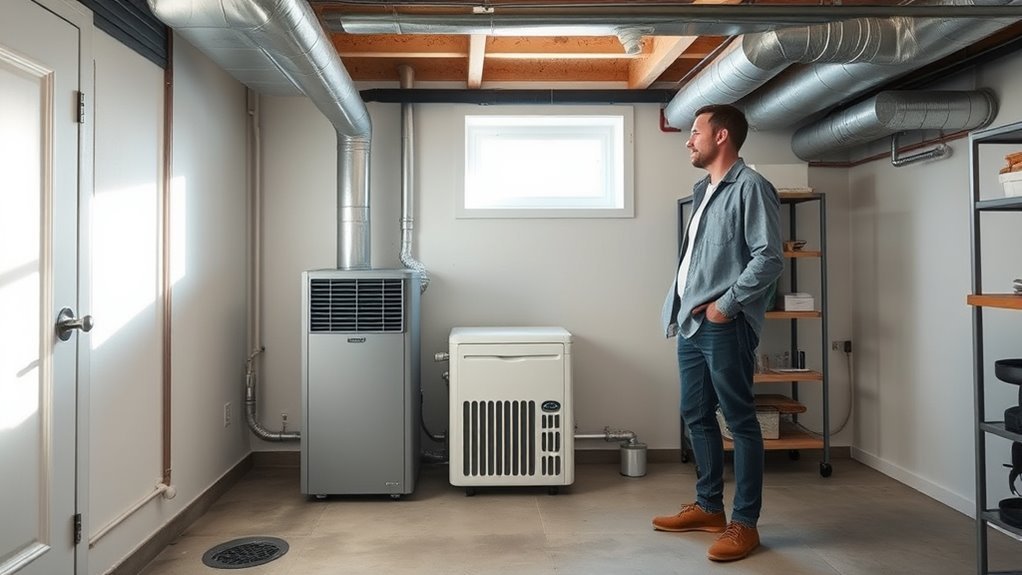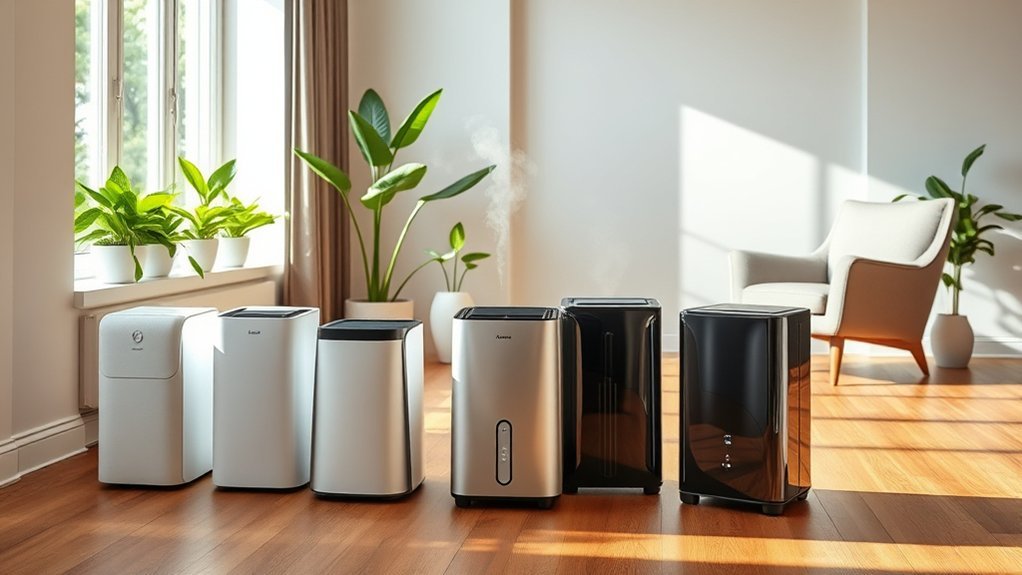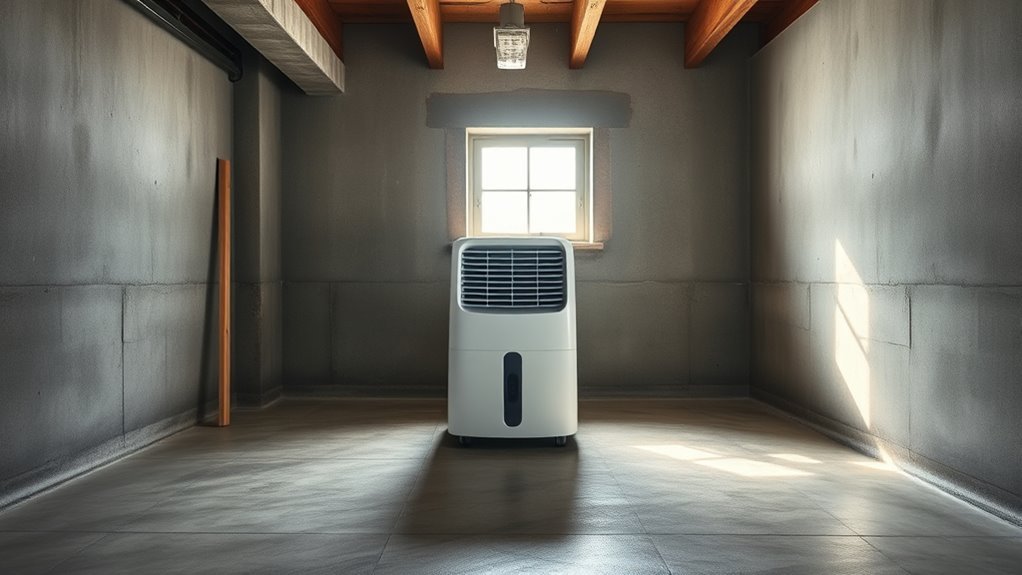
For the best results, place your dehumidifier where it can pull in the dampest air without blocked airflow. In a single problem area, that usually means near the main moisture source, such as a damp basement wall, laundry zone, bathroom entrance, or crawl-space access point. In a large open room or connected area, a central spot often works better because dry air can spread more evenly.
Quick Answer
Put a dehumidifier near the main moisture source if one area is clearly damp. Use a central location if you want to dry a larger open space or several connected rooms. Keep clear space around the vents, set it on a firm level surface, close exterior windows and doors, and aim for about 30% to 50% indoor humidity.
Key Takeaways
- For one damp spot, place the unit near the moisture source, not across the room.
- For open layouts, central placement helps dry air circulate more evenly.
- Follow your manual for clearance; many portable units need about 12 to 18 inches around key vents.
- Use a hygrometer and keep indoor humidity below 60%, with 30% to 50% as a better mold-control target.
- Never run a dehumidifier in standing water or with blocked vents, unstable support, or unsafe wiring.
At a Glance
| Time Required | 10 to 20 minutes to choose the spot, check clearance, set humidity, and confirm drainage |
| Difficulty | Easy |
| Tools Needed | Hygrometer, grounded outlet, optional drain hose, and your dehumidifier manual |
| Cost | Usually $0 if you already own the unit; about $10 to $20 for a basic hygrometer if needed |
How Should You Place a Dehumidifier?
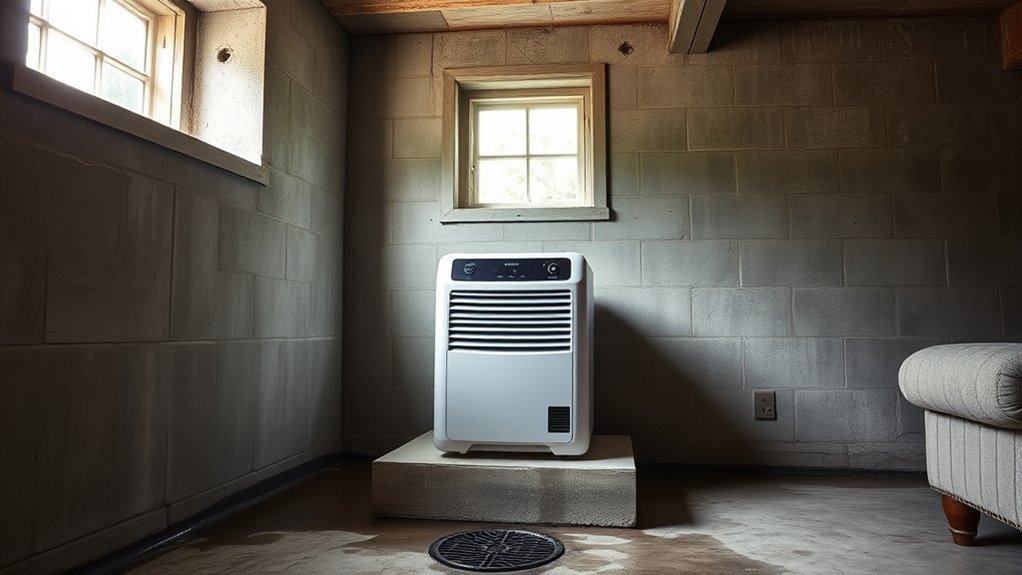
Place your dehumidifier where damp air can reach the intake and dry air can leave the exhaust without hitting walls, furniture, curtains, boxes, or laundry piles. A unit squeezed into a corner may run for hours while still leaving humidity pockets around the room.
Start by finding the dampest area with your senses and a hygrometer. Look for musty odors, condensation, damp flooring, wet laundry, shower steam, cold basement walls, or a crawl space with visible moisture. Then decide whether the problem is local or spread out.
- Local moisture problem: Put the dehumidifier near the source, while keeping the vents clear.
- Whole-room dampness: Use a more central spot so air can circulate evenly.
- Multiple connected rooms: Place it near the middle of the connected area and keep internal doors open.
The EPA recommends keeping indoor relative humidity below 60%, ideally between 30% and 50% when possible. A dehumidifier is only part of that strategy. You should also fix leaks, vent bathrooms and dryers outdoors, and avoid bringing in humid outdoor air while the unit is running.
Warning: Do not run a dehumidifier where standing water may collect. Unplug the unit before moving it, emptying it, cleaning it, or stepping into any wet area. Use a properly grounded outlet, avoid extension cords unless your manual specifically allows them, and keep the unit on a firm, level surface.
Recommended Products

Semiconductor dehumidifiers use thermoelectric cooling to remove moisture from the air. They create a drier, more comfortable environment by reducing humidity and improving air quality.

Maintain the Right Room Temperature and Humidity Levels: This wireless indoor thermometer/hygrometer combination is perfect to pair with humidifiers or dehumidifiers

POWERFUL 2,500 SQ. FT. COVERAGE - Stop letting sticky, heavy air dictate your comfort. The BANABIE dehumidifier utilizes a high-efficiency rotary compressor to deliver heavy-duty moisture removal, extracting 32 pints daily (at 95°F, 90%RH). Engineered with a smart integrated airflow system, this unit effectively covers up to 2,500 Sq. Ft., ensuring that your basement, crawl space, or large open floor plans stay bone-dry
Put It Near the Moisture Source
Put your dehumidifier close to the main moisture source when one spot is clearly causing the problem. This helps the unit remove humid air before it spreads through the room.
Good moisture-source placements include:
- Near a laundry area where damp clothes or a washer increase humidity.
- Near a basement wall, floor drain, sump area, or musty storage zone.
- Near a bathroom entrance or hallway outside a shower room, especially if the bathroom is small.
- Near a kitchen or dishwashing area if cooking steam is the main issue.
- Near a crawl-space access point or damp zone if the unit is rated for that environment.
The best spot is not always the center of the room. It is the nearest safe spot where damp air can reach the unit and dry air can move away freely.
Do not press the dehumidifier directly against the damp wall or appliance. Leave enough room for airflow and maintenance. If the dampness comes from a leak, seepage, roof issue, plumbing problem, or poor dryer venting, fix that source first. A dehumidifier can reduce humidity, but it cannot solve an active water problem.
When Central Placement Works Best
Central placement works best when humidity is spread across a large room, finished basement, open-plan living area, or several connected rooms. A centered unit pulls humid air from more directions and helps prevent damp corners.
Open Room Coverage
In a large open room, place the unit near the center of the space or along an open airflow path. Keep it away from sofas, curtains, storage bins, and walls. If the room has ceiling fans or a separate air mover, gentle circulation can help dry air reach the edges of the space.
For portable units, remember that ENERGY STAR describes room dehumidifiers as products typically used for a single room or space. If you need to manage humidity across many rooms every day, a larger portable unit, multiple units, or a whole-home ducted dehumidifier may be more practical.
Moisture Source Balance
When moisture comes from several areas, central placement gives the dehumidifier a better chance to balance the room. Use this approach when a basement smells musty throughout, a kitchen and laundry area share one open space, or several rooms connect through an open hallway.
| Situation | Best Placement | Why It Works |
|---|---|---|
| One damp wall or laundry zone | Near the source | Captures moisture before it spreads |
| Large open basement | Central open area | Improves whole-room airflow |
| Several connected rooms | Central hallway or open doorway zone | Lets air move between rooms |
| Small closed bathroom | Outside the bathroom door or in a nearby hallway | Avoids cramped, wet, unsafe placement |
Unobstructed Airflow Path
A central dehumidifier only works well if air can move freely. Open internal doors when you want to dry connected rooms. Close exterior doors and windows so the unit is not constantly pulling in new humid outdoor air. If outdoor air is less humid than indoor air, ventilation may help, but during muggy weather, open windows can make the dehumidifier work harder.
Pro Tip: Put a small hygrometer on the far side of the room, not right next to the dehumidifier. If the far side stays above your target humidity, move the unit, improve airflow, or use a larger unit.
How Much Clearance Does It Need?
Check your owner’s manual first because clearance depends on where the intake and exhaust vents are located. As a practical rule, many portable dehumidifiers need about 12 inches of open space around the air path. Some manuals call for 12 to 18 inches of space around the rear, sides, or top louvers, depending on the model.
Good clearance helps the unit:
- Draw humid air into the intake.
- Push dry air back into the room.
- Avoid heat buildup.
- Read room humidity more accurately.
- Run without unnecessary strain.
Avoid carpets, soft mats, thick rugs, closets, tight corners, and dusty workshop areas. The surface should be strong enough to hold the dehumidifier when the bucket is full. If you use continuous draining, make sure the hose is secure, not kinked, and sloping toward the drain unless your unit has a pump.
How to Zone a Bigger Space
For a bigger space, think in zones instead of expecting one small unit to fix every damp area. A “zone” is a section of the home with its own moisture source, airflow pattern, and humidity reading.
- Map the damp zones. Check basements, bathrooms, laundry rooms, closets, crawl-space areas, and exterior walls.
- Measure humidity. Use a hygrometer in each zone. The EPA recommends using a moisture or humidity gauge to see whether indoor humidity is in a good range.
- Place the unit where humidity rises fastest. Start near the worst zone, then recheck readings after several hours.
- Improve airflow. Open internal doors, move furniture away from vents, and use a fan if needed.
- Recheck and adjust. If one area stays damp, move the unit closer or create a separate zone with another unit.
If the unit runs constantly but humidity does not drop, the dehumidifier may be too small, the space may be too open, the outdoor air may be entering, or there may be an active moisture source that needs repair.
Recommended Products

120 PPD Crawl Space Dehumidifier: The Sentinel HD55S Energy Star Certified dehumidifier removes up to 120 pints of moisture per day at saturation (55 PPD at AHAM) and effectively controls humidity in spaces up to 1,300 sq. ft. Its rugged metal housing is built for demanding environments and long-term reliability, making it ideal for crawl spaces, basements, warehouses, offices, factories, and storage areas

Specially Designed for Crawl Spaces— The AIUSEVO commercial dehumidifier features a high-performance compressor and a powerful 265 CFM airflow, removes up to 125 pint/d(at 95°F, 90% RH). Covers up to 6500 sq. ft. It can keep humidity at an ideal level and prevent excessive moisture from damaging your personal belongings. With compact dimensions of 19.3" x 17.8" x 17.5" , it fits between floor joists and in low-clearance crawl spaces. Ideal for Garage,warehouses, offices, factories, shops

PRO-GRADE 70-PINT PERFORMANCE – This AlorAir Crawl Space Dehumidifier removes up to 70 pints per day under saturated conditions (35 pints per day under AHAM standards). The advanced R32 system efficiently controls humidity in areas up to 1,000 sq. ft. Ideal for crawl spaces, basements, garages, attics, commercial and industrial environments. Serious performance meets modern efficiency.
Best Dehumidifier Spots by Room
Each room needs a slightly different placement strategy. Use the room’s moisture source, outlet location, drain options, and airflow path to choose the safest spot.
| Room | Best Spot | Avoid |
|---|---|---|
| Basement | Near the dampest wall, sump area, or center of an open basement | Standing water, cluttered corners, blocked floor drains |
| Bathroom | Near the doorway or just outside the bathroom after showers | Inside a cramped wet bathroom, beside a tub, or where splashing can occur |
| Laundry room | Near damp laundry, washer area, or drying rack with clear airflow | Blocking appliance doors, dryer vents, or walkways |
| Kitchen | Near the humid area after cooking or dishwashing, away from grease and heat | Next to a stove, sink splash zone, or greasy airflow |
| Bedroom | Open floor area away from bedding, curtains, and walls | Under a desk, inside a closet, or blowing directly at your face while sleeping |
| Crawl space | Near the dampest safe access point, using a model rated for crawl spaces | Unprotected wiring, standing water, pests, or unsupported surfaces |
In bathrooms and kitchens, ventilation still matters. The CDC recommends exhaust fans in kitchens and bathrooms that vent outdoors, along with fixing leaks and keeping humidity low to prevent mold.
Recommended Products

70-pint Dehumidifier:This commercial dehumidifiers can remove 70 pints per day of moisture from the air with less than other conventional dehumidifiers, is a great helper in saving and your money. It is suitable for large spaces up to 1,000 sq ft, such as crawl spaces, basements, storage areas, garage, laundry rooms or commercial use, you can maintain a healthy 45%-55% humidity range easily.
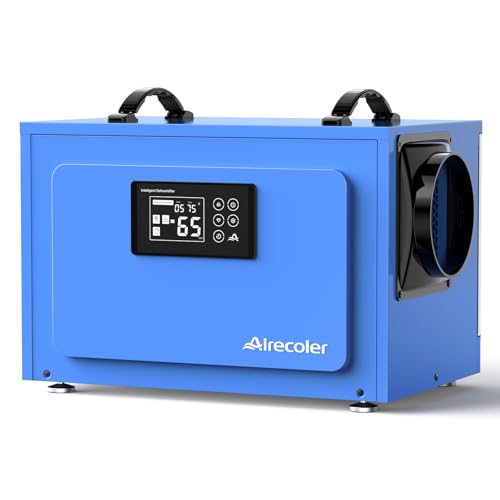
Enhanced Commercial Dehumidification: Airecoler commercial dehumidifier GT-X5 stands out for its exceptional moisture removal, capable of extracting up to 125 pints daily (Max.) and 60 pints at AHAM, being an optimal drying solution in expansive, damp places like crawl spaces, basements, warehouses, garages, and even commercial/industrial areas.
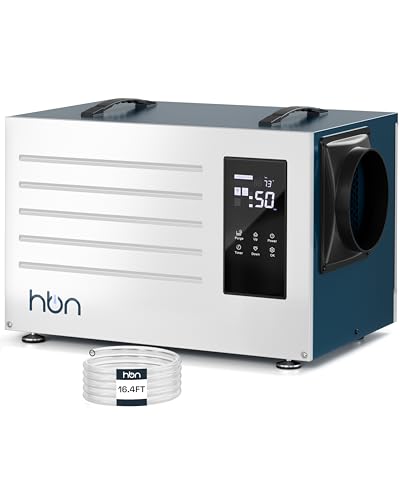
【Enhanced Dehumidification】 This commercial dehumidifier removes up to 125 pints/day (95°F, RH90%) and 60 pints/day under AHAM conditions, quickly reducing excess moisture. Covers up to 5,900 sq. ft. for large commercial areas and delivers precise 10%–90% RH control for smaller rooms and tight spaces.
Best Settings After Placement
After choosing the spot, set the humidistat to a realistic target. For most damp indoor areas, 45% to 50% is a practical starting point. If the room still smells musty or shows condensation, lower the setting slightly. If the air feels too dry, raise it a little.
Use these targets as a simple guide:
- 30% to 50% RH: Good target range for mold control in many homes.
- Below 60% RH: Upper limit to avoid sustained damp conditions.
- Above 60% RH: Investigate moisture sources, airflow problems, or undersized equipment.
Note: A dehumidifier may warm the room slightly while it runs. That is normal for many compressor-style units because they release heat during operation.
Common Placement Mistakes to Avoid
Small placement mistakes can make a good dehumidifier seem weak. Avoid these common problems:
- Putting it tight against a wall: This blocks airflow and slows moisture removal.
- Running it with exterior windows open: Humid outdoor air can keep replacing the dry air.
- Using it on thick carpet: Carpet can block lower vents and make the unit unstable.
- Hiding it behind furniture: The unit needs open air, not a closed pocket.
- Ignoring the filter: A clogged filter reduces airflow and performance.
- Setting humidity too low: Very low settings can waste energy and make the air uncomfortable.
- Forgetting the drain hose: A kinked or uphill hose can leak or stop draining.
- Using it as a leak fix: A dehumidifier helps with humidity, but leaks and water intrusion still need repair.
Frequently Asked Questions
Where should you place a dehumidifier for best results?
Place it near the main moisture source if one area is damp. Use a central open spot if humidity is spread across a larger room or several connected spaces. Keep the vents clear, close exterior windows and doors, open internal doors when drying connected rooms, and measure humidity with a hygrometer.
Should you use a dehumidifier if you have COPD?
A dehumidifier may help if your home is too humid, musty, or mold-prone, but it is not a treatment for COPD. The American Lung Association notes that excess mold exposure can be especially concerning for people with chronic lung diseases such as COPD. Keep the unit clean, avoid over-drying the air, and ask a healthcare professional if humidity changes affect your symptoms.
Will a dehumidifier help dry out plaster?
Yes, a dehumidifier can help remove moisture from the air while plaster dries, especially in a damp room. Keep air moving, maintain a steady room temperature, and do not rush drying with extreme heat. If the plaster is wet because of a leak, flood, or hidden wall moisture, repair the water source first and consider professional moisture testing.
Will a dehumidifier help with gnats?
It can help reduce damp indoor conditions, but fungus gnats usually breed in moist potting mix. Penn State Extension says fungus gnats thrive in moist soil, so the main fix is to avoid overwatering, let the top soil dry between waterings, improve pot drainage, and use traps or other plant-safe controls if needed.
Should the door be open or closed when using a dehumidifier?
Close exterior doors and windows so humid outdoor air does not keep entering. Open internal doors if you want one dehumidifier to treat connected rooms. Close internal doors if you want to dry one small problem room faster.
How long should a dehumidifier run after you move it?
Give the new placement several hours, then check the hygrometer reading across the room. Very damp spaces may need a day or more to stabilize. If humidity stays high, check for open windows, blocked airflow, a full bucket, dirty filter, hose problems, leaks, or an undersized unit.
Conclusion
The best place to put a dehumidifier is the safest open spot closest to the moisture problem. If the whole room is humid, move it toward the center so air can circulate. Keep vents clear, follow your manual’s clearance rules, close outdoor air openings, use a hygrometer, and aim for about 30% to 50% relative humidity when possible.
Smart placement helps the unit remove moisture faster, use less energy, and reduce musty odors. It also helps protect your home from damp materials and mold-friendly conditions. If humidity stays high after good placement, look for leaks, poor ventilation, blocked airflow, or a dehumidifier that is too small for the space.
Sources
- U.S. EPA — Mold Course Chapter 2 — supports indoor relative humidity targets below 60%, ideally 30% to 50%.
- U.S. EPA — Care for Your Air: A Guide to Indoor Air Quality — supports using a humidity gauge and keeping indoor humidity in a healthy range.
- CDC — Mold — supports mold prevention guidance, ventilation, leak repair, and keeping home humidity low.
- ENERGY STAR — Dehumidifiers — supports the distinction between portable room dehumidifiers and whole-home ducted units.
- Home Depot Dehumidifier Use and Care Guide — supports clearance, level-surface, standing-water, and drainage safety guidance.
- Penn State Extension — Fungus Gnats in Indoor Plants — supports moisture-related fungus gnat guidance for houseplants.