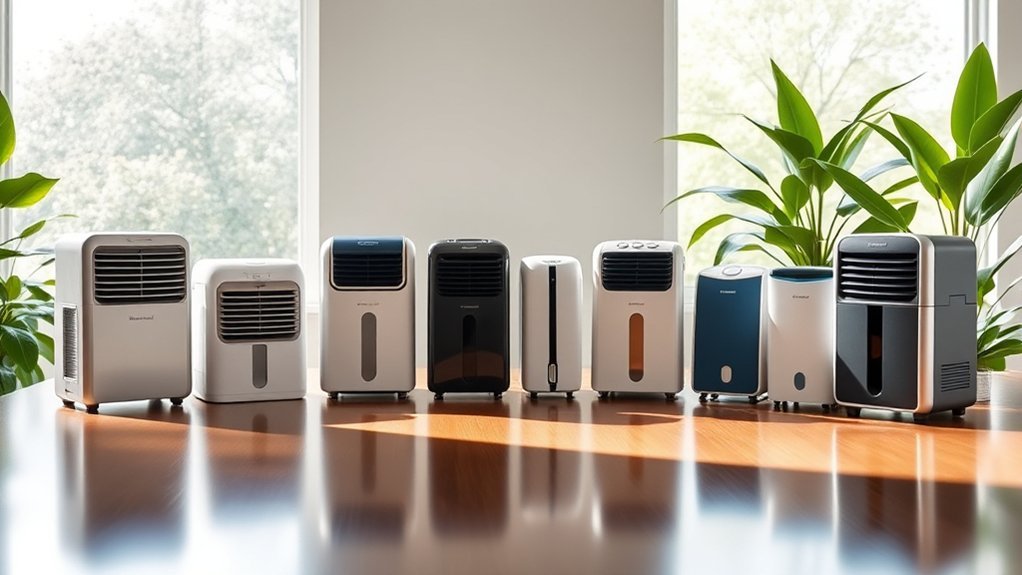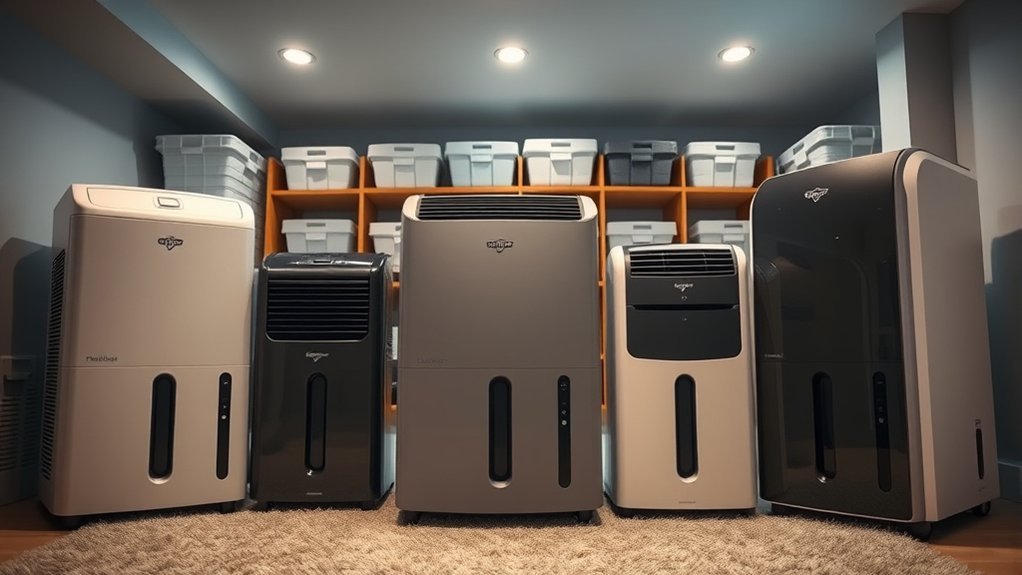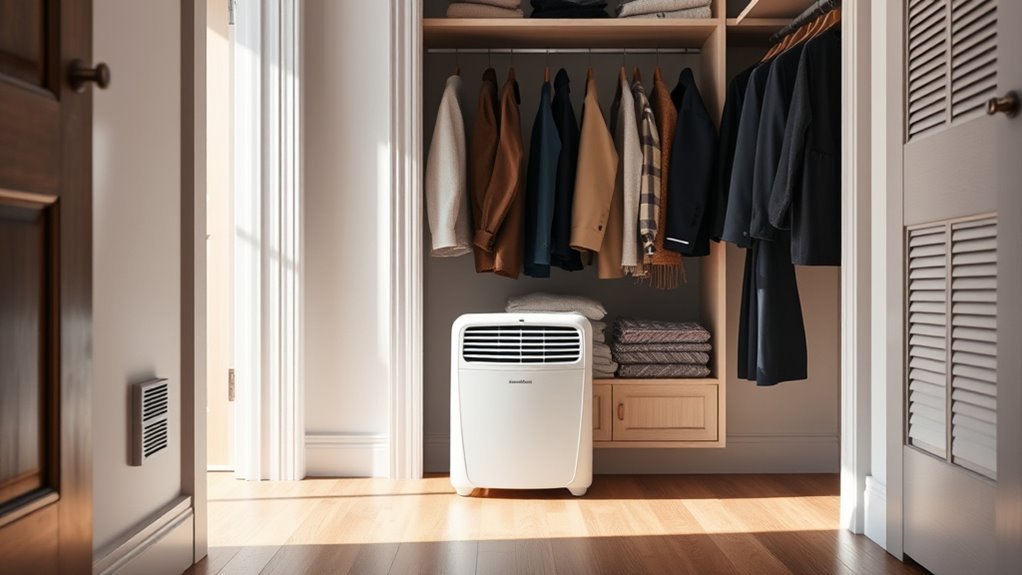
Yes, you can put a dehumidifier in a closet, but only when the closet has enough space, airflow, and a safe electrical setup for that specific unit. In a cramped reach-in closet, a passive moisture absorber or dehumidifying the adjoining room is usually a better fit than forcing in a powered appliance. For a walk-in closet, use an electric dehumidifier only when you can meet the manufacturer’s clearance, airflow, drainage, and electrical instructions. Aim for about 30% to 50% relative humidity, and fix leaks, wet materials, or visible mold instead of relying on a dehumidifier to hide the source.
Last updated: August 19, 2026 · Reviewed against current EPA, CDC, ENERGY STAR, and CPSC guidance.
Quick Answer
A small reach-in closet with mild dampness can use moisture absorber bags or a rechargeable desiccant unit. A larger or persistently damp walk-in closet may use a small electric dehumidifier only if the unit can sit on a flat, dry surface with the manufacturer-required clearance and unobstructed intake and exhaust. If it cannot, dehumidify the adjoining room instead. Check with a hygrometer and aim for 30% to 50% relative humidity.
Key Takeaways
- Use a hygrometer before buying anything. Readings that repeatedly exceed 50% are above the CDC target; readings near or above 60% are also outside the EPA’s preferred range and deserve prompt moisture-source checks.
- Choose the moisture-control method by severity: absorber bags for mild dampness, rechargeable desiccant units for small closets, and electric dehumidifiers for persistent humidity.
- Never block the air intake or exhaust on an electric unit. If the closet cannot meet the manual’s clearance and electrical instructions, do not run the powered unit there.
- A dehumidifier helps control moisture, but it will not fix a roof leak, plumbing leak, exterior-wall condensation problem, or existing mold growth by itself.
At a Glance
| Time Required | 10 to 20 minutes for the physical setup, plus humidity checks across a full day before deciding whether powered dehumidification is needed |
| Difficulty | Easy, as long as the closet has safe clearance and airflow |
| Tools Needed | Hygrometer, tape measure, moisture absorber or dehumidifier, optional small fan, and access to a safe outlet for powered units |
| Cost | Low for disposable absorbers, moderate for rechargeable desiccant units, and higher for electric dehumidifiers; exact prices vary by brand and capacity |
Can You Put a Dehumidifier in a Closet?
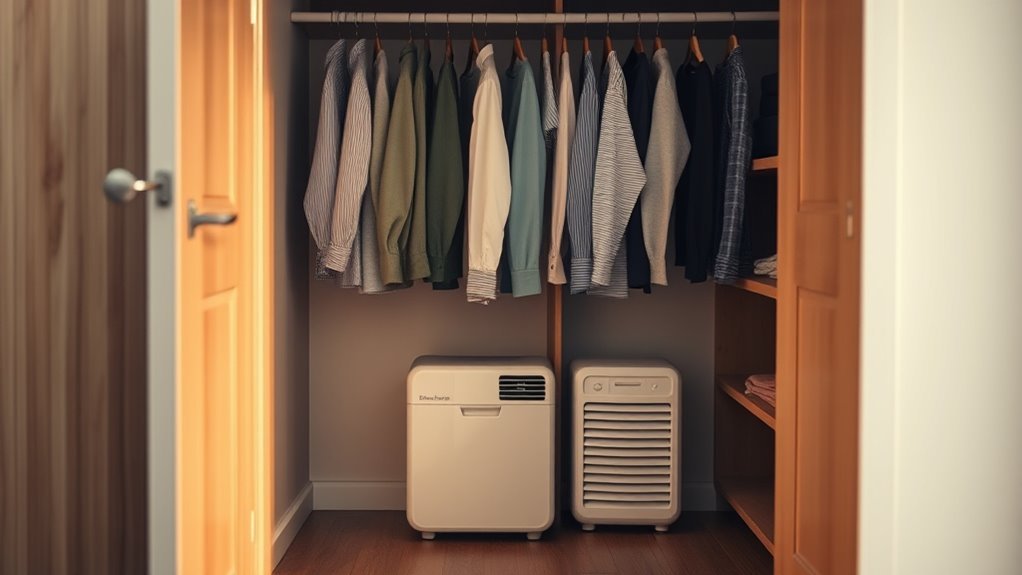
Yes, you can put a dehumidifier in a closet if the unit is appropriate for the space and the closet can meet its operating instructions. A tiny reach-in closet usually does not need a room-size compressor dehumidifier. It may only need silica gel, calcium chloride moisture absorbers, a rechargeable desiccant unit, or better airflow from the adjoining room. A walk-in closet, basement closet, laundry closet, or closet on an exterior wall may justify a small electric model when measured humidity stays high, but safe fit and airflow come before capacity.
The first step is simple: put a hygrometer in the closet for a day or two. The U.S. Environmental Protection Agency recommends keeping indoor relative humidity below 60% and ideally between 30% and 50% when possible. The CDC also recommends keeping home humidity no higher than 50% all day to help prevent mold growth.
Warning: Do not squeeze an electric dehumidifier into a cramped closet where clothing, boxes, carpet, or shelves block the air intake or exhaust. Place the unit on a flat, dry surface, use the electrical setup required by the manual, keep the cord uncovered, follow the manufacturer’s clearance instructions, and check the CPSC dehumidifier recall list before continuing to use an older model.
Can I Safely Run an Electric Dehumidifier in This Closet?
Use a powered dehumidifier inside the closet only when every item below is a clear “yes.” This pass-or-fail check is more useful than choosing by advertised room size alone.
- Manual-approved clearance: The unit has the open space required around its intake, exhaust, sides, and top.
- Unblocked airflow: Hanging clothes, shelves, boxes, doors, and walls cannot obstruct the air path.
- Stable, dry placement: The unit can sit upright on a flat surface away from active leaks or standing water.
- Safe power: A properly grounded outlet and cord routing can meet the manufacturer’s electrical instructions without covering or pinching the cord.
- Water removal access: You can safely empty the tank or use a supported drain setup without routing water near electrical connections.
- Maintenance access: You can reach the filter, tank, vents, and controls without moving piles of stored items.
If any answer is “no,” do not improvise the installation. Use a passive absorber for mild closet-only dampness, improve ventilation, or place the electric dehumidifier in the adjoining room and let the closet exchange air with that drier space.
Why Closets Trap Moisture
Closets trap moisture because they are usually closed, crowded, and poorly ventilated. Clothes, towels, shoes, leather, cardboard boxes, and fabric bins can all hold moisture. Once damp air gets inside, it has fewer ways to escape.
Poor Airflow
Most closets have no windows, no supply vent, and no exhaust fan. If the door stays closed all day, the air becomes stagnant. That makes it easier for humidity to build up around clothes, shelves, shoes, and corners.
Exterior-wall closets can be worse because the wall surface may get colder than the room. When warm humid air touches a cool surface, condensation can form. That dampness can show up as musty odor, spotting, or soft wall material.
Humid Materials
Fabrics and storage materials can act like a sponge. Cotton, wool, towels, cardboard, paper, leather, and some shoe materials can absorb moisture and release it slowly. If the closet is packed tight, air cannot move between items, so dampness stays trapped longer.
Note: A musty closet is often a moisture problem, but it can also be a storage problem. Too many boxes, plastic bins pushed against walls, and clothes packed shoulder-to-shoulder can block airflow even when the rest of the room is dry.
Signs Your Closet Needs Dehumidifying
A musty smell is often the first sign that your closet has too much moisture. Do not ignore it, especially if the smell returns after washing clothes or cleaning shelves.
Look for these signs:
- Humidity readings above 50% to 60% on a hygrometer
- Clothes, towels, or linens that feel damp, cool, stiff, or stale
- Musty odor inside shoes, luggage, boxes, or hanging garments
- Visible mildew or mold spots on walls, shelves, shoes, or fabrics
- Condensation on the closet wall, door, mirror, or nearby window
- Peeling paint, soft drywall, swollen trim, or stains near the baseboard
If you see visible mold, fix the moisture source first. A dehumidifier can reduce humidity, but it cannot remove established mold contamination or repair water-damaged materials. The EPA says moldy areas smaller than about 10 square feet can often be handled by the homeowner following its cleanup guidance; larger areas, major water damage, contaminated water, or health concerns can require more specialized help.
Portable Dehumidifier vs. Hanging Bags
The best option depends on how damp the closet is. A mild odor in a small linen closet does not need the same equipment as a humid walk-in closet on an exterior wall.
| Option | Best For | Pros | Limits |
|---|---|---|---|
| Hanging moisture absorber bags | Small closets with light, occasional dampness | Cheap, silent, no outlet needed | Slow, disposable, limited capacity, must be replaced when saturated |
| Rechargeable desiccant dehumidifier | Tiny closets, cabinets, safes, and shoe storage | Reusable, compact, no cord while in the closet | Works slowly and needs periodic regeneration or recharging according to the product instructions |
| Small electric dehumidifier | Walk-in closets, basement closets, laundry closets, and persistent high humidity | Active moisture removal, humidistat options, tank or drain hose options | Needs electricity, clearance, maintenance, and safe placement |
Moisture absorber bags are good for light humidity, but they are not a cure for a wet closet. If your hygrometer stays high, clothes feel damp, or the closet sits in a basement or humid climate, an electric unit may be more effective.
Recommended Products

Semiconductor dehumidifiers use thermoelectric cooling to remove moisture from the air. They create a drier, more comfortable environment by reducing humidity and improving air quality.

✔ EASY TO USE: This mini dehumidifier is spill and mess free. Just hang and go! Non-toxic, child and pet safe! Your small rooms will be dry and odor free. Works for areas up to 333 cubic feet.

REUSABLE, ECO-FRIENDLY DESIGN: The Osmo Moisture Absorber features a refillable water tank, removing up to 44 fl oz of moisture from the air. Unlike disposable moisture absorbers such as hanging bags or crystals, our Moisture Absorber can be used over and over again, helping to reduce waste and improve your carbon footprint.
How to Choose the Right Dehumidifier Size
Do not choose a closet dehumidifier by guessing. Measure the closet and check the actual humidity first. According to ENERGY STAR, dehumidifier capacity is usually measured in pints per 24 hours, and the right capacity depends on both the size of the space and how damp it is.
ENERGY STAR’s capacity guidance is designed for portable room dehumidifiers. In a tiny reach-in closet, the first decision is whether an electric appliance can operate safely at all; a larger pint rating does not make a cramped installation better.
Use this simple process:
- Measure the closet. Multiply length by width to get square footage. For a walk-in closet, also consider ceiling height.
- Measure humidity. Put a hygrometer in the closet and check readings at different times of day.
- Check the dampness level. A closet that smells musty or has damp walls needs more help than a closet that only gets slightly stale in summer.
- Read the product label. Look for capacity in pints per day or the manufacturer’s recommended room size.
- Confirm physical fit. The unit must fit without blocked vents, crowded clothes, or covered cords.
Recommended Products

Effective Moisture Control for Home Use: OWAAE dehumidifier is designed to reduce excess moisture and help maintain comfortable humidity levels in everyday living spaces. It works best in moderate-to-high humidity environments, improve overall air comfort at home

Efficient Dehumidification: Traps excess moisture quickly. Vacplus moisture absorbers use spherical calcium chloride to enlarge the absorbing area. The large collecting capacity of this moisture remover keeps a long time dry.

High-Efficiency Dehumidifier for Home: Still annoyed about the muggy weather? Just Take it easy! Have a try at our 35OZ Peltier dehumidifier, in a closed small room with humid environment of 86°F and 80% RH, it can collect a max of 16oz(450ml) of water in 24 hours, and with very low energy consumption (no more than1 kWh per day).
Choose Moisture Control by the Humidity Reading
| Reading or Condition | What It Suggests | Best First Move |
|---|---|---|
| 30% to 50% RH, no dampness | Within the commonly recommended indoor target range | Improve storage spacing and airflow; do not add a dehumidifier just to push the number lower |
| Above 50% but below 60% repeatedly | Above the CDC target and outside the EPA ideal range | Check for moisture sources, improve airflow, and use a passive absorber for mild closet-only dampness if needed |
| 60% RH or higher, or recurring condensation | Persistent moisture needs stronger source control | Fix the moisture source and use powered dehumidification only where the unit can operate safely |
| Active leak, wet drywall, standing water, or visible mold | A source-control or cleanup problem, not just an RH problem | Repair, dry, and clean up first; use dehumidification afterward to help maintain the repaired area |
Pro Tip: If the closet is small but the whole bedroom is humid, it may work better to dehumidify the room instead of cramming a powered unit into the closet. Lowering room humidity can help the closet dry out with less safety risk.
What to Look for in a Closet Dehumidifier
When you compare closet dehumidifiers, focus on fit, capacity, safety, and maintenance. A powerful model is not automatically better if it cannot operate safely in a tight space.
Recommended Products

【The Undisputed Champion — Industry-Leading Dehumidifier Brand】Choose AEOCKY, getting double market validation. According to data independently verified by Stackline, a leading third-party data analytics company, AEOCKY was an industry‑leading dehumidifier brand on Amazon U.S. in 2025. Meanwhile, it stands as a technology-leading rotary desiccant dehumidifier brand on Amazon. This isn’t just an appliance—it’s a complete humidity-control solution for small spaces. Skip low-performance alternatives and trust a brand recognized by the market.

EFFECTIVE DEHUMIDIFICATION: The CLEVAST dehumidifier bags feature spherical calcium chloride particles that can attract and absorb excess moisture quickly and efficiently. Moisture absorbers are designed with a premium one-way moisture-permeable paper that will securely lock the moisture inside.(WHEN the temperature drops sharply or the humidity is low, crystals may appear inside the bag, and no water droplets at the bottom. This is normal, please be patient for the product to work)

EFFECTIVE ABSORBING: Vacplus dehumidifier bags use Spherical calcium chloride to enlarge the area to absorb quickly. One-way moisture permeable paper absorbs effectively. 500 ml/pack large capacity moisture absorption keep dry for a long time.
Capacity and Humidistat
Choose a model that lists moisture-removal capacity and has an adjustable humidistat if possible. A humidistat lets the unit turn on and off based on the humidity target instead of running nonstop.
For light closet humidity, moisture absorbers or rechargeable desiccant units may be enough. For a walk-in closet or a closet attached to a damp room, choose an electric unit that matches the measured square footage and humidity conditions.
Clearance and Airflow
Check the manual for required clearance around the unit. Many powered dehumidifiers need open space around the intake and exhaust. Do not place the unit behind hanging clothes, inside a crowded shoe rack, or directly against a wall unless the manual specifically allows it.
Tank, Drainage, and Auto Shutoff
A small tank is fine for a lightly damp closet, but it may fill quickly in a humid walk-in closet. Look for auto shutoff to prevent overflow. If the closet is near a safe drain location, a continuous drain hose can reduce the need to empty the tank.
Noise, Heat, and Energy Use
Electric dehumidifiers make noise and release some heat. That may not matter in a basement closet, but it can matter in a bedroom closet. ENERGY STAR says certified dehumidifiers use about 20% less energy than similarly sized conventional models. It also notes that frost can form on condensing coils when room temperature falls below about 65°F, so a cool basement closet may need a model specifically rated for lower-temperature operation. ENERGY STAR capacity testing can help you compare room dehumidifiers on a consistent basis.
How to Set Up a Closet Dehumidifier
Set up matters as much as the unit you buy. A dehumidifier cannot work well if the closet is packed tight or the air path is blocked.
Choose the Right Spot
Place the dehumidifier on a flat, stable, dry surface. Leave open space around the intake and exhaust according to the product manual. Keep clothes, towels, shoes, bags, and boxes away from the vents.
For a walk-in closet, choose the position based on the unit’s intake and exhaust layout rather than assuming the center is always best. The correct spot is the one that meets the manual’s clearance requirements and stays clear when clothes or doors move. For a small reach-in closet, a powered unit may not be safe or practical. In that case, use moisture absorbers, a rechargeable desiccant unit, or dehumidify the adjoining room.
Decide Whether to Open or Close the Door
If an electric dehumidifier is treating the closet itself, a closed door generally helps it dehumidify that defined space more efficiently; ENERGY STAR recommends closing doors and windows to the space being dehumidified. That advice assumes the appliance still has the manufacturer-required airflow and clearance inside the closet.
If a solid door, tight walls, hanging clothes, or shelves prevent safe airflow around the unit, do not guess that cracking the door will make an otherwise unsuitable installation safe. Move the electric dehumidifier to the adjoining room or use a passive closet absorber instead. If a powered unit develops unusual heat or odor, trips a breaker, or cannot run normally, turn it off and check the manual and setup before using it again.
Keep It Running Safely
Set the humidistat around 45% to 50% if your unit allows it. Check the hygrometer after several hours and again the next day. If the reading falls below 30%, raise the set point or reduce runtime so the closet returns to the EPA’s recommended 30% to 50% range instead of continuing to dry the space.
Empty the tank before it overflows, clean the tank regularly, and rinse or replace filters according to the manual. If you use disposable hanging bags, replace them when the crystals dissolve or the collection pouch reaches the fill line. If you use a rechargeable desiccant unit, recharge it as soon as the indicator shows saturation.
Simple Ways to Lower Closet Humidity
A dehumidifier works better when you also reduce the causes of trapped moisture. Start with airflow and storage habits before buying a larger unit.
Keep the closet below about 50% relative humidity when possible, but do not ignore leaks, condensation, or wet materials. Moisture control works best when you remove the source and improve airflow.
- Open the door regularly. Let stale air escape, especially after rainy or humid days.
- Leave gaps between clothes. Air should be able to move between hangers.
- Do not store damp items. Let coats, towels, shoes, and umbrellas dry fully before putting them away.
- Move boxes off exterior walls. Leave a small gap so cool walls can dry.
- Use silica gel or calcium chloride absorbers. These help in small spaces with mild moisture.
- Do not confuse odor control with humidity control. Use the hygrometer to judge moisture; a product that mainly masks or absorbs odor is not a substitute for dehumidification.
- Add ventilation if possible. Louvered doors, transfer grilles, or better room airflow can make a big difference.
How Much Closet Dehumidifiers Cost
The cost of a closet dehumidifier depends on the type, size, capacity, and features. Avoid choosing only by price. A cheap moisture bag may be fine for a small dry closet, but it can become expensive if you replace it constantly in a damp walk-in closet.
| Type | Typical Cost Pattern | Best Value When |
|---|---|---|
| Disposable hanging bag | Low upfront cost, repeated replacement cost | Humidity is mild or seasonal |
| Rechargeable desiccant unit | Moderate upfront cost, reusable | The closet is small and has no safe outlet |
| Small electric dehumidifier | Higher upfront cost plus electricity use | Humidity is persistent, measurable, and above target |
If you are buying for a closet only, start with the smallest solution that solves the measured problem. If the whole room is humid, spend the money on room-level humidity control instead.
How a Closet Dehumidifier Protects Clothes
A closet dehumidifier protects clothes by reducing the damp conditions that lead to musty odor, mildew, and material breakdown. Natural fibers, leather, paper, cardboard, and stored linens can all suffer when humidity stays high.
Lower humidity can help:
- Reduce musty smells in coats, towels, linens, and shoes
- Lower the chance of mildew on stored fabrics
- Protect leather shoes, belts, and bags from damp storage conditions
- Keep cardboard boxes and paper items from softening or warping
- Make the closet feel fresher when you open the door
For best results, combine moisture control with better organization. A dry closet that is still packed wall-to-wall can keep trapping stale air.
When a Closet Dehumidifier Is Not Enough
A dehumidifier is a moisture-control tool, not a repair tool. If humidity keeps coming back quickly, look for a deeper source.
A closet dehumidifier may not be enough if:
- There is a roof, wall, plumbing, or HVAC leak
- The closet backs up to a cold exterior wall with condensation
- Paint is peeling or drywall feels soft
- Mold covers more than about 10 square feet, or water damage is extensive
- The closet floor or carpet feels wet
- The whole room or basement is humid
In those cases, fix the moisture source first. For mold or significant water damage, follow EPA cleanup guidance before relying on humidity control. Then use a dehumidifier to help keep the repaired area dry.
Troubleshooting Closet Humidity Problems
The Closet Still Smells Musty
Remove everything from the closet and check shoes, boxes, bags, walls, baseboards, and shelves. One damp cardboard box or pair of wet shoes can keep the smell alive. Clean washable surfaces, dry items fully, and throw away badly contaminated cardboard.
The Tank Fills Too Fast
If the tank fills quickly, the closet may have a larger moisture source or the surrounding room may be too humid. Check for leaks, condensation, wet flooring, and humidity in the room outside the closet. Consider a drain hose if your model supports it and the location is safe.
Humidity Will Not Drop
The unit may be too small, the closet may be too crowded, or damp air may be entering faster than the unit can remove moisture. Clear space around the unit, improve airflow, and check whether the entire room needs dehumidifying.
The Unit Runs Constantly
Check the humidistat setting. If you set it too low, the unit may run all the time. A target around 45% to 50% is usually more practical than trying to force the closet far below normal indoor humidity.
Frequently Asked Questions
Where should you not put a dehumidifier?
Do not put an electric dehumidifier in a cramped spot where clothes, carpet, boxes, curtains, or shelves block the air intake or exhaust. Avoid unstable surfaces, wet floors, covered cords, and places where the unit can tip over. Always follow the clearance and electrical instructions in the manual.
Will a dehumidifier work in a closet?
Yes, a dehumidifier can work in a closet if it is matched to the closet size and moisture level and can operate with the required airflow and clearance. Moisture absorber bags work for mild dampness, while a small electric dehumidifier can be appropriate for persistent humidity in a walk-in or basement closet when the installation is safe.
Can a dehumidifier prevent mold in a closet?
A dehumidifier can make mold growth less likely by keeping humidity in a drier range, but it cannot guarantee that mold will not grow. Fix leaks and condensation, dry wet materials promptly, improve airflow, and clean existing mold instead of relying on the appliance alone.
What can I put in my closet to keep moisture out?
You can use silica gel packs, calcium chloride hanging bags, rechargeable desiccant dehumidifiers, or a small electric dehumidifier when the closet can meet the unit’s safe operating requirements. Also improve airflow by spacing clothes, removing damp items, opening the door regularly when appropriate, and keeping boxes away from exterior walls.
Should the closet door be open or closed when using a dehumidifier?
If an electric dehumidifier is safely installed to treat the closet itself, keeping the door closed usually improves dehumidification efficiency. The unit must still meet its manual’s airflow and clearance requirements. If the closet is too cramped or blocked for safe operation, move the powered unit to the adjoining room rather than guessing with the door position.
What humidity should a closet be?
Aim for about 30% to 50% relative humidity. If the closet repeatedly stays above 50%, check for trapped moisture, poor airflow, damp stored items, condensation, or leaks. Readings at or above 60% are outside the EPA’s preferred range and call for more urgent moisture control.
How often should you empty or replace closet moisture absorbers?
Empty an electric dehumidifier tank whenever it nears full, or use auto shutoff and a safe drain hose if supported. Replace disposable moisture absorbers when the product reaches its fill line or the crystals dissolve. Recharge reusable desiccant units according to the product instructions when their indicator shows saturation.
Conclusion
A dehumidifier can help keep a closet dry and protect stored belongings, but the right choice depends on the measured humidity and whether a powered unit can operate safely. Put a hygrometer in the closet and check it at different times across a full day. If the closet is only mildly stale and humidity is near the target range, better airflow or a passive absorber may be enough. If humidity stays high, use an electric dehumidifier only where the manual’s clearance, airflow, drainage, and electrical requirements can be met.
Most importantly, do not use a closet dehumidifier to hide a bigger moisture issue. Fix leaks, condensation, wet materials, and visible mold first. If the closet cannot safely accommodate a powered appliance, dehumidify the adjoining room instead and improve air exchange with the closet.
Sources
- U.S. Environmental Protection Agency: A Brief Guide to Mold, Moisture and Your Home — supports indoor humidity targets and mold/moisture prevention.
- Centers for Disease Control and Prevention: Mold — supports keeping home humidity no higher than 50% all day to help prevent mold growth.
- ENERGY STAR: Dehumidifiers — supports capacity guidance and shopping considerations.
- ENERGY STAR: Dehumidifier Testing and Capacity — supports pints-per-day capacity and testing explanation.
- U.S. Consumer Product Safety Commission: Dehumidifier Recalls — supports checking older dehumidifiers for fire-safety recalls.