Can a dehumidifier reach beneath your floor, or does it only dry the air above it? A dehumidifier can help dry damp flooring by lowering indoor humidity and encouraging moisture to evaporate, but it will not magically suck standing water out of a sealed cavity. If water is trapped under hardwood, laminate, vinyl, tile, carpet, or a subfloor, you need to stop the source, remove bulk water, create airflow, measure moisture, and sometimes lift materials to prevent hidden damage.
Quick Answer
A dehumidifier will not directly pull standing water from under the floor. It removes moisture from the surrounding air, which can speed evaporation from damp flooring and subfloor materials. For trapped water, you also need airflow, access points, water removal, moisture testing, and sometimes professional drying or floor removal.
Key Takeaways
- A dehumidifier dries air, not hidden puddles. It works best after standing water is removed or exposed.
- Keep indoor relative humidity below 60%, and ideally closer to 30%–50%, to reduce mold risk, according to the EPA.
- Wet materials should be dried or removed within 24–48 hours when possible to reduce mold growth risk, according to EPA and CDC guidance.
- Use fans or air movers with the dehumidifier so moisture can evaporate from the floor assembly.
- If readings stay high, the floor smells musty, boards cup or buckle, or water came from sewage/flooding, call a water-damage restoration professional.
At a Glance
| Time Required | A few hours for minor surface dampness; 24–72+ hours for damp subflooring; longer if water is trapped, airflow is poor, or materials must be removed. |
| Difficulty | Moderate for small clean-water spills; difficult or professional-level for flooding, sewage, buckled floors, or wet insulation. |
| Tools Needed | Dehumidifier, fans or air movers, hygrometer, moisture meter, wet/dry vacuum for clean water, towels, gloves, and access to the wet cavity when needed. |
| Cost | Low if you already own drying tools; moderate for rentals; high if flooring removal, mold remediation, or professional water-damage restoration is needed. |
Will a Dehumidifier Pull Water From Under the Floor?
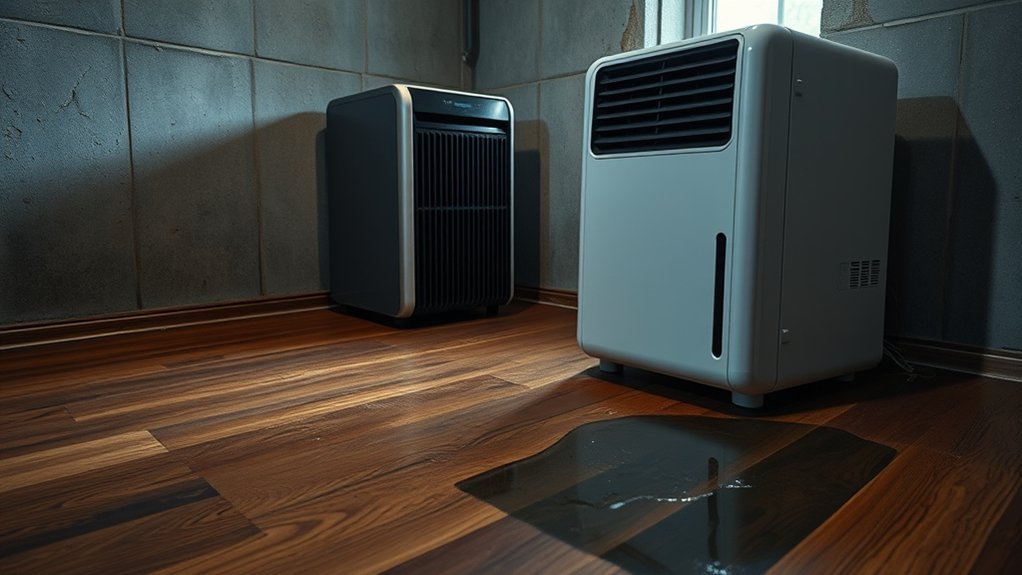
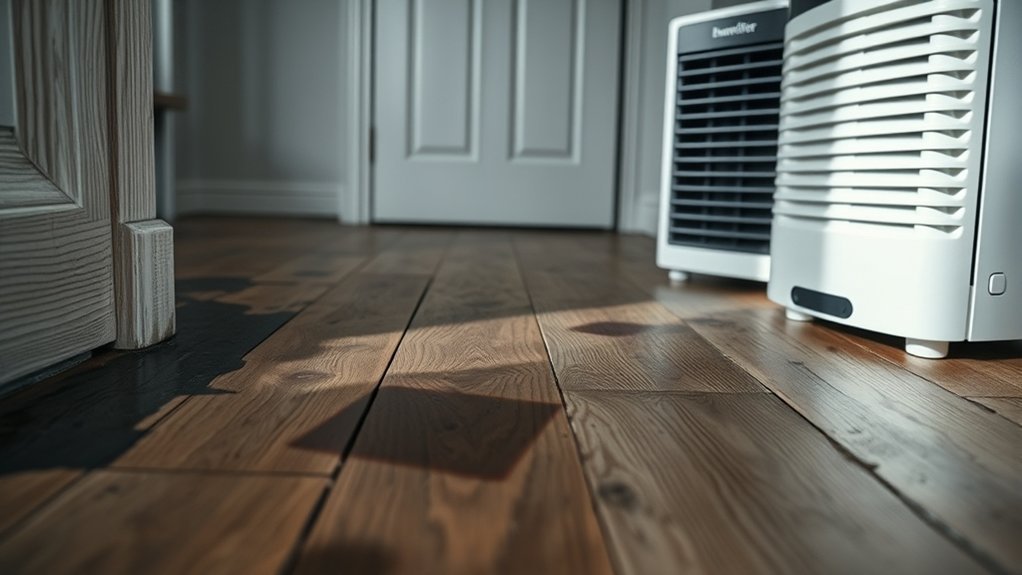
A dehumidifier will not directly pull standing water from under the floor. It works by removing water vapor from the air, and its capacity is rated by how much water it can remove over 24 hours under specified test conditions, according to ENERGY STAR.
That means it can help if the floor assembly is damp and moisture can evaporate into the room air. It is not enough if water is sealed beneath vinyl, laminate, tile, hardwood, underlayment, or insulation with no airflow path. In that case, the dehumidifier may dry the room while the hidden cavity stays wet.
The best approach is controlled drying: stop the leak, remove bulk water, open a path for air movement, run fans or air movers, use a dehumidifier to keep the room dry, and verify progress with a hygrometer and moisture meter.
Warning: Do not run fans, dehumidifiers, vacuums, or extension cords in standing water. If outlets, wiring, appliances, or the breaker panel may be wet, shut off power from a safe location and call a qualified professional.
Why Water Gets Trapped Under Your Floor
Water gets trapped under flooring when it moves below the visible surface and cannot evaporate quickly. This can happen after a plumbing leak, appliance overflow, roof leak, flood, crawl-space moisture problem, or repeated spills. The top of the floor may look dry while the underlayment, subfloor, joists, or insulation below it remain damp.
Hidden Subfloor Spaces
Subfloors, crawl spaces, underlayment seams, expansion gaps, and wall edges can hide moisture. Laminate and vinyl floors are especially good at slowing evaporation because their surface layers are less breathable than unfinished wood. Water can also run under baseboards or cabinets and settle where you cannot see it.
A dehumidifier helps only if moisture can move from the hidden area into the air. If the wet space is sealed, you need access points, lifted trim, removed planks, drilled inspection holes, crawl-space drying, or professional equipment that can move dry air into the cavity.
Porous Material Absorption
Porous materials act like sponges. Wood, plywood, OSB, fiberboard underlayment, carpet padding, insulation, and some setting beds can absorb moisture long after the surface looks dry. Wood also exchanges moisture with the surrounding air; the USDA Forest Products Laboratory explains that wood reaches an equilibrium moisture content based on temperature and relative humidity.
Do not rely on one universal moisture number for every floor. For example, the NWFA/NOFMA unfinished solid wood flooring standard lists manufactured flooring moisture content of 6%–9%, with a limited allowance up to 12% for some pieces, but that does not mean 12% is a safe target for every finished floor, subfloor, climate, or product. Always compare readings with dry nearby areas and the flooring manufacturer’s guidance.
Trapped Moisture Sources
The source matters because clean water from a supply line is handled differently than sewage, floodwater, or long-term seepage. If the source is still active, drying equipment only treats the symptom.
| Moisture Source | How It Gets Under Flooring | Main Risk |
|---|---|---|
| Plumbing leak | Runs through seams, wall edges, cabinets, or subfloor gaps | Rapid subfloor wetting and hidden swelling |
| Appliance overflow | Spreads under floating floors and toe-kicks | Wet underlayment and cabinet damage |
| Basement or crawl-space humidity | Condenses on cool surfaces or migrates upward | Persistent dampness and mold-supporting conditions |
| Floodwater or sewage | Soaks through floor openings and porous materials | Contamination, mold, and material removal |
Safety Steps Before You Start Drying
Before you set up a dehumidifier, make the area safe. Drying equipment is helpful, but water damage can involve electricity, contaminated water, mold, and weakened materials.
- Stop the water source first. Shut off the supply valve, repair the leak, clear the drain, or address exterior drainage before drying.
- Protect yourself. Wear gloves, eye protection, and a properly fitted mask if you are disturbing moldy or dirty materials.
- Do not handle sewage or floodwater as a simple DIY cleanup. Contaminated water often requires professional removal and disinfection.
- Remove wet rugs, loose items, and baseboards when needed. These can trap water against flooring and walls.
- Document damage. Take photos before removing materials if you may file an insurance claim.
Note: If the wet area is larger than you can inspect, smells musty, involves contaminated water, or has been wet for more than a day or two, drying the room air may not be enough. Hidden wet materials may need to be removed.
Recommended Products

NIOSH-APPROVED: 3M Particulate Filter 2097, P100 provides at least 99.97% filtration efficiency against solids and liquid aerosols, as well as oil-based particulates

NIOSH-APPROVED N95 for at least 95 percent filtration efficiency against certain non-oil-based particles and aerosols
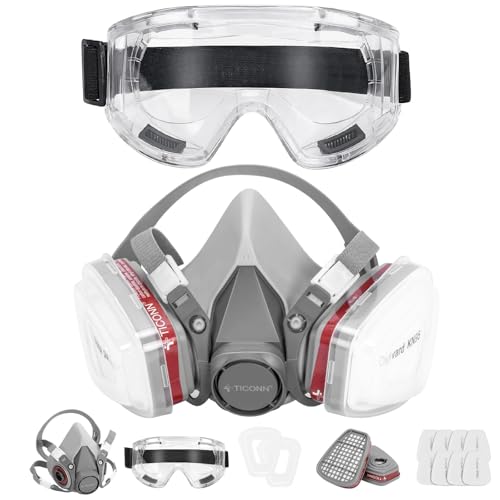
High-Efficiency Protection: TICONN safety gas mask features a dual filtration system that effectively blocks vapors, gases, smoke, pollen, and dust; A front-mounted one-way exhalation valve helps release exhaled air for easier breathing
How to Tell the Floor Is Still Wet
A floor can be wet underneath even when the surface feels dry. Use several checks instead of guessing.
- Look for shape changes. Cupping, crowning, buckling, raised seams, bubbling, soft spots, or swollen baseboards often point to moisture below the surface.
- Smell the room. A musty odor can mean damp materials or microbial growth in a hidden cavity.
- Feel for temperature differences. Damp areas often feel cooler than nearby dry areas.
- Listen for hollow or loose spots. Tile, vinyl, laminate, and wood can sound different when adhesive, underlayment, or subflooring has been affected.
- Use a hygrometer. Keep room humidity below 60%, and ideally between 30% and 50%, as recommended by the EPA for mold control.
- Use a moisture meter carefully. Check multiple spots, compare with unaffected areas, and follow the meter and flooring manufacturer’s instructions. Pinless meters can be helpful for scanning, while pin meters may give more targeted readings in accessible wood.
If moisture readings stay elevated after 24–48 hours of drying, or if the same area keeps testing wet while nearby areas are dry, assume moisture is trapped and create more access or call a professional.
How to Dry Water Under the Floor
To dry water under the floor, you need three things working together: bulk water removal, air movement, and humidity control. A dehumidifier handles only the humidity-control part.
- Stop the leak or water source. Do not start the drying clock until the water source is controlled.
- Remove standing water. For clean water only, use towels, a mop, or a wet/dry vacuum. Do not vacuum sewage, floodwater, or unknown water without professional guidance.
- Open a drying path. Remove wet rugs, mats, furniture, toe-kick panels, loose transition strips, and baseboards where water entered. For floating floors, some planks may need to be lifted.
- Place the dehumidifier near the wet zone. Keep doors and windows closed enough for the unit to lower the room’s relative humidity. Use continuous drain mode if the unit supports it.
- Add fans or air movers. Move air across the wet surface and toward openings where moisture can escape. Do not point fans at visible mold, because that can spread spores.
- Dry the space below if accessible. If the wet area is over a crawl space or basement, dry from below as well as above.
- Measure daily. Track room RH and moisture-meter readings in the wet area and a dry reference area.
- Escalate if drying stalls. If readings stop improving, the floor may need more access, material removal, or professional drying equipment.
Pro Tip: A dehumidifier works better in a controlled room. Close exterior windows and doors, empty or drain the tank continuously, clean the filter, and leave space around the unit so air can circulate freely.
The key to mold control is moisture control. Drying wet materials quickly, lowering humidity, and fixing the water source matter more than running one machine in a closed room.
Recommended Products

120 PPD Crawl Space Dehumidifier: The Sentinel HD55S Energy Star Certified dehumidifier removes up to 120 pints of moisture per day at saturation (55 PPD at AHAM) and effectively controls humidity in spaces up to 1,300 sq. ft. Its rugged metal housing is built for demanding environments and long-term reliability, making it ideal for crawl spaces, basements, warehouses, offices, factories, and storage areas

Specially Designed for Crawl Spaces— The AIUSEVO commercial dehumidifier features a high-performance compressor and a powerful 265 CFM airflow, removes up to 125 pint/d(at 95°F, 90% RH). Covers up to 6500 sq. ft. It can keep humidity at an ideal level and prevent excessive moisture from damaging your personal belongings. With compact dimensions of 19.3" x 17.8" x 17.5" , it fits between floor joists and in low-clearance crawl spaces. Ideal for Garage,warehouses, offices, factories, shops

PRO-GRADE 70-PINT PERFORMANCE – This AlorAir Crawl Space Dehumidifier removes up to 70 pints per day under saturated conditions (35 pints per day under AHAM standards). The advanced R32 system efficiently controls humidity in areas up to 1,000 sq. ft. Ideal for crawl spaces, basements, garages, attics, commercial and industrial environments. Serious performance meets modern efficiency.
Drying Tips by Flooring Type
Different flooring materials trap and release moisture differently. Use the floor type to decide how aggressive the drying plan should be.
Hardwood Floors
Hardwood can cup, crown, gap, or buckle when moisture changes unevenly. A dehumidifier and air movers can help, but aggressive heat can also damage wood if used incorrectly. Take moisture readings in several areas and compare them with unaffected wood. If boards are buckling, lifting, or staying wet underneath, call a wood-flooring or restoration professional before sanding or refinishing.
Laminate Floors
Laminate is vulnerable because its core can swell and delaminate. If water gets below laminate planks, drying from above may not save the floor. Lift planks when possible, dry the underlayment and subfloor, and replace swollen pieces.
Vinyl and Luxury Vinyl Plank
Vinyl surfaces can block evaporation. Water may travel under seams and stay trapped between the vinyl and subfloor. If water entered beneath the floor, you may need to remove planks or sheet vinyl edges to dry the subfloor properly.
Tile Floors
Tile itself may not absorb much water, but grout, mortar beds, cracks, and subflooring can hold moisture. Loose tiles, hollow sounds, or stained grout can indicate hidden water. A dehumidifier can help the room, but it may not dry a saturated setting bed quickly.
Carpet and Padding
Carpet padding often holds water like a sponge. If padding is soaked, it usually needs removal, especially after floodwater or sewage. Drying only the carpet surface can leave moisture and odor underneath.
Crawl Spaces and Basements
If the floor is above a crawl space or basement, inspect from below. Wet insulation, joists, sill plates, or subfloor panels can keep feeding moisture upward. Improve drainage, repair vapor barriers, and dry the underside before assuming the floor is safe.
When a Dehumidifier Isn’t Enough
A dehumidifier is not enough when moisture cannot evaporate into the room. You may need to lift flooring, remove wet underlayment, open wall cavities, or bring in restoration equipment.
Call a professional if you notice any of these signs:
- Water came from sewage, floodwater, or an unknown source.
- The wet area is larger than a small room or extends under cabinets or walls.
- Flooring is buckling, cupping, bubbling, or separating.
- Moisture readings stay high after steady drying.
- There is visible mold or a strong musty odor.
- Insulation, drywall, or subflooring is wet.
- You cannot safely access the wet area.
Professional restorers can use moisture mapping, containment, floor-drying mat systems, commercial dehumidifiers, and targeted air movement to dry areas a standard home setup cannot reach.
Recommended Products

COMPACT YET POWERFUL: Moves serious air, wherever you need it. This small portable fan delivers high-velocity airflow in a lightweight design. Delivers up to 289 CFM through three speeds, effectively cooling hot, stuffy areas.
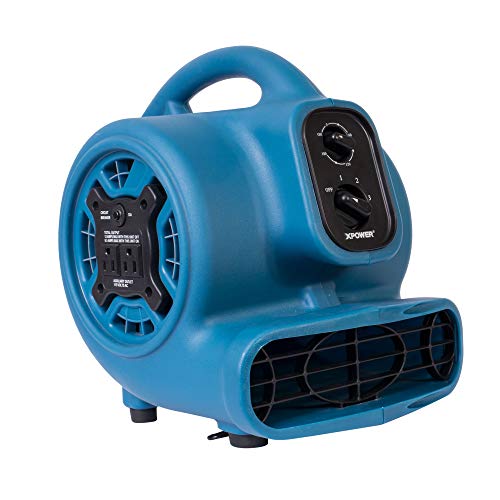
FASTER SURFACE DRYING–Speed-dry carpets, floors, furniture, windows, and walls with acentrifugal air mover! By producing a powerful, focused air current, the P-230AT is optimalfor drying flat surfaces and tight areas.

MADE FOR: A more efficient drying and cooling process
How to Prevent Mold Under Flooring
Keeping mold out from under flooring starts with controlling moisture quickly. The EPA says the key to mold control is moisture control and recommends drying water-damaged areas and items within 24–48 hours when possible. The CDC also advises removing items wet with floodwater if they cannot be cleaned and dried completely within 24–48 hours.
- Keep indoor humidity controlled. Aim below 60% RH, and ideally 30%–50%, when practical.
- Fix leaks immediately. Check supply lines, drains, appliances, roofs, windows, and exterior grading.
- Improve airflow. Ventilate crawl spaces correctly, keep HVAC systems maintained, and avoid sealing damp cavities without a drying plan.
- Use moisture barriers where appropriate. Basements and crawl spaces often need vapor control and drainage improvements.
- Replace materials that cannot be dried. Wet padding, swollen laminate, contaminated insulation, and moldy porous materials may not be salvageable.
Warning: Do not paint, seal, or install new flooring over a damp subfloor. Trapping moisture can lead to odor, mold growth, adhesive failure, and future flooring damage.
Frequently Asked Questions
Will a dehumidifier dry up water under the floor?
A dehumidifier can help dry damp flooring by lowering the humidity in the room, but it will not directly remove standing water trapped under the floor. If water is sealed under planks, vinyl, tile, padding, or subflooring, you need airflow, access, and possibly material removal.
How long should I run a dehumidifier after water gets under flooring?
Run it continuously until moisture readings stabilize near unaffected areas and the room humidity stays controlled. Small clean-water events may improve in 24–72 hours, but trapped water, wet padding, saturated subflooring, or poor airflow can take longer and may require professional drying. For typical timelines, see our guide on how long a dehumidifier takes to work.
Should I use fans with a dehumidifier?
Yes, if there is no visible mold and the water is clean. Fans or air movers help moisture evaporate from wet materials, while the dehumidifier removes that moisture from the air. If mold is visible, avoid blasting air across it and call a professional.
Do I need to pull up flooring to dry water underneath?
Sometimes, yes. If the floor is floating, swollen, buckled, musty, or still testing wet after drying, lifting flooring may be the only way to dry the underlayment and subfloor. Sealed surfaces like vinyl and laminate often hide moisture below.
What humidity level helps prevent mold after a leak?
Keep indoor relative humidity below 60%, and ideally between 30% and 50% when possible. Humidity control helps, but it does not replace removing wet materials, fixing the water source, and drying the floor assembly quickly.
Where should I place a dehumidifier for wet flooring?
Place it near the wet area with enough clearance for air intake and exhaust. Keep the room closed enough for the unit to lower humidity, use continuous drainage if available, and pair it with air movers pointed across wet surfaces or toward open access points.
Conclusion
A dehumidifier can help dry water under flooring only when moisture has a path to evaporate into the air. It lowers humidity and supports drying, but it does not remove hidden standing water by itself. For the best result, stop the water source, remove bulk water, create airflow, monitor humidity and moisture readings, and open or remove materials that stay wet. If the floor is buckling, smells musty, involves contaminated water, or will not dry quickly, call a water-damage restoration professional before hidden moisture becomes mold or structural damage.
Sources
- U.S. Environmental Protection Agency — Mold Course, Chapter 2 — supports indoor relative humidity below 60%, ideally 30%–50%.
- U.S. Environmental Protection Agency — A Brief Guide to Mold, Moisture and Your Home — supports moisture control and drying water-damaged materials within 24–48 hours.
- Centers for Disease Control and Prevention — 8 Tips to Clean Mold — supports removing flood-wet materials that cannot be cleaned and dried within 24–48 hours.
- ENERGY STAR — Dehumidifier Testing and Capacity — explains dehumidifier capacity as moisture removed from surrounding air over 24 hours under test conditions.
- NWFA/NOFMA International Standards for Unfinished Solid Wood Flooring — supports wood-flooring moisture-content context.
- USDA Forest Products Laboratory — Wood Handbook — supports wood moisture behavior and equilibrium moisture content concepts.