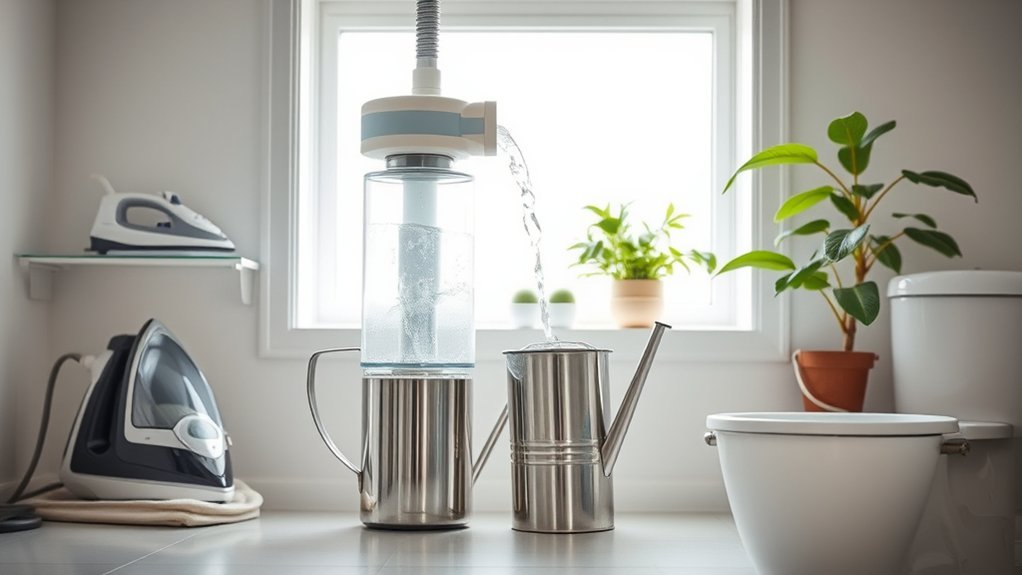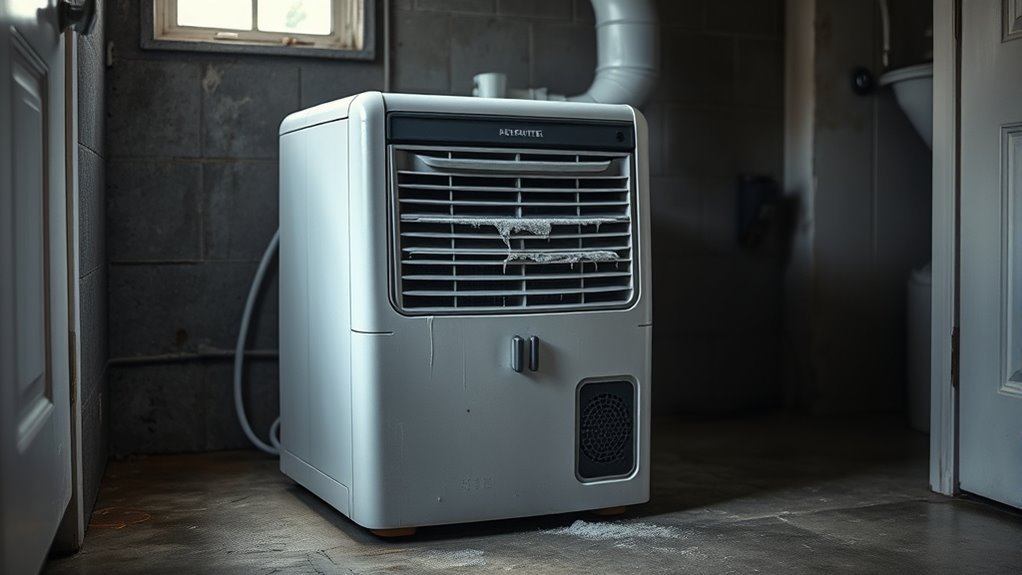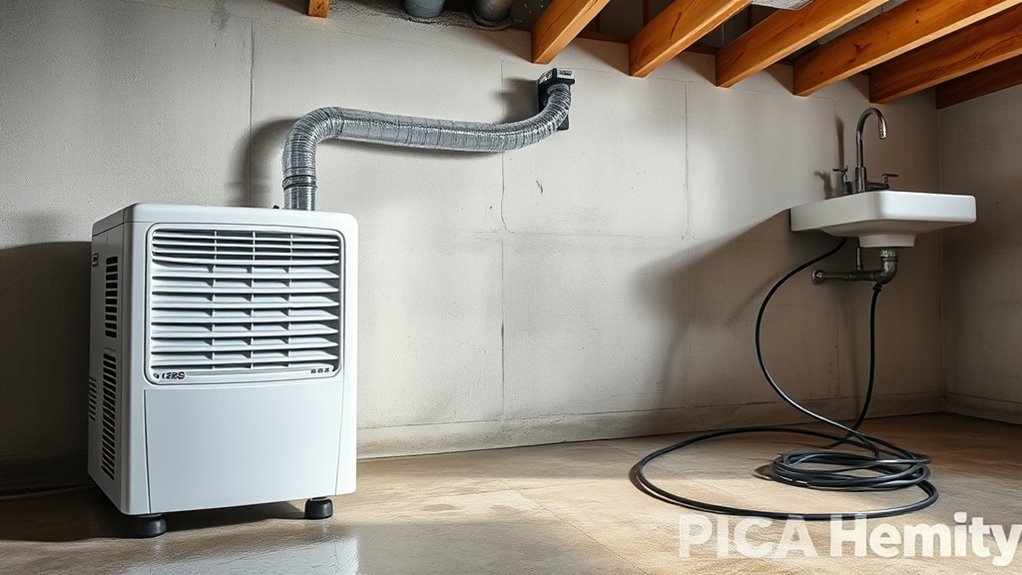
You can drain a basement dehumidifier without a floor drain, but the safest method depends on where the water can legally and reliably go. Use a gravity hose when the outlet can stay above the discharge point. Use a condensate pump when water must travel uphill. Treat a separate collection container as a monitored, temporary backup rather than a hands-off solution.
Quick Answer
Without a floor drain, route a gravity hose to a lower sink, sump, or approved outdoor discharge point, or let the hose feed a condensate pump that can lift the water. Keep every line sloped or correctly sized for the pump, add overflow protection, and never rely on an unmonitored open barrel.
Key Takeaways
- Gravity drainage is the simplest option, but the hose outlet must remain lower than the dehumidifier’s drain connection.
- A condensate pump is the better choice when water must move upward or across the basement.
- Use the hose and tubing sizes listed in the dehumidifier and pump manuals. A universal 3/4-inch inside-diameter hose is not required.
- Choose a legal discharge point that will not send water back toward the foundation, create ice, or allow drain water to backflow.
- A large container can overflow and become too heavy to move, so use it only with frequent checks, secondary containment, and a high-water alarm.
At a Glance
| Time Required | About 15 to 45 minutes for a basic hose or pump setup |
| Difficulty | Easy for gravity drainage; moderate for an external pump and safety switch |
| Tools Needed | Owner’s manuals, compatible hose or tubing, hose washer or clamp if required, level, and pliers if needed |
| Cost | No added cost if you already have the correct hose; otherwise it varies by hose, pump, tubing, and alarm |
Warning: Do not place a dehumidifier on an unstable box, chair, or narrow shelf just to gain drain height. Keep electrical plugs and connections dry, use the outlet arrangement required by the manufacturer, and stop using any setup that leaks, overflows, or trips a breaker.
Choose the Best Drainage Method
Start by identifying a safe discharge point and measuring the vertical difference between that point and the dehumidifier’s drain outlet. Then choose the simplest method that can move the water without creating a new moisture problem.
| Method | Best When | Main Risk |
|---|---|---|
| Gravity hose | The full hose run can slope continuously to a lower sink, sump, or approved outlet | A kink, upward loop, clogged hose, or submerged hose end can stop drainage |
| Condensate pump | Water must travel uphill or the drain point is too far away for gravity | Pump failure or a blocked discharge line can cause overflow |
| Collection container | You need a short-term backup while arranging a permanent route | Overflow, tipping, microbial growth, and excessive weight |
| Built-in bucket | The dehumidifier runs occasionally and someone can check it reliably | The unit shuts off when full, allowing humidity to rise again |
Recommended Products
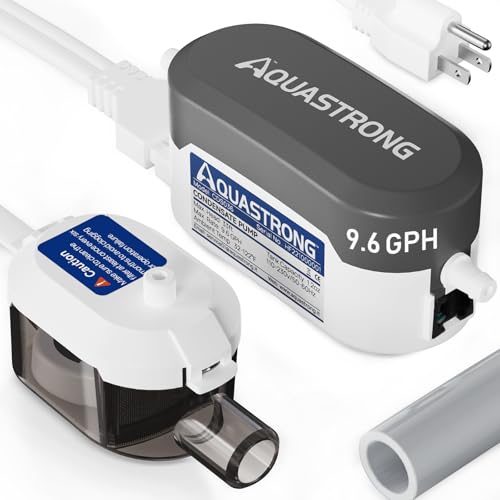
High Performance: Automatic condensate pump features an efficient thermally protected motor, providing quick draining and ultra-silent operation (20 dB) with max. flow 9.6 GPH or max. head 33ft. Reliable hall switch ensures auto operation and long service life. Ideal for removing condensate from collector pans of AC units, furnaces and dehumidifiers
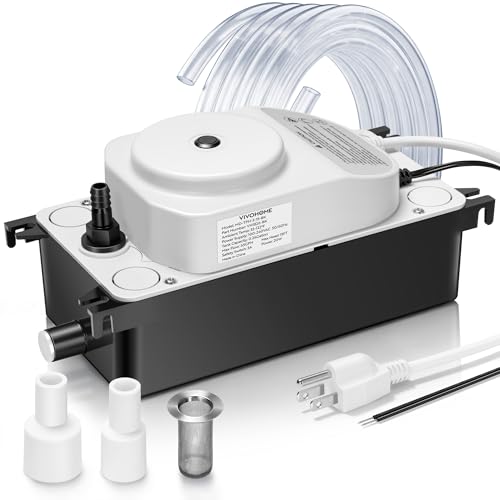
QUIET & POWERFUL & ENERGY-SAVING: Enjoy peace and savings with low-noise DC motor; The VIVOHOME condensate pump moves up to 65 GPH or lifts water up to 15 ft vertically, operating at only 25 dB and 20W for quick, quiet, and energy-efficient drainage

AUTOMATIC CONDENSATE PUMP: features a vertical-type switch to reduce footprint and is designed to automatically remove condensate produced by boilers, furnaces, air conditioners and de-humidifiers
How Much Water Will Your Basement Dehumidifier Collect?
A dehumidifier’s pint rating is the amount of water it can remove in 24 hours under a specified laboratory test, not a promise that it will collect that amount in every basement. Actual output changes with room temperature, relative humidity, airflow, runtime, unit condition, and moisture entering through walls, floors, leaks, or outdoor air.
Current portable-dehumidifier ratings also should not be compared directly with older labels. ENERGY STAR explains that the newer DOE test uses cooler conditions that better represent basements. Under its rough comparison, an older 70-pint portable model is similar to a newer 40- to 45-pint model.
Use this simple conversion only as a planning ceiling:
- 20 pints per day equals up to 2.5 gallons per day at the rated test condition.
- 30 pints per day equals up to 3.75 gallons per day at the rated test condition.
- 50 pints per day equals up to 6.25 gallons per day at the rated test condition.
Bucket-emptying frequency depends on the bucket’s actual volume and the water collected in your basement, not the pint number alone.
For example, a 30-pint unit running at its full rated output could theoretically produce 3.75 gallons in a day. If its bucket holds 1.5 gallons, it could need more than two empties during that unusually demanding day. In normal conditions, output may be much lower. Check the bucket after the first few hours and again after a full day to learn your real collection rate.
Note: If the basement stays above 60% relative humidity or the unit runs almost constantly, drainage is only part of the problem. Look for plumbing leaks, foundation seepage, open sump pits, poor grading, blocked gutters, or unvented moisture sources.
Drain Your Basement Dehumidifier With Gravity
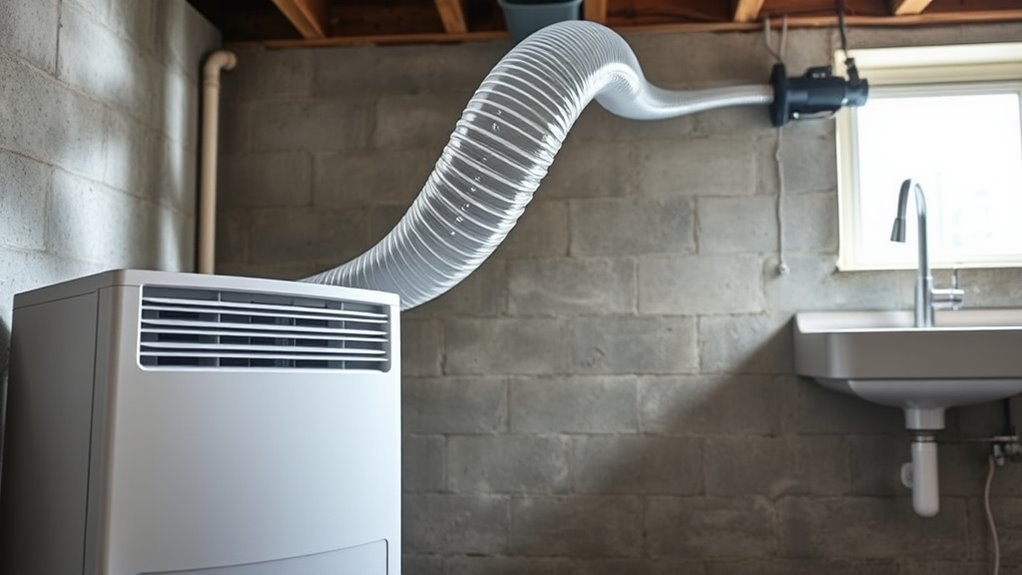
Gravity drainage works when the hose can run from the dehumidifier to a lower discharge point without any uphill section. It is usually the quietest and lowest-maintenance option because there is no pump motor or reservoir to service.
Recommended Products

[Convenient] This drain hose automatically drains water from the dehumidifier to the drain for uninterrupted use.

PREMIUM QUALITY - Nickel-plated brass fittings, fits standard 3/4" hose thread outlets. Fully compatible with most brands of dehumidifiers, and can also be connected to a variety of valves and hose taps.
1. Check the Hose Connection
Read the owner’s manual before buying a hose. Many portable units accept a standard garden-hose connection, but the required connector, washer, minimum hose diameter, and bucket position vary by model. Do not assume that every unit needs a 3/4-inch inside-diameter hose. Frigidaire advises using a large-diameter hose of at least 1/2 inch for its applicable models, while other manufacturers may specify a different hose.
2. Place the Unit on a Stable, Level Surface
Keep the dehumidifier level so condensate reaches its internal drain correctly. If you need more height, use a broad, load-rated platform that cannot wobble, collapse, or block the air intake. Leave the clearances listed in the manual.
3. Attach and Route the Hose
- Turn off and unplug the dehumidifier.
- Remove the drain cap or adapter as directed by the manual.
- Install the required washer, adapter, or hose connection without cross-threading it.
- Route the hose in the shortest practical path.
- Maintain a continuous downward slope from the unit to the outlet.
- Keep the hose flat where required and remove loops, pinches, and sharp bends.
- Position the hose end above the receiving water level so it cannot become submerged.
4. Test the Drainage
Restore power and run the unit while watching the connection, hose, and discharge point. Confirm that water reaches the destination and that none returns to the bucket or leaks onto the floor. Recheck it after several hours.
Pro Tip: A short hose with a steady downward pitch drains more reliably than a long hose laid nearly flat. Trim unnecessary length only when the hose is dedicated to this use and the manual allows it.
Use a Condensate Pump to Push Water Up
If gravity cannot move the water to a lower point, let the dehumidifier drain by gravity into an external condensate pump reservoir. The pump then sends the water through its smaller discharge tubing to the approved destination.
Do not choose a pump by a generic claim such as “15 feet up and 50 feet across.” Pump capacity drops as vertical lift increases, and each model has its own shutoff head, tubing size, flow curve, duty limits, and check-valve requirements. For example, the Little Giant VCMA-15 series lists a 15-foot shutoff head and a 3/8-inch barbed discharge. That does not mean every pump can deliver useful flow at 15 feet, and it does not justify using 3/4-inch hose on the pump outlet.
Recommended Products

AUTOMATIC CONDENSATE PUMP: features a vertical-type switch to reduce footprint and is designed to automatically remove condensate produced by boilers, furnaces, air conditioners and de-humidifiers

AUTOMATIC CONDENSATE PUMP: features a vertical-type switch to reduce footprint and is designed to automatically remove condensate produced by boilers, furnaces, air conditioners and dehumidifiers

AUTOMATIC CONDENSATE PUMP: features a vertical-type switch to reduce footprint and is designed to automatically remove condensate produced by boilers, furnaces, air conditioners and dehumidifiers
1. Choose a Suitable Pump
Look for a pump specifically approved for dehumidifier or HVAC condensate. Its rated lift must exceed the measured vertical rise, and its flow at that lift must exceed the dehumidifier’s expected water production. A built-in check valve helps prevent water in the discharge tube from flowing back into the reservoir.
For an unattended basement, choose a model with a high-water safety switch or connect a separate water alarm. A safety switch can sound an alarm or shut down compatible equipment before the reservoir overflows.
2. Connect the Dehumidifier to the Pump
- Set the pump on a level surface below the dehumidifier drain outlet.
- Run the dehumidifier’s gravity hose into the correct pump inlet.
- Keep that inlet hose short and continuously sloped downward.
- Attach only the discharge tubing size specified by the pump manufacturer.
- Route the discharge tube without kinks and install the check valve in the required direction.
- Secure the outlet so it cannot jump out of a sink or receptor when the pump starts.
3. Test the Pump and Overflow Protection
Follow the pump manual’s test procedure. Confirm that the float starts the pump, water reaches the drain point, the check valve prevents backflow, and the high-water switch or alarm responds. Inspect every fitting for leaks.
Warning: A condensate pump is not maintenance-free. Sludge, algae, debris, a stuck float, a failed check valve, or a pinched tube can stop drainage. Do not leave the setup unattended until it has completed several normal pump cycles without leaking.
Where to Send the Dehumidifier Water
The best destination is a trapped, approved plumbing receptor or another location permitted by your local plumbing and stormwater rules. The hose or pump tube should discharge where you can inspect it and where a blockage will not send water back into the dehumidifier.
Utility Sink or Approved Standpipe
A utility sink is often convenient because the outlet remains visible. Clip or secure the hose above the sink rim while preserving an air gap. Do not seal a dehumidifier hose inside a drain opening or push it below standing water. Use a washing-machine standpipe only when the arrangement is permitted and the hose is secured without blocking the standpipe’s required air space.
Sump Basin
A functioning sump basin can accept dehumidifier condensate when the system is clean, covered as appropriate, permitted locally, and capable of handling the added water. ENERGY STAR lists a sump as a common hose-drain destination. Keep the hose end arranged so sump water cannot back up into the unit, and verify that the sump pump, check valve, power supply, and discharge line work reliably.
Outdoor Discharge
Outdoor discharge may work when local rules allow it and freezing is not a concern. Route the water to a stable area that drains away from the foundation, window wells, walkways, neighboring property, wells, and septic drainfields. Do not let condensate pool beside the basement wall or create algae or ice on a walking surface.
Destinations to Avoid
- An open hose laid on the basement floor with no lower outlet
- A drain opening where the hose end will sit underwater
- A sanitary drain connection that is sealed without an approved trap or air gap
- A location near electrical equipment, stored valuables, or finished flooring
- An outdoor spot that sends water back toward the foundation
- A container that cannot be inspected, moved safely, or protected from overflow
Collect Water in a Large Container
A separate container can provide short-term collection when no permanent drain route is ready, but it is not automatically a low-maintenance solution. A 15- to 50-gallon container is sometimes suggested because it holds more water, yet that size creates serious practical problems. Water weighs about 8.3 pounds per U.S. gallon, so 15 gallons weighs roughly 125 pounds and 50 gallons weighs more than 400 pounds before adding the container’s weight.
Do not plan to carry a large container after it fills. If you must use one temporarily:
- Choose a rigid, stable, lidded container compatible with the hose.
- Keep it on the floor inside a secondary drain pan, not on a shelf.
- Use a high-water alarm or float switch.
- Check the water level at least daily until you know the collection rate.
- Keep children and pets away from the container and tubing.
- Clean and dry the container regularly to control slime and odor.
- Transfer the water with a suitable pump or empty a smaller, manageable container before it becomes heavy.
A smart leak sensor can alert you to water on the floor, but an app notification is not a substitute for a physical overflow switch or a person who can respond. Never assume a large container can be emptied weekly. A 50-pint unit could theoretically collect up to 6.25 gallons per day at its rated test condition, so even a large container may fill within days.
Empty the Bucket as a Last Resort
The built-in bucket is the safest manual collection method because the dehumidifier is designed to stop when the bucket is full or removed. Use it when the basement needs occasional drying or while you arrange a better drain route.
Do not rely on fixed claims such as “two to three empties per day for a 30-pint unit” or “four to six for a 70-pint unit.” Bucket capacity, room conditions, runtime, and rating method all change the result. Instead, check the bucket after two to four hours during the first day, note how quickly it fills, and set a realistic schedule.
When the bucket fills, the unit normally stops collecting water. That protects against an immediate bucket overflow, but humidity can climb while the machine is off. Empty, rinse, and reinstall the bucket correctly. If you are carrying water up stairs several times a day, install a proper hose or pump system.
Troubleshoot a Dehumidifier That Will Not Drain
If water stays in the bucket or appears on the floor, turn off and unplug the unit before checking the setup.
- Confirm the drain mode. Some units require the bucket, cap, adapter, or control setting to remain in a specific position.
- Check the slope. Remove every uphill loop and make sure the outlet is lower than the unit.
- Inspect the hose end. Raise it above standing water and make sure it is not sealed inside a drain.
- Look for kinks and clogs. Flush the hose with clean water and remove slime or debris from the drain port as the manual permits.
- Check the washer and threads. Replace a cracked or missing hose washer and correct any cross-threaded connection.
- Level the unit. A tilted dehumidifier or pump reservoir may not drain or trigger its float correctly.
- Test the pump. Check power, float movement, tubing, check-valve direction, and lift against the pump curve.
- Watch for freezing. A cold basement can cause frost on some dehumidifiers and reduce water removal.
GE Appliances describes manual, gravity-hose, and pump drainage as separate methods, so follow the instructions for the exact mode and model you own rather than combining parts from different methods.
Maintain the Drainage System
- Inspect the hose, pump reservoir, tubing, and discharge point every month during regular use.
- Clean the air filter on the schedule in the dehumidifier manual.
- Flush a gravity hose when flow slows or visible buildup appears.
- Clean the pump reservoir and test its float, check valve, alarm, and safety switch.
- Check outdoor outlets for insects, algae, ice, erosion, and water returning toward the house.
- Place a leak alarm near the dehumidifier and pump, especially in a finished basement.
- Recheck the system after moving the unit, changing a hose, or restoring power after an outage.
Control the Source of Basement Humidity
Drainage keeps the dehumidifier running, but it does not stop moisture from entering the basement. The U.S. Environmental Protection Agency recommends keeping indoor relative humidity between 30% and 50%. A practical basement setting is often around 45% to 50%, adjusted for comfort, condensation, and the unit’s accuracy.
Repair plumbing leaks, vent clothes dryers outdoors, cover open sump pits where appropriate, and keep gutters clear. Also make sure soil and roof runoff move away from the house. The University of Minnesota Extension identifies poor grading and ineffective roof-water drainage as common causes of basement moisture.
Frequently Asked Questions
How can I drain a dehumidifier in a basement without a hose?
Use the built-in bucket and empty it before the full-bucket shutdown, or place the unit above a compatible condensate pump reservoir if the manufacturer allows a short drain connection. A dehumidifier cannot continuously move collected water to another location without some type of hose, tube, pipe, or removable container.
Where should I drain my basement dehumidifier?
Use a lower utility sink, an approved standpipe or plumbing receptor, a functioning sump basin, or a permitted outdoor discharge point. Preserve an air gap, prevent backflow, secure the hose, and keep outdoor water away from the foundation and walkways.
Can a dehumidifier cause a sore throat?
A dehumidifier does not usually cause a sore throat directly, but air may feel uncomfortably dry if the humidity setting is too low. Keep indoor relative humidity in the recommended range, drink fluids, and consider other causes. Seek medical advice for severe, persistent, or recurring symptoms.
Is it okay to run a basement dehumidifier for only 12 hours a day?
It can be enough if a hygrometer shows that humidity remains controlled after the unit stops. There is no universal 12-hour schedule. Let the humidistat cycle the unit as needed, and run it longer if relative humidity rises above the target range, condensation returns, or the basement smells musty.
Can I drain a dehumidifier into a sump pump basin?
Usually, yes, when the sump system is permitted for that use, the basin and pump are in good condition, and the hose cannot back-siphon sump water. Keep the outlet secure and confirm that the sump discharge sends water safely away from the house.
Why is my dehumidifier filling the bucket when a drain hose is attached?
The hose may be kinked, clogged, too high, submerged, or connected without the correct washer or adapter. The unit may also require the bucket to be seated or a drain setting to be enabled. Unplug it, inspect the full route, clean the hose, and follow the model-specific manual.
Conclusion
When you need to drain a basement dehumidifier without a floor drain, use gravity if the entire hose can slope to a lower, approved destination. Use a properly sized condensate pump when water must move uphill. A sump or utility sink can work when the connection is secure and permitted, while outdoor discharge must stay away from the foundation and freezing surfaces.
A large collection container and manual bucket emptying can keep the unit running temporarily, but both require regular attention. The most reliable long-term setup combines a correct drain path, overflow protection, routine cleaning, and moisture-source repairs that keep basement humidity near the recommended range.
Sources
- ENERGY STAR: Dehumidifier Testing and Capacity — current rating methods and comparison with older pint ratings
- ENERGY STAR: Dehumidifiers — capacity guidance, water-removal options, sump drainage, and basement operating considerations
- U.S. EPA: Improving Your Indoor Environment — recommended indoor relative-humidity range
- Frigidaire: Dehumidifier Not Draining — gravity-hose size, slope, cleaning, and blockage guidance
- Little Giant: VCMA-15 Condensate Pump — example pump lift, discharge size, check valve, and performance data
- University of Minnesota Extension: Moisture in Basements — foundation grading, roof drainage, and basement moisture sources