
How are dehumidifiers rated? Mainly by pints per day, which is moisture removal capacity, and by Integrated Energy Factor (IEF), which is liters of water removed per kilowatt-hour. Then compare airflow, noise, operating temperature, drainage type, tank size, and humidistat control. Once you know what each rating means, you can match the dehumidifier to your room instead of guessing from the box.
Key Takeaways
- Pint capacity tells you how much water a dehumidifier can remove in 24 hours under standardized test conditions.
- Integrated Energy Factor (IEF) is the current efficiency metric; higher L/kWh means better moisture removal per unit of electricity.
- Newer pint ratings look lower than older ratings because portable dehumidifiers are tested at cooler, more realistic conditions than they were before 2020.
- Choose capacity by room dampness, humidity level, temperature, and drainage setup—not square footage alone.
- A good indoor target is usually below 60% relative humidity and ideally around 30% to 50% when possible.
Dehumidifier Ratings at a Glance
If you only compare one label, use this quick checklist. Capacity tells you how much moisture the unit can remove. IEF tells you how efficiently it removes that moisture. The other ratings tell you whether the unit will be practical in your actual room.
| Rating | What it means | Best way to use it |
| Pints/day | Moisture removed in 24 hours under test conditions. | Choose by dampness level, room size, and whether moisture keeps entering. |
| IEF | Liters of water removed per kWh of electricity. | Compare models in the same capacity class; higher is more efficient. |
| Airflow | How much room air the fan moves, often shown as CFM. | Useful for open basements and large rooms, but only if vents stay clear. |
| Noise | Sound level in decibels. | Prioritize lower dB ratings for bedrooms, offices, and living rooms. |
| Drainage | Bucket, gravity hose, or built-in pump. | Pick the setup that lets the unit run without shutting off from a full bucket. |
| Operating temperature | Temperature range where the unit can work reliably. | Look for low-temperature operation or auto-defrost in cool basements. |
How Are Dehumidifiers Rated? What the Ratings Mean
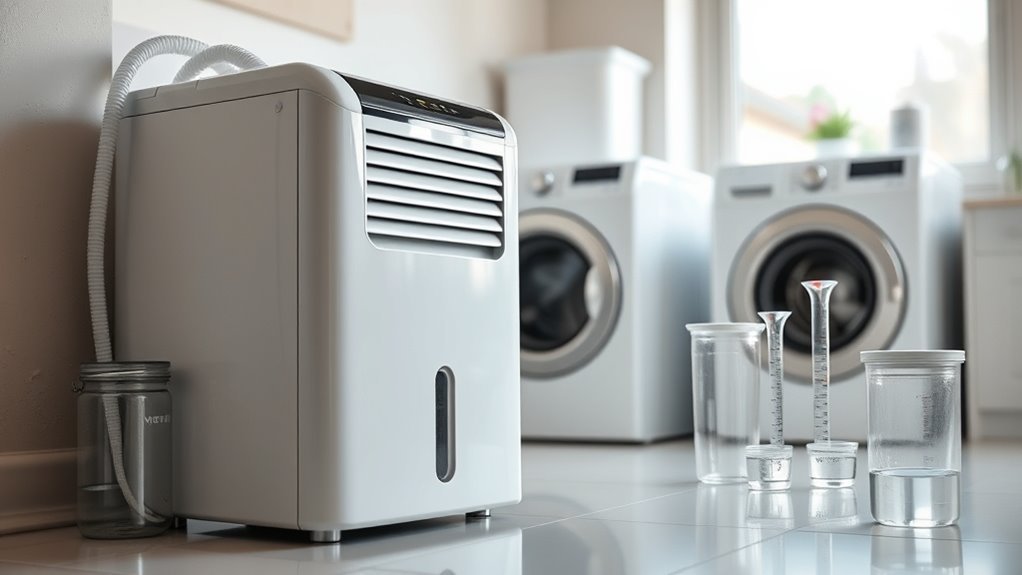
Dehumidifier ratings explain three big things: how much moisture the unit removes, how much power it uses, and how practical it is in your space. For the shorthand printed on labels, see what the numbers on a dehumidifier mean. According to ENERGY STAR dehumidifier testing guidance, the two primary performance ratings are capacity and energy efficiency.
- Capacity: measured in pints per day. This is the amount of water the unit can remove in 24 hours at test conditions.
- Integrated Energy Factor (IEF): measured in liters per kilowatt-hour. This shows how efficiently the unit removes water while accounting for dehumidification and low-power operating modes.
- Airflow: often shown as CFM, or cubic feet per minute. Higher airflow can help a unit process more room air, but placement and filter cleanliness matter too.
- Noise level: measured in decibels. Lower decibel ratings are better for bedrooms, living rooms, and home offices.
- Tank and drainage: tank size affects how often you empty the bucket. A hose connection or built-in pump can matter more than tank size in basements or laundry rooms.
- Operating temperature: low-temperature performance matters in basements, garages, and crawl spaces where frost can form on coils.
Note: Tank size is not the same as capacity. A 50-pint dehumidifier does not need a 50-pint bucket; it may remove up to 50 pints per day while shutting off or draining as the bucket fills.
How Is Dehumidifier Capacity Measured?
Capacity is measured in pints per day. A 50-pint dehumidifier can remove about 50 pints, or 6.25 gallons, of water from the air in 24 hours under the rating test conditions. That does not mean it will always collect that much water in your home.
Real output changes with room temperature, starting humidity, airflow, filter condition, and how much moisture keeps entering the room. A damp basement at 75% relative humidity gives the unit more water to remove than a finished room already near 45% relative humidity.
The formal federal test method for portable dehumidifiers corrects product capacity to standard rating conditions of 65°F dry-bulb temperature and 60% relative humidity. That is why current portable-unit ratings are more conservative than older ratings that used warmer test conditions.
Do Portable and Whole-Home Dehumidifiers Use the Same Rating Test?
No. Portable and whole-home dehumidifiers both use capacity and IEF ratings, but the federal test conditions are not identical. The current DOE method corrects portable dehumidifier capacity to 65°F and 60% relative humidity. Whole-home dehumidifier capacity is corrected to 73°F and 60% relative humidity.
| Type | Capacity rating condition | What it means for shoppers |
| Portable dehumidifier | 65°F and 60% RH | Better reflects cool basement-like use. |
| Whole-home dehumidifier | 73°F and 60% RH | Better reflects ducted equipment serving warmer living-space air. |
Why Did Pint Ratings Change in 2020?
Pint ratings changed because the U.S. Department of Energy updated how dehumidifiers are tested. ENERGY STAR explains that DOE finalized new standards that took effect in June 2019, and shoppers began seeing lower capacity ratings on comparable models starting in early 2020. The newer portable-unit test uses 65°F instead of the older 80°F condition, which better reflects basement-like use.
A newer “35-pint” dehumidifier may be closer in real-world class to an older “60-pint” model, so always compare units by the same test standard.
Cooler air holds less moisture than warmer air. Because there is less water available to remove at 65°F, the same class of machine often receives a lower pint rating under the newer test. That does not automatically mean the new model is weaker. It usually means the label is based on a more realistic test.
Old vs. New Pint Ratings: Quick Conversion
Use this as a rough comparison when replacing an older portable dehumidifier. Exact performance varies by model, but ENERGY STAR provides these approximate old-to-new capacity changes for portable dehumidifiers.
| Older rating through 2019 | Approximate newer rating from 2020 onward |
| 30 pints/day | 20 pints/day |
| 40 pints/day | 25 pints/day |
| 50 pints/day | 30 pints/day |
| 55 pints/day | 30–35 pints/day |
| 60 pints/day | 35 pints/day |
| 70 pints/day | 40–45 pints/day |
| 90 pints/day | 55 pints/day |
Pro Tip: If you are replacing an older unit, do not shop by the old pint number alone. Look for the newer equivalent capacity, then compare IEF, drainage, noise, and low-temperature operation.
Which Specs Matter Most in Real Homes?
The specs that matter most in real homes are the ones that predict comfort, cost, and convenience. Pint capacity matters, but it is only the starting point.
| Spec | Why it matters | What to look for |
| Pints per day | Shows moisture removal capacity. | Match to dampness level, not just square footage. |
| IEF | Shows efficiency in liters removed per kWh. | Higher is better; compare similar-capacity units. |
| Noise level | Affects bedrooms, offices, and living spaces. | Choose the lowest dB rating that still fits your moisture load. |
| Drainage | Controls how often you empty water. | Bucket for occasional use, gravity hose for floor drains, pump for uphill drainage. |
| Operating temperature | Cold rooms can cause frost and reduce performance. | Look for low-temperature operation or auto-defrost in cool basements. |
| Humidistat | Turns the unit on and off to hold a target RH. | Use a separate hygrometer if the built-in reading seems off. |
Recommended Products
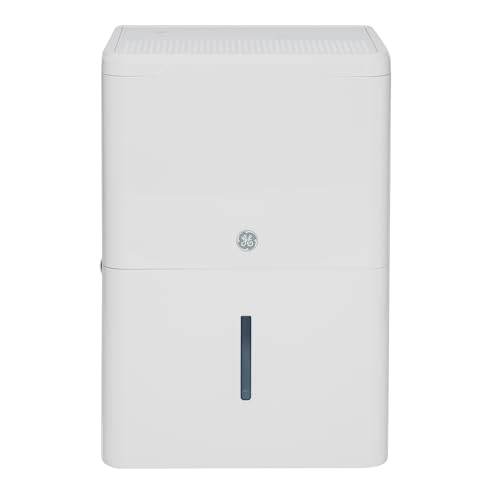
LARGE DEHUMIDIFIER: Effectively removes up to 50 pints of moisture daily, perfect for whole home moisture control including basements, garages, bedrooms, bathrooms, and high-humidity spaces up to 5000 sq ft.

【Mighty Performance: Versatile Drainage Defies Space Limits】 Unlike bulky units, ARION is a small compressor dehumidifier which blends a mini footprint with massive power. It removes 50 pints/day at 95℉/95% RH, for up to 3000 sq.ft. (Capacity ≠ tank volume. High output quickly fills the 0.5-gal tank; to avoid frequent emptying, use the included hose for continuous gravity drainage. You can also pair the provided Garden Hose Adapter(3/4 inch) with your own garden hose for an ultra-long path, solving the dilemma of no nearby floor drains).

130 Pint Crawl Space Dehumidifier - Removes up to 130 pints of moisture per day (under 95°F, 90% RH) with a powerful high-brush motor and a maximum airflow of 206 CFM, effectively reducing humidity in spaces up to 7,500 square feet. The humidity is adjustable from 10% to 98% RH, offering greater control than most devices (which range from 20%-80% RH). Ideal for commercial, industrial, crawl spaces, storage rooms, garages, living spaces, and offices
How Do You Choose the Right Pint Rating?
The right pint rating depends on the size of the space, how damp it is, how cold it gets, and whether new moisture keeps entering. Our guide on what size dehumidifier you need goes deeper. ENERGY STAR recommends estimating capacity from the room’s dampness condition and size, then oversizing rather than undersizing when you are between capacities.
- Measure humidity first. Use a hygrometer for a few days. A target below 60% RH, and ideally around 30% to 50%, helps reduce mold-friendly conditions.
- Identify the moisture level. A musty smell is different from wet walls, seepage, or laundry drying indoors.
- Choose capacity by condition. Very damp and wet spaces need more capacity than mildly damp rooms of the same size.
- Adjust for temperature. If the room often falls below 65°F, choose a unit rated for lower-temperature use.
- Plan drainage. A larger unit is easier to live with when it has a hose or pump instead of a small bucket.
| Condition without dehumidification | Small-medium room under 2,000 sq. ft. | Large room over 2,000 sq. ft. |
| Slightly to moderately damp, musty at times, about 50%–75% RH | 20–30 pints/day | 30+ pints/day |
| Very damp, consistent damp smell, damp spots, about 75%–90% RH | 25–40 pints/day | 40+ pints/day |
| Wet, sweating walls or floors, seepage, laundry drying, about 90%–100% RH | 30–50 pints/day | 50+ pints/day |
Recommended Products

SEE YOUR HUMIDITY AT A GLANCE — REAL-TIME DISPLAY + INSTANT READINGS: The digital display shows your room's exact humidity percentage in real time — no guessing, no checking your phone. Set your target anywhere from 30–80% RH and this dehumidifier works to reach it, cycling on and off automatically to hold the level once it gets there. An easy way to keep tabs on moisture in a basement, bedroom without any extra equipment

【Waykar Dehumidifier For Spaces Up To 7,000 Sq. Ft.】Our dehumidifier are able to remove up to 150 pints (under 95°F, 90%RH condition) of moisture per day, which cover areas up to 7,000 Sq. Ft. and adjust humidity from 30% to 80%. It is a dehumidifier ideal for home, basement, wine cellars, garages, supermarkets, concourses, and other indoor/outdoor places,cellars, crawlspace, large spaces, etc.

【2000 Sq. ft. 30 Pint Dehumidifier for Home】HUMILABS Dehumidifier with self-developed high-power compressor, can remove up to 30 pints/3 gal of moisture in the air per day Suitable for basements, offices, bathrooms, bedrooms, garages, laundries, cellars and other occasions, effectively controlling the environmental humidity, to provide protection for the environment and physical health
How to Read IEF and ENERGY STAR Ratings
IEF stands for Integrated Energy Factor. ENERGY STAR defines it as the ratio between dehumidifier capacity and total energy consumed, expressed in liters per kilowatt-hour. A higher IEF means the unit removes more water for each kWh of electricity.
Current ENERGY STAR efficiency criteria for certified portable dehumidifiers use these minimum IEF levels:
- 25 pints/day or less: at least 1.70 L/kWh.
- 25.01 to 50 pints/day: at least 2.01 L/kWh.
- 50 pints/day or more: at least 3.30 L/kWh.
Do not compare IEF in isolation. First choose the right capacity class, then pick the more efficient unit within that class. A small, efficient unit can still run constantly and disappoint you if the room needs a larger capacity.
How Do You Compare Dehumidifier Labels in Store?
Start with the same rating standard. Compare current DOE-rated pint capacities against current DOE-rated pint capacities, not an old 2019 label against a new 2020-and-later label. Then compare IEF inside the same capacity class.
- Match the capacity class. Choose the smallest class that can handle your dampness level, then move up if the room is cold, open, or repeatedly gets wet.
- Check IEF next. Higher IEF means better moisture removal per kWh, but only after capacity is adequate.
- Confirm drainage. A high-capacity unit is frustrating if it shuts off because the bucket fills while you are away.
- Check low-temperature notes. For basements, look for auto-defrost or low-temperature operation.
- Check sound level. A louder unit may be fine in a basement but annoying in a bedroom or office.
Recommended Products

【129 Pints Max Powerful Moisture Removal】: Built for heavy humidity and larger spaces, this high-capacity dehumidifier removes up to 129 pints of moisture per day under high-temperature, high-humidity conditions, with 50-pint DOE-rated performance for reliable everyday use. Ideal for basements, large rooms, laundry areas and other humid spaces around the home.

65 Pints Max for High-Humidity Conditions: Built to handle demanding humidity, this dehumidifier removes up to 65.5 pints of moisture per day at 90°F and 80% RH, while delivering 25-pint DOE-rated capacity for everyday dehumidification. Ideal for basements, bedrooms, laundry rooms and other moisture-prone areas around the home.
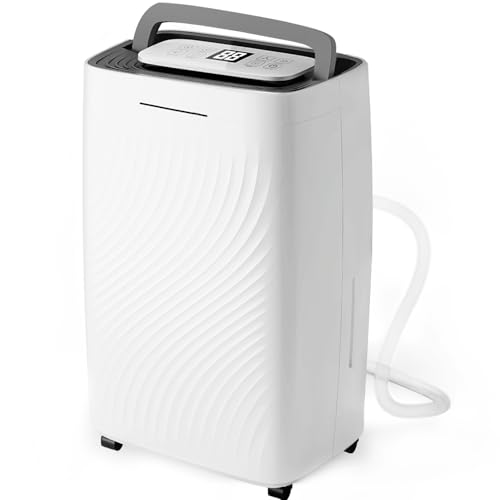
Manastin 5500 Sq.Ft High-Efficiency Dehumidifier Engineered as a robust dehumidifier for home up to 5,500 sq. ft., this Manastin unit delivers exceptional moisture extraction. It pulls 80 pints/day in peak summer (95°F, 95% RH) and 50 pints/day in damp basements (86°F, 80% RH). This large dehumidifier for home outperforms standard 50-pint units while being more compact and energy efficient than bulky industrial models. Includes auto-defrost, safety shut-off, a 1.6-gallon tank, and a 78-inch hose for continuous drainage
What Conditions Change Real-World Performance?
Dehumidifier ratings come from controlled tests, but your home is not a lab. These factors can make real output higher or lower than the label:
- Temperature: cooler rooms reduce moisture removal and can cause frost on coils.
- Starting humidity: the higher the humidity, the more water the unit can remove at first.
- Airflow: blocked intake or discharge vents slow performance.
- Open doors and windows: outside humidity can keep refilling the room with moisture.
- Dirty filters: dust restricts airflow and lowers efficiency.
- Water intrusion: leaks, seepage, poor drainage, and wet building materials can overwhelm any portable unit.
- Room layout: closed doors, tall ceilings, and separated rooms reduce coverage.
Warning: A dehumidifier controls airborne moisture; it does not fix leaks, flooding, mold contamination, or unsafe wiring. Repair water problems first, keep drainage away from electrical cords, and follow the manufacturer’s grounding instructions.
Common Rating Mistakes to Avoid
- Comparing old and new pint ratings directly. A pre-2020 “70-pint” model is not the same label class as a current “70-pint” model.
- Buying by square footage only. Dampness level matters as much as room size.
- Ignoring drainage. A high-capacity unit with a tiny bucket may shut off before it does the job.
- Setting the humidistat too low. A very low target wastes energy and may make the air uncomfortably dry.
- Using a dehumidifier in a cold room without defrost protection. Frost can reduce water removal and cause short cycling.
- Assuming “coverage area” is exact. Coverage claims are estimates and depend on layout, airflow, and moisture load.
Frequently Asked Questions
What does pint rating mean on a dehumidifier?
It is how many pints of water the dehumidifier can remove from the air in 24 hours under standardized test conditions. It is a capacity rating, not the bucket size, and actual collection depends on humidity, temperature, airflow, and how much moisture keeps entering the room.
What is IEF on a dehumidifier?
IEF stands for Integrated Energy Factor. It measures liters of water removed per kilowatt-hour, including dehumidification and low-power modes, and a higher number is better when you compare models in the same capacity class.
Why are new dehumidifier pint ratings lower than old ones?
The DOE test method changed. Older ratings used 80 degree F air, while the current portable test uses 65 degree F and 60% relative humidity. Cooler air holds less water, so the same class of machine gets a lower pint rating.
Is a 50-pint dehumidifier too big?
Not necessarily. A 50-pint unit suits a wet basement, a large area, or a space with seepage or laundry moisture, but it is more than a small, mildly damp bedroom needs. A working humidistat lets a larger unit cycle off once it reaches the target.
Are portable and whole-home dehumidifier ratings the same?
No. Both use capacity and IEF, but the federal test conditions differ. Portable capacity is corrected to 65 degrees F and 60% relative humidity, and whole-home capacity is corrected to 73 degrees F and 60% relative humidity.
Why is my dehumidifier not collecting much water?
The room may already be near the target humidity, the air may be cool, the filter may be dirty, vents may be blocked, or the humidistat may be set too high. Check with a separate hygrometer, clean the filter, and make sure the bucket or drain hose is seated correctly.
Conclusion
You cannot judge a dehumidifier by pint rating alone. Start with capacity, then compare IEF, noise, airflow, drainage, operating temperature, and humidistat control. The best unit is not always the largest one. It is the one that can hold your space near the EPA-recommended humidity range without wasting energy or creating constant maintenance. Use current pint ratings, check the IEF, and size the unit for the room’s actual dampness.
Sources
- ENERGY STAR: Dehumidifier Testing and Capacity: capacity definitions, IEF change, and 2020 rating changes.
- eCFR: Appendix X1 Uniform Test Method for Dehumidifiers: federal test conditions and capacity calculations.
- ENERGY STAR: Dehumidifiers Key Efficiency Criteria: current IEF thresholds for certified portable and whole-home dehumidifiers.
- ENERGY STAR: Dehumidifier Buying Guidance: sizing, drainage, placement, operating temperature, humidistat, and humidity guidance.
- U.S. EPA: A Brief Guide to Mold, Moisture and Your Home: indoor humidity guidance and moisture-control actions.
- CDC: Mold Prevention: humidity, airflow, leak repair, and mold-prevention guidance.


[…] Dehumidifier Ratings Explained: 2026 Pint & IEF Guide — nordicdesignblog.com […]