Affiliate disclosure: This article contains affiliate links. We may earn a commission if you buy through them, at no extra cost to you.
UK buying note: The links below open Amazon.com listings. Check delivery to the UK, import charges, return terms, packet instructions, and seller details before ordering.
If you are looking for the best desiccant moisture absorbers for UK storage spaces in 2026, this guide compares four passive options for drawers, cupboards, cars, safes, toolboxes, equipment cabinets, and sealed storage boxes. These products are not substitutes for a powered room dehumidifier. They work best in small or enclosed spaces, and the right choice depends on capacity, reusability, spill risk, and how easily the desiccant can be monitored or recharged.
Quick verdict
Choose the Wisedry 2 x 500g packets for reusable general storage protection, the 5g colour-indicating packets for jars and small containers, or the CLEVAST boxes when you prefer a disposable absorber that collects liquid. The five-pack of 600g silica gel bags offers the greatest total capacity for larger enclosed storage areas.
How these picks were compared
The comparison focuses on desiccant type, pack size, reusability, saturation monitoring, spill risk, placement safety, and suitability for enclosed storage. No hands-on testing is claimed.
Quick Comparison
| Product | Type | Best For | Reusable? | Main Limitation | Link |
|---|---|---|---|---|---|
| 5g Colour-Indicating Packets | Silica gel sachets | Small containers, electronics cases, lenses, and dry storage | Yes, when recharged exactly as directed | Very limited capacity per packet | Check Amazon Availability |
| CLEVAST 6 Pack | Calcium chloride boxes | Wardrobes, cupboards, caravans, and small utility spaces | No | Collects liquid and must remain upright | Check Amazon Availability |
| Wisedry 2 x 500g | Indicating silica gel bags | Cars, safes, toolboxes, camera storage, and cupboards | Yes | Bulky for small containers | Check Amazon Availability |
| Large 600g Packs | Large silica gel bags | Larger sealed boxes, vehicle storage, safes, and equipment cabinets | Yes | No built-in colour indicator stated | Check Amazon Availability |
Colour-Indicating Silica Gel Packets (50 Pack)
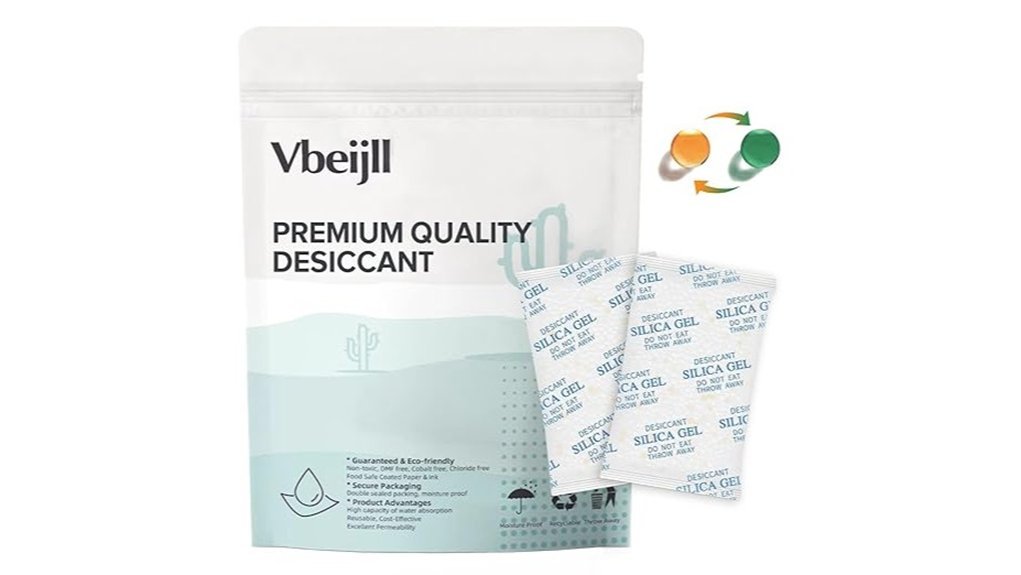
Best for small containers: These 5g colour-indicating silica gel packets are designed for compact moisture control in sealed or mostly enclosed storage. The 50-pack format makes it easy to distribute sachets among camera cases, electronics boxes, drawers, tool cases, small safes, and filament bags. The orange indicator beads change towards dark green as they absorb moisture, helping you judge when the packets need attention.
Why you may like them: They are small, easy to place, and reusable when the packet instructions permit heat reactivation. Their size also lets you use several sachets instead of putting one oversized pack into a small box.
Who should avoid them: Do not choose 5g sachets for an open room, a damp wardrobe with active condensation, or any space with a major water problem. Their capacity is intended for small-volume storage rather than whole-room humidity control.
Pros:
- Colour indicator provides a quick visual saturation check.
- Small format fits jars, drawers, cases, bags, and other tight spaces.
- Reusable when regenerated according to the product’s own instructions.
Cons:
- Each packet has limited capacity and may saturate quickly in humid conditions.
- Multiple packets may be needed for a larger container.
- Packets must be kept intact, dry on the outside, and away from children and pets.
Safety note: Do not eat silica gel. Use it near food only when the current packaging specifically permits that use, and do not use damaged or leaking sachets.
CLEVAST Moisture Absorber Boxes 6 Pack
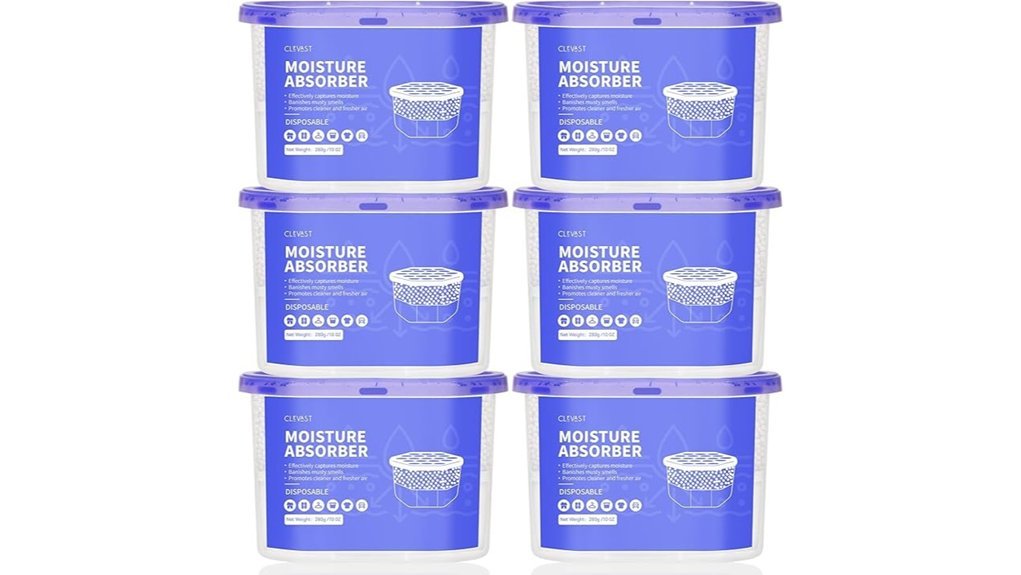
Best disposable option: CLEVAST’s unscented boxes use calcium chloride pellets to draw moisture from the surrounding air and collect the resulting liquid in the lower chamber. They suit wardrobes, cupboards, caravans, small bathroom storage areas, utility cupboards, and other compact spaces where you want a ready-to-use absorber without heating or recharging silica gel.
Why you may like them: The visible collection chamber makes progress easy to monitor, and the six-pack can be divided among several locations. There is no electrical setup, filter, or drain hose.
Who should avoid them: They are not ideal beside valuable papers, electronics, fabrics, or surfaces that could be damaged if the box is knocked over. They also create ongoing replacement waste because the calcium chloride is consumed during use.
Pros:
- Ready to use with no electricity or regeneration cycle.
- Visible liquid chamber shows when moisture has been collected.
- Six boxes can be placed in several small locations.
Cons:
- Disposable rather than reusable.
- Collected liquid creates a spill risk if the box tips.
- Not powerful enough for a large open room or serious damp problem.
Placement note: Keep each box upright on a stable surface, away from children, pets, valuables, and areas where collected liquid could cause damage.
Wisedry Colour-Indicating Silica Gel Desiccant Packets, 2 x 500g
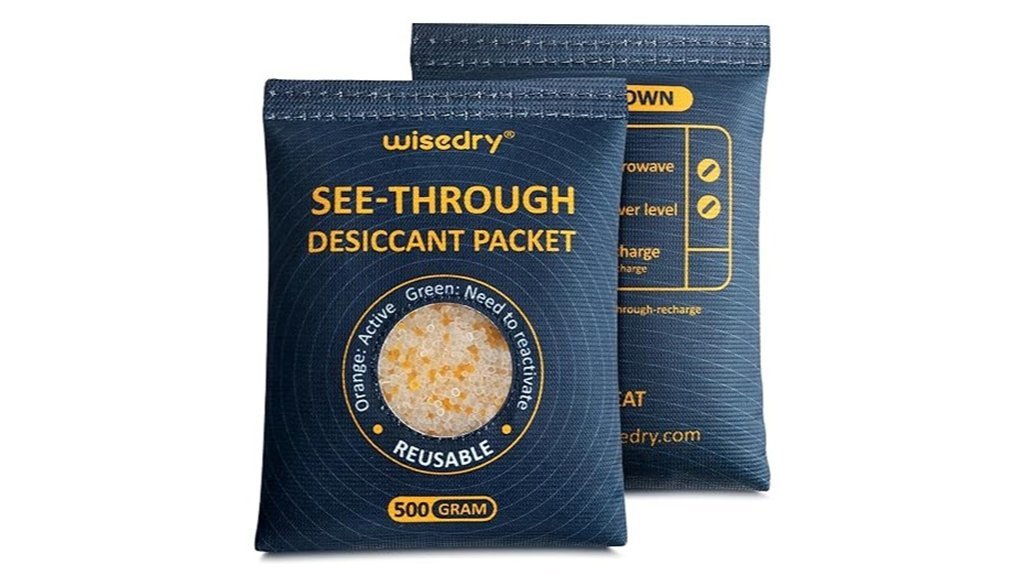
Best overall reusable pick: Wisedry’s two 500g silica gel packets provide more capacity than small sachets while remaining portable enough for cars, safes, camera storage, toolboxes, cupboards, boats, and sealed equipment areas. A see-through indicator window helps you check the beads: orange indicates usable desiccant, while dark green signals that regeneration is due.
Why you may like them: The larger capacity reduces how many packets you need, and the indicator makes maintenance easier than with plain silica gel bags. The reusable fabric format can be regenerated by oven or microwave only when you follow the current manufacturer directions for temperature, power, timing, placement, and cooling.
Who should avoid them: They are too bulky for jars and small cases, and they are not a replacement for a powered dehumidifier in a lived-in room, flooded area, or persistently wet basement.
Pros:
- Two large reusable packets suit medium-sized enclosed storage spaces.
- Colour-changing indicator window helps identify saturation.
- Suitable for repeated regeneration when the instructions are followed carefully.
Cons:
- Large packet size limits use in tight containers.
- Heating and cooling cycles require supervision and time.
- Performance depends heavily on how well the target space is enclosed.
Maintenance tip: Confirm saturation before heating. Do not copy timings from another desiccant product, and allow the packet to cool fully before returning it to storage.
Large 600g Reusable Silica Gel Desiccant Packs
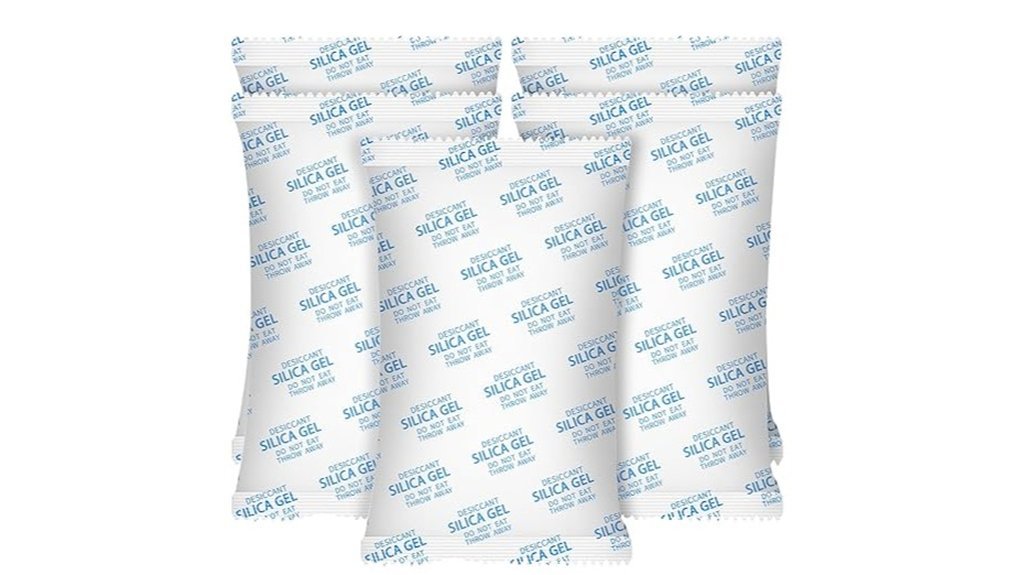
Best high-capacity bundle: This set contains five 600g transparent silica gel packs for vehicles, equipment cupboards, storage boxes, safes, filament storage, and other larger enclosed areas. The seller states that each pack can hold up to 240g of moisture under suitable conditions, giving the bundle substantially more total capacity than small sachets.
Why you may like them: Five separate packs let you divide the capacity across several locations or group multiple bags in one larger enclosure. The reusable design can reduce replacement waste when the regeneration instructions are followed correctly.
Who should avoid them: The packs are large, do not provide the same clear colour-change cue as indicating silica gel, and may be inconvenient if you do not have a safe way to heat, handle, and cool them.
Pros:
- Five 600g packs provide strong total capacity for enclosed storage.
- Reusable by the oven or microwave method specified by the seller.
- Transparent, cobalt-chloride-free silica gel is listed for a wide range of storage uses.
Cons:
- Large footprint does not suit drawers, jars, or small cases.
- No stated colour indicator means you may need to monitor weight or declining performance.
- Overheating can damage the packet, so regeneration instructions must be followed closely.
Best-use note: Treat these as storage absorbers, not as a way to dehumidify an open garage or basement. Place them inside a vehicle, cabinet, safe, dry box, or sealed container.
Factors to Consider When Choosing Desiccant Moisture Absorbers
Passive desiccants are most effective when the product type matches the space. Before buying, decide whether you need protection for a sealed container, wardrobe, car, safe, garage cabinet, equipment case, or filament dry box. Then compare total desiccant capacity, recharge method, indicator system, spill risk, and replacement cost.
Room Dehumidifier or Storage Absorber?
This is the most important distinction. Silica gel and calcium chloride boxes can protect belongings in small or enclosed spaces, but they do not move enough air to control humidity across a typical occupied room. If you have wet walls, recurring condensation, mould growth, a leak, or widespread damp, investigate the moisture source and use a correctly rated powered dehumidifier designed for UK mains electricity.
Enclosure Size and Moisture Load
Match the amount of desiccant to the volume of the storage space and the severity of the moisture problem. Small 5g packets are appropriate for jars, cases, and bags. Larger 500g or 600g packs suit cars, safes, cupboards, tool cabinets, dry boxes, and sealed storage containers. Very humid spaces may need several packs and more frequent regeneration.
Reusable vs Disposable
Reusable silica gel can offer better long-term value, but it requires safe heating, cooling, and monitoring. Disposable calcium chloride boxes are simpler because they need no regeneration, yet they must be replaced and create a liquid spill risk. Choose the maintenance method you are most likely to follow consistently.
Indicator and Saturation Checks
Colour-changing beads or windows make it easier to see when silica gel is saturated. Plain transparent packs may need to be weighed or judged by declining performance. Never assume a packet is ready for reheating; use the manufacturer’s indicator, weight guidance, and regeneration instructions.
Regeneration Method
Check whether the specific product allows oven heating, microwave heating, or both. Temperature, power level, cycle length, cooling time, and packet placement vary between products. Do not copy regeneration directions from another brand, and stop using any packet that is scorched, torn, leaking, or otherwise damaged.
Spill, Ingestion, and Placement Safety
Keep all desiccants away from children and pets. Do not ingest silica gel or calcium chloride. Keep liquid-collecting boxes upright and away from valuable surfaces. Packets used near food should be intact and specifically labelled for that application.
UK Marketplace Checks
Confirm that the seller ships to your UK address and review import charges, total delivered cost, return terms, package quantity, and current regeneration instructions. For any powered appliance, check the rating plate for 230V, 50Hz operation and a suitable UK plug before purchase. A plug adaptor alone does not change voltage or frequency.
Value Over Time
Compare cost per usable gram, expected recharge cycles, replacement frequency, and the number of locations you need to protect. A larger reusable pack can be economical for a car or storage cupboard, while small sachets are often more practical for many separate containers.
Before You Buy Checklist
- Decide whether you need room-level humidity control or only enclosed-storage protection.
- Measure or estimate the size of the container, cupboard, car, safe, cabinet, or dry box.
- Choose between reusable silica gel and disposable calcium chloride.
- Check for a colour indicator or a clear saturation-testing method.
- Read the exact regeneration instructions before heating any packet.
- Confirm safe placement around children, pets, food, electronics, and valuables.
- For UK orders, verify delivery, import charges, returns, and seller details.
Frequently Asked Questions
Are These Products Powered Room Dehumidifiers?
No. The four products in this guide are passive moisture absorbers. They are intended for enclosed storage and targeted protection, not active whole-room drying.
How Often Should Reusable Desiccants Be Regenerated?
Regenerate them when the product’s colour indicator, weight guidance, or performance shows saturation. The interval may range from days to months depending on packet size, enclosure volume, humidity, and how often the space is opened.
Can Silica Gel Stop Mould in a Room?
Not reliably. Silica gel can help protect belongings in enclosed storage, but room mould usually requires moisture-source repair, ventilation, heating, cleaning, and often a correctly sized powered dehumidifier.
Which Option Is Best for a Car?
A 500g or 600g reusable silica gel pack is more practical than tiny sachets for routine condensation control in a parked car. It will not solve water ingress, wet carpets, failed door seals, or a blocked drain, so repair those causes first.
Are Colour-Indicating Silica Gel Packets Safe Near Food?
Use them near food only when the current packaging specifically states that the product is suitable for that use. Keep packets intact, never ingest the contents, and discard damaged sachets.
Are Calcium Chloride Boxes Reusable?
Usually not. The crystals dissolve as they collect moisture, leaving liquid in the lower chamber. Replace the box according to its instructions and keep it upright during use and disposal.
What Should UK Buyers Check Before Ordering?
Check whether the listing ships to the UK, the total delivered cost, return options, product quantity, seller details, and current instructions. For powered appliances, also confirm 230V, 50Hz compatibility and an appropriate UK plug.
Conclusion
The best choice depends on what you are protecting. The Wisedry 2 x 500g packets are the most balanced reusable option for cars, safes, cupboards, and equipment storage. The 5g colour-indicating packets are better for jars and small cases, while the large 600g bundle offers more total capacity for bigger enclosed spaces. Choose the CLEVAST boxes for simple disposable moisture collection. For damp across an entire UK room, buy a properly rated powered dehumidifier instead of relying on passive packets.