Disclosure: As an Amazon Associate I earn from qualifying purchases. If you click a link on this page and make a purchase, we may receive a small commission at no extra cost to you.
Dry indoor air can shrink acoustic-guitar wood, while excessive moisture can cause swelling and setup problems. The Heysland 3 in 1 Guitar Humidifier HEY08 combines a refillable sponge, a desiccant option, and a removable soundhole cover in one compact accessory. It is a practical choice when your guitar has a 100 to 103 mm round soundhole, but it does not measure humidity or regulate moisture automatically. This review explains the fit, setup, limitations, and value so you can decide whether it suits your instrument-care routine.
Quick Verdict
Rating: 8/10, Recommended with caveats
Best For: Acoustic-guitar owners who want a compact manual humidifier, dehumidifier, and feedback cover for a compatible soundhole.
Bottom Line: The HEY08 offers useful three-way functionality in a small, reusable design. Its main tradeoff is that you must measure humidity yourself and choose either the damp sponge or desiccant based on the conditions.
| Specification | Detail |
|---|---|
| Product name | Heysland 3 in 1 Guitar Humidifier |
| Model | HEY08 |
| Product type | Manual acoustic-guitar humidifier, dehumidifier, and soundhole cover |
| Compatible soundhole | 100 to 103 mm (3.937 to 4.055 inches) in diameter |
| Item size | 11 × 1 cm (about 4.3 × 0.4 inches) |
| Item weight | 53 g (about 1.9 oz), according to the listing description |
| Materials | Plastic with a soft rubber-covered insert edge |
| Included parts | 1 soundhole cover, 1 sponge, and 1 bag of desiccant |
| Power required | None |
| Key limitation | Not suitable when the fretboard extends into or reaches the soundhole opening |
Key Takeaways
- The HEY08 is designed for round acoustic-guitar soundholes measuring 100 to 103 mm.
- You can use the included damp sponge to add moisture or the desiccant to reduce moisture, but the product does not switch modes automatically.
- The soft rubber-covered edge helps reduce direct hard-plastic contact with the soundhole.
- As a soundhole cover, it can reduce unwanted acoustic feedback when you amplify an acoustic-electric guitar.
- A digital hygrometer is still needed to know when to humidify, dehumidify, or remove the device.
What Is the Heysland 3 in 1 Guitar Humidifier?
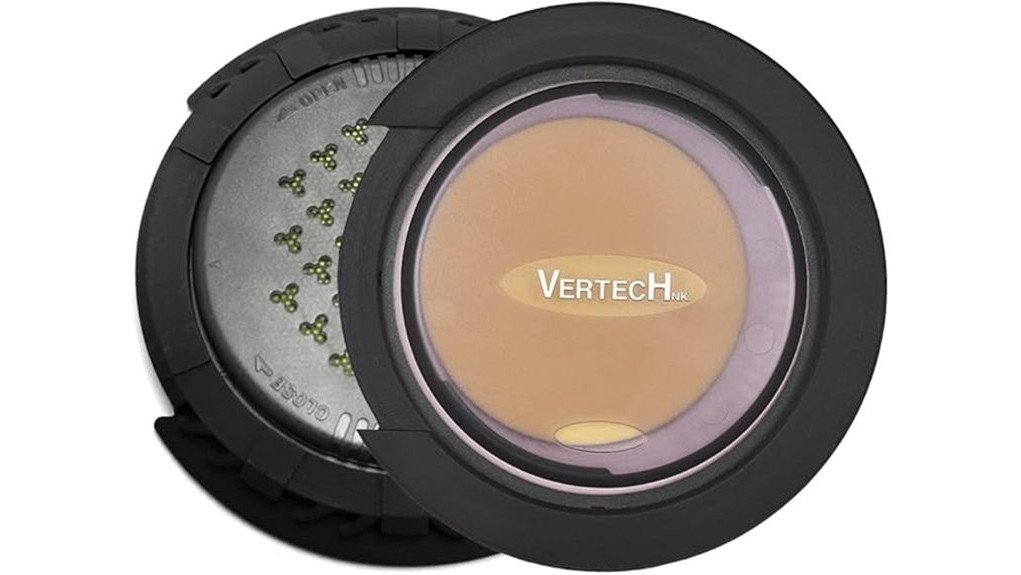
The Heysland HEY08 is a circular accessory that seats in the soundhole of a compatible acoustic guitar. Its housing accepts the included sponge for humidification or the included desiccant for moisture absorption. You can also use the housing without either moisture insert as a standard soundhole cover.
The design is aimed at players who want one compact accessory for basic guitar care and amplified performance. It does not include a hygrometer, digital display, automatic valve, or sealed two-way humidity packet. You remain responsible for checking the case humidity and selecting the correct mode.
Who Should Buy It?
Best For
- Owners of acoustic or acoustic-electric guitars with a clear 100 to 103 mm round soundhole.
- Players who already use a digital hygrometer and want manual moisture control.
- Performers who also need a removable soundhole cover to help control feedback.
Skip If
- Your soundhole is outside the listed size range or partly blocked by the fretboard.
- You want automatic two-way humidity control with no sponge refilling.
- You need a built-in humidity display or alert.
Before You Buy: Measure the clear soundhole opening before ordering. The listing states that this cover is not suitable when the guitar’s fretboard reaches the soundhole, even if the nominal diameter appears correct.
Why Humidity Control Matters for an Acoustic Guitar
Acoustic guitars react to changes in relative humidity because the body, braces, bridge, and neck include wood components. Many guitar makers recommend keeping an acoustic guitar near 45% to 55% relative humidity. Conditions below that range can dry and shrink wood, while prolonged high humidity can cause swelling and setup changes.
The Heysland accessory can help you respond to either direction, but only after you check the actual humidity. Use the sponge when the environment is too dry. Use the desiccant when the case is too humid. Remove both when the guitar is already within a safe range.
Understanding the Three Functions
| Function | How It Works | What You Need to Know |
|---|---|---|
| Humidifier | A damp sponge releases moisture into the guitar and case. | The sponge should be moist, not dripping, and you must rewet it as conditions require. |
| Dehumidifier | The included desiccant absorbs moisture from the surrounding air. | Use it only when a hygrometer shows that the environment is too humid. |
| Soundhole cover | The circular cover reduces air movement through the soundhole. | It can help reduce feedback when amplified, but it also changes unplugged projection and tone. |
Humidifier Performance
The refillable sponge is the simplest part of the system. Moisten it, squeeze out all excess water, place it in the housing, and fit the cover into the soundhole. The small reusable insert avoids disposable packet costs, but it needs more attention than an automatic two-way system.
Refill frequency depends on your room, case, season, and heating or air-conditioning use. Do not follow a fixed calendar alone. Check the sponge and your hygrometer regularly, because a sponge can dry much faster in winter than it does in a humid season.
Dehumidifier Performance
The included desiccant gives the HEY08 an advantage over basic sponge-only humidifiers. It can help when the guitar case is above the recommended humidity range, such as during damp weather or storage in a humid room.
This is still a small passive desiccant system, not a powered room dehumidifier. It is best viewed as case-level moisture management. If your room stays very humid, you may need broader climate control rather than relying on one small packet.
Soundhole Cover and Feedback Control
When you amplify an acoustic-electric guitar, sound from the speaker can re-enter the body through the soundhole and create a feedback loop. A fitted soundhole cover reduces that open pathway and can help you play at higher stage volume before feedback starts.
The tradeoff is noticeable during unplugged playing. Covering the soundhole reduces natural projection and can change the guitar’s acoustic response. Remove the cover when you want full unplugged volume and do not need moisture control.
Fit and Compatibility
The stated fit range is narrow: 100 to 103 mm, or about 3.94 to 4.06 inches. That range suits many full-size acoustic guitars, but it is not universal. Smaller travel guitars, some classical guitars, oval soundholes, and nonstandard body designs may not work.
The listing also warns that the product will not fit when the fretboard extends into the soundhole area. Measure the unobstructed opening where the rubber edge will seat. A cover that is too large can be difficult to install, while one that is too small may not stay secure.
Pro Tip: Measure the soundhole at two points and check for fretboard overlap before ordering. After installation, inspect the rubber edge to confirm that it sits evenly without forcing the rosette or finish.
How to Use It Correctly
- Check humidity first. Place a digital hygrometer in the guitar case and confirm whether the case is dry, normal, or humid.
- Select one moisture mode. Use the damp sponge for dry conditions or the desiccant for humid conditions. Do not assume both should be used together.
- Prepare the sponge safely. Moisten it and squeeze until no water drips. Liquid water should never contact the guitar’s wood or finish.
- Install without force. Seat the cover gently and confirm that the soft rubber edge rests evenly around the opening.
- Store the guitar in its closed case. A closed case creates a smaller environment that is easier to manage than an open room.
- Recheck the reading. Remove or change the insert when the humidity returns to the target range.
Follow the product instructions and your guitar maker’s care guidance. If the instrument already shows cracks, a lifted bridge, fret sprout, severe swelling, or major action changes, have a qualified guitar technician inspect it instead of treating the issue with humidity alone.
What to Expect in Everyday Use
For Winter Home Storage
Indoor heating can lower relative humidity quickly. In this setting, the sponge mode is the most useful feature. Keep the guitar in its case, monitor the reading, and rewet the sponge only when it becomes dry and the case remains below the recommended range.
For Humid-Climate Storage
In a damp climate, switch to the desiccant rather than adding water. The small packet can help manage moisture inside the case, but it may saturate faster when the room stays humid. A room dehumidifier may be the better long-term solution for a consistently wet environment.
For Live Amplified Performance
Used without the moisture inserts, the housing works as a feedback-reducing soundhole cover. This can be helpful near monitors or loud stage speakers. Test it during rehearsal because the cover can also change the plugged-in tone and the amount of acoustic sound you hear from the instrument.
For Travel and Climate Changes
The 53 g design is easy to carry in a case pocket, and the three modes reduce the need to pack separate accessories. The challenge is knowing which mode to use after a climate change. Keep a compact digital hygrometer in the case and check the reading after the guitar has adjusted to the new environment.
Materials, Build, and Care
The listing describes a plastic body with rubber around the insert edge. The rubber is the contact surface that helps reduce the chance of a hard edge scraping the soundhole. Even so, inspect both the cover and guitar before each installation, especially if dust or grit could become trapped between them.
Remove the sponge before cleaning the housing. Wipe the plastic and rubber with a clean, slightly damp cloth, then let the parts dry fully before returning them to the case. Do not soak the housing, apply household chemicals, or install a dripping sponge.
Pros and Cons
Pros
- Combines humidifying, dehumidifying, and feedback-cover functions.
- Includes the sponge and desiccant needed for both moisture modes.
- Soft rubber-covered edge reduces hard-plastic contact at the soundhole.
- No battery, app, or power connection is required.
- Compact 53 g design is easy to store in a guitar case.
Cons
- Narrow 100 to 103 mm fit range will not suit every acoustic guitar.
- No built-in hygrometer or automatic two-way control.
- Cannot fit guitars whose fretboard reaches into the soundhole.
Is It Worth the Price?
The HEY08 offers strong value for the price when all three functions matter to you. A reusable sponge, included desiccant, and feedback cover can replace several basic accessories, while the compact housing takes little room in a case.
The value is weaker if you only need automatic humidity maintenance. This product requires a separate hygrometer, manual mode selection, and regular sponge or desiccant checks. It is worth considering if you prefer a simple, reusable system and your soundhole matches the listed fit range.
How It Compares to Alternatives
The D’Addario Humidipak is better for buyers who want automatic two-way humidity control with less day-to-day adjustment. The MusicNomad Humitar ONE is worth comparing if you want a humidifier paired with a hygrometer, while the GUITTO GHD-04 is another cover-style option for a wider listed soundhole range.
The Heysland HEY08 makes the most sense when you want one low-tech accessory that can add moisture, absorb moisture, and reduce feedback. Its fit is more restrictive, and it depends more heavily on your own monitoring.
Frequently Asked Questions
What guitars fit the Heysland HEY08?
It is designed for acoustic guitars with a round soundhole measuring 100 to 103 mm. It is not suitable when the fretboard reaches into the soundhole opening, so check both diameter and clearance.
Does it automatically maintain the correct humidity?
No. You choose the damp sponge for dry conditions or the desiccant for humid conditions. Use a digital hygrometer to decide which mode is appropriate and when to remove it.
How wet should the sponge be?
The sponge should be evenly moist but never dripping. Squeeze out excess water before placing it in the housing, and do not allow liquid water to contact the guitar.
Can you use the sponge and desiccant together?
You should select the mode that matches the measured conditions. Using moisture-releasing and moisture-absorbing inserts together works against the purpose of each, so follow the product directions and your hygrometer reading.
Can it be used with an electric guitar?
It is not designed for a solid-body electric guitar. It may fit an acoustic-electric guitar because that instrument uses an acoustic body, but the soundhole must meet the 100 to 103 mm size and clearance requirements.
How often should the sponge or desiccant be replaced?
There is no verified fixed replacement interval in the listing. Check the sponge, desiccant, and case humidity regularly, then replace an insert if it is damaged, contaminated, no longer effective, or the seller’s instructions call for replacement.
Does the soundhole cover affect tone?
Yes. A soundhole cover can reduce feedback during amplified use, but it also reduces natural air movement and changes unplugged projection. Remove it when you want the guitar’s full acoustic response.
Is a hygrometer included?
No hygrometer appears in the verified package list. Plan to use a separate digital hygrometer so you can avoid adding moisture when the guitar is already humid or using desiccant when it is too dry.
The Bottom Line
The Heysland 3 in 1 Guitar Humidifier HEY08 is a smart buy for owners of compatible acoustic guitars who want manual moisture control plus a feedback cover in one compact accessory. Skip it if your soundhole does not fit, your fretboard overlaps the opening, or you prefer automatic two-way humidity regulation.
Its strongest feature is the flexible three-mode design. Its main limitation is that safe results depend on careful measurement, correct insert selection, and regular monitoring.