If you need a rotary tool for engraving, sanding, polishing, light cutting, grinding, or detailed DIY work, two options in this guide fit that buyer intent especially well: the Dremel 3000-2/28 and the GOXAWEE Mini Rotary Tool Kit. The Dremel is the more focused choice for buyers who want a well-established rotary-tool platform and two useful guide attachments, while the GOXAWEE stands out for its large accessory bundle, flexible shaft, and keyless chuck.
This article contains affiliate links. If you buy through one of these links, the site may earn a commission at no extra cost to you. Product details and availability can change, so check the current listing before ordering.
Quick Verdict
- Best Overall for General DIY: Dremel 3000-2/28 — 5,000–35,000 RPM, 28 accessories, and two guide attachments.
- Best Accessory Bundle: GOXAWEE Mini Rotary Tool Kit — 140-piece kit, flexible shaft, keyless chuck, and 8,000–30,000 RPM operation.
Quick Comparison: Dremel 3000 vs GOXAWEE
| Feature | Dremel 3000-2/28 | GOXAWEE Mini Rotary Tool Kit |
|---|---|---|
| Power Source | Corded, 1.2 Amp | Corded, 130W |
| Speed Range | 5,000–35,000 RPM | 8,000–30,000 RPM |
| Included Accessories | 28 accessories | 140-piece kit |
| Notable Extras | Sanding/grinding guide and multipurpose cutting guide | Flexible shaft, keyless chuck, cutting guide and shield |
| Best For | General DIY, carving, sanding, polishing and controlled cutting | Crafting and buyers wanting many accessories in one kit |
| Amazon | Check Availability | Check Availability |
Dremel 3000 Variable Speed Rotary Tool Kit
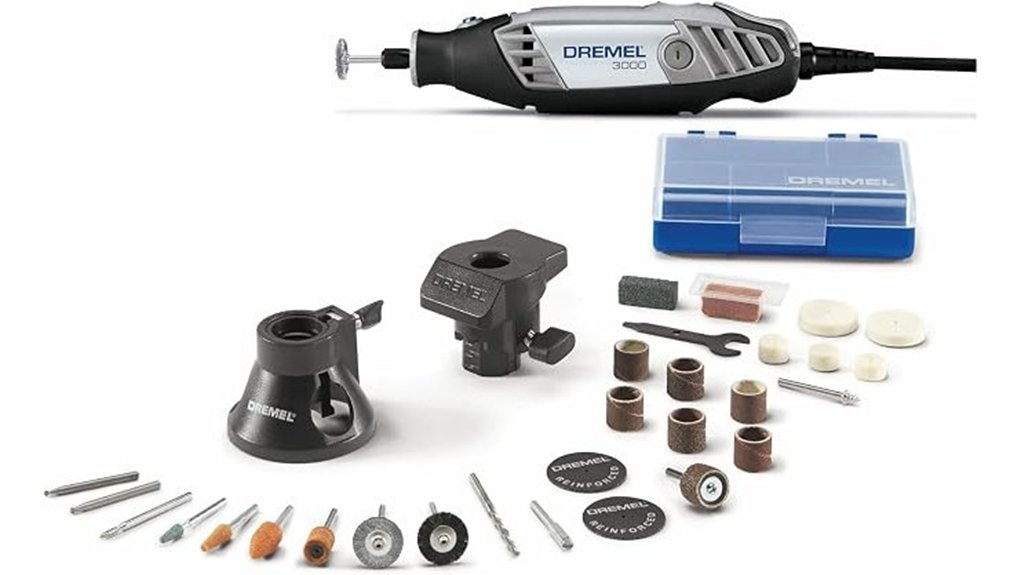
The Dremel 3000-2/28 Variable Speed Rotary Tool Kit is a strong all-around choice for detailed DIY jobs such as sanding, carving, grinding, polishing, cleaning, sharpening, and light cutting. Its 1.2 Amp corded motor provides a variable speed range of 5,000 to 35,000 RPM, giving you more control when switching between materials and accessories.
The 3000-2/28 kit includes 28 Dremel accessories plus two attachments: a sanding/grinding guide and a multipurpose cutting guide. Its ventilation system is designed to help manage heat during operation, while the compact body makes it easier to control during detailed work.
Best For: DIYers, hobbyists, crafters, and homeowners who want a versatile corded rotary tool with a broad accessory ecosystem.
Why You’ll Like It:
- Wide 5,000–35,000 RPM range gives you useful control for different materials and applications.
- Includes 28 accessories for common cutting, sanding, grinding, polishing, carving, and cleaning tasks.
- Two included guide attachments make sanding, grinding, and controlled cutting easier to manage.
- Corded power avoids battery-runtime concerns during longer bench projects.
Things to Consider:
- The cord limits mobility compared with a cordless rotary tool.
- The included accessory selection is smaller than the GOXAWEE kit.
- Rotary tools are intended for detailed and light-to-moderate work; they are not substitutes for larger grinders, saws, or drills when those tools are required.
GOXAWEE Mini Rotary Tool Kit (140 Pcs)
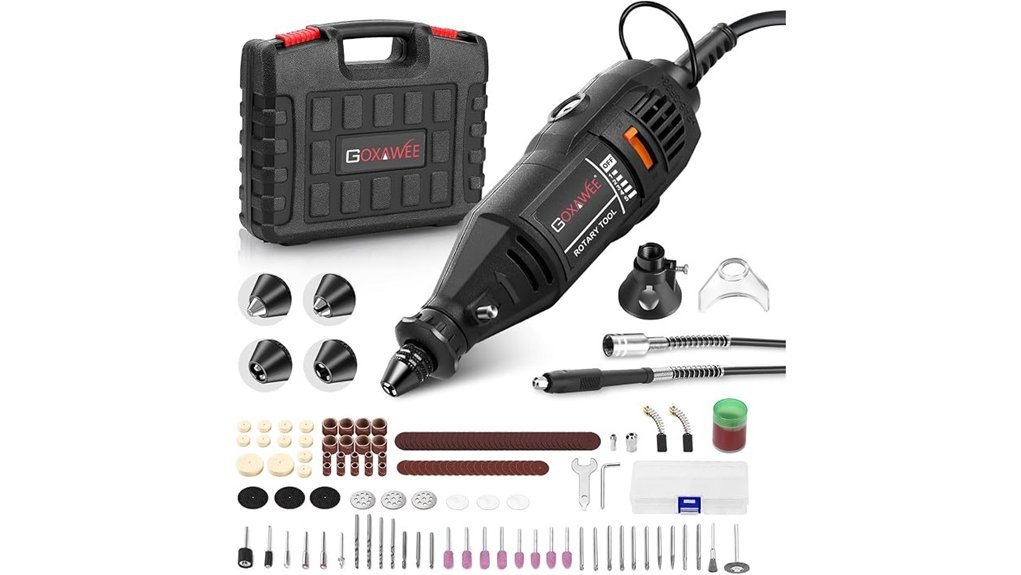
The GOXAWEE Mini Rotary Tool Kit is aimed at DIY and crafting users who want many accessories in one package. The corded G4007-US tool operates from 8,000 to 30,000 RPM and includes a 140-piece accessory kit for tasks such as sanding, polishing, cutting, engraving, grinding, cleaning, and drilling.
A major advantage is the keyless chuck, which accepts accessory shanks from approximately 1/64 inch to 1/8 inch. The kit also includes a flexible shaft, cutting guide, transparent shield, and storage case, making it particularly useful for detailed craft projects and buyers starting without an existing accessory collection.
Best For: DIY enthusiasts, crafters, and beginners who want a broad starter kit with a flexible shaft and many included accessories.
Why You’ll Like It:
- Large 140-piece bundle reduces the number of accessories you need to buy separately at the start.
- 8,000–30,000 RPM variable speed provides flexibility for different materials and jobs.
- Keyless chuck makes switching compatible accessory shanks more convenient.
- Flexible shaft can improve control during detailed engraving, polishing, and other precision work.
Things to Consider:
- Its minimum speed is higher than the Dremel 3000’s, which may matter for tasks that benefit from slower operation.
- The large kit includes many accessory types, but you may still prefer specialized or replacement accessories for demanding jobs.
- It is corded, so you need access to a suitable power outlet while working.
How to Choose a Rotary Tool for DIY and Home Projects
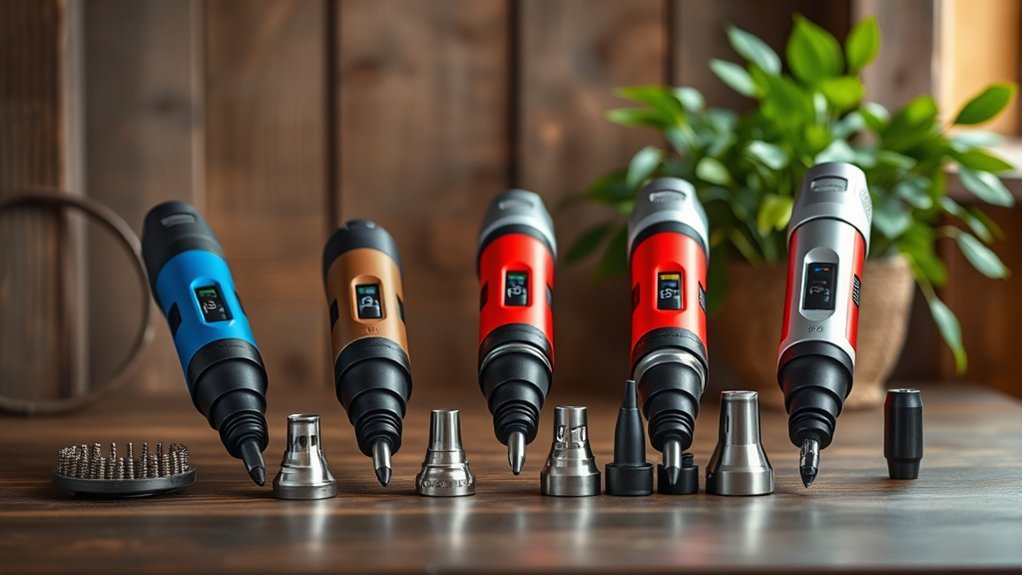
The best rotary tool for your projects depends on more than maximum RPM. Consider speed range, accessory compatibility, power source, attachments, ergonomics, and the materials you plan to work with. A good match makes detailed cutting, sanding, carving, polishing, and engraving easier to control.
Corded vs Cordless Rotary Tools
Corded rotary tools provide continuous power as long as you have access to an outlet. That makes them convenient for workbench projects and longer sessions where you do not want to manage batteries. Cordless models provide greater freedom of movement but add battery runtime, charging time, battery weight, and platform compatibility to the buying decision.
Both products retained in this guide are corded. If most of your work happens at a bench or in a garage, that may be perfectly suitable. If you frequently work away from outlets, a cordless model may better match your needs.
Why Variable Speed Matters
A variable-speed rotary tool lets you adjust the RPM to suit the accessory, material, and job. Lower speeds can provide better control for some polishing, delicate materials, and detailed work, while higher settings are commonly useful for cutting, carving, sanding, and material removal.
Do not assume maximum speed is always better. Follow the tool and accessory manufacturer’s recommended speed range. The accessory’s rated speed should be suitable for the speed at which you operate the rotary tool.
Accessory and Collet Compatibility
Accessory compatibility is one of the most important buying considerations. Check the shank diameter, collet or chuck size, accessory type, intended material, and maximum rated RPM before use.
The Dremel 3000 is designed around the Dremel rotary-tool accessory system and is compatible with a wide variety of accessories and attachments. The GOXAWEE kit uses a keyless chuck designed to accept shanks from roughly 1/64 inch to 1/8 inch. Physical fit alone does not guarantee that an accessory is appropriate, so always check its intended use and speed rating.
Included Accessories and Attachments
A large accessory count can be useful when you are starting from scratch, but the number alone should not determine your purchase. Consider whether the kit includes the accessories you will actually use.
The Dremel 3000-2/28 provides a smaller, more focused 28-accessory collection plus two guide attachments. The GOXAWEE provides a much larger 140-piece assortment along with a flexible shaft and other useful add-ons. Buyers who already own compatible accessories may value the Dremel ecosystem more, while a beginner may prefer the larger GOXAWEE starter bundle.
Comfort and Control
Rotary-tool jobs often involve detailed hand movements, so grip size, balance, vibration, and accessory setup matter. A compact tool body can help during freehand work, while a flexible shaft can move much of the tool’s bulk away from your hand during detailed engraving or polishing.
Take regular breaks during extended sessions, especially when a task requires a tight grip or continuous pressure. Let the accessory do the work rather than forcing it aggressively into the material.
Before You Buy Checklist
- What materials will you work on most often: wood, plastic, metal, glass, or another material?
- Do you need very low speeds as well as high-speed cutting and grinding?
- Are the included accessories useful for your actual projects?
- Will you benefit from a flexible shaft or cutting/sanding guide?
- Are replacement accessories easy for you to obtain?
- Does the tool accept the accessory shank sizes you plan to use?
- Will a corded design work comfortably in your usual workspace?
Safety Note
Read the owner’s manual before use. Wear suitable eye protection, inspect accessories for damage, and use hearing or respiratory protection when the task calls for it. Keep hair and loose clothing away from rotating parts. Make sure each accessory is correctly fitted and rated for the operating speed, and clamp small workpieces when practical.
Frequently Asked Questions
What Safety Gear Should I Wear When Using Rotary Tools?
Eye protection is important because cutting, sanding, grinding, and wire-brushing accessories can throw debris. Depending on the material and job, you may also need hearing protection, a suitable dust mask or respirator, gloves or protective clothing appropriate to the operation, and other PPE recommended by the tool manufacturer. Read the owner’s manual for the exact tool and accessory before use.
How Do I Maintain My Rotary Tool?
Disconnect the tool from power before maintenance. Keep exterior surfaces and ventilation openings clean, inspect the cord, chuck or collet, and accessories for damage, replace worn or damaged accessories, and store the tool in a clean, dry location. Follow the manufacturer’s manual for model-specific maintenance rather than adding lubricant or opening the tool unless the instructions specifically call for it.
Can Rotary Tools Be Used for Woodworking Projects?
Yes. With the correct accessories, rotary tools can handle detailed sanding, carving, engraving, shaping, polishing, and some cutting tasks in wood. They are particularly useful for small or intricate areas where a larger power tool would be difficult to control.
Do I Need Different Accessories for Different Materials?
Yes. Cutting wheels, sanding drums, engraving cutters, polishing accessories, grinding stones, brushes, and drill-type accessories are designed for different jobs and materials. Always confirm that the accessory is intended for the material you are working on, fits the tool correctly, and is rated for the intended operating speed.
Is a Flexible Shaft Worth Having?
A flexible shaft can be useful for detailed engraving, polishing, carving, and other precision work because you hold a smaller handpiece instead of the full tool body. It can improve access and control, although it is not necessary for every project.
Which Is Better: Dremel 3000 or GOXAWEE?
Choose the Dremel 3000-2/28 if you want a well-established rotary-tool platform, a broad 5,000–35,000 RPM range, and two useful guide attachments. Choose the GOXAWEE Mini Rotary Tool Kit if you place more value on a large 140-piece starter bundle, flexible shaft, and keyless chuck. The better option depends on whether you prioritize the tool platform or the quantity of included accessories.
Conclusion
For most buyers choosing between these two rotary tool kits, the Dremel 3000-2/28 is the stronger all-around option because of its broad speed range, established accessory system, and useful guide attachments. The GOXAWEE Mini Rotary Tool Kit is an appealing alternative when you want a large accessory collection, flexible shaft, and keyless chuck in one package.
Before ordering, think about the materials you work with most, the speed range you need, and whether you already own compatible accessories. Whichever tool you choose, use accessories that fit correctly and are rated for the tool’s operating speed.
Final Recommendation
Choose Dremel 3000: if you want the more established general-purpose rotary-tool setup.
Choose GOXAWEE: if a large starter accessory bundle and flexible-shaft setup matter more to you.