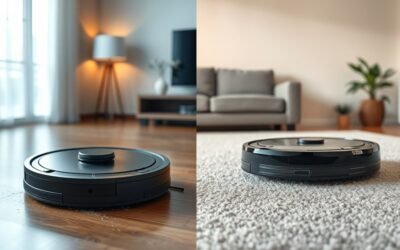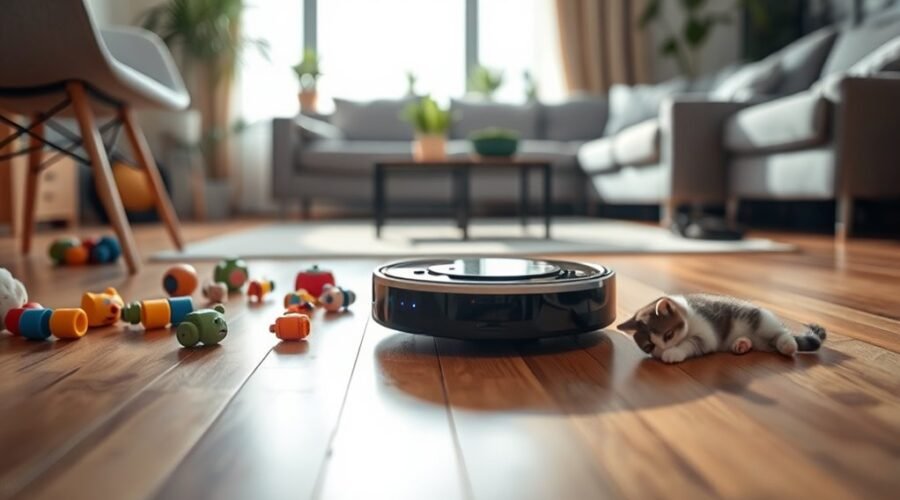
Robot vacuum object recognition is the process that lets a machine identify furniture, cords, shoes, pet waste, and other obstacles before contact occurs. It combines sensor data, usually from cameras, infrared, ultrasonic, and LiDAR systems, with software that classifies shapes and distances in real time. The result is more selective navigation and fewer interruptions. Yet the accuracy of this system depends on more than hardware alone.
What Is Robot Vacuum Object Recognition?
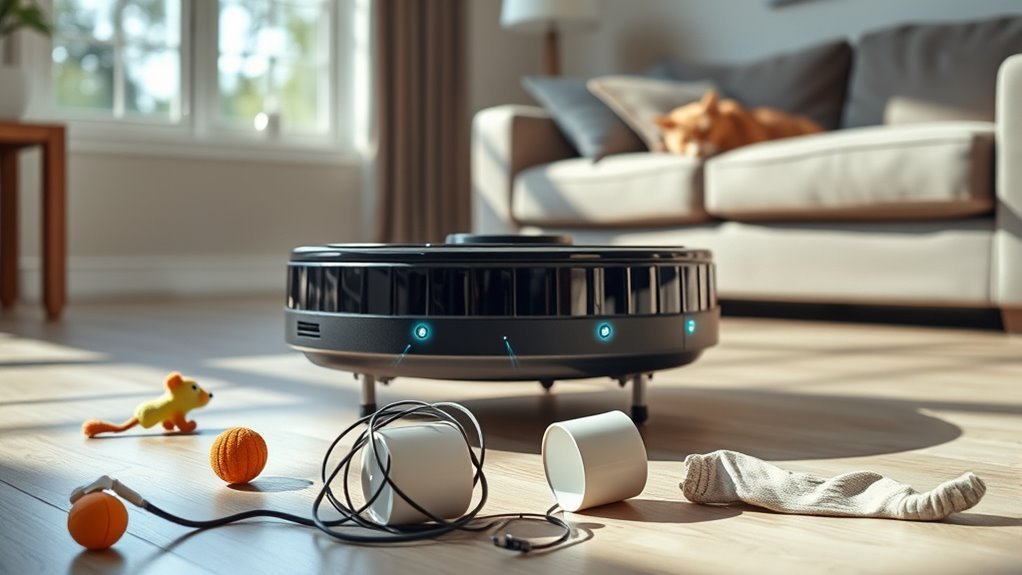
Robot vacuum object recognition is the capability that allows a vacuum to identify and classify items in its environment so it can navigate efficiently and avoid obstacles.
In practice, robot vacuums detect furniture, pet items, and other common household objects through software that interprets visual and spatial data. This function is a core element of obstacle avoidance technology, because it enables the machine to distinguish between open floor space and physical barriers without constant human intervention.
Advanced models often combine camera-based systems, infrared sensors, and depth-sensing methods to expand recognition accuracy across complex interiors. Some units can classify more than 300 object types, which improves route selection and reduces collisions, tangling, and stoppages.
How Robot Vacuums Detect Obstacles
Robot vacuums detect obstacles through layered sensing, typically combining infrared, ultrasonic, and Time-of-Flight sensors to estimate distance from reflected signals and pulse timing.
More advanced systems add LiDAR or cameras to build spatial maps and supply visual data for AI-based object classification.
This sensor fusion supports real-time path adjustment, allowing the unit to avoid collisions and maintain cleaning continuity.
Sensor Types
Obstacle detection in robot vacuums relies on a combination of sensor technologies that each measure the environment differently. These sensor types support obstacle detection through complementary signals rather than a single method.
Infrared sensors infer proximity by analyzing reflected light, while ultrasonic sensors emit sound waves to measure distance and detect softer materials that absorb light.
Time-of-Flight sensors calculate range by timing light pulses, improving precision in tight spaces.
LiDAR sensors sweep the room with rotating laser scans, producing detailed maps that guide efficient, autonomous paths.
Camera-based systems capture visual data for navigation and, when paired with AI, can later support object classification.
Together, these mechanisms reduce dependence on blind movement, helping devices move with greater autonomy and fewer constraints.
AI Object Classification
AI object classification enables robot vacuums to distinguish obstacles by applying machine learning models to sensor inputs from cameras, LiDAR, and related depth sensors. These AI models perform object recognition in real time, separating furniture, cables, toys, and other barriers with measurable precision. High-end units may classify more than 300 object types, expanding autonomous navigation and reducing collisions.
| Input | Classification | Effect |
|---|---|---|
| ToF depth | size and distance | safer passage |
| Infrared camera | low-light detection | fewer blind spots |
| Learning feedback | model refinement | stronger independence |
Which Sensors Matter Most?
Camera-based AI vision often provides the richest object semantics, allowing a robot vacuum to distinguish furniture, toys, and bowls rather than merely detect shape or contrast.
Depth sensors and Time-of-Flight modules contribute precise range data, which improves obstacle localization and path planning in cluttered spaces.
In practice, the most effective systems combine both modalities, using visual classification and depth measurement to achieve reliable recognition and avoidance.
Camera And AI Vision
While sensor fusion remains central to reliable navigation, camera and AI vision systems have become increasingly important in robot vacuum object recognition.
Camera-based systems use RGB input, sometimes paired with infrared illumination, to improve contrast and classification under changing light. AI-driven software interprets visual data, assigning labels that strengthen obstacle recognition around cords, pet bowls, shoes, and other hazards.
Advanced object libraries support finer distinctions, including separating a shoe from pet waste, which reduces avoidable contact and expands practical autonomy. In high-end models, visual sensing adds a layer of spatial context that helps the machine move with greater independence.
When combined with other sensors, cameras sharpen decision-making and lower collision rates, making navigation more precise and less constrained by environmental uncertainty.
Depth Sensors And ToF
Depth sensors, including Time-of-Flight (ToF) systems, extend robot vacuum object recognition by measuring how long emitted light takes to return from surrounding surfaces, producing accurate distance estimates and improving object-size detection.
These depth sensors supply real-time 3D mapping, so the machine can infer shape, height, and spatial position without relying on visible color alone.
ToF remains effective in low light, where camera-based systems weaken, preserving obstacle avoidance in dim rooms and under furniture.
When fused with LiDAR, cameras, and AI-driven software, depth data strengthens classification and reduces collision rates.
The result is a more autonomous platform, one less constrained by poor lighting or ambiguous contours, and better able to navigate spaces on its own terms, with greater precision, confidence, and practical freedom.
Why Sensor Fusion Improves Recognition
Sensor fusion improves robot vacuum recognition by combining inputs from cameras, LiDAR, and infrared sensors into a unified perception model. This sensor fusion strengthens object recognition by merging visual texture with depth and proximity data, allowing cleaner classification of items such as pet bowls, shoes, and other household forms.
The result is more reliable obstacle avoidance, because ambiguous detections are resolved before a collision can occur. Real-time processing lets the machine update its path quickly as rooms change, preserving movement autonomy in dense, shifting environments.
By cross-checking sensor streams, the system reduces false positives and limits unnecessary stops, misreads, and interruptions during cleaning. In practice, robot vacuums using sensor fusion score higher in obstacle avoidance tests, reflecting better discrimination of common objects and safer navigation.
Sensor fusion reduces false positives, improving obstacle avoidance and helping robot vacuums navigate safely with fewer interruptions.
That analytical integration supports a more liberated domestic routine, where automated cleaning operates with fewer constraints and less human correction.
What Robot Vacuums Can Recognize
Robot vacuums can identify common household objects, including furniture, storage items, and floor-level debris, using camera-based classification and depth sensing.
Many models also detect pet items and cords, which require finer obstacle discrimination because of their varied shapes and low-profile placement.
In advanced systems, recognition performance extends to dozens or even hundreds of object types, improving navigation in cluttered environments.
Common Household Objects
Modern robot vacuums can recognize more than 300 common household objects, including furniture legs, cords, shoes, toys, and pet bowls, which greatly improves navigation and obstacle avoidance.
Their obstacle avoidance sensor suites and AI models detect obstacles in real time, allowing the machine to classify common household obstacles before contact.
Depth-sensing tools, especially Time of Flight units, measure distance and object volume, while camera systems with infrared illumination refine detection of small, low-contrast items.
This combination reduces collisions and supports cleaner routes through crowded rooms.
High-performing models such as the Eufy Omni S2 and MOVA V70 Ultra demonstrate near-perfect results in standardized tests, showing how machine learning continually strengthens recognition.
The result is less interference, more autonomous movement, and more liberated use of domestic space.
Pet Items And Cords
Beyond furniture and toys, advanced object-recognition systems also address pet items and cords, two of the most common sources of cleaning interruptions. Camera-based and depth-sensing platforms classify bowls, toys, and cable loops with high precision, supporting obstacle avoidance in homes where pets move freely.
| Recognized item | Risk | Response |
|---|---|---|
| Pet bowls | spill | reroute |
| Toys | entrapment | avoid |
| Cords | tangling | bypass |
High-end units identify more than 300 object types, allowing more independent cleaning and fewer manual rescues. Models such as the MOVA V70 Ultra use retractable navigation hardware to cross thresholds while preserving clearance around pet items. In obstacle tests, systems like the Ecovacs X12 OmniCyclone reached 23/24, indicating reliable object recognition and reduced interruption.
Which Obstacles Are Hardest to Avoid?
Thin, low-profile obstacles are often the most difficult for robot vacuums to avoid because basic sensors may fail to register cables, cords, or shoes before contact occurs. These obstacles can slip beneath a chassis-facing field of view, producing collisions or entanglement that interrupt autonomous cleaning.
Thin, low-profile obstacles often evade basic sensors, leading to collisions, entanglement, and interrupted autonomous cleaning.
Transparent items, including clear plastic and glass, create a separate detection problem: many optical and infrared systems cannot distinguish them reliably from the surrounding floor. Dark surfaces, especially black carpets, can absorb infrared light and appear absent to some sensors, leaving zones uncleaned.
Small, irregular objects such as pet toys or furniture legs require advanced sensors and stronger AI to detect and avoid obstacles with precision. Shadows from plant pots or overhanging furniture further complicate perception by distorting depth cues.
In practice, liberation from manual intervention depends on object recognition systems that can classify varied obstacles consistently across changing lighting, texture, and geometry.
How Vacuum Wars Tests Object Recognition
Vacuum Wars evaluates robot vacuum object recognition with a standardized 24-object course designed to measure how effectively each model identifies and avoids common household hazards such as shoes, cords, and pet bowls.
The vacuum tests combine controlled placements with chaotic scenes, producing a dual view of obstacle avoidance systems under predictable and degraded conditions. Each run is scored by avoidance success rate, with consistency bonuses applied when performance remains stable, especially around pet waste, where failure has higher practical cost.
Advanced units face a torture test that introduces multiple simultaneous obstacles, probing whether object recognition degrades under complexity or remains disciplined.
Video documentation accompanies the results, permitting direct inspection of each maneuver and error. This method gives consumers usable evidence, not marketing haze, and helps separate robust autonomy from decorative claims.
The framework thus measures liberation from manual intervention by quantifying how reliably a robot can navigate clutter without surrendering to it.
Best Robot Vacuums for Obstacle Avoidance
Among the strongest performers in obstacle avoidance, the Eufy Omni S2 stands out with a perfect 24-for-24 score, indicating exceptionally reliable object detection and path planning in cluttered environments. For robot vacuum obstacle avoidance, this result reflects advanced detection systems that reduce manual intervention and expand household autonomy.
The MOVA V70 Ultra Complete adds practical mobility through StepMaster 2.0, clearing thresholds up to 45 mm and preserving continuous coverage across mixed flooring.
Ecovacs T90 Pro Omni pairs a 100% pet hair pickup score with 23-of-24 obstacle avoidance, showing efficient recognition technology that supports disciplined routing around frequent floor hazards.
Ecovacs X12 OmniCyclone extends control through live video monitoring and app-based navigation tools, strengthening situational awareness.
Eufy E28 Omni contributes DuoSpiral detangle brushes, limiting hair wrap near obstacles and maintaining stable cleaning performance.
Together, these models represent a technical pathway toward cleaner spaces with less supervision, giving users more freedom from routine vacuum management.
How Robot Vacuums See in the Dark
In low-light conditions, robot vacuums rely on infrared sensors, depth-sensing systems, and camera modules with infrared illumination to maintain object recognition without visible light. These subsystems emit or detect nonvisible signals, allowing the machine to infer shape, distance, and surface boundaries when human sight falters.
Infrared sensors identify nearby obstacles through reflected energy, while depth sensing adds spatial measurement, improving path planning and reducing collisions. Time-of-Flight sensors strengthen this process by timing light pulses to compute range with high precision.
Some models extend this capability with 3D structured light, generating denser environmental maps for more reliable object recognition in darkness. The result is a coordinated sensing stack that preserves navigation accuracy and cleaning continuity under dim or absent lighting.
How to Choose an Obstacle-Avoiding Robot Vacuum
When selecting an obstacle-avoiding robot vacuum, priority should be given to models that combine LiDAR, camera-based recognition, and depth-sensing systems such as Time of Flight sensors. These technologies improve object detection, distance measurement, and route planning in cluttered interiors.
Obstacle Avoidance performance should be verified through published test scores, with top-rated units such as the Eufy Omni S2 and MOVA V70 Ultra demonstrating complete success in obstacle trials. Advanced Systems that identify more than 300 object types and clear thresholds or barriers offer broader autonomy across varied layouts.
Sensor Type matters: LiDAR supports mapping, cameras supply visual classification, and ToF refines proximity judgment around small objects.
Cleaning utility should also be assessed, because strong mopping and self-cleaning functions, as seen in the Ecovacs X12 OmniCyclone, reduce manual intervention. A vacuum should thus maximize navigation independence, minimizing household labor and expanding practical freedom.
Frequently Asked Questions
What Are Some Robot Vacuum Cleaners That Have Object Detection?
Eufy Omni S2, MOVA V70 Ultra Complete, Ecovacs T90 Pro Omni, Ecovacs X12 OmniCyclone, and DEEBOT X8 PRO OMNI use smart sensors and navigation technology for object detection, improving cleaning efficiency and reducing interruptions.
What Are the Downsides of Using a Robotic Vacuum Cleaner?
About 30% of robotic vacuums require frequent intervention; downsides include maintenance challenges, limited battery lifespan, and reduced navigation accuracy. Low-profile obstacles, dark carpets, and sensor errors can trap units, compromising autonomous cleaning freedom.
Which Robot Vacuum Has the Best Object Detection?
Eufy Omni S2 appears best, with a perfect 24/24 obstacle-avoidance score. Its smart technology maximizes cleaning efficiency and improves user experience, while MOVA V70 Ultra Complete and DEEBOT X8 PRO OMNI remain strong contenders.
Which Robot Vacuum Has Lidar?
Several robot vacuums have Lidar technology, including Ecovacs T90 Pro Omni, DEEBOT X8 PRO OMNI, Eufy Omni S2, and MOVA V70 Ultra Complete. This improves Navigation accuracy, obstacle mapping, and Cleaning efficiency in cluttered spaces.
Conclusion
To sum up, robot vacuum object recognition combines infrared, ultrasonic, LiDAR, and machine learning to identify obstacles with increasing precision. Sensor fusion acts like a well-coordinated orchestra, converting fragmented inputs into reliable navigation decisions. As recognition improves, these machines can avoid hazards, reduce interruptions, and clean more efficiently across complex environments. The technology remains central to evaluating performance, especially in low-light conditions and cluttered homes, where accurate detection directly determines operational effectiveness.