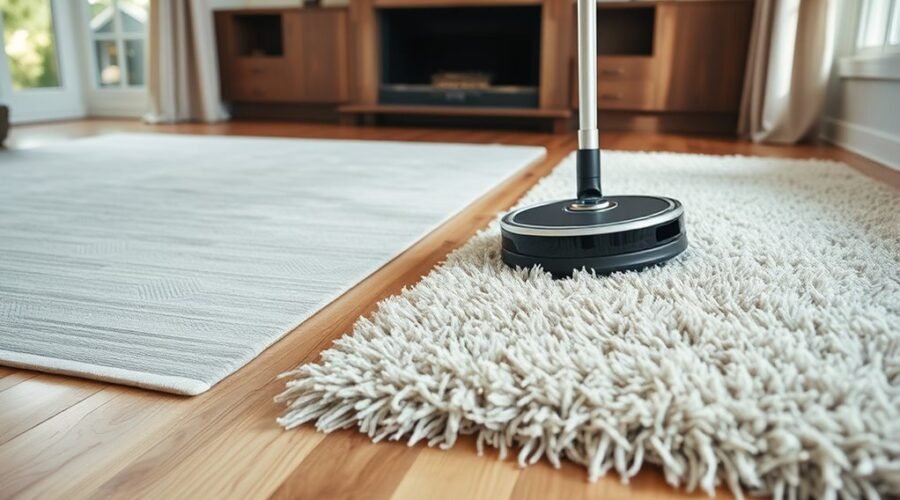
Robot vacuums can usually go over area rugs, but the result depends on pile height, suction power, and rug setup. Low-pile rugs are often no problem, while thicker rugs can slow brush rolls or trap weak models. Dark patterns, fringe, and loose edges may also confuse navigation. The real question is not just whether a robot can cross a rug, but which rugs it can handle without trouble.
Can Robot Vacuums Go Over Area Rugs?
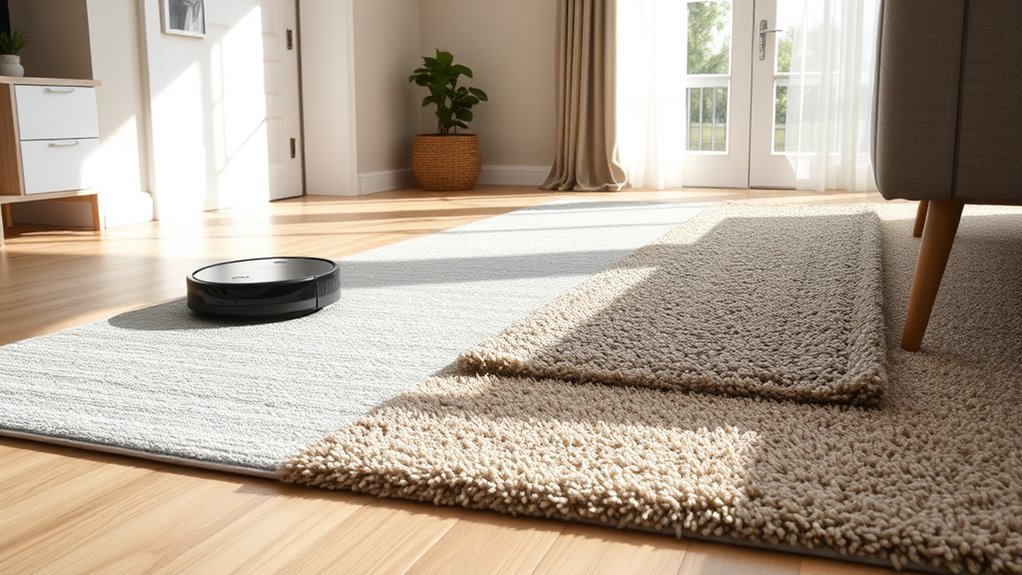
Yes, robot vacuums can usually go over area rugs, but performance depends on the rug’s texture and the vacuum’s capabilities.
On low-pile rugs, most robot vacuums move smoothly and maintain steady cleaning performance. On high-pile rugs, shag surfaces, or thick fringe, movement can slow, and tangling may occur.
Models with strong suction and carpet detection handle more demanding area rugs better, especially when pile height is moderate. Anti-tangle brush rolls help reduce wraparound on decorative edges, while virtual barriers can keep the machine away from delicate rug zones.
Dark or patterned rugs may confuse cliff sensors, so some units avoid them entirely. Regular cleaning of sensors, brushes, and wheels supports reliable operation and protects cleaning performance.
With the right setup, robot vacuums can cover area rugs efficiently and with less manual labor.
Why Pile Height Matters
Pile height affects how easily a robot vacuum can move across an area rug and how well it can clean it.
Low-pile rugs, usually under half an inch thick, are easier for most models to handle, while high-pile rugs can slow movement and trap more debris.
Tassels, fringes, and thicker fibers also raise the chance of tangling, making rug design important as well.
Low Pile Handling
Low pile rugs, usually under 1/2 inch thick, are among the easiest surfaces for robot vacuums to clean.
Most robot vacuums move across low pile rugs with little resistance, because their sensors and suction power are built to handle this surface. They collect dirt and debris efficiently, and carpet detection features can boost cleaning performance as the machine moves from hard floor to rug.
Brush entanglement is less likely on this lower pile, so operation stays smooth and maintenance remains lighter.
For households seeking easier routines, regular cleaning on low pile rugs keeps fibers looking fresh without extra effort. This makes them a practical choice for people who want cleaning tools that work without demanding constant attention or manual intervention.
High Pile Challenges
High pile rugs can create real challenges for robot vacuums because their deeper fibers increase resistance and make it harder for the machine to move smoothly. On high pile rugs, robot vacuums performance often drops because traction issues, lift-off, and navigation systems errors can interrupt coverage. Suction power above 2,500 Pa usually supports better cleaning effectiveness and deeper cleaning, especially when carpet boost modes activate automatically.
| Factor | Impact |
|---|---|
| Pile height | More drag |
| Suction power | Better pickup |
| Navigation systems | Fewer errors |
| Regular maintenance | Less tangling |
Robot vacuum models vary widely, so testing on high pile rugs matters before expecting consistent results. Brush rolls should be checked often, since tangled fibers reduce efficiency. With the right setup, some units can cross these surfaces, but performance still depends on design and upkeep.
How Robot Vacuums Detect Rug Edges
Robot vacuums usually rely on infrared cliff sensors to detect sudden changes in floor height, which helps them recognize rug edges and avoid rolling off a drop.
In practice, robot vacuums use these infrared sensors with navigation systems to detect rug edges and map shifts between hard floors and textiles. When the signal changes, the machine adjusts course, which supports cleaning efficiency and reduces wasted motion.
Robot vacuums combine infrared sensors with navigation systems to spot rug edges and adjust course efficiently.
Texture influence also matters: smooth borders are easier to read, while fringes and thick edges can blur the boundary for sensors.
To improve results, many models add advanced algorithms that compare sensor data with room maps and refine movement in real time. This layered approach helps the vacuum move with more independence, making rug crossings less uncertain and more reliable without constant human intervention.
Why Dark Rugs and Fringe Cause Problems
Dark rugs can be tricky for robot vacuums because their cliff sensors may read the darker surface as a drop-off, causing the machine to avoid the area altogether. This can misinterpret the rug as a hazard and disrupt navigation, especially when infrared sensors struggle on low-contrast surfaces.
Fringe adds another layer of friction: it can tangle in the brushroll, stall cleaning, and demand manual release. Thick rugs may also slow movement and increase hesitation.
- Dark rugs can trigger false drop-off readings.
- Fringe can wrap brushes and stop the robot vacuum.
- Thick rugs may resist smooth navigation.
- Advanced navigation and anti-tangle technology reduce failure points.
Folding fringe under the rug often helps, and selecting models with stronger sensors can support steadier coverage. For users seeking liberation from constant resets, setup choices matter as much as hardware.
Area Rugs Robot Vacuums Handle Best
Low-pile and flat-weave area rugs are usually the easiest match for robot vacuums, since their low profile allows smooth movement and consistent pickup.
These area rugs let robot vacuums glide without strain, so cleaning stays steady and simple. For medium-pile rugs, stronger suction power and carpet boost help lift dirt more fully.
On high-pile rugs and thick carpets, performance depends on even more suction power plus anti-tangle brushrolls, which reduce snagging and keep the machine moving. Decorative rugs with fringes also benefit from anti-tangle design.
Useful features to look for include adaptive carpet detection, brush protection, and low-profile body design.
Practical cleaning tips include choosing low-profile rug pads so cliff sensors stay accurate and changes remain seamless.
In short, the best setup favors flat-weave surfaces first, then medium-pile options with the right features. This keeps the work of cleaning lighter, faster, and more independent.
Area Rugs That Need More Suction
Thicker area rugs often call for stronger suction to pull dirt out from deeper fibers. For many robot vacuums, area rugs with dense construction need more suction power to achieve effective cleaning without repeated passes.
High-pile and shag styles usually perform best at 3,500 Pa or more, while medium-pile rugs generally need at least 2,500 Pa to avoid weak pickup and clogging. Carpet detection helps by raising suction automatically when a robot moves from hard floors to heavier rugs, improving rug performance without constant manual adjustment.
- High-pile rugs: prioritize strong suction and wide airflow.
- Medium-pile rugs: select balanced suction power for steady pickup.
- Fringed rugs: use anti-tangle brush rolls to limit wrapping.
- Regular maintenance: clean brushes and sensors to preserve performance.
Well-chosen robot vacuums can keep area rugs cleaner, support freer movement through a home, and reduce dependence on labor-heavy upkeep.
Setup Tips for Rugs, Pads, and Thresholds
Even a robot vacuum with strong suction can struggle on area rugs if the setup is not right. Practical setup tips begin with low-profile rug pads, which reduce false cliff-sensor alerts caused by sudden height changes.
Low-profile rug pads can prevent false cliff-sensor alerts and help robot vacuums glide smoothly over area rugs.
Keep thresholds between rooms low, ideally under 0.78 inches, so entry-level models can cross without blockage. For rugs with fringes, tuck them under or secure them with tape to prevent tangling and preserve smooth navigation.
On medium-pile rugs, strong suction of at least 2,500 Pa helps lift embedded dirt and maintain performance. New layouts should be tested before relying on routine cleaning, because vacuum behavior can shift when pads, edges, or floor alterations change.
If navigation fails, adjust the rug position, trim loose fringe, or simplify the path. With careful setup, the machine can move freely, protect the rug, and do its work without constant rescue.
Best Robot Vacuum Features for Area Rugs
Carpet detection and auto-boost help a robot vacuum recognize when it moves onto area rugs and raise suction automatically for deeper cleaning.
Anti-tangle brushes, especially rubber roller designs, reduce hair and fringe buildup on the vacuum.
Together, these features improve cleaning performance while making routine maintenance easier.
Carpet Detection
When a robot vacuum moves from hard flooring to an area rug, carpet detection helps it automatically increase suction for better cleaning without wasting power on bare surfaces.
In robot vacuums, this feature supports cleaning efficiency by matching suction power to the surface. Advanced models often use multi-sensor navigation to identify area rugs accurately and avoid treating dark rugs as drop-offs.
Auto-boost technology can then raise performance on medium and high-pile fibers, where stronger pull is needed.
- Lower-pile rugs may work well at about 1,500 Pa.
- Thick rugs often need 2,500 Pa or more.
- Carpet detection reduces guesswork and improves coverage.
- Anti-tangle brush rolls help maintain steady operation on textured rugs.
Anti-Tangle Brushes
Anti-tangle brushes are especially useful on area rugs because their rubber bristles or shaped brushrolls reduce hair wrapping and help the vacuum clean high-pile and shag surfaces more consistently.
These anti-tangle brushes support effective cleaning on shag rugs, where loose fibers and embedded debris can trap standard rollers.
Many models use sensors to identify different flooring types and adjust brush height automatically, helping the machine glide over rug edges without strain.
This flexibility can also protect fringes and prevent damage to delicate fibers.
For peak performance, regular maintenance remains essential: hair, string, and lint should be removed from the brushrolls often.
With proper care, anti-tangle systems help robot vacuums work with greater freedom across mixed floors and area rugs.
First-Run Checklist for Area Rugs
Before a robot vacuum is sent onto an area rug for the first time, the rug should be checked for pile height, since low-pile styles are usually manageable while high-pile or shag rugs may need stronger suction and specialized features.
A practical first-run checklist helps robot vacuums move across area rugs with less friction and more freedom.
- Match rug types to suction power; confirm carpet detection or auto-boost is enabled.
- Inspect tassels and fringes, then tuck or tape them to reduce entanglement.
- Watch the first pass for navigation issues, especially at edges, corners, and boundaries.
- Clean cliff sensors and test dark rugs carefully so false drop-off readings do not interrupt cleaning.
If performance weakens, adjust settings before the next run. This simple check protects the machine, preserves the rug, and supports smoother coverage without unnecessary intervention.
Frequently Asked Questions
Can Robot Vacuums Go Over Thick Rugs?
Yes, some can, but thick rug compatibility depends on robot vacuum limitations, area rug types, vacuum height sensors, cleaning efficiency concerns, navigation challenges, floor surface interactions, rug material impact, robotic design features, and maintenance tips.
What Are the Downsides of Using a Robotic Vacuum Cleaner?
Like a diligent but imperfect servant, a robotic vacuum can reduce robot performance, shorten battery life, raise noise levels and maintenance costs, while navigation issues, weak obstacle detection, limited app integration, suction power, cleaning effectiveness, and customer support persist.
Can Roomba Go Over Area Rugs?
Yes, most Roomba models handle area rugs; robot vacuum compatibility depends on area rug types, rug thickness effects, and surface change issues. Robot vacuum sensors, rug material impact, and robot vacuum features shape cleaning performance comparison, maintenance tips, user experience reviews.
Why Won’t My Roomba Go Over My Rug?
The Roomba avoids the rug because Roomba sensors sense rug height, surface friction, or obstacle detection. Roughly 30% of navigation challenges stem from carpet types and rug materials; vacuum settings, cleaning efficiency, maintenance tips matter.
Conclusion
Robot vacuums can handle many area rugs, but performance depends on pile height, suction power, and setup. Low-pile rugs are usually smooth sailing, while thicker carpets and fringe can cause trouble. Proper rug placement, strong carpet detection, and a clean first-run setup help prevent misses and stalls. With the right machine and a few adjustments, most homes can keep rugs and floors clean without much fuss.