Robot vacuums can clean dark floors, but results vary by model and sensor design. Older units may struggle with glossy black surfaces, weak contrast, or poor lighting, while newer machines with LiDAR, infrared sensors, and better obstacle detection often perform much better. Even so, small details like sensor cleanliness and floor finish can change the outcome. The real question is which models handle those conditions reliably, and what owners should check first.
Can Robot Vacuums Clean Dark Floors?
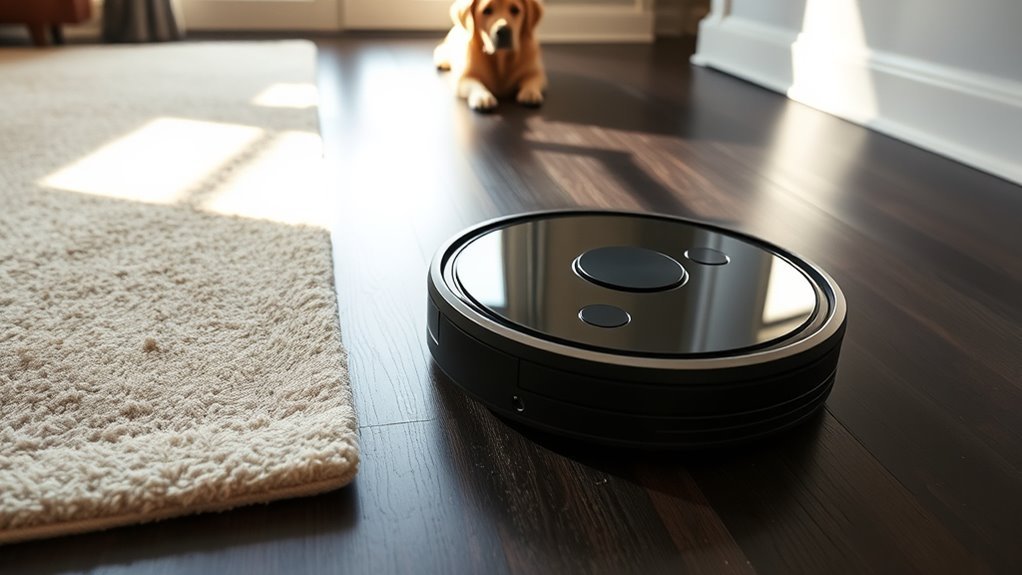
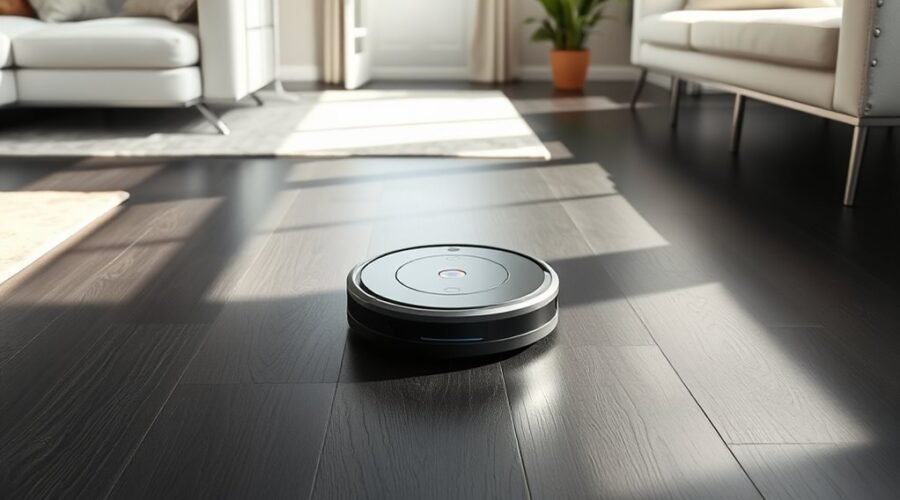
Yes, many robot vacuums can clean dark floors effectively, particularly newer models equipped with LiDAR, infrared, or dToF laser sensors.
Yes—many newer robot vacuums clean dark floors effectively, especially those with LiDAR, infrared, or dToF sensors.
A modern robotic vacuum cleaner can map rooms, avoid obstacles, and maintain steady coverage on dark floors even when ambient light is limited. Systems such as TrueMapping improve route planning and help the machine finish the job with less supervision, supporting a more liberated home routine.
dToF laser sensors are especially useful because they send out light pulses that do not depend on floor color or reflectivity. For this reason, many advanced models, including DEEBOTs, perform well on black or very dark surfaces.
Reliable results still depend on clear sensors and routine upkeep. Dust, debris, or dirty lenses can weaken performance and reduce efficiency.
Older units may be less consistent, but current designs are built to handle these surfaces with far greater confidence.
Why Dark Floors Confuse Some Robot Vacuums
Dark floors can still confuse some robot vacuums because their cliff sensors may mistake a lack of reflected light for an actual drop-off, causing the machine to skip or avoid certain areas.
Older models are most vulnerable, especially when their optical sensors depend on strong contrast to map a room. On a dark surface, that contrast may be weak, so the vacuum hesitates, circles, or leaves patches untouched.
Glossy dark finishes can create another problem: reflections may mislead sensors, making paths seem safer or riskier than they are.
Newer units with dual beam cliff sensors and AI-based navigation handle these conditions better, yet they are not immune to poor maintenance. Dust on cliff sensors can weaken detection and reduce accuracy.
For owners seeking reliable, low-friction cleaning, regular sensor care and newer navigation systems offer the clearest route to consistent results on dark floors.
How Robot Vacuums Navigate in the Dark
Robot vacuums navigate in the dark by using LiDAR and infrared sensors to detect walls, furniture, and room layout without depending on visible light.
These systems allow the robot to build a map and plan its route even in low-light conditions.
As a result, modern models can clean accurately across dark rooms and dark floors with little loss in performance.
LiDAR And Infrared Sensors
When visibility drops, robot vacuums rely on onboard sensing systems rather than ambient light. LiDAR and infrared sensors let them work with steadier freedom on dark floors.
- lidar emits light pulses to measure distance and shape.
- infrared sensors detect obstacles in low-light rooms.
- Fully-embedded dToF LiDAR in premium models improves precision.
- AIVI 3D 3.0 strengthens real-time obstacle recognition.
- Smart algorithms use sensor data to guide efficient routes.
This combination helps a vacuum avoid collisions, keep its path organized, and clean without depending on visible light.
For owners, the practical result is less limitation from dim spaces and more dependable coverage across rooms that would otherwise challenge basic machines.
Mapping Without Ambient Light
Even in low light, modern robot vacuums can map and clean effectively by relying on LiDAR, infrared cameras, and advanced navigation software rather than ambient illumination. Their mapping systems trace room edges, detect furniture, and plan efficient routes across dark floors. dToF LiDAR sends light pulses that stay accurate on reflective surfaces, while RGB AI and 3D structured light strengthen obstacle avoidance in real time. High-end units such as the DEEBOT T50 PRO OMNI keep working in corners and under furniture, supporting freedom from manual cleanup.
| Technology | Benefit | Result |
|---|---|---|
| LiDAR | Precise mapping | Reliable routes |
| Infrared cameras | Low-light sensing | Better detection |
| RGB AI + 3D light | Obstacle avoidance | Fewer misses |
Best Sensors for Dark-Floor Cleaning
For dark-floor cleaning, the most effective robot vacuums rely on sensors that do not depend heavily on ambient light. LiDAR offers precise room mapping by sending light pulses, helping machines move confidently across dark surfaces.
Infrared cameras add obstacle detection in low-light settings, reducing missed objects and wasted passes. AIVI 3D improves real-time recognition, which limits collisions and supports steadier cleaning.
TrueMapping, used in premium systems, strengthens map accuracy where illumination is weak. Glossy finishes can still challenge navigation, so reflectivity matters when choosing sensors.
TrueMapping improves map accuracy in low light, while glossy surfaces can still affect sensor performance.
- LiDAR for reliable mapping
- Infrared for obstacle detection
- AIVI 3D for smarter recognition
- TrueMapping for low-light precision
- Reflectivity control for smoother coverage
Together, these sensors give homeowners more freedom from manual intervention and make dark-floor upkeep more predictable, efficient, and thorough.
Roomba Models That Work on Dark Surfaces
Roomba models in the j, i, and s Series are generally better suited to dark surfaces because improved dual beam cliff sensors help them recognize floors instead of treating them as edges.
The j9 and j9+ stand out for stronger navigation on dark wood and carpet, while older models may still misread darker areas and stall.
For reliable performance, cliff sensors should be kept clean and maintained so the vacuum can detect surfaces accurately.
Dark Surface Compatibility
Dark floors can still pose a challenge for some robot vacuums, because older Roomba models may mistake dark surfaces for ledges and avoid them altogether.
For shoppers seeking dark surface compatibility, the key issue is cliff sensors and how they read contrast.
- i, j, and s Series improve detection with dual beam cliff sensor technology.
- j9 and j9+ models are often reported to navigate dark floors well.
- Dust on sensors can reduce accuracy and should be cleared regularly.
- Dark hardwood is generally cleaned effectively by many users.
- Better sensor design reduces unnecessary avoidance and restores coverage.
That progress offers practical freedom: fewer skipped rooms, steadier cleaning, and less manual intervention on dark flooring.
Best Roomba Series
Among Roomba options for dark flooring, the newer i, j, and s Series stand out as the strongest choices, with the j9 and j9+ often cited as especially reliable thanks to dual beam cliff sensor technology. For a Robot Vacuum for Hardwood, these models balance suction power with steady navigation on black, espresso, and other deep tones. They also earn strong user feedback for pet hair and debris pickup.
| Series | Dark-floor fit | Note |
|---|---|---|
| i | Strong | Modern sensing |
| j9/j9+ | Best | Dual beam sensors |
| s | Strong | High cleaning power |
Regular maintenance matters, and keeping sensors clear helps preserve performance. Older Roombas can still work, but these series offer the most practical path to cleaner, freer living.
Cliff Sensor Considerations
Older Roomba models may misread dark flooring as a drop-off because their cliff sensors can mistake deep colors for edges, which can disrupt navigation and cleaning paths.
The navigation system in newer j, i, and s Series models handles these surfaces better.
- j9/j9+ uses dual beam cliff sensor technology.
- Improved sensors reduce false drop-off alerts.
- Regularly clean cliff sensors to remove dust.
- Keep the navigation system unobstructed and updated.
- Do not disable cliff sensors; safety matters.
For owners seeking freedom from constant supervision, these models offer better control on dark floors.
Still, performance depends on maintenance, lighting, and floor finish. Choosing newer Roomba units can reduce interruptions and support safer, more reliable cleaning across challenging surfaces.
DEEBOT Models That Clean in Low Light
DEEBOT models such as the T50 PRO OMNI are built to clean reliably in low light, using TrueMapping 2.0 to create accurate maps even when ambient light is limited. For households seeking freedom from constant supervision, these robotic vacuum cleaners offer a practical answer for dark interiors.
Fully-embedded dToF LiDAR sensors send out light pulses that support precise navigation and obstacle detection, helping the unit move with confidence in dim rooms. AIVI 3D 3.0 OMNI-Approach Technology adds real-time object recognition, allowing the vacuum to work around furniture and other obstacles without hesitation.
DEEBOT models are also designed to operate effectively on dark floors, so varied flooring colors do not require special handling. Advanced navigation algorithms further refine routes without depending on ambient light, which supports thorough coverage in challenging lighting conditions.
In practice, this means less manual intervention and more consistent cleaning.
What Affects Dark-Floor Cleaning Performance
Dark-floor cleaning performance depends on a few practical hardware and surface factors, even in models designed for low-light use. On dark floors, the quality of sensors shapes whether a robot vacuum moves with confidence or stalls in confusion.
- LiDAR and infrared sensors help map rooms by sending out light pulses, so ambient light matters less.
- Older cliff sensors may misread dark surfaces as drop-offs, disrupting movement and coverage.
- High-end systems, such as TrueMapping in the DEEBOT T50 PRO OMNI, improve navigation on dark floors.
- Glossy or reflective finishes can scatter signals and create navigation errors.
- Dust on cliff sensors reduces accuracy, especially when contrast is low.
Performance thus depends on both machine design and surface finish. A well-built vacuum with advanced sensors can clean dark floors effectively, while weaker hardware may need careful placement, cleaner surfaces, and more attentive maintenance to keep the path clear and the work free.
How to Clean Robot Vacuum Sensors
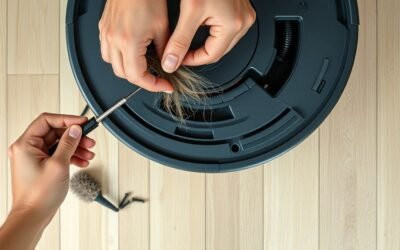
Keeping robot vacuum sensors clean helps preserve navigation accuracy, especially on dark floors where cliff sensors may be more likely to misread the surface.
Before any clean, the vacuum should be powered off to prevent accidental movement or activation. A soft, dry cloth or microfiber cloth is the safest tool for gently wiping the sensors, since abrasive materials can scratch delicate surfaces.
Dust, pet hair, and fine debris should be removed with care, because even small buildup can distort readings and reduce performance. Liquids and cleaning solutions should be avoided entirely; they can seep inside the unit and damage internal components.
Monthly inspection is a practical baseline, though homes with pets or heavy dust may require more frequent attention.
Regular care keeps the sensors clean and helps the robot move with greater confidence, offering users a more reliable, less frustrating cleaning routine.
How to Choose a Robot Vacuum for Dark Floors
Selecting a robot vacuum for dark floors calls for a focus on navigation and detection features that can handle low-contrast surfaces reliably. Shoppers should favor robot vacuums with LiDAR, which maps rooms well in dim light, and with TrueMapping for tighter route planning.
Strong obstacle detection matters, because dark flooring can confuse simpler sensors. Higher suction ratings help lift dust from hardwood floors and other smooth surfaces without repeated passes. Versatility also matters for households that move between rugs, tile, and carpet.
- LiDAR navigation for dependable mapping
- TrueMapping for precise cleaning paths
- Obstacle detection for safer movement
- Strong suction for better debris pickup
- Multi-surface compatibility for broader use
A model that balances these traits gives owners more control and less maintenance, supporting clean floors with fewer limits.
Frequently Asked Questions
What Are the Downsides of Using a Robotic Vacuum Cleaner?
The downsides include limited suction power, navigation issues on cluttered or dark surfaces, shorter battery life during complex runs, and ongoing maintenance costs for brushes, sensors, and filters. It may also miss corners and thick debris.
Do Robot Vacuums Work in Dark Rooms?
Yes, they generally do. Modern robot vacuums use robot navigation, LiDAR, infrared, and floor sensors to map and clean in darkness. Most perform reliably in dark rooms, though glossy surfaces may occasionally confuse detection.
Can Roomba Clean in the Dark?
Yes, a Roomba can clean in the dark, because robot navigation does not require bright light. Its floor sensors guide movement, though older models may struggle on very dark surfaces. Regular sensor cleaning helps maintain performance.
Can I Use a Robot Vacuum to Mop My LVP Flooring?
Yes, a robot vacuum with mopping can clean LVP flooring well, especially models with robot mop features, microfiber pads, and adjustable water flow. Regular pad cleaning and simple LVP maintenance tips help prevent streaks and residue.
Conclusion
Dark floors can still be well served by robot vacuums, but only when design matches the surface. Older models may stumble where new ones glide: LiDAR and infrared map the room while dark finishes and reflective patches once caused confusion. That contrast makes the choice clear. With strong obstacle detection, clean sensors, and models built for low-light navigation—such as Roomba j series or DEEBOT T50 PRO OMNI—owners can expect reliable cleaning, not guesswork.