Yes, a robot vacuum can fall down stairs if its cliff sensors miss the edge. These sensors use infrared signals to detect drops, but dirt, dark flooring, poor lighting, or navigation errors can weaken their response. Regular cleaning, app-based no-go zones, and simple barriers help reduce the risk. Even so, owners should know where the weak points are, because one small oversight can turn a routine cleaning into a problem.
Can a Robot Vacuum Fall Down Stairs?
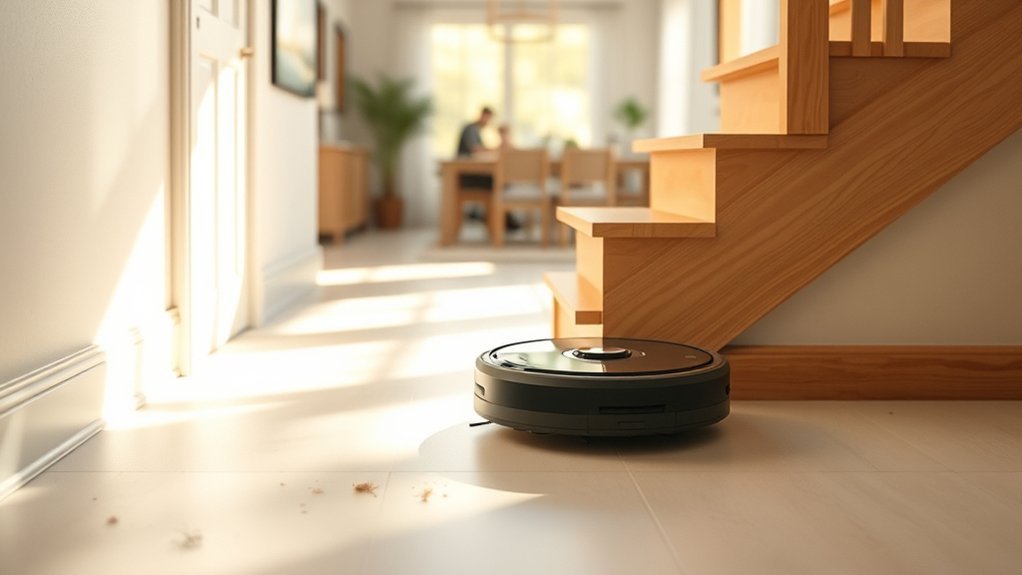
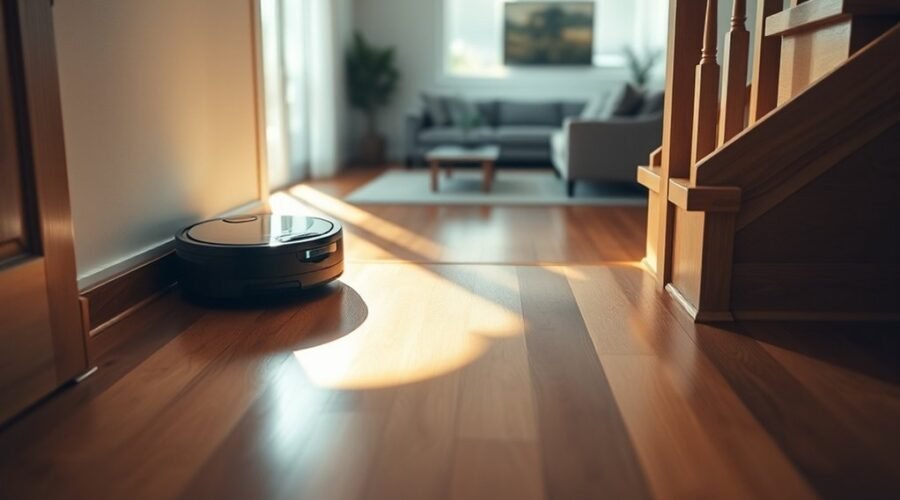
Yes—robot vacuums can fall down stairs if their cliff sensors fail to detect the drop-off, but in normal operation they are designed to avoid this. These devices use cliff sensors to detect edge changes and trigger a stop before a fall. If the signal drops, the vacuum reverses or pauses, helping it avoid falling down stairs and limiting damage.
Yet safety is not absolute. Dirt, dust, or an obstruction over the sensors can cause misreads, so regular maintenance matters. Dark flooring, glossy surfaces, or strong light reflections may also confuse navigation near staircases.
For added control, owners can set virtual barriers in the app or place physical blockers at risky edges. The practical lesson is simple: the machine offers useful protection, but responsibility remains with the household. A clear path, clean sensors, and thoughtful setup preserve both the vacuum and the freedom of the space it serves.
How Robot Vacuum Cliff Sensors Work
Robot vacuums avoid stairs by using cliff sensors that shine infrared beams downward and read the reflections from the floor below. That is how cliff sensors work: strong reflections mean the surface continues, while weak or missing reflections suggest an edge.
When the sensors detect stairs or another drop-off, the vacuum stops or turns away to prevent falls. This scanning happens continuously in real time, so the machine can react to sudden changes in floor height without human intervention.
Some advanced models add LiDAR or cameras to improve navigation near stairs and ledges, but the basic safety logic remains the same.
Clean sensors matter. Dust, smudges, or debris can interfere with the infrared signal and cause misreads, so regular maintenance helps preserve reliable cliff detection.
For owners seeking independence from constant supervision, this simple safeguard is one of the most important features keeping a robot vacuum moving freely and safely.
Why Robot Vacuums Miss Stair Edges
Even with cliff sensors, robot vacuums can still miss stair edges when those sensors are dirty, blocked, or fooled by unusual floor conditions.
These infrared detectors depend on a clear view of the floor, and small disruptions can create false confidence or false alarms. Dark or shiny surfaces may confuse the readings, while nearby objects or loose rugs can interrupt the signal before the machine reaches the edge.
Dark or shiny floors, rugs, and nearby objects can distort infrared cliff-sensor readings.
Navigation errors also matter: if mapping is inaccurate or software glitches alter the route, the vacuum may approach stairs from a risky angle.
Sensor limitations add another layer of risk, since some models react slowly or struggle on uneven surfaces.
In practice, cliff sensors reduce danger, but they do not eliminate it. Safe use still depends on open stair zones, reliable setup, and routine attention to how the robot moves through the home.
Dirty Sensors and Dark Floors
Dirty sensors are one of the most common reasons cliff protection fails. When dust or debris coats the cliff sensors, infrared beams can be blocked, and the vacuum may read a stair edge as safe floor. That small error can send it over the drop.
Dark floors can create the same problem. Weak reflections from black, glossy, or highly polished surfaces may confuse the sensor system, making it think there is solid ground ahead when there is not. Low light can add to the problem by further weakening detection.
The practical fix is simple: clean the cliff sensors regularly with a dry microfiber cloth and keep the operating area well lit when possible. Clear sensors and stable lighting help the machine respond as intended, reducing risk and giving owners more control over a device meant to work independently.
How Navigation Errors Cause Falls
Navigation errors can also lead a robot vacuum to fall down stairs when its map of the home is inaccurate or outdated.
When mapping data is wrong, the machine may misread room layouts and approach a stair edge as if it were open floor. Software glitches can worsen this, causing the vacuum to make poor route decisions at the worst moments.
Environment changes such as moved chairs, boxes, or other obstacles can break the original map and increase the chance of a misstep. Low battery levels may also reduce reliable movement, making behavior less predictable and weakening cliff sensors’ response.
Moved chairs, boxes, or obstacles can break a robot vacuum’s map and increase the chance of a misstep.
If sensors are dirty or slightly misaligned, height changes may not be detected with enough precision. These navigation errors do not require a dramatic failure; a small software or sensor fault can be enough to send the robot over the edge when the home no longer matches its internal model.
How to Stop a Robot Vacuum Falling
Preventing a robot vacuum from falling starts with keeping its cliff sensors clean so it can detect stairs accurately.
App-based no-go zones can add a reliable digital boundary around staircases.
Physical barriers such as baby gates or magnetic strips provide an extra safeguard where needed.
Clean Cliff Sensors
Cliff sensors are a robot vacuum’s last line of defense near stairs, so keeping them clear and properly aligned is essential. Regular cleaning tips matter here: wipe the cliff sensors with a dry microfiber cloth to remove dust that can block infrared beams and confuse edge detection.
Owners should also inspect the sensors for misalignment, scratches, or other damage, since small defects can cause faulty readings and prevent accidents from being prevented. A quick supervised test near stairs can confirm that the vacuum stops as expected before it is left to work freely.
Charging docks should be placed away from stair edges, reducing exposure to drop-offs during charging. Well-maintained sensors help the machine operate safely and independently.
Set No-Go Zones
Another effective safeguard is to set no-go zones in the robot vacuum’s app so it avoids stair edges and other drop-off points. Most advanced models let users set virtual barriers that the machine recognizes as off-limits, helping keep freedom from constant supervision.
These no-go zones should be drawn carefully around landings, steps, and other hazards, then reviewed whenever furniture or room layouts change. Even with strong cliff sensors, digital boundaries add an important layer of control and reduce the chance of a fall.
After software updates or shifts in the home environment, the settings should be checked again to confirm they still match the space. This simple adjustment supports safer cleaning and preserves independence without unnecessary interruption.
Add Physical Barriers
Physical barriers offer a straightforward way to keep a robot vacuum away from stairs and other drop-offs. Baby gates or magnetic strips create an immediate boundary, supporting the vacuum’s cliff sensors and preventing the vacuum from reaching danger.
| Barrier | Best use | Note |
|---|---|---|
| Baby gate | Stair tops | Keep latched |
| Magnetic strip | Door thresholds | Check adhesion |
| Tall barrier | Open landings | Stop edging |
| App no-go zone | Map control | Layered defense |
| Regular inspection | Ongoing safety | Reposition after changes |
Barriers should be secure and tall enough, since some models probe for gaps or low obstacles. Home layouts change, so checking fit and integrity helps maintain safety. Used with virtual no-go zones, physical barriers preserve freedom from worry while reducing fall risk.
Clean the Sensors and Set No-Go Zones
Regular cleaning of the robot vacuum’s cliff sensors with a dry microfiber cloth helps keep infrared signals clear and improves edge detection.
Loose rugs or debris should be kept away from the sensor area, since anything blocking the view can weaken drop detection.
Using the mobile app to set no-go zones around stairs adds a useful safeguard against accidental falls.
Sensor Cleaning Basics
A robot vacuum’s cliff sensors should be kept clean and unobstructed so they can accurately detect stair edges and avoid falls. In sensor cleaning basics, a dry microfiber cloth is enough to remove dust and debris that can block infrared beams and cause misreadings. Regular care helps cliff sensors stay responsive and prevent falls without added hassle.
| Task | Tool | Result |
|---|---|---|
| Wipe sensors | Dry microfiber | Clear readings |
| Inspect area | Visual check | Fewer obstructions |
| Test near stairs | Supervised run | Confirmed response |
Physical barriers, such as baby gates or magnetic strips, can further limit access to stair edges. After any environmental change, supervised test runs near stairs help verify performance. These small steps support safer, more independent cleaning.
App No-Go Zones
Once the cliff sensors are clean, the next layer of protection comes from the robot vacuum’s app settings. Most models allow app no-go zones to block stairs and other drop-offs, giving the machine clear boundaries without physical clutter.
Virtual barriers can be drawn in the map to define safe zones and keep the vacuum away from danger. After setting them, the robot should be tested near the stairs to confirm the limits work as intended. If navigation drifts, the zones should be adjusted.
Keeping the app updated matters too, since newer versions often improve barrier controls and safety features. Together, clean cliff sensors and precise virtual barriers help preserve a home’s freedom from constant supervision and reduce the risk of a fall.
Use Barriers and Move the Dock
Setting virtual barriers in the robot vacuum’s app can sharply reduce the chance of it reaching stair edges, and physical blockers such as baby gates or magnetic strips add another layer of protection.
For households that value freedom from constant supervision, these virtual barriers near stairs work best when they are mapped carefully and reviewed often. Moving the Charging Dock Away from drop-offs also helps, since many units return to the dock on their own and should not be routed toward danger.
A combined setup gives the vacuum fewer chances to wander into a hazard zone. Home layouts change, so no-go settings should be checked and updated after furniture shifts or renovations.
Used together, app limits and physical boundaries create a practical safety net that preserves convenience while reducing fall risk. This approach supports cleaner floors without demanding closer monitoring.
How Low Light Affects Stair Detection
Low light can make stair detection less reliable, even in robot vacuums equipped with cliff sensors. These sensors usually use infrared technology to spot stair edges, yet dim conditions can weaken edge detection when the machine also depends on visual navigation.
In darker rooms, infrared may still function, but optical systems can misread the floor, shadows, or reflective surfaces. That creates a higher risk of hesitation or false readings near ledges.
More advanced models reduce this weakness with AI-powered cameras and other low light enhancements that support steadier edge detection. Even so, maintenance matters. Dust on cliff sensors can interfere with performance, especially when lighting is poor.
Testing a vacuum in different lighting conditions gives owners a clearer sense of reliability near stairs. For households seeking freedom from constant monitoring, the goal is simple: confirm that the robot can move independently, even when the room is dim.
What to Do If Your Robot Vacuum Falls
If a robot vacuum falls down stairs, the first step is to inspect it for physical damage and confirm that all parts are still intact.
This is what to do if your robot vacuum falls: power it off, check wheels, brushes, casing, and battery access, then restart it only after a careful review.
A short test run should follow to confirm navigation accuracy and that the cliff sensors keep working as intended. Those sensors should be inspected for dirt, dust, or misalignment, since edge detection depends on clean, properly seated components.
If the unit still behaves erratically, support should be contacted for repair guidance. Owners should also review the warranty before paying for service, because fall-related damage may be covered.
Regular checks can help keep a robot vacuum from falling again and reduce avoidable setbacks.
Frequently Asked Questions
How Can I Prevent My Robot Vacuum From Falling Down Stairs?
It can be prevented by cleaning vacuum sensors, setting app no-go zones, and adjusting home layout to keep stairs blocked. For stair safety, physical barriers, supervised tests, and a dock away from edges help further.
What Are the Downsides of Using a Robotic Vacuum Cleaner?
Like a tireless chess piece, a robotic vacuum saves labor but brings maintenance challenges, limited battery life, and navigation issues. It may struggle with thresholds, cords, and stairs, requiring supervision, cleaning, and occasional troubleshooting.
Can You Use a Robot Vacuum if You Have Stairs?
Yes, a robot vacuum can be used in homes with stairs. Stair safety depends on reliable vacuum sensors, plus virtual no-go zones. With regular maintenance, it preserves cleaning efficiency while avoiding drops and covering lower floors.
My Roomba Fell Down the Stairs. Is This Normal?
No, it is not normal. A Roomba falling suggests issues with robot sensors, stair safety, or navigation. After checking vacuum durability, the owner should clean sensors, inspect damage, and add barriers or virtual boundaries immediately.
Conclusion
In the end, a robot vacuum can absolutely go tumbling down stairs if its cliff sensors are dirty, confused, or simply outmatched by a tricky floor. These machines are smart, but not invincible. Owners who clean the sensors, check for low light, set no-go zones, and use barriers dramatically reduce the risk. A few minutes of maintenance can save a very expensive, very dramatic plunge and keep the little floor robot safely on the ground.