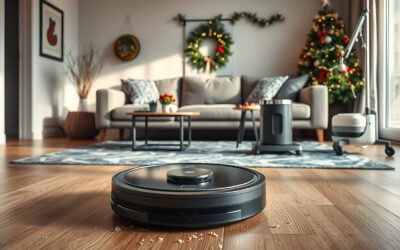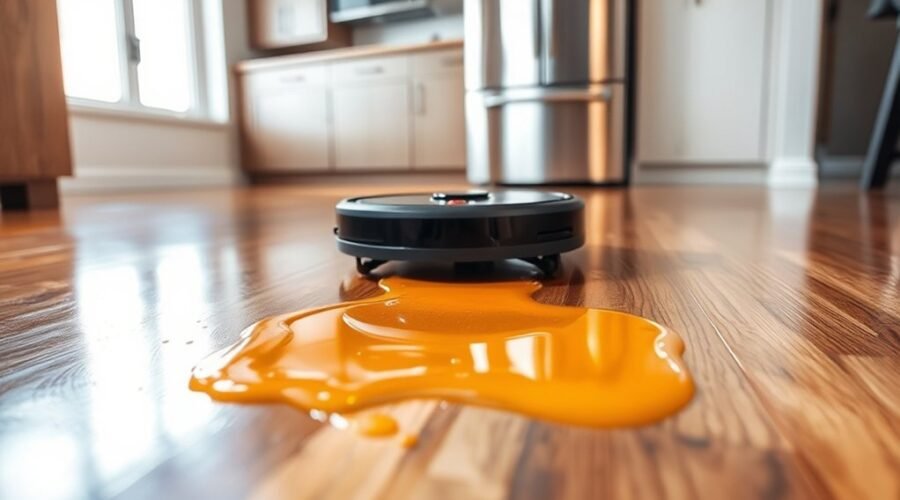
Robot vacuums are built for dry debris, not liquid cleanup. Water can saturate filters, strain motors, and create electrical risks if a spill reaches the unit. Some mop combo models handle light moisture better, but even they have limits. A small puddle may seem harmless at first, yet the wrong machine can turn a simple spill into a costly repair, which raises the question of what owners should use instead.
Can a Robot Vacuum Pick Up Liquids?
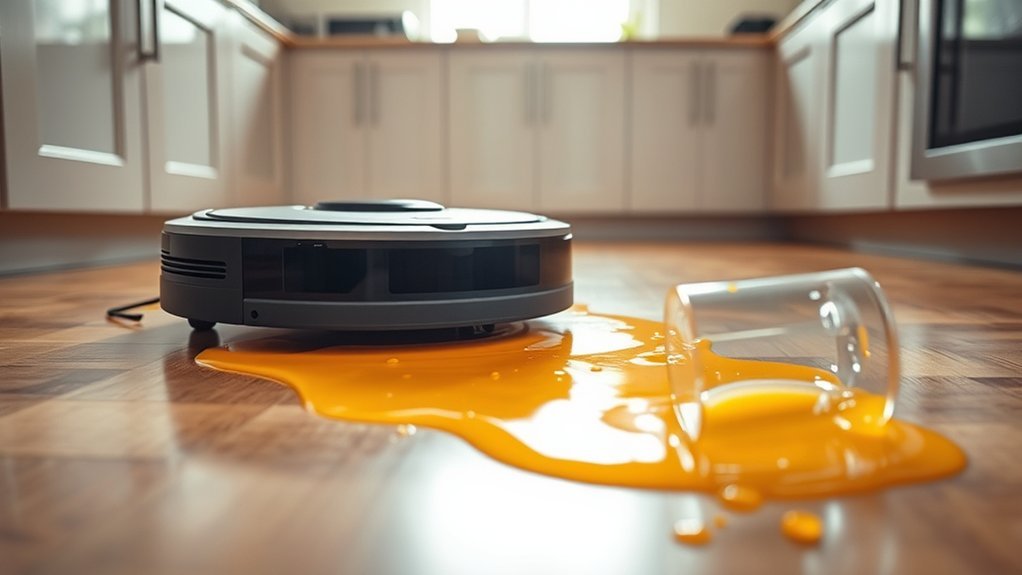
Most robot vacuums are built for dry debris, not liquids, because their suction systems and onboard sensors are not designed to distinguish wet from dry surfaces.
Most robot vacuums are designed for dry debris, not liquids, and their sensors can’t reliably tell the difference.
In practice, a standard robot vacuum may move over liquids, but it will not clean them well and may spread the mess. Its brushes and intake paths are optimized for dust, crumbs, and hair, not fluid pickup.
Advanced models with moisture sensors and AI DirtSense™ can detect small spills and modify the cleaning process, yet even these systems have limits. Sticky liquids can cling to floors and defeat routine passes.
If a large spill is present, the unit should be powered off immediately to reduce damage and electrical risk.
For reliable liquid cleanup, a dedicated wet/dry vacuum remains the practical tool, since it is engineered to manage both wet and dry messes safely.
Such equipment restores control, reduces dependence, and supports efficient, low-risk cleanup.
Why Robot Vacuums Struggle With Water
Robot vacuums struggle with water because their systems are engineered for dry debris, not liquid pickup. Their brush rolls, airflow channels, and filters are tuned for dust and grit, so liquids can bypass the normal path and reach electronics.
Most robot vacuums also lack sensors that detect the difference between dry floors and wet patches, leaving no reliable response when spills appear. Even when advanced sensors are present, they mainly identify moisture, not process large amounts of liquids.
The suction power in these machines is calibrated for dirt and crumbs, not for lifting water or sticky residue from surfaces. As a result, cleaning up liquids can overload motors, saturate filters, and trigger moisture damage.
Continued use on wet messes increases the risk of corrosion, short circuits, and costly failure. For users seeking independence, the practical rule is simple: standard robot vacuums should stay on dry duty only.
Can a Robot Vacuum Clean Small Spills Safely?
Small spills can be cleaned safely only by robot vacuums built for liquid handling, not by standard dry-debris models. Most ordinary robot vacuum units are engineered for dust and crumbs, and liquid spills can confuse their sensors, overload suction paths, and cause damage to internal components.
Advanced robot vacuums with moisture sensors and AI detection can identify wet spots, then shift cleaning modes to reduce risk and improve contact with the surface. Models designed for minor liquid messes often use controlled water dispensing and strong suction, which supports more thorough cleaning. They also make multiple passes to remove excess moisture and lift residue from the floor.
If a spill is large, the machine should be shut off at once and dried before reuse. After any incident, owners should inspect the unit, check for trapped moisture, and follow maintenance steps to preserve performance and keep the device operating freely.
How Robot Vacuum Mop Combos Clean Spills
When a liquid spill is detected, robot vacuum mop combos use moisture sensors to switch from standard floor cleaning to a spill-response mode. A robot vacuum and mop can then identify the affected area, detect water, and begin controlled cleaning without spreading the mess.
The mop pad receives a measured amount of cleaning solution or water through a regulated dispenser, keeping the cloth damp but not saturated. This restraint supports efficient cleaning and protects floors from excess moisture.
Next, strong suction engages to extract liquids from the surface and pull residue into the tank. In many systems, multiple passes follow, helping remove remaining droplets and reducing streaks as the floor dries.
Some models with AI features, including DirtSense™, adjust suction and mopping pressure based on spill volume and type. The result is a practical, hands-off response that helps users reclaim clean floors with less effort and more control.
Best Robot Vacuums for Small Liquid Messes
Smart spill detection is the key feature for handling small liquid messes, since most robot vacuums are not built for large spills.
Models such as the Narwal Freo Z Ultra, Narwal S20 Pro, and Narwal Freo Z10 combine moisture sensing, controlled water dispensing, and adaptive mopping to manage drips and splashes effectively.
For best results, a unit should use precise liquid detection and maintain enough suction and mop control to clean without streaking or spreading the spill.
Smart Spill Detection
Advanced robot vacuums with smart spill detection, such as the Narwal Freo Z10, can identify minor liquid messes using AI DirtSense™ and automatically adjust cleaning modes for targeted cleanup.
In a smart home, robot vacuums work best when they detect obstacles, map floors, and modify a cleaning pattern for a small amount of liquid.
Models built to handle liquids use controlled water dispensing to limit oversaturation, then combine mopping with suction to lift residue.
Higher suction, like 20,000Pa, improves moisture extraction after contact with wet surfaces. Multiple passes help finish the job and reduce dampness.
This approach supports fast, low-effort cleanup without dependence on manual labor.
However, these systems remain limited to minor spills; large volumes can overwhelm components and damage the unit, so restraint and prompt response remain essential.
Best Small-Spill Models
Among the best robot vacuums for small liquid messes are models such as the Narwal Freo Z Ultra, Narwal S20 Pro, and Narwal Freo Z10, which use AI-based detection and moisture sensors to identify minor spills quickly. These advanced models suit small liquid spills, not large puddles, and improve cleaning effectiveness through wet mopping and repeated passes.
| Model | Strength |
|---|---|
| Narwal S20 Pro | Powerful suction, 20,000Pa |
| Narwal Freo Z10 | DirtSense™ 3.0, dynamic mop pressure |
| Freo Z Ultra | AI spill detection |
For owners seeking control, these robot vacuums reduce drips, juice, or water messes with precision. Their wet mopping systems help lift residue while limiting excess moisture, supporting cleaner floors and practical freedom.
What to Do When a Robot Vacuum Hits a Big Spill
When a robot vacuum hits a large spill, it should be powered off immediately to reduce damage and limit liquid spread.
If the docking station is wet, it should be unplugged before cleanup begins.
The unit can then be wiped dry and inspected for internal moisture, including the dustbin and filters.
Stop And Unplug
At the first sign of a large spill, the robot vacuum should be powered off immediately to prevent damage to its electronics and motor.
The unit should be stopped, then unplugged from the charging dock if the dock is wet, reducing electrical hazards and short-circuit risk. This quick action limits potential damage and preserves the vacuum’s core systems.
The exterior should then be wiped with a clean cloth to clear visible moisture. If the spill is significant or the vacuum does not restart, customer support should be contacted for guidance.
The goal is simple: secure the device, cut power, and prevent the spill from spreading into sensitive components. Decisive handling protects autonomy, reduces repair costs, and keeps the system ready for future use.
Dry And Inspect
After the robot vacuum is powered down and the dock is unplugged, the exterior should be wiped dry with a clean cloth to remove all visible moisture.
Robot vacuums are not equipped for liquid recovery; they are designed for dry debris, not spills. The unit should then be opened as allowed by the manufacturer to inspect internal brushes, bins, and sensors for trapped moisture.
Each removed part should be dried thoroughly before reassembly to limit moisture-related issues. The charging dock and floor contacts should also be checked for residue and fully dried to reduce electrical hazards.
- Remove the bin and filter
- Inspect wheel wells and intake paths
- Dry the underside and seams
- Refit only fully dry components
- Contact customer support if restart fails
When to Use a Wet/Dry Vacuum Instead
A wet/dry vacuum is the better choice for large spills, heavy liquid cleanup, and sticky messes that a robot vacuum cannot handle effectively. Wet/dry vacuums handle clean water and mixed debris with direct user control, making them practical for urgent cleanup and deep cleaning. Their dual-tank system keeps clean water separate from waste, reducing cross-contamination and improving workflow. Powerful suction, often reaching 23,000 Pa, helps remove residue that automated units miss. Versatility is another advantage: these machines support spill recovery, floor maintenance, and other household tasks.
| Task | Robot Vacuum | Wet/Dry Vacuum |
|---|---|---|
| Large spills | Poor | Strong |
| Sticky messes | Weak | Strong |
| Manual control | Limited | Direct |
| Deep cleaning | Minimal | Effective |
| Versatility | Narrow | Broad |
For owners seeking efficient, independent cleanup, wet/dry vacuums offer a controlled, durable alternative when liquid volume or mess severity exceeds robot capability.
How to Protect Your Floors After Spills
Prompt cleanup is essential after any spill, since liquids can seep into seams, cracks, and edges on hardwood or laminate and cause staining, warping, or other surface damage.
On hardwood floors, liberation from avoidable repair begins with fast, disciplined response and the right tools.
- Use absorbent materials to blot, not spread, the liquid.
- Dry edges and joints where moisture lingers.
- Apply protective coatings to reduce future penetration.
- Schedule regular maintenance to detect weak finish or open seams.
- Respect robot vacuum limitations; vacuums are designed for debris, not wet pickup.
A robot vacuum should remain off damp areas, because most vacuums are designed for dry debris and can fail or be damaged by liquid.
After cleanup, inspect the surface for residue, swelling, or discoloration. If the spill involved sticky or corrosive contents, a neutral cleaner may be needed.
Consistent prevention, prompt action, and repair-minded care preserve floor integrity and reduce long-term costs.
Frequently Asked Questions
What Are the Downsides of Using a Robotic Vacuum Cleaner?
Robot vacuums can reduce robot performance, especially on carpets and cluttered rooms. Limited suction power, battery life, and flooring compatibility weaken cleaning efficiency. Maintenance tips help, but cost effectiveness drops when repairs, liquid damage, or missed debris occur.
What Liquid Can I Put in a Robot Vacuum?
None should be added unless the manufacturer explicitly allows it. Robot vacuum features rarely support liquid types, limiting cleaning efficiency and risking damage. Maintenance tips, safety precautions, user experiences favor alternative solutions such as wet/dry vacuums.
Can I Suction Liquids up in My Vacuum?
No, like a dry sponge meeting a flood, a vacuum’s suction capabilities depend on vacuum design; liquid types matter. Safety features are limited. Maintenance tips from user experiences favor alternative solutions, such as wet/dry vacs.
Can Water Damage a Robot?
Yes, water exposure can damage a robot through electronic damage and moisture effects. Proper cleaning protocols, safety precautions, maintenance tips, and awareness of warranty implications help preserve function and support liberated, reliable use.
Conclusion
Robot vacuums are built for dry debris, not liquids, and forcing them onto spills can damage motors, filters, and electronics. Small damp messes may be handled only by models designed for wet cleaning, but even those have limits. A wet/dry vacuum remains the safer choice for larger spills. If a vacuum contacts liquid, power it off immediately and dry it thoroughly. With the right tool, cleanup stays safer, faster, and far less costly.