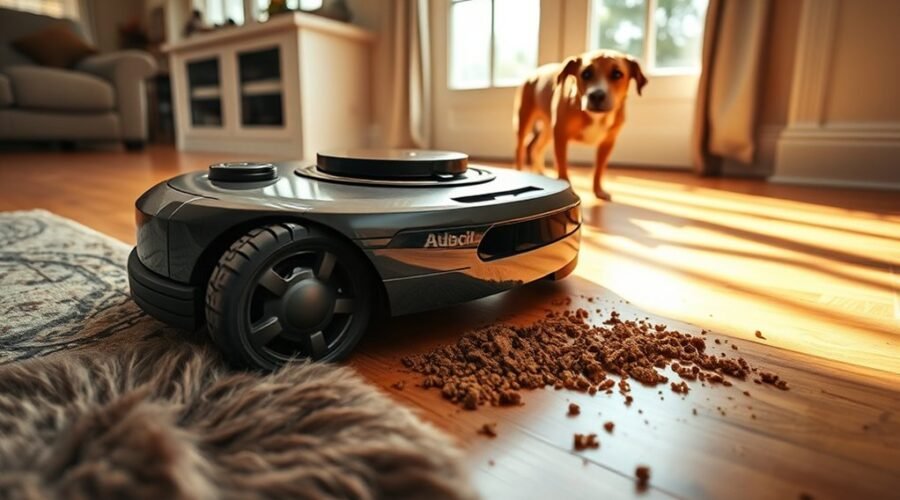
A robot vacuum can spread pet waste if it misses a hazard and makes contact with it. This risk is higher with low light, clutter, or irregular shapes on the floor. Even advanced models can fail under the right conditions. That makes obstacle detection, room setup, and cleaning timing critical. The key question is not whether it can happen, but how owners can reduce the odds and respond quickly when it does.
Can a Robot Vacuum Spread Pet Waste?
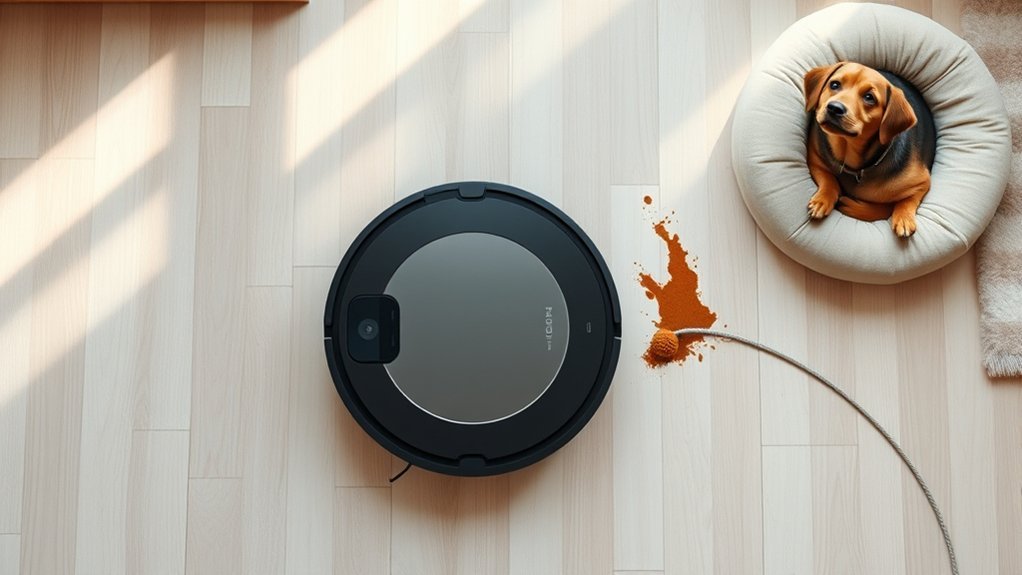
Yes—traditional robot vacuums can spread pet waste if they encounter it during cleaning, especially models with limited navigation and obstacle detection.
In practical terms, a robot vacuum without a robust obstacle avoidance system may drag pet waste from room to room, creating avoidable contamination. Advanced units with AI Obstacle recognition, depth sensing, LED fill lights, and no-go zones are designed to improve object detection and avoid messes more reliably. The Roomba j7+ is a well-known example of this approach.
Without robust obstacle avoidance, a robot vacuum can drag pet waste room to room.
Even so, no system offers a complete guarantee; irregularly shaped waste can still challenge sensors. Routine maintenance of cameras and sensors supports better performance and helps preserve a cleaner, more liberated home environment.
For owners seeking convenience without constant supervision, the clinical takeaway is straightforward: intelligent navigation meaningfully reduces risk, but caution remains necessary whenever pet waste may be present.
Why Robot Vacuums Miss Dog Poop
Robot vacuums may miss dog poop when their AI and navigation systems are trained to recognize common obstacles but not irregular, low-profile shapes.
Detection can be further reduced in low-light conditions, where cameras and infrared sensors have less reliable visual input.
These limits do not imply failure in every case, but they do explain why careful monitoring remains advisable.
AI Misses Irregular Shapes
Basic robot vacuums can miss dog poop because their navigation systems are usually optimized for broad floor coverage, not for identifying low, irregularly shaped hazards. For robot vacuum cleaners, the practical aim is to avoid pet waste without constraining daily freedom.
| Detection method | Typical limitation |
|---|---|
| Bump-and-turn | Misses soft forms |
| Infrared sensors | Prioritize larger objects |
| AI camera systems | Improve object recognition |
| Depth sensing | Varies by model |
| Obstacle detection | Reduces pet accidents |
Traditional units may pass over waste and spread it. Models with advanced navigation, RGB cameras, and stronger obstacle detection perform better, but no device can guarantee perfect avoidance. The safest approach is to pair automation with quick inspection, allowing cleaning to remain efficient, controlled, and liberating.
Low-Light Detection Limits
In low-light conditions, many robot vacuums become less reliable at identifying pet waste because their infrared-based sensors are better suited to general navigation than to recognizing irregular, low-profile hazards.
In practice, robot vacuums avoid dog waste only when their detection capabilities extend beyond basic bump-and-turn behavior. Without smart sensors, obstacle recognition weakens, and pet messes may be contacted, pushed, or spread across poorly lit floors.
Models with RGB cameras, depth sensing, and LED fill lights perform better, yet soft or wet material can still evade detection. Routine cleaning of lenses and sensors helps preserve performance and supports safer autonomy.
For households seeking liberation from manual cleanup, the key is matching technology to the environment, especially where dim light reduces margin for error.
How Robot Vacuums Detect Dog Poop?
Modern robot vacuums detect dog poop by combining AI-based obstacle recognition with RGB cameras, infrared sensors, and, in some models, depth sensing and LED fill lights. This allows a Robot Vacuum to detect irregular dog waste, classify it as an obstacle, and avoid contact during cleaning.
LiDAR contributes by building accurate 2D maps of the home, so navigation remains controlled as the machine moves around furniture, cords, and other obstacles. In better systems, object libraries exceed 200 items, improving recognition of ambiguous shapes that resemble household debris or pet waste.
Detection performance still depends on clean sensors and lenses; dust or residue can weaken interpretation and increase risk. For users seeking freedom from constant supervision, this architecture offers practical reassurance. It does not eliminate every hazard, but it gives the vacuum a structured way to perceive, assess, and avoid messes before they are spread across the floor.
Features That Help Robot Vacuums Avoid Dog Poop
AI obstacle detection now plays a central role in reducing contact with dog poop by identifying irregular shapes and steering the vacuum away from them.
No-go zone mapping adds another layer of control by allowing specific areas to be excluded from cleaning paths.
Together, these features help lower the risk of waste spread while supporting safer operation in homes with pets.
AI Obstacle Detection
How do advanced robot vacuums reduce the risk of spreading pet waste? Through AI obstacle recognition, they analyze RGB camera data trained on thousands of images to detect and navigate around hazards before contact. This capability helps avoid dog poop with measured accuracy, while depth sensing and LED fill lights improve detection in dim rooms.
Real-time obstacle avoidance then redirects the machine around identified waste, limiting contamination during cleaning. Some high-end units add LiDAR mapping for precise floor plans and route planning, supporting pet-friendly smart operation in homes that value freedom from constant manual oversight.
App-based no-go zones further restrict access to selected areas, reducing exposure to mess-prone spaces. The result is a cleaner, more autonomous workflow with lower risk of waste spread.
No-Go Zone Mapping
No-go zone mapping gives robot vacuums a practical way to avoid dog poop by keeping them out of designated risk areas. With smartphone apps, pet owners need only mark zones once to create virtual boundaries that support cleaner, freer routines. | Feature | Effect |
| — | — |
|---|---|
| no-go zone mapping | Blocks access to hazard areas |
| virtual boundaries | Guides cleaning without intrusion |
| object recognition technology | Identifies waste in real time |
| infrared sensors | Detect low-lying obstacles accurately |
Depth-sensing and infrared sensors improve the system’s ability to avoid dog poop that basic navigation might miss. Object recognition technology adds another layer of defense, while regular mapping updates preserve reliability. When configured correctly, these controls reduce accidental contact, limit mess, and let owners delegate cleaning with greater confidence and less supervision.
Best Robot Vacuums for Pet Owners
For pet owners, the best robot vacuums pair reliable obstacle detection with strong filtration and low-maintenance operation. A best robot vacuum should avoid dog poop, pet hair and dander, and other debris while restoring calm to the home.
Advanced robot vacuums such as the Dreame X50 Ultra and L40s Ultra use AI obstacle recognition and LiDAR, so each unit identifies and avoids pet messes with measured precision. The eufy S1 Pro adds 3D MatrixEye™ AI and active infrared stereo vision, allowing it to navigate around more than 200 household objects.
For cleaner air, HEPA filters are preferable because they trap allergens and bacteria. Self-emptying models, including the Dreame X50 Ultra, reduce bin handling and support weeks of unattended cleaning.
Even so, regular sensor cleaning and map maintenance remain essential to preserve accuracy and limit any risk of spreading waste.
How to Keep Robot Vacuums Away From Pet Waste
Although advanced robot vacuums with AI obstacle recognition can greatly reduce the chance of contact with pet waste, they still cannot guarantee perfect avoidance.
Pet parents can improve protection by using virtual boundaries in the app to block litter zones, feeding stations, or any area where accidents are more likely. A Robot Vacuum with recognition technology should also be scheduled when animals are elsewhere, which lowers exposure and preserves household freedom.
Use virtual boundaries to block risky zones, and schedule vacuuming when pets are elsewhere.
Regular upkeep of cameras, sensors, and wheels helps the unit avoid obstacles with greater consistency, especially in homes shared with active pets. Floors should remain clear of toys, cords, and scattered objects, because clutter can impair navigation and create avoidable errors.
These measures do not eliminate risk, but they substantially reduce it, allowing pet parents to move through daily life with less vigilance and more confidence in automated cleaning.
How to Clean a Robot Vacuum After Dog Poop
When a robot vacuum contacts dog poop, it should be powered off immediately, and the battery removed before any cleaning begins.
The dustbin should be emptied at once to limit contamination, and the exterior wiped with a disposable cloth. Any visible waste in the suction path or on the brush rolls should be removed carefully so the robot vacuum can clean safely again.
Removable parts, including the dustbin and filters, should be washed with warm, soapy water, then dried completely before reassembly.
Afterward, the sensors and cameras should be inspected for residue that could impair navigation. This maintenance step supports reliable operation and reduces the chance of spreading dog poop during future cleaning cycles.
A calm, methodical approach protects the device and preserves freedom from recurring mess. Regular maintenance also helps the machine remain dependable, sanitary, and ready for use without unnecessary disruption.
Frequently Asked Questions
What Robot Vacuums Can Avoid Pet Poop?
Robot vacuums with PrecisionVision, RGB cameras, depth sensing, and pet waste sensors can avoid poop—examples include Roomba j7+, Dreame X50 Ultra, L40s Ultra, and eufy S1 Pro—improving cleaning efficiency through advanced navigation technology, maintenance tips, user reviews.
What Are the Downsides of Using a Robot Vacuum?
Robot vacuum downsides include navigation issues, cleaning efficiency gaps, noise factors, battery life limits, and maintenance challenges. Like a small metal tide, it may miss corners, demand upkeep, and still offers liberating convenience for routine floors.
Will Roomba Detect Dog Poop?
Yes, the Roomba j7+ can detect dog poop using poop detection technology, though sensor accuracy challenges and robot design limitations remain. This supports cleaning efficiency concerns. Regular vacuum maintenance advice and pet training tips further reduce risk.
What Happens if a Roomba Runs Over Dog Poop?
It smears like a dark tide, then stalls. The robot vacuum sensors may spread pet waste across floors; pet waste cleanup, odor control solutions, cleaning schedules, floor surface compatibility, and user experiences guide recovery calmly and efficiently.
Conclusion
To sum up, a robot vacuum can spread pet waste when sensors miss an obstacle, especially in low light or with irregular shapes. Yet the risk can be reduced with careful setup, updated navigation features, and routine supervision. Pet owners who keep floors clear, use virtual boundaries, and clean on a safe schedule lower the chance of a messy event. If contact occurs, immediate shutdown and thorough cleaning remain essential for containment and hygiene.