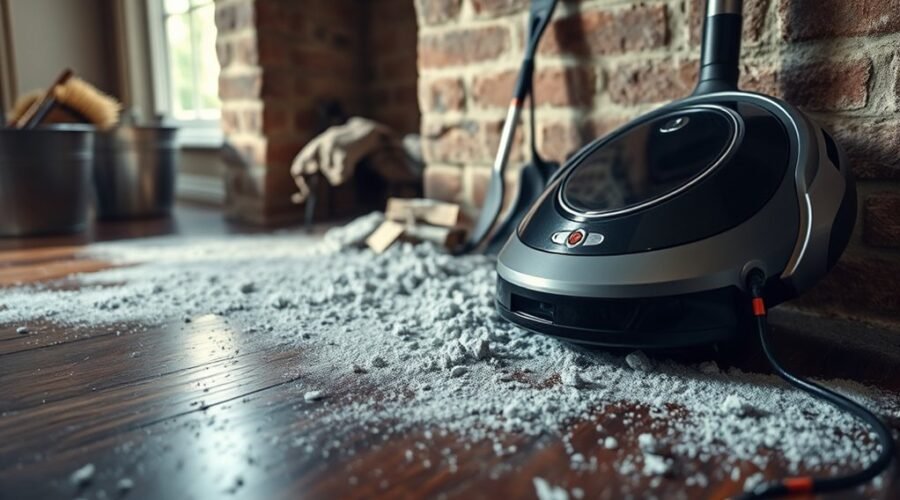
Robot vacuums are built for everyday dust, not fireplace ash. Fine ash can clog filters, scratch parts, and spread particles back into the air, while any hidden ember adds a clear fire risk. Even models with strong suction usually lack the heat-safe materials needed for this job. That leaves a practical question: what tools handle ash safely, and which cleanup methods protect both the machine and the home?
Can a Robot Vacuum Clean Fireplace Ash?
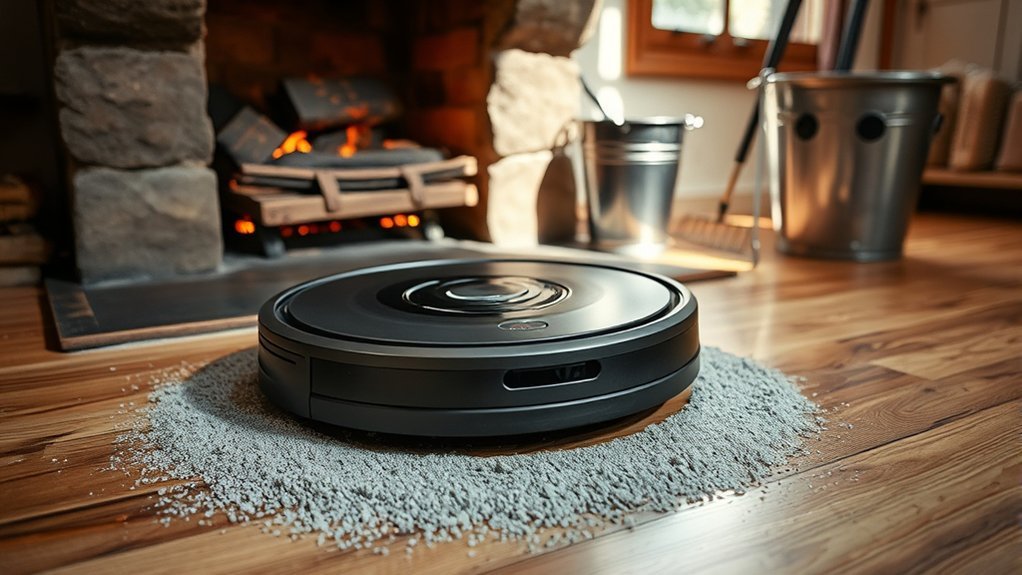
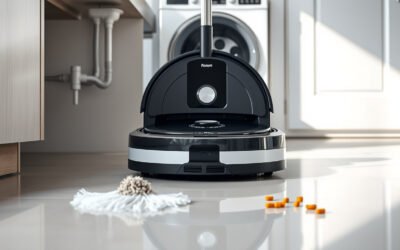
No, a robot vacuum should not be used to clean fireplace ash. A standard robot vacuum is built for household dust and debris, not fine ash or residue from a hearth.
No, a robot vacuum should not clean fireplace ash; it is not designed for hearth residue.
Ash can clog filters, coat sensors, and damage internal parts, reducing performance and shortening the machine’s life. It also creates a fire risk if any hidden embers remain, since hot coals can stay dangerous for days. Before any cleaning begins, ashes must be fully cool.
Even then, a robot vacuum lacks the heat-resistant filters and metal components found in an ash vacuum, so it cannot manage the job safely or effectively. Loose ash can also become airborne, creating respiratory exposure and spreading contamination.
For practical cleanup, a dedicated ash vacuum is the appropriate tool. A robot vacuum offers convenience in ordinary rooms, but liberation from labor should not come at the cost of safety, equipment failure, or preventable hazards.
Why Robot Vacuums Struggle With Ash
Robot vacuums struggle with ash because the material is unlike the dust and debris they are built to handle. Fine ash particles can pass through basic filtration, clog filters, and quickly reduce suction performance.
Because ash is extremely light, it is easily disturbed; instead of being collected cleanly, it can swirl back into the air and settle elsewhere. Many robot vacuums also lack the specialized filtration needed to trap ash particles as small as 0.4 to 0.7 microns, so cleanup remains incomplete.
There is also a safety issue. Conventional units may draw in hidden hot coals, creating a fire hazard that can persist for days. Their standard plastic parts are not heat-resistant, so contact with heat can damage the machine and increase risk.
For households seeking practical freedom from manual labor, this makes robot vacuums a poor choice for fireplace ash.
What Makes Fireplace Ash So Hard to Clean?
Fireplace ash is difficult to clean because its particles are extremely fine, often as small as 0.4 to 0.7 microns, which allows them to slip through standard vacuum filters and clog them quickly.
That scale makes vacuuming ash a poor match for ordinary household machines, since filters load up fast and suction drops. The ash is also light, so a small disturbance can send it swirling into the air, spreading dust across nearby surfaces and back into the room.
When someone tries to clean your fireplace, the problem is not only mess; hidden hot coals may remain inside the pile if the fire was not fully cooled.
Conventional vacuums are not built for these conditions, and blockages can follow. For effective cleanup, tools designed for ash are usually required because they better handle fine debris and reduce the risk of damage or fire.
When an Ash Vacuum Is the Safer Choice
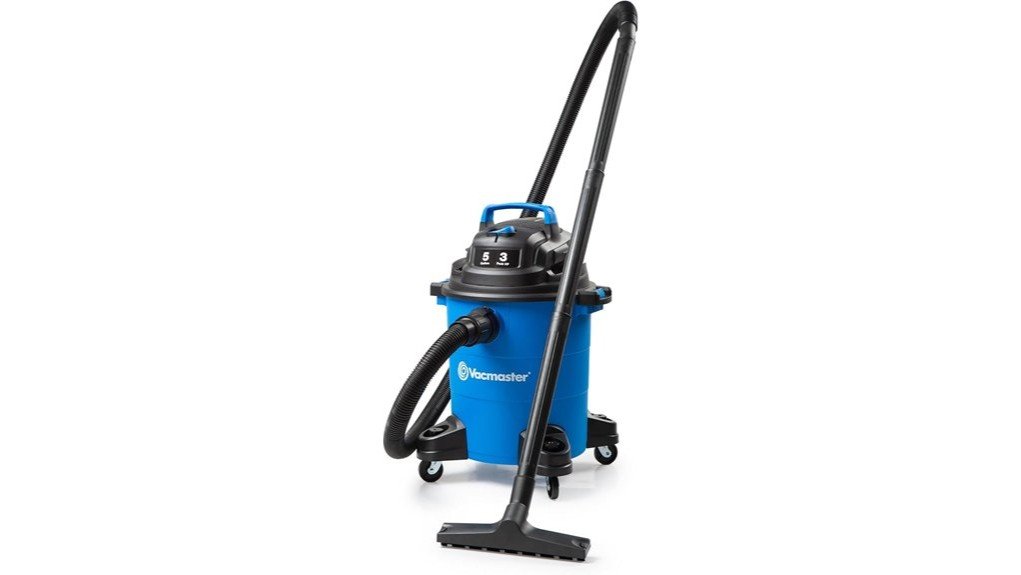
When fine ash is involved, an ash vacuum is the safer choice because it is built for the job in ways a robot vacuum is not. Its metal hose and heat-resistant filter are designed to handle warm or cool residue without blockages or fire risk.
In fireplace cleaning, this matters because hidden embers may remain active for days, and a standard robot vacuum can be damaged or ignite material it was never meant to touch. An ash vacuum also supports dust-free cleanup, reducing the chance that ash will be stirred into the air and inhaled.
That cleaner capture helps protect respiratory comfort while keeping the hearth area orderly. For households seeking a practical, self-directed way to maintain the fireplace, the ash vacuum offers a more reliable and safer path than general-purpose devices.
It replaces improvisation with purpose-built control, which is essential whenever fine ash and possible heat are still present.
How to Clean Fireplace Ash by Hand
Safety comes first: fireplace ash should be fully cooled for at least 12 to 24 hours, and gloves, a dust mask, and safety goggles should be worn before any cleanup begins.
The needed tools are simple—a dustpan and brush, plus a metal ash tray for collecting the waste, with a wire brush available for stubborn soot or creosote.
The ash can then be swept up carefully and transferred to a safe metal container, since fine particles can become airborne and create a mess.
Safety First
Once the fireplace ash has cooled to below 40 °C, it can be handled safely by hand with the right precautions.
The first rule is protection: gloves, a dust mask, and safety goggles help shield skin, lungs, and eyes from fine ash. A metal poker or scooper reduces disturbance and limits airborne particles, supporting cleaner removal.
Ash should then be lifted into a dustpan and brush designed for this task, not a regular vacuum, which can spread dust or suffer damage. Careful handling preserves control and keeps cleanup orderly.
It also helps to inspect the fireplace and chimney regularly for blockages or creosote buildup, since hidden hazards undermine safety and freedom from avoidable risk.
Gather Cleaning Tools
After the ash has cooled for at least 12 to 24 hours, the next step is to gather the proper cleaning tools before removal begins.
To gather cleaning tools, one should prepare a chimney brush, dustpan, stiff brush, and a metal container for metal ash. A drop cloth placed around the fireplace helps contain stray debris and reduces cleanup friction.
Protective gear matters: gloves, a dust mask, and safety goggles limit exposure to fine particles and support safe, independent work.
If soot or creosote remains stuck inside the firebox or chimney area, a wire brush may help loosen it before the final cleanup.
Keeping every item ready before contact with ash saves time, improves control, and makes the task more orderly and manageable.
Sweep And Dispose
With the ashes fully cooled for at least 12 to 24 hours, the fireplace can be swept by hand using a metal dustpan and brush to reduce static and fire risk.
A wire brush may first loosen stubborn soot on the walls. The sweeping should stay gentle so ashes from the fireplace do not swirl into the room; a damp cloth can gather fine residue that a vacuum should not touch.
Collected debris belongs in a metal container, preferably lidded, so any hidden heat is contained. Plastic tools are less suitable because they can melt or ignite.
This manual method gives a clear, independent way to remove ash safely while keeping the hearth ready for the next fire.
Which Fireplace Areas Need Special Care?
The firebox and grate need close attention because ash buildup there can restrict airflow and raise the risk of chimney fires.
Hidden crevices and edges also require care, since ash and embers can remain trapped in hard-to-reach spots.
These areas should be checked thoroughly before any vacuuming or cleaning begins.
Firebox And Grate
When cleaning fireplace ash, special care is needed in the firebox and grate, since these areas can collect ash and creosote that create fire hazards if left unattended.
The firebox should be cleared regularly so airflow stays open and combustion remains efficient. In the grate, ash buildup can block air movement, causing incomplete burning and more smoke.
Before any cleaning, ashes should cool for 12 to 24 hours to reduce risk. A chimney brush and ash vacuum can remove residue from the fireplace safely while limiting dust disturbance.
Careful maintenance of these zones supports cleaner burns, better performance, and greater control over the hearth environment.
For those seeking a safer, more functional fireplace, disciplined ash removal in these core areas remains essential.
Hidden Crevices And Edges
Hidden crevices and edges in a fireplace often require the most attention, since ash and debris tend to settle in corners, along the base, and in uneven recesses.
Robot vacuums usually cannot move with enough precision to clean these confined spaces, because their shape and navigation limits reduce access in tight areas.
Fireplace ash can remain trapped where surfaces change depth or angle, especially near joints, ledges, and side edges.
As a result, a machine may remove loose material from open areas while leaving residue behind.
Regular inspection and manual cleaning of these hard-to-reach spots remain necessary for complete removal.
This approach supports a cleaner fireplace, reduces buildup, and gives greater control over maintenance without relying on tools that are not built for such restricted spaces.
How to Reduce Soot and Ash Buildup
Properly seasoned wood is one of the most effective ways to reduce soot and ash buildup, since damp fuel produces more smoke and leaves more residue behind. Keeping moisture under the 25% legal limit supports cleaner combustion and easier cleanup.
| Action | Effect |
|---|---|
| Season wood fully | Lower smoke output |
| Store under cover | Block rain and snow |
| Allow airflow | Dry fuel faster |
| Check with nail test | Estimate dryness |
| Inspect chimney | Limit creosote |
A protected wood pile with steady air circulation helps the fuel dry evenly. The nail test can offer a rough check, though experience improves accuracy. Regular fireplace and chimney maintenance also matters, because creosote restricts airflow and encourages soot deposits. Cleaner burning means less debris for any cleanup method, and it helps reduce soot before it reaches the hearth. Wait for cool ash before handling it, then remove only the light residue that remains. This approach preserves safety, reduces buildup, and supports a freer, less laborious routine around the fireplace.
Best Tools to Use Instead of a Robot Vacuum
A robot vacuum is not suited to fireplace ash, since fine particles can clog its mechanisms and any hidden ember can create a fire hazard.
Better options begin with ash vacuums, which use heat-resistant parts and filters that trap particles as small as 0.4 to 0.7 microns. They offer a safer, cleaner route for people who want independence from repeated sweeping and dust clouds.
Metal ash trays also help by collecting and carrying ash without scattering it across the room.
For smaller jobs, manual tools such as a dustpan and brush or a wire brush can clear residue from hearth surfaces, though they may stir up more mess.
For deep cleaning, professional chimney sweeping services remove ash and creosote thoroughly, reducing risk and saving time.
Each option serves a clear purpose, but only the right tool protects the space, the lungs, and the freedom to use the fireplace confidently.
Frequently Asked Questions
What Is the Best Vacuum for Cleaning Fireplace Ash?
The best vacuum for cleaning fireplace ash is a specialized ash vacuum, such as PowerSmith PAVC101 or Stanley models. Their ash vacuum features heat-resistant metal bins, strong filtration, and safer ash disposal methods.
Can Fireplace Ash Be Vacuumed?
Fireplace ash can be vacuumed only after complete cooling, but only with a specialized ash vacuum; robot vacuum limitations make conventional units unsafe. Safer ash disposal methods include sealing, bagging, and disposal once cold.
What Is the Best Way to Clean Out Fireplace Ashes?
A specialized ash vacuum is best. For practical fireplace maintenance tips and safe ash disposal methods, let the ashes cool 12–24 hours, wear protective gear, use a chimney brush, and empty the tank carefully.
Do You Need a Special Vacuum for Ash?
Yes, a special ash vacuum is needed for vacuum safety. Ordinary vacuums can clog, fail, or ignite hidden embers. Proper ash disposal methods require heat-resistant materials, metal hoses, and fine-particle filters for reliable cleanup.
Conclusion
In practice, a robot vacuum is a poor match for fireplace ash. Its filters, motors, and brushes are built for household dust, not fine, abrasive residue or hidden embers. One homeowner learned this the hard way when a “quick” cleanup clogged the machine and spread ash across the room, turning a small task into a bigger mess. For safe results, an ash vacuum or careful hand cleaning remains the better tool.