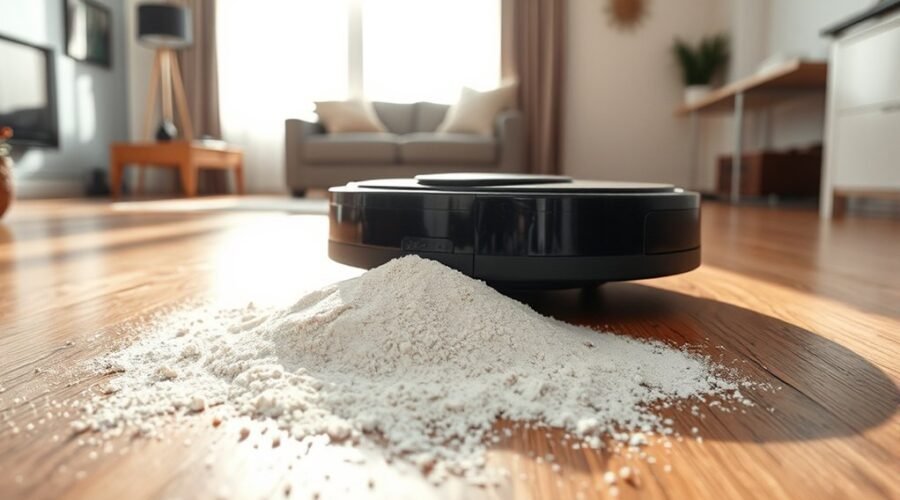
Robot vacuums can handle fine powder, but only under the right conditions. Strong suction, sealed filtration, and a HEPA filter improve capture of ultrafine particles, while smooth floors usually give the best results. Even so, edges, brush design, and airflow paths can leave residue behind. The real question is not whether they can clean powder, but how much and how reliably they can do it.
Can a Robot Vacuum Clean Fine Powder?
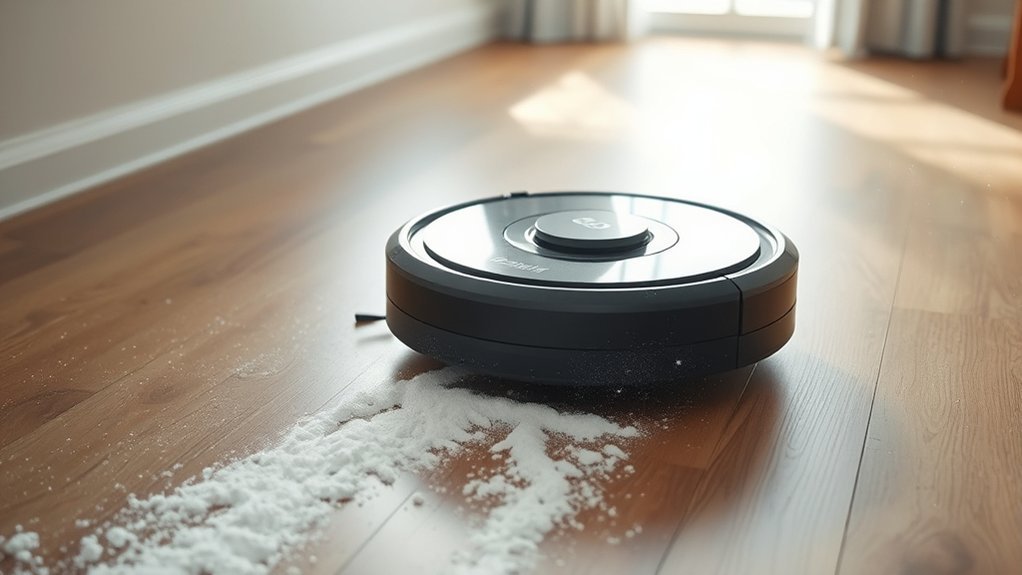
Yes, a robot vacuum can clean fine powder, but performance depends heavily on suction strength, filtration, brush design, and maintenance. Stronger units, such as a robot vacuum rated near 8,000Pa, remove fine dust more effectively than lower-power models.
HEPA filtration is important because it traps particles before they recirculate, protecting indoor air and supporting cleaner surfaces. Brush systems also matter; floating main brushes maintain closer contact with floors, improving pickup on tile, wood, and low-pile carpet.
HEPA filtration traps fine particles before recirculation, while floating brushes improve pickup across hard floors and low-pile carpet.
Smart navigation contributes by mapping coverage and reaching accumulation zones efficiently, reducing missed patches. For users seeking liberation from manual sweeping, these features translate into lower labor and more consistent results.
Regular filter cleaning, brush inspection, and timely replacement preserve suction and collection efficiency. In practical terms, fine powder can be managed well when the machine is specified and maintained for particle control rather than general debris alone.
Why Fine Powder Is Hard for Robot Vacuums
Fine powder is difficult for robot vacuums because the particles are often smaller than 10 microns and light enough to escape standard suction patterns.
In practice, fine particles behave almost like airborne dust: they disperse, resettle, and slip past weak intake currents. When a robot vacuum moves over them, its suction power may not create enough lift to pull settled material from smooth floors, and embedded residue in carpet can remain behind.
Round chassis designs add another limit, since triangular gaps at corners and edges are harder to reach, leaving accumulations untouched. Airflow losses near walls further reduce performance where powder commonly collects.
Even when a filter captures what enters the bin, the pickup stage still depends on strong airflow, brush contact, and sustained suction power. Without those elements working together, powder removal stays incomplete, and users seeking cleaner, more independent living face a machine that can only partly reclaim the space.
What Features Help a Robot Vacuum Pick Up Fine Powder
Effective fine powder pickup depends first on strong suction power, which helps lift particles from hard floors and carpets without leaving residue.
Fine-pore filtration, including HEPA-level capture, prevents loosened powder from escaping back into the air.
Edge-cleaning brushes improve contact along corners and baseboards, where fine dust often accumulates and is otherwise missed.
Strong Suction Power
Strong suction power is a primary requirement for lifting fine powder from hard floors and low-pile surfaces, with high-output models such as the DEEBOT X2 OMNI delivering up to 8,000Pa to improve particle pickup.
This strong suction power helps the machine break the hold of loose dust and carry it into the airflow before it can spread. A central suction inlet supports balanced intake, reducing losses at the edges and improving collection consistency.
HEPA filters then help retain captured particles, limiting recirculation during operation. For users seeking cleaner rooms and less manual effort, LiDAR and AI mapping can direct the robot toward concentrated dust zones.
Routine brush and filter cleaning remains necessary, since blockages quickly reduce suction and weaken performance.
Fine-Pore Filtration
Fine-pore filtration is essential for capturing powder-level debris that can pass through less efficient systems. HEPA filters are particularly effective because they can trap 99.97% of particles as small as 0.3 microns.
In practice, this fine filtration keeps airborne residue contained instead of recirculating it into living space, which supports cleaner, more autonomous care. Robot vacuums with HEPA filters perform better on fine powder when paired with strong suction, because lifted particles are retained rather than expelled.
Dustbin design also matters: larger bins with efficient airflow reduce clogging and preserve performance. Regular filter cleaning and replacement remain necessary, since saturation weakens suction and limits collection.
Together, these features let the machine work with less interruption and more freedom.
Edge-Cleaning Brushes
Along edges and into corners, edge-cleaning brushes help draw fine powder into the vacuum’s suction path by spinning outward and sweeping debris inward.
In practical use, edge cleaning depends heavily on side brushes, especially when they are longer and more flexible, since they can conform to baseboards, tile gaps, and uneven shifts.
Dual side brushes usually outperform single-brush designs because they widen coverage and capture more powder near boundaries.
Edge modes improve results by reducing travel speed, increasing suction, and forcing repeated passes along walls.
Some units add adaptive algorithms that alter brush behavior and suction output according to surface type and debris load.
For users seeking cleaner, freer floors, brush design determines whether fine dust is merely moved or actually collected.
Best Surfaces for Fine Powder Cleanup
Hard floors and tile are the most favorable surfaces for fine powder cleanup, since robot vacuums can maintain full suction contact and leave little residue.
Low-pile rugs and mats are also well suited, as their short fibers allow debris extraction without greatly restricting airflow or brush movement.
In both cases, cleanup efficiency depends on smooth travel, stable suction, and minimal fiber resistance.
Hard Floors And Tile
On smooth tile and hardwood, robot vacuums are especially effective at removing fine powder because suction can lift loose debris directly from the surface instead of working through carpet fibers. A vacuum cleaner with strong airflow, such as 8,000Pa models, can free dust from open floorplanes quickly.
| Surface | Result |
|---|---|
| Tile | Rapid pickup |
| Hardwood floors | Clean sweep |
| Grout lines | Better reach |
| Dust film | Reduced residue |
| HEPA filter | Trapped particles |
Smooth travel improves coverage, and high-efficiency filters prevent recirculation. Regular brush and filter cleaning preserves suction, keeping liberation from dust consistent. On these hard surfaces, fine powder is removed efficiently, with minimal obstruction and predictable results.
Low-Pile Rugs And Mats
Low-pile rugs and mats are among the most effective surfaces for robot vacuums to clean fine powder, because their flat, low-friction fibers allow strong suction and airflow to lift dust from the surface without extensive entanglement.
On these textiles, vacuums use improved airflow paths, so particles stay exposed rather than buried. Models with high suction, such as 8,000Pa units, provide better coverage and more complete pickup along seams and edges.
Smart navigation further extends reach into corners where powder collects, reducing missed zones.
However, fine dust can clog brushes and filters quickly, lowering performance if maintenance is neglected. Regular cleaning of these components preserves liberation from repeated manual touch-ups and keeps low-pile surfaces close to powder-free.
Where Robot Vacuums Struggle With Fine Powder
Fine powder exposes several weak points in robot vacuum design, particularly on lower-powered models below about 3,800Pa, where suction may be insufficient to fully lift particles from hard floors.
Fine powder can expose weak robot vacuums, especially lower-powered models below about 3,800Pa.
Standard roller brushes can worsen the issue by scattering dust instead of gathering it, especially on smooth surfaces.
In practice, obstacle avoidance systems and round chassis shapes leave narrow corners, baseboards, and furniture edges less accessible, so residue can remain in triangular zones.
Cleaning performance is further limited when the machine makes only one pass; fine powder often requires repeated runs to reduce visible buildup.
Even when filtration is adequate for larger debris, ultra-fine material may still escape intended capture pathways if the system is not engineered for powder-heavy tasks.
For users seeking cleaner autonomy, the practical limit is clear: robot vacuums can assist, but they do not reliably liberate floors from fine powder without careful settings, frequent cycles, and realistic expectations.
How HEPA Filters Control Fine Dust
HEPA filters control fine dust by forcing exhaust air through a dense fiber matrix that captures 99.97% of particles as small as 0.3 microns, reducing the amount of airborne debris recirculated into a room.
In robot vacuums, HEPA filters help contain fine dust that would otherwise escape during cleaning and settle again on floors and surfaces. This containment supports cleaner indoor air and can reduce exposure to common allergens such as pollen, dust mites, and pet dander.
For practical performance, the filter must be maintained on schedule; cleaning or replacement preserves airflow and keeps capture efficiency stable. When HEPA filters remain unobstructed, the vacuum can better manage fine powders and maintain a more controlled cleanup process.
For households seeking relief from persistent dust, HEPA filtration offers a measurable barrier between collected debris and breathable air, supporting a cleaner living space without unnecessary recirculation.
How Brush Design and Suction Affect Pickup
Brush design and suction strength determine how effectively a robot vacuum removes fine powder from floors. In practice, brush design shapes initial contact, while suction power determines whether loosened particles enter the airflow path.
Rubber brushes, such as those used in the DEEBOT T20 OMNI, maintain firm floor contact and reduce scatter on hard surfaces. Side brushes further guide dust from edges and corners toward the main intake, widening coverage without manual intervention.
High suction power, exemplified by models reaching 8,000Pa like the DEEBOT X2 OMNI, improves pickup of very small particles that would otherwise remain embedded in floor texture.
Even so, performance depends on clean brushes and unobstructed filtration. Fine powder can accumulate on brush fibers or filters, lowering airflow and reducing capture efficiency.
For users seeking freedom from repeated sweeping, brush design and suction power form the core mechanical limits that define what a robot vacuum can remove consistently.
How to Improve Robot Vacuum Performance on Fine Powder
Improving a robot vacuum’s performance on fine powder requires a combination of strong suction, effective filtration, and surface-adapted brush design. Models with more than 3,800Pa can lift powder from hard floors and low-pile carpets more reliably.
When vacuums are equipped with HEPA filtration, particles down to 0.3 microns are retained instead of recirculated, reducing airborne residue. Rubber or floating main brushes improve floor contact and help dislodge dust without scattering it.
Regular maintenance is essential: filters should be cleaned or replaced frequently, and brushes inspected for buildup to preserve airflow and prevent clogging.
Smart navigation, including LiDAR or AI mapping, increases coverage in zones where fine powder accumulates, minimizing missed patches and unnecessary passes. The practical result is a machine that works with less waste, less repetition, and more control over dust exposure.
Best Robot Vacuums for Fine Powder
When fine powder is the main cleaning challenge, the best robot vacuums combine high suction, effective filtration, and surface-responsive brushes. Models such as the DEEBOT X2 OMNI, with up to 8,000Pa suction, are better suited to lifting settled powder from hard floors and low-pile surfaces.
HEPA-equipped units, including the DEEBOT T20 OMNI, help contain particles as small as 0.3 microns, reducing recirculation and supporting cleaner air. Advanced models also use AI and LiDAR navigation to map dust-prone zones, improve coverage, and avoid missed patches.
The DEEBOT N10 PLUS shows the value of a floating main brush and antibacterial filter for adapting to mixed surfaces while maintaining capture efficiency. For best results, brush rollers and filters should be cleaned and replaced on schedule, since buildup weakens pickup performance.
In practical terms, the most effective machines for fine powder are those that balance suction, filtration, and autonomous path planning without requiring constant intervention.
Frequently Asked Questions
Can Vacuums Pick up Powder?
Yes, vacuums can pick up powder, especially certain powder types, when suction, brush design, and filtration support cleaning efficiency. Fine dust and flour require strong seals and HEPA filters to prevent redistribution.
What Are the Downsides of Using a Robotic Vacuum Cleaner?
Robot vacuums offer convenience, yet their robot efficiency can be modest in corners and on fine debris. Maintenance issues arise as filters, brushes, and sensors need frequent cleaning; suction limits and missed spots further reduce performance.
Which Pool Robot Is Best for Cleaning Fine Particles?
Maytronics S200 and Zodiac DX4050IQ are the strongest pool robots for fine particles. Their extra-fine baskets capture sediment efficiently. Regular filter maintenance preserves suction, reliability, and practical freedom from recurring manual cleaning.
What Liquid Can I Put in a Robot Vacuum?
Usually none; one spilled cup can cripple a robot vacuum. Only manufacturer-approved fluids qualify, and only in mopping systems. Liquid compatibility directly affects cleaning efficiency, so water or diluted solution should be used exactly as specified.
Conclusion
In practice, a robot vacuum can clean fine powder, but performance depends heavily on suction, airflow design, and filtration. Models near 8,000Pa with HEPA filtration are better suited to capturing ultrafine particles before they recirculate. Even so, edges and corners often retain residue, and one pass is rarely enough. In one vivid benchmark, 1 gram of powder can disperse into thousands of visible specks, showing why repeated cleaning and regular filter maintenance remain essential.