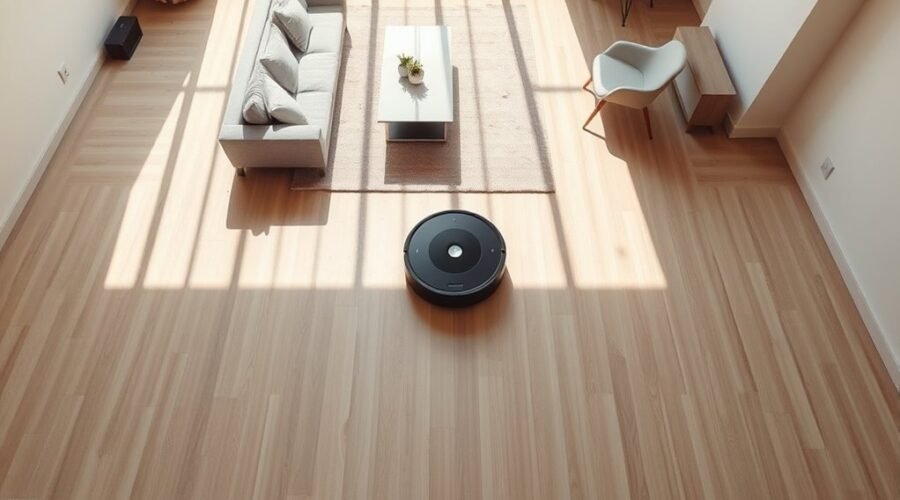
Robot vacuums clean in rows because the control system is trying to cover space with minimal overlap and fewer missed areas. Mapping, localization, and sensor feedback guide each pass, while the software adjusts when walls, furniture, or floor changes disrupt the plan. When that logic fails, the machine may drift, loop, or skip sections. The pattern looks simple, but the underlying behavior is more complex than it seems.
Why Won’t My Robot Vacuum Go Straight?
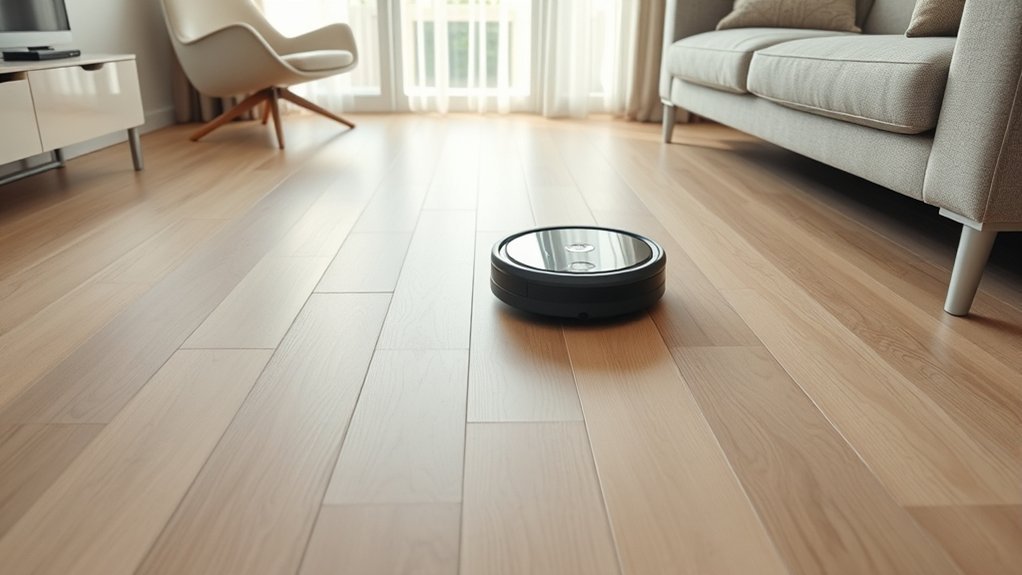
A robot vacuum may fail to travel in a straight line when its sensors, wheels, or software are compromised. In a robot vacuum cleaner, dirty sensors can misread nearby objects, forcing the navigation system to adjust course repeatedly and produce erratic movement.
Hair, lint, or debris trapped in the wheels can also introduce mechanical drag, preventing a stable trajectory. When propulsion is uneven, the device drifts, corrects, and drifts again, which reduces autonomy and wastes energy.
Software faults may further destabilize path planning. If internal communication breaks down, the navigation system may issue conflicting commands, resulting in circular motion or abrupt turns.
Regular maintenance is thus essential: clean sensors, inspect wheels, and remove obstructions. Updating firmware and resetting the navigation system can restore accurate guidance and improve performance.
For users seeking reliable, less constrained household automation, disciplined maintenance remains the most effective path to straight-line travel.
Why Does a Robot Vacuum Keep Going in Circles?
Circular motion in a robot vacuum usually indicates a fault in sensing, mobility, or navigation logic.
In robot vacuum cleaners, dirty or blocked advanced sensors can misread obstacles, causing repeated turns instead of a stable cleaning path. Hair, string, or debris wrapped in the wheels can also restrict traction, so the machine pivots rather than advances.
Software glitches or outdated navigation code may further disrupt position tracking, leaving the unit trapped in a loop. On different floor types, poor recognition can trigger constant course correction as the system fails to settle on a direct route.
These errors reduce coverage and delay completion, undermining the user’s autonomy over domestic labor. Regular maintenance remains decisive: sensors should be cleaned, wheels cleared, and firmware kept current.
When the hardware and control logic remain unobstructed, the vacuum can move with discipline instead of circling wastefully.
How Robot Vacuum Mapping Works
When mapping is enabled, robot vacuums use LiDAR, VSLAM, and related sensor systems to build a virtual layout of the cleaning area. The robotic vacuum cleaner converts spatial data into a navigable map, letting its mapping and navigation logic divide rooms into measurable segments.
This structure supports systematic paths that help the robot remove dust with minimal overlap and fewer missed zones. By analyzing room dimensions, the device plans efficient routes, recognizes obstacles, and preserves a record of specific cleaning zones for targeted future passes.
Many models also interpret floor-surface differences, adjusting effort according to the conditions encountered. The result is not mere automation, but a controlled process that frees household labor through repeatable precision.
Regular software updates refine mapping accuracy, improve route stability, and strengthen long-term performance. Over time, the machine’s memory of the home becomes more exact, enabling cleaner coverage and more deliberate movement across the entire space.
What Sensors Keep a Robot Vacuum on Track?
Ultrasonic ToF sensors measure distance to nearby obstacles with high precision, helping a robot vacuum hold a straight cleaning line and avoid drifting off course.
In robot vacuums, these sensors work with LiDAR, which builds a virtual map and guides systematic cleaning patterns instead of aimless travel. IMUs add motion data, letting the machine preserve position estimates and limit overlap across lanes.
3D sensors in AIVI 3D systems improve obstacle recognition and help the unit adapt to floor changes and room layouts. Pressure sensors monitor dust and debris levels in the dustbin, which can inform how aggressively the machine should continue its run.
Together, these sensors create a control loop that keeps navigation disciplined, efficient, and visibly organized. For users seeking liberation from manual vacuuming, the result is not merely convenience but a machine that reads space, responds to hazards, and cleans with measured purpose.
How to Fix Robot Vacuum Coverage Issues
Coverage issues in robot vacuums are often traced to navigation logic, sensor condition, or map integrity rather than raw suction performance.
Systematic grid or zigzag navigation is designed to deliver broad coverage, but dirt on sensors or wheels can distort movement and create gaps in cleaning. A technician would first inspect and clean these components, then verify that no obstacles are confusing the path planner.
Dirt on sensors or wheels can distort movement, leaving gaps; inspect, clean, and check for obstacles first.
Virtual barriers in the app can redirect the machine away from cluttered zones while preserving access to open areas. Firmware should be kept current, since a software update may improve navigation accuracy and route selection.
If the device still misses sections, resetting the navigation system or recreating the map can restore spatial orientation. These steps do not merely recover efficiency; they return control over domestic labor to the user, making coverage deliberate rather than accidental and allowing cleaning to proceed with greater autonomy and fewer interruptions.
Frequently Asked Questions
What Are the Downsides of Using a Robotic Vacuum Cleaner?
Downsides include limited Battery life, ongoing Maintenance costs, weak Surface compatibility on carpets, imperfect Navigation accuracy around obstacles, and sometimes disruptive Noise levels. These constraints reduce autonomy, increase labor, and limit thorough cleaning performance.
How Do Robot Vacuums Know Where to Clean?
It maps and roams, order against clutter. Mapping technology and navigation algorithms identify rooms; sensor types refine boundaries; obstacle detection prevents collisions; cleaning patterns direct coverage. The machine learns routes, then cleans liberated from randomness.
Do Robot Vacuums Clean Properly?
Yes, robot vacuums generally clean properly when navigation technology, dirt detection, and battery life are well calibrated; cleaning efficiency improves with regular maintenance tips, though corners, clutter, and deep carpet remain limiting factors.
Why Does Roomba Keep Cleaning the Same Area?
Roomba repeats areas because navigation algorithms prioritize coverage and missed debris, while sensor technology flags dirt concentrations. Its cleaning patterns adapt to surfaces, balancing battery longevity with surface adaptability, so high-traffic zones receive extra passes.
Conclusion
In conclusion, robot vacuums clean in rows because systematic path planning produces consistent coverage, fewer missed areas, and better energy use than random motion. Their LiDAR or VSLAM mapping systems continuously update position, while onboard sensors correct drift and obstacle contact. One useful benchmark is that structured cleaning can reduce redundant passes by roughly 30% compared with unscripted roaming. When straight lines fail, the issue is usually calibration, mapping error, or wheel traction rather than the cleaning logic itself.