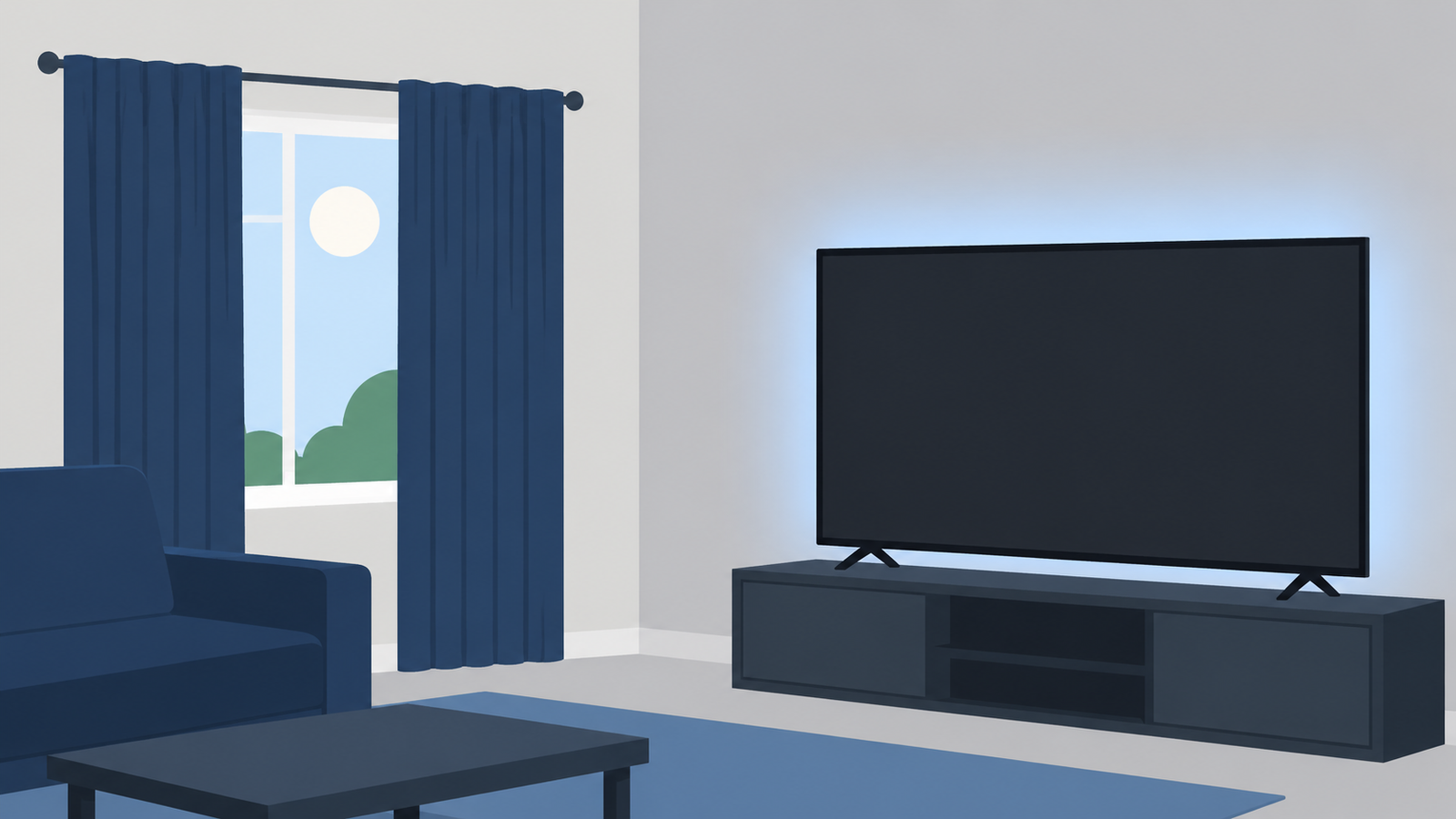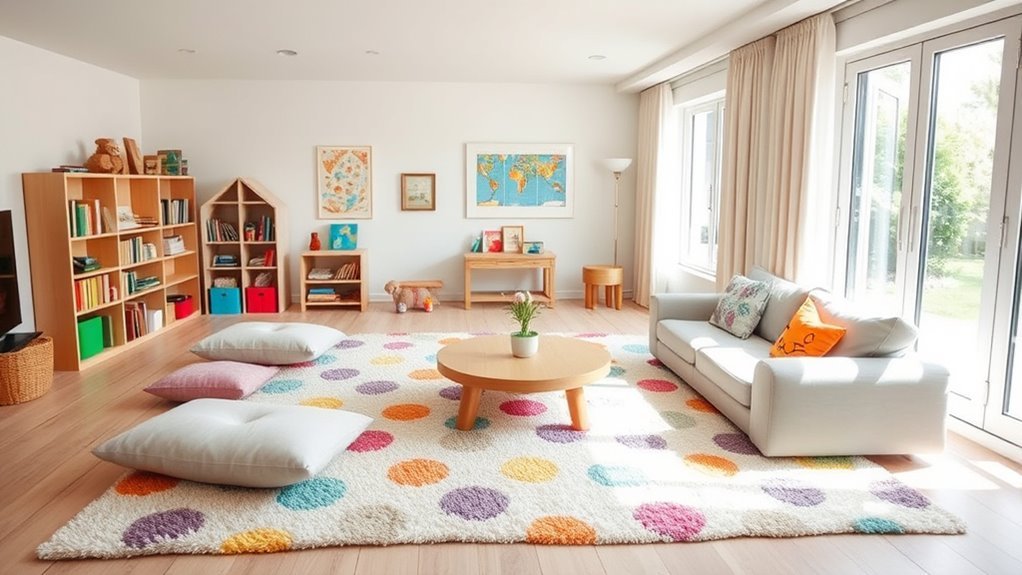
To create a kid-friendly living room, start with safety: anchor tall furniture and TVs, control cords, secure rugs, remove small hazards, and keep dangerous items out of reach. Then add durable, easy-to-clean materials, low toy storage, and clear zones for play, reading, crafts, and family time so the room works for children without feeling like a full-time playroom.
Last updated: August 19, 2026
By: [VERIFY] Add the real author name and relevant credentials before publishing.
Quick Answer
To make a living room kid-friendly, fix the highest-risk hazards first: anchor tall furniture and TVs, control cords, secure rugs, and remove small objects or dangerous items within reach. Then choose sturdy, easy-to-clean furniture, create simple play and reading zones, keep everyday toys in low labeled storage, and use a short daily reset routine.
Key Takeaways
- Safety comes first: anchor furniture and TVs, secure cords and rugs, check window-covering hazards, and remove small objects or batteries from child height.
- Durable does not have to mean boring; performance fabrics, washable covers, patterned rugs, and wipeable tables keep the space stylish and practical.
- Low, labeled storage makes everyday toys easier to find and gives each category a clear cleanup location.
- Zones for play, reading, crafts, and family lounging make the room easier to use and easier to tidy.
At a Glance
| Time Required | Varies by room: a basic safety walk-through and rearrangement can fit into one session, while anchoring or furniture changes may take longer |
| Difficulty | Easy to moderate, depending on furniture anchoring and storage changes |
| Tools Needed | Tape measure, baskets or bins, labels, washable rug pad, furniture/TV anchoring kit, screwdriver or drill |
| Cost | Low to high: start with rearranging, labels, and baskets; invest later in washable rugs, storage furniture, or performance upholstery |
Why a Kid-Friendly Living Room Matters: Safety and Fun First
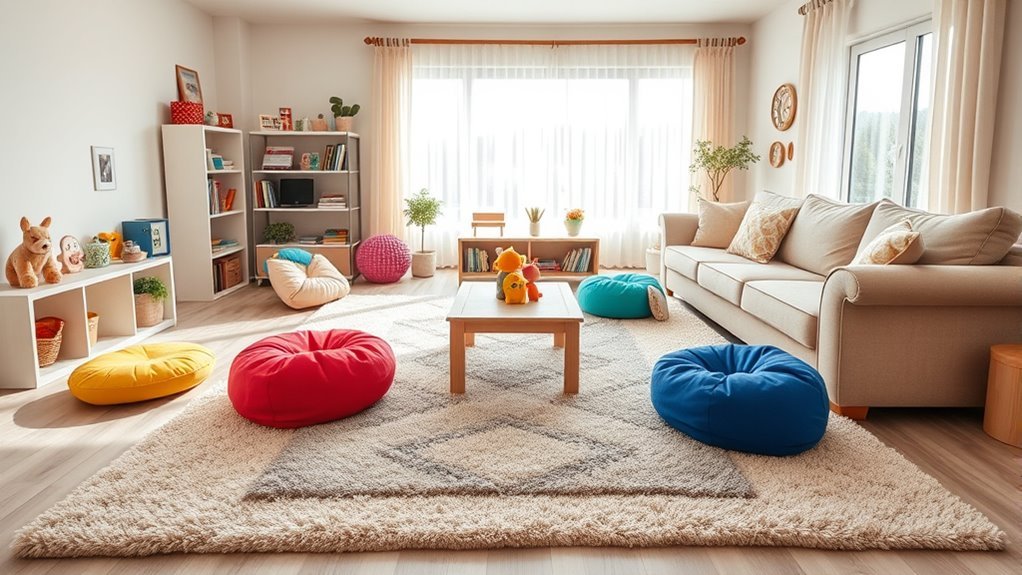
A kid-friendly living room is not just about cheerful colors or cute baskets. It is about creating a safe, flexible family space where children can move, imagine, and learn while adults still have a room that feels comfortable and welcoming.
Start with the risks you cannot see at first glance: tipping furniture, loose cords, slippery rugs, sharp corners, tiny objects under the sofa, and heavy items within reach. The U.S. Consumer Product Safety Commission’s Anchor It! campaign recommends anchoring furniture with drawers, doors, and shelves to help prevent tip-over injuries and deaths. CPSC also advises anchoring TVs and keeping tempting items such as toys and remotes where children are not encouraged to climb for them.
Once the safety foundation is in place, focus on joy. A good family living room gives kids room to play, a cozy spot to rest, and simple systems that make cleanup feel manageable instead of overwhelming.
Warning: Design choices do not replace supervision, product instructions, or proper installation. Anchor heavy furniture and TVs according to the manufacturer’s directions, and get professional help if you are unsure how to secure an item safely.
Start With a Safety-First Living Room Checklist
Before buying anything new, walk through the room from a child’s eye level. Sit on the floor and look for hazards that are easy to miss when you are standing.
- Anchor tall or climbable furniture: secure bookcases, media consoles, cabinets, and storage units to the wall.
- Secure the TV: mount it properly or use anti-tip straps designed for your television and stand.
- Control cords: hide lamp cords, charger cords, and entertainment-center wires in cord covers or cable boxes.
- Check window coverings: the CPSC says cordless window coverings are the safest option when young children are present. Keep any existing cords inaccessible.
- Use rug pads: add a non-slip pad under area rugs so kids do not slide while running or playing.
- Remove choking and ingestion hazards: look under sofas, cushions, baskets, and side tables for tiny toys, coins, button or coin batteries, beads, or loose parts.
- Soften sharp corners: choose rounded furniture or add corner guards to low tables and media units.
- Store adult items securely: remotes with button or coin batteries, candles, matches, glass decor, cleaning sprays, and craft blades should stay out of reach. The CPSC warns that a swallowed button or coin battery can burn through a child’s throat or esophagus in as little as two hours.
- Protect accessible outlets: use child-safety outlet covers or other appropriate protection on exposed receptacles that young children can reach, following CPSC childproofing guidance and the product instructions.
- Reduce window-fall access: keep climbable furniture away from windows and use appropriate window guards or stops where needed. The CPSC warns not to rely on window screens to prevent falls.
Choosing Safe and Durable Furniture for Your Family
When picking furniture for your family living room, look for pieces that are stable, easy to clean, and comfortable for both kids and adults. Rounded edges are helpful, but stability matters just as much. A wobbly table, lightweight shelf, or top-heavy cabinet can create more risk than a sturdy piece with a few protected corners.
Recommended Products

Ultra Soft & Non-slip: Featuring a shaggy carpet surface, the Ophanie soft area rug is highly soft with a high-density sponge interlayer. This rug effectively reduces shedding, and the non-slip bottom with small, durable anti-slip dots enhances friction to prevent sliding.

Tiny Land 2-in-1 Foldable Sofa & Couch: Tiny land 2-in-1 kids sofa easily transforms into a comfy couch, providing your little one with the perfect spot to sit, relax. Whether used as a cozy sofa, it’s perfect for kids' playrooms, bedrooms, or living rooms

Extra-Wide Sectional: 108" L-shaped modular sectional sofa with chaise lounge. Flexible layout fits as a corner sofa, straight couch, or sofa bed. Perfect for modern, minimalist, or Scandinavian interiors
Selecting Kid-Friendly Materials
Choose materials that can handle spills, crumbs, sticky fingers, pets, and everyday use. Performance fabrics, washable slipcovers, microfiber, leather, and wipeable synthetic materials can all work well depending on your budget and style.
| Material or Feature | Why It Helps in a Kid-Friendly Living Room |
|---|---|
| Performance Fabrics | Many are designed for stain resistance and heavy use; check the specific fabric’s care instructions |
| Washable Slipcovers | Can be removed and cleaned after spills or muddy days |
| Rounded Edges | Reduce bumps from low tables, benches, and consoles |
| Multi-Functional Furniture | Adds storage without crowding the room |
| Patterned or Medium-Tone Upholstery | Helps disguise crumbs, pet hair, and small marks between cleanings |
For indoor air quality, be careful with broad claims like “non-toxic.” A more useful approach is to look for low-VOC paints, low-emitting furnishings when available, and cleaning products with safer-ingredient certifications. The EPA explains that VOCs can come from paints, cleaners, building materials, furnishings, adhesives, and other household products.
Prioritizing Safety Features
Safety features should blend into the design so the room still feels warm and grown-up. Choose low, sturdy storage instead of tall unstable towers. Pick ottomans instead of sharp coffee tables if toddlers are learning to walk. Use closed storage for messy supplies and open storage for the toys you want kids to reach on their own.
Inspect the room regularly. Tighten loose legs, remove broken toys, check basket handles, and make sure storage lids cannot slam on little fingers. If you use a storage bench or trunk, choose one with slow-close hinges or no heavy lid at all.
Designate Zones in Your Kid-Friendly Living Room
Creating distinct activity areas helps play and relaxation coexist. Zones also make cleanup easier because every item has a home.
Define Activity Areas
Use rugs, shelves, lighting, and furniture placement to create simple zones. You do not need a large room; even a corner can become a useful play or reading area.
- Reading zone: a soft chair, floor cushion, book basket, and warm lamp.
- Building zone: a low table or washable mat for blocks, trains, and puzzles.
- Craft zone: a wipeable tray, washable markers, paper, and a small supply bin that can be put away after use.
- Family zone: comfortable seating where everyone can watch a movie, play a game, or talk.
Keep walkways clear between zones. Children need open floor space, and adults need safe paths through the room while carrying laundry, snacks, or a sleeping toddler.
Balance Play and Relaxation
A living room that is all play can feel chaotic. A room that is all adult seating can make kids feel unwelcome. Balance both by giving active toys a clear boundary and adding soft places to decompress.
In the play zone, use a washable rug and a few open bins. In the relaxation zone, use pillows, bean bags, or a small chair near books. This lets the same room support movement, creativity, quiet time, and family connection without mixing every activity together.
Pro Tip: Keep only a manageable selection of toys in the living room and store overflow elsewhere. Swap items when the current selection stops being useful. Fewer items on display means fewer items to sort and reset.
Adapt the Living Room as Kids Grow
A kid-friendly living room should change as children gain mobility, reach, and independence. Use the child’s current abilities, not age alone, to decide what belongs at floor level and what needs to move, lock, or be anchored.
| Stage | Main Living-Room Priorities |
|---|---|
| Crawling and Early Walking | Clear floor hazards, secure rugs and cords, protect accessible outlets, remove small objects, soften sharp low edges, and anchor anything that can tip or be climbed. |
| Preschool Years | Keep a defined play area, use reachable bins for daily toys, choose slow-close or lid-free storage, and keep messy or hazardous supplies in adult-controlled storage. |
| School-Age Years | Add flexible space for reading, games, homework, or crafts; use closed storage for visual clutter; and keep small batteries, tools, and younger-sibling hazards secured. |
Recheck the room whenever a child starts crawling, pulling up, climbing, or reaching higher surfaces. A setup that worked last month may no longer match what the child can access today.
Using Montessori Principles to Foster Independence in Play
Montessori-inspired design can work well in a kid-friendly living room because it centers on accessibility and order. The goal is simple: make a small number of appropriate items visible, reachable, and easy to return.
Use low open shelving for a small number of toys, books, or activities. Place each category in its own basket or tray. Add picture labels for younger children and word labels for early readers. This makes the activity choices and cleanup locations easier to understand at a glance.
Open-ended toys can be practical in shared living spaces because one set can support different activities. Blocks, magnetic tiles, pretend-play pieces, animal figures, scarves, and simple art supplies can cover many kinds of play without requiring a separate bin for every activity.
Personalize Your Living Room for Family Fun
A family-friendly living room should still feel like your home. Display family photos, framed children’s artwork, travel finds, or handmade pieces in a way that is safe and intentional.
Put fragile items higher than a child can reach. Use acrylic frames, soft baskets, washable pillow covers, and sturdy decor on lower surfaces. Bright colors and playful patterns can add energy, but they work best when balanced with calmer base pieces like a neutral sofa, natural wood, or simple storage.
Invite kids into small design decisions. Let them choose a pillow, help label bins, pick which books go in the basket, or choose the artwork for a rotating frame. Giving children a small role in the setup also makes the storage labels, book choices, and display areas easier to explain as shared family systems.
Smart Ways to Store Toys and Supplies
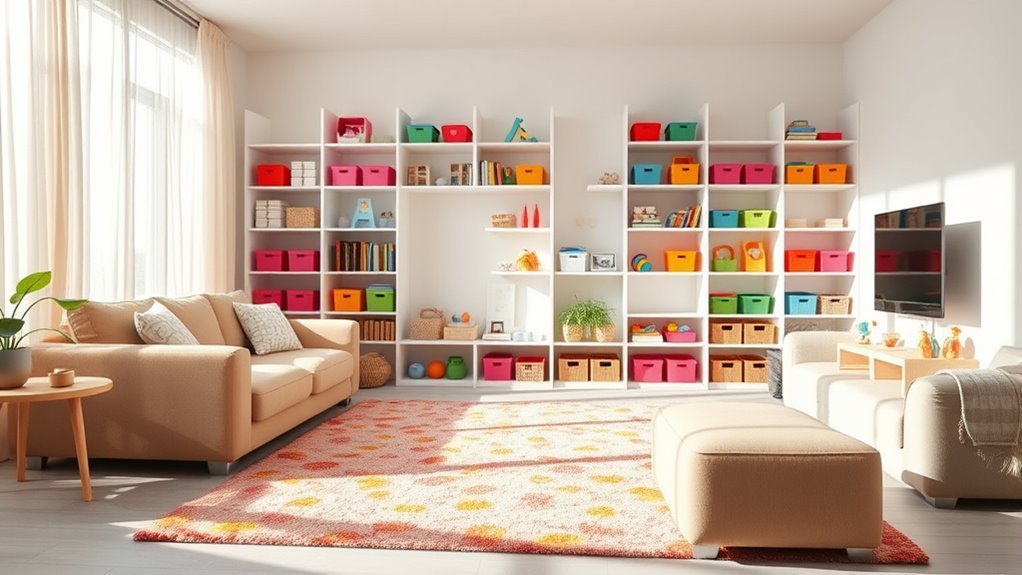
A well-organized living room can handle toys without looking messy all day. The trick is to mix hidden storage with kid-accessible storage.
- Use baskets for soft toys: stuffed animals, blankets, and dress-up pieces are easy to toss into large bins.
- Use trays for small sets: puzzles, blocks, and magnetic tiles stay together better on trays or in lidded containers.
- Use closed storage for visual clutter: board games, craft supplies, and electronic accessories can go behind cabinet doors.
- Use open shelves for daily favorites: keep the most-used toys at child height so kids can play independently.
- Use labels: picture labels help pre-readers; word labels help older kids practice responsibility.
Multi-functional furniture is especially helpful. A storage ottoman can hold blankets or toys. A coffee table with drawers can hide remotes and games. A low console can organize books, puzzles, and art supplies while doubling as a display surface.
Recommended Products

【QUICK ASSEMBLY, EASY FOLDAWAY】This storage ottoman from the SONGMICS MAZIE Collection has a foldable design that allows quick setup in seconds by simply inserting the bottom panel. Easily fold and store it under the bed or in a closet when not in use

DETACHABLE DIVIDER - The toy box have a removable divider board. You can attach it by velcro, which is great for organizing different items separately, you can detach the divider for store bigger things, like blankets, large toys, etc

BULIT TO LAST: Boasts a large 8 Gallon (47L) hidden storage capacity, measuring 13"D x 17"W x 13"H (43 x 33 x 33 cm). Perfect for storing clothes, blankets, toys, books and magazines to tidy up your living room, bedroom and entryway. Built with solid MDF panels and reinforced heavy-duty frame, this storage ottoman holds up to 286 lbs (130 kg) static weight. It works great as a comfortable extra seat, footrest for daily use.
Kid-Friendly Small Living Room Ideas
In a small living room, give each piece more than one job and keep the floor plan easy to reset. A storage ottoman can replace a sharp coffee table, a low console can combine books and toy storage, and one washable rug can define the play area without adding another piece of furniture.
- Protect the walkway first: do not let baskets, floor cushions, or toy bins narrow the main path through the room.
- Use one daily-access zone: keep the most-used books and toys together instead of spreading storage around the room.
- Hide overflow: move less-used games, crafts, and toys to closed storage so the shared room can return to adult use quickly.
- Choose flexible pieces: nesting tables, storage ottomans, and lightweight floor cushions can move when children need more open play space.
- Avoid unsafe vertical storage shortcuts: do not add a tall unit just to gain capacity unless it is stable and properly anchored.
Recommended Products

【QUICK ASSEMBLY, EASY FOLDAWAY】This storage ottoman from the SONGMICS MAZIE Collection has a foldable design that allows quick setup in seconds by simply inserting the bottom panel. Easily fold and store it under the bed or in a closet when not in use
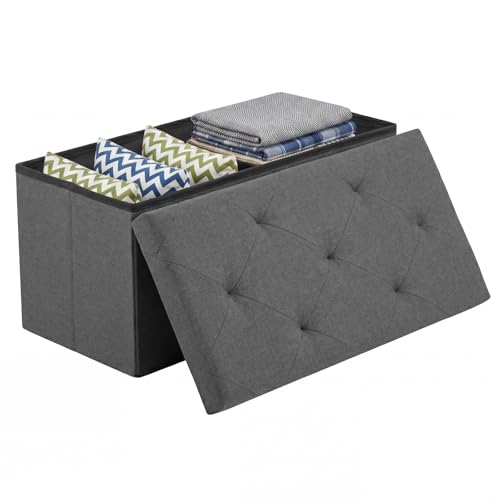
Heavy-Duty Support: Built with thick MDF panels for strong structural support, this storage ottoman bench holds up to 660 lbs. The cushioned top features high-density foam and breathable linen fabric, providing a comfortable seating experience
Make the Room Easy to Clean
Easy cleaning starts with forgiving choices. Choose washable rugs, wipeable tables, durable fabrics, and fewer dust-catching accessories on low surfaces. Keep a small cleanup kit nearby with a lint roller, microfiber cloth, gentle cleaner, and stain-removal product that is appropriate for your fabrics.
When choosing cleaners, follow product labels and ventilate when needed. The EPA’s Safer Choice program can help families identify cleaning and household products made with safer ingredients for human health and the environment.
Keeping Your Kid-Friendly Space Clean and Tidy
Maintaining a clean and tidy living space is easier when the routine is simple. Predictable steps and easy-to-reach storage make cleanup instructions clearer.
- Set a no-shoes rule: this reduces dirt on rugs and floors, especially where babies crawl or kids play.
- Do a five-minute evening reset: return toys to bins, fold blankets, clear cups, and check the floor for small objects.
- Use the “one bin at a time” rule: encourage kids to put one toy category away before pulling out another.
- Rotate toys: store some toys elsewhere and refresh the living room selection regularly.
- Make cleanup visual: labels, picture tags, and clear containers help everyone know where things belong.
Note: Renters can still improve safety and organization with low stable storage, baskets, cord covers, washable rugs with non-slip pads, and removable labels. Do not treat “freestanding” as automatically safe: furniture that can tip still needs an appropriate restraint. Check your lease or ask the landlord how safety anchoring can be installed without violating the rental agreement.
Frequently Asked Questions
How do you make a living room kid-friendly?
Start by anchoring tall furniture and the TV, securing cords, adding rug pads, removing choking hazards, and choosing sturdy furniture with rounded edges. Then create zones for play, reading, and relaxing. Finish with low labeled storage so kids can reach toys and help clean up.
How do I create a play area in the living room without sacrificing style?
Define one play zone with a washable rug, a low shelf, or a small group of matching baskets. Keep only daily-use toys visible and place bulky or messy items behind closed doors. Repeating the room’s existing colors and materials in the storage makes the kids’ area feel like part of the living room instead of a separate playroom.
How do I make a small living room work for kids?
Protect the main walkway, use furniture that serves more than one purpose, and keep one compact zone for everyday toys and books. A storage ottoman, low console, nesting table, and washable rug can add function without filling the floor. Keep overflow toys elsewhere and avoid adding tall storage unless it can be safely anchored.
How can renters make a living room safer for kids?
Use low stable storage, cord covers, non-slip rug pads, removable labels, and locked or out-of-reach storage for hazardous items. Furniture that can tip may still need anchoring, so check the lease or ask the landlord about an approved installation method rather than skipping the restraint.
What furniture is best for a kid-friendly living room?
The best furniture is sturdy, stable, easy to clean, and scaled to the room. Look for anchored bookcases, storage ottomans, washable sofas, rounded coffee tables, low shelves, and soft seating. Avoid unstable pieces, glass-topped tables, and storage with heavy lids that can slam shut.
How do you store toys in a living room without making it look messy?
Use a mix of closed storage and child-height open storage. Put everyday toys in labeled baskets or trays, hide bulky or messy items in cabinets, and rotate toys so only a small selection is out at once. Matching baskets can make toy storage feel intentional instead of cluttered.
Conclusion
A kid-friendly living room should feel safe, comfortable, and usable for the whole family. Start with anchored furniture and TVs, controlled cords, secure rugs, durable materials, and storage children can use safely. Then add reading spots, play zones, personal artwork, and a short cleanup routine. As a next step, do one floor-level safety walk through the room today and fix the highest-risk item you find before buying new decor or storage.
Sources
- CPSC Anchor It! — supports furniture and TV anchoring guidance for tip-over prevention.
- CPSC: Window Covering Cords — supports choosing cordless window coverings when young children are present.
- CPSC: Button Cell and Coin Batteries — supports keeping small batteries and battery-powered remotes inaccessible to children.
- CPSC: Childproofing Your Home — supports protecting accessible outlets and securing common household hazards.
- CPSC: Window Safety — supports keeping climbable furniture away from windows and using guards or stops where appropriate.
- EPA: Volatile Organic Compounds’ Impact on Indoor Air Quality — supports low-VOC and ventilation recommendations for household materials and products.
- EPA Safer Choice — supports choosing cleaning and household products with safer ingredients.