For a basement closet, you want a dehumidifier or moisture absorber that is compact, quiet, leak-resistant, and easy to maintain in a tight space. Vacplus Moisture Absorbers and Ksend Moisture Absorbers are good for small closets, cabinets, and low-effort moisture control, while DampRid’s hi-capacity bucket is better for longer-lasting dampness and musty odor control. If you need active moisture removal instead of a disposable absorber, ToLife’s 1,000 sq. ft. unit gives you auto shut-off, quiet sleep mode, and a larger tank, while the Small Home Dehumidifier adds timer settings, safety features, and a compact electric design. Keep reading to compare the best option for your basement closet, storage area, bathroom, or other small damp space.
Quick Verdict: Best Basement Closet Dehumidifiers and Moisture Absorbers
Best low-maintenance pick: Vacplus Moisture Absorbers are simple, fragrance-free, and easy to place in several small spaces.
Best long-lasting bucket: DampRid Hi-Capacity Moisture Absorber works well when your basement closet has ongoing dampness or musty odors.
Best active electric option: ToLife Dehumidifier is the better choice if you want powered moisture removal, sleep mode, and auto shut-off.
Best compact electric option with timer: Small Home Dehumidifier is useful if you want a small powered unit with timer choices and extra safety features.
Best value pack for closets: Ksend Moisture Absorbers are helpful when you want to protect multiple closets, cabinets, or storage corners at once.
| Product | Best For | Type | Key Advantage | Amazon |
|---|---|---|---|---|
| Vacplus Moisture Absorbers 6 Pack | Small closets and simple moisture control | Disposable moisture absorber | Fragrance-free, compact, and easy to place | Check Price on Amazon |
| DampRid Hi-Capacity Moisture Absorber Bucket 2-Pack | Persistent dampness and musty odors | Large moisture absorber bucket | Longer-lasting moisture control for enclosed spaces | Check Current Amazon Availability |
| ToLife Dehumidifier for Home, 1000 sq.ft, Grey | Powered moisture removal in small-to-medium spaces | Electric dehumidifier | Sleep mode, auto shut-off, and larger tank | View Latest Deal on Amazon |
| Small Home Dehumidifier with 10 Color Lights | Small closets, bedrooms, bathrooms, and quiet spaces | Electric dehumidifier | Timer settings, safety features, and compact design | Check Product Details on Amazon |
| Ksend Moisture Absorbers for Closet 12 Pack | Multiple closets, cabinets, and small storage areas | Disposable moisture absorber | 12-pack coverage with leakproof moisture-locking paper | See Today’s Price on Amazon |
Before you choose: Moisture absorber boxes are quiet, cordless, and easy to use, but they work gradually and need replacement. Electric dehumidifiers remove moisture more actively, but they need power, airflow, and regular tank emptying.
Vacplus Moisture Absorbers 6 Pack Dehumidifier Boxes

Vacplus Moisture Absorbers 6 Pack Dehumidifier Boxes are a smart pick if you want a simple, low-maintenance way to control dampness in a basement closet. You get six portable 10.5-ounce boxes that use spherical calcium chloride to pull moisture from the air over time. The visible water-collecting layer lets you check progress easily, and the fragrance-free design won’t add unwanted odors. Their leakproof build helps protect nearby items, while the compact navy blue boxes fit well in closets, bathrooms, kitchens, laundry rooms, and basements. Keep one running continuously for steady, hands-off moisture control.
Why You’ll Like It: This is the kind of moisture-control option you can place and forget for a while. It does not need an outlet, it does not make fan noise, and it works well when your main problem is light dampness, musty closet air, or stored items that need extra protection.
Best For: People looking for a simple, low-maintenance moisture-control solution for spaces like closets, basements, bathrooms, kitchens, or laundry rooms.
Who Should Buy This: Choose it if you want a cordless, fragrance-free, easy-to-check moisture absorber for a small basement closet or several tight storage areas.
Who Should Avoid This: Skip it if your basement closet has heavy moisture, visible water, or humidity that needs faster active dehumidification.
Pros:
- Uses spherical calcium chloride for effective moisture absorption over time.
- Leakproof design helps protect nearby items from spills.
- Fragrance-free and compact, making it easy to place in different rooms.
Cons:
- Works gradually, so it is not ideal for fast dehumidification needs.
- Disposable box design may require regular replacement as it fills with water.
- Best suited for small to medium spaces rather than large, very damp areas.
DampRid Hi-Capacity Moisture Absorber Bucket 2-Pack
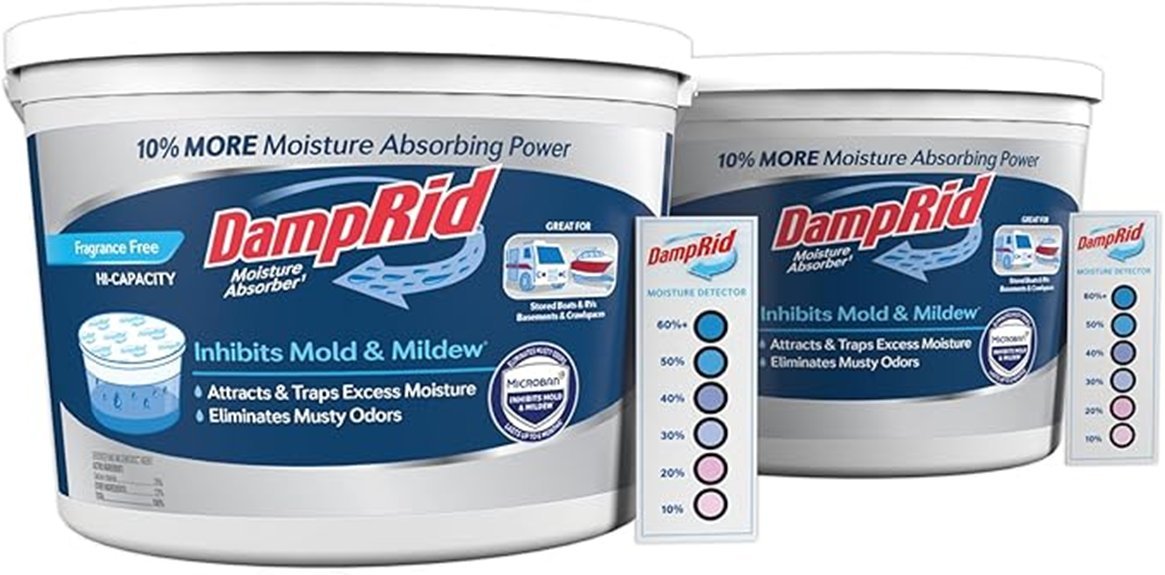
DampRid’s hi-capacity bucket suits you if your basement closet battles persistent dampness and musty odors. You get a fragrance-free 2 lb. 15.5 oz. absorber that pulls excess moisture from the air and helps freshen enclosed spaces. The included moisture detection strips let you check humidity, while the replacement line tells you when it’s time to swap it out. Each bucket can work for up to six months, depending on conditions. It’s also useful in basements, crawl spaces, garages, and storage areas. Keep it away from children, leather, metal, and moving vehicles.
Why You’ll Like It: This bucket is a better fit when a tiny absorber box feels too small for the job. It gives you a larger passive moisture-control option for enclosed storage spaces where musty odor, damp air, and seasonal humidity keep coming back.
Best For: People needing a fragrance-free, long-lasting moisture absorber for damp enclosed spaces like basements, garages, crawl spaces, storage areas, RVs, or boats.
Who Should Buy This: Choose it if your basement closet is larger, your storage area smells musty, or you want a passive moisture absorber that may last longer between replacements.
Who Should Avoid This: Avoid it if you need a small hidden box for a narrow shelf, or if you need an electric unit that actively removes moisture every day.
Pros:
- Absorbs excess moisture and helps reduce musty odors.
- Includes moisture detection strips and a replacement indicator line.
- Long-lasting performance of up to 6 months depending on conditions.
Cons:
- Not suitable for use in moving vehicles.
- Must be kept away from children, leather, and metal.
- Effectiveness varies based on temperature and humidity.
ToLife Dehumidifier for Home, 1000 sq.ft, Grey
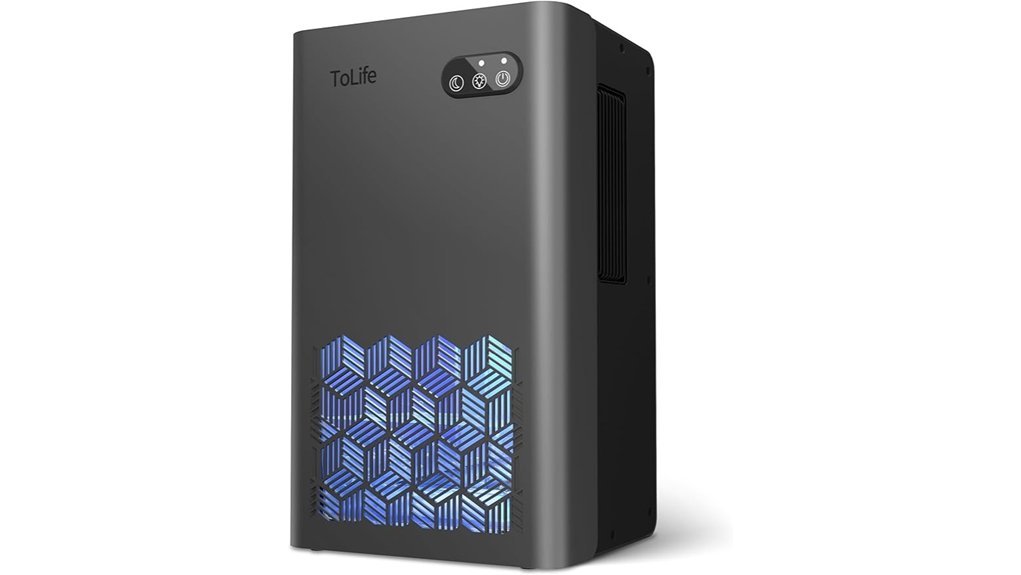
The ToLife Dehumidifier suits you if your basement closet needs quiet, compact moisture control. You get coverage up to 1,000 sq. ft., so it can handle more than a small closet if needed. Its semiconductor condensation system helps keep humidity below 45%, while the 95-ounce tank reduces frequent emptying. Use powerful mode for faster drying, or switch to sleep mode for under-30-dB operation. The compact 8.27-by-5.55-by-13.78-inch body and handles make it easy to move. Auto shut-off adds peace of mind, and the seven LED colors can fit your space.
Why You’ll Like It: This is a stronger choice when passive absorber boxes are not enough. You get powered moisture removal, a larger tank, quiet sleep mode, and a portable design that can move from a basement closet to a bedroom, bathroom, laundry area, or storage room when needed.
Best For: People who want a compact, quiet dehumidifier for bedrooms, basements, closets, or other small-to-medium spaces up to 1,000 sq. ft.
Who Should Buy This: Choose it if you want an electric dehumidifier with auto shut-off, quiet operation, and enough tank space for regular use in a damp basement closet.
Who Should Avoid This: Skip it if your basement has serious water intrusion, flooding, or very high humidity that requires a larger compressor-based dehumidifier.
Pros:
- Quiet sleep mode operates at under 30 dB, making it suitable for nighttime use.
- Compact size with handles makes it easy to move between rooms.
- Auto shut-off and a 95-ounce tank help reduce overflow risk and frequent emptying.
Cons:
- 1 liter per day dehumidification capacity may be too modest for very damp or large areas.
- Semiconductor condensation is generally less powerful than compressor-based dehumidifiers.
- No advanced smart features or app control mentioned.
Small Home Dehumidifier with 10 Color Lights
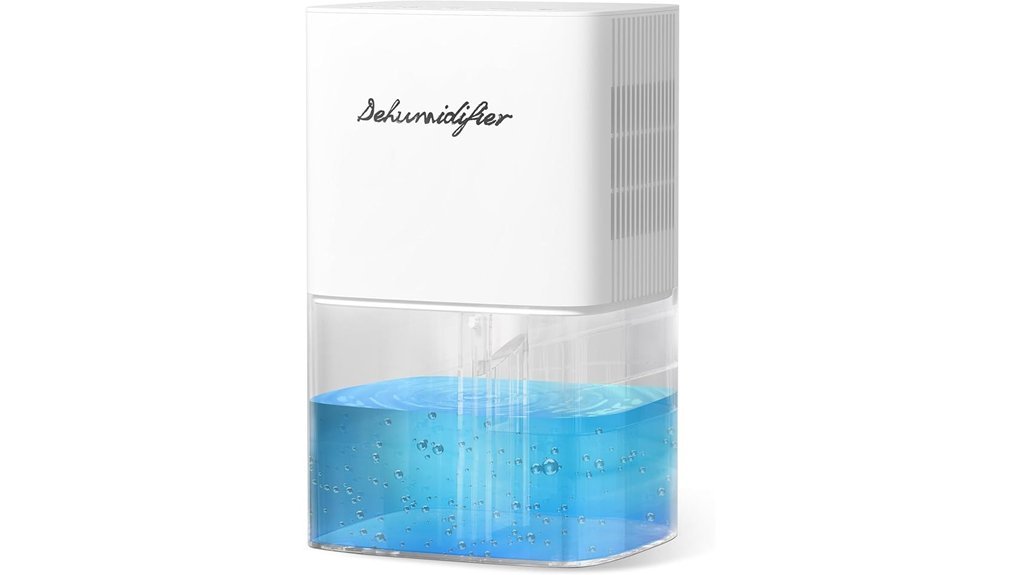
With 10-color ambient lighting, this compact dehumidifier suits small basement closets and quiet bedrooms. You get a 1657ml tank, so you won’t empty it as often, and its stable, lightweight build fits bathrooms, bedrooms, and living rooms. Choose sleep mode for under-40dB operation, normal mode for everyday use, or performance mode when you need stronger moisture removal. Set a timer for 24, 48, 72, or 96 hours, or let it run continuously. Auto shutoff, tilt protection, frost defrosting, and FCC, CE, and RoHS approvals add peace of mind.
Why You’ll Like It: This option makes sense if you want more control than a passive moisture absorber but still need a small unit. The timer choices are helpful if you do not want the dehumidifier running nonstop, and the auto shutoff helps reduce overflow worries when the tank fills.
Best For: people who need a quiet, compact dehumidifier for small spaces like bedrooms, bathrooms, closets, or a small basement area.
Who Should Buy This: Choose it if you want a small electric unit with timer settings, safety protection, and quiet operation for a closet, bathroom, or bedroom corner.
Who Should Avoid This: Avoid it if you need high-capacity moisture removal for a large basement, wet crawl space, or very damp storage room.
Pros:
- 10-color ambient lighting adds a nice decorative touch.
- Three operating modes and multiple timer settings offer flexible use.
- Large 1657ml tank with auto shutoff, tilt protection, and defrosting for convenience and safety.
Cons:
- Best suited for small rooms, not larger or very damp spaces.
- Dehumidification capacity is modest at 0.3 liters per day.
- Light features may be unnecessary for users who prefer a simpler design.
Ksend Moisture Absorbers for Closet (12 Pack)
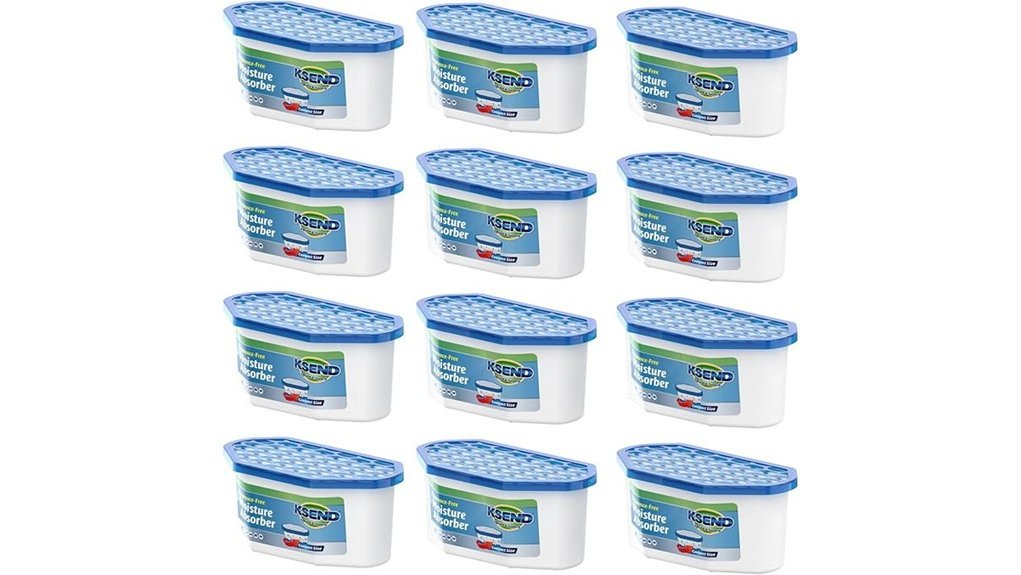
Ksend’s 12-pack moisture absorbers suit you if you need compact, leakproof closet protection. You get 300ml boxes filled with large spherical calcium chloride particles that pull moisture from the air and turn it into liquid inside the container. The moisture-locking paper helps stop leaks, even if you tip a box over. Their slim 3.3 x 6 x 2.5-inch design fits closets, cabinets, and bathrooms without wasting space. You can use them in three quick steps: remove the lid, peel the film, and close it again. They’re energy-saving, long-lasting, and easy to place anywhere.
Why You’ll Like It: The 12-pack format is useful if you want to cover more than one basement closet, cabinet, bathroom shelf, wardrobe, or storage bin area. Since each box is slim, you can spread them around moisture-prone corners instead of relying on only one larger unit.
Best For: Homeowners or renters looking for compact, leakproof moisture protection in closets, cabinets, bathrooms, and other small indoor spaces.
Who Should Buy This: Choose it if you want several small moisture absorbers for multiple closets, cabinets, shoe racks, or storage shelves.
Who Should Avoid This: Skip it if you want one reusable powered machine or if your basement closet needs fast moisture removal after leaks or heavy dampness.
Pros:
- Compact 300ml design fits easily in tight spaces without taking up much room.
- Leakproof moisture-locking paper helps prevent spills even if a box is tipped over.
- Simple three-step use makes setup quick and hassle-free.
Cons:
- Best suited for small areas, so it may not be enough for larger or very damp rooms.
- Single-use moisture absorbers require replacement after they fill up.
- The plastic-box format may be less eco-friendly than refillable alternatives.
Factors to Consider When Choosing a Dehumidifier for Basement Closet
When you choose a dehumidifier for your basement closet, check how much moisture it can remove and whether it matches the closet’s size. You’ll also want a leakproof design, low noise, and energy-efficient power use so it works well without creating new problems. Basement closets often have limited airflow, so the right choice depends on whether you need light prevention, odor control, or active daily moisture removal.
Before You Buy Checklist
- Measure your closet or storage area before choosing coverage size.
- Decide whether you want a passive absorber or an electric dehumidifier.
- Check tank size, replacement needs, or refill frequency.
- Look for auto shut-off if you choose an electric model.
- Keep moisture absorbers away from direct contact with shoes, clothing, leather, and metal.
- Improve airflow where possible so damp air does not stay trapped behind stored items.
Moisture Removal Capacity
Moisture removal capacity is one of the most important things to check, because it tells you how much water a dehumidifier can pull from the air each day. You’ll usually see this rated in liters per day. Smaller units may remove about 0.3 to 0.5 liters daily, which works well in tight closet spaces, while stronger models can extract up to 1 liter for damper basements. Match that capacity to your humidity level so you can keep moisture below 45%. Also check tank volume, since a 300ml reservoir needs emptying more often than one that holds over 95 fluid ounces. If you want better results, look for semiconductor condensation or spherical calcium chloride designs that boost absorption.
Closet Size Coverage
After checking how much moisture a unit can remove, make sure its coverage matches your basement closet’s size. You should look at the closet’s square footage first, because coverage determines whether the dehumidifier can actually handle the space. A compact model can work well in a small closet, but a larger one may need a unit rated for around 1,000 sq. ft. or more. Don’t ignore tank capacity, either, since a small tank in a bigger closet can force you to empty it often. If your closet stays damp, choose a model that can pull up to 1 liter a day. Continuous operation modes and automatic shut-off can also help you manage moisture efficiently in tight basement spaces without extra hassle.
Leakproof Design
A leakproof design is a must for a basement closet dehumidifier because it keeps collected water safely contained and protects your floors and nearby items from damage. You should look for units that use moisture-locking materials, since they trap liquid and help stop spills even if the dehumidifier gets tipped over. High-quality plastics or aluminum housings often signal better resistance to corrosion and wear, which matters in damp basements. When you choose a model with dependable sealing, you can place it in tight spaces with more confidence. Make sure the unit keeps its leakproof integrity over time, because constant humidity can test weaker construction. A solid leakproof design gives you peace of mind and keeps your closet area dry and protected.
Noise Level
Noise level matters when you choose a dehumidifier for a basement closet, especially if the space doubles as a sleeping area or quiet retreat. You’ll want a model that runs quietly enough to stay out of your way, and many good options stay below 40 dB. That’s quiet enough for nighttime use in most homes. If you’re especially sensitive to sound, look for a unit with a sleep mode, since it usually lowers fan noise during quiet hours. Noise can also vary with wattage and airflow capacity, so smaller, lower-wattage models often sound gentler. Before you buy, check product specs and user reviews for real noise ratings. That way, you can pick a dehumidifier that keeps the closet dry without disturbing your rest.
Power Usage
Power usage matters because it affects both your electricity bill and how efficiently the dehumidifier handles basement humidity. You should compare wattage before you buy; lower-wattage models usually use less energy and cost less to run over time. Check the unit’s capacity too, since a larger closet or heavier moisture load may need a higher-capacity model that can clear damp air without running nonstop. Energy efficiency ratings help you spot units built to deliver good performance at lower power levels. Also look for operating modes like low-speed or sleep settings, which can cut consumption when humidity drops. An automatic shut-off feature helps avoid wasted power by stopping the unit when the tank fills or the dehumidifier isn’t positioned correctly.
Safety Features
Safety features matter just as much as performance when you’re choosing a dehumidifier for a basement closet. You should pick a model with automatic shut-off, so it stops when the tank is full and won’t overflow. Tilt or fall detection is equally useful because it cuts power if the unit tips over. Look for FCC, CE, and RoHS certifications; they show the dehumidifier meets safety and environmental standards. Defrost technology also helps by preventing frost from building up on the coils, which keeps the unit running safely and efficiently. Finally, choose a unit with clear warning lights or alerts that tell you when it needs maintenance or the tank needs emptying. These features help you avoid damage, reduce risk, and use the dehumidifier with confidence.
Passive Absorber vs Electric Dehumidifier
A passive moisture absorber is best when you want silent, cordless, low-effort moisture control in a small closet, cabinet, or storage corner. It slowly pulls moisture from the air and usually needs replacement after it fills. An electric dehumidifier is better when humidity is more noticeable and you want active moisture removal, a water tank, operating modes, and auto shut-off. For many basement closets, a passive absorber is enough for prevention, while an electric unit is better for ongoing dampness.
Safety Note
Moisture absorbers collect liquid inside the container, so keep them upright and away from children, pets, leather, metal, and direct contact with clothing or shoes. Electric dehumidifiers need airflow around the unit, a stable surface, and regular tank emptying unless they support continuous drainage.
Pro Tips for Keeping a Basement Closet Dry
A dehumidifier works better when your closet is set up correctly. Leave a small gap between storage bins and the wall so air can move. Avoid packing clothes too tightly, because trapped fabric can hold moisture and musty odor. Use breathable garment bags for seasonal clothing, and check shoes, boxes, and leather items often for damp spots. If your basement has water seepage, a dehumidifier can help with humidity, but you should also fix the source of moisture.
- Use a small hygrometer: It helps you see whether your closet humidity is actually improving.
- Rotate stored items: Moving boxes and shoes occasionally helps prevent hidden damp spots.
- Keep the closet clean: Dust and organic debris can make musty smells worse in damp spaces.
- Choose the right tool: Use absorber boxes for light moisture and electric dehumidifiers for stronger humidity control.
Frequently Asked Questions
How Often Should Basement Closet Dehumidifiers Be Emptied?
You should empty basement closet dehumidifiers every 1-3 days, or whenever the tank’s full light comes on. If you use a drain hose, you won’t need to empty it manually as often. For disposable moisture absorbers, check the collected liquid level regularly and replace the container when it reaches the fill line.
Do Dehumidifiers Help Prevent Mold on Stored Clothes?
Yes, you’ll reduce moisture, so your clothes stay drier and mold has less chance to grow. You should still use breathable storage bins, keep items clean, and check the closet regularly for damp spots or odors. A dehumidifier helps control the environment, but it should not replace cleaning, airflow, or fixing leaks.
Can I Use a Dehumidifier in a Windowless Closet?
Yes, you can use a dehumidifier in a windowless closet if you leave enough airflow and empty it regularly. You’ll reduce moisture, but you should still check for ventilation and temperature changes. For very tight windowless closets, a passive absorber may be easier to place, while an electric model needs room around the intake and outlet.
What Humidity Level Is Best for Basement Closets?
You’ll want to keep your basement closet around 45% to 55% humidity. That range helps you prevent mold, protect clothes, and avoid overly dry air, so you can stay comfortable and keep things fresh. If your humidity stays much higher, consider a stronger electric dehumidifier or check whether moisture is entering through walls, floors, or plumbing.
Are Dehumidifier Boxes Safe Around Shoes and Fabrics?
Yes, you can use dehumidifier boxes around shoes and fabrics, but keep them upright and away from direct contact. Place them on a stable shelf or floor area where they will not tip over. Check for leaks, dust, or spills regularly, especially if the box is near leather shoes, metal accessories, storage bins, or delicate fabrics.
Which Is Better for a Basement Closet: Moisture Absorber or Electric Dehumidifier?
A moisture absorber is better if your closet has light dampness and you want a silent, cordless, low-maintenance option. An electric dehumidifier is better if the closet feels consistently humid, smells musty, or needs active moisture removal. If you are unsure, start by checking humidity with a small hygrometer so you can choose based on the actual moisture level.
Final Recommendation
If you want the easiest option for a small basement closet, start with Vacplus Moisture Absorbers or Ksend Moisture Absorbers. They are compact, quiet, and simple to place near stored clothes, shoes, and boxes. If your closet has stronger musty odors or dampness that keeps coming back, DampRid Hi-Capacity Moisture Absorber Bucket gives you a larger passive option. If you want active powered moisture removal, ToLife Dehumidifier is the strongest fit here, while the Small Home Dehumidifier with 10 Color Lights is a practical compact choice with timer settings and safety features.
Conclusion
When you pick the right dehumidifier for your basement closet, you protect your clothes, shoes, and storage from musty odors and moisture damage. Choose the option that fits your space, budget, and maintenance needs, and you’ll keep things fresher all year. A passive moisture absorber is best for simple prevention, while an electric dehumidifier is better for active humidity control. Remember, an ounce of prevention is worth a pound of cure, so don’t wait until mildew shows up. With the right choice, you can breathe easier and store smarter.