Affiliate disclosure: This article contains Amazon affiliate links. We may earn a commission from qualifying purchases at no additional cost to you.
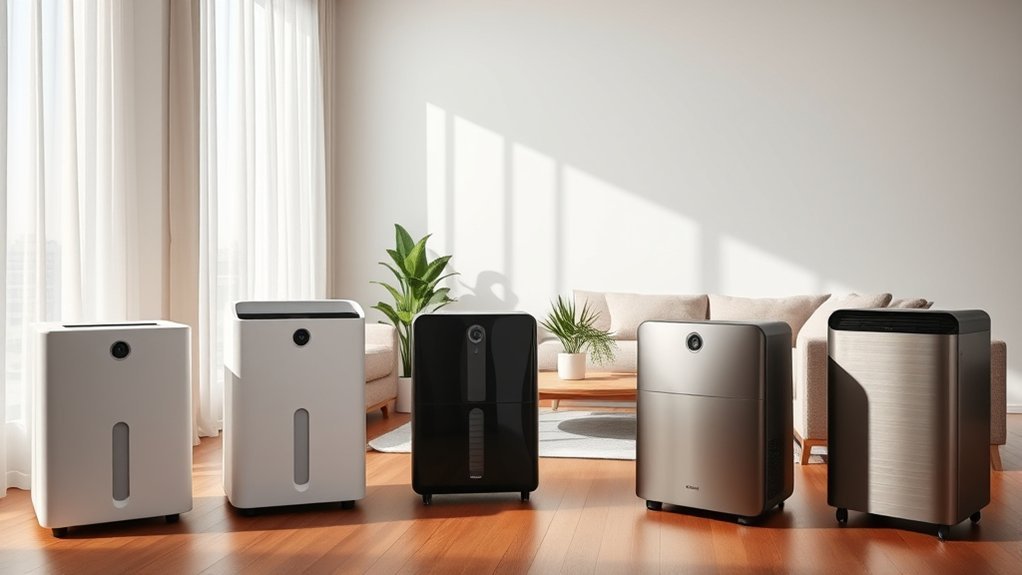
The best dehumidifier for van life depends on how much moisture you need to manage, whether you have dependable power, and whether the van is parked or moving. A small powered dehumidifier can help with everyday humidity in a warm, closed van, while rechargeable silica-gel units and calcium-chloride absorbers are better for cabinets, storage zones, and power-free moisture control.
None of these products can repair a roof leak, door-seal problem, plumbing issue, or poorly vented cooking area. Use a separate hygrometer, improve ventilation, dry wet gear promptly, and fix the source of recurring water before relying on a moisture-control product.
Quick Verdict
- Best Overall Powered Pick: BREEZOME 60 OZ for its larger tank, timer, sleep mode, and dual-semiconductor design.
- Best Flexible-Control Powered Pick: NeedDuck 44 OZ for its 44 oz tank, multiple timers, operating modes, auto shutoff, and defrost function.
- Best Reusable Pick: Wisedry 2 × 500g packs for power-free use inside a van, vehicle, or storage area.
- Best High-Capacity Passive Pick: Vacplus Large Capacity Buckets for a parked van or RV where a stable, upright placement is available.
Important van-use safety note
Use powered appliances only when the van is parked, properly ventilated, and connected to a suitable electrical system. Secure every unit so it cannot tip. Calcium-chloride buckets, boxes, and hanging bags collect salty liquid and should remain upright or freely suspended; remove or safely stow them before driving. Keep all moisture absorbers away from children, pets, food, fabrics, leather, electronics, and metal surfaces unless the product instructions specifically allow that placement.
How We Selected These Van Dehumidifiers
These options were compared by moisture-control method, power requirements, tank or absorption capacity, portability, noise-focused features, maintenance, spill risk, and suitability for a compact vehicle. Product identity and key listing details were rechecked for this update, but Amazon availability can change. Powered thermoelectric units were prioritized for occupied vans with shore power or a capable battery system. Rechargeable silica-gel products were assessed for reusable, power-free protection, while calcium-chloride products were limited to stationary use because they collect liquid.
Quick Comparison of the Best Dehumidifiers for Van Life
| Product | Type | Best For | Key Advantage | Main Limitation | Amazon |
|---|---|---|---|---|---|
| BREEZOME 60 OZ | Powered thermoelectric | Warm, occupied vans with reliable power | 1.8L tank, timer, sleep mode | Output drops in cooler or less-humid conditions | Check Price |
| NeedDuck 44 OZ | Powered thermoelectric | Van owners who value timers and adjustable controls | 44 oz tank, timers, auto shutoff, defrost | No clearly verified standardized removal rating | Check Price |
| Wisedry 2 × 500g | Rechargeable silica gel | Condensation control without continuous power | High reusable desiccant mass | Requires weighing and periodic reactivation | Check Price |
| Wisesorb 2 × 500g | Rechargeable silica gel | Users who want a visible saturation indicator | Transparent color-change window | Bulky for very tight cabinets | Check Price |
| Eva-Dry E-500 2-Pack | Renewable silica-gel unit | Cabinets, closets, and separate storage zones | Silent and cordless during use | Slow, localized moisture control | Check Price |
| Vacplus Large Buckets | Calcium chloride bucket | Parked or stored vans with a secure flat surface | Large 2200 ml reservoir capacity | Liquid spill risk; not for driving | Check Price |
| DampRid Hi-Capacity | Calcium chloride bucket | Stored vans and larger damp zones | Includes moisture-detection strips | Must remain upright and away from surfaces | Check Price |
| Vacplus Hanging Bags | Hanging calcium chloride bag | Van closets and wardrobe compartments | Visible 500 ml collection reservoir per bag | Single use and must hang freely | Check Price |
| Moismile Boxes | Calcium chloride box | Small stationary storage and cabinet areas | Fragrance-free, visible collection box | Not sized for severe whole-van humidity | Check Price |
Best Powered Mini Dehumidifiers for Van Life
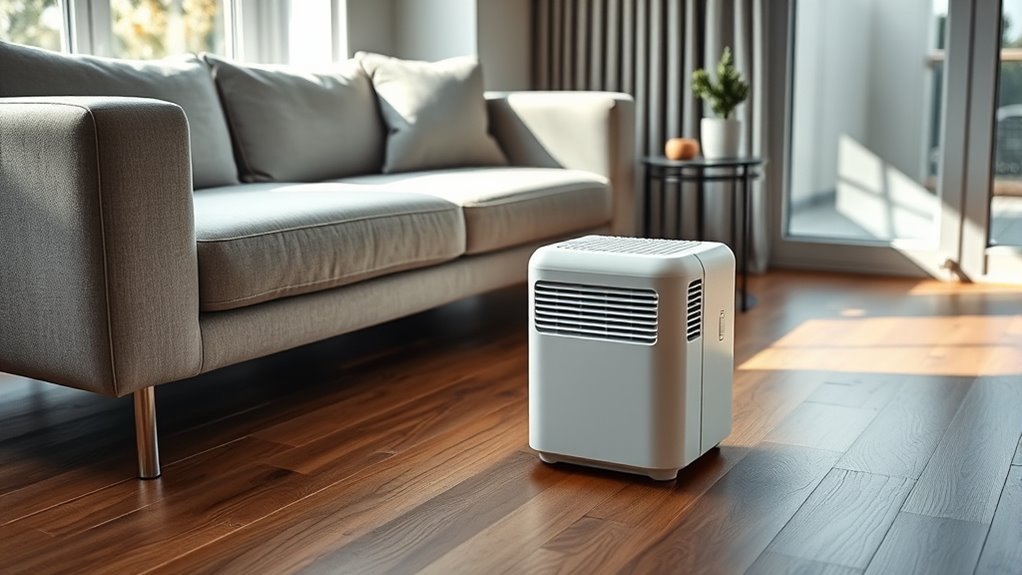
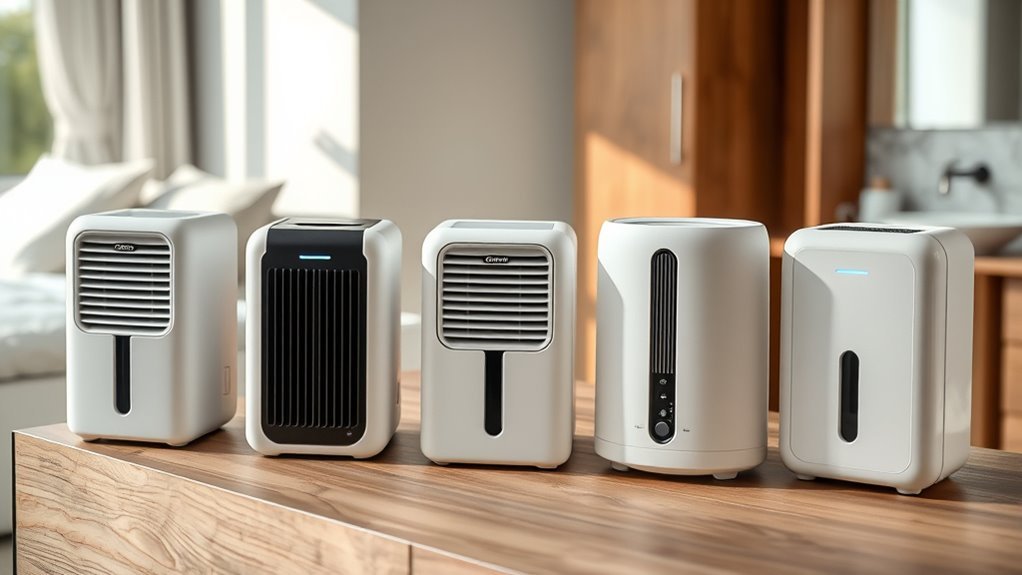
Powered thermoelectric models are compact and relatively quiet, but their advertised maximum output is usually measured in warm, very humid test conditions. They are best for mild to moderate moisture in a closed van and should not be expected to perform like a full-size compressor dehumidifier.
BREEZOME 60 OZ Quiet Dehumidifier with Timer & Light
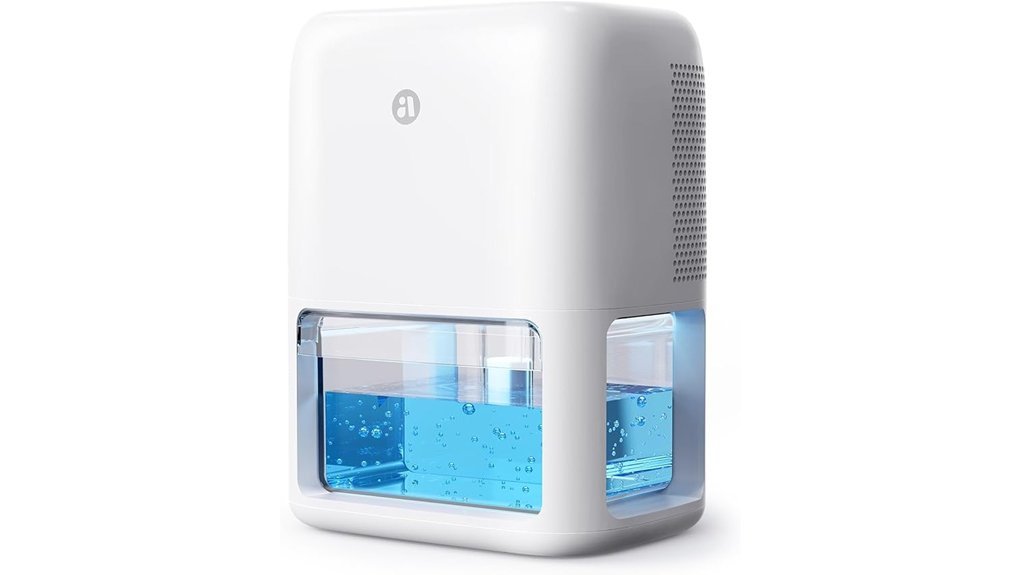
The BREEZOME 60 OZ model offers the strongest feature set among the powered units retained in this guide. It uses dual semiconductor condensers, has a 1.8L water tank, includes 12-, 24-, 36-, and 48-hour timer settings, and provides a quieter sleep mode. The manufacturer lists moisture removal of up to 700 ml per day under hot, highly humid test conditions, so real van performance will vary with temperature, airflow, and relative humidity.
Best For: Van dwellers who regularly use shore power or have enough battery and inverter capacity for a 48W appliance.
Why You’ll Like It: The larger tank reduces emptying frequency, while auto shutoff and defrost protection simplify unattended use when the van is parked.
Who Should Avoid It: Off-grid users with a small battery bank, cold-weather campers, or anyone expecting rapid control of severe condensation.
Pros:
- Large 60 oz (1.8L) tank for a mini thermoelectric unit.
- Timer, sleep mode, auto shutoff, and defrost protection.
- Built-in handle makes it easier to move and stow.
Cons:
- The maximum daily removal figure is based on warm, humid test conditions.
- Continuous use can consume significant battery energy over 24 hours.
- Still requires manual tank emptying and a secure, level position.
NeedDuck Portable Quiet Dehumidifier with 44OZ Tank
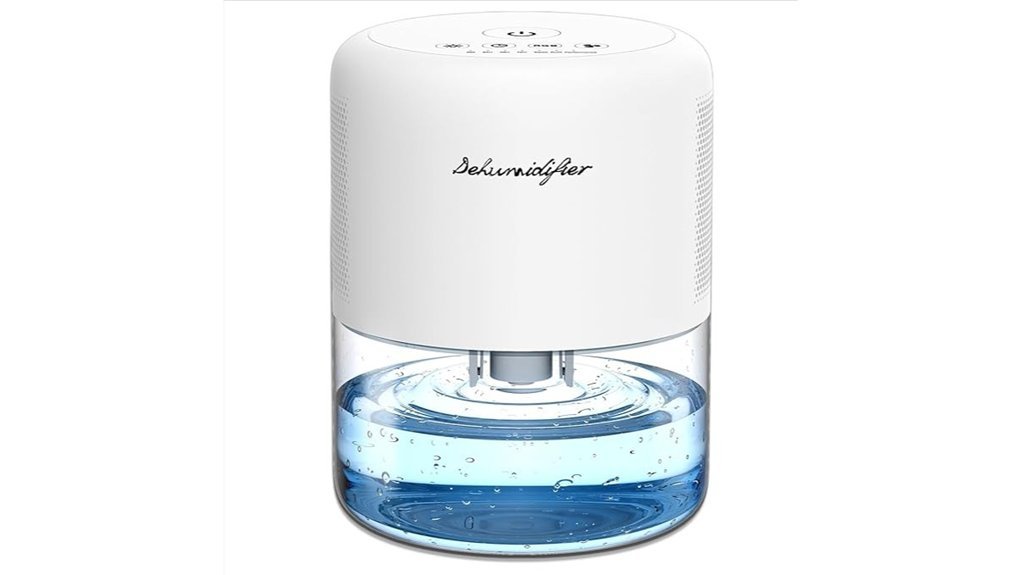
This NeedDuck model combines a 44 oz tank with automatic shutoff, automatic defrost, multiple timer choices, and three operating modes. The feature set is useful in a van, but the listing does not provide a clearly standardized daily moisture-removal figure in the information verified for this update. Buy it for gradual humidity management and flexible controls, not because of an advertised room-size number.
Best For: Van owners who want a compact powered unit with multiple timers and adjustable operating modes.
Why You’ll Like It: It offers more operating choices than a basic one-button mini dehumidifier and remains compact enough to store between trips.
Who Should Avoid It: Buyers who need a verified pints-per-day rating or strong cold-weather performance.
Pros:
- 44 oz tank provides useful collection capacity for a compact unit.
- Auto shutoff and defrost protection simplify day-to-day use.
- Multiple timers and operating modes make scheduling easier.
Cons:
- No clearly verified standardized moisture-removal rating.
- Decorative lighting adds little functional value in a van.
- Like other thermoelectric units, it is intended for gradual moisture control.
Best Rechargeable Moisture Absorbers for Vans
Rechargeable silica-gel products are quiet and power-free while absorbing moisture. They work best in enclosed or semi-enclosed areas and need periodic reactivation. They are useful for parked vehicles, windshield-condensation support, closets, tool storage, and cabinets, but they do not move air through the van like a powered dehumidifier.
Wisedry Rechargeable Silica Gel Car Dehumidifier Pack
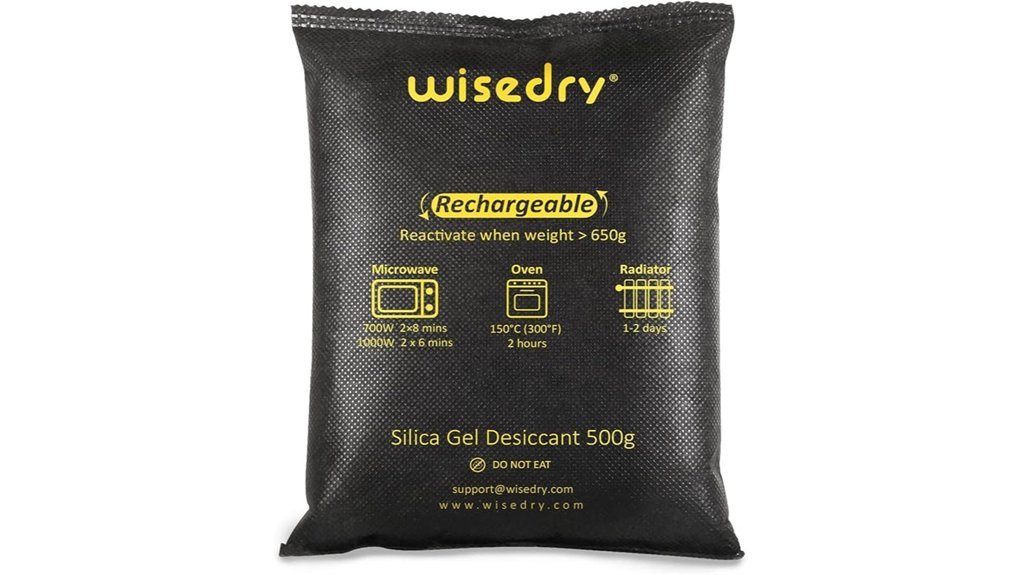
The Wisedry pack includes two 500g silica-gel bags designed for vehicles and other storage spaces. The manufacturer states that each bag can adsorb about 150g of moisture, with a listed maximum of 180g, before reactivation. This makes the pair useful for reducing stored moisture and supporting clearer windows without drawing power while in use.
Best For: Vans that spend time parked, off-grid users, and anyone who wants reusable moisture control without a liquid reservoir.
Why You’ll Like It: The large desiccant mass can be reactivated and reused, reducing recurring waste compared with disposable tubs.
Who Should Avoid It: Users without access to the reactivation method specified in the instructions or anyone needing whole-cabin air circulation.
Pros:
- Two large 500g reusable packs.
- No power, fan noise, or liquid collection while in use.
- Suitable for vehicles, storage areas, boats, and RVs.
Cons:
- The manufacturer recommends weighing the bag to judge saturation.
- Reactivation takes time and must follow the included instructions.
- Works gradually and locally rather than actively circulating van air.
Wisesorb Rechargeable Desiccant Packs (500g, 2pcs)

The Wisesorb two-pack also uses 500g silica-gel bags, but it adds a transparent window with beads that change from orange toward light green as moisture builds. That visual cue is easier to monitor than a bag that must be weighed. The bags can be reactivated by the approved microwave or oven method stated in the product instructions.
Best For: Van owners who want reusable desiccant packs with a visible saturation indicator.
Why You’ll Like It: The clear window helps you decide when reactivation is approaching without opening the bag.
Who Should Avoid It: People with very limited storage space or those who prefer a self-contained plug-in renewal system.
Pros:
- Two 500g packs provide broad placement options.
- Color-change window makes saturation easier to monitor.
- Reusable design reduces disposable absorber waste.
Cons:
- Each pack is relatively large and heavy for a small cabinet.
- Reactivation must follow the stated heat and power limits.
- Not a substitute for ventilation or a powered unit in an occupied van.
Eva-Dry E-500 Renewable Dehumidifier 2-Pack
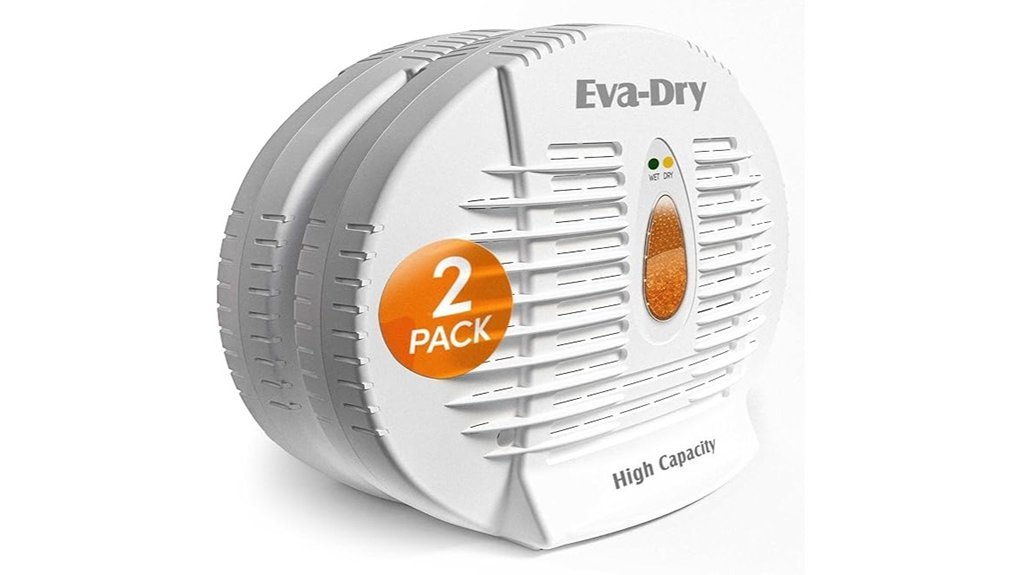
The Eva-Dry E-500 two-pack uses renewable silica gel in a rigid, self-contained housing. Each unit operates silently and without a cord while absorbing moisture, then plugs into a suitable power strip for renewal when its indicator changes color. The current product instructions specify an approximately 16–18 hour renewal cycle on a hard, heat-resistant surface in a well-ventilated area. The two-pack is convenient for separating moisture control between a wardrobe, under-bed compartment, cabinet, or other enclosed van zones.
Best For: Van cabinets, closets, storage compartments, and travel trailers where a neat, spill-free housing is preferred.
Why You’ll Like It: There are no loose bags or disposable refills, and the color indicator gives a simple renewal cue.
Who Should Avoid It: Buyers expecting rapid whole-van dehumidification or those without a suitable power source and safe place for the renewal cycle.
Pros:
- Silent and cordless during normal use.
- Color-changing indicator shows when renewal is needed.
- Two units can protect separate enclosed spaces.
Cons:
- Moisture control is slow and localized.
- Renewal takes about 16–18 hours and requires a suitable power strip and heat-resistant surface.
- Manufacturer coverage claims are intended for small enclosed spaces and should not be treated as a whole-van performance guarantee.
Best Passive Moisture Absorbers for Parked Vans
Calcium-chloride products attract moisture and collect it as liquid. They need no electricity, but they can damage nearby materials if the solution leaks. Use them only in a parked or stored van, place them on a stable surface or hang them exactly as directed, and remove or secure them before travel.
Vacplus Large Capacity Moisture Absorber Buckets (4 Pack)
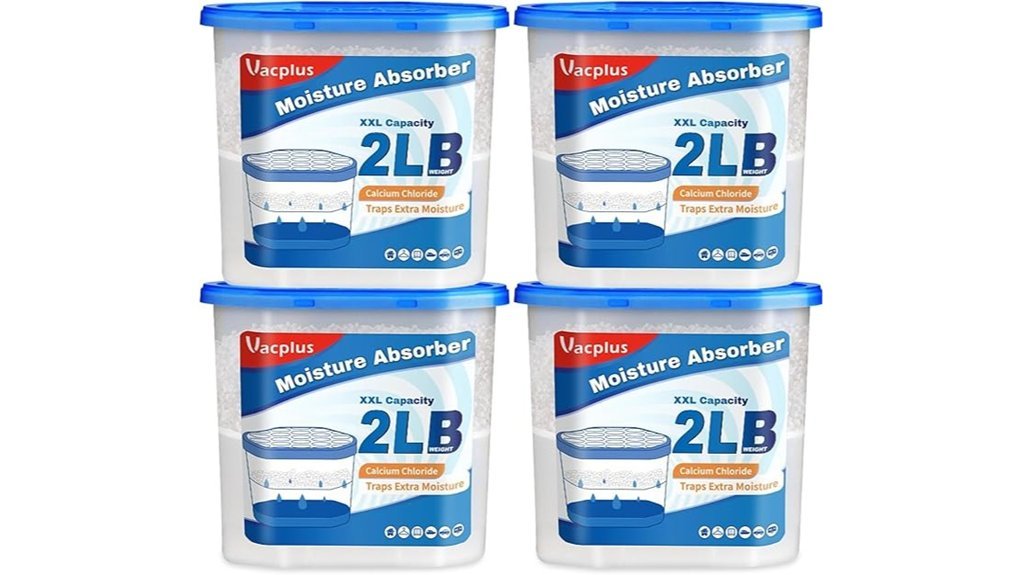
Each Vacplus bucket has a listed 2200 ml collection capacity, which is much larger than a typical compact absorber box. That number describes the reservoir capacity, not a guaranteed daily moisture-removal rate. The fragrance-free calcium-chloride formula is useful for a van that is stored for extended periods, provided the bucket can stay upright on a protected surface.
Best For: Parked RVs, stored camper vans, and larger stationary moisture-prone areas.
Why You’ll Like It: The large clear reservoir is easy to monitor and can reduce replacement frequency.
Who Should Avoid It: Full-time travelers who move daily, families unable to isolate the bucket, or anyone without a stable spill-safe location.
Pros:
- Large 2200 ml collection reservoir.
- Fragrance-free and electricity-free.
- Clear tank makes the fill level visible.
Cons:
- Collected calcium-chloride solution can damage materials if spilled.
- Not appropriate for use while the van is moving.
- Single-use consumable with ongoing replacement cost.
DampRid Hi-Capacity Moisture Absorber Bucket (2 Pack)
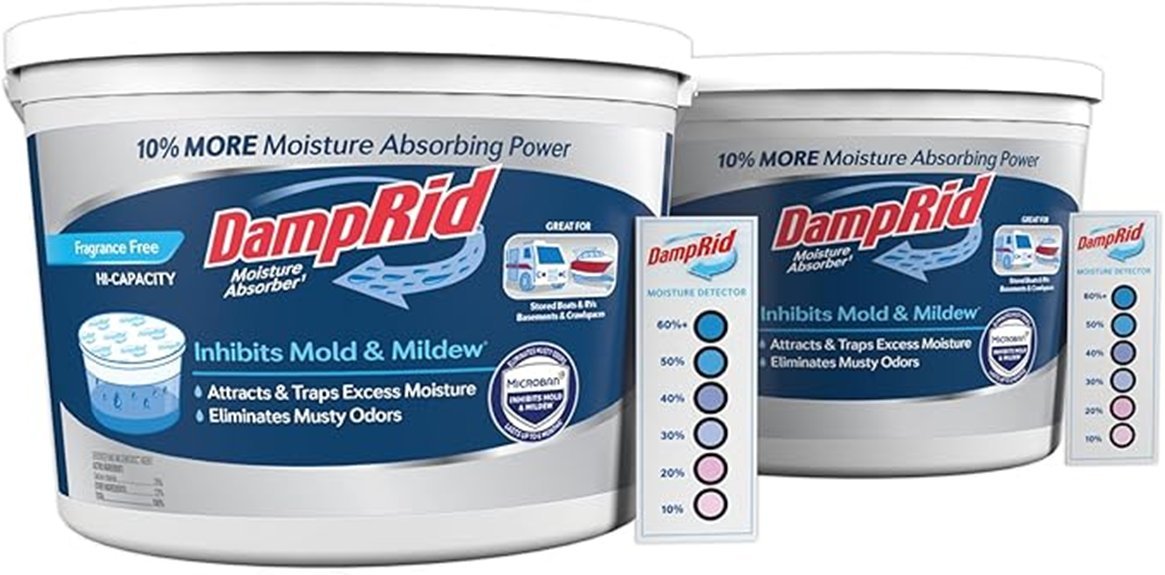
This DampRid bundle combines two high-capacity fragrance-free buckets with moisture-detection strips. The strips can help identify which section of a parked van or RV is more humid before you choose a placement. Service life varies widely with temperature, airflow, and humidity, so inspect the bucket regularly rather than relying on a fixed replacement schedule.
Best For: Stored vans, RVs, garages, and larger stationary areas where you want help locating a damp zone.
Why You’ll Like It: The detection strips add a practical placement aid that basic buckets do not include.
Who Should Avoid It: Anyone who cannot keep the bucket upright, isolated, and away from children, pets, leather, electronics, or metal.
Pros:
- High-capacity format for stationary moisture control.
- Fragrance-free design.
- Detection strips help compare damp areas.
Cons:
- Liquid collection creates a spill and surface-damage risk.
- Not for use in a moving vehicle.
- Replacement timing depends heavily on conditions.
Vacplus Hanging Closet Dehumidifier Bags (10 Pack)

These fragrance-free hanging bags are designed for closets and other enclosed spaces. Each bag has a 500 ml collection reservoir; that is total capacity, not 500 ml of moisture removal per day. The clear lower chamber lets you see liquid build up, making the bags useful for a wardrobe or shower compartment when the van is parked.
Best For: Hanging wardrobes, shower compartments, and enclosed van closets with enough clearance for the bag to hang freely.
Why You’ll Like It: The vertical format saves shelf space and makes the collected liquid easy to monitor.
Who Should Avoid It: Anyone who cannot maintain clearance from clothing or who plans to leave the bag hanging while driving.
Pros:
- 500 ml collection capacity per bag.
- Fragrance-free and power-free.
- Visible reservoir and simple hanging setup.
Cons:
- Single-use bags require replacement.
- Must hang freely and remain protected from punctures.
- Collected solution can damage nearby items if the bag leaks.
Moismile Moisture Absorbers & Odor Eliminator Boxes (3-Pack)
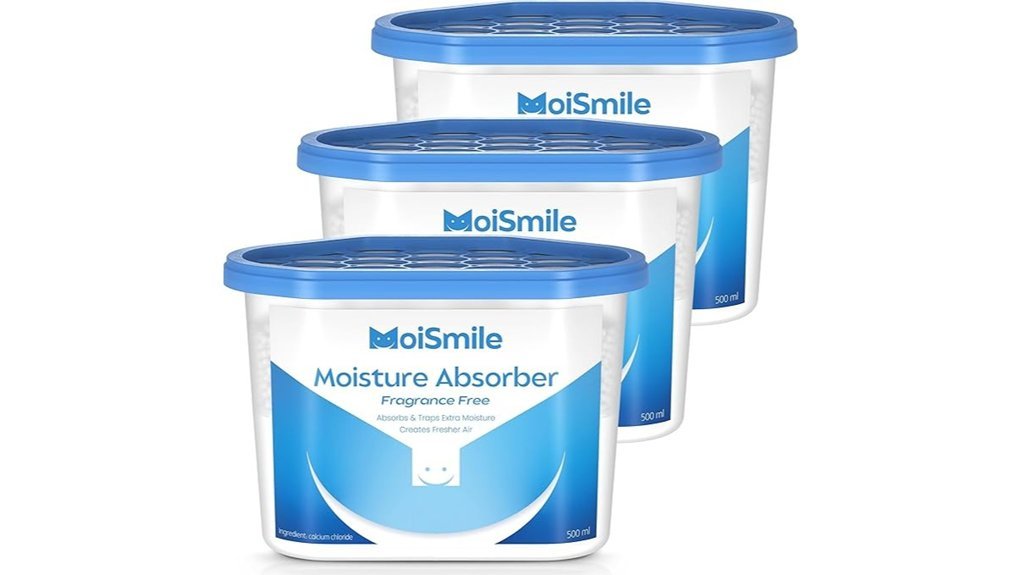
The Moismile three-pack uses calcium chloride in compact transparent boxes. It is a straightforward option for small stationary compartments where a hanging bag will not fit. The original listing’s exact humidity-reduction and coverage claims are not presented here because they are not standardized and may not reflect performance in a van.
Best For: Under-sink cabinets, storage cubbies, bathroom shelves, and other small parked-van areas.
Why You’ll Like It: The clear box shows when liquid is collecting, and the fragrance-free design avoids adding scent to a compact cabin.
Who Should Avoid It: Buyers looking for whole-van control or anyone unable to keep the boxes level and isolated.
Pros:
- Compact three-box format for separate storage zones.
- Fragrance-free and electricity-free.
- Transparent housing makes inspection easy.
Cons:
- No standardized daily moisture-removal rating.
- Small boxes may fill quickly in severe humidity.
- Calcium-chloride liquid must be handled and disposed of carefully.
Factors to Consider When Choosing Dehumidifiers for Van Life
Measure Humidity Before Buying
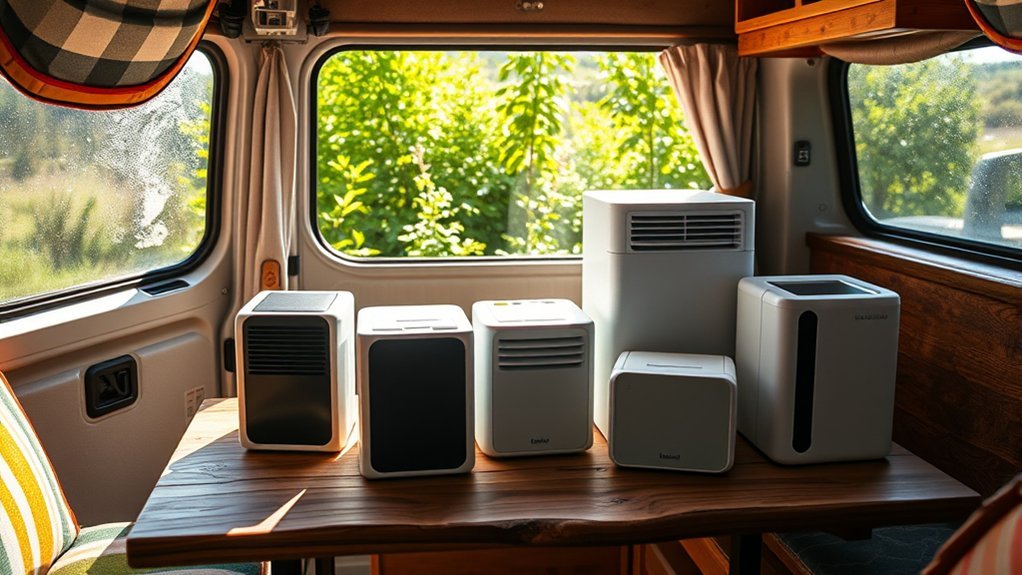
Use a separate digital hygrometer instead of judging humidity only by how the air feels. The U.S. Environmental Protection Agency recommends keeping indoor relative humidity below 60%, ideally around 30% to 50%. In a van, the exact target also depends on outdoor conditions, temperature, and how much condensation appears on windows and metal surfaces. See the EPA moisture and mold guidance for general humidity-control principles.
Powered Dehumidifier vs. Passive Absorber
A powered thermoelectric unit moves air across a cold surface and collects condensed water. It is better for an occupied, closed van when you have reliable power. A silica-gel pack or calcium-chloride absorber works silently without continuous electricity, but it acts more slowly and is most useful in storage areas, cabinets, or a parked vehicle. Do not compare a passive absorber’s reservoir size with an electric unit’s daily removal rate.
Battery and Solar Power Budget
Check the unit’s wattage before buying. Daily energy use in watt-hours is approximately the rated watts multiplied by the hours of operation. A 48W unit running for 10 hours can use about 480Wh before inverter losses. Compare that demand with your battery’s usable capacity, solar production, refrigerator load, fans, lights, and other appliances. Do not assume a small physical size means negligible power use.
Temperature and Season
Small thermoelectric dehumidifiers perform best in warm, humid air. Their water collection can fall sharply in a cool winter van, even when window condensation is severe. In cold weather, prioritize controlled ventilation, safe heat, insulation, thermal breaks, and drying wet materials. Rechargeable desiccants can support cabinets and stored gear, but they will not solve major whole-cabin condensation by themselves.
Tank Size vs. Moisture-Removal Rate
A large tank only tells you how much water the unit can hold before it needs emptying. It does not show how quickly the machine removes moisture. Look for a daily removal figure and the temperature and humidity conditions used for that claim. Standardized pint ratings are more useful for compressor dehumidifiers; many mini thermoelectric products use manufacturer-specific warm-humidity test conditions.
Safe Placement in a Van
Place powered units on a level, ventilated surface with clear air inlets and outlets. Keep cords away from water, cooking areas, and walkways. Buckets and boxes need a stable tray or protected shelf, while hanging bags need free clearance from clothing and sharp edges. Remove liquid-collecting products before driving unless the manufacturer specifically approves mobile use and the unit is securely contained.
Ventilation and Moisture-Source Control
Breathing, cooking, propane combustion, wet coats, showers, and drying clothes can add substantial moisture to a van. Use a roof fan or cracked window when weather permits, vent cooking steam, dry wet gear outside, and avoid unvented combustion appliances. Repair leaks and damaged seals promptly. A dehumidifier should support these measures, not replace them.
Noise and Sleeping Comfort
Check whether the published noise figure applies to sleep mode or maximum power. Even a quiet fan can become noticeable in a small metal van at night. A timer lets you run the unit before bed or during the day, while silica-gel products are completely silent during use.
Maintenance and Replacement Cost
Powered units need tank cleaning, dust removal from air openings, and inspection for frost or clogs. Rechargeable silica gel needs periodic renewal according to the exact instructions. Calcium-chloride products must be replaced or refilled when exhausted, and their collected liquid must be handled carefully. Compare long-term consumable cost with the convenience of a reusable product.
Before You Buy Checklist
- Measure the van’s humidity with a separate hygrometer.
- Identify whether the moisture comes from occupants, cooking, wet gear, condensation, or a leak.
- Confirm the unit’s wattage, voltage, and expected daily energy use.
- Check the stated test conditions behind any moisture-removal claim.
- Choose a secure location with airflow and no tipping or spill risk.
- Plan how you will empty, replace, or reactivate the product.
Frequently Asked Questions
Can a Mini Dehumidifier Handle an Entire Camper Van?
A mini thermoelectric dehumidifier can help with mild to moderate humidity in a warm, closed van, but it may not keep up with two sleepers, frequent cooking, wet gear, or winter condensation. Use a hygrometer to judge the result. If humidity remains high or water continues to collect on windows and walls, improve ventilation and moisture-source control rather than adding more tiny units.
Can a Van Dehumidifier Run on Solar Power?
Yes, provided your solar array, battery bank, charge controller, inverter, and wiring can safely support the load. Calculate the unit’s watt-hours for the planned run time and include inverter losses and other appliance demands. A model drawing 48W continuously uses far more energy than a rechargeable desiccant pack that only needs occasional renewal.
What Humidity Level Should I Aim for in a Van?
A practical target is generally 30% to 50% relative humidity, while keeping it below 60% whenever possible. Outdoor weather may make the lower end unrealistic, so watch for persistent condensation, damp bedding, musty odors, or wet surfaces and respond quickly.
Can I Use Calcium-Chloride Absorbers While Driving?
It is safer to remove or securely stow them before travel. Buckets, boxes, and hanging bags collect a concentrated liquid that can spill if tipped, punctured, or swung into another object. Use them when the van is parked and follow the product’s placement and disposal instructions.
Will a Dehumidifier Stop Mold in a Van?
It can help reduce one condition that supports mold growth, but it cannot guarantee prevention or remove existing contamination. Fix leaks, dry wet materials quickly, improve ventilation, clean affected surfaces appropriately, and replace materials that cannot be dried or cleaned safely.
What Works Best for Cold-Weather Van Life?
Cold-weather condensation is often better managed with controlled ventilation, safe heating, insulation, thermal breaks, and moisture-source reduction. Many mini thermoelectric dehumidifiers collect much less water at low temperatures. A rechargeable desiccant can help protect enclosed cabinets and gear, but severe whole-van condensation may require a properly rated low-temperature dehumidifier and a stronger electrical system.
How Do I Maintain a Van Dehumidifier?
Empty and rinse powered-unit tanks regularly, keep air openings free of dust, inspect the cord and adapter, and dry the tank before storage. Reactivate silica-gel products exactly as directed and replace damaged bags or housings. Inspect calcium-chloride products often and dispose of collected liquid according to the label.
Conclusion
For an occupied van with dependable power, the BREEZOME 60 OZ offers the best balance of tank size, controls, and quiet-operation features. The NeedDuck 44 OZ is the better fit when flexible timers, multiple operating modes, auto shutoff, and defrost controls matter more than a clearly standardized daily removal rating.
For power-free moisture control, choose the Wisedry or Wisesorb packs for reusable desiccant protection, or the Eva-Dry E-500 for a self-contained renewable design. Use Vacplus, DampRid, and Moismile calcium-chloride products only in a parked van where they can remain upright, isolated, and regularly inspected.
The most reliable setup combines a hygrometer, ventilation, leak repair, dry storage habits, and a moisture-control product matched to your power supply and van layout.