Disclosure: As an Amazon Associate, we earn from qualifying purchases. If you click a link on this page and make a purchase, we may receive a small commission at no extra cost to you.
Managing air quality in large open living spaces or master bedrooms requires serious circulation power and high-grade filtration. Standard compact air purifiers often struggle to move enough air, leaving persistent dust, pet hair, and cooking odors behind. This review evaluates whether this H13 True HEPA large room air purifier delivers the performance needed for spaces up to 500 square feet or if you should consider alternative options.
Quick Verdict
Rating: 8.8/10 (Recommended)
Best For: Living rooms, open layouts, and bedrooms up to 500 sq ft that need fast allergen and odor removal.
Bottom Line: Equipped with a strong 235 CFM CADR rating and medical-grade H13 True HEPA filtration, this unit cleans large areas effectively in just 15 minutes. High-pollution households will need to budget for filter replacements every 3 to 4 months.
| Specification | Detail |
|---|---|
| Filter Grade | H13 True HEPA Filter |
| Particle Capture Efficiency | 99.97% of particles down to 0.1 microns |
| CADR Rating | 235 CFM (Cubic Feet Per Minute) |
| Coverage Area | Up to 500 sq ft (Air turnover every 15 minutes) |
| Air Quality Display | Real-time PM2.5 Numerical Display |
| Operating Modes | Auto Mode, Sleep Mode, Manual Fan Speeds |
| Safety Features | Child Lock, Filter Change Alert Indicator |
| Filter Replacement Interval | Every 3 to 4 months (depending on air quality) |
What Is the H13 HEPA Large Room Air Purifier?
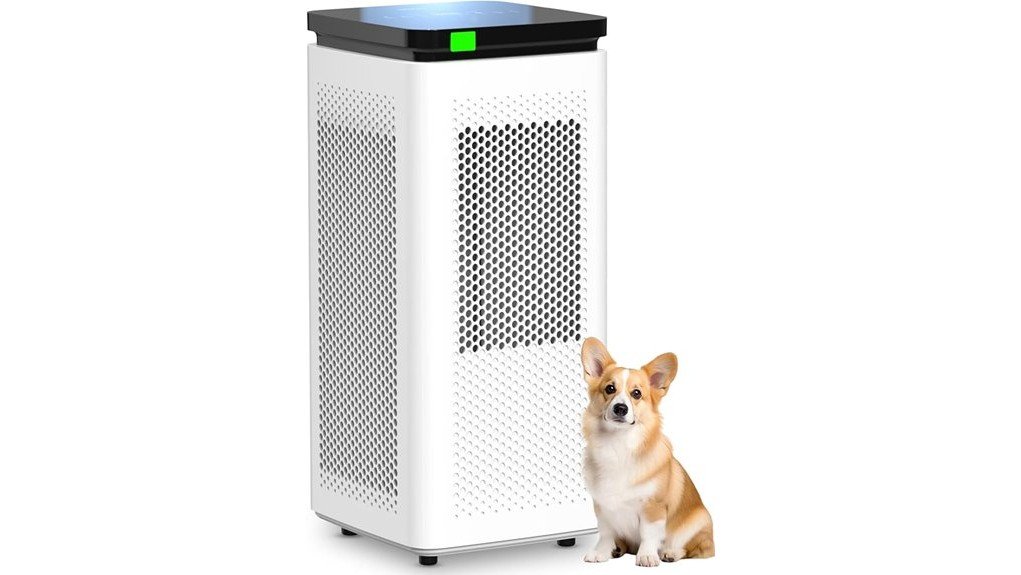
This air purifier is designed specifically to handle higher air volume demands in broad living areas, apartments, and master suites. Powered by an internal motor capable of producing a Clean Air Delivery Rate (CADR) of 235 CFM, the machine cycles all the air in a 500-square-foot space four times per hour.
At its core is a multi-stage filtration setup featuring an H13 True HEPA filter. This medical-grade material captures airborne particles as small as 0.1 microns, including microscopic fine dust, ragweed pollen, pet dander, mold spores, and smoke residue. An integrated activated carbon layer captures kitchen odors and chemical vapors.
Unlike basic purifiers that run blindly on a single fan speed, this model incorporates smart PM2.5 air quality sensors. The digital display updates environmental readings continuously, letting you monitor indoor air quality visually while the system automatically adjusts fan speeds as airborne pollutants rise and fall.
Who Should Buy It?
Best For
- Pet owners tackling loose fur, dander, and persistent litter box odors
- Homeowners with open-concept floor plans up to 500 sq ft
- Allergy and asthma sufferers sensitive to seasonal pollen and dust mites
Skip If
- You need air filtration for small bathrooms or compact offices under 150 sq ft
- You prefer washable permanent filters over recurring replacement cartridges
Core Features and Performance Breakdown
Evaluating an air purifier requires looking past marketing numbers to see how key components handle real-world pollution sources in your home environment.
Medical-Grade H13 True HEPA Filtration
Standard HEPA filters trap 99.97% of particles down to 0.3 microns. The upgraded H13 True HEPA material used here goes further by capturing particles down to 0.1 microns. This higher filtration efficiency traps ultra-fine airborne irritants, wildland smoke particles, and microscopic allergens that easily pass through lower-grade filters.
235 CFM CADR Air Circulation
A high filter rating is ineffective if the fan cannot draw room air through the filter media quickly. With a CADR rating of 235 CFM, this unit moves air rapidly across large floor plans. In a standard 500-square-foot room, it completes a full air exchange every 15 minutes, ensuring dust and dander do not settle onto furniture or floors.
Smart PM2.5 Air Quality Monitoring and Auto Mode
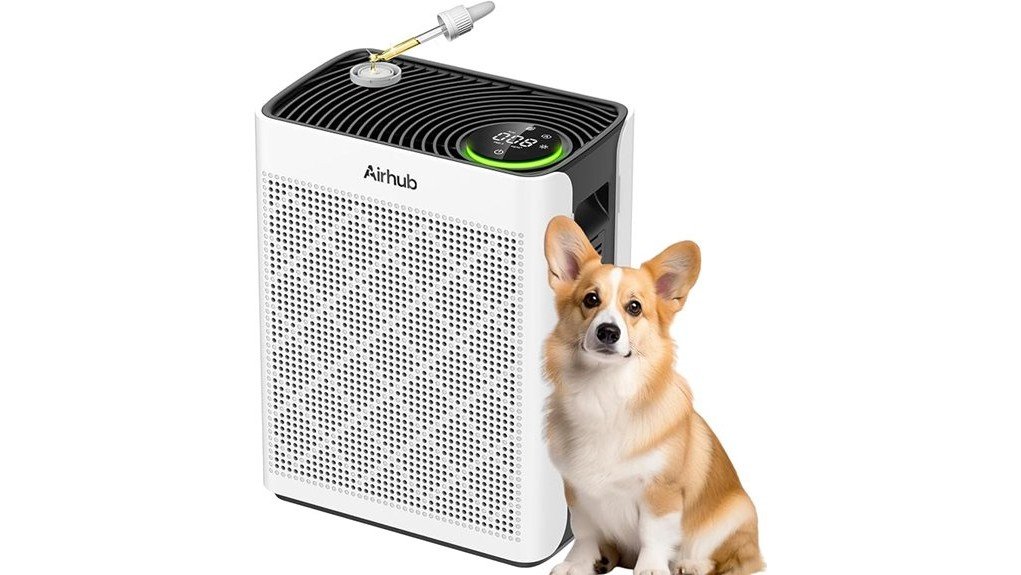
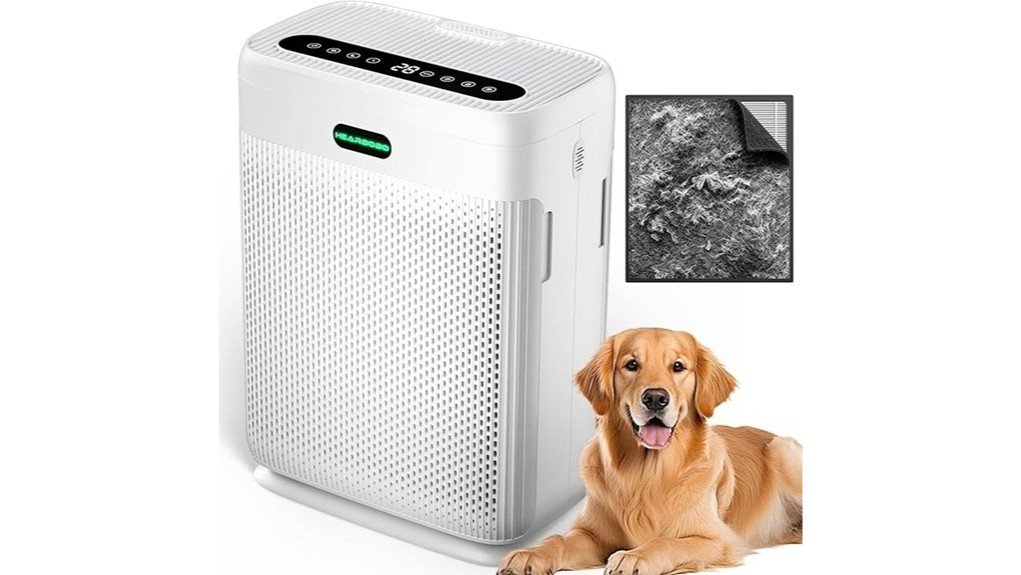
The front panel features a real-time PM2.5 digital readout that measures ambient fine particulate concentration. When switched to Auto Mode, the internal processor responds to changes in room air quality instantly. If you sear food in the kitchen or brush a shedding pet nearby, the purifier increases fan speed automatically until pollutant levels drop back into the green zone.
Quiet Sleep Mode and Child Lock Safety
For night operation in bedrooms, Sleep Mode lowers fan noise to a whisper and dims panel lights to prevent sleep disruption. The touch control interface also includes a physical child lock button, preventing curious toddlers or pets from accidentally modifying your fan or timer settings.
How It Performs in Real Use
To give you a clear picture of what to expect day to day, here is how this air purifier operates across four common household scenarios.
For Open-Concept Living Rooms
In large living areas where family members and pets gather, dust and dander circulate constantly. Placed centrally, the 235 CFM airflow keeps heavy particulate levels under control. You will notice significantly less visible dust buildup on coffee tables and television screens over the course of a week.
For Bedrooms and Nighttime Sleeping
Running the unit in a master bedroom creates a cleaner sleeping space for allergy sufferers. In Sleep Mode, the fan operates quietly while continuing to trap pollen and dust mites. The dimmed control panel keeps your bedroom dark without intrusive LED light bleed.
For Kitchens and Heavy Cooking Odors
Cooking with garlic, onions, or hot oil can leave strong smells that linger for days. When placed near the kitchen, the activated carbon filter layer absorbs airborne grease and cooking odors rapidly, preventing food scents from penetrating living room upholstery and drapes.
For Homes with Pets
Pet hair and dander are major sources of indoor respiratory irritation. The intake grilles capture airborne pet dander and floating fur efficiently before it settles into carpet fibers. Running the unit continuously cuts pet-related odors substantially.
Placement and Maintenance Tips
Before You Buy: Always remove the protective plastic film wrapping from the HEPA filter cartridge inside the unit before plugging it in for the first time. Operating the motor with sealed plastic can damage the internal fan motor.
Getting the maximum lifespan and clean air performance out of your air purifier depends heavily on proper room positioning and filter care.
- Maintain Clearance: Place the purifier at least 12 inches away from walls, curtains, and large furniture to allow unhindered 360-degree intake airflow.
- Keep Intake Clean: Vacuum the outer intake grille once a month to remove surface dust buildup and keep air flowing freely.
- Elevate on Carpets: If placing the unit on plush carpet, position it on a firm mat to keep intake vents clear of thick carpet fibers.
Pro Tip: Keep the air purifier running on Auto Mode 24/7 rather than turning it on and off manually. Auto Mode consumes minimal electricity on low speed and ramps up only when air pollution rises, maintaining clean air consistently.
The integrated filter status indicator alerts you when airflow drops below efficiency thresholds. Under normal conditions, replace the composite filter cartridge every 3 to 4 months. Homes with multiple shedding pets or heavy smoke exposure may require filter changes closer to the 3-month mark.
Pros and Cons
Pros
- High 235 CFM CADR cleans 500 sq ft spaces every 15 minutes
- Medical-grade H13 True HEPA filters fine particles down to 0.1μm
- Real-time digital PM2.5 display provides clear air quality readings
- Responsive Auto Mode adjusts fan speed based on actual pollution levels
- Quiet Sleep Mode and child lock feature ideal for family homes
Cons
- Replacement filters needed every 3 to 4 months in heavy use homes
- Maximum fan speed generates noticeable wind noise during heavy air clearing
- Larger footprint requires dedicated floor space away from walls
Is It Worth the Price?
When evaluating value in large room air purifiers, the key calculation comes down to CADR output per dollar and filter effectiveness. Cheaper compact units often cost less up front but lack the air circulation power needed for 500-square-foot areas, leading to poor air exchange rates.
This unit offers strong value by combining a high 235 CFM CADR fan with an H13 grade filter and real-time smart monitoring. Rather than running at full power unnecessarily, Auto Mode keeps energy consumption low by throttling fan speeds down once air quality stabilizes.
While ongoing filter cartridge replacements add a recurring maintenance cost every few months, the improvement in indoor air clarity, allergen reduction, and odor control makes it a practical investment for families and pet owners seeking healthier indoor spaces.
How It Compares to Alternatives
Compared to entry-level purifiers designed for small bedrooms (which typically offer CADR ratings under 120 CFM), this unit delivers nearly double the airflow capacity. It handles wide open floor plans without struggling.
Against premium smart purifiers costing significantly more, this model includes essential features like PM2.5 numerical displays, auto-fan adjustments, and child safety locks without forcing buyers to pay extra for complex mobile app setups. It strikes a balanced midpoint between performance, functionality, and straightforward operation.
Frequently Asked Questions
How often should I run my air purifier daily?
Running the air purifier continuously on Auto Mode delivers the best air quality results. On Auto Mode, the machine runs on energy-efficient low speeds when air is clean and automatically ramps up fan power only when airborne dust or smoke is detected.
Can I use the air purifier while cooking?
Yes, running the air purifier while cooking helps eliminate grease smoke and strong food odors quickly. The activated carbon layer traps volatile odor molecules before they can absorb into furniture fabrics or carpets.
Does the air purifier remove allergens from furniture?
The purifier captures airborne dust, pollen, and pet dander floating in the air before they settle onto surfaces. While it cleans the air, combining air purification with regular couch and fabric vacuuming offers the best complete allergen defense.
Is it safe to use around pets and children?
Yes, this unit uses 100% ozone-free mechanical filtration, making it safe for pets and children. It also features a child lock button to lock panel controls against accidental touches from toddlers or pets.
How do I know when to replace the filter?
The built-in filter replacement indicator illuminates on the display panel when it is time for a new filter, typically every 3 to 4 months depending on fan usage and household pollution levels.
What room size is a 235 CFM CADR rating suited for?
A 235 CFM rating cleans spaces up to 500 square feet effectively, carrying out 4 complete air turnover cycles per hour (once every 15 minutes) for consistent air freshness.
How quiet is sleep mode during night operation?
In Sleep Mode, fan speed drops to an ultra-quiet level while control panel lighting turns off or dims significantly, allowing light sleepers to rest without noise or light disturbance.
The Bottom Line
For spaces up to 500 square feet, this air purifier offers the airflow capacity and high-grade filtration needed to maintain clean indoor air. Its 235 CFM CADR rating, medical-grade H13 HEPA filter, and automated PM2.5 monitoring make keeping your home free of dust, pollen, and pet odors straightforward and reliable.
Ready to Buy?
Check current pricing, filter availability, and product details on Amazon.