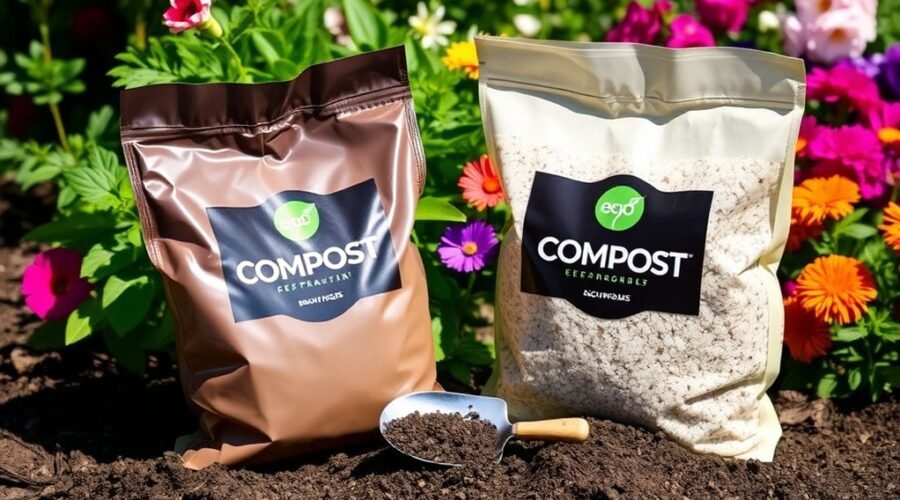
Bagged compost looks simple until you are standing in the garden centre aisle comparing a 20-quart bag of premium potting mix against a 40-pound sack of general-purpose compost and wondering which one actually goes in your raised bed. The two are not interchangeable, and buying the wrong category is the most common — and most expensive — mistake gardeners make. For the 2026 growing season, two widely available bagged options cover most small-scale needs: Vermont Compost Fort Vee, a compost-based potting mix built for containers and heavy feeders, and Michigan Peat Garden Magic, a low-odor bagged compost blend for amending beds, borders and lawns. Below you will find what each one is genuinely good for, honest limitations for both, and a coverage guide so you order the right number of bags the first time.
Quick verdict
- Growing in pots, window boxes or starting transplants? Vermont Compost Fort Vee — it is a complete growing medium, not just an amendment.
- Improving existing garden soil, topping a raised bed or feeding a lawn? Michigan Peat Garden Magic — cheaper per bag and designed to be mixed into what you already have.
- Filling a large bed from scratch? Neither. Both bags are under one cubic foot. Order bulk compost by the yard instead.
Quick Comparison: Fort Vee vs Garden Magic
| Vermont Compost Fort Vee | Michigan Peat Garden Magic | |
|---|---|---|
| Category | Compost-based potting mix (complete growing medium) | Bagged compost blend (soil amendment) |
| Best for | Containers, potting up, transplants, heavy feeders | Amending beds, top dressing, raised bed blends, lawns |
| Bag size | 20 quarts (roughly 0.67 cu ft) | 40 lb (listed at roughly 0.75 cu ft) |
| Main ingredients | Compost, sphagnum peat moss, nutrient amendments including blood meal and kelp meal | Reed sedge peat and composted animal manure |
| Use straight from the bag? | Yes — plant directly into it | No — blend with existing soil or other media |
| Relative cost per bag | Higher (premium mix) | Lower (general purpose) |
| Main limitation | Rich for fine seed starting; small bag for the price | Peat-heavy and manure-based; not a standalone potting mix |
| Check Price on Amazon | Check Price on Amazon |
How These Picks Were Chosen
These two products were selected against a consistent set of criteria rather than by popularity alone: clearly disclosed ingredients on the bag, wide and consistent availability in bagged retail form, a defined use case that a home gardener can actually match to a project, and stated coverage that can be checked against the volume of a real bed or container. Where a claim on the packaging could not be independently verified — certification status, guarantees, exact nutrient analysis — it is flagged as something to confirm on the current listing rather than repeated here as fact. No hands-on trial of these specific bags was conducted; the guidance below reflects published product information, standard horticultural practice and the limitations that apply to any manure- and peat-based bagged product.
Vermont Compost Fort Vee Organic Potting Mix (20 Quarts)
BEST FOR CONTAINERS & HEAVY FEEDERS
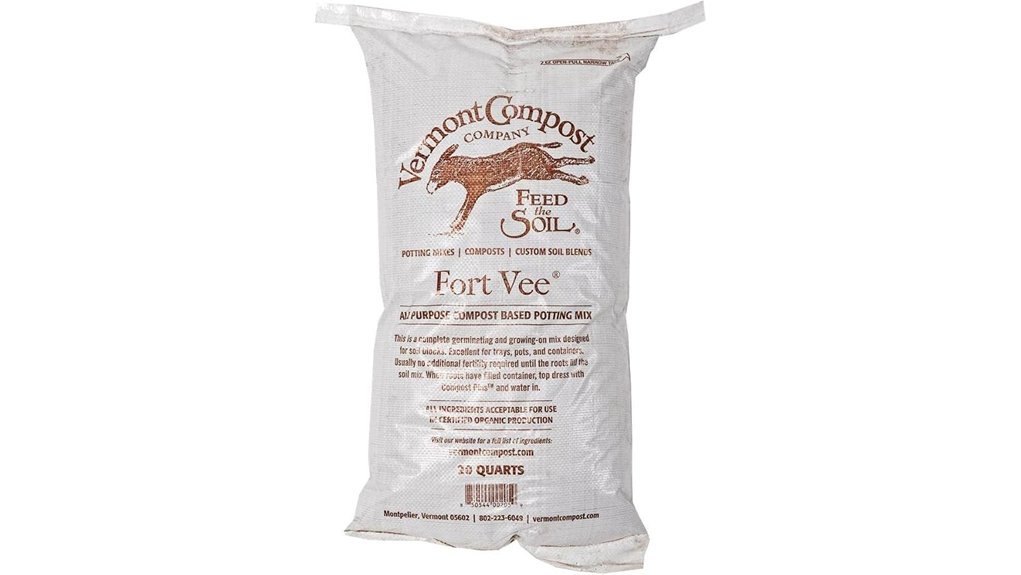
The Vermont Compost Fort Vee is best understood as a complete, compost-based growing medium rather than a bag of compost to dig into your garden. It is designed so that you can fill a pot with it and plant straight away, with no additional soil or fertiliser needed at the start. The maker lists compost, blonde sphagnum peat moss and nutrient amendments including blood meal and kelp meal among the ingredients — check the current bag or listing for the full ingredient panel and for any OMRI or organic certification status, as formulations and listings change over time.
The problem it solves: cheap potting soils tend to compact, drain poorly and run out of nutrients within a few weeks, which is why container tomatoes so often stall and yellow by midsummer. A compost-rich mix like this holds structure through repeated watering and carries a larger reserve of nutrition, so demanding crops such as tomatoes, peppers and squash have something to draw on well past transplant shock.
Why You’ll Like It: it behaves predictably. The mix stays open and crumbly rather than turning to a dense block in the pot, which makes it forgiving for anyone who waters on an irregular schedule, and it is ready to plant into without mixing anything else in.
Who Should Buy This: container gardeners, anyone potting up seedlings or nursery starts, growers of heavy feeders, and gardeners who want a single bag that works indoors and out without additional amendments.
Who Should Skip It: anyone trying to fill a raised bed or amend a large area — at roughly 0.67 cubic feet, the cost per cubic foot is high for bulk work. It is also richer than ideal for germinating fine seeds; many growers prefer a lighter, lower-nutrient medium for that stage and move seedlings into a mix like this once they have their first true leaves. Gardeners avoiding animal products should note the blood meal.
Best For: Gardeners who want a ready-to-plant, compost-based potting mix for containers and heavy feeding crops, indoors or out.
Pros:
- Nutrient-rich profile suited to demanding crops such as tomatoes and peppers.
- Holds soil structure well through repeated watering, resisting compaction in pots.
- Ready to use straight from the bag — no additional soil or starter fertiliser required.
- Works for both indoor containers and outdoor pots and planters.
Cons:
- Richer than necessary for low-nutrient plants such as succulents, cacti and many herbs.
- At roughly 0.67 cubic feet, one bag will not go far on larger projects.
- Higher price point than standard potting soils.
- Contains blood meal, which some gardeners avoid and which can attract dogs or wildlife to freshly filled pots.
Michigan Peat Garden Magic Odor-Free Compost (40 lb)
BEST VALUE FOR SOIL IMPROVEMENT
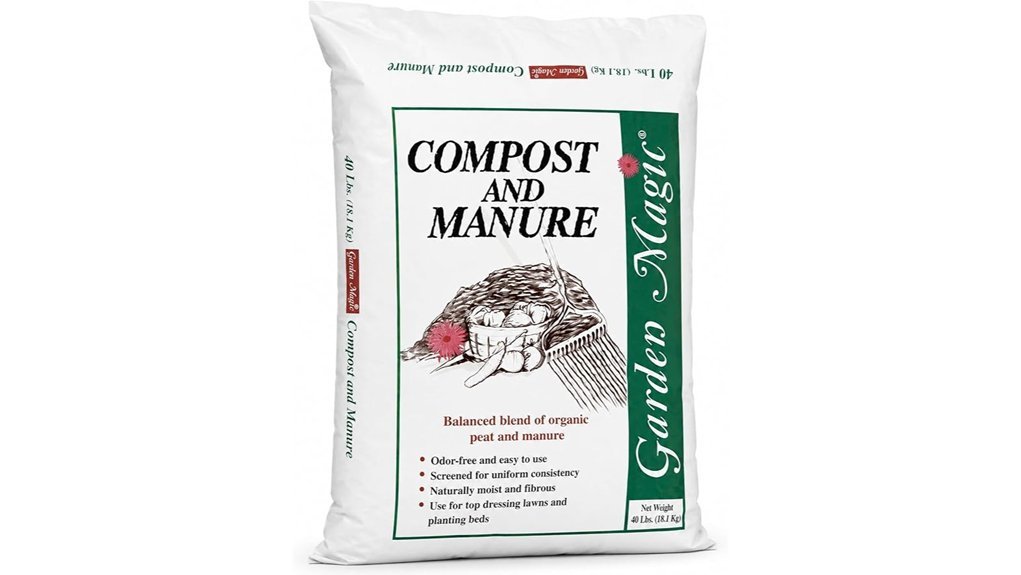
Michigan Peat Garden Magic is a general-purpose bagged compost blend of reed sedge peat and composted animal manure, sold in a 40-pound bag listed at approximately 0.75 cubic feet. The “odor-free” name refers to its reduced smell compared with raw or fresh manure — most users report it is mild rather than genuinely scentless, so it is workable in a suburban garden without upsetting the neighbours, but it is still a manure-based product.
The problem it solves: tired, compacted or sandy garden soil that dries out too fast and grows weak plants. Worked into the top few inches of a bed, or used as an annual top dressing, a compost blend like this raises organic matter, improves moisture retention and slowly releases nutrition as it breaks down.
Why You’ll Like It: it is the straightforward, unfussy option. It goes into flower beds, vegetable rows, new lawn seedings and raised bed blends without any special handling, and the cost per bag is low enough that buying several for a real project is realistic.
Who Should Buy This: gardeners improving existing beds, anyone top dressing a lawn or borders, and raised bed builders who want a compost component to blend with topsoil and other media.
Who Should Skip It: anyone looking for a standalone container mix — used alone in pots it holds too much water and lacks the aeration a potted root system needs. Gardeners specifically avoiding peat should also look elsewhere, as reed sedge peat is a primary ingredient.
Best For: Gardeners who want an affordable, low-odor compost blend to amend and enrich existing soil for flowers, vegetables and grass.
Pros:
- Organic matter content: reed sedge peat and composted animal manure add the bulk organic matter tired soil is usually missing.
- Genuinely versatile as an amendment: suits beds, borders, lawn top dressing and raised bed blends.
- Low odor: noticeably milder than fresh manure, making it practical for suburban and small gardens.
- Affordable per bag: buying several bags for a real project stays within reach.
Cons:
- Limited coverage: at roughly 0.75 cubic feet per bag, larger projects need many bags — see the coverage guide below before ordering.
- Heavy to handle: a 40-pound bag is awkward to carry and pour for some users.
- Not a standalone potting mix: it needs blending, and used alone in containers it stays too wet.
- Peat-based: not suitable if you are deliberately buying peat-free.
Factors to Consider When Choosing Bagged Compost (2026 Buying Guide)
Bagged compost is not a single product category. Before comparing brands, work out whether you need a soil amendment, a complete growing medium, or a mulch — then check ingredients, coverage and suitability for the crops you actually grow. The sections below cover the factors that make the biggest practical difference.
Compost vs Potting Mix: Know Which One You Need
This is the distinction that causes the most wasted money. Compost is a soil amendment — decomposed organic matter you mix into existing soil or spread as a top dressing to raise organic matter and improve structure. Used alone in a container it usually holds too much water and compacts around roots. A potting mix is a complete growing medium, engineered with peat, coir, bark, perlite or vermiculite so it drains and aerates correctly in the closed environment of a pot, often with compost as one component. Of the two products above, Garden Magic is an amendment and Fort Vee is a growing medium. If you are filling pots, buy the mix. If you are improving ground, buy the compost.
How Much Compost Do You Actually Need?
Coverage is where most first orders go wrong, because bag volumes are small and beds are larger than they look. One cubic foot spread one inch deep covers about 12 square feet. A standard 4×8 foot raised bed is 32 square feet, so topping it with two inches of compost needs roughly 5.3 cubic feet — around seven of the 0.75 cubic foot bags. Filling that same bed to a 10-inch depth from empty would take about 26 cubic feet, which is bulk delivery territory, not bagged. Before adding to cart: multiply length by width in feet, multiply by your intended depth in inches, divide by 12 to get cubic feet, then divide by the bag volume. Buying bagged is convenient and clean for small jobs and top dressing; for anything larger, bulk compost by the cubic yard is dramatically cheaper.
Ingredients and What “Organic” Really Means
Two different meanings of “organic” get blurred on compost bags. In the soil-science sense, organic matter simply means carbon-based material — composted manure, plant residues, peat — and this is what improves soil structure, aeration and water retention. In the regulatory sense, “certified organic” or “OMRI Listed” means the product has been reviewed for use in certified organic production. A bag can be full of organic matter without carrying any certification. If certification matters to you, look for the OMRI seal or USDA-allowed wording directly on the current packaging rather than relying on product descriptions. Nutrient-dense additions such as kelp meal and blood meal support heavy feeders; peat moss and vermiculite improve structure and moisture handling. No bagged product can honestly be described as guaranteed free of all contaminants, so treat absolute purity claims with scepticism.
Nutrient Profile Evaluation
Quality compost supplies a modest, slow-release mix of nitrogen, phosphorus and potassium alongside micronutrients, released gradually as microbial activity breaks the material down. That slow release is the point: it feeds steadily rather than spiking like a synthetic fertiliser, which suits heavy feeders needing continuous nourishment over a season. Note that compost is generally a soil conditioner first and a fertiliser second — nutrient levels are low compared with a dedicated feed, so hungry crops in containers may still need supplementary feeding later in the season. If a bag lists a guaranteed analysis, compare it against the needs of your intended crops; if it does not, assume gentle rather than concentrated nutrition.
Application and Versatility
Match the blend to the job. Seed starting wants a light, low-nutrient medium. Potting up and transplanting want a richer complete mix. Bed amendment wants bulk organic matter mixed into the top four to six inches. Top dressing wants a fine, screened material spread half an inch to two inches deep. Lawn top dressing wants something that will work down between grass blades without smothering them. A blend that genuinely covers indoor and outdoor use, containers and raised beds, gives you more flexibility from one bag — but be sceptical of any product claiming to be ideal for every one of those jobs at once.
Soil Structure Quality
Soil structure describes how particles clump and how much pore space sits between them, which governs water retention, air movement and how easily roots push through. Good compost has a crumbly, friable texture that drains freely while still holding moisture and nutrients, and it should not arrive as a wet, compacted slab. Well-structured material also supports microbial activity, which in turn helps make nutrients available to plants. Organic materials such as peat moss and composted manure improve structure by increasing porosity and nutrient-holding capacity. If a bag feels sodden and heavy when you lift it, that is worth noting — excessively wet material is harder to spread and slower to work into soil.
Bag Size and Cost Efficiency
Compare bags by volume, not weight, because weight varies enormously with moisture content. A 40-pound bag sounds much larger than a 20-quart bag, but 20 US quarts is roughly 0.67 cubic feet and that 40-pound bag is listed at around 0.75 cubic feet — close to the same amount of material. Neither is a large-project solution. Smaller bags are easier to carry, store and pour, which matters if you garden on a balcony or have limited storage. Larger bags reduce trips and packaging per cubic foot but are awkward to handle. The honest calculation is cost per cubic foot, plus a realistic look at whether bagged is the right format at all: past roughly 10 to 15 cubic feet, bulk delivery is usually far better value.
Odor Control
Odor matters most for urban gardens, balconies and anywhere you will be working close to the material. Well-finished compost that has fully heated and matured smells earthy rather than sour or ammoniac; a sharp or rotten smell suggests incomplete decomposition. Materials such as reed sedge peat and composted manure tend to be milder than fresh manure, and products marketed as “odor-free” are generally low-odor rather than genuinely scentless — expect a mild earthy smell that fades after a day or two outdoors. If you are working indoors or in a confined space, open the bag outside first and let it air.
Before You Use It: Manure-Based Compost Caution
Worth knowing: persistent broadleaf herbicides such as aminopyralid, clopyralid and picloram can survive the composting process in manure-derived products and cause cupped, twisted growth in sensitive crops — particularly tomatoes, peppers, beans, peas and potatoes. This is an industry-wide issue with manure-based compost, not specific to any one brand, and most bags are fine. If you are planting a valuable crop, run a simple bioassay first: fill a few pots with the compost, sow bean or pea seeds, grow them on a windowsill for two to three weeks, and compare against seeds in plain potting soil. Distorted growth means do not use that batch on sensitive plants. Also wash your hands after handling any manure-based product, and keep fresh applications away from ready-to-eat crops.
Environmental Impact
Compost use has real environmental upside: it recycles organic waste, builds soil carbon, supports biodiversity and reduces reliance on synthetic fertilisers. The honest counterweight is peat. Both products discussed here contain peat, and peat extraction releases stored carbon and damages peatland habitats that take centuries to form — this is why peat-free growing media have become a priority in many markets. Locally produced compost also carries a lower transport footprint than material shipped across the country, and recyclable or biodegradable packaging reduces waste further. If peat use is a deciding factor for you, look specifically for products labelled peat-free, which typically substitute coir, bark fines, wood fibre or green waste compost.
Before You Buy: Quick Checklist
- Have you worked out whether you need an amendment or a complete potting mix?
- Have you calculated cubic feet for your bed or containers, and divided by the bag volume?
- Is your project over roughly 10–15 cubic feet? If so, price bulk delivery before buying bags.
- Do you need certified organic? Check for the OMRI seal on the current packaging.
- Are you growing tomatoes, beans or peppers? Consider a quick bioassay on manure-based compost.
- Are you avoiding peat or animal products? Check the ingredient panel before ordering.
- Do you have somewhere dry to store leftovers, or should you buy fewer bags now?
Frequently Asked Questions
What’s the Difference Between Compost and Potting Mix?
Compost is a soil amendment you mix into existing soil or spread as a top dressing to add organic matter. Potting mix is a complete growing medium engineered to drain and aerate properly inside a container, often containing compost as one ingredient. Using straight compost in pots usually leads to waterlogging and compaction.
Can I Use Compost Straight Without Mixing It?
As a top dressing on beds and borders, yes — spreading half an inch to two inches over the surface works well. As a growing medium in containers, generally no. Blend it with existing soil or with a proper potting mix rather than filling pots with compost alone.
How Many Bags of Compost Do I Need?
One cubic foot covers about 12 square feet at one inch deep. For a 4×8 foot raised bed topped with two inches, that is roughly 5.3 cubic feet — about seven bags at 0.75 cubic feet each. Measure your area, decide your depth, and divide by the bag volume before ordering.
How Can I Tell if Compost Is Organic?
Look for an OMRI Listed seal or USDA-allowed wording printed on the current packaging, and read the ingredient panel for synthetic additives. Descriptions using “organic” loosely may mean organic matter rather than certified organic, so the label on the bag is the reliable source.
What Is the Shelf Life of Bagged Compost?
Bagged compost typically stays usable for around six months to two years depending on storage. It does not spoil in a dangerous way, but nutrient content and microbial activity decline over time, and bags left in the sun or the wet degrade faster.
Can I Use Compost for Indoor Plants?
Yes, provided it is well-aged and used as part of a mix rather than on its own. Indoors, drainage and pests matter more than outdoors, so a purpose-made potting mix is usually the safer choice for houseplants, with compost added as a component.
Is Bagged Compost Suitable for Vegetable Gardens?
It generally is, and it is one of the most effective ways to improve vegetable bed soil. Choose a well-finished product, and if you are growing sensitive crops such as tomatoes, beans or peppers, run a quick bean-seed bioassay on manure-based compost first as a precaution against persistent herbicide residues.
How Do I Store Leftover Compost?
Fold the bag over and seal it, then keep it somewhere cool, dry and off bare ground — a shed, garage or covered bin works well. This prevents it drying out or becoming waterlogged and keeps pests out until the next application.
Final Recommendation
There is no single winner here, because these two products do different jobs. Choose based on your project, not on which sounds more premium:
Choose Vermont Compost Fort Vee if you are growing in pots, planters or window boxes, potting up seedlings, or feeding demanding crops like tomatoes and peppers. It is a complete growing medium you can plant straight into, and it holds its structure far better than budget potting soils. Accept the higher price and the small bag volume as the trade-off.
Choose Michigan Peat Garden Magic if you are improving existing garden soil, top dressing beds or a lawn, or blending a raised bed mix. It is the more affordable, more practical option for ground-level work — just do the coverage maths first and buy enough bags, and do not use it alone in containers.
Conclusion
Good soil is the cheapest upgrade most gardens can get, and bagged compost is the easiest way to deliver it on a small scale. The decision comes down to two questions: are you filling containers or improving ground, and how many cubic feet do you actually need? Answer those honestly and the choice makes itself — Vermont Compost Fort Vee for containers and heavy feeders, Michigan Peat Garden Magic for amending beds and borders. Measure before you order, check the current bag label for certification if that matters to you, and treat manure-based products with the small precaution outlined above. Get those basics right and a few bags of compost will do more for your 2026 season than almost anything else you buy.